nn
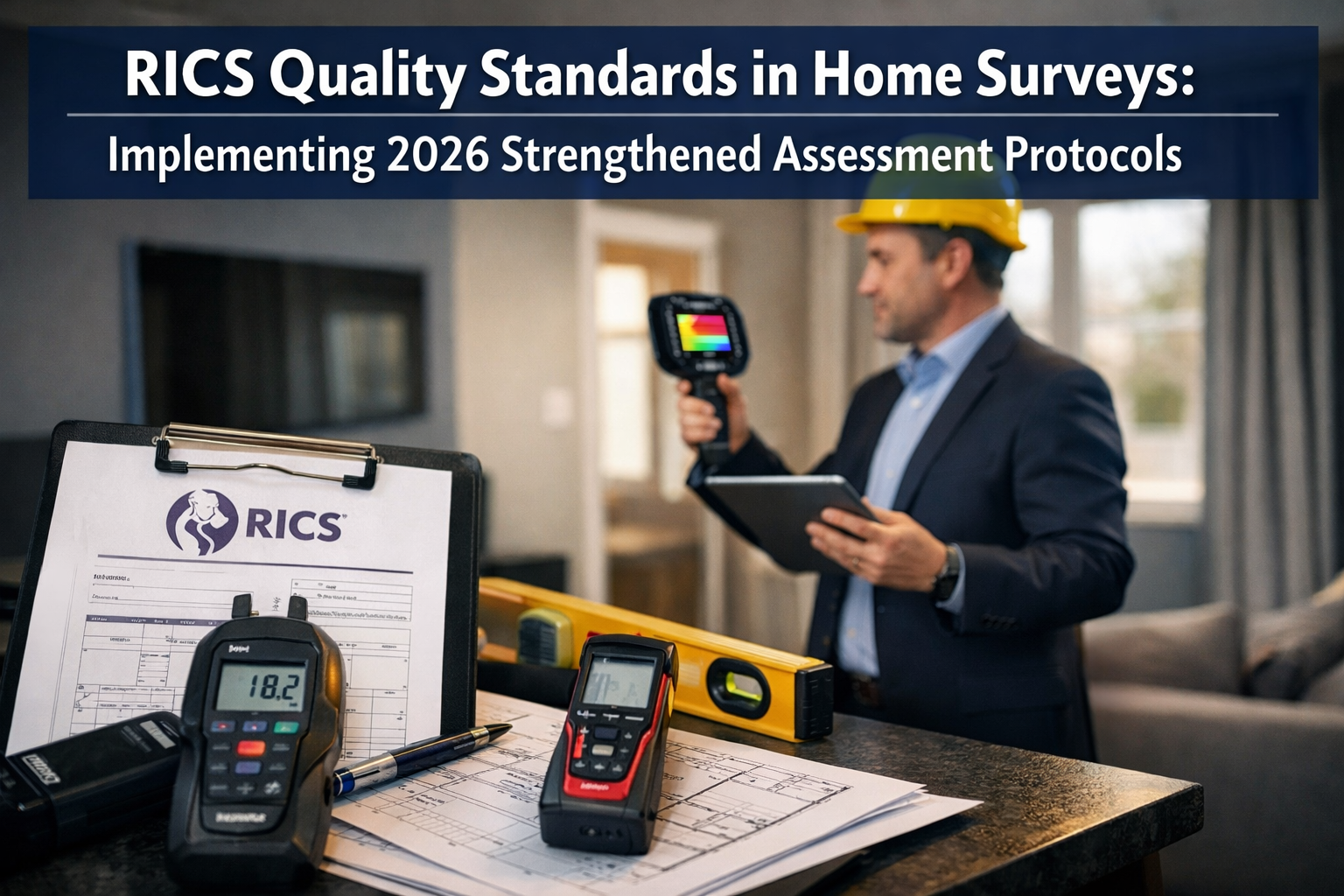
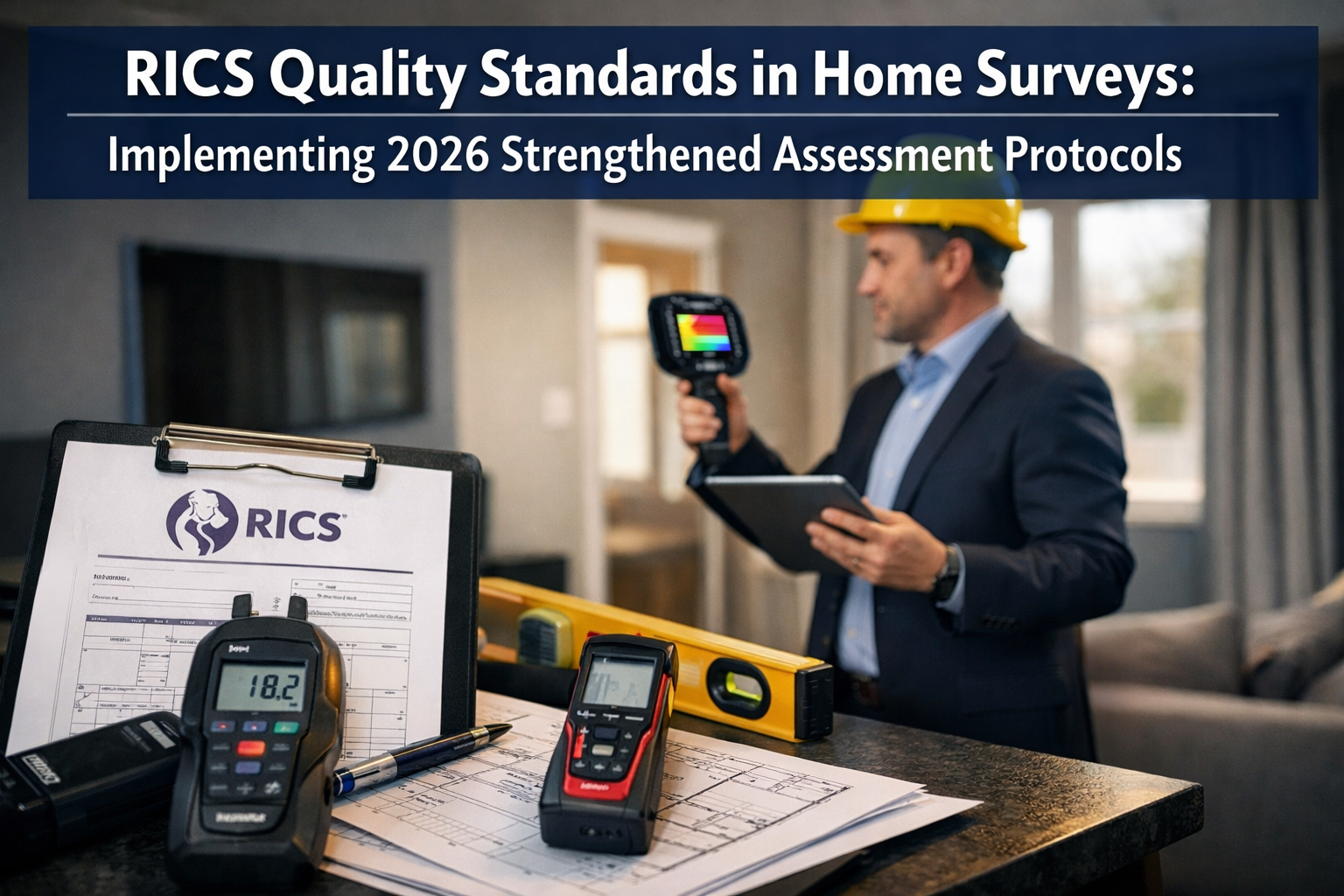
The property surveying profession stands at a pivotal moment in 2026. As homebuyers increasingly demand transparency and accuracy in property assessments, the Royal Institution of Chartered Surveyors (RICS) is responding with comprehensive updates to its home survey standards. The RICS Quality Standards in Home Surveys: Implementing 2026 Strengthened Assessment Protocols represents more than just regulatory refinement—it signals a fundamental shift toward consumer-focused, technology-enhanced property assessments that will reshape how surveyors conduct their work[1].
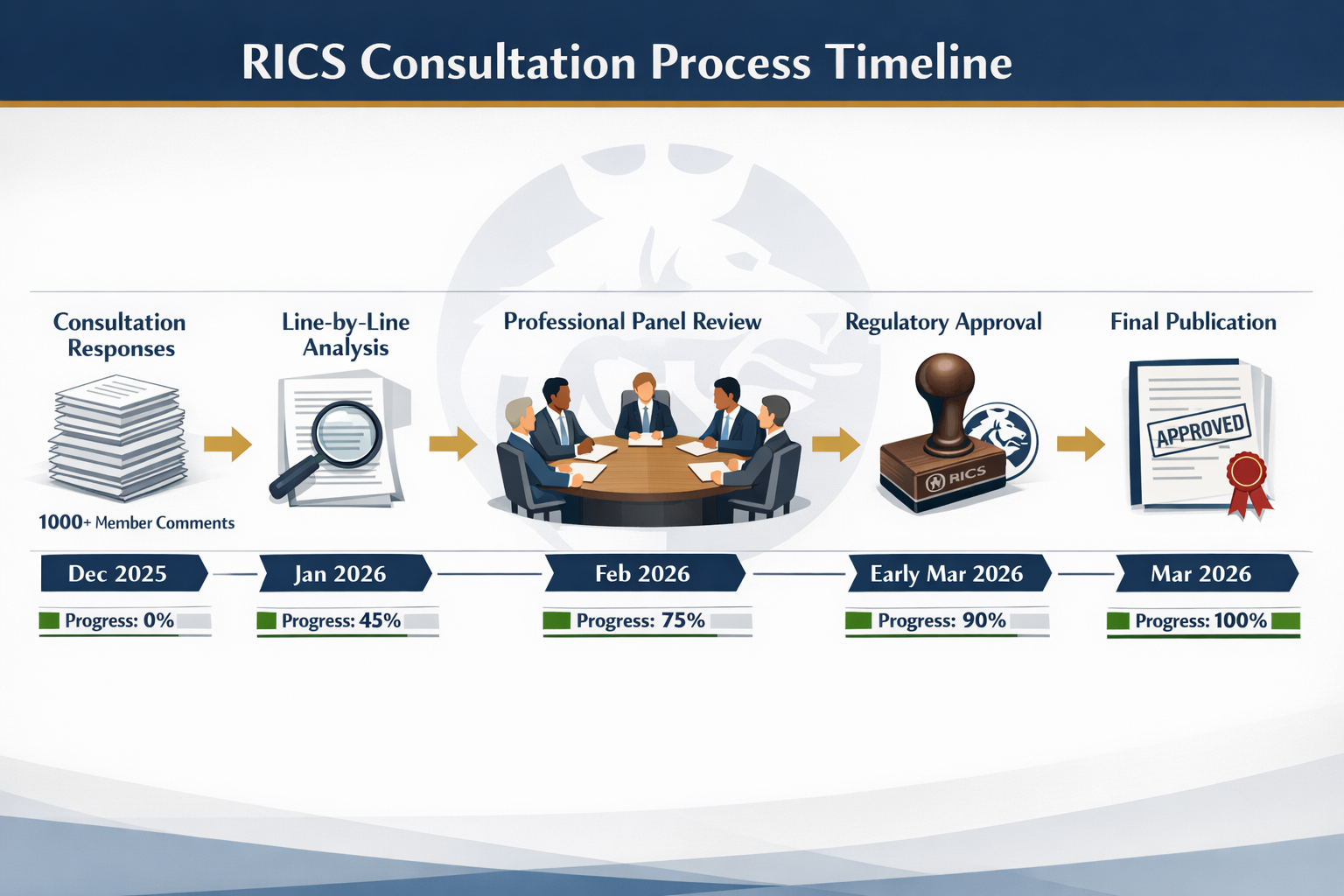
With over 1,000 member comments received during the consultation phase, the surveying community has spoken clearly: standards must evolve to address modern challenges while maintaining competitive viability[1]. This article explores the critical elements of these strengthened protocols and provides actionable guidance for surveyors navigating this transformative period.
Key Takeaways
- 📋 RICS received over 1,000 consultation responses from members, emphasizing widespread professional engagement with the updated standards and highlighting concerns from SME firms about implementation requirements[1]
- 🔍 Clarity and conciseness emerged as the primary feedback theme, with members requesting clear distinctions between mandatory requirements ('musts') and recommended practices ('shoulds')[1]
- 💻 Consumer insights and technological changes form the core focus areas for strengthening, reflecting the evolving expectations of modern homebuyers and available assessment tools[1]
- ⏰ March 2026 milestone marks RICS's commitment to publishing a comprehensive progress update on completion timelines and next implementation steps[1][8]
- ✅ Multi-stage review process ensures thorough vetting through professional panels, expert boards, and independent regulatory teams before final approval[1]
Understanding the RICS Quality Standards Framework
The Foundation of Professional Home Surveys
The RICS home survey standards provide the essential framework that governs how chartered surveyors conduct residential property assessments across the United Kingdom. Originally introduced in 2021, these standards established best practice benchmarks designed to ensure consistency, reliability, and professionalism throughout the residential surveying sector[2].
The standards cover multiple survey types, including the widely-used Level 2 and Level 3 surveys, each tailored to different property types and client needs. A Level 2 survey (formerly known as a HomeBuyer Report) provides a comprehensive inspection suitable for conventional properties in reasonable condition, while a Level 3 survey offers the most detailed examination for older, altered, or complex properties[2].
Why Standards Matter for Surveyors and Consumers
Quality standards serve dual purposes in the property market. For surveyors, they provide:
- Clear professional guidance on assessment methodologies
- Protection against liability through standardized procedures
- Competitive differentiation based on recognized credentials
- Framework for continuous professional development
For consumers, these standards ensure:
- Consistent quality regardless of surveyor selection
- Transparent reporting formats that facilitate comparison
- Professional accountability through regulatory oversight
- Confidence in property investment decisions
The RICS building survey process exemplifies how these standards translate into tangible consumer benefits, providing structured assessments that identify defects, maintenance issues, and potential risks before purchase completion.
The 2026 Strengthening Initiative: What's Changing
Consultation Response Analysis
The current update to RICS Quality Standards in Home Surveys: Implementing 2026 Strengthened Assessment Protocols represents an unprecedented collaborative effort. RICS received over 1,000 comments from members during the consultation phase, with particularly strong engagement from small and medium-sized enterprise (SME) firms[1]. This response volume underscores the standard's critical importance across the profession.
As of February 2026, RICS is conducting a meticulous line-by-line review of consultation responses to refine requirements and address underlying professional concerns[1]. This detailed analysis ensures that the final standard reflects genuine practitioner experience rather than theoretical ideals.
Key Focus Areas for Enhancement
The strengthened protocols concentrate on three primary dimensions:
1. Consumer Insight Integration 🏠
Modern homebuyers possess different expectations than previous generations. They demand:
- Greater transparency in defect identification and risk assessment
- Clear explanations of technical findings in accessible language
- Digital delivery options for reports and supporting documentation
- Actionable recommendations with cost implications
The updated standards incorporate extensive consumer research to align surveyor practices with these evolving expectations[1].
2. Technological Advancement 📱
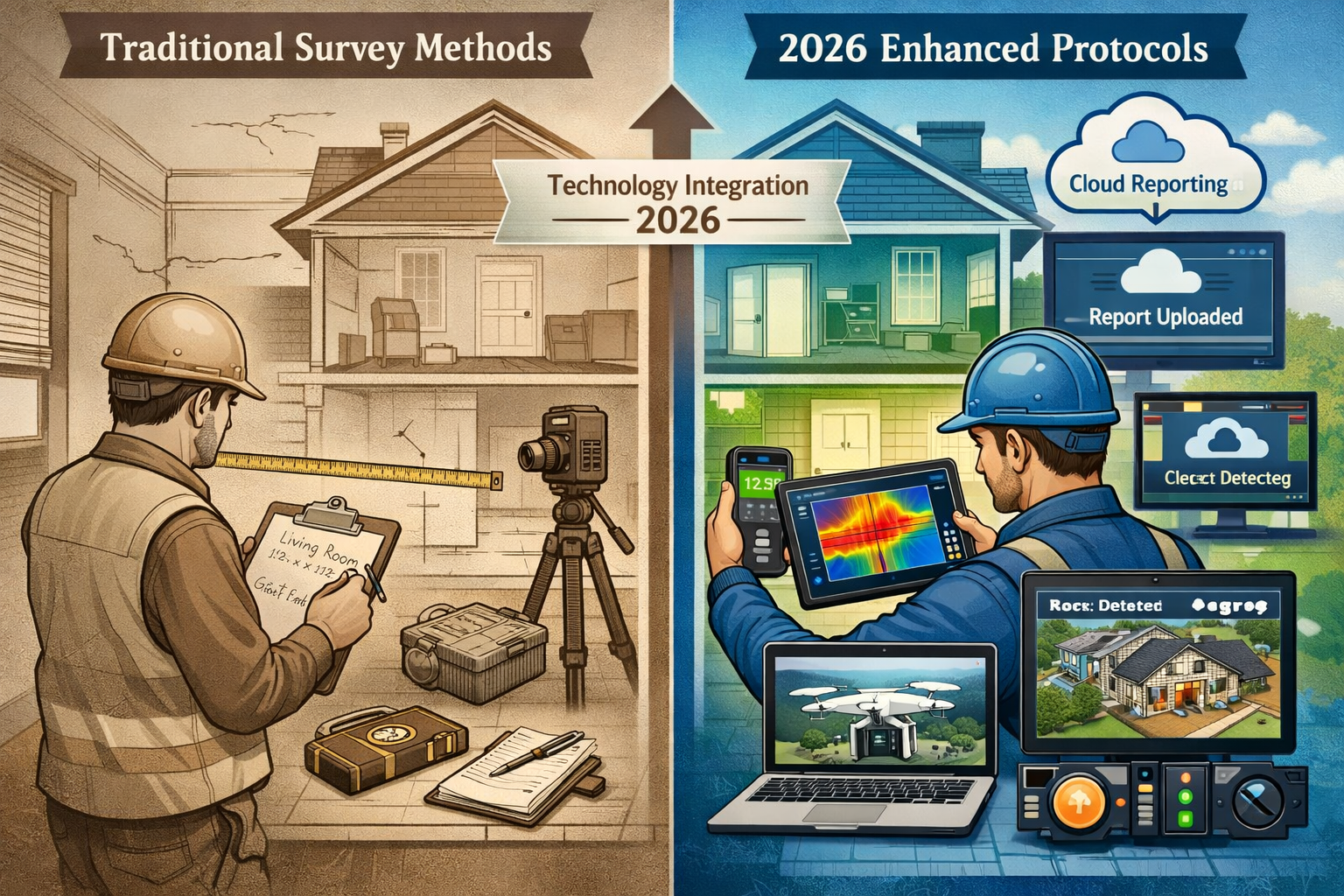
The surveying profession has witnessed remarkable technological evolution. The 2026 protocols acknowledge and integrate:
- Thermal imaging cameras for moisture and insulation assessment
- Drone technology for roof and chimney inspections
- Digital measurement tools for enhanced accuracy
- Cloud-based reporting systems for efficient delivery
- AI-assisted defect recognition for comprehensive analysis
These technological considerations ensure standards remain relevant as assessment capabilities expand[1][9].
3. Clarity and Prescriptiveness Balance ⚖️
A consistent theme throughout consultation feedback centered on the need for standards to be clearer and more concise[1]. Members specifically requested:
- Unambiguous distinction between mandatory requirements ('musts') and recommended practices ('shoulds')
- Practical guidance on implementation without excessive prescription
- Flexibility to maintain competitive positioning while meeting standards
- Reduced administrative burden for compliance documentation
RICS faces the delicate challenge of providing sufficient guidance without creating overly prescriptive requirements that limit professional judgment or competitive differentiation[1].
Implementation Timeline and Review Process
Current Project Status
The RICS Quality Standards in Home Surveys: Implementing 2026 Strengthened Assessment Protocols initiative entered its analysis phase in February 2026[1]. This critical stage involves comprehensive evaluation of consultation responses to identify common themes, address concerns, and refine draft requirements.
To guide this important work, RICS appointed a new project lead in December 2025—a chartered surveyor with over 20 years of professional experience who brings practical insight to the standard development process[1]. This leadership ensures the updated protocols remain grounded in real-world surveying practice.
Multi-Stage Review Process
Once consultation analysis concludes, the standard will progress through several rigorous review stages:
| Review Stage | Participants | Focus Areas |
|---|---|---|
| Professional Panel Review | Member-led practitioner groups | Technical accuracy, practical implementation |
| Expert Board Evaluation | Specialist technical committees | Alignment with broader RICS standards |
| Regulatory Approval | Independent compliance teams | Consumer protection, legal requirements |
| Final Publication | RICS Standards Board | Comprehensive approval and release |
This sequential process ensures thorough vetting from multiple perspectives before finalization[1].
Basis for Conclusions Document
The final standard will include a comprehensive Basis for Conclusions document that summarizes consultation responses and explains how RICS addressed member feedback[1]. This transparency mechanism demonstrates accountability and helps practitioners understand the reasoning behind specific requirements.
March 2026 Milestone
RICS has committed to publishing a progress update by the end of March 2026, detailing completion timelines and outlining next implementation steps[1][8]. This milestone represents a critical checkpoint for surveyors planning their compliance strategies and professional development activities.
Practical Implementation for Surveying Professionals
Preparing for the Updated Standards
Surveyors should take proactive steps now to position themselves for successful implementation:
1. Review Current Practices 📝
Conduct a comprehensive audit of existing survey procedures against anticipated requirements:
- Assessment methodologies for different property types
- Reporting formats and content structure
- Technology utilization in inspections
- Client communication protocols
- Documentation and record-keeping systems
Understanding current practice provides a baseline for identifying necessary adjustments.
2. Invest in Technology 💻
The strengthened protocols emphasize technological integration. Consider strategic investments in:
- Thermal imaging equipment for enhanced moisture and insulation detection
- Digital measurement tools for improved accuracy and efficiency
- Tablet-based inspection software for on-site data capture
- Cloud storage systems for secure report delivery
- Professional photography equipment for comprehensive visual documentation
These tools not only support compliance but also enhance service quality and competitive positioning.
3. Enhance Professional Development 📚
Continuous learning ensures surveyors remain current with evolving standards:
- Attend RICS training sessions on updated protocols
- Participate in professional forums discussing implementation challenges
- Review homebuyers report examples to understand reporting best practices
- Engage with peer networks to share implementation strategies
- Pursue specialized certifications in emerging assessment technologies
Professional development represents an ongoing commitment rather than a one-time activity.
4. Strengthen Consumer Communication 💬
The updated standards emphasize consumer insights. Improve client engagement through:
- Clear, jargon-free explanations of survey findings
- Visual aids and photographs to illustrate defects
- Structured recommendations with priority ratings
- Transparent pricing and scope discussions
- Follow-up consultations to address questions
Effective communication transforms technical assessments into valuable decision-making tools for clients.
Addressing Common Implementation Challenges
Surveyors may encounter several challenges during the transition to strengthened protocols:
Challenge 1: Balancing Prescription with Flexibility
Solution: Focus on understanding the underlying principles behind requirements rather than treating them as rigid checklists. The standards aim to ensure quality outcomes, not dictate every procedural detail[1].
Challenge 2: Technology Integration Costs
Solution: Prioritize investments based on survey types offered and client demographics. Not all technologies suit every practice. Consider phased implementation aligned with business growth.
Challenge 3: Maintaining Competitive Positioning
Solution: View standards compliance as a competitive advantage rather than burden. Clients increasingly value RICS-accredited surveys, and standardization creates market differentiation from unregulated competitors[1].
Challenge 4: Administrative Burden
Solution: Leverage technology to streamline compliance documentation. Template-based reporting systems and digital workflows reduce administrative time while ensuring consistency.
Specialized Survey Applications Under Updated Standards
Level 2 and Level 3 Survey Enhancements
The RICS Quality Standards in Home Surveys: Implementing 2026 Strengthened Assessment Protocols will impact how surveyors conduct both standard survey types:
Level 2 Survey Improvements:
- Enhanced guidance on defect categorization and condition ratings
- Clearer requirements for accessible areas inspection
- Standardized reporting templates for consistency
- Integration of basic technological assessment tools
- Improved recommendations section with actionable advice
Level 3 Survey Enhancements:
- More comprehensive structural analysis requirements
- Detailed guidance on investigating specific defects
- Enhanced reporting on building materials and construction methods
- Integration of advanced diagnostic technologies
- Expanded scope for older and complex properties
Understanding these distinctions helps surveyors appropriately scope services and set client expectations.
Specialized Assessment Integration
The updated standards also influence specialized survey types that complement standard home surveys:
Damp Surveys 💧
Damp surveys represent a critical specialized assessment often required following home survey findings. The strengthened protocols emphasize:
- Clear identification of moisture sources (condensation, penetrating damp, rising damp)
- Technology-assisted detection using moisture meters and thermal imaging
- Detailed remediation recommendations with cost implications
- Integration with main survey reports for comprehensive property assessment
Specific Defect Surveys 🔍
When home surveys identify particular concerns, specific defect surveys provide focused investigation. Updated standards require:
- Clear scope definition aligned with identified concerns
- Appropriate investigation methodology for defect type
- Expert consultation when specialized knowledge required
- Actionable recommendations for resolution
Stock Condition Surveys 🏢
For landlords and property portfolios, stock condition surveys assess multiple properties systematically. The 2026 protocols influence:
- Standardized assessment criteria across property portfolios
- Technology integration for efficient multi-property evaluation
- Consistent reporting formats for comparative analysis
- Maintenance planning recommendations based on condition findings
Property Valuation Alignment
RICS property valuations often accompany home surveys, particularly for mortgage purposes. The strengthened assessment protocols ensure:
- Consistent property condition information supporting valuation accuracy
- Clear communication between survey and valuation teams
- Standardized defect reporting that informs value adjustments
- Integration of market insights with physical condition assessment
Market Context and Professional Implications
Housing Market Recovery Signals
The development of RICS Quality Standards in Home Surveys: Implementing 2026 Strengthened Assessment Protocols occurs against a backdrop of cautious market recovery. RICS's January 2026 residential survey report shows tentative signs of housing market stabilization, with house prices appearing to have leveled at a national scale[3].
This market context influences the standards update in several ways:
Increased Transaction Scrutiny: As buyers become more selective in a stabilizing market, comprehensive surveys gain importance in purchase decisions.
Value-for-Money Focus: Economic uncertainty drives consumers to seek maximum value from professional services, emphasizing the importance of clear, actionable survey reports.
Risk Mitigation Priority: Buyers prioritize understanding property condition to avoid unexpected costs, making thorough assessments essential.
Competitive Landscape Evolution
The strengthened protocols create both challenges and opportunities for surveying practices:
Opportunities ✅
- Professional Differentiation: RICS accreditation becomes more valuable as standards strengthen
- Technology Leadership: Early adopters of enhanced assessment tools gain competitive advantage
- Consumer Confidence: Standardized quality builds market trust and referral business
- Service Expansion: Comprehensive standards support broader service offerings
Challenges ⚠️
- Implementation Costs: Technology investments and training require capital allocation
- Practice Adaptation: Established workflows may require modification
- Competitive Pressure: Maintaining pricing while enhancing service quality
- Regulatory Compliance: Ongoing monitoring and documentation requirements
Dispelling Common Misconceptions
Several common myths about property surveys persist in the market. The updated standards help address these misconceptions:
Myth 1: "All surveys are basically the same."
Reality: RICS standards ensure quality consistency while recognizing different survey levels serve different purposes.
Myth 2: "Surveys are just a formality for mortgage approval."
Reality: Comprehensive surveys provide critical information for informed purchase decisions beyond lender requirements.
Myth 3: "Technology makes traditional surveyor expertise unnecessary."
Reality: Technology enhances but doesn't replace professional judgment and experience in property assessment.
Myth 4: "Newer properties don't need detailed surveys."
Reality: Even modern properties benefit from professional assessment to identify construction defects and maintenance needs.
Regional Considerations and Service Delivery
Geographic Variations in Property Characteristics
The RICS Quality Standards in Home Surveys: Implementing 2026 Strengthened Assessment Protocols must accommodate regional property variations across the United Kingdom. Surveyors operating in different areas encounter distinct challenges:
Urban Properties: Dense development, shared structures, and limited access require specialized assessment approaches.
Rural Properties: Older construction methods, non-standard materials, and outbuildings demand comprehensive evaluation.
Coastal Areas: Environmental exposure, flood risks, and weathering necessitate enhanced inspection protocols.
Historic Districts: Conservation requirements, listed building considerations, and traditional construction techniques require specialist knowledge.
Understanding these regional nuances ensures standards application remains practical across diverse property types and locations.
Professional Service Networks
Surveyors often collaborate with complementary professionals to deliver comprehensive property assessments. The updated standards influence these relationships:
- Structural Engineers: For complex structural concerns identified during surveys
- Damp Specialists: For detailed moisture investigation and remediation planning
- Building Control Officers: For regulatory compliance verification
- Conservation Experts: For listed buildings and heritage properties
- Environmental Consultants: For contamination, flood risk, and sustainability assessments
Effective professional networks enhance service quality while maintaining clear scope boundaries and professional accountability.
Future-Proofing Your Surveying Practice
Anticipating Continued Evolution
The 2026 strengthened protocols represent a snapshot in the ongoing evolution of surveying standards. Forward-thinking practices should:
Monitor Regulatory Developments: Stay informed about RICS updates, consultation opportunities, and emerging requirements.
Track Technology Trends: Evaluate new assessment technologies for potential integration into service offerings.
Engage Professional Communities: Participate in RICS forums, regional groups, and specialist networks to share insights and best practices.
Invest in Adaptability: Build flexible systems and processes that accommodate future standard modifications without major disruption.
Prioritize Client Feedback: Consumer insights drive standards evolution; understanding client needs positions practices for future success.
Building a Culture of Quality
Successful implementation of RICS Quality Standards in Home Surveys: Implementing 2026 Strengthened Assessment Protocols extends beyond technical compliance to encompass organizational culture:
Quality Commitment: Embed quality principles throughout all business operations, not just survey delivery.
Continuous Improvement: Regularly review and refine practices based on feedback, outcomes, and emerging best practices.
Professional Integrity: Maintain ethical standards and transparency in all client interactions and professional relationships.
Knowledge Sharing: Foster learning environments where team members share insights and support collective development.
Client-Centric Focus: Design services around client needs and expectations rather than internal convenience.
Leveraging Digital Transformation
Technology integration represents more than compliance with updated standards—it offers strategic advantages:
Enhanced Efficiency: Digital tools streamline inspection processes, reducing time requirements while improving thoroughness.
Improved Accuracy: Measurement technologies and diagnostic equipment provide more precise assessments than traditional methods alone.
Better Documentation: Digital photography, video, and annotation tools create comprehensive visual records supporting written reports.
Seamless Delivery: Cloud-based systems enable rapid report delivery and convenient client access from any device.
Data Analytics: Accumulated inspection data supports trend analysis, benchmarking, and continuous service improvement.
Actionable Implementation Checklist
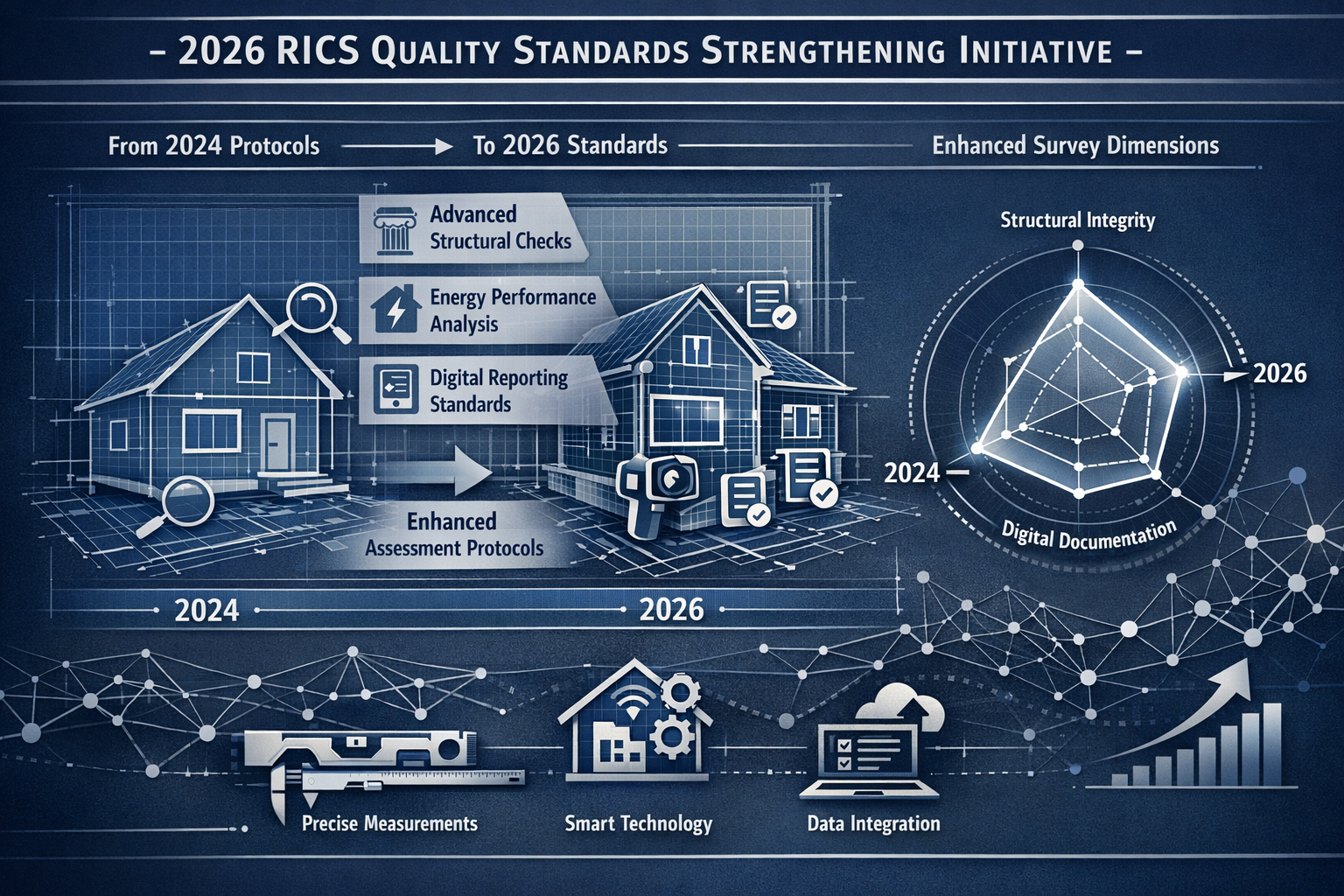
To support practical implementation of the RICS Quality Standards in Home Surveys: Implementing 2026 Strengthened Assessment Protocols, surveyors should work through this comprehensive checklist:
Immediate Actions (Now – March 2026) 📅
- ✅ Review RICS progress updates and consultation summaries
- ✅ Assess current practice against anticipated requirements
- ✅ Identify technology gaps and research equipment options
- ✅ Register for RICS training sessions and webinars
- ✅ Engage with professional networks to discuss implementation strategies
- ✅ Review and update professional indemnity insurance coverage
- ✅ Audit current reporting templates and documentation systems
Short-Term Actions (April – June 2026) 📅
- ✅ Attend RICS training on finalized standards
- ✅ Implement priority technology investments
- ✅ Update reporting templates to align with new requirements
- ✅ Revise client communication materials and service descriptions
- ✅ Train staff on updated procedures and technologies
- ✅ Establish quality assurance review processes
- ✅ Update website and marketing materials to reflect enhanced capabilities
Medium-Term Actions (July – December 2026) 📅
- ✅ Monitor implementation outcomes and client feedback
- ✅ Refine procedures based on practical experience
- ✅ Complete additional technology investments as needed
- ✅ Pursue specialized certifications in emerging assessment areas
- ✅ Develop case studies demonstrating enhanced service quality
- ✅ Expand professional networks and referral relationships
- ✅ Conduct comprehensive practice review against finalized standards
Ongoing Actions 🔄
- ✅ Participate in RICS continuing professional development
- ✅ Monitor regulatory updates and guidance documents
- ✅ Maintain technology currency through regular upgrades
- ✅ Collect and analyze client feedback systematically
- ✅ Share insights with professional community
- ✅ Review and update procedures regularly
- ✅ Invest in emerging technologies and methodologies
Conclusion: Embracing Standards as Competitive Advantage
The RICS Quality Standards in Home Surveys: Implementing 2026 Strengthened Assessment Protocols represent far more than regulatory compliance requirements—they offer a strategic framework for building sustainable, competitive surveying practices that deliver exceptional client value.
The unprecedented consultation response, with over 1,000 member comments, demonstrates the profession's commitment to quality and continuous improvement[1]. As RICS completes its line-by-line analysis and moves toward the March 2026 progress update milestone, surveyors have a critical opportunity to prepare for successful implementation[1][8].
The strengthened protocols' focus on consumer insights and technological changes reflects the evolving expectations of modern property buyers and the expanding capabilities of assessment tools[1]. Surveyors who embrace these enhancements position themselves as trusted advisors in an increasingly complex property market.
Next Steps for Surveying Professionals
1. Stay Informed: Monitor RICS communications for the March 2026 progress update and subsequent implementation guidance.
2. Invest Strategically: Prioritize technology and training investments that align with anticipated requirements and your specific practice focus.
3. Engage Actively: Participate in professional forums, training sessions, and peer networks to share implementation experiences and best practices.
4. Focus on Quality: View standards compliance as a foundation for excellence rather than a ceiling for performance.
5. Communicate Value: Help clients understand how strengthened protocols enhance the quality and reliability of survey services.
The property surveying profession stands at a transformative moment. Those who view the RICS Quality Standards in Home Surveys: Implementing 2026 Strengthened Assessment Protocols as an opportunity rather than an obligation will emerge as market leaders, delivering the comprehensive, technology-enhanced, consumer-focused assessments that define professional excellence in 2026 and beyond.
For surveyors ready to embrace this evolution, the path forward is clear: commit to quality, invest in capability, and deliver exceptional value. The strengthened protocols provide the roadmap—professional dedication provides the destination.
References
[1] Home Survey Standard 2nd Edition A Progress Update – https://www.rics.org/news-insights/home-survey-standard-2nd-edition-a-progress-update
[2] The New Rics Home Survey Standard Explained – https://www.surveymerchant.com/blog/the-new-rics-home-survey-standard-explained
[3] Uk Resi Survey Jan 2026 Report Shows Early Signs Market Recovery Despite Caution – https://www.rics.org/news-insights/uk-resi-survey-jan-2026-report-shows-early-signs-market-recovery-despite-caution
[4] Home Survey Standards – https://www.rics.org/profession-standards/rics-standards-and-guidance/sector-standards/building-surveying-standards/home-surveys/home-survey-standards
[5] Cih Responds To Rics Residential Stock Condition Survey Code Of Practice – https://www.cih.org/news/cih-responds-to-rics-residential-stock-condition-survey-code-of-practice/
[6] Home Buying And Selling Reform Hub – https://www.rics.org/news-insights/current-topics-campaigns/home-buying-and-selling-reform-hub
[7] Post Alta Nsps 2026 Standards Implementation Challenges And Success Stories For Property Surveyors – https://nottinghillsurveyors.com/blog/post-alta-nsps-2026-standards-implementation-challenges-and-success-stories-for-property-surveyors
[8] Rics Publishes Progress Update On Home Survey Standard Review – https://www.lexisnexis.co.uk/legal/news/rics-publishes-progress-update-on-home-survey-standard-review
[9] Things About Building Surveying You Need To Know In 2026 – https://mcessex.co.uk/2026/01/23/things-about-building-surveying-you-need-to-know-in-2026/