


The UK private rental sector is bracing for its most significant valuation recalibration in decades. With the Renters' Rights Act 2026 set to take effect on May 1, 2026, property valuations built on decades of established comparable evidence and predictable income streams face fundamental disruption[2]. For landlords navigating this seismic shift, understanding the Renters' Rights Act 2026: Valuation Challenges for Private Landlords Seeking Expert Witness Support has become critical to protecting investment value and preparing for inevitable tribunal disputes.
The legislation fundamentally reshapes the Housing Act 1988, abolishing Section 21 "no-fault" evictions and replacing fixed-term tenancies with periodic agreements[4]. These changes don't just alter landlord-tenant relationships—they strike at the core assumptions that professional valuers, mortgage lenders, and investment analysts have relied upon for property assessment. Historic comparable evidence may no longer provide reliable benchmarks, creating a 12-24 month period of market uncertainty where expert witness testimony becomes essential for resolving valuation disputes.
Key Takeaways
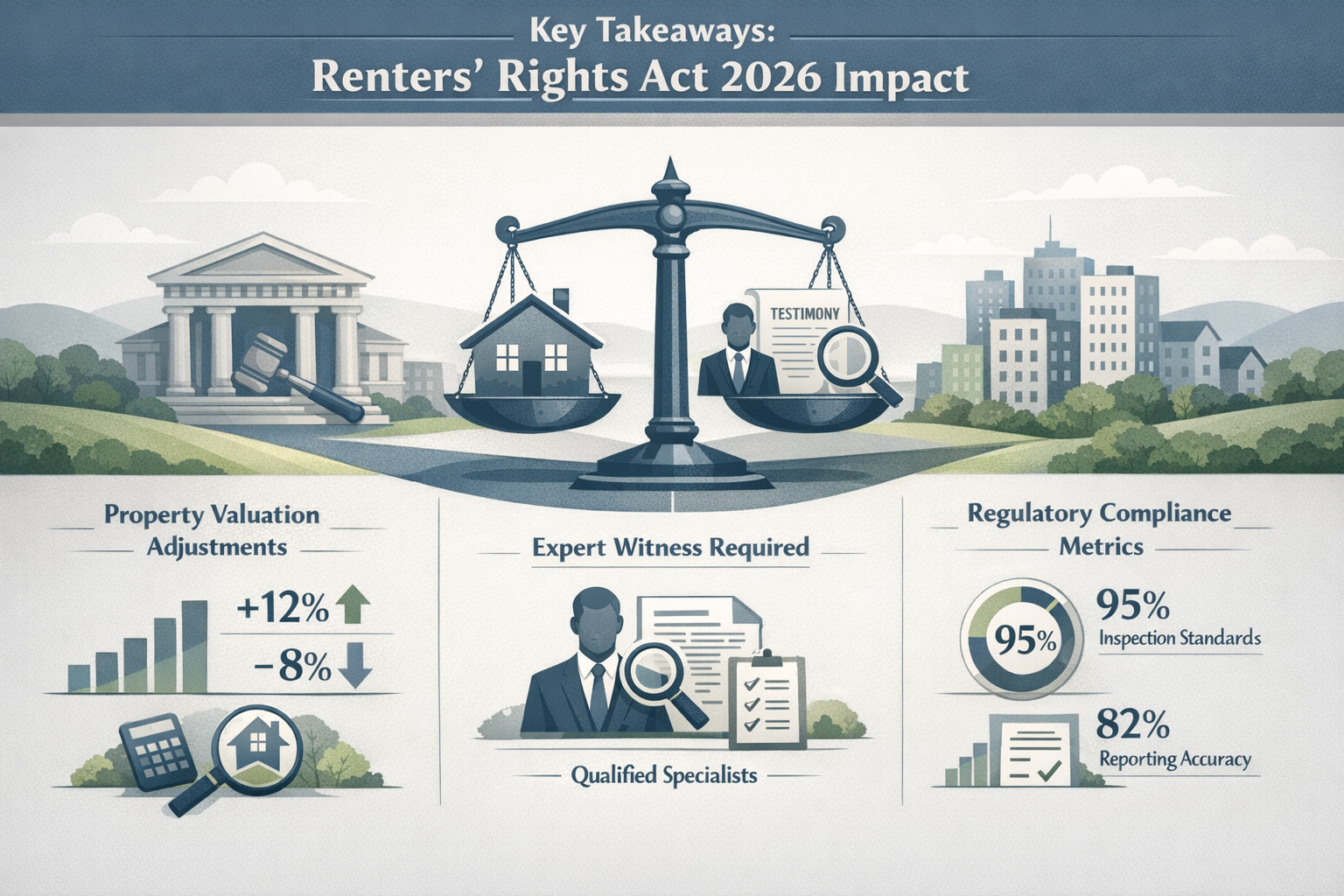
- 🏛️ Section 21 abolition forces landlords to rely solely on statutory grounds for possession, increasing tribunal disputes and demand for expert witness valuers
- 📊 Periodic tenancies replace fixed-term agreements, disrupting traditional valuation models based on predictable rental income patterns
- ⚖️ First Tier Tribunal rent determinations can only match or reduce proposed rents, fundamentally changing landlord leverage in disputes
- 🔍 Historic comparable evidence reliability is questioned as market enters 12-24 month recalibration period with widening valuation gaps
- 📋 Building surveys and compliance assessments become essential for landlords preparing for new enforcement standards and potential disputes
Understanding the Renters' Rights Act 2026: Core Changes Affecting Property Valuations
The Renters' Rights Act 2026 represents the most comprehensive overhaul of private rental legislation in a generation. Scheduled for implementation on May 1, 2026, the Act introduces several provisions that directly impact how properties are valued, financed, and traded[2].
Abolition of Section 21 "No-Fault" Evictions
The removal of Section 21 notices eliminates the primary possession mechanism landlords have relied upon since 1988[3]. Previously, landlords could regain possession without providing specific grounds, offering flexibility that supported property valuations by ensuring portfolio liquidity. Under the new framework, landlords must demonstrate statutory grounds such as:
- Rent arrears exceeding prescribed thresholds
- Antisocial behaviour with documented evidence
- Genuine intention to sell the property
- Landlord or family member occupation requirement
This shift creates increased litigation risk and extends possession timelines, factors that professional valuers must now incorporate into their assessments. The inability to quickly regain possession reduces property liquidity and increases holding costs during disputes[4].
Transition from Fixed-Term to Periodic Tenancies
Perhaps the most disruptive change for valuation professionals is the abolition of fixed-term tenancy agreements. All new tenancies will operate on periodic (rolling) contracts, fundamentally altering income predictability[2].
Fixed-term agreements provided:
- ✅ Guaranteed rental income for specified periods
- ✅ Clear renewal cycles for rent reviews
- ✅ Predictable cash flow for mortgage servicing
- ✅ Reliable comparable evidence for valuations
Periodic tenancies introduce:
- ⚠️ Potential for tenant departure with minimal notice
- ⚠️ Income volatility affecting mortgage serviceability
- ⚠️ Rent increase restrictions (maximum once annually)[1]
- ⚠️ Uncertainty in long-term income projections
For building surveyors and valuation professionals, this shift requires recalibrating yield calculations and investment return models that have remained stable for decades.
Rent Increase Limitations and Tribunal Powers
The Act restricts rent increases to once per year maximum, with tenants gaining the right to challenge proposed increases through the First Tier Tribunal (FTT)[1]. Critically, the FTT can only:
- Accept the landlord's proposed rent
- Set a lower market rent if evidence supports reduction
The tribunal cannot award rent higher than proposed, creating asymmetric risk for landlords[4]. A case example from East Sussex illustrates this dynamic: the FTT determined market rent £25 per calendar month lower than the landlord's request, yet this still represented a 35% increase from the previous rent[4].
This mechanism introduces downside valuation risk without corresponding upside potential, a factor that expert witnesses must address when providing tribunal testimony on market rent determinations.
Renters' Rights Act 2026: Valuation Challenges Creating Expert Witness Demand
The legislative changes create multiple valuation challenges that increase the likelihood of disputes requiring expert witness support. Understanding these challenges helps landlords prepare for potential tribunal proceedings and property transactions complicated by valuation disagreements.
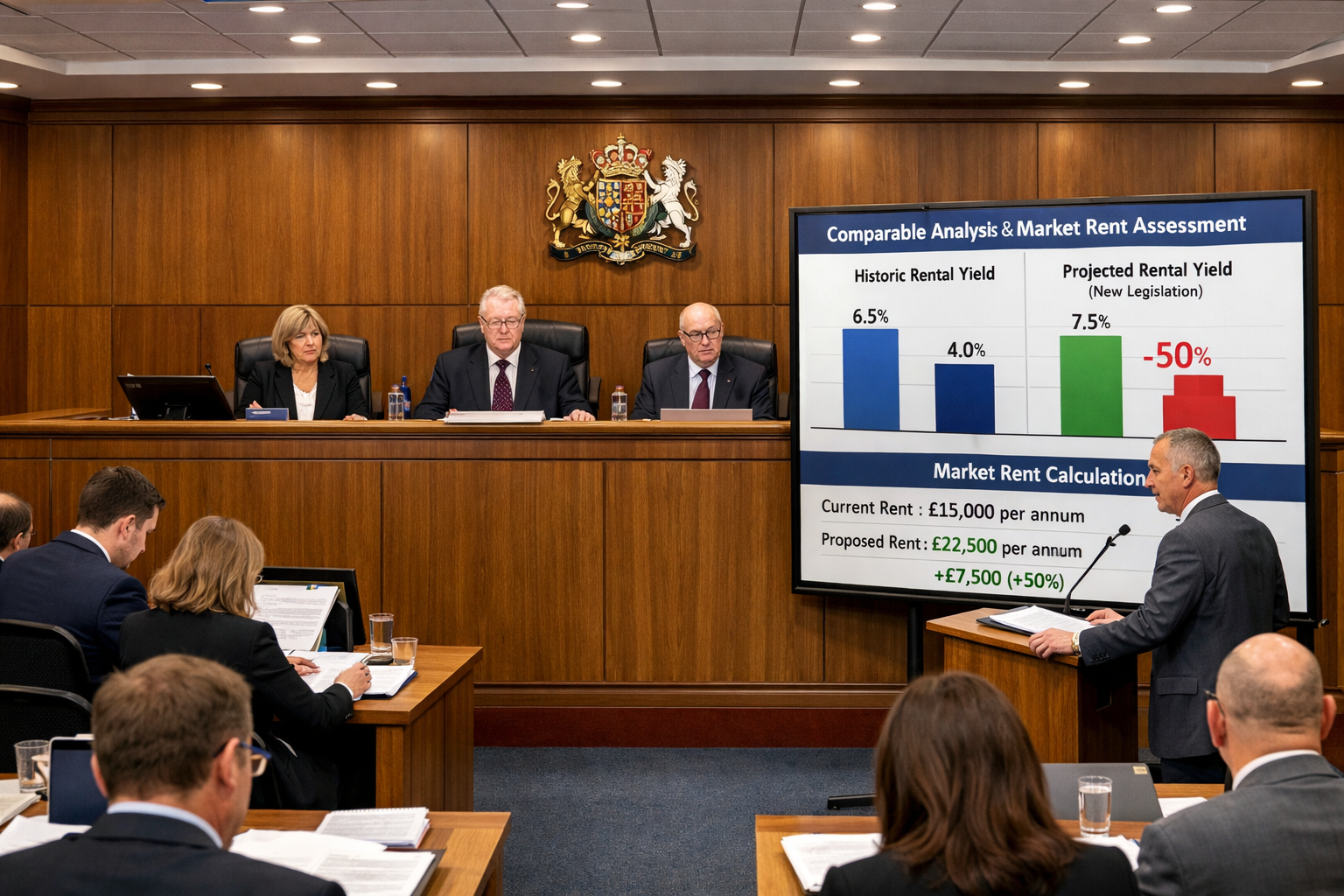
Historic Comparable Evidence Becomes Unreliable
Property valuation traditionally relies on comparable evidence—recent sales and rental transactions of similar properties in comparable locations. The Renters' Rights Act 2026 threatens this foundational methodology[2].
Properties sold or let under the previous regime operated with:
- Fixed-term income certainty
- Section 21 possession rights
- Flexible rent review mechanisms
- Lower regulatory compliance costs
Properties valued post-May 2026 face:
- Periodic tenancy income volatility
- Extended possession procedures
- Restricted rent increase frequency
- Enhanced compliance requirements
The question facing valuers: Can a property sold in 2024 with fixed-term tenancy income serve as reliable comparable evidence for a 2026 valuation under periodic tenancy rules?[2]
Industry experts suggest the answer is increasingly "no," creating a comparable evidence gap that widens valuation uncertainty and increases disputes between buyers and sellers, landlords and lenders, and parties in tribunal proceedings.
Mixed-Use and Secondary Properties Face Amplified Risk
The valuation challenges intensify for complex property types[2]:
Mixed-use properties (residential above commercial) already suffer from limited comparable evidence. The Act's changes further complicate valuations by introducing:
- Different regulatory frameworks for residential versus commercial components
- Uncertainty about how periodic tenancies affect overall asset value
- Lender reluctance due to increased complexity
Secondary residential units in high street locations face similar challenges, with insufficient market transactions to establish reliable post-Act valuation benchmarks[2].
For landlords owning these property types, engaging property inspection specialists and valuation experts early becomes essential to documenting current condition and establishing defensible valuation positions before disputes arise.
The 12-24 Month Market Recalibration Period
Sources indicate the rental property market will enter a 12-24 month recalibration period following the Act's implementation[2][8]. During this transition:
- Buyer uncertainty may suppress transaction volumes
- Lender caution could tighten mortgage availability
- Valuation spreads between different surveyors may widen significantly
- Yield compression may occur as investors demand higher returns for increased risk
This recalibration period creates peak demand for expert witness services as parties dispute valuations in:
- Purchase transactions where buyer and seller valuations diverge
- Mortgage applications where lender valuations fall short
- Tribunal proceedings determining market rents
- Partnership dissolutions requiring asset division
- Estate settlements involving rental properties
Landlords should consider obtaining homebuyers surveys or comprehensive building surveys to establish baseline property condition and value before market turbulence peaks.
Lender Response and Mortgage Valuation Impacts
Mortgage lenders base lending decisions on income coverage ratios—the rental income must exceed mortgage payments by specified margins (typically 125-145% depending on tax status). Periodic tenancies introduce income uncertainty that challenges these calculations[2].
Key lender concerns include:
| Valuation Factor | Pre-Act Assumption | Post-Act Challenge |
|---|---|---|
| Income stability | Fixed-term guarantees | Periodic uncertainty |
| Possession rights | Section 21 available | Statutory grounds only |
| Rent review timing | Contractual flexibility | Annual maximum |
| Tenant turnover | Predictable cycles | Increased volatility |
| Void period risk | Manageable | Potentially extended |
Lenders may respond by:
- Requiring higher income coverage ratios (e.g., 150-160%)
- Reducing loan-to-value ratios for rental properties
- Increasing interest rates to reflect higher risk
- Requesting enhanced property condition reports
These responses create valuation pressure as properties generate lower borrowing capacity, potentially reducing market values and creating disputes when sellers' expectations clash with buyers' financing limitations.
Strategies for Private Landlords Seeking Expert Witness Support
Navigating the Renters' Rights Act 2026: Valuation Challenges for Private Landlords Seeking Expert Witness Support requires proactive preparation and strategic engagement with professional advisors. The following strategies help landlords position themselves for successful dispute resolution.

Conduct Pre-Implementation Compliance Reviews
Professional advisors recommend landlords conduct comprehensive compliance reviews before May 1, 2026[3]. These assessments, typically costing around £300, evaluate:
- Property condition against enhanced safety standards
- Compliance with "fit for purpose" requirements
- Necessary repairs or upgrades to meet new standards
- Documentation systems for maintenance records
- Tenancy agreement updates for new requirements
Early preparation achieves multiple objectives:
- ✅ Identifies compliance gaps before enforcement actions
- ✅ Establishes baseline property condition for future disputes
- ✅ Creates documentary evidence for tribunal proceedings
- ✅ Demonstrates reasonable landlord conduct
- ✅ Potentially avoids penalties for non-compliance
Sources emphasize that "early preparation will smooth the transition significantly"[3], reducing the likelihood of disputes and strengthening the landlord's position if expert witness testimony becomes necessary.
Engage RICS-Qualified Valuation Experts Early
When disputes arise requiring expert witness support, the quality and credentials of the valuation professional become critical. Landlords should seek experts with:
Essential qualifications:
- Royal Institution of Chartered Surveyors (RICS) membership
- Specialist residential property valuation experience
- Tribunal testimony experience
- Knowledge of local market conditions
- Understanding of the Renters' Rights Act 2026 implications
Expert witness specific skills:
- Clear report writing for legal proceedings
- Ability to withstand cross-examination
- Impartiality and professional objectivity
- Current knowledge of comparable evidence
- Understanding of valuation methodology debates
Engaging qualified professionals from firms offering residential property advice ensures landlords receive defensible valuations that withstand tribunal scrutiny.
Document Everything: Building the Evidence Base
Successful tribunal outcomes depend heavily on documentary evidence. Landlords should maintain comprehensive records including:
Property condition documentation:
- Professional survey reports at acquisition
- Periodic condition assessments
- Maintenance and repair records with invoices
- Photographs documenting property state
- Compliance certificates (gas, electrical, EPC)
Financial records:
- Rental income history with payment records
- Void period documentation
- Marketing evidence for rent setting
- Comparable property rental evidence
- Operating cost documentation
Tenancy management:
- All correspondence with tenants
- Rent increase notices with justification
- Maintenance request responses
- Inspection reports with tenant acknowledgment
- Dispute resolution attempts
This evidence base supports expert witness testimony by providing verifiable data for valuation opinions and demonstrating reasonable landlord conduct—factors that influence tribunal decisions on rent determinations and possession proceedings.
Understand First Tier Tribunal Procedures
Landlords facing rent disputes under the new Act must understand FTT procedures to effectively utilize expert witness support[4]. Key procedural elements include:
Tribunal composition and powers:
- Three-person panel including property valuation specialist
- Authority to determine market rent based on evidence
- Cannot award rent higher than landlord's proposal
- Decisions binding on parties subject to appeal rights
Evidence requirements:
- Written statements from both parties
- Expert valuation reports with comparable evidence
- Property inspection (tribunal may conduct site visit)
- Market analysis supporting rent determination
Strategic considerations:
- Landlord bears risk of proposing excessive rent
- Strong comparable evidence essential for defense
- Expert witness credibility heavily influences outcomes
- Professional presentation of evidence matters
Understanding these procedures helps landlords work effectively with expert witnesses to present compelling cases. Resources on legal disputes and court costs provide additional context for navigating these proceedings.
Consider Portfolio-Wide Valuation Reviews
Landlords with multiple properties should consider portfolio-wide valuation reviews to understand aggregate exposure to the Act's changes[2]. This strategic approach:
Identifies high-risk properties:
- Those with marginal rental yields
- Properties requiring significant compliance investment
- Mixed-use or complex assets with limited comparables
- Properties in markets with high tenant turnover
Enables strategic decision-making:
- Disposal of high-risk assets before market uncertainty peaks
- Targeted investment in properties with strongest fundamentals
- Portfolio rebalancing toward lower-risk property types
- Refinancing strategies before lender criteria tighten
Establishes baseline valuations:
- Pre-Act valuations for future comparison
- Documentation of value changes attributable to legislation
- Evidence base for potential compensation claims
- Reference points for partnership or estate planning
Professional house evaluation services provide the technical expertise necessary for comprehensive portfolio analysis, helping landlords make informed strategic decisions during the transition period.
Prepare for Increased Building Survey Demand
The Renters' Rights Act 2026 creates unprecedented demand for building surveys as enforcement of property standards intensifies[7]. Landlords should:
Schedule surveys proactively:
- Before May 2026 implementation to avoid capacity constraints
- After any significant property issues or tenant complaints
- Before marketing properties for sale or refinancing
- As part of regular portfolio management cycles
Use surveys strategically:
- Document compliance with "safe, warm, and fit for purpose" standards
- Identify maintenance priorities to prevent enforcement actions
- Support valuation opinions with condition evidence
- Demonstrate proactive landlord management
Select appropriate survey levels:
- Homebuyers surveys for standard properties in good condition
- Comprehensive building surveys for older or complex properties
- Specialist surveys (damp, structural) for specific concerns
- Regular condition assessments for ongoing compliance
Early engagement with surveying professionals ensures landlords access expert services before demand peaks, positioning them advantageously for any disputes requiring expert witness support.
Emerging Valuation Methodologies Under the New Regulatory Framework
As the market adapts to the Renters' Rights Act 2026, valuation professionals are developing new methodologies to address the challenges created by periodic tenancies and enhanced tenant protections.
Risk-Adjusted Yield Calculations
Traditional rental yield calculations (annual rent ÷ property value × 100) provided straightforward investment return metrics. Post-Act valuations increasingly incorporate risk adjustments reflecting:
- Void probability multipliers accounting for increased tenant mobility
- Possession cost provisions for extended dispute resolution timelines
- Compliance cost reserves for enhanced property standards
- Rent restriction discounts for limited increase frequency
These adjustments typically reduce effective yields by 0.5-1.5 percentage points, with corresponding impacts on capital values[8].
Scenario-Based Valuation Modeling
Given uncertainty about market behavior post-implementation, expert witnesses increasingly present scenario-based valuations[2]:
Optimistic scenario:
- Market adapts quickly with minimal disruption
- Tenant behavior remains stable
- Comparable evidence gap closes within 12 months
- Yield compression limited to 0.5%
Base case scenario:
- 18-month recalibration period
- Moderate increase in tenant turnover
- Yield compression of 1.0%
- Gradual development of new comparable evidence
Pessimistic scenario:
- Extended market uncertainty beyond 24 months
- Significant tenant mobility increase
- Yield compression exceeding 1.5%
- Persistent comparable evidence challenges
This approach provides tribunals and transaction parties with transparent analysis of valuation uncertainty, supporting more informed decision-making during the transition period.
Enhanced Due Diligence Requirements
Valuation professionals now conduct enhanced due diligence when assessing rental properties[8]:
- Detailed compliance audits against new standards
- Tenant payment history analysis for rent determination disputes
- Local authority enforcement action searches
- Enhanced market analysis with post-Act transaction weighting
- Lender criteria assessment for financing viability
This rigorous approach increases valuation costs but provides stronger evidence bases for expert witness testimony and reduces the likelihood of successful challenges to valuation opinions.
Preparing for the May 2026 Implementation: Action Steps
With the May 1, 2026 implementation date approaching, landlords should take concrete steps to prepare for the valuation challenges ahead:
Immediate Actions (Next 3 Months)
- Schedule compliance review with qualified surveyor or property advisor
- Review tenancy agreements for necessary updates and transition planning
- Organize property documentation including surveys, certificates, and maintenance records
- Assess portfolio for high-risk properties requiring strategic decisions
- Establish relationships with RICS-qualified valuation experts
Medium-Term Preparation (3-9 Months)
- Complete identified compliance work to meet enhanced property standards
- Obtain professional valuations establishing pre-Act baseline values
- Review financing arrangements and engage lenders about post-Act criteria
- Implement robust record-keeping systems for ongoing documentation
- Consider strategic disposals of high-risk properties before market uncertainty
Long-Term Strategy (9+ Months)
- Monitor market developments and emerging comparable evidence
- Maintain regular surveyor engagement for ongoing compliance and condition assessment
- Build expert witness relationships for potential dispute support
- Adapt portfolio strategy based on market recalibration outcomes
- Stay informed about regulatory guidance and tribunal precedents
These proactive measures position landlords to navigate valuation challenges effectively and access expert witness support when disputes arise.
Conclusion
The Renters' Rights Act 2026 represents a fundamental restructuring of the private rental sector, with profound implications for property valuations that will persist well beyond the May 1, 2026 implementation date. The abolition of Section 21 evictions, transition to periodic tenancies, and enhanced tenant protections create valuation uncertainty that increases the likelihood of disputes requiring expert witness resolution.
For private landlords, the challenges are significant but manageable through proactive preparation. Conducting compliance reviews, engaging qualified valuation professionals, maintaining comprehensive documentation, and understanding tribunal procedures provide the foundation for successful navigation of this regulatory transformation.
The 12-24 month market recalibration period will test traditional valuation methodologies and create temporary uncertainty, but landlords who prepare strategically will emerge well-positioned. Those who delay risk facing enforcement actions, valuation disputes, and financing challenges without the documentary evidence and expert relationships necessary for favorable outcomes.
Next Steps for Landlords
✅ Schedule a professional compliance review before May 2026 to identify and address property standard gaps
✅ Obtain baseline property valuations from RICS-qualified surveyors to establish pre-Act reference points
✅ Organize comprehensive documentation of property condition, maintenance history, and financial records
✅ Establish relationships with expert witnesses qualified to provide tribunal testimony if disputes arise
✅ Review portfolio strategy to identify high-risk properties requiring disposal or enhanced investment
✅ Stay informed about emerging tribunal precedents and market developments during the recalibration period
The Renters' Rights Act 2026 creates challenges, but prepared landlords with access to expert witness support will navigate this transition successfully. Taking action now—before implementation and before market uncertainty peaks—provides the strongest foundation for protecting property values and resolving disputes favorably.
For landlords seeking professional guidance on property valuations and compliance assessments, engaging experienced surveying firms offering comprehensive building surveyor services ensures access to the expertise necessary for this regulatory transition.
References
[1] Watch – https://www.youtube.com/watch?v=HHwBPDxJlF0
[2] Renters Rights Bill Future Of Valuations – https://www.terracottaproperty.com/blog/renters-rights-bill-future-of-valuations
[3] Renters Rights Act How A 300 Review Protects You – https://www.oakwoodpropertyservices.co.uk/renters-rights-act-how-a-300-review-protects-you/
[4] Rrb Overview – https://theindependentlandlord.com/rrb-overview/
[7] Renters Rights Act 2026 Impact On Building Surveys Surveyor Roles In Decent Homes Standard Compliance For Landlords – https://nottinghillsurveyors.com/blog/renters-rights-act-2026-impact-on-building-surveys-surveyor-roles-in-decent-homes-standard-compliance-for-landlords
[8] Valuation Adjustments For Renters Rights Act 2026 How Building Surveyors Must Assess Landlord Tenant Compliance – https://nottinghillsurveyors.com/blog/valuation-adjustments-for-renters-rights-act-2026-how-building-surveyors-must-assess-landlord-tenant-compliance