

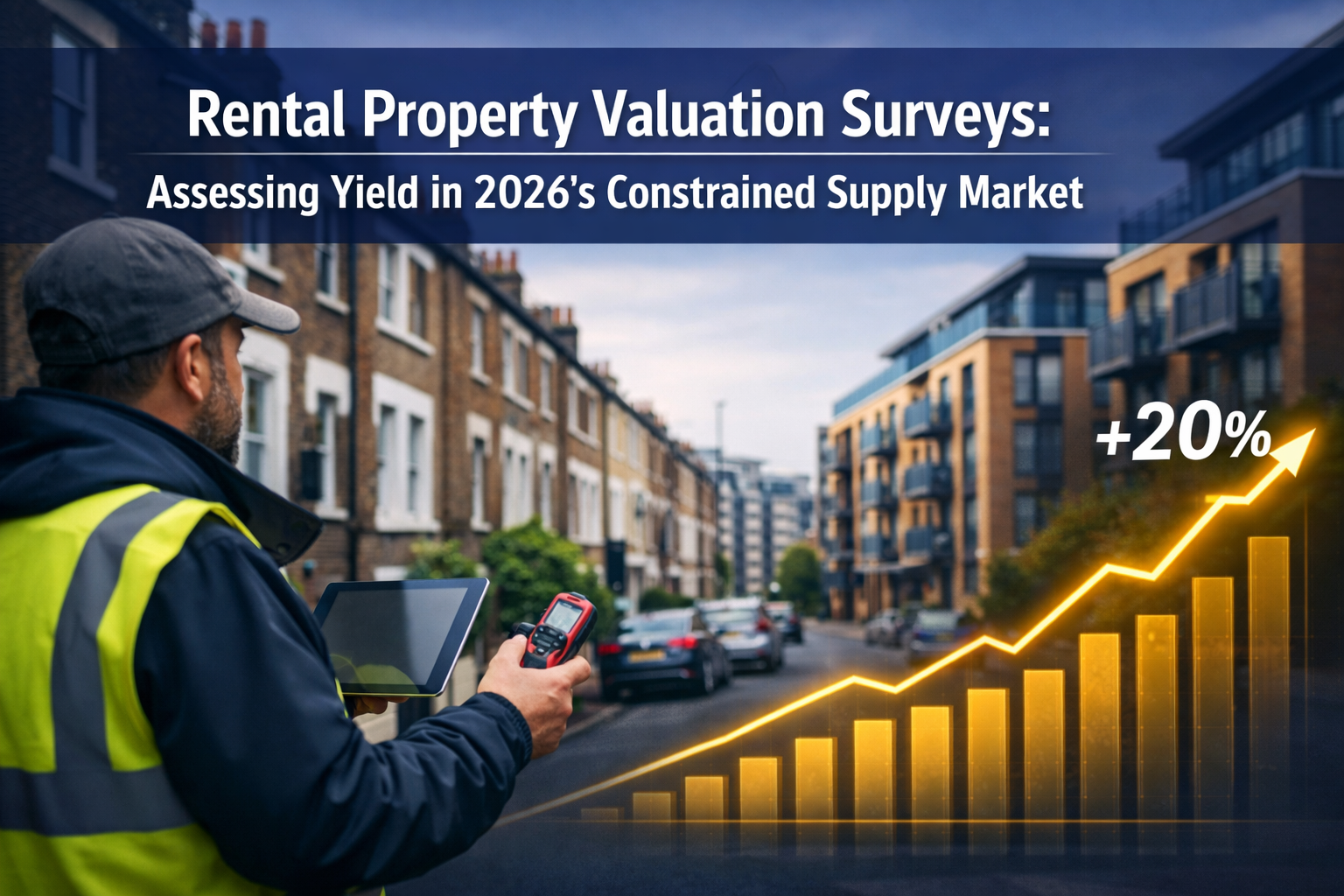
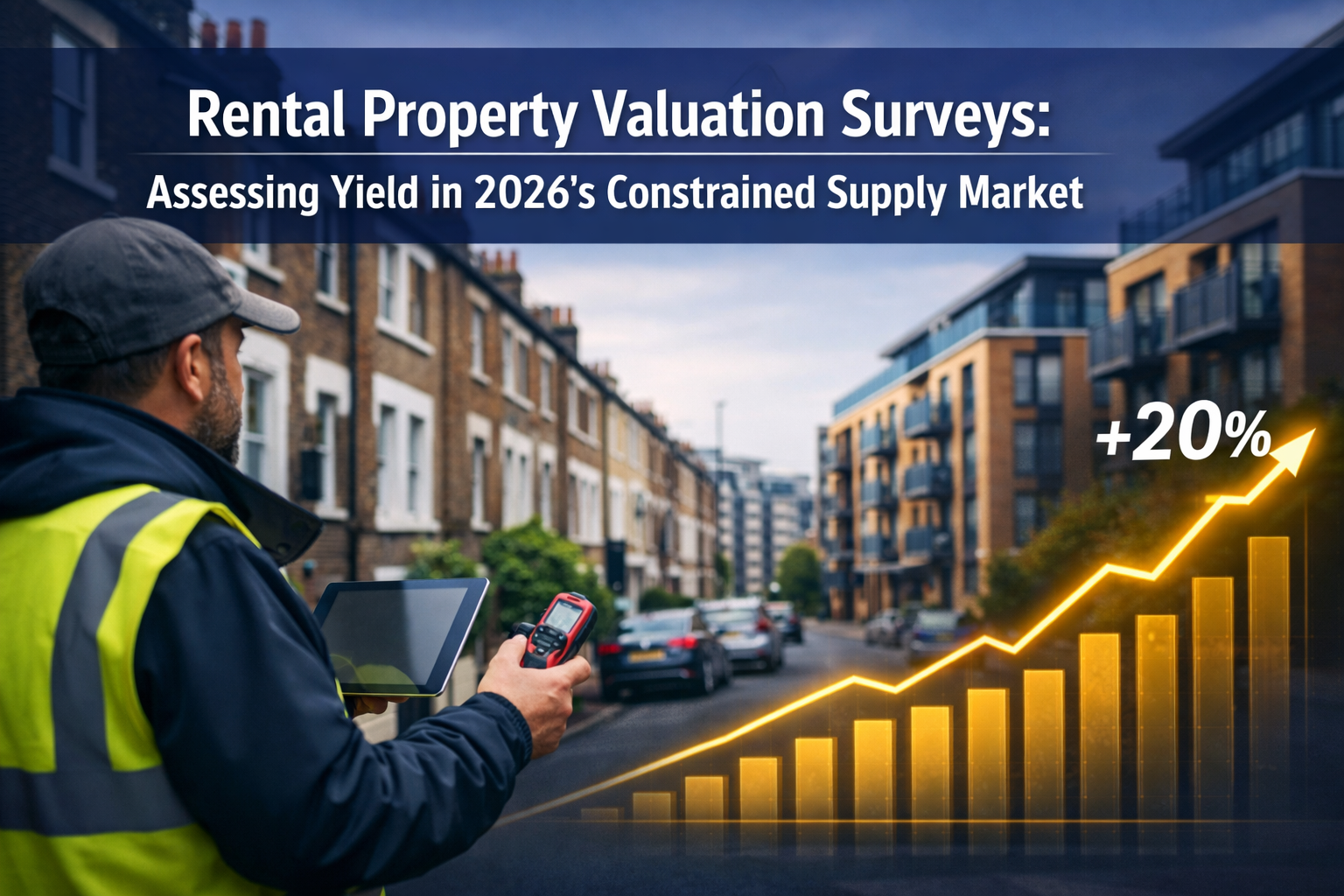
The rental property market in 2026 presents a fascinating paradox: landlord instructions have plummeted 27% while tenant demand remains remarkably stable, creating a supply-constrained environment that's reshaping how investors assess rental yields. With projections indicating potential rent growth of up to 20% in certain market segments, understanding Rental Property Valuation Surveys: Assessing Yield in 2026's Constrained Supply Market (+20% Rent Growth Expected) has never been more critical for property investors, landlords, and financial institutions.
This unique market dynamic—characterized by reduced supply meeting persistent demand—requires specialized valuation techniques that balance scarcity value against growing affordability constraints. Traditional valuation methods alone no longer capture the full picture of rental property potential in this evolving landscape.
Key Takeaways
- 📊 Supply constraints are driving value: With landlord instructions down 27% and record-low new construction, rental property scarcity is creating upward pressure on valuations despite modest historical rent growth
- 💰 Yield assessment requires new methodologies: Single-family rentals are projected to grow 2.3% while multifamily growth remains minimal at 0.3%, requiring differentiated valuation approaches by property type [3]
- 🏘️ Market fundamentals remain strong: Despite stagnant rent growth in 2025, unprecedented demand with 9 renters competing for each available unit signals robust underlying value [3]
- 📈 Investor confidence persists: 71% of rental property owners remain optimistic about profitability, with property price indices declining only 1.3% in 2025, indicating market stabilization [2][3]
- 🎯 Strategic opportunities exist: Moderate-income housing and single-family rentals received investment prospect scores of 3.75, highlighting specific subsectors poised for growth [4]
Understanding the 2026 Rental Market Landscape
The Supply Constraint Reality
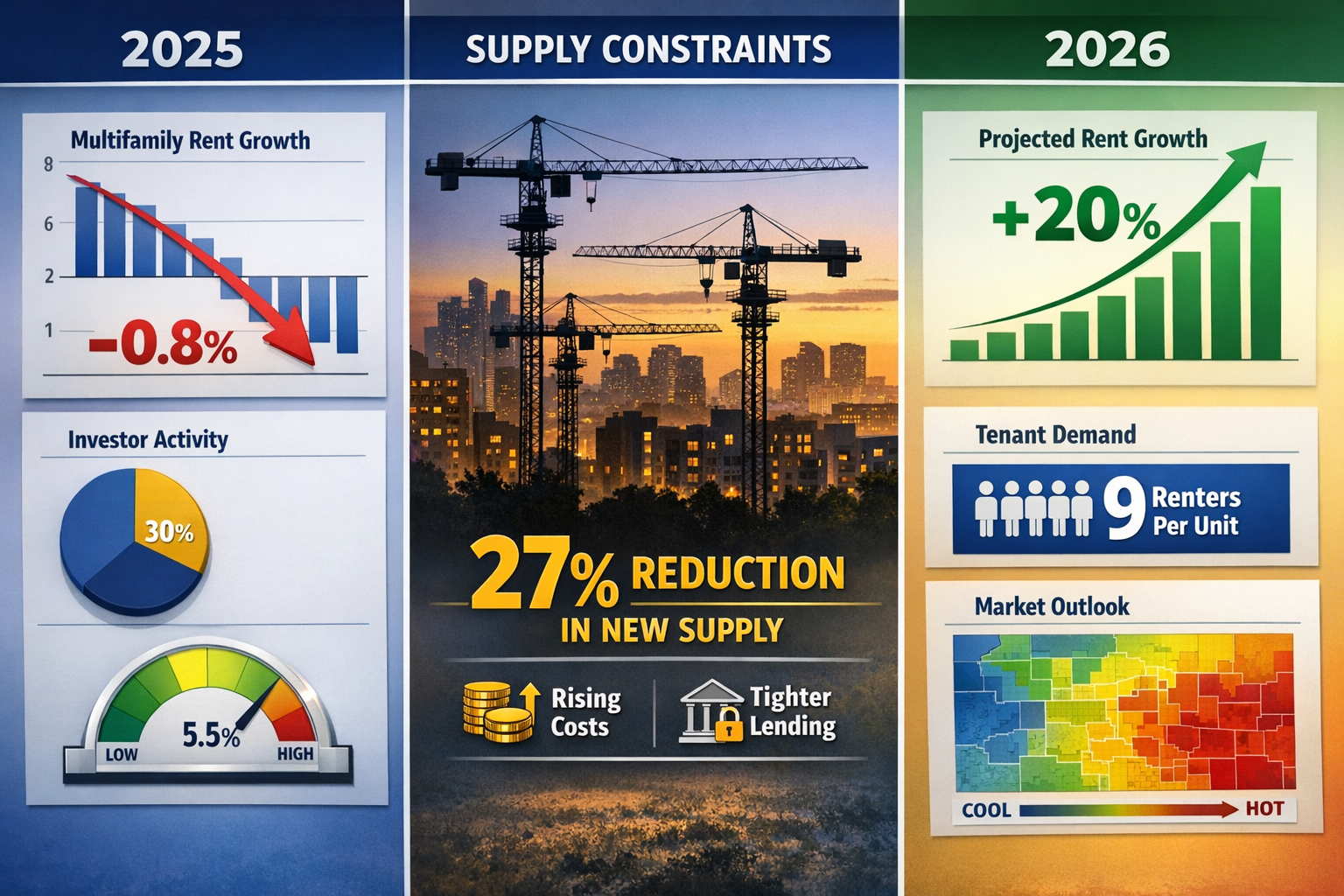
The rental property market in 2026 operates under unprecedented supply constraints. While 2025 saw a record 500,000+ new multifamily units added—the highest level in over 50 years—this supply surge has now subsided [3]. Development activity has slowed dramatically, with landlord instructions down 27% compared to previous years.
This supply normalization represents a significant shift. According to market analysts, supply growth is expected to return to levels typical of the late 2010s in 2026, creating more predictable rental environments but also tightening available inventory [6].
The impact on property valuation methodologies is substantial. Traditional approaches that relied on steady supply pipelines must now account for scarcity premiums and longer-term supply constraints.
Demand Dynamics Driving Value
Despite supply challenges, tenant demand remains extraordinarily robust. The 2025 market demonstrated this clearly:
- 9 renters competed for each available unit on average
- Apartments filled in an average of 41 days
- Vacancy rates increased only modestly to 6.7% from 6.4% [2][3]
This demand resilience stems from several factors:
✅ Delayed homeownership: Potential homebuyers continue delaying purchases due to affordability concerns
✅ Demographic shifts: Millennial and Gen Z renters represent growing market segments
✅ Economic uncertainty: Many households prefer rental flexibility during uncertain economic periods
✅ Lifestyle preferences: Urban and suburban rental living appeals to diverse demographics
The Rent Growth Divergence
Perhaps the most critical aspect of Rental Property Valuation Surveys: Assessing Yield in 2026's Constrained Supply Market (+20% Rent Growth Expected) is understanding the divergence between property types.
Multifamily properties experienced challenging conditions in 2025:
- Rent growth fell -0.8% overall
- Rents declined for three consecutive months through September
- 2026 projections show minimal growth of just 0.3% [2][3]
Single-family rentals tell a different story:
- Growth hit a 15-year low of 1.4% year-over-year in August 2025
- However, 2026 projections show 2.3% growth—nearly 8x multifamily rates
- Record investor activity with 30% of purchases made by investors [3]
This divergence requires property-type-specific valuation approaches, which we'll explore in detail.
Specialized Yield Assessment Techniques for Rental Property Valuation Surveys
Gross Yield vs. Net Yield Calculations
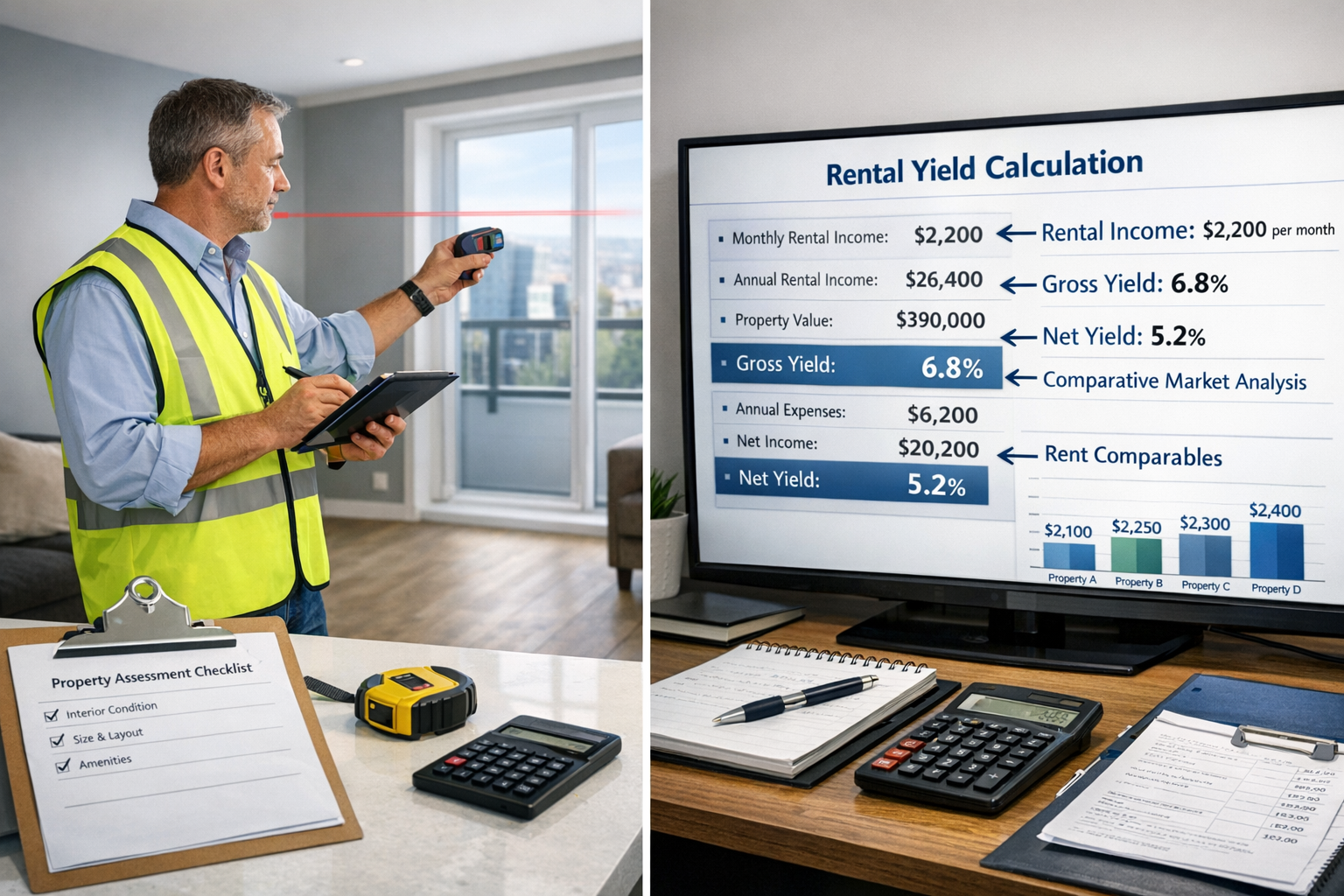
Understanding yield metrics forms the foundation of effective property evaluation in 2026's market. Both gross and net yield calculations provide essential insights, but they serve different purposes.
Gross Rental Yield offers a quick snapshot:
Gross Yield = (Annual Rental Income ÷ Property Purchase Price) × 100
Example: A property purchased for £300,000 generating £18,000 annual rent produces a 6% gross yield.
However, gross yield doesn't account for operating expenses, making it insufficient for comprehensive valuation surveys.
Net Rental Yield provides a more accurate picture:
Net Yield = [(Annual Rental Income - Annual Expenses) ÷ Property Purchase Price] × 100
Example: The same property with £5,000 in annual expenses (maintenance, insurance, property management, void periods) yields:
- (£18,000 – £5,000) ÷ £300,000 × 100 = 4.33% net yield
| Yield Type | Calculation Complexity | Accuracy | Best Use Case |
|---|---|---|---|
| Gross Yield | Simple | Basic | Initial screening, market comparisons |
| Net Yield | Moderate | Good | Investment decisions, portfolio analysis |
| Cash-on-Cash Return | Complex | Excellent | Leveraged investments, true ROI |
Incorporating Supply Constraints into Valuations
The 27% reduction in landlord instructions fundamentally alters traditional valuation models. When conducting Rental Property Valuation Surveys: Assessing Yield in 2026's Constrained Supply Market (+20% Rent Growth Expected), surveyors must incorporate scarcity premiums.
Key adjustments include:
🔍 Supply-Adjusted Capitalization Rates: Traditional cap rates may undervalue properties in supply-constrained markets. Reduce cap rates by 25-50 basis points to reflect scarcity value.
🔍 Extended Hold Period Analysis: With limited inventory, properties may command premium exit valuations. Model 7-10 year hold periods rather than standard 5-year projections.
🔍 Competitive Positioning Assessment: Evaluate how property characteristics (location, amenities, condition) position it within a shrinking supply pool.
Professional property assessment services can provide detailed market positioning analysis that accounts for these supply dynamics.
Demand Strength Indicators
The unprecedented demand metric of 9 renters per available unit requires new valuation considerations [3]. Strong demand translates directly to reduced vacancy risk and improved yield stability.
Demand-adjusted valuation factors:
- Vacancy Rate Projections: In high-demand markets, reduce standard vacancy assumptions from 8-10% to 4-6%
- Rent Growth Acceleration: Apply graduated rent increase models rather than flat percentage assumptions
- Tenant Quality Premiums: Strong demand allows greater selectivity, reducing default risk
- Lease Renewal Rates: Higher demand correlates with improved retention, reducing turnover costs
Property-Type-Specific Valuation Models
Given the dramatic performance divergence between property types, Rental Property Valuation Surveys: Assessing Yield in 2026's Constrained Supply Market (+20% Rent Growth Expected) must employ differentiated approaches.
Multifamily Property Valuation (0.3% projected growth):
Focus on:
- Defensive positioning and expense management
- Value-add opportunities through renovation
- Amenity differentiation to justify premium pricing
- Geographic micro-market selection within broader metros
Single-Family Rental Valuation (2.3% projected growth):
Emphasize:
- Appreciation potential alongside rental yield
- Neighborhood quality and school district ratings
- Property condition and deferred maintenance assessment
- Comparative sales analysis with owner-occupied homes
The U.S. Census Bureau's 2024 Rental Housing Finance Survey (RHFS), released February 19, 2026, provides comprehensive mortgage financing data across all rental property types, offering valuable benchmarking information for valuations [1].
Cash Flow Modeling in Constrained Markets
Beyond simple yield calculations, comprehensive cash flow modeling captures the full investment picture. This becomes particularly important when assessing properties in the context of expected 20% rent growth in select segments.
Essential cash flow model components:
-
Income Projections
- Base rent with property-type-specific growth rates
- Ancillary income (parking, storage, pet fees)
- Utility reimbursements where applicable
-
Operating Expenses
- Property management (typically 8-12% of gross rent)
- Maintenance and repairs (1-2% of property value annually)
- Insurance (increasing 5-7% annually in many markets)
- Property taxes (varies by jurisdiction)
- Utilities (if landlord-paid)
-
Capital Expenditures
- Roof replacement reserves
- HVAC system updates
- Appliance replacement cycles
- Major renovation reserves
-
Financing Costs
- Mortgage principal and interest
- Refinancing assumptions
- Interest rate sensitivity analysis
A detailed homebuyers report or building survey can identify potential capital expenditure requirements that significantly impact cash flow projections.
Market Intelligence and Data Sources for Accurate Valuations
Leveraging Comprehensive Market Data
Accurate Rental Property Valuation Surveys: Assessing Yield in 2026's Constrained Supply Market (+20% Rent Growth Expected) require robust data sources. The market intelligence landscape in 2026 offers unprecedented access to rental market information.
Primary data sources include:
📊 Government Statistics: The Census Bureau's RHFS provides authoritative data on rental property characteristics, financing, and market conditions [1]
📊 Industry Indices: The RCA Apartment CPPI (price index) declined only 1.3% in 2025, indicating market stabilization and investor confidence [2]
📊 Market Research Firms: Organizations like PwC and ULI publish comprehensive property type outlooks with investment prospect scores [4]
📊 Property Management Platforms: Real-time rental rate data, vacancy trends, and tenant demand metrics from operational systems
Understanding Regional Variations
National trends provide context, but local market conditions drive individual property valuations. The 20% rent growth expectation varies dramatically by geography, property type, and market segment.
Regional factors affecting valuations:
🏙️ Urban Core Markets: Experiencing recovery but facing affordability constraints
🏘️ Suburban Markets: Strong demand from families seeking space and value
🌳 Secondary Cities: Benefiting from migration patterns and relative affordability
🏖️ Sunbelt Regions: Continued population growth supporting rental demand
When conducting valuations in specific areas like Notting Hill, Hackney, or Paddington, local market expertise becomes invaluable.
Investor Sentiment and Market Psychology
Beyond hard data, investor sentiment significantly influences rental property valuations. The 2026 market demonstrates strong confidence despite modest historical performance.
Key sentiment indicators:
- 71% of rental property owners feel optimistic about profitability [3]
- 32% plan to purchase 2-3 new properties despite challenges [3]
- Moderate-income housing received 3.75 investment prospect scores, indicating strong institutional interest [4]
"The rental market in 2026 rewards investors who can accurately assess the interplay between supply constraints, demand strength, and property-specific characteristics. Traditional valuation methods must evolve to capture these dynamics." — Property Investment Analysis, 2026
Regulatory and Policy Considerations
Valuation surveys must account for regulatory environments affecting rental property operations and profitability.
Critical policy factors:
⚖️ Rent Control: Survey participants cite this as a significant deterrent, with 18% noting economic feasibility concerns [2]
⚖️ Tenant Protection Legislation: Eviction restrictions and tenant rights affect risk profiles
⚖️ Tax Treatment: Depreciation schedules, interest deductibility, and capital gains treatment
⚖️ Zoning and Development Restrictions: Limiting new supply and supporting existing property values
Understanding legal requirements and regulatory frameworks is essential for accurate long-term yield projections.
Strategic Approaches for Maximizing Rental Property Value
Identifying High-Potential Subsectors
Not all rental properties will benefit equally from the constrained supply environment. Rental Property Valuation Surveys: Assessing Yield in 2026's Constrained Supply Market (+20% Rent Growth Expected) should prioritize subsectors with strongest fundamentals.
Top-performing subsectors:
🏡 Single-Family Rentals: With 2.3% projected growth significantly outpacing multifamily, these properties offer superior yield potential [3]
🏘️ Moderate-Income/Workforce Housing: Receiving 3.75 investment prospect scores due to limited mid-market development [4]
🏢 Small Multifamily (2-4 units): Offering single-family rental benefits with multifamily efficiency
🌆 Suburban Garden-Style Apartments: Balancing space, amenities, and affordability
Value-Add Strategies in Constrained Markets
When supply is limited, strategic improvements can capture disproportionate value. Effective valuation surveys should identify and quantify value-add opportunities.
High-ROI improvement categories:
✨ Unit Renovations: Kitchen and bathroom updates typically generate 10-15% rent premiums
✨ Amenity Additions: In-unit laundry, upgraded appliances, smart home features
✨ Common Area Enhancements: Fitness centers, coworking spaces, outdoor amenities
✨ Energy Efficiency: Reducing operating costs while appealing to environmentally-conscious tenants
✨ Technology Integration: Smart locks, package lockers, high-speed internet infrastructure
A comprehensive structural survey can identify renovation opportunities and potential obstacles before acquisition.
Risk Mitigation in Yield Assessments
While supply constraints and strong demand create opportunities, prudent valuations must account for potential risks.
Key risk factors:
⚠️ Affordability Limits: The 20% rent growth expectation may face resistance from tenant affordability constraints
⚠️ Economic Recession: Unemployment increases could shift demand dynamics rapidly
⚠️ Interest Rate Volatility: Affecting both property values and financing costs
⚠️ Supply Response: If constraints ease faster than anticipated, reducing scarcity premiums
⚠️ Regulatory Changes: New rent control or tenant protection measures
Risk mitigation strategies include:
- Stress-testing cash flow models with pessimistic scenarios
- Building larger expense and vacancy reserves
- Diversifying across property types and geographies
- Maintaining conservative leverage ratios
- Planning flexible exit strategies
Portfolio Optimization Considerations
For investors holding multiple properties, Rental Property Valuation Surveys: Assessing Yield in 2026's Constrained Supply Market (+20% Rent Growth Expected) should inform portfolio-level decisions.
Portfolio optimization questions:
🔄 Rebalancing: Should underperforming multifamily assets be exchanged for single-family rentals?
🔄 Geographic Concentration: Does current portfolio exposure align with strongest growth markets?
🔄 Property Type Mix: Is the portfolio positioned for projected performance divergence?
🔄 Value-Add Timing: Which properties offer best risk-adjusted improvement returns?
🔄 Disposition Strategy: Should certain assets be sold to capitalize on current valuations?
Professional property condition assessment services provide the detailed property intelligence needed for these strategic decisions.
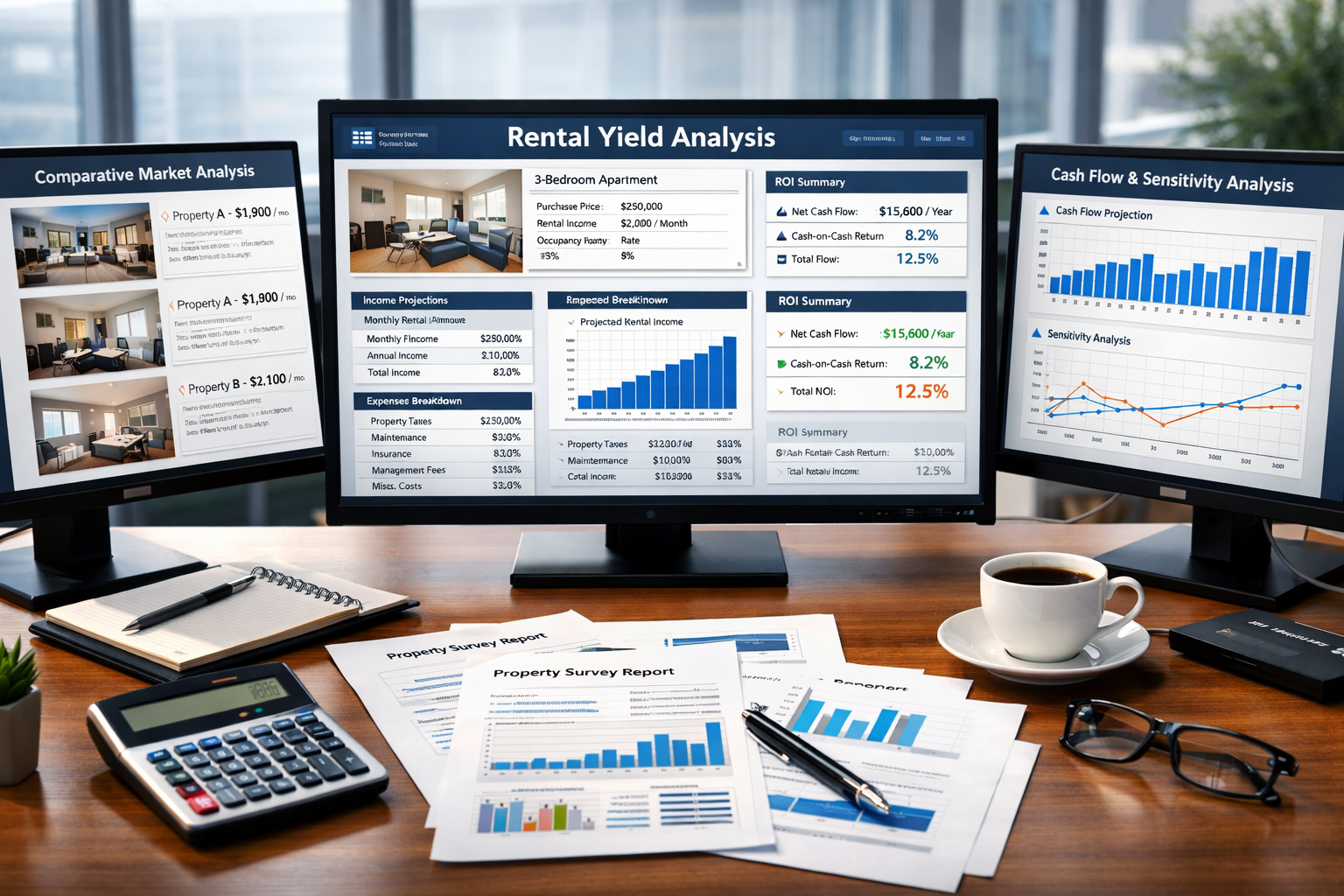
Practical Implementation: Conducting Effective Rental Property Valuation Surveys
Survey Methodology and Best Practices
Implementing effective Rental Property Valuation Surveys: Assessing Yield in 2026's Constrained Supply Market (+20% Rent Growth Expected) requires systematic methodology.
Step-by-step survey process:
1. Property Inspection and Documentation
- Physical condition assessment
- Measurement verification
- Systems evaluation (HVAC, plumbing, electrical)
- Deferred maintenance identification
- Amenity inventory
2. Market Research and Comparable Analysis
- Rental rate comparables (minimum 5-10 similar properties)
- Occupancy and vacancy trends
- Days-on-market analysis
- Tenant demographic research
- Supply pipeline assessment
3. Financial Analysis
- Historical income and expense review (3-5 years)
- Rent roll analysis
- Lease terms and expiration schedule
- Operating expense benchmarking
- Capital expenditure planning
4. Yield Calculation and Projection
- Current yield calculation (gross and net)
- Projected yield under various scenarios
- Sensitivity analysis
- Comparative yield assessment
- Risk-adjusted return modeling
5. Valuation Synthesis
- Income approach valuation
- Sales comparison approach
- Cost approach (where applicable)
- Reconciliation of value indicators
- Final value opinion with supporting documentation
Technology Tools for Modern Valuations
The 2026 valuation landscape benefits from advanced technology tools that improve accuracy and efficiency.
Essential technology platforms:
💻 Property Management Software: Provides operational data, tenant information, and financial reporting
💻 Market Data Platforms: Aggregate rental rates, vacancy data, and market trends
💻 Financial Modeling Tools: Sophisticated cash flow and yield analysis capabilities
💻 GIS and Mapping: Geographic analysis of market conditions and property positioning
💻 Automated Valuation Models (AVMs): Initial screening tools (though requiring professional validation)
Working with Professional Surveyors
While technology enables sophisticated analysis, professional surveyor expertise remains invaluable for comprehensive valuations. RICS surveyors bring specialized knowledge and credentialing to the valuation process.
Benefits of professional surveyor engagement:
✅ Regulatory compliance and professional standards adherence
✅ Local market expertise and relationship networks
✅ Liability protection through professional indemnity insurance
✅ Credibility with lenders, investors, and other stakeholders
✅ Access to proprietary data and research resources
When selecting a surveyor, consider their experience with rental properties specifically, understanding of current market dynamics, and familiarity with your target geography.
Documentation and Reporting Standards
Comprehensive valuation surveys require thorough documentation to support conclusions and provide actionable intelligence.
Essential report components:
📋 Executive Summary: Key findings, value conclusions, and recommendations
📋 Property Description: Location, physical characteristics, condition assessment
📋 Market Analysis: Supply and demand dynamics, competitive positioning, trends
📋 Financial Analysis: Income and expense history, yield calculations, projections
📋 Valuation Approaches: Methodology explanation and supporting calculations
📋 Assumptions and Limiting Conditions: Scope limitations and key assumptions
📋 Supporting Documentation: Photographs, maps, comparable data, financial statements
High-quality documentation serves multiple purposes: supporting investment decisions, facilitating financing, providing audit trails, and enabling future valuation updates.
Valuation Update Frequency
In dynamic markets like 2026's constrained supply environment, regular valuation updates ensure investment decisions reflect current conditions.
Recommended update schedule:
| Portfolio Type | Update Frequency | Trigger Events |
|---|---|---|
| Active Acquisition | Quarterly | Market shifts, rate changes |
| Stabilized Holdings | Annual | Lease renewals, major improvements |
| Distressed Assets | Semi-annual | Performance changes, market opportunities |
| Pre-Disposition | Quarterly | Market timing optimization |
Conclusion: Navigating 2026's Rental Property Valuation Landscape
The rental property market in 2026 presents both unprecedented challenges and compelling opportunities. With landlord instructions down 27% creating supply constraints, yet tenant demand remaining robust with 9 renters competing for each available unit, Rental Property Valuation Surveys: Assessing Yield in 2026's Constrained Supply Market (+20% Rent Growth Expected) require sophisticated approaches that balance multiple competing factors.
The dramatic divergence between property types—with single-family rentals projected to grow 2.3% compared to just 0.3% for multifamily properties—demands differentiated valuation methodologies tailored to specific asset classes [3]. Traditional yield calculations alone cannot capture the full picture of value in this constrained supply environment.
Key success factors for 2026 valuations include:
🎯 Comprehensive data integration: Leveraging government statistics, industry indices, and local market intelligence
🎯 Property-type-specific approaches: Recognizing fundamental performance differences across rental categories
🎯 Supply constraint premiums: Adjusting traditional models to reflect scarcity value
🎯 Demand strength indicators: Incorporating unprecedented tenant competition metrics
🎯 Risk-adjusted projections: Stress-testing assumptions against affordability constraints and economic uncertainty
The strong investor sentiment—with 71% of rental property owners remaining optimistic and 32% planning new acquisitions—demonstrates confidence in the sector's fundamentals despite modest historical rent growth [3]. This confidence is supported by market stabilization indicators, including the RCA Apartment CPPI declining only 1.3% in 2025 [2].
Actionable Next Steps
For property investors, landlords, and financial institutions seeking to capitalize on 2026's rental market dynamics:
1. Commission Professional Valuations: Engage qualified surveyors experienced in rental property assessment and familiar with current market conditions. Consider property evaluation services that specialize in yield analysis.
2. Prioritize High-Potential Subsectors: Focus acquisition and improvement efforts on single-family rentals and moderate-income housing, which received the strongest investment prospect scores [4].
3. Implement Robust Financial Modeling: Move beyond simple yield calculations to comprehensive cash flow models that account for property-type-specific growth rates, supply constraints, and demand dynamics.
4. Monitor Market Intelligence: Establish systems for tracking rental rates, vacancy trends, supply pipelines, and regulatory changes in target markets.
5. Plan Strategic Improvements: Identify value-add opportunities that can capture rent premiums in supply-constrained environments, validated through professional property condition assessment.
6. Diversify Thoughtfully: Balance portfolio exposure across property types, geographies, and market segments to optimize risk-adjusted returns.
The rental property market in 2026 rewards investors who can accurately assess the interplay between supply constraints, demand strength, and property-specific characteristics. By employing specialized valuation techniques that account for these unique market dynamics, investors can identify opportunities that deliver strong yields while managing downside risks.
As supply constraints persist and demand remains robust, the properties that receive comprehensive, professional valuation surveys will be positioned to capture the value creation opportunities inherent in 2026's constrained supply market. Whether the projected 20% rent growth materializes broadly or concentrates in specific subsectors, thorough yield assessment provides the foundation for informed investment decisions and portfolio optimization.
The time to act is now—market conditions favor those who combine professional valuation expertise with strategic market positioning to navigate this distinctive rental property landscape.
References
[1] 2024 Rhfs Data – https://www.census.gov/newsroom/press-releases/2026/2024-rhfs-data.html
[2] U S Multifamily Market Snapshot February 2026 – https://arbor.com/blog/u-s-multifamily-market-snapshot-february-2026/
[3] Real Estate Market Report 2025 – https://www.landlordstudio.com/blog/real-estate-market-report-2025
[4] Property Type Outlook – https://www.pwc.com/us/en/industries/financial-services/asset-wealth-management/real-estate/emerging-trends-in-real-estate-pwc-uli/property-type-outlook.html
[5] Pwc And Uli Report Reveals The 2026 Real Estate Trends Transforming Where We Live Work And Invest – https://urbanland.uli.org/capital-markets-and-finance/pwc-and-uli-report-reveals-the-2026-real-estate-trends-transforming-where-we-live-work-and-invest
[6] 2026 Rental Market Predictions – https://www.buildium.com/blog/2026-rental-market-predictions/