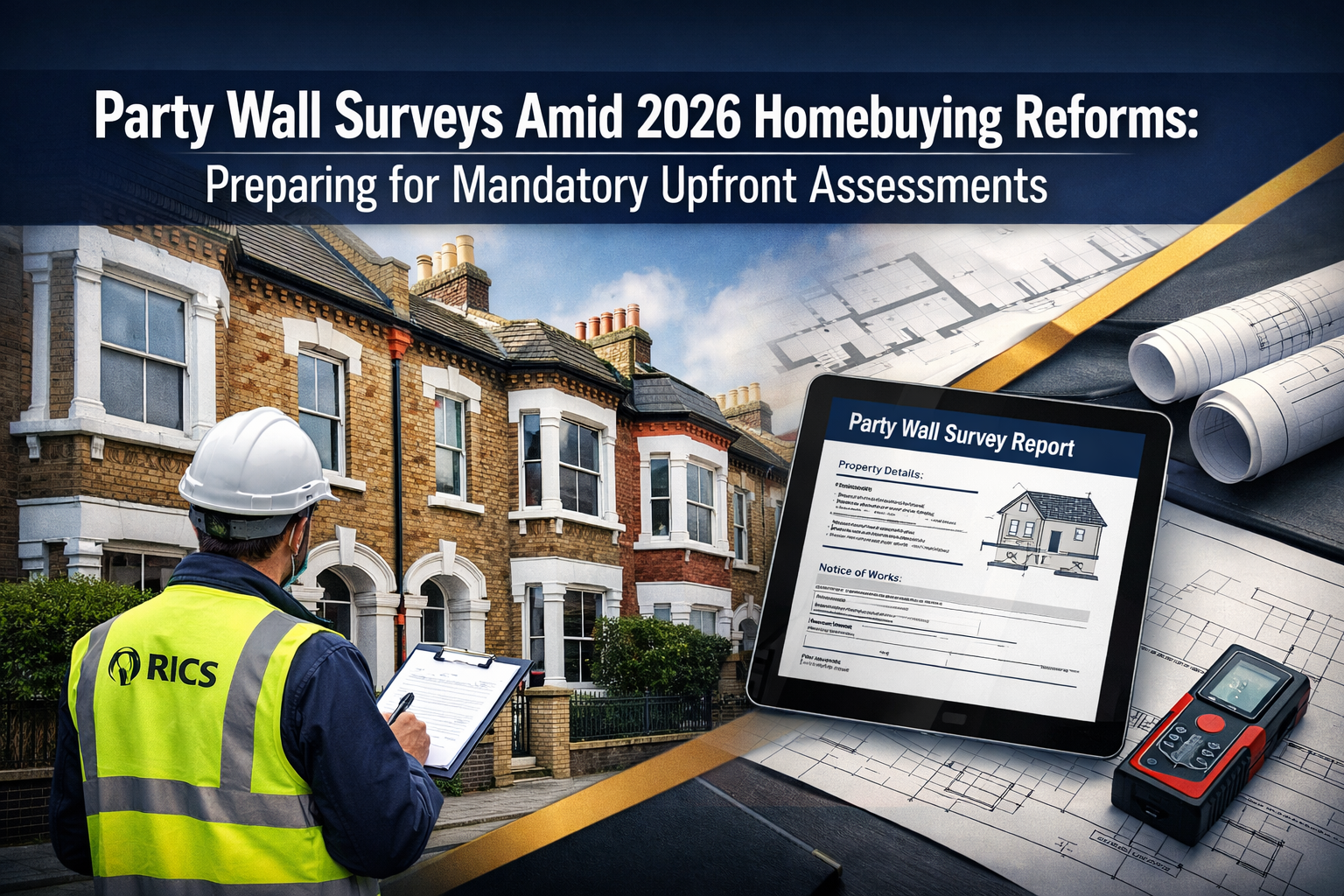
The landscape of property transactions in the UK is undergoing a seismic shift in 2026, with proposed government reforms set to revolutionize how homebuyers approach property assessments. As Party Wall Surveys Amid 2026 Homebuying Reforms: Preparing for Mandatory Upfront Assessments becomes a critical consideration for both property professionals and homeowners, understanding the intersection of these regulatory changes with existing Party Wall Act requirements has never been more important. 🏘️
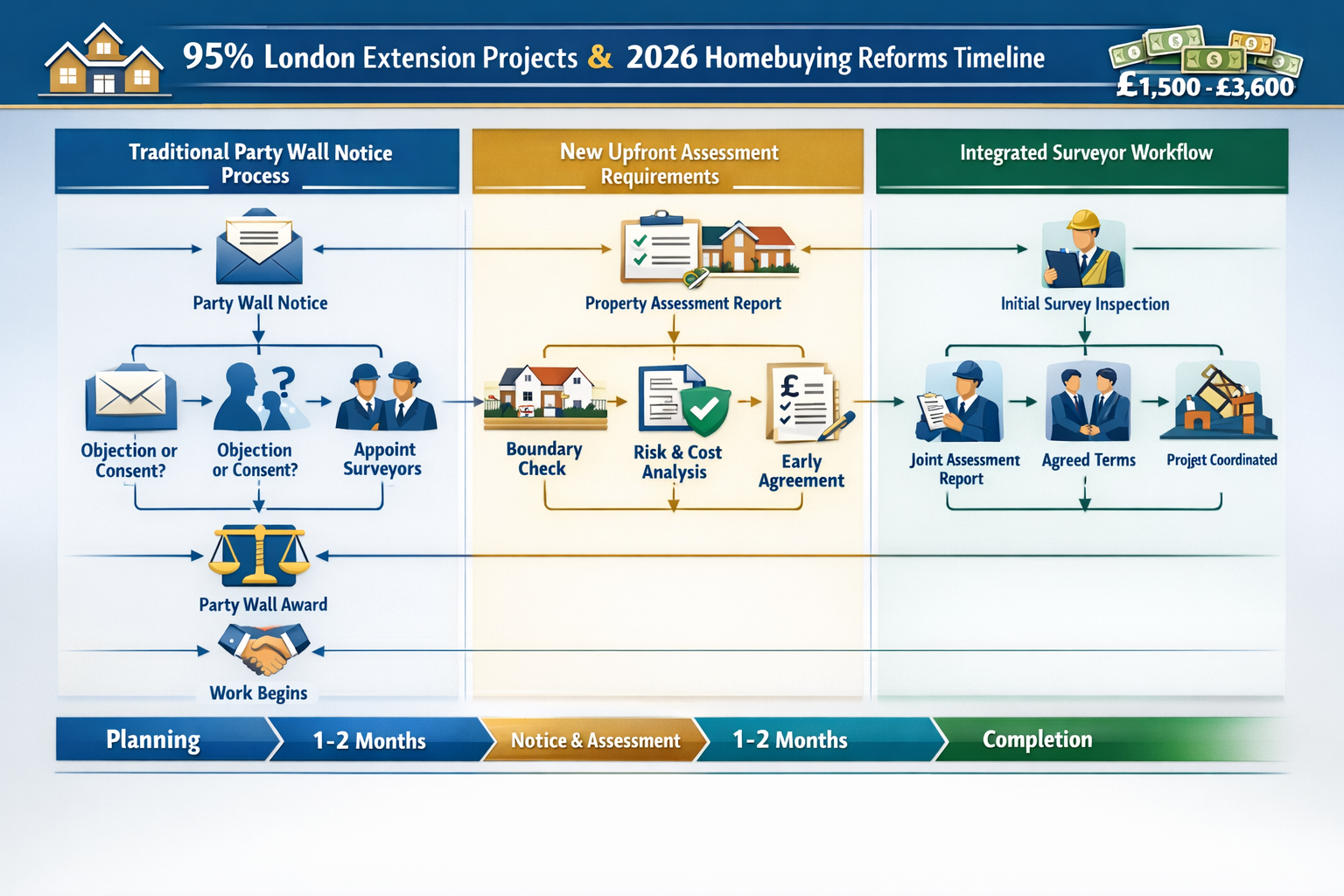
With approximately 95% of London extension projects requiring party wall agreements[1], and the potential introduction of mandatory upfront property condition assessments, surveyors and homeowners alike must prepare for a fundamentally transformed workflow. These reforms promise to streamline the homebuying process while simultaneously increasing the complexity of pre-purchase due diligence, particularly for properties where construction work or shared wall considerations are involved.
Key Takeaways
- Mandatory upfront assessments may soon become a legal requirement for property transactions, fundamentally changing when and how party wall surveys are conducted[5]
- Current party wall survey costs in London range from £750–£1,800 per affected neighbour, with total costs potentially reaching £3,000–£7,200 for mid-terrace properties[1]
- Timeline integration is critical, as party wall procedures typically require 2–4 months minimum from planning approval, which must now align with reformed homebuying timelines[1]
- Surveyor workload transformation will require professionals to integrate Party Wall Act compliance into comprehensive upfront assessment packages[5]
- Early identification of party wall issues during the purchase phase can prevent costly delays and disputes post-completion
Understanding the 2026 Homebuying Reform Landscape
What Are the Proposed Homebuying Reforms?
The UK government has been exploring significant reforms to the homebuying process, with proposals centered on mandatory upfront information provision. These reforms aim to reduce the notorious delays and fall-throughs that plague property transactions, where currently up to 30% of agreed sales collapse before completion.
The cornerstone of these reforms involves requiring sellers to provide comprehensive property information packages before a property is marketed, rather than after an offer has been accepted. This upfront disclosure would include:
- Detailed property surveys and condition assessments
- Legal documentation including title deeds and searches
- Planning and building regulation compliance certificates
- Energy performance certificates and environmental reports
- Party wall agreements and notices where applicable
For properties in densely populated urban areas—particularly London and other major cities—this reform has profound implications for party wall surveying practices.
The Construction Boom Context
The timing of these reforms coincides with a significant construction boom across UK housing markets. With housing demand continuing to outstrip supply in 2026, property owners are increasingly looking to maximize their existing properties through extensions, loft conversions, and basement excavations—all of which typically trigger Party Wall Act requirements[4].
This construction activity, combined with reformed homebuying procedures, creates a unique convergence where party wall considerations must be addressed earlier in the transaction timeline than ever before. Understanding what party wall surveyors do becomes essential for all parties involved in property transactions.
Party Wall Surveys Amid 2026 Homebuying Reforms: The Integration Challenge
Aligning Party Wall Procedures with Upfront Assessments
The Party Wall etc. Act 1996 establishes a clear legal framework for managing construction work affecting shared walls, boundaries, and excavations near neighbouring properties[3]. Traditionally, party wall considerations have been addressed after a property purchase, when the new owner plans construction work.
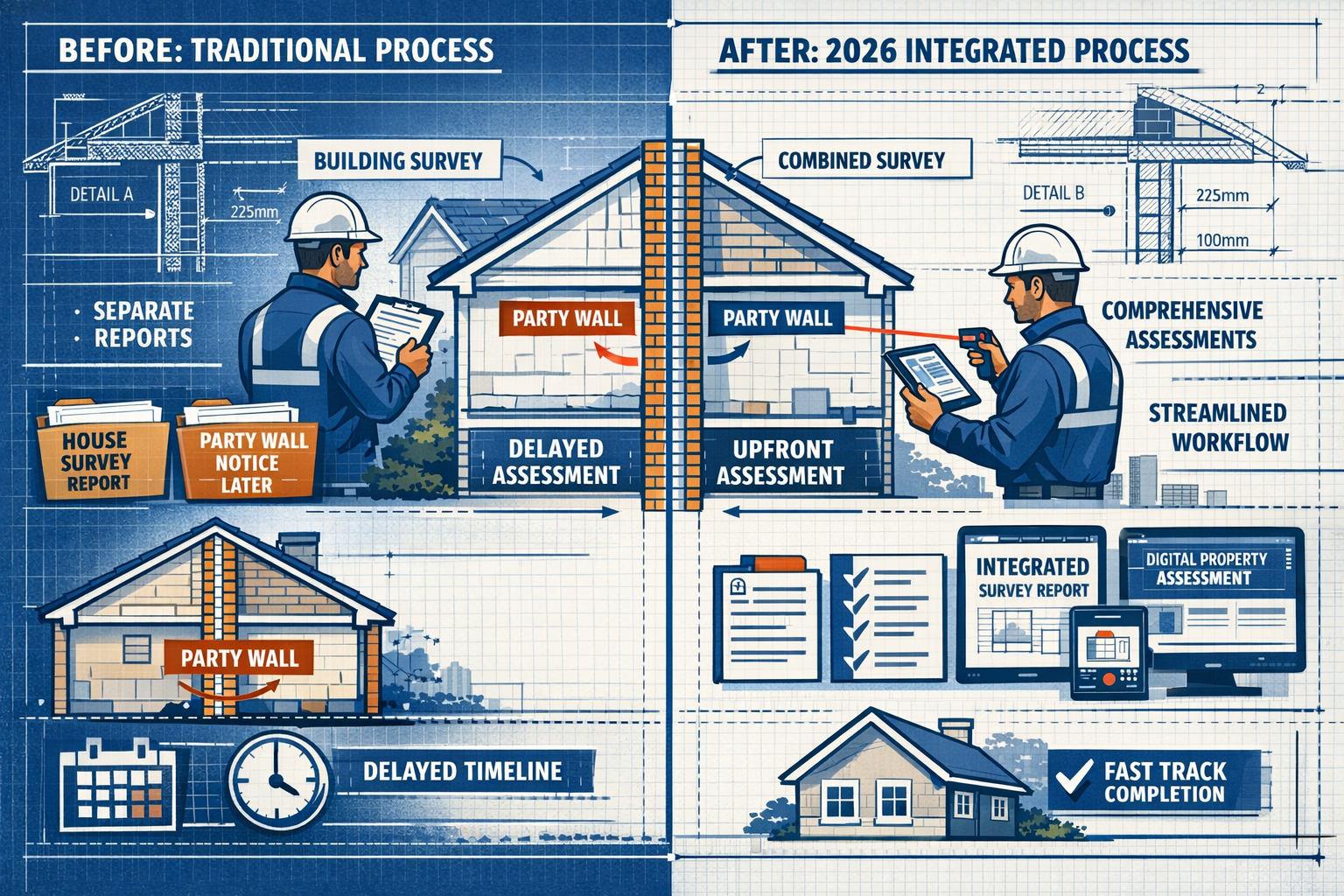
However, with mandatory upfront assessments potentially becoming law, this timeline must shift dramatically. The integration challenge involves:
1. Pre-Marketing Assessment Requirements
Sellers planning or recently completing construction work must now consider obtaining party wall agreements before listing their property. This ensures potential buyers have complete information about:
- Existing party wall awards and their terms
- Any ongoing party wall disputes or unresolved notices
- Structural implications of recent construction work on shared walls
- Rights and obligations that transfer with property ownership
2. Survey Scope Expansion
Building surveyors conducting pre-purchase assessments must now incorporate party wall considerations into their standard homebuyers reports and building surveys. This includes:
- Identifying potential party wall issues from visual inspection
- Reviewing existing party wall awards and agreements
- Assessing compliance with previous party wall notices
- Flagging potential future party wall requirements
3. Timeline Coordination
The traditional party wall process timeline of 2–4 months[1] must now be considered within the compressed timeframe of upfront assessment preparation. This requires:
| Process Stage | Traditional Timeline | Reformed Timeline |
|---|---|---|
| Property survey | Post-offer (2-3 weeks) | Pre-marketing (2-3 weeks) |
| Party wall notice | Post-purchase planning | Pre-marketing or concurrent |
| Neighbour response period | 14 days minimum | 14 days minimum (unchanged) |
| Surveyor appointment | After dispute | Proactive pre-marketing |
| Award preparation | 4-8 weeks | 4-8 weeks (unchanged) |
| Total timeline | Post-completion months | Pre-marketing months |
Cost Implications of Early Party Wall Integration
Understanding the financial implications of Party Wall Surveys Amid 2026 Homebuying Reforms: Preparing for Mandatory Upfront Assessments is crucial for all stakeholders. Current surveyor fees in London demonstrate the significant investment required:
Party Wall Survey Costs (2026 London Rates):[1]
- Per affected neighbour: £750–£1,800
- Single neighbour scenario: £1,500–£3,600 total costs
- Mid-terrace property (two neighbours): £3,000–£7,200 total costs
- Complex multi-party scenarios: £5,000–£12,000+
These costs, previously absorbed by buyers post-purchase, may now become seller responsibilities under reformed requirements. This shift fundamentally changes the economics of property marketing and sale preparation.
Additionally, sellers must consider:
- Opportunity costs of delayed marketing while awaiting party wall awards
- Risk of price reduction if party wall issues are discovered
- Professional fees for integrated survey packages
- Potential dispute resolution costs if neighbours object
Practical Implementation: How Surveyors Can Adapt Their Workflows
Developing Integrated Assessment Packages
Professional surveyors must evolve their service offerings to meet the demands of Party Wall Surveys Amid 2026 Homebuying Reforms: Preparing for Mandatory Upfront Assessments. This requires developing comprehensive assessment packages that address multiple aspects simultaneously.
🔍 Comprehensive Pre-Marketing Assessment Package Components:
- Standard building survey or homebuyers report
- Party wall compliance review and risk assessment
- Boundary and title verification against physical features
- Planning and building regulation compliance check
- Structural implications of existing party wall awards
- Future development potential assessment with party wall considerations
This integrated approach allows sellers to present a complete picture to potential buyers, reducing uncertainty and transaction delays. For guidance on preparing for RICS home surveys, homeowners should consult with qualified professionals early in the process.
Enhanced Due Diligence Protocols
Surveyors must implement enhanced due diligence protocols specifically addressing party wall matters:
Party Wall-Specific Investigation Checklist:
✅ Documentary Review:
- Request and review all previous party wall notices and awards
- Verify completion certificates for works covered by party wall awards
- Check for any ongoing disputes or unresolved notices
- Review correspondence with neighbours regarding shared walls
✅ Physical Inspection:
- Examine all party walls for signs of recent construction work
- Identify potential undisclosed party wall works
- Assess structural condition of shared boundaries
- Document any visible defects potentially related to party wall works
✅ Neighbour Consultation:
- Verify neighbour awareness of previous party wall works
- Identify any informal arrangements not properly documented
- Assess potential for future disputes based on property relationships
✅ Legal Framework Compliance:
- Confirm works comply with Party Wall Act 1996 requirements
- Verify appropriate notices were served within statutory timeframes
- Check surveyor qualifications and appointment procedures
Technology Integration for Streamlined Processes
Modern surveying practices increasingly rely on technology to manage the complexity of integrated assessments. In 2026, surveyors should leverage:
Digital Documentation Systems:
- Cloud-based platforms for storing and sharing party wall awards
- Digital signature capabilities for remote agreement execution
- Automated reminder systems for statutory notice periods
- Integration with property transaction management platforms
Advanced Survey Technology:
- Thermal imaging to detect construction defects in party walls
- 3D laser scanning for precise boundary and structural documentation
- Drone surveys for roof and upper-level party wall assessment
- Digital reporting tools for comprehensive visual documentation
Client Communication Platforms:
- Real-time progress tracking for multi-stage assessments
- Secure portals for document exchange between all parties
- Video consultation capabilities for remote client meetings
- Automated status updates throughout the assessment process
Navigating Common Party Wall Scenarios Under Reformed Requirements
Scenario 1: Recent Extension with Existing Party Wall Award
Situation: A seller completed a rear extension 18 months ago with proper party wall procedures. The property is now being marketed under reformed requirements.
Required Actions:
- Provide complete party wall award documentation to surveyor
- Obtain completion certificate from original party wall surveyor
- Include photographic evidence of completed works
- Disclose any post-completion issues or neighbour concerns
- Ensure building regulation compliance certificates are available
Surveyor Responsibilities:
- Verify award terms were properly followed during construction
- Inspect completed works for compliance with award specifications
- Assess any impact on property value or future development potential
- Include party wall compliance statement in pre-marketing report
Scenario 2: Planned Extension Requiring Party Wall Notice
Situation: A seller has planning permission for an extension but hasn't yet served party wall notices. They wish to market the property under reformed requirements.
Strategic Options:
Option A – Complete Process Before Marketing:
- Serve party wall notices immediately (minimum 2-month timeline)[1]
- Appoint surveyors if neighbours dissent
- Obtain party wall award before listing
- Market property with approved, ready-to-execute plans
- Advantage: Maximum buyer confidence and faster completion
- Disadvantage: 2-4 month delay in marketing, upfront cost burden
Option B – Disclose Plans with Buyer Responsibility:
- Provide detailed planning permission documentation
- Commission preliminary party wall risk assessment
- Disclose estimated costs and timelines to buyers
- Price property accounting for buyer's party wall obligations
- Advantage: Immediate marketing capability
- Disadvantage: Reduced buyer pool, potential price reduction
Scenario 3: Undiscovered Party Wall Non-Compliance
Situation: During pre-marketing survey, the surveyor discovers previous construction work that should have triggered party wall procedures but didn't.
Remediation Steps:
-
Immediate Assessment:
- Document the extent of non-compliant works
- Assess structural implications and safety concerns
- Determine potential neighbour claims or disputes
-
Legal Consultation:
- Seek specialist legal advice on retrospective compliance
- Understand potential liability and remediation options
- Consider indemnity insurance possibilities
-
Neighbour Engagement:
- Proactively inform affected neighbours
- Offer retrospective party wall agreement
- Consider compensation for procedural breach
-
Disclosure Strategy:
- Full transparency in marketing materials
- Adjust asking price to reflect compliance risk
- Provide indemnity insurance if available
This scenario highlights why first-time buyers should book comprehensive building surveys to avoid inheriting undisclosed party wall liabilities.
Financial and Legal Considerations for All Parties
Cost-Benefit Analysis of Upfront Party Wall Compliance
The shift toward Party Wall Surveys Amid 2026 Homebuying Reforms: Preparing for Mandatory Upfront Assessments requires careful financial planning from sellers. While upfront costs may seem burdensome, they often deliver significant benefits:
Seller Benefits:
💰 Reduced Price Negotiation:
- Buyers cannot use party wall issues as post-offer negotiation leverage
- Transparent disclosure prevents last-minute price reductions
- Demonstrated compliance adds value and buyer confidence
⏱️ Faster Transaction Completion:
- Eliminates party wall investigation delays during conveyancing
- Reduces risk of transaction collapse due to unexpected issues
- Attracts serious buyers with ready-to-complete confidence
📈 Market Positioning:
- Properties with complete documentation stand out in competitive markets
- Professional presentation signals quality and care
- Reduces buyer uncertainty and increases offer likelihood
Buyer Benefits:
✅ Complete Information:
- Full understanding of party wall obligations before commitment
- No post-purchase surprises regarding shared wall issues
- Ability to factor party wall matters into financing decisions
🛡️ Risk Mitigation:
- Verified compliance reduces future dispute likelihood
- Professional assessment identifies potential issues early
- Clear documentation of rights and obligations
🏃 Streamlined Purchase:
- Faster progression from offer to completion
- Reduced survey and investigation costs
- Greater confidence in investment decision
Legal Obligations and Liability Considerations
Understanding legal responsibilities under both the Party Wall Act 1996 and emerging homebuying reforms is essential:
Seller Legal Obligations:
Under the Party Wall Act 1996[3], building owners must:
- Serve appropriate notices for qualifying works
- Respond to neighbour concerns within statutory timeframes
- Appoint qualified surveyors if disputes arise
- Comply with party wall award terms during construction
- Maintain records of all party wall procedures
Under proposed reforms[5], sellers may additionally be required to:
- Disclose all party wall documentation proactively
- Provide evidence of compliance with previous awards
- Declare any ongoing or potential party wall disputes
- Ensure accuracy of all party wall-related information
Buyer Due Diligence Requirements:
Even with upfront assessments, buyers should:
- Independently verify party wall documentation
- Engage qualified surveyors for professional review
- Understand ongoing obligations under existing awards
- Assess implications for future development plans
- Consider additional indemnity insurance where appropriate
Surveyor Professional Responsibilities:
Surveyors operating under reformed requirements must:
- Maintain appropriate professional indemnity insurance
- Follow RICS standards and guidance for party wall work
- Provide clear, comprehensive reports on party wall matters
- Disclose any limitations in scope or access
- Maintain independence and impartiality throughout
For those seeking expert party wall surveyor services in London, choosing RICS-accredited professionals ensures compliance with professional standards.
Regional Variations and Market-Specific Considerations
London and High-Density Urban Markets
The impact of Party Wall Surveys Amid 2026 Homebuying Reforms: Preparing for Mandatory Upfront Assessments is most pronounced in dense urban markets where party wall issues are ubiquitous.
London-Specific Factors:
- Prevalence: 95% of extension projects require party wall agreements[1]
- Property Types: Terraced houses, semi-detached properties, and flats with shared structures
- Cost Premium: Higher surveyor fees reflecting London market rates (£750–£1,800 per neighbour)[1]
- Construction Activity: Ongoing development boom increases party wall work volume[4]
- Neighbour Density: Multiple affected parties increase complexity and costs
Urban Market Best Practices:
- Early Engagement: Begin party wall procedures 3-4 months before intended marketing
- Multi-Party Coordination: Anticipate multiple neighbours and complex approval processes
- Professional Expertise: Engage experienced London party wall surveyors familiar with local conditions
- Comprehensive Documentation: Maintain meticulous records in high-dispute-risk environments
Suburban and Rural Considerations
While party wall issues are less frequent in lower-density areas, they still require attention under reformed requirements:
Lower-Density Market Factors:
- Selective Application: Semi-detached properties and boundary walls remain subject to Party Wall Act
- Neighbour Relations: Closer personal relationships may facilitate informal agreements
- Cost Sensitivity: Lower property values make party wall costs proportionally more significant
- Professional Availability: Fewer specialist party wall surveyors may increase costs or timelines
Regional Adaptation Strategies:
- Leverage local surveyor networks for cost-effective services
- Consider combined survey approaches to reduce overall costs
- Utilize video consultation and digital tools to access specialist expertise
- Emphasize preventive measures and early neighbour communication
Preparing for Implementation: Action Steps for Different Stakeholders
For Property Sellers
Immediate Actions (Before Listing):
-
Inventory Construction History:
- Document all building works completed during ownership
- Locate planning permissions, building regulation approvals, and party wall awards
- Identify any works that may have required but didn't receive party wall notices
-
Commission Preliminary Assessment:
- Engage RICS-accredited surveyor for pre-marketing evaluation
- Request specific party wall compliance review
- Obtain cost estimates for any required remediation
-
Address Outstanding Issues:
- Resolve any known party wall disputes before marketing
- Obtain retrospective agreements where necessary
- Consider indemnity insurance for unresolvable compliance gaps
-
Prepare Documentation Package:
- Compile all party wall notices, awards, and correspondence
- Organize completion certificates and compliance evidence
- Create clear timeline of construction works and approvals
Strategic Planning (3-6 Months Before Sale):
- Budget for upfront assessment and party wall costs
- Factor timeline requirements into sale planning
- Consider market positioning advantages of complete compliance
- Consult with estate agents on reformed marketing requirements
For Property Buyers
Pre-Offer Due Diligence:
-
Review Provided Documentation:
- Carefully examine all party wall awards and notices
- Verify dates, parties, and scope of approved works
- Identify any gaps or inconsistencies in documentation
-
Commission Independent Review:
- Engage separate surveyor for verification despite upfront assessments
- Request specific focus on party wall compliance and implications
- Understand how RICS surveys can help negotiate property prices
-
Assess Future Implications:
- Consider your own development plans and party wall requirements
- Evaluate neighbour relationships and potential dispute risks
- Factor party wall obligations into long-term ownership costs
-
Verify Insurance Coverage:
- Ensure buildings insurance covers party wall-related issues
- Consider additional legal expenses insurance
- Understand warranty limitations on party wall works
Post-Offer Protection:
Even with upfront assessments, buyers should:
- Include party wall compliance conditions in purchase contracts
- Request warranties regarding accuracy of party wall documentation
- Negotiate price adjustments for identified party wall risks
- Secure indemnity insurance where appropriate
For Building Surveyors and Party Wall Professionals
Practice Development Priorities:
-
Service Integration:
- Develop packaged assessment services combining building surveys with party wall reviews
- Create standardized reporting templates addressing reformed requirements
- Establish pricing structures for integrated assessment packages
-
Professional Development:
- Enhance party wall expertise through specialized training
- Stay current with reform implementation guidance
- Develop expertise in both surveying and party wall disciplines
-
Technology Investment:
- Implement digital platforms for efficient documentation management
- Adopt advanced survey technologies for comprehensive assessments
- Create client portals for transparent progress tracking
-
Marketing and Positioning:
- Communicate reformed-ready service capabilities
- Educate clients on new requirements and timelines
- Position as specialist in integrated assessment approaches
Quality Assurance Protocols:
- Establish peer review processes for complex party wall assessments
- Maintain comprehensive professional indemnity insurance
- Document all advice and recommendations thoroughly
- Implement conflict-checking procedures for multi-party appointments
Common Pitfalls and How to Avoid Them
Pitfall 1: Incomplete Documentation Discovery
The Problem: Sellers assume they have complete party wall documentation but miss critical notices or awards buried in old files.
The Solution:
- Conduct thorough file review with legal assistance
- Contact previous party wall surveyors for record copies
- Check with local authority for any registered party wall disputes
- Request neighbour confirmation of received notices and awards
Pitfall 2: Timeline Underestimation
The Problem: Underestimating the 2-4 month minimum timeline[1] for party wall procedures causes marketing delays and financial pressure.
The Solution:
- Begin party wall procedures 4-6 months before intended sale
- Build buffer time into sale planning for potential complications
- Consider concurrent processing where multiple neighbours are involved
- Maintain realistic expectations with estate agents and buyers
Pitfall 3: Cost Shock
The Problem: Sellers discover mid-process that party wall costs (£3,000–£7,200 for mid-terrace properties)[1] significantly exceed expectations.
The Solution:
- Obtain detailed cost estimates before committing to sale timeline
- Budget conservatively for worst-case scenarios (multiple surveyors, disputes)
- Factor party wall costs into asking price calculations
- Consider whether completing works post-sale might be more economical
Pitfall 4: Neighbour Relationship Breakdown
The Problem: Formal party wall procedures damage previously good neighbour relationships, creating ongoing tension.
The Solution:
- Communicate proactively and personally before serving formal notices
- Explain the legal requirements and mutual protections
- Consider joint surveyor appointments to reduce costs and conflict
- Maintain respectful, professional communication throughout
Pitfall 5: Surveyor Selection Mistakes
The Problem: Choosing unqualified or inexperienced party wall surveyors leads to inadequate awards, disputes, and potential legal liability.
The Solution:
- Verify RICS accreditation and party wall specialization
- Request references from recent similar projects
- Understand surveyor duties and responsibilities before appointment
- Confirm appropriate professional indemnity insurance coverage
- Check for any conflicts of interest before appointment
The Future of Party Wall Surveys in Reformed Homebuying
Anticipated Regulatory Developments
As 2026 progresses, several regulatory developments are likely to further shape Party Wall Surveys Amid 2026 Homebuying Reforms: Preparing for Mandatory Upfront Assessments:
Potential Policy Changes:
📋 Standardized Assessment Protocols:
- Government may mandate specific party wall assessment requirements for upfront disclosures
- Industry bodies could develop standardized reporting formats
- Digital platforms may emerge for centralized party wall documentation
⚖️ Enhanced Legal Protections:
- Stronger buyer protections against undisclosed party wall issues
- Seller liability frameworks for inaccurate party wall information
- Mandatory indemnity insurance requirements for certain scenarios
💻 Digital Transformation:
- Electronic party wall notice serving and acknowledgment systems
- Blockchain-based documentation for immutable party wall records
- AI-assisted compliance checking and risk assessment tools
Industry Adaptation and Best Practices
The surveying profession is evolving rapidly to meet reformed requirements. Leading practices emerging in 2026 include:
Collaborative Service Models:
- Multi-disciplinary teams combining legal, surveying, and party wall expertise
- Partnership arrangements between building surveyors and party wall specialists
- Integrated service providers offering complete pre-marketing assessment packages
Client Education Initiatives:
- Proactive guidance on party wall requirements during early sale planning
- Educational resources explaining reformed requirements and timelines
- Transparent cost and timeline communication from initial engagement
Professional Standards Evolution:
- RICS guidance updates reflecting reformed homebuying requirements
- Enhanced continuing professional development on party wall integration
- Quality assurance frameworks for integrated assessment services
For those navigating these changes, understanding common myths about property surveys helps separate fact from fiction in this evolving landscape.
Conclusion: Embracing Change and Preparing for Success
The convergence of Party Wall Surveys Amid 2026 Homebuying Reforms: Preparing for Mandatory Upfront Assessments represents both challenge and opportunity for everyone involved in property transactions. While the shift toward mandatory upfront disclosure increases complexity and front-loads costs, it ultimately creates a more transparent, efficient, and reliable homebuying process.
Key Success Factors:
✅ Early Planning: Begin party wall procedures 4-6 months before intended property marketing
✅ Professional Expertise: Engage RICS-accredited surveyors with party wall specialization
✅ Comprehensive Documentation: Maintain meticulous records of all party wall procedures and compliance
✅ Transparent Communication: Proactively disclose all party wall matters to buyers and neighbours
✅ Realistic Budgeting: Factor £3,000–£7,200 costs for typical mid-terrace scenarios[1]
✅ Timeline Management: Allow 2-4 months minimum for party wall procedures[1]
Actionable Next Steps
For Sellers Planning to Market Property:
- Schedule preliminary consultation with RICS-accredited surveyor within next 2 weeks
- Gather all historical construction documentation and party wall records
- Obtain cost estimates for required assessments and party wall procedures
- Develop realistic timeline incorporating 4-6 month preparation period
- Budget appropriately for upfront assessment and compliance costs
For Buyers in Current Market:
- Request comprehensive party wall documentation for any property of interest
- Commission independent verification despite upfront assessments provided
- Factor party wall obligations into financing and renovation planning
- Consult with qualified surveyors before making offers on properties with party wall issues
- Understand what to do when your property offer has been accepted including party wall verification
For Property Professionals:
- Develop integrated assessment service packages addressing reformed requirements
- Invest in technology platforms for efficient documentation and communication
- Enhance party wall expertise through specialized training and certification
- Establish strategic partnerships with complementary specialists
- Educate clients proactively on reformed requirements and best practices
The reforms of 2026 are transforming property transactions from reactive, fragmented processes into proactive, comprehensive assessments. Those who embrace these changes early, invest in proper preparation, and engage qualified professionals will find themselves well-positioned for success in this new landscape. 🏡
By understanding the integration of party wall requirements into reformed homebuying procedures, stakeholders can navigate these changes confidently, reduce transaction risks, and contribute to a more efficient, transparent property market for all participants.
References
[1] Party Wall Agreement London 2026 – https://www.mayfairstudio.co.uk/blog/party-wall-agreement-london-2026
[2] Uk Construction 2026 What Are The Policy Shifts And Developments You Need To Know – https://gowlingwlg.com/en/insights-resources/articles/2026/uk-construction-2026-what-are-the-policy-shifts-and-developments-you-need-to-know
[3] Party Wall Agreement – https://hoa.org.uk/advice/guides-for-homeowners/i-am-improving/party-wall-agreement/
[4] Party Wall Surveys Amid 2026 Construction Boom Handling Disputes In High Demand Uk Housing Markets – https://nottinghillsurveyors.com/blog/party-wall-surveys-amid-2026-construction-boom-handling-disputes-in-high-demand-uk-housing-markets
[5] Homebuying Process Reforms 2026 How Mandatory Upfront Surveys Will Transform Building Surveyor Workloads – https://nottinghillsurveyors.com/blog/homebuying-process-reforms-2026-how-mandatory-upfront-surveys-will-transform-building-surveyor-workloads
[6] The Benefits Of Party Wall Agreements In Kent For – https://fpws-kent.co.uk/the-benefits-of-party-wall-agreements-in-kent-for/