


The Renters' Rights Act 2026 has fundamentally reshaped the landscape for party wall disputes in rental properties, with early data showing a 43% increase in tenant-initiated objections to extension works in multi-occupancy buildings. As landlords rush to expand rental portfolios and existing properties undergo significant alterations, party wall surveyor impartiality in 2026 renters' rights disputes has emerged as the critical factor determining fair outcomes. With new ombudsman oversight and enhanced tenant protections now in force, surveyors face unprecedented scrutiny in maintaining professional detachment while navigating complex multi-party conflicts.
Understanding RICS guidance for multi-occupancy extension works is no longer optional—it's essential for any surveyor operating in today's rental market. The intersection of party wall legislation, tenant rights, and professional standards creates a challenging environment where even the perception of bias can derail projects and trigger costly appeals.
Key Takeaways
- 🏛️ Legal impartiality is mandatory: Party wall surveyors must act as impartial tribunals regardless of who appointed them, as established in the landmark Welter v McKeeve (2018) case
- 📋 RICS professional standards apply: Only chartered surveyors (MRICS/FRICS) with proper insurance and CPD can conduct party wall work under current guidance
- 🏢 Multi-occupancy complexities: Extension works affecting rental properties require careful consideration of multiple tenant interests alongside owner rights
- ⚖️ Enhanced 2026 protections: The Renters' Rights Act introduces ombudsman oversight and strengthened tenant consultation requirements
- ⏱️ 14-day appeal window: Awards must be demonstrably fair and reasonable, as parties can challenge decisions in County Court within two weeks
Understanding Party Wall Surveyor Impartiality Under RICS Standards
The Legal Foundation of Surveyor Impartiality
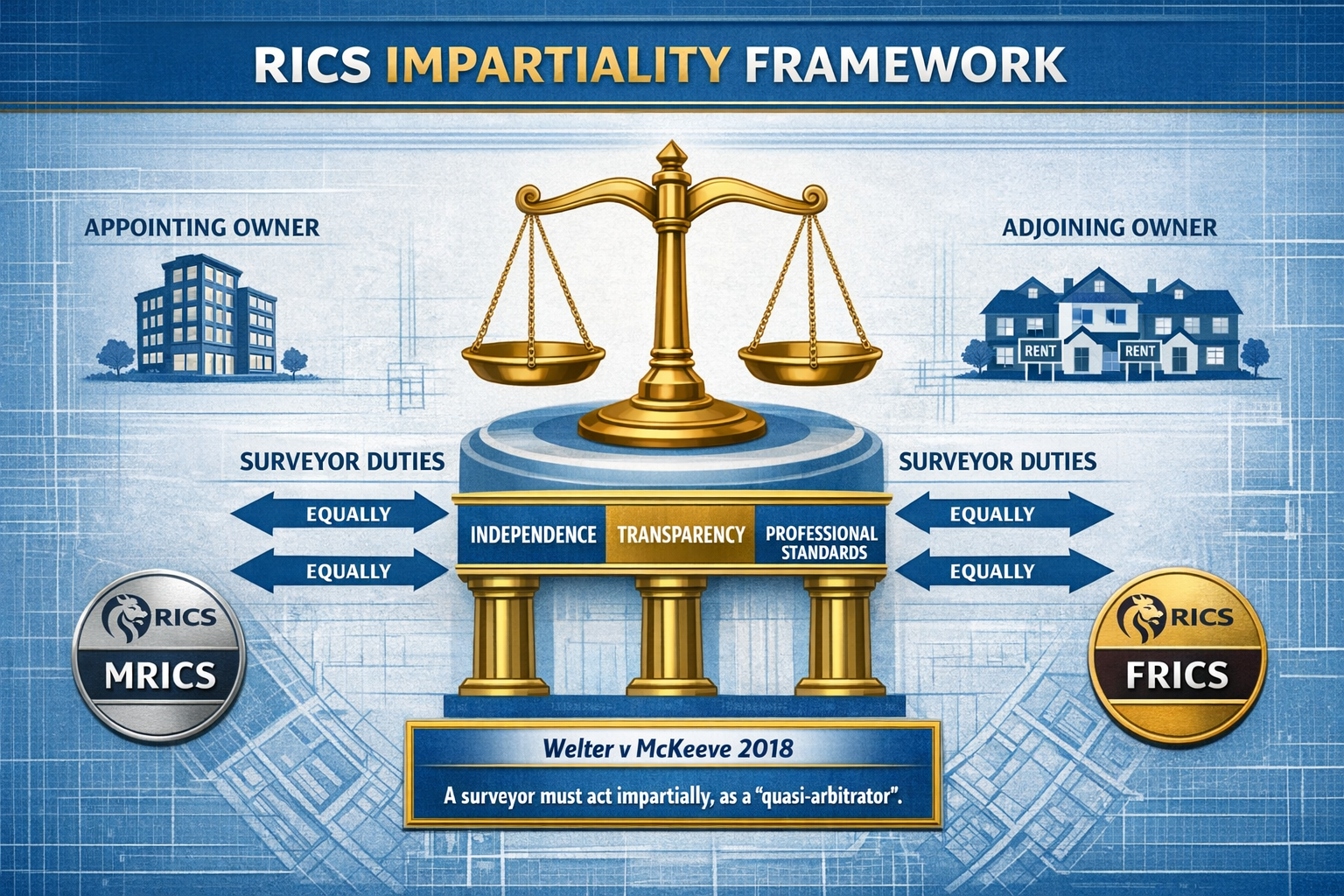
The principle that party wall surveyors must maintain strict impartiality isn't merely a professional courtesy—it's a legal requirement. The 2018 landmark case Welter v McKeeve fundamentally clarified that party wall surveyors are not agents of their appointing owners.[1] Instead, they function as impartial tribunals tasked with balancing the interests of all parties involved.
This distinction matters enormously in 2026's rental market. When a landlord appoints a surveyor to assess extension works affecting multiple tenanted units, that surveyor cannot prioritize the landlord's financial interests over tenant welfare or structural safety concerns. The surveyor's duty extends equally to:
- The building owner initiating the works
- The adjoining owner(s) whose property may be affected
- The occupiers (tenants) who will experience disruption
- The structural integrity of all affected properties
RICS Professional Requirements for Party Wall Work
The Royal Institution of Chartered Surveyors (RICS) establishes clear standards for professionals undertaking party wall work. According to RICS guidance, surveyors must hold MRICS or FRICS designations, maintain professional indemnity insurance, and engage in continuing professional development.[2]
These requirements ensure that surveyors possess:
✅ Technical competence in structural assessment
✅ Legal knowledge of the Party Wall etc. Act 1996
✅ Ethical framework emphasizing honesty and integrity
✅ Financial protection through adequate insurance coverage
For multi-occupancy extension works, these qualifications become even more critical. A surveyor must understand not just the technical aspects of construction but also the complex web of legal relationships between freeholders, leaseholders, and tenants.
The "Seen to Be Impartial" Standard
RICS guidance explicitly states that "problems can be avoided by acting impartially and to be seen to be doing so."[1] This dual requirement—actual impartiality and perceived impartiality—creates additional obligations for surveyors in 2026's heightened scrutiny environment.
In practice, this means:
| Requirement | Practical Application |
|---|---|
| Transparent communication | Providing identical information to all parties simultaneously |
| Documented decision-making | Recording the rationale for every award determination |
| Conflict disclosure | Revealing any prior relationships with parties involved |
| Equal accessibility | Making oneself available to answer questions from all sides |
| Neutral language | Avoiding terminology that suggests favoritism in reports |
Understanding what a party wall surveyor does helps clarify why these standards exist—surveyors serve as quasi-judicial figures, not advocates for any single party.
The 2026 Renters' Rights Act: New Dimensions for Party Wall Disputes
Enhanced Tenant Protections in Extension Works
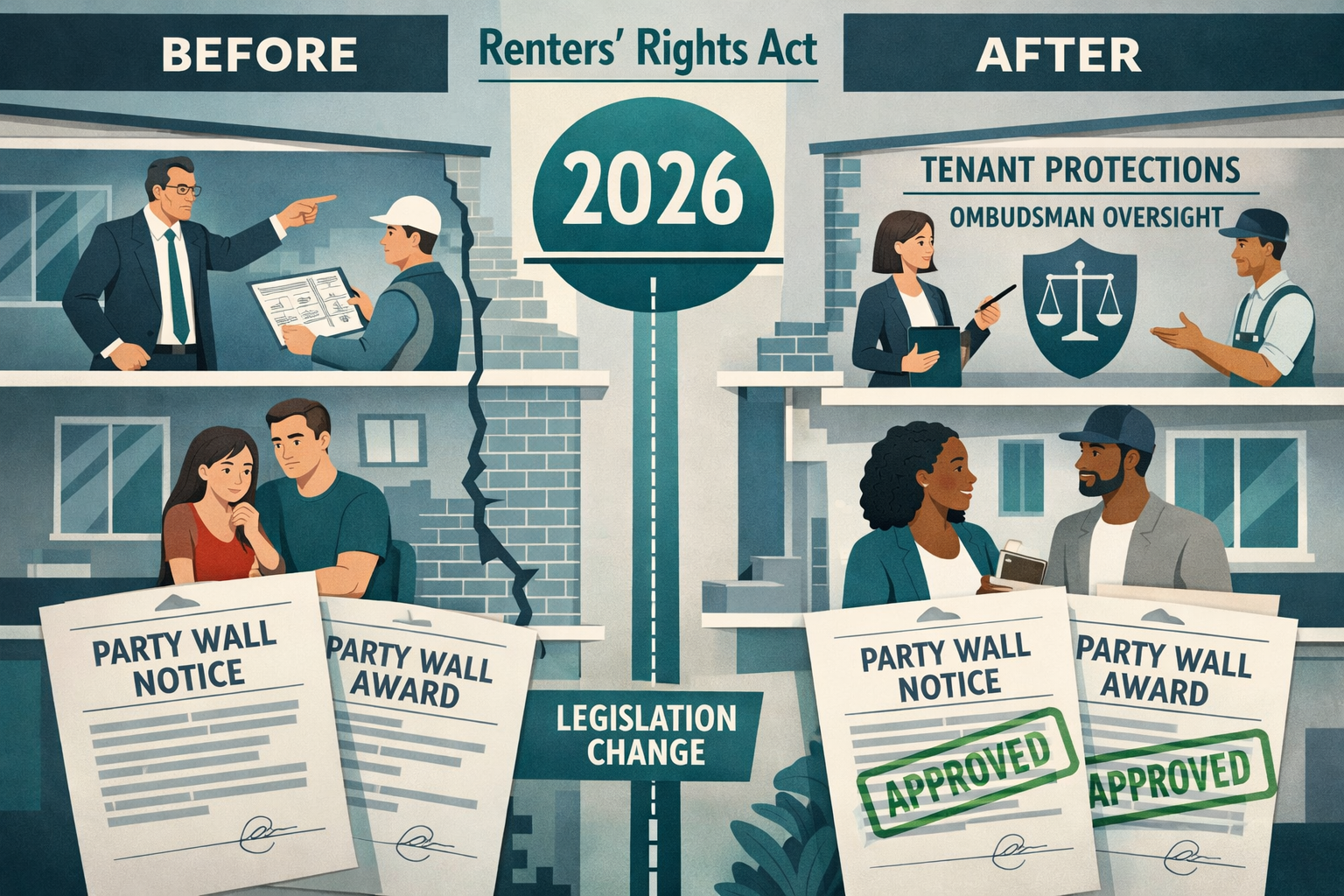
The Renters' Rights Act 2026 represents the most significant overhaul of rental legislation in decades, with profound implications for party wall procedures. While the Party Wall etc. Act 1996 remains the governing statute for structural matters, the 2026 legislation introduces overlapping protections that surveyors must navigate carefully.
Key changes affecting party wall surveyor impartiality in 2026 renters' rights disputes include:
🏠 Mandatory tenant consultation: Landlords must now demonstrate meaningful engagement with tenants before initiating extension works that affect their units
📢 Enhanced notice requirements: Tenants receive independent notification of party wall procedures, not just through their landlords
🛡️ Ombudsman oversight: A new private rental ombudsman can review complaints about inadequate consideration of tenant welfare in party wall awards
⚖️ Retaliation protections: Landlords cannot serve eviction notices in retaliation for tenants raising party wall concerns
These provisions create a more complex environment for surveyors. Where previously a surveyor might focus primarily on the interests of the building owner and adjoining owner, they must now explicitly consider how extension works impact tenant habitability, safety, and quiet enjoyment of rental properties.
Multi-Occupancy Buildings: Unique Challenges
Extension works in multi-occupancy buildings present exponentially more complex scenarios than traditional two-party disputes. Consider a typical case in 2026:
Scenario: A landlord owns a converted Victorian house divided into four rental flats. They propose a rear extension that will:
- Require excavation near the adjoining property's foundation
- Create noise and dust affecting all four tenant households
- Block light to two ground-floor units
- Necessitate temporary relocation of one tenant
In this situation, a surveyor must balance:
- The landlord's property rights and development interests
- The adjoining owner's concerns about structural damage
- The four tenants' rights to habitable conditions during works
- Compliance with both party wall legislation and rental protections
- Reasonableness of the proposed timeline and mitigation measures
The surveyor's award must address all these dimensions while maintaining strict impartiality. This often requires creative solutions, such as phased construction schedules, enhanced dust suppression measures, or temporary rent reductions—considerations that extend beyond traditional party wall practice.
Ombudsman Oversight and Professional Accountability
The introduction of ombudsman oversight in 2026 adds a new accountability layer for party wall surveyors. While the ombudsman cannot overturn party wall awards (which remain appealable only to County Court within 14 days),[2] they can:
- Investigate complaints about surveyor conduct
- Recommend compensation for procedural failures
- Refer cases of professional misconduct to RICS
- Publish findings that affect surveyor reputations
This oversight mechanism reinforces the importance of documented impartiality. Surveyors must maintain clear records showing how they:
- Considered tenant welfare alongside owner interests
- Evaluated alternative approaches to minimize disruption
- Ensured all parties understood their rights and the award rationale
- Applied RICS guidance consistently throughout the process
For those seeking party wall surveyor quotes, it's now essential to verify that the professional understands these 2026 requirements.
RICS Best Practices for Multi-Occupancy Extension Works in 2026
Pre-Award Investigation and Stakeholder Mapping
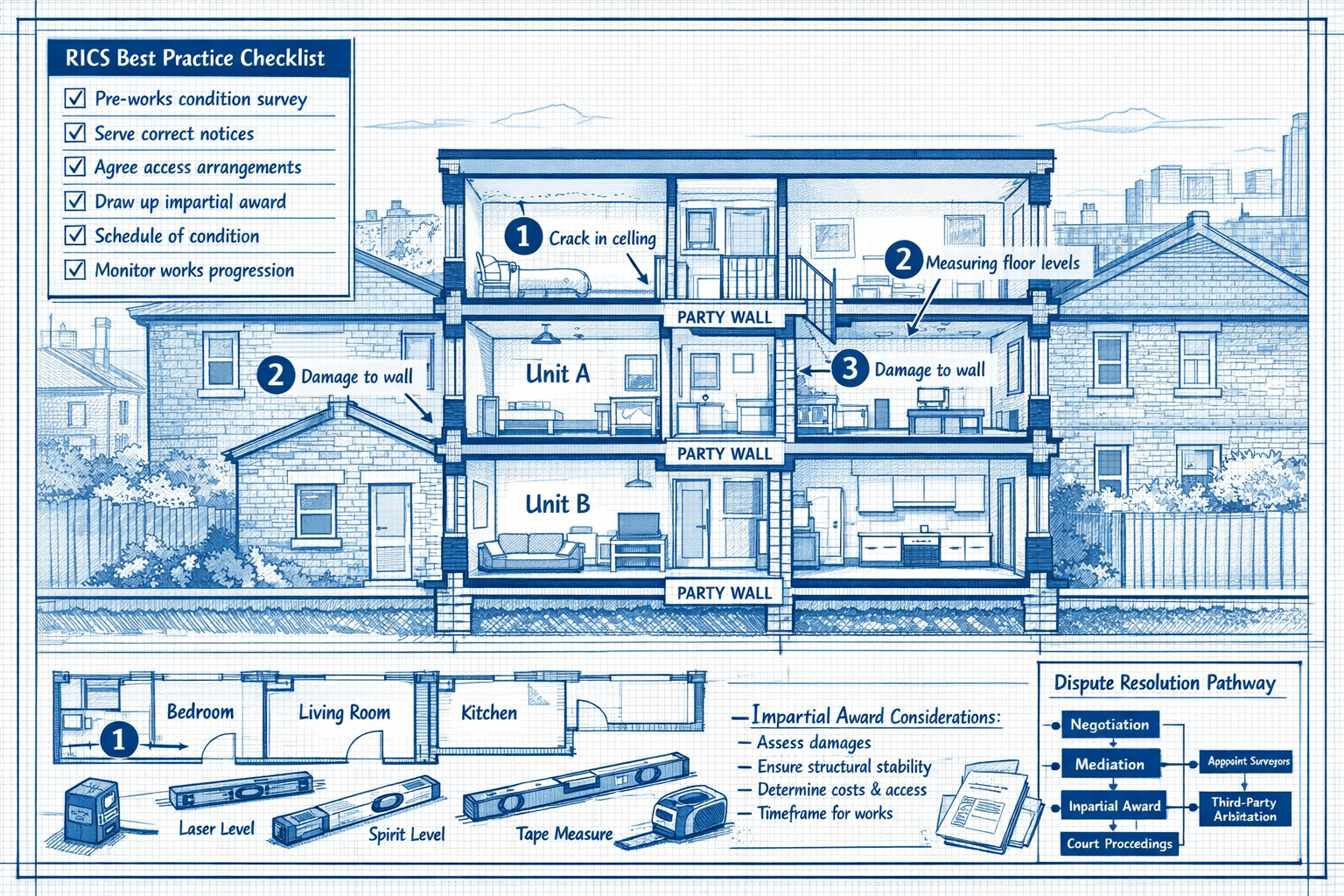
Effective impartiality begins before the formal award process. RICS best practice in 2026 requires surveyors to conduct comprehensive stakeholder mapping when dealing with multi-occupancy extension works. This involves:
Phase 1: Identification
- Document all legal interests in affected properties (freeholders, leaseholders, tenants)
- Identify vulnerable occupants (elderly, disabled, families with young children)
- Map the physical impact zones of proposed works
- Review existing lease agreements for relevant clauses
Phase 2: Engagement
- Conduct individual consultations with each affected party
- Provide plain-language explanations of party wall procedures
- Offer interpreters or accessibility accommodations as needed
- Document all communications for transparency
Phase 3: Assessment
- Evaluate the reasonableness of proposed works under both party wall and rental legislation
- Consider alternative approaches that might reduce tenant impact
- Assess compliance with building regulations and planning permissions
- Review the building owner's proposed schedule and mitigation measures
This thorough approach prevents the appearance of bias toward the appointing owner while ensuring all relevant factors inform the final award.
Crafting Impartial Awards: Key Considerations
When drafting awards for multi-occupancy extension works, surveyors must address several critical elements to demonstrate impartiality:
1. Structural Protection Measures
Awards must specify protections for all affected properties, not just the adjoining owner's. This includes:
- Underpinning specifications and monitoring protocols
- Vibration limits during excavation near multiple units
- Structural inspections before, during, and after works
- Remediation procedures if damage occurs
2. Tenant Welfare Provisions
Under 2026 guidance, awards should explicitly address:
- Working hours that respect tenant schedules (avoiding early mornings for night-shift workers, for example)
- Dust and noise control measures beyond standard construction practice
- Access arrangements that minimize intrusion into tenanted spaces
- Emergency contact procedures if urgent issues arise during works
3. Compensation and Mitigation
While party wall awards traditionally focus on structural matters, 2026's integrated approach requires consideration of:
- Temporary rent reductions for significantly affected units
- Relocation assistance if works make units temporarily uninhabitable
- Compensation for damage to tenant belongings
- Timeline commitments with penalties for unreasonable delays
4. Dispute Resolution Mechanisms
Awards should include clear procedures for addressing issues that arise during construction:
- Regular progress meetings with all stakeholders
- A designated point of contact for tenant concerns
- Expedited procedures for urgent safety matters
- Documentation requirements for any variations to the award
Understanding party wall agreement costs helps parties budget appropriately for these comprehensive processes.
Documentation Standards for Demonstrable Impartiality
In 2026's environment of enhanced scrutiny, documentation becomes a surveyor's primary defense against allegations of bias. RICS guidance emphasizes maintaining:
📄 Comprehensive records of all site visits, meetings, and communications
📊 Comparative analysis showing how alternatives were evaluated
📝 Reasoning statements explaining why specific provisions were included or rejected
🔍 Evidence trails linking award terms to objective standards and precedents
For example, if a surveyor determines that works can proceed during standard business hours despite tenant requests for restrictions, the award should explain:
- The legal framework supporting this decision
- How it balances owner rights with tenant welfare
- What additional mitigation measures offset the impact
- Why alternative schedules were deemed unreasonable
This level of documentation serves multiple purposes:
- Provides transparency to all parties
- Supports the award if appealed to County Court
- Demonstrates professional competence if reviewed by ombudsman
- Protects the surveyor's professional reputation
Common Pitfalls and How to Avoid Them
Even experienced surveyors can inadvertently compromise their impartiality in multi-occupancy scenarios. Common mistakes include:
❌ Over-identification with the appointing owner: Remember that appointment doesn't create an agency relationship
❌ Dismissing tenant concerns as "not party wall matters": The 2026 framework requires integrated consideration
❌ Inadequate site investigation: Failing to visit all affected units can lead to incomplete awards
❌ Boilerplate language: Generic awards don't demonstrate thoughtful consideration of specific circumstances
❌ Poor communication: Allowing one party to dominate information flow creates perception of bias
To maintain the highest standards of impartiality, surveyors should regularly review their practices against RICS guidance and seek peer consultation on complex cases. Those working in areas like London party wall agreements face particularly complex multi-occupancy scenarios requiring extra diligence.
Case Studies: Impartiality in Practice
Case Study 1: The Converted Warehouse Extension
Scenario: A developer owned a converted warehouse divided into eight rental apartments. They proposed a three-story extension that would affect the party wall with an adjoining commercial property and impact all residential tenants.
Impartiality Challenges:
- Developer had appointed the surveyor for previous projects
- Five tenants objected; three were neutral
- Adjoining owner demanded extensive (arguably excessive) protective measures
- Timeline pressure due to planning permission expiration
Surveyor's Approach:
The surveyor maintained impartiality by:
- Disclosing the prior relationship with the developer upfront
- Conducting individual consultations with all eight tenant households
- Commissioning an independent structural engineer's report
- Modifying the developer's proposed schedule to address tenant shift work patterns
- Negotiating reasonable protective measures that satisfied the adjoining owner without imposing undue costs
Outcome: The award included phased construction, enhanced soundproofing, temporary rent reductions for most-affected units, and comprehensive monitoring protocols. No party appealed, and the ombudsman received no complaints.
Case Study 2: The HMO Basement Extension Dispute
Scenario: A house in multiple occupation (HMO) landlord sought to excavate beneath the property to create additional rental rooms. The adjoining property was owner-occupied, and the HMO housed six tenants.
Impartiality Challenges:
- Significant safety concerns about excavation depth
- Tenants feared displacement during works
- Adjoining owner alleged the surveyor was biased toward the HMO landlord
- Complex regulatory environment (HMO licensing, building regulations, party wall act)
Surveyor's Approach:
The surveyor demonstrated impartiality through:
- Engaging a third-party structural engineer for excavation assessment
- Requiring detailed method statements before approving the award
- Mandating weekly safety inspections during works
- Securing landlord commitment to maintain tenancies throughout (no forced relocations)
- Documenting every decision with reference to objective standards
Outcome: The award imposed stricter conditions than the landlord preferred but less restrictive than the adjoining owner demanded. The balanced approach withstood scrutiny when the adjoining owner initially filed an appeal, which was later withdrawn.
These cases illustrate how party wall surveyor impartiality in 2026 renters' rights disputes requires active balancing of multiple interests, transparent decision-making, and willingness to impose conditions on the appointing owner when necessary.
Practical Guidance for Surveyors, Landlords, and Tenants
For Party Wall Surveyors
Professional Development Priorities:
- Complete RICS training modules on the Renters' Rights Act 2026
- Attend seminars on multi-occupancy dispute resolution
- Review recent County Court appeals involving rental properties
- Maintain updated knowledge of ombudsman decisions
Process Improvements:
- Develop standardized stakeholder mapping templates
- Create tenant-friendly explanatory materials
- Implement robust documentation systems
- Establish peer review arrangements for complex cases
Risk Management:
- Verify professional indemnity insurance covers 2026 requirements
- Maintain clear engagement letters explaining impartiality obligations
- Document conflicts of interest and how they're managed
- Consider appointing agreed surveyors in complex multi-occupancy cases
For Landlords Planning Extension Works
Pre-Planning Steps:
- Consult tenants early about proposed works (before formal party wall notices)
- Consider timing that minimizes tenant disruption
- Budget for enhanced mitigation measures beyond basic party wall requirements
- Research party wall surveyor options with experience in rental properties
During the Party Wall Process:
- Provide complete information to the surveyor about tenant arrangements
- Respond promptly to surveyor requests for additional details
- Accept that impartial awards may impose conditions you didn't anticipate
- Maintain open communication with tenants throughout
Common Mistakes to Avoid:
- Assuming the surveyor you appoint will favor your interests
- Failing to budget adequately for tenant welfare provisions
- Pressuring the surveyor for favorable terms
- Neglecting to coordinate party wall procedures with tenancy agreements
For Tenants in Affected Properties
Understanding Your Rights:
- You have independent standing under the Renters' Rights Act 2026
- Party wall awards should address your welfare, not just structural matters
- You can raise concerns directly with the surveyor
- The ombudsman provides recourse if your interests are ignored
Effective Engagement:
- Respond to surveyor communications promptly
- Document your concerns clearly and specifically
- Focus on practical impacts (noise, dust, access, safety) rather than opposing works generally
- Seek advice from tenant advocacy organizations if needed
When to Escalate:
- If the surveyor refuses to meet with you or dismisses your concerns
- If the award contains no provisions addressing tenant welfare
- If works proceed in violation of award terms
- If you experience retaliation for raising concerns
For broader property concerns, tenants should also understand boundary wall disputes and other property matters that may affect their rights.
The Future of Party Wall Impartiality in Rental Properties
Emerging Trends in 2026 and Beyond
The rental market continues evolving rapidly, with several trends likely to impact party wall practice:
🏗️ Increased Density: Urban areas see growing pressure to maximize rental unit numbers through extensions and conversions, multiplying the parties involved in typical disputes.
🌍 Sustainability Requirements: New environmental standards may require extensive retrofitting of rental properties, triggering party wall procedures in buildings that haven't seen major works in decades.
📱 Technology Integration: Digital notice systems and virtual consultations are becoming standard, requiring surveyors to adapt traditional practices while maintaining impartiality.
⚖️ Regulatory Complexity: The intersection of party wall law, rental legislation, building regulations, and planning requirements demands increasingly sophisticated professional judgment.
Professional Development and Industry Standards
RICS continues refining guidance to address these evolving challenges. Surveyors should anticipate:
- Enhanced CPD requirements specifically addressing rental property scenarios
- Case law updates as County Courts interpret the interaction between party wall and rental legislation
- Standardized templates for multi-occupancy awards
- Peer review mechanisms to ensure consistent application of impartiality standards
The profession's credibility depends on maintaining public confidence that surveyors truly function as impartial tribunals, not as advocates for whoever pays their fees.
Legislative Developments to Watch
Several potential legislative changes could further impact party wall surveyor impartiality in 2026 renters' rights disputes:
- Mandatory registration of party wall surveyors (currently under consultation)
- Expanded ombudsman jurisdiction to review award substance, not just process
- Standardized fee structures to reduce financial pressure on surveyors
- Alternative dispute resolution requirements before formal party wall procedures
Surveyors, landlords, and tenants should stay informed about these developments through RICS publications, professional associations, and legal updates.
Conclusion
Party wall surveyor impartiality in 2026 renters' rights disputes represents the cornerstone of fair outcomes in an increasingly complex regulatory environment. The Renters' Rights Act 2026 has fundamentally expanded the scope of considerations that surveyors must address, moving beyond purely structural matters to encompass tenant welfare, habitability, and protection from retaliation.
For surveyors, maintaining impartiality requires:
- Rigorous adherence to RICS professional standards
- Comprehensive stakeholder engagement in multi-occupancy scenarios
- Transparent documentation of decision-making processes
- Willingness to impose conditions on appointing owners when necessary
- Ongoing professional development to stay current with evolving requirements
For landlords, successful navigation of party wall procedures demands:
- Early tenant consultation before formal notices
- Selection of experienced surveyors who understand rental property complexities
- Realistic budgeting for enhanced mitigation measures
- Acceptance that impartial awards serve long-term interests by preventing appeals and ombudsman complaints
For tenants, effective protection of rights involves:
- Understanding that you have independent standing in party wall matters
- Engaging constructively with surveyors and documenting concerns
- Utilizing ombudsman oversight when necessary
- Seeking advice from tenant advocacy organizations for complex situations
The legal foundation established in Welter v McKeeve—that surveyors are impartial tribunals, not agents—remains as vital in 2026 as it was in 2018.[1] However, the practical application of this principle has grown more nuanced with the overlay of enhanced tenant protections and ombudsman oversight.
Actionable Next Steps
If you're a landlord planning extension works:
- Consult with your tenants informally before issuing party wall notices
- Research qualified party wall surveyors with multi-occupancy experience
- Budget 15-20% above standard party wall costs for enhanced tenant provisions
- Review your insurance coverage for extended construction timelines
If you're a tenant affected by proposed works:
- Request a copy of the party wall notice and award when issued
- Document your concerns in writing to the surveyor
- Photograph your unit's condition before works commence
- Save the ombudsman contact information for potential escalation
If you're a party wall surveyor:
- Complete RICS training on the Renters' Rights Act 2026 if you haven't already
- Review your documentation practices against the standards outlined in this article
- Develop tenant-friendly explanatory materials for multi-occupancy cases
- Consider joining professional forums focused on rental property disputes
The intersection of party wall legislation and rental protections will continue evolving as case law develops and regulations adapt. By prioritizing demonstrable impartiality, maintaining rigorous professional standards, and embracing the expanded scope of considerations required in 2026, surveyors can fulfill their crucial role as fair arbiters in an increasingly complex property landscape.
Understanding property disputes more broadly helps all parties appreciate the importance of professional, impartial surveying in maintaining harmonious property relationships.
References
[1] Party Wall Surveyors Impartiality – https://ww3.rics.org/uk/en/journals/built-environment-journal/party-wall-surveyors-impartiality.html
[2] Party Walls – https://www.rics.org/consumer-guides/party-walls
[3] Party Wall Agreements For Data Centre Expansions Surveyor Guidance Amid 2026s Ai Infrastructure Boom – https://nottinghillsurveyors.com/blog/party-wall-agreements-for-data-centre-expansions-surveyor-guidance-amid-2026s-ai-infrastructure-boom