

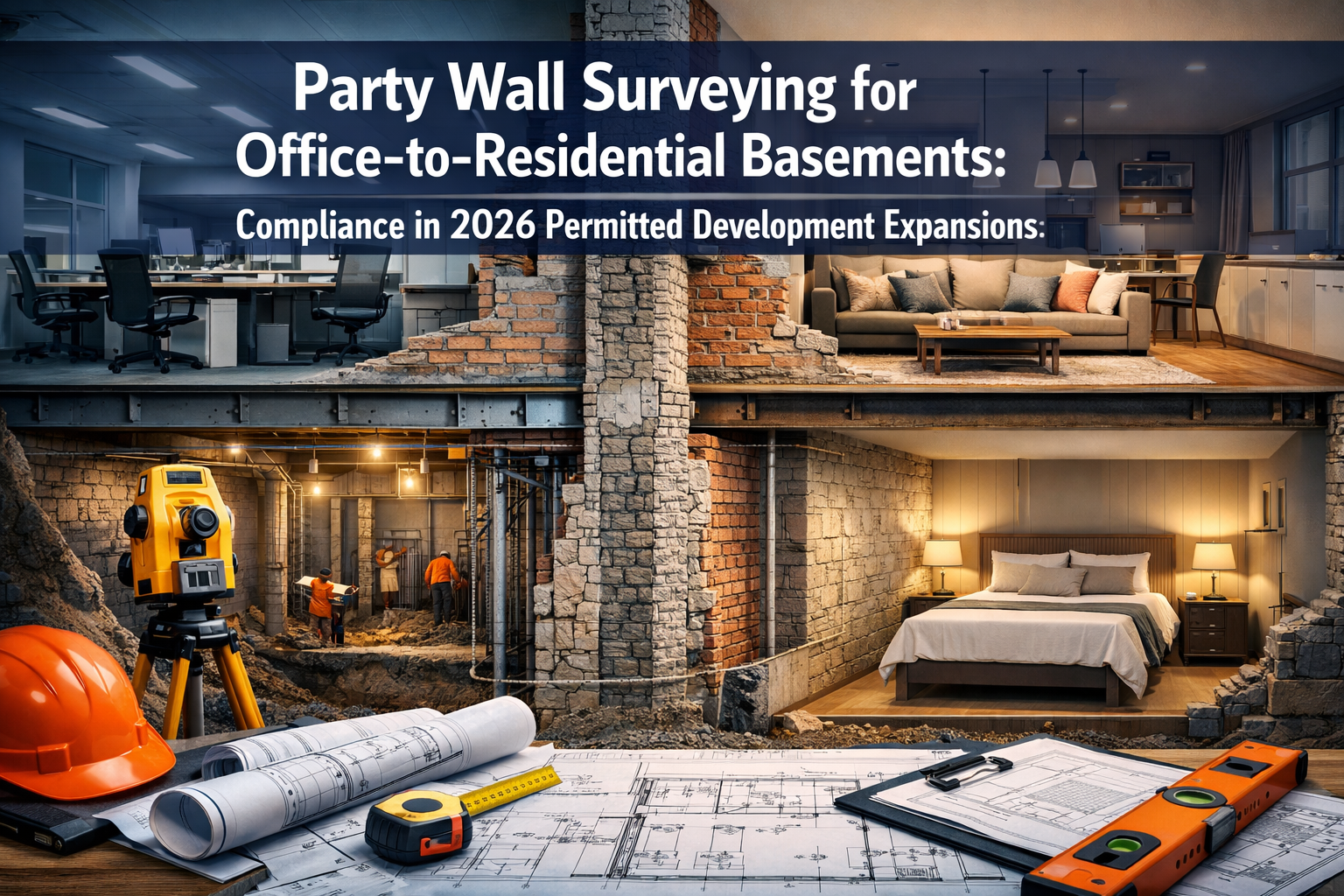
As urban development pipelines recover and expand in 2026, Party Wall Surveying for Office-to-Residential Basements: Compliance in 2026 Permitted Development Expansions has become a critical concern for property developers and building owners. With permitted development (PD) rights increasingly allowing office-to-residential conversions, basement expansions present unique challenges that require careful navigation of party wall legislation. Understanding the intersection of these regulations protects both building owners and their neighbours while ensuring projects proceed smoothly. 🏗️
The surge in office-to-residential conversions reflects changing work patterns and housing demands. However, when these conversions involve basement excavations or structural alterations affecting shared walls, the Party Wall etc. Act 1996 comes into sharp focus. Surveyors now guide developers through complex neighbour negotiations, award drafting, and compliance protocols that have evolved to meet 2026's expanded PD landscape.
Key Takeaways
- Party wall notices are mandatory for basement works affecting adjoining properties, even under permitted development rights
- Surveyor appointments facilitate dispute resolution and ensure legal compliance throughout conversion projects
- Party wall awards provide binding agreements that protect both building and adjoining owners' interests
- Compliance with 2026 regulations requires understanding both PD rights and party wall legislation simultaneously
- Professional guidance significantly reduces project delays and potential legal complications
Understanding Party Wall Surveying for Office-to-Residential Basements
What Is Party Wall Surveying?
Party wall surveying involves the professional assessment and management of construction works that affect walls, structures, or excavations shared between or near neighbouring properties. Under the Party Wall etc. Act 1996, specific types of work require formal notification to adjoining owners, regardless of whether planning permission or permitted development rights apply.
For office-to-residential basement conversions, party wall surveying becomes essential when:
- Excavating within three or six metres of neighbouring foundations (depending on depth)
- Underpinning or strengthening existing party walls
- Creating new openings or structural alterations to shared walls
- Installing damp-proofing or waterproofing systems that affect party structures
- Removing or modifying load-bearing elements adjacent to boundaries
The surveyor acts as an impartial professional who prepares detailed schedules of condition, drafts party wall awards, and ensures works comply with both structural safety standards and legal requirements. Understanding what a party wall surveyor does helps property owners appreciate their crucial role in conversion projects.
The Party Wall Act 1996 Framework
The legislation establishes three main categories of notifiable works:
| Work Type | Description | Notice Period |
|---|---|---|
| Section 1 | New party walls on boundary lines | 1 month |
| Section 2 | Works to existing party walls/structures | 2 months |
| Section 6 | Excavations near neighbouring foundations | 1 month |
For basement conversions, Section 6 notices are most commonly required. When excavating below the foundation level of an adjoining property, or within specified distances, formal notification becomes mandatory. The adjoining owner then has 14 days to consent or dissent to the proposed works.
Permitted Development Rights in 2026
Permitted development rights allow certain building works without requiring full planning permission. In 2026, expanded PD rights for office-to-residential conversions have streamlined many projects, but they do not override party wall obligations.
This distinction confuses many developers who assume PD rights eliminate all regulatory requirements. However, party wall legislation operates independently of planning regulations. Even when planning permission isn't needed, party wall procedures remain fully applicable.
Key 2026 PD considerations for basement conversions:
- Volume limits and height restrictions still apply
- Local authority prior approval may be required for certain aspects
- Building regulations approval remains mandatory
- Party wall notices must be served regardless of PD status
- Structural calculations must demonstrate compliance with safety standards
Compliance Requirements for Office-to-Residential Basement Expansions in 2026
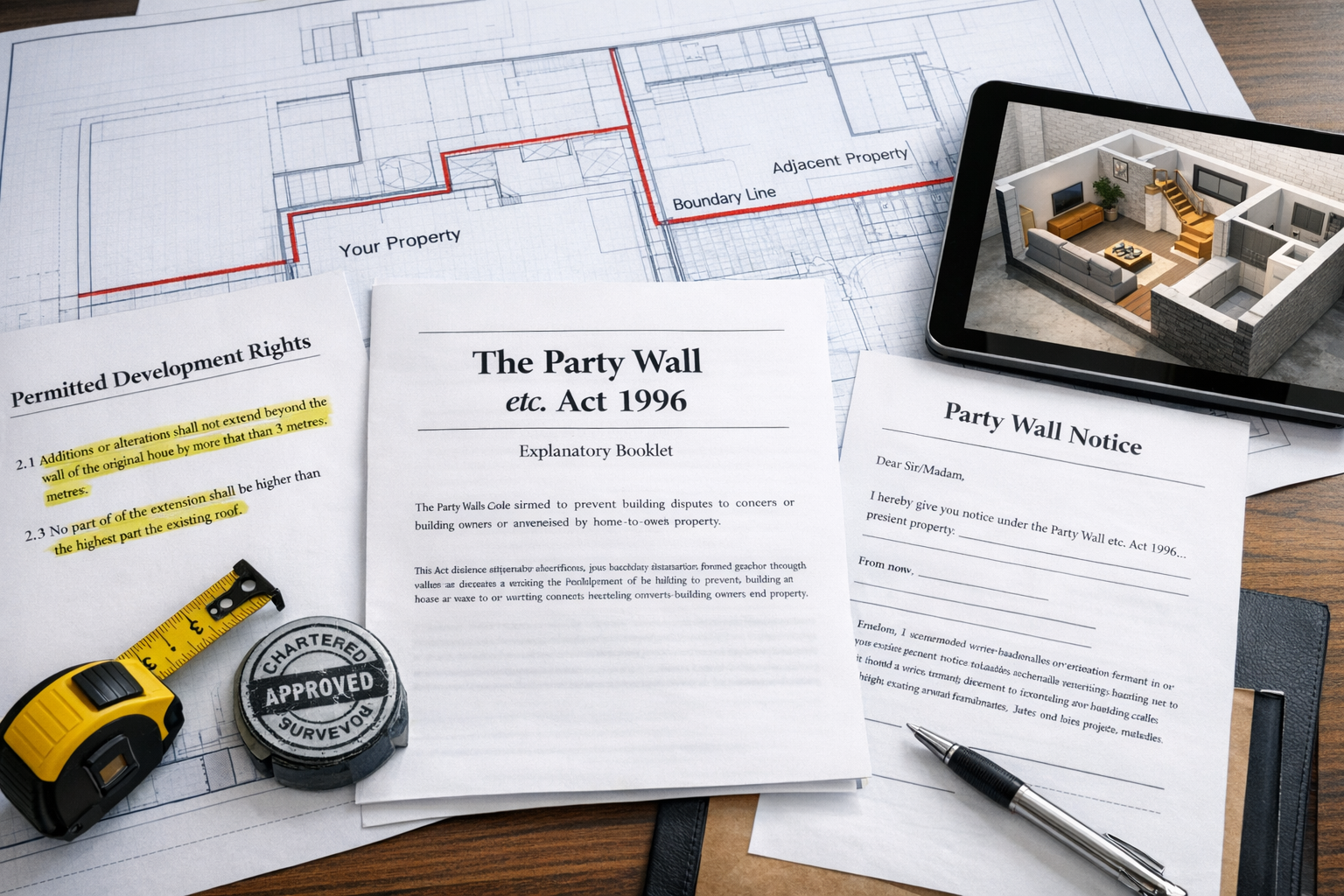
Initial Assessment and Planning
Before commencing any basement conversion project, a comprehensive assessment establishes the scope of party wall involvement:
Step 1: Boundary Identification 📍
Determine exact property boundaries using title deeds, land registry documents, and professional surveys. Basement works often extend closer to boundaries than ground-floor structures, increasing the likelihood of triggering party wall requirements.
Step 2: Structural Survey
Commission a detailed structural survey identifying:
- Existing foundation depths (both your property and neighbours')
- Current condition of party walls and shared structures
- Soil conditions and drainage patterns
- Potential impact zones from proposed excavations
Step 3: Neighbour Consultation
While not legally required before serving notices, early informal discussions with adjoining owners can prevent disputes and facilitate smoother proceedings. Explain the project scope, anticipated timeline, and measures to minimize disruption.
Serving Party Wall Notices
Proper notice serving follows strict procedural requirements:
Notice Content Requirements:
- Clear description of proposed works with technical drawings
- Start date (must allow full notice period)
- Building owner's details and contact information
- Statement of adjoining owner's rights and response options
- Explanation of the dispute resolution process
Delivery Methods:
Notices must be served correctly to be legally valid:
- Hand delivery with signed receipt
- Recorded delivery postal service
- Email (if previously agreed in writing)
- Service to the property if owner cannot be located
Response Timelines:
Adjoining owners have 14 days to respond by either:
- Consenting in writing (works may proceed without award)
- Dissenting or not responding (triggers surveyor appointment)
- Requesting modifications (requires negotiation)
Understanding the costs involved in party wall agreements helps budget appropriately for this process.
Surveyor Appointments and the Award Process
When adjoining owners dissent or fail to respond, the party wall award process begins:
Surveyor Selection Options:
- Agreed Surveyor – Single surveyor acts for both parties (most cost-effective)
- Two Surveyors – Each party appoints their own surveyor (more common for complex projects)
- Third Surveyor – Appointed to resolve disagreements between the two surveyors
The appointed surveyor(s) then:
✅ Conduct pre-work inspections documenting existing conditions
✅ Prepare schedule of condition with photographs and detailed descriptions
✅ Draft the party wall award specifying permitted works and protective measures
✅ Establish working hours and access arrangements
✅ Determine cost allocation between parties
✅ Set dispute resolution procedures for any issues arising
Award Contents:
A comprehensive party wall award includes:
- Detailed work specifications and methodologies
- Structural protection requirements (shoring, underpinning methods)
- Monitoring protocols during construction
- Insurance requirements and indemnities
- Procedures for addressing damage or disputes
- Timeline for completion and post-work inspections
The award becomes a legally binding document enforceable through county courts if necessary.
Basement-Specific Compliance Considerations
Office-to-residential basement conversions present unique challenges requiring specialized surveying expertise:
Foundation Depth Analysis 🏢
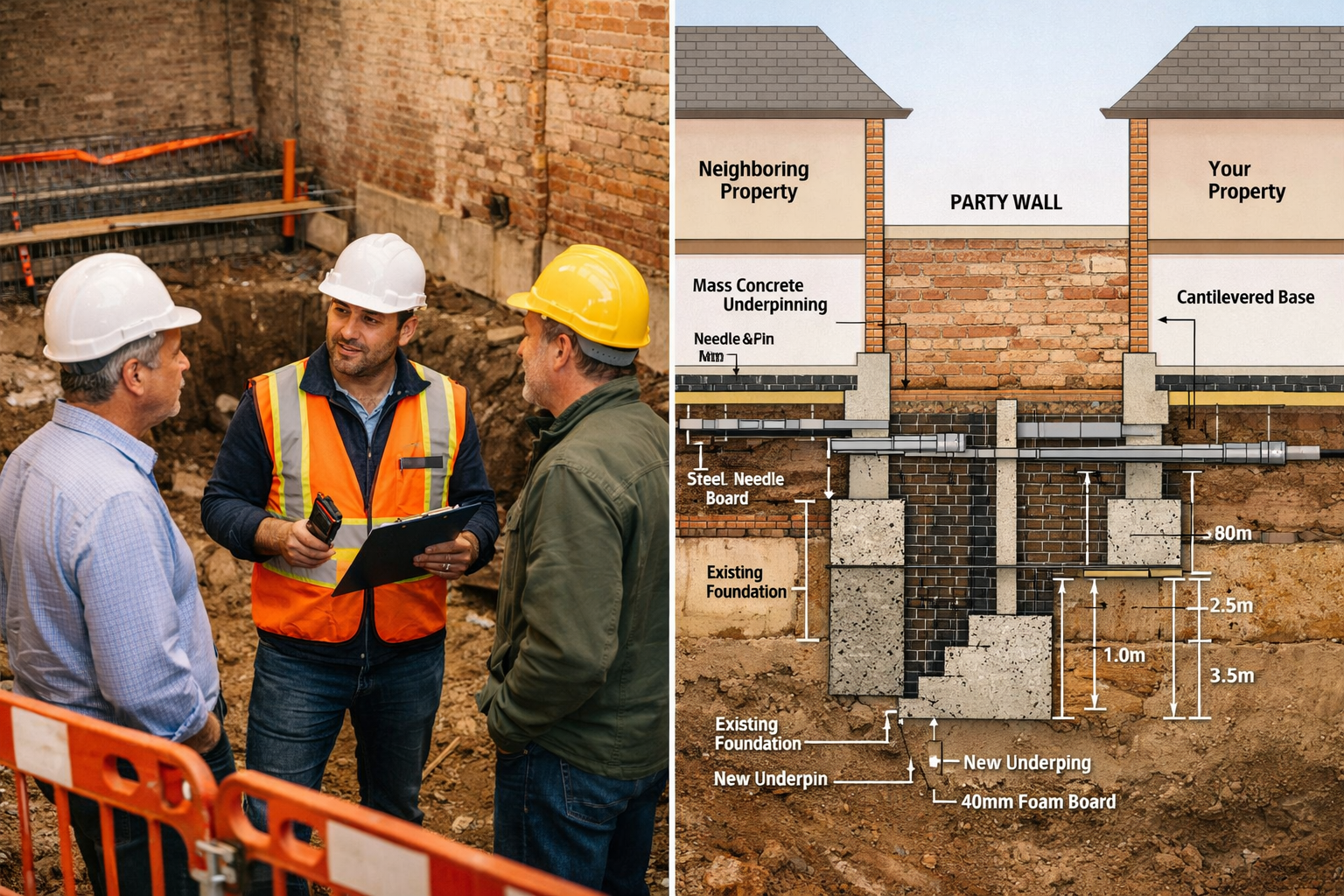
Commercial buildings often have deeper foundations than residential properties. When converting offices to residential use with basement expansion, careful analysis ensures new excavations don't undermine neighbouring foundations. This requires:
- Detailed foundation investigation on both properties
- Soil mechanics assessment
- Underpinning design where necessary
- Temporary works design for excavation support
Waterproofing and Drainage
Basement waterproofing systems can affect party walls and neighbouring properties:
- External tanking may require work on adjoining land
- Drainage alterations must not direct water toward neighbours
- Sump pump installations require careful positioning
- Damp-proof membranes at party walls need bilateral agreement
Structural Loading Changes
Converting office space to residential use alters structural loading patterns:
- Residential loading codes differ from commercial standards
- Party walls may require strengthening
- Floor structures need reassessment
- Fire resistance requirements change
Access and Logistics 🚧
Basement construction requires consideration of:
- Excavation material removal routes
- Equipment access (may require temporary easements)
- Working hours in residential areas
- Noise and vibration management
- Dust suppression measures
Consulting with expert party wall surveyors in London ensures these complex issues receive proper attention.
Navigating Neighbour Negotiations and Dispute Resolution
Effective Communication Strategies
Successful basement conversion projects depend heavily on maintaining positive neighbour relations throughout the process:
Pre-Notice Engagement 💬
Before formal notices, consider:
- Hosting an informal meeting to present plans
- Providing visual representations (3D models, cross-sections)
- Addressing concerns proactively
- Offering to modify plans where reasonable
- Establishing direct communication channels
Transparency Throughout Construction
Maintain trust by:
- Providing regular progress updates
- Notifying neighbours before particularly disruptive phases
- Responding promptly to concerns
- Allowing reasonable inspection access
- Documenting all communications
Professional Representation
Engaging experienced professionals demonstrates commitment to proper procedures:
- Chartered surveyors with party wall specialization
- Structural engineers for technical assessments
- Project managers for coordination
- Legal advisors for complex situations
Common Disputes and Resolutions
Despite best efforts, disputes occasionally arise during basement conversion projects:
Dispute Type 1: Extent of Works
Neighbours may contest whether proposed works actually require party wall notices. Resolution involves:
- Detailed technical assessment by surveyors
- Reference to case law and precedent
- Third surveyor determination if needed
- Possible modification of work scope
Dispute Type 2: Working Hours and Access
Disagreements about construction timing or site access require:
- Negotiated schedules balancing project needs and neighbour comfort
- Written agreements on specific activities and timeframes
- Compensation arrangements for exceptional disruption
- Alternative access arrangements where possible
Dispute Type 3: Damage Claims
Alleged damage to neighbouring properties demands:
- Reference to pre-work schedule of condition
- Independent structural assessment
- Determination of causation (was damage caused by works?)
- Appropriate remediation or compensation
- Insurance claim procedures where applicable
Dispute Type 4: Cost Allocation
Disagreements over who pays surveyor fees and award costs involve:
- Review of statutory cost responsibility provisions
- Assessment of benefit derived by each party
- Consideration of reasonableness and proportionality
- Award determination by appointed surveyor(s)
Understanding London party wall surveyor costs helps set realistic expectations for all parties.
The Third Surveyor Role
When two appointed surveyors cannot reach agreement, the third surveyor provides binding resolution:
Selection Process:
- Usually agreed upon by the two surveyors
- Must be impartial with no prior involvement
- Typically highly experienced in party wall matters
- May be selected from professional body lists
Decision-Making Authority:
The third surveyor can:
- Determine disputed technical matters
- Modify award provisions
- Allocate costs between parties
- Set binding timelines and procedures
- Issue determinations enforceable as awards
Cost Implications:
Third surveyor involvement increases overall costs, typically:
- £1,500-£5,000 for straightforward determinations
- £5,000-£15,000+ for complex technical disputes
- Costs allocated according to reasonableness of parties' positions
Legal Remedies and Enforcement
When informal resolution fails, legal mechanisms enforce party wall rights:
Injunctions ⚖️
Courts may grant injunctions to:
- Stop works proceeding without proper notices
- Prevent damage to adjoining properties
- Enforce award provisions
- Secure compliance with protective measures
Damages Claims
Adjoining owners can pursue compensation for:
- Physical damage to their property
- Diminution in property value
- Loss of amenity during works
- Costs incurred due to non-compliance
Criminal Proceedings
Serious breaches may constitute criminal offences:
- Proceeding without serving required notices
- Causing unnecessary inconvenience
- Refusing reasonable access for inspections
- Failing to comply with award provisions
Most disputes resolve through surveyor mediation without reaching court, but understanding available remedies encourages compliance and reasonable behaviour from all parties.
Best Practices for Party Wall Surveying in 2026 Basement Conversions
Selecting the Right Surveyor
Choosing appropriate professional representation significantly impacts project success:
Essential Qualifications:
- RICS membership (Royal Institution of Chartered Surveyors)
- Specific party wall specialization and experience
- Knowledge of basement construction techniques
- Understanding of 2026 permitted development regulations
- Local area familiarity and precedent knowledge
Experience Indicators:
Look for surveyors with:
- Minimum 5+ years party wall practice
- Portfolio of similar basement conversion projects
- Professional indemnity insurance (minimum £1 million)
- Positive client testimonials and references
- Membership in Faculty of Party Wall Surveyors (FPWS)
Cost Considerations:
Surveyor fees for basement conversions typically range:
- Agreed surveyor: £1,500-£4,000
- Building owner's surveyor: £2,000-£5,000
- Adjoining owner's surveyor: £1,500-£3,500
- Complex projects: £5,000-£15,000+
Fees depend on project complexity, property value, and anticipated duration. For detailed pricing information, review London party wall surveyor costs.
Documentation and Record-Keeping
Meticulous documentation protects all parties throughout the conversion process:
Pre-Work Documentation: 📋
- Comprehensive photographic surveys (interior and exterior)
- Detailed written descriptions of existing conditions
- Crack monitoring reports with measurements
- Structural assessment reports
- Soil investigation results
- Drainage surveys and CCTV inspections
During Construction:
- Weekly progress photographs
- Daily site diaries recording activities
- Incident reports for any concerns
- Correspondence logs with all parties
- Monitoring data (vibration, settlement, noise levels)
- Delivery and access records
Post-Completion:
- Final condition surveys comparing to pre-work state
- Completion certificates from building control
- As-built drawings showing actual construction
- Warranty documentation for structural works
- Final account of costs and settlements
Proper documentation facilitates dispute resolution and provides evidence if claims arise years later.
Technology Integration in 2026
Modern surveying technology enhances accuracy and efficiency:
3D Laser Scanning 🔬
- Creates precise digital models of existing structures
- Documents conditions with millimetre accuracy
- Enables detailed comparison of pre- and post-work states
- Provides compelling evidence in dispute situations
Building Information Modelling (BIM)
- Integrates structural, architectural, and services information
- Facilitates coordination between design professionals
- Identifies potential conflicts before construction
- Improves communication with neighbours through visualizations
Remote Monitoring Systems
- Automated crack monitoring with digital gauges
- Vibration sensors providing real-time alerts
- Settlement monitoring with precision levelling
- Data logging for compliance demonstration
Digital Documentation Platforms
- Cloud-based systems for document sharing
- Version control for drawings and specifications
- Audit trails for all communications
- Secure access for all authorized parties
Insurance and Risk Management
Comprehensive insurance coverage protects against party wall-related risks:
Required Policies:
-
Professional Indemnity Insurance
- Covers surveyor errors and omissions
- Minimum £1 million coverage recommended
- Essential for all appointed surveyors
-
Contractor's All Risks Insurance
- Covers damage during construction
- Should specifically include party wall works
- Minimum £5-10 million public liability
-
Structural Warranty
- Provides long-term protection for structural works
- Typically 10-year coverage period
- Transferable to future property owners
-
Non-Negligent Damage Insurance
- Covers accidental damage not resulting from negligence
- Specific party wall endorsement recommended
- Particularly important for basement excavations
Risk Mitigation Strategies: 🛡️
- Engage experienced contractors with relevant track records
- Implement robust site management and supervision
- Conduct regular inspections throughout construction
- Maintain emergency response procedures
- Establish contingency funds for unforeseen issues
Timeline Planning and Project Management
Realistic scheduling accounts for party wall procedures:
Typical Timeline for Basement Conversion:
Months 1-2: Pre-Construction Phase
- Initial surveys and design development
- Structural calculations and building control submission
- Party wall notice preparation and serving
- Awaiting response period (14 days minimum)
Months 2-3: Award Process
- Surveyor appointments (if dissent occurs)
- Schedule of condition preparation
- Award drafting and negotiation
- Award finalization and signing
Months 3-8: Construction Phase
- Site setup and temporary works
- Excavation and underpinning (if required)
- Structural works and waterproofing
- Services installation
- Finishing and fit-out
Month 8-9: Completion
- Building control final inspection
- Post-work condition survey
- Defects rectification period
- Final settlement of costs
Total Duration: Typically 8-12 months from notice serving to completion
Allow additional time for complex projects, difficult ground conditions, or dispute resolution.
Conclusion
Party Wall Surveying for Office-to-Residential Basements: Compliance in 2026 Permitted Development Expansions requires careful navigation of intersecting regulatory frameworks. While permitted development rights streamline planning aspects of office conversions, party wall obligations remain fully applicable and demand rigorous compliance.
Successful basement conversion projects in 2026 depend on:
✅ Early engagement with neighbours and professional surveyors
✅ Proper notice procedures following statutory requirements
✅ Comprehensive documentation protecting all parties' interests
✅ Expert surveyor selection with relevant experience
✅ Proactive dispute resolution maintaining positive relationships
✅ Integration of modern technology enhancing accuracy and communication
The recovering development pipeline presents significant opportunities for office-to-residential conversions with basement expansions. However, these projects succeed only when developers recognize that permitted development rights and party wall legislation operate in parallel, not as alternatives.
Actionable Next Steps
For property owners and developers planning basement conversions:
- Commission a feasibility study assessing party wall implications early in project conception
- Engage a qualified party wall surveyor before finalizing design proposals
- Initiate neighbour discussions informally before serving formal notices
- Budget appropriately for surveyor fees, awards, and potential dispute costs
- Build realistic timelines accounting for statutory notice periods and award processes
- Maintain comprehensive insurance covering all party wall-related risks
- Document everything from initial surveys through final completion
For those seeking professional guidance, get a quote from experienced chartered surveyors who understand both party wall legislation and permitted development requirements in 2026.
The intersection of party wall law and expanded permitted development rights creates complexity, but with proper professional guidance and procedural compliance, basement conversions can proceed smoothly while protecting the interests of all parties involved. Understanding these requirements from project inception prevents costly delays, disputes, and legal complications that might otherwise derail valuable development opportunities. 🏗️