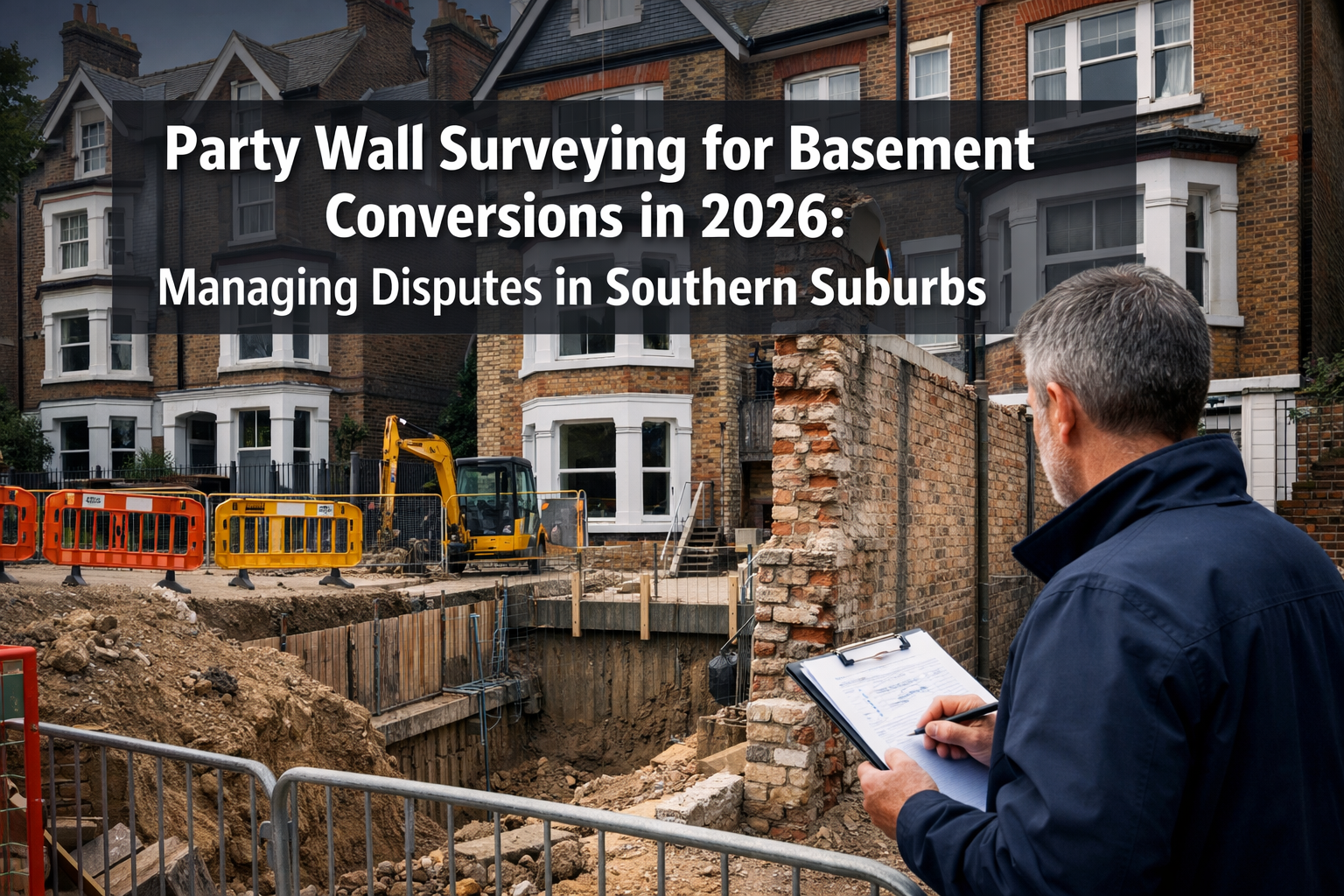
As property prices stabilise across London's sought-after southern suburbs in 2026, homeowners are increasingly looking downward rather than outward to expand their living space. Basement conversions have emerged as the premium solution for adding value without relocating, but these ambitious projects bring unique challenges—particularly when it comes to Party Wall Surveying for Basement Conversions in 2026: Managing Disputes in High-Demand Southern Suburbs. Understanding the complex legal framework, notice requirements, and dispute resolution mechanisms can mean the difference between a smooth project and costly delays.
The Party Wall Act 1996 governs all basement excavation work that affects neighbouring properties, and compliance isn't optional. With southern suburbs experiencing heightened construction activity, proper party wall procedures have never been more critical for maintaining good neighbour relations while protecting your investment.
Key Takeaways
- Basement conversions require multiple party wall notices including Section 3 (underpinning party walls) and Section 6 (adjacent excavation), with notice periods ranging from 1-2 months depending on the work type
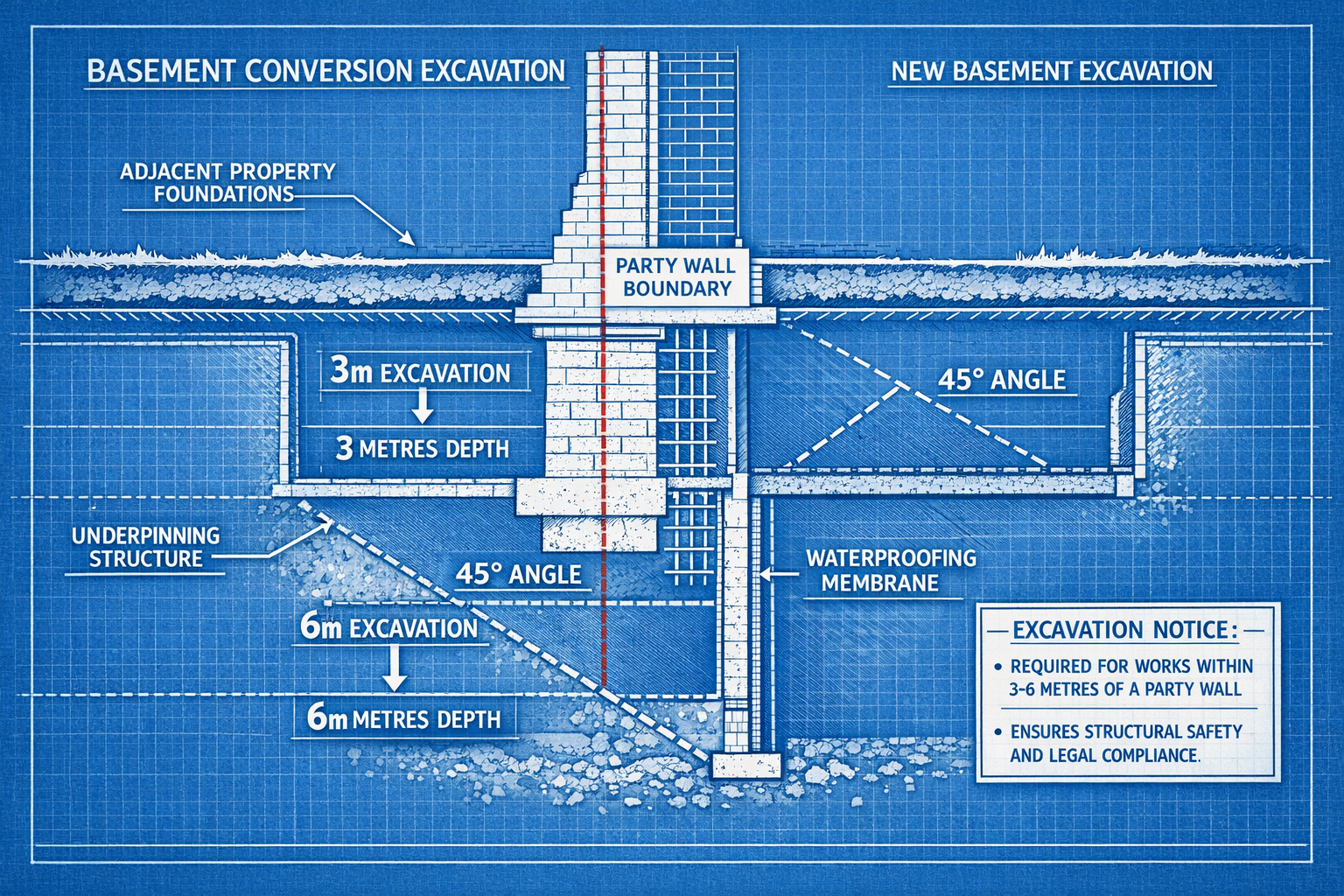
- Excavation within 3 metres of neighbouring buildings automatically triggers Adjacent Excavation Notice requirements, extending to 6 metres if digging below a 45-degree line from foundation bottoms [1]
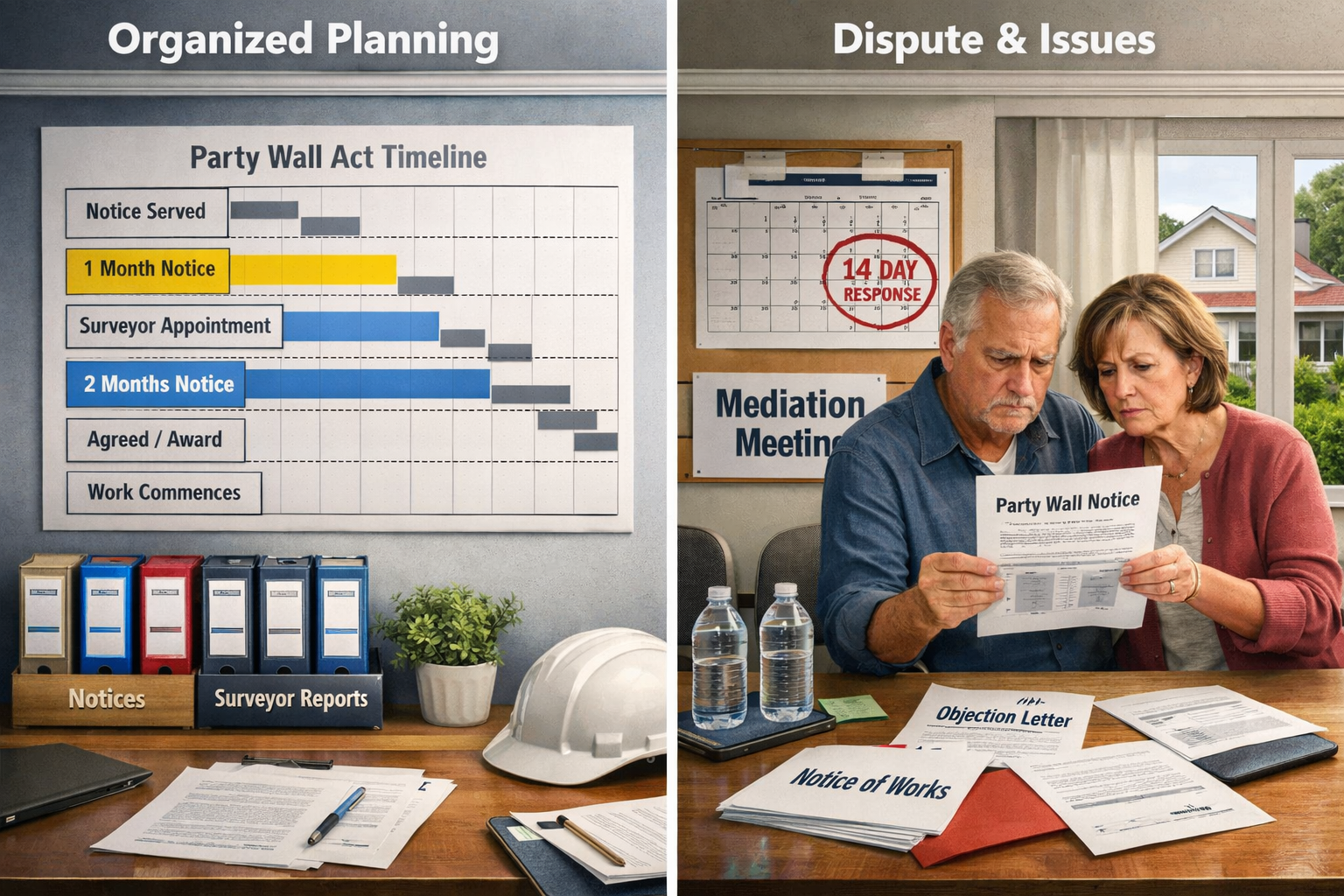
- Non-response from neighbours within 14 days constitutes a deemed dispute, requiring formal Party Wall Awards prepared by appointed surveyors
- Professional Schedule of Condition documentation protects both parties by recording pre-construction property status, preventing unfounded damage claims
- Early engagement and transparent communication with neighbours significantly reduces disputes and project delays in high-density southern suburbs
Understanding Party Wall Surveying for Basement Conversions in 2026
What Makes Basement Conversions Different?
Basement projects represent some of the most complex scenarios under the Party Wall Act. Unlike simple loft conversions or single-storey extensions, basement excavations involve multiple types of party wall work simultaneously, each requiring specific notices and procedures.
The key challenges include:
🏗️ Excavation near foundations – Digging below ground level affects the structural stability of adjacent properties
🔧 Underpinning party walls – Strengthening shared walls requires direct intervention on boundary structures
💧 Groundwater and drainage – Basement waterproofing can alter water flow patterns affecting neighbours
📏 Special foundations – New structural elements often extend beneath or alongside party walls
These factors make basement conversions particularly sensitive from a party wall perspective, requiring careful planning and expert surveying to navigate successfully.
The Legal Framework in 2026
The Party Wall Act 1996 remains the cornerstone legislation governing basement conversions in England and Wales. The Act provides a statutory framework designed to prevent and resolve disputes between neighbours when building work affects shared walls or nearby structures.
For basement conversions specifically, three sections of the Act typically apply:
| Section | Work Type | Notice Period | Application |
|---|---|---|---|
| Section 1 | New party wall construction | 1 month | Rarely applies to basements |
| Section 3 | Underpinning party walls | 2 months | Common for basement structural work |
| Section 6 | Adjacent excavation | 1 month | Always required for basement digs |
Understanding which sections apply to your specific project is crucial. Most basement conversions trigger both Section 3 and Section 6 requirements, meaning you'll need to serve multiple notices with different timeframes [1].
Critical Notice Requirements for Party Wall Surveying for Basement Conversions in 2026
Section 3 Notices: Underpinning Party Walls
When your basement conversion requires underpinning or strengthening a party wall, Section 3 of the Party Wall Act applies. This work involves increasing the depth or thickness of foundations supporting a shared wall—a common requirement when excavating below the existing foundation level.
Key requirements for Section 3 notices:
- 2 months' advance notice must be served to all adjoining owners
- Detailed descriptions of the proposed underpinning work
- Drawings showing the extent and depth of new foundations
- Specification of materials and construction methods
The extended two-month notice period for Section 3 work reflects the significant structural implications of underpinning. This timeframe allows neighbours adequate opportunity to review proposals, seek professional advice, and either consent or dissent to the works.
Failing to serve proper Section 3 notices can result in injunctions halting your project and potential legal costs, making early compliance essential for any basement conversion timeline.
Section 6 Notices: Adjacent Excavation
The Adjacent Excavation Notice under Section 6 applies whenever you're digging near a neighbour's building. For basement conversions in the densely-packed southern suburbs, this section is virtually always triggered [1].
Section 6 applies when:
✅ Excavating within 3 metres of any neighbouring building's foundation
✅ Excavating within 6 metres if your dig extends below a 45-degree line drawn downward from the bottom of their foundation
The 45-degree rule is particularly important for basement projects. Even if you're digging more than 3 metres away, the depth of basement excavation often means you'll cross this geometric threshold, bringing Section 6 into play.
Notice period: Unlike Section 3, Section 6 notices require only 1 month's advance notice, but this still requires careful timing coordination when both sections apply to your project.
Coordinating Multiple Notices
For comprehensive basement conversions, you'll typically need to serve both Section 3 and Section 6 notices. This creates a coordination challenge that many homeowners underestimate.
Best practice approach:
- Serve all notices simultaneously to avoid confusion
- Use the longest notice period (2 months for Section 3) as your project timeline baseline
- Engage a professional party wall surveyor to ensure all notices are properly drafted
- Include comprehensive drawings and specifications with all notices
The complexity of coordinating multiple notices makes professional assistance invaluable. A qualified party wall surveyor ensures compliance while maintaining positive neighbour relations—critical in close-knit southern suburb communities.
Managing Disputes in High-Demand Southern Suburbs
The 14-Day Response Rule
Once you've served your party wall notices, neighbours have 14 days to respond. This seemingly simple timeframe carries significant implications that many homeowners don't fully appreciate.
Three possible outcomes:
📝 Written consent – Neighbour agrees to the works as proposed, and you can proceed after the notice period expires
❌ Written dissent – Neighbour objects, triggering the formal dispute resolution process
⏰ No response – After 14 days of silence, the neighbour is deemed to be in dispute, automatically requiring a Party Wall Award [1]
The "deemed dispute" provision is particularly important in 2026's busy construction environment. Many neighbours simply don't respond to notices—whether through oversight, confusion, or deliberate avoidance. Regardless of the reason, non-response triggers the same formal process as active dissent.
Appointing Party Wall Surveyors
When a dispute arises (actual or deemed), the Party Wall Act requires appointment of surveyors to prepare a Party Wall Award—a legally binding document setting out how the work will proceed and how both parties are protected.
Three surveyor appointment options:
- Agreed Surveyor – Both parties appoint the same surveyor (most cost-effective)
- Two Surveyors – Each party appoints their own surveyor, who then appoint a third surveyor
- Three Surveyors – Each party appoints one surveyor, who jointly appoint a third surveyor
In practice, the Agreed Surveyor approach works well when relationships are amicable and the project is straightforward. However, for complex basement conversions in high-value southern suburb properties, many neighbours prefer appointing separate surveyors to ensure independent representation.
Important cost consideration: The building owner (you) typically pays for all surveyor fees, including your neighbour's surveyor. This can add £1,500-£3,000+ to project costs depending on complexity, making it a significant budget item to plan for when considering party wall costs.
The Party Wall Award Process
The Party Wall Award is the formal document that allows your basement conversion to proceed while protecting both parties' interests. Professional surveyors prepare this comprehensive agreement, which typically includes:
Standard Award components:
- Detailed description of all proposed works
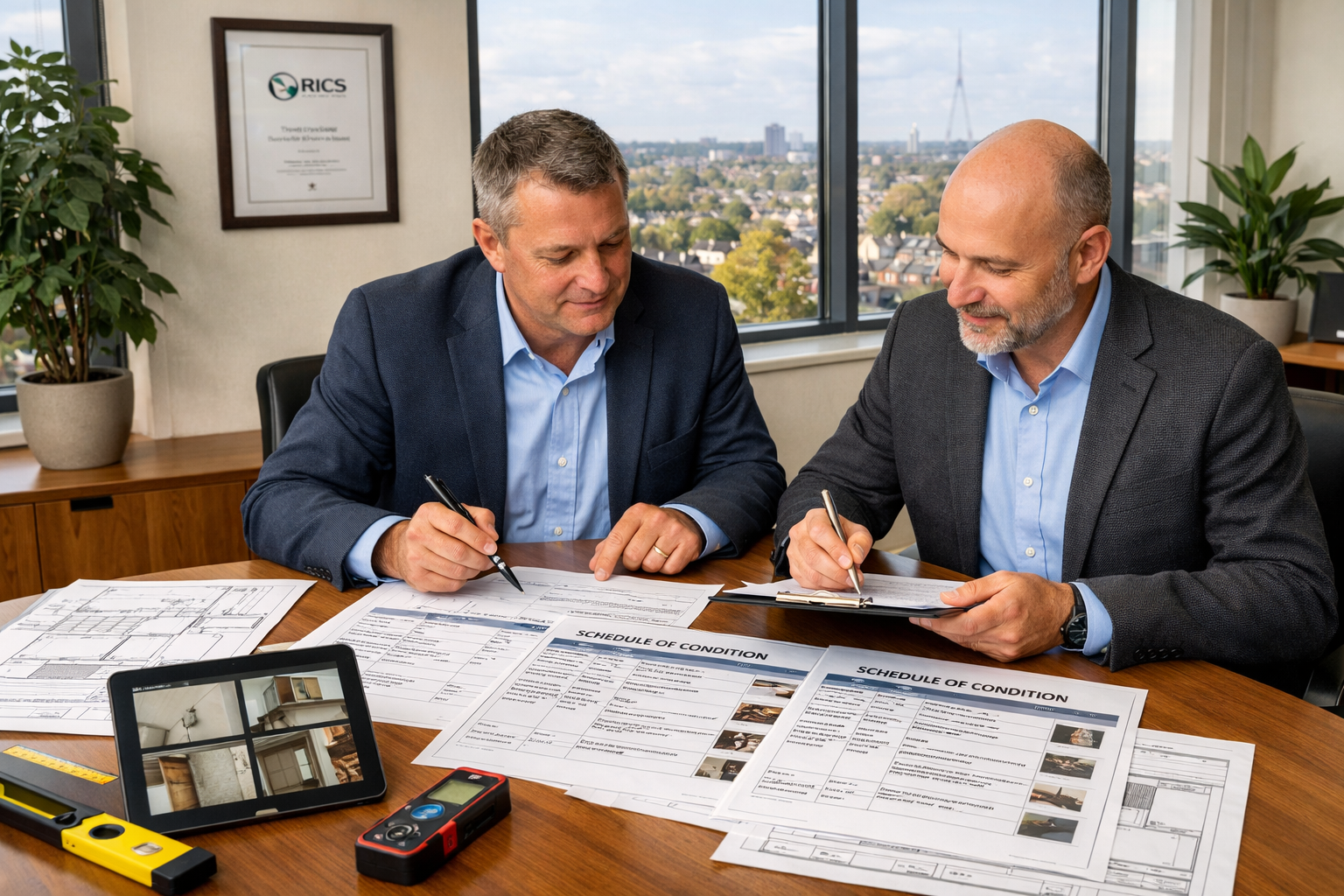
- Schedule of Condition documenting pre-construction property status
- Working hours and access arrangements
- Security for expenses (if required)
- Dispute resolution procedures for issues arising during construction
The Schedule of Condition deserves special attention. This photographic and written record of your neighbour's property before work begins provides crucial evidence if damage claims arise later. Without this documentation, disputes about whether cracks or defects resulted from your construction become nearly impossible to resolve fairly.
Common Dispute Triggers in Southern Suburbs
The high-demand southern suburbs present unique challenges that frequently lead to party wall disputes. Understanding these common triggers helps you proactively address concerns:
Top dispute causes:
🚧 Construction disruption – Noise, vibration, and access issues in quiet residential areas
💰 Property value concerns – Neighbours worry about impact on their home's marketability
🏛️ Heritage and character – Conservation areas and Victorian terraces require sensitive approaches
⏱️ Project duration – Extended construction timelines test even good neighbour relationships
📐 Structural concerns – Legitimate worries about excavation affecting their foundations
Addressing these concerns proactively through clear communication significantly reduces formal disputes. Many southern suburb homeowners find that informal discussions before serving formal notices create goodwill that carries through the entire project.
Advanced Strategies for Party Wall Surveying for Basement Conversions in 2026
Pre-Notice Neighbour Engagement
While the Party Wall Act sets out formal notice requirements, savvy homeowners in 2026 are adopting pre-notice engagement strategies that dramatically reduce disputes and delays.
Effective pre-notice approach:
- Informal discussion – Share your plans before formal notices, explaining benefits and addressing concerns
- Visual materials – Provide drawings and 3D visualisations showing how work affects them
- Timeline transparency – Clearly communicate project duration and disruption periods
- Professional introduction – Introduce your architect and party wall surveyor early
- Written summary – Follow up verbal discussions with clear written summaries
This approach works particularly well in southern suburbs where community relationships matter. Neighbours who feel informed and respected are far more likely to consent to works, avoiding the deemed dispute scenario and associated surveyor costs.
Selecting the Right Party Wall Surveyor
Not all party wall surveyors bring equal expertise to basement conversions. The complexity of excavation work, underpinning, and structural interventions requires specialist knowledge beyond basic party wall procedures.
Essential qualifications to seek:
✓ RICS membership – Chartered status ensures professional standards and insurance
✓ Basement conversion experience – Specific expertise with excavation and underpinning
✓ Local knowledge – Familiarity with southern suburb property types and soil conditions
✓ Communication skills – Ability to explain technical matters to non-professionals
✓ Dispute resolution track record – Proven success in managing neighbour disputes
The right surveyor acts as both technical expert and diplomatic mediator, balancing your construction needs with neighbours' legitimate concerns. This dual role is particularly valuable in high-stakes southern suburb projects where property values and community relationships are paramount.
Integrating Party Wall Procedures with Project Planning
Successful basement conversions in 2026 integrate party wall procedures into overall project planning rather than treating them as administrative afterthoughts.
Timeline integration checklist:
| Project Stage | Party Wall Action | Timing |
|---|---|---|
| Initial design | Identify party wall implications | Month 1 |
| Detailed planning | Engage party wall surveyor | Month 2 |
| Pre-application | Informal neighbour discussions | Month 3 |
| Planning submission | Serve party wall notices | Month 4 |
| Notice period | Surveyor appointments, Award preparation | Months 5-6 |
| Award completion | Finalise Schedule of Condition | Month 7 |
| Construction start | Commence works post-Award | Month 8+ |
This integrated approach ensures party wall procedures don't delay construction starts. Too many homeowners serve notices too late, discovering that the 2-month Section 3 notice period pushes back their planned start date significantly.
Managing Costs and Budgeting
Party wall procedures add meaningful costs to basement conversions, and 2026's active construction market hasn't reduced these expenses. Proper budgeting prevents unwelcome surprises.
Typical cost breakdown:
💷 Party wall surveyor fees – £1,200-£2,500 for straightforward projects
💷 Neighbour's surveyor fees – £1,000-£2,000 (your responsibility)
💷 Third surveyor fees – £800-£1,500 (if appointed)
💷 Schedule of Condition – £500-£1,000 for comprehensive documentation
💷 Award preparation – Included in surveyor fees
💷 Dispute resolution – Additional costs if disagreements escalate
Total party wall costs: £3,000-£7,000+ for typical basement conversions
These figures represent a small fraction of total basement conversion costs (typically £50,000-£150,000+), but they're often underestimated in initial budgets. Building a 10-15% contingency into your party wall budget provides cushion for unexpected complications.
For detailed guidance on understanding these expenses, review our comprehensive information on party wall agreements.
Regional Considerations for Southern Suburbs
Property Types and Typical Challenges
Southern suburbs encompass diverse property types, each presenting unique party wall challenges for basement conversions:
Victorian and Edwardian terraces 🏘️
- Shared party walls on both sides
- Shallow original foundations requiring extensive underpinning
- Heritage considerations in conservation areas
- Multiple neighbours requiring coordination
Semi-detached properties 🏡
- Single party wall but often with sensitive neighbours
- Varying foundation depths between properties
- Potential asymmetric settlement concerns
Detached houses 🏠
- No party walls but Section 6 excavation notices still required
- Easier neighbour management but still legal compliance needed
The prevalence of Victorian terraces in sought-after areas like Wimbledon, Balham, and Clapham means most basement conversions involve complex multi-neighbour scenarios requiring sophisticated coordination.
Soil Conditions and Structural Implications
Southern London's geology significantly impacts basement conversion party wall procedures. The predominant London Clay subsoil creates specific challenges:
Clay-related considerations:
- Shrinkage and swelling – Seasonal moisture changes affect foundations
- Deep excavation requirements – Often need to dig 2.5-3 metres for adequate ceiling height
- Underpinning necessity – Shallow Victorian foundations almost always require underpinning
- Water management – Clay's low permeability requires careful drainage design
These geological factors make thorough Schedule of Condition documentation particularly important. Pre-existing movement or cracking in neighbouring properties—common in clay soil areas—must be clearly recorded to distinguish from any construction-related damage.
Understanding these regional factors helps explain why professional surveyor services with local expertise deliver superior outcomes for southern suburb basement conversions.
Market Dynamics and Neighbour Motivations
The 2026 property market in southern suburbs creates a unique context for party wall negotiations. With prices stabilising after previous volatility, homeowners are more likely to invest in substantial improvements like basement conversions.
Current market influences:
📈 Value enhancement – Basement conversions add 15-25% to property values, motivating projects
🏘️ Supply constraints – Limited housing stock makes extending existing properties attractive
👨👩👧👦 Family retention – Families prefer adding space over relocating from established communities
🔨 Construction activity – Multiple projects in the same street create "normalisation" of disruption
These dynamics generally create a favourable environment for basement conversions, as neighbours increasingly understand the value proposition and accept temporary disruption as part of urban living.
Best Practices for Successful Party Wall Surveying
Documentation and Record-Keeping
Meticulous documentation protects all parties and prevents disputes from escalating. Professional party wall surveyors emphasise comprehensive record-keeping throughout the process.
Essential documentation:
📋 Notice service records – Proof of delivery and timing for all party wall notices
📸 Pre-construction photography – Comprehensive interior and exterior images of neighbouring properties
📐 Technical drawings – Detailed plans showing excavation depths, underpinning details, and structural interventions
📝 Correspondence logs – Written records of all neighbour communications
📊 Monitoring data – Crack monitoring, settlement measurements, and vibration readings during construction
This documentation serves dual purposes: demonstrating compliance with party wall procedures and providing evidence if disputes arise about construction impacts.
Communication Protocols
Clear, consistent communication prevents misunderstandings that often escalate into formal disputes. Establishing protocols at the project outset creates expectations and builds trust.
Effective communication framework:
- Designated contact person – Single point of contact for neighbour concerns
- Regular updates – Weekly or bi-weekly progress reports during active construction
- Advance notice of disruptive work – 48-72 hours warning for particularly noisy or intrusive activities
- Accessible complaint procedure – Clear process for raising and resolving concerns
- Documented responses – Written follow-up to all verbal discussions
These protocols demonstrate respect and professionalism, qualities that significantly influence neighbour cooperation throughout lengthy basement conversion projects.
Quality Control and Monitoring
Party Wall Awards typically include provisions for monitoring neighbouring properties during construction. Proactive quality control prevents damage and demonstrates commitment to protecting neighbours' interests.
Monitoring best practices:
🔍 Baseline surveys – Professional condition assessment before work begins
📏 Regular inspections – Periodic checks of neighbouring properties during construction phases
⚡ Vibration monitoring – Electronic sensors tracking ground movement from excavation and piling
📐 Settlement monitoring – Precise measurements detecting any foundation movement
🎥 Video documentation – Time-stamped recordings of critical construction stages
This monitoring serves multiple purposes: early detection of potential issues, evidence of careful construction practices, and reassurance for concerned neighbours.
For properties showing concerning signs, understanding wall cracking causes helps distinguish normal settlement from construction-related damage.
Conclusion
Party Wall Surveying for Basement Conversions in 2026: Managing Disputes in High-Demand Southern Suburbs requires sophisticated understanding of legal requirements, technical procedures, and interpersonal dynamics. As southern suburb property markets stabilise and homeowners increasingly invest in basement conversions, mastering these processes becomes essential for successful projects.
The key to success lies in early engagement, professional expertise, and transparent communication. Serving proper notices under Sections 3 and 6 of the Party Wall Act, coordinating the required 1-2 month notice periods, and preparing comprehensive Party Wall Awards through qualified surveyors protects both your investment and neighbour relationships [1].
Remember that the 14-day response rule means non-responsive neighbours automatically trigger dispute procedures, making proactive communication before formal notices particularly valuable. Professional party wall surveyors navigate these complexities while maintaining the diplomatic relationships essential in close-knit southern suburb communities.
Next Steps for Your Basement Conversion
Immediate actions:
- Engage a qualified party wall surveyor with specific basement conversion experience in southern suburbs
- Review your design plans to identify all party wall implications, including excavation depths and underpinning requirements
- Initiate informal neighbour discussions before serving formal notices to build goodwill and address concerns early
- Budget appropriately for party wall procedures, including surveyor fees, Schedule of Condition costs, and contingencies
- Integrate party wall timelines into your overall project schedule, accounting for 2-month notice periods and Award preparation
By approaching Party Wall Surveying for Basement Conversions in 2026: Managing Disputes in High-Demand Southern Suburbs with professionalism, expertise, and respect for neighbours, you'll navigate this complex process successfully while protecting your valuable investment in one of London's most desirable residential areas.
For comprehensive guidance on how the Party Wall Act 1996 applies to your specific situation, consult with experienced local professionals who understand the unique challenges of southern suburb basement conversions.
References
[1] Basement Conversions – https://iconsurveyors.co.uk/party-wall/basement-conversions/