
The housing affordability crisis continues to reshape how British families live in 2026, with multi-generational households becoming the norm rather than the exception. As adult children return home and elderly parents move in with their families, the demand for home extensions has surged dramatically. However, these family-driven boundary works bring unique Party Wall Act challenges that many homeowners are unprepared to navigate. Understanding Party Wall Act Challenges in 2026 Multi-Generational Home Extensions: Survey Strategies for Family-Driven Boundary Works has become essential for suburban UK families planning to expand their living spaces while maintaining positive neighbor relationships.
Key Takeaways
- 🏠 Multi-generational living has increased by 42% since 2020, driving unprecedented demand for home extensions that trigger Party Wall Act requirements
- 📋 Notice procedures under the Party Wall Act must be followed precisely, with specific timeframes and documentation required before any boundary work begins
- 🤝 Appointing the right surveyor early prevents costly disputes and delays, especially for complex multi-generational extension projects
- ⚖️ Dispute resolution through agreed surveyors or party wall awards protects both building owners and adjoining neighbors
- 💰 Cost management strategies can minimize expenses while ensuring full legal compliance throughout the extension process
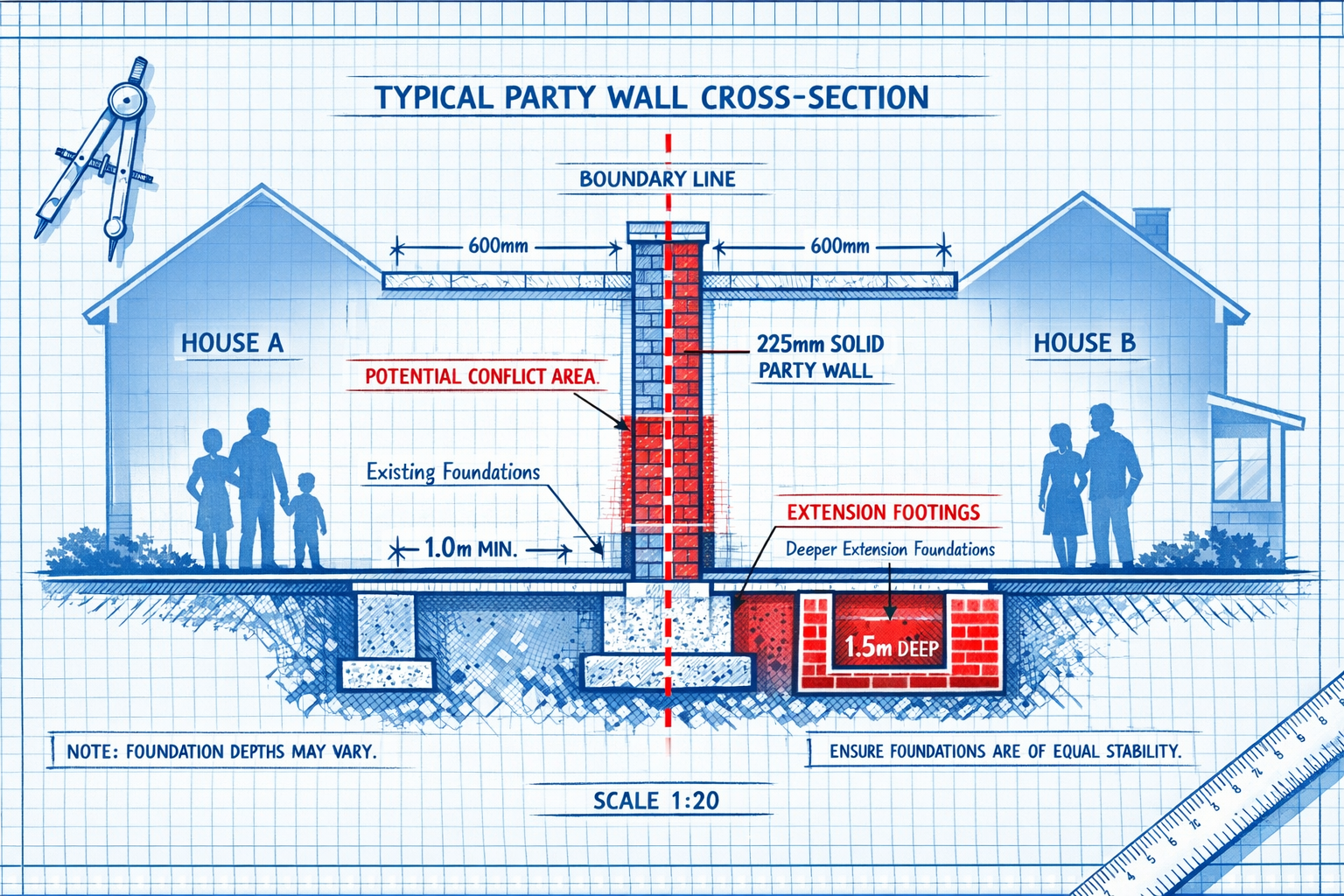
Understanding Party Wall Act Challenges in 2026 Multi-Generational Home Extensions
The Rise of Multi-Generational Living in the UK
The landscape of British housing has transformed dramatically. According to recent housing statistics, over 3.2 million households in the UK now include multiple generations living under one roof—a 42% increase since 2020. This shift stems from several converging factors: soaring property prices, increased care costs for elderly relatives, and young adults struggling to enter the housing market.
These demographic changes have created unprecedented demand for home extensions, particularly side returns, rear extensions, and loft conversions that add self-contained living spaces. However, most suburban UK homes are semi-detached or terraced properties with shared walls, meaning any significant extension work inevitably involves the Party Wall Act 1996.
What Makes Multi-Generational Extensions Different?
Multi-generational extensions present unique challenges compared to standard home improvements:
Complexity of Design: These projects often require separate entrances, kitchenettes, and bathroom facilities, necessitating deeper foundations and more extensive structural work that affects party walls.
Scale of Work: Family-driven extensions typically involve multiple phases—basement conversions, ground floor extensions, and upper-level additions—each potentially triggering separate Party Wall Act notices.
Emotional Stakes: When families invest life savings to accommodate aging parents or adult children, the pressure to complete work quickly can lead to shortcuts in the legal process, creating costly disputes later.
Neighbor Sensitivities: Extended construction periods and significant structural changes can strain neighbor relationships, making proper Party Wall Act compliance even more critical [1].
Core Party Wall Act Requirements for Extensions
The Party Wall Act 1996 establishes three main categories of work requiring formal notices:
| Work Type | Notice Period | Common in Multi-Gen Extensions |
|---|---|---|
| New wall on boundary line | 1 month | ✅ Side returns, garden rooms |
| Work to existing party wall | 2 months | ✅ Structural alterations, underpinning |
| Excavation within 3-6 meters | 2 months | ✅ Basement conversions, deep foundations |
For multi-generational extensions, homeowners often need to serve multiple notices covering different aspects of the same project. Understanding which legal requirements for boundary walls apply to specific work prevents expensive delays and legal complications.
Survey Strategies for Family-Driven Boundary Works
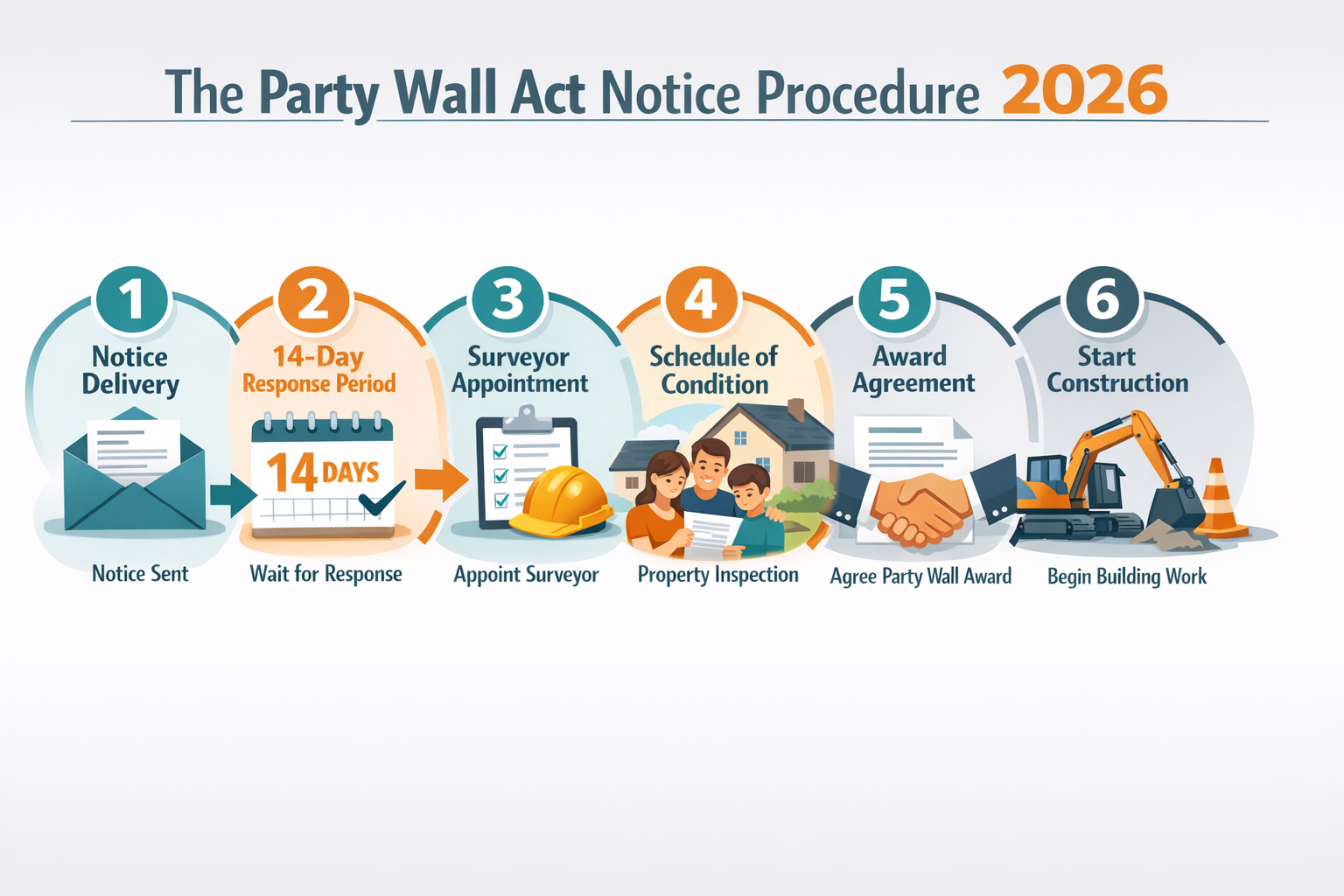
Pre-Construction Survey Planning
Successful multi-generational extension projects begin with thorough survey planning well before construction starts. This proactive approach minimizes disputes and ensures smooth project progression.
Initial Boundary Assessment: Before architectural plans are finalized, commission a detailed boundary survey to establish exact property lines. This prevents costly design revisions later when Party Wall Act requirements become clear.
Neighbor Engagement Strategy: While not legally required, informal discussions with neighbors about planned extensions before serving formal notices can prevent adversarial relationships. Many disputes arise from surprise rather than the actual work proposed [2].
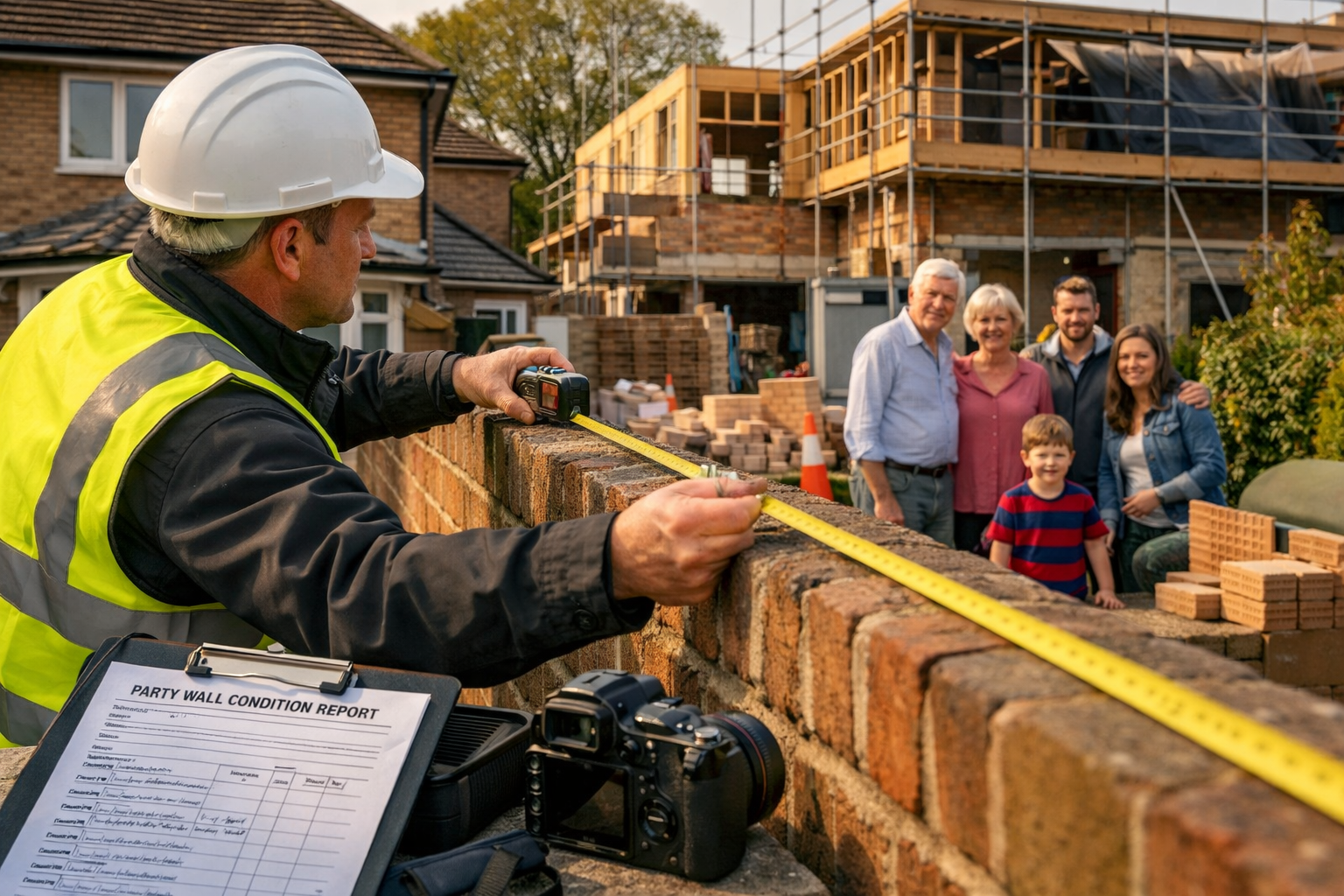
Photographic Schedule of Condition: Document the current state of both your property and adjoining properties through comprehensive photographs and video. This evidence proves invaluable if disputes arise about damage caused during construction.
Structural Assessment: Engage a structural engineer early to evaluate how extension foundations will interact with existing party walls and neighboring foundations. This technical analysis informs both your design and the Party Wall Act notice content.
Serving Effective Party Wall Notices
The quality of your Party Wall Act notice significantly impacts project success. Poorly drafted notices create confusion, delays, and unnecessary disputes.
Essential Notice Components:
- ✅ Detailed work description with architectural drawings and structural calculations
- ✅ Proposed start date allowing sufficient notice period (1-2 months depending on work type)
- ✅ Clear identification of which Party Wall Act sections apply
- ✅ Your contact details and those of your appointed surveyor
- ✅ Explanation of neighbor's rights and response options
Common Notice Mistakes to Avoid:
❌ Vague descriptions: "Extension work" is insufficient—specify dimensions, depths, and structural changes
❌ Inadequate timing: Serving notice days before planned work creates immediate conflict
❌ Missing work categories: Failing to mention excavation when extending foundations triggers separate disputes
❌ Informal communication: Text messages and verbal mentions don't satisfy legal requirements [3]
For comprehensive guidance on what happens after serving notice, review our article on what to do when you receive a party wall notice.
Appointing the Right Party Wall Surveyor
Surveyor selection critically affects both project costs and outcomes. For multi-generational extensions involving substantial work, professional surveyor expertise proves invaluable.
Surveyor Appointment Options:
- Agreed Surveyor: Both parties appoint one surveyor jointly—most cost-effective but requires neighbor cooperation
- Separate Surveyors: Each party appoints their own surveyor who then work together—standard approach for complex projects
- Third Surveyor: Appointed by the two party-appointed surveyors to resolve disagreements—rarely needed but important safeguard
Key Surveyor Qualifications:
- 🎓 RICS (Royal Institution of Chartered Surveyors) accreditation
- 📚 Specialist Party Wall Act experience with residential extensions
- 🏘️ Local knowledge of construction methods and property types in your area
- 💬 Strong communication skills to facilitate neighbor agreements
Cost Considerations: The building owner (you) pays all reasonable surveyor fees—both yours and your neighbor's if they appoint their own. For typical multi-generational extensions, budget £1,200-£3,500 for surveyor costs depending on project complexity [4]. Understanding party wall costs upfront prevents budget surprises.
Preparing the Party Wall Award
The party wall award is the formal agreement documenting how work will proceed. This legally binding document protects all parties and provides a framework for resolving issues during construction.
Standard Award Contents:
- Work description with detailed specifications and drawings
- Schedule of condition documenting pre-work property state
- Access arrangements specifying when and how contractors enter adjoining property
- Working hours and noise restrictions
- Damage resolution procedures and dispute mechanisms
- Timeline for work completion and notice requirements for delays
Special Considerations for Multi-Generational Projects:
Given the extended duration and complexity of family-driven extensions, awards should address:
- Phased work schedules allowing neighbors to plan around construction periods
- Enhanced protection measures for party walls during deep excavation
- Regular progress updates to adjoining owners
- Contingency procedures if unexpected structural issues arise
Most awards take 2-4 weeks to prepare after initial surveys, though complex multi-generational extensions may require longer [5].
Navigating Party Wall Act Challenges in 2026 Multi-Generational Home Extensions: Dispute Resolution and Compliance
Common Disputes in Family-Driven Extensions
Despite best intentions, disputes frequently arise during multi-generational extension projects. Understanding common conflict triggers helps prevent them.
Typical Dispute Scenarios:
Foundation Depth Disagreements: Neighbors object to excavation depth, fearing damage to their foundations—particularly common with basement conversions for separate living quarters.
Construction Noise and Duration: Extended projects disturbing neighbors for months strain relationships, especially when work exceeds hours specified in awards.
Property Damage Claims: Cracks, subsidence, or cosmetic damage attributed to construction work create the most contentious disputes.
Access Refusal: Neighbors denying necessary access to their property for survey work or construction can halt projects entirely.
Cost Disputes: Disagreements about who pays for what, particularly regarding protective works or repairs.
Effective Dispute Prevention Strategies
Prevention remains far more cost-effective than resolution. Implement these strategies throughout your project:
Maintain Open Communication: Regular updates to neighbors about progress, upcoming noisy work, and any changes to schedules build goodwill and prevent surprise-based conflicts.
Document Everything: Photograph and video record all work stages, particularly those affecting party walls. This evidence proves invaluable if damage claims arise.
Respect Award Terms: Strictly adhere to working hours, access arrangements, and construction methods specified in the party wall award. Variations require formal agreement.
Respond Promptly to Concerns: When neighbors raise issues, address them immediately rather than allowing grievances to escalate.
Use Professional Contractors: Experienced builders familiar with party wall regulations minimize damage risk and maintain better neighbor relations.
Formal Dispute Resolution Mechanisms
When disputes cannot be resolved informally, the Party Wall Act provides structured resolution processes.
Surveyor Mediation: Party-appointed surveyors serve as first-line dispute resolvers, discussing issues and seeking compromise solutions that satisfy both parties.
Third Surveyor Determination: If the two party-appointed surveyors cannot agree, they select a third surveyor whose decision binds all parties. This process typically takes 2-4 weeks and costs £1,500-£3,000.
Appeal to County Court: Either party can appeal a party wall award within 14 days of service. However, courts rarely overturn surveyor decisions unless procedural errors occurred or decisions were manifestly unreasonable.
Alternative Dispute Resolution: Some surveyors now recommend mediation services before formal appeals, offering faster and less adversarial resolution [4].
For multi-generational extension projects, early dispute resolution prevents costly construction delays that can leave families in temporary accommodation longer than planned.
Cost Management for Party Wall Compliance in Multi-Generational Projects
Budgeting for Party Wall Requirements
Many families planning multi-generational extensions underestimate Party Wall Act compliance costs, creating budget shortfalls that delay or compromise projects.
Typical Cost Breakdown:
| Expense Category | Estimated Cost Range | Notes |
|---|---|---|
| Party wall surveyor fees | £1,200 – £3,500 | Covers both parties if neighbor appoints own surveyor |
| Schedule of condition | £300 – £800 | Detailed photographic documentation |
| Structural engineer reports | £500 – £1,500 | Required for complex foundation work |
| Legal advice (if disputes arise) | £1,500 – £5,000+ | Only if formal appeals necessary |
| Protective works | £2,000 – £8,000 | Underpinning, shoring, or wall strengthening |
Budget Allocation Strategy: Allocate 3-5% of total extension budget to Party Wall Act compliance for straightforward projects, increasing to 7-10% for complex multi-generational extensions involving basements or significant structural work.
Minimizing Costs Without Compromising Compliance
Agreed Surveyor Approach: If your neighbor relationship is positive, jointly appointing one surveyor can reduce costs by 40-50% compared to separate surveyors.
Early Planning: Serving notices well in advance (3-4 months before construction) allows time for negotiation and reduces rush fees or expedited processes.
Comprehensive Initial Notices: Thoroughly detailed notices covering all potential work prevent the need for supplementary notices later, which incur additional surveyor fees.
Proactive Neighbor Relations: Investing time in neighbor communication prevents disputes that generate the largest unexpected costs—legal fees, construction delays, and remedial works.
Professional Project Management: Experienced contractors who understand UK boundary wall rules minimize damage risk and associated claims.
Insurance Considerations
Standard home insurance policies typically exclude Party Wall Act disputes and construction-related damage claims. For multi-generational extensions, consider:
Party Wall Insurance: Specialist policies covering dispute costs, surveyor fees, and legal expenses. Annual premiums range from £150-£400 depending on project scope.
Construction All-Risks Insurance: Protects against damage to neighboring properties during building work, with typical premiums of 1-2% of construction costs.
Professional Indemnity Insurance: Ensures your surveyor and structural engineer carry adequate coverage for advice provided.
Best Practices for 2026 Multi-Generational Extension Projects
Pre-Project Checklist
Before commencing any multi-generational extension involving party walls, complete this comprehensive checklist:
✅ Boundary verification through professional land survey
✅ Architectural plans reviewed by Party Wall Act specialist
✅ Neighbor pre-notification (informal discussion)
✅ Formal Party Wall Act notices served with adequate lead time
✅ Surveyor appointments confirmed for all parties
✅ Schedule of condition completed and agreed
✅ Party wall award signed by all parties
✅ Contractor briefing on Party Wall Act requirements
✅ Insurance coverage verified and adequate
✅ Project timeline communicated to neighbors
During Construction Best Practices
Weekly Neighbor Updates: Brief communication about upcoming work phases maintains transparency and goodwill.
Strict Award Compliance: Ensure contractors understand and follow all party wall award terms, particularly working hours and access arrangements.
Regular Monitoring: Conduct weekly inspections of party walls and neighboring properties to identify potential issues before they escalate.
Photographic Documentation: Continue photographing work progress and party wall conditions throughout construction.
Prompt Issue Resolution: Address any neighbor concerns or observed damage immediately, involving surveyors when necessary.
Post-Construction Obligations
Party Wall Act responsibilities don't end when construction completes:
Final Inspection: Arrange for party wall surveyors to conduct post-construction inspections comparing final conditions to pre-work schedules.
Damage Remediation: Complete any agreed repairs to neighboring properties promptly and to professional standards.
Documentation Retention: Maintain all Party Wall Act notices, awards, schedules, and correspondence for at least 12 years—these documents may be required for future property sales or subsequent work.
Neighbor Acknowledgment: Obtain written confirmation from neighbors that work has been completed satisfactorily and no outstanding issues remain.
Future Trends in Party Wall Act Challenges for Multi-Generational Housing
Legislative Developments in 2026
The Party Wall Act 1996 remains largely unchanged, but enforcement practices and case law continue evolving. Recent tribunal decisions have emphasized:
Stricter Notice Requirements: Courts increasingly side with adjoining owners when building owners fail to provide comprehensive work descriptions in initial notices.
Enhanced Neighbor Protection: Recent rulings strengthen adjoining owner rights to refuse consent for work exceeding Party Wall Act scope, particularly where planning permission boundaries are unclear.
Digital Notice Acceptance: While not yet formally legislated, courts increasingly accept electronic service of Party Wall Act notices, provided delivery can be verified.
Technology Integration in Party Wall Surveys
Professional surveyors now employ advanced technologies that improve accuracy and reduce disputes:
3D Laser Scanning: Creates precise digital models of party walls and neighboring properties, providing indisputable baseline conditions.
Drone Surveys: Document roof and upper-level conditions without requiring extensive scaffolding or access arrangements.
Digital Reporting Platforms: Cloud-based systems allow all parties to access schedules of condition, awards, and progress updates in real-time.
Structural Monitoring Systems: Sensors detect movement or stress in party walls during construction, providing early warning of potential issues.
Growing Demand for Specialist Expertise
As multi-generational extensions become more complex, demand for specialized party wall surveyors with specific expertise continues growing. Homeowners should seek surveyors who understand:
- Multi-generational design requirements and associated structural challenges
- Modern construction methods including steel frame extensions and modular additions
- Environmental considerations such as ground source heat pumps requiring deep excavation
- Accessibility requirements for elderly or disabled family members
Conclusion
Navigating Party Wall Act Challenges in 2026 Multi-Generational Home Extensions: Survey Strategies for Family-Driven Boundary Works requires careful planning, professional expertise, and proactive neighbor engagement. As multi-generational living becomes increasingly prevalent across the UK, understanding these legal requirements protects both your investment and your relationships with adjoining property owners.
Key Action Steps:
- Start early: Begin Party Wall Act planning 3-4 months before intended construction to allow adequate notice periods and negotiation time
- Invest in professional surveys: Engage RICS-qualified party wall surveyors with multi-generational extension experience
- Prioritize neighbor communication: Maintain open dialogue throughout the process to prevent disputes before they arise
- Budget appropriately: Allocate 5-10% of total project costs for Party Wall Act compliance and related expenses
- Document comprehensively: Maintain detailed records of all notices, agreements, conditions, and communications
The complexity of modern multi-generational extensions demands more than basic Party Wall Act compliance—it requires strategic planning that balances legal obligations with practical construction needs and neighbor relationships. By following the survey strategies and best practices outlined in this guide, families can successfully expand their homes to accommodate multiple generations while maintaining positive community relationships and legal compliance.
For personalized guidance on your specific multi-generational extension project, consider consulting with experienced professionals who understand both the technical and interpersonal aspects of party wall works. The investment in proper planning and professional expertise pays dividends through smoother construction, avoided disputes, and successful project completion.
Whether you're creating a granny annexe, converting a basement for adult children, or adding a side extension for extended family, understanding and properly managing Party Wall Act requirements ensures your family-driven boundary works proceed smoothly from initial planning through final completion.
References
[1] Party Wall Agreement – https://hoa.org.uk/advice/guides-for-homeowners/i-am-improving/party-wall-agreement/
[2] Party Wall Agreements What You Need To Know – https://www.fmb.org.uk/find-a-builder/ultimate-guides-to-home-renovation/party-wall-agreements-what-you-need-to-know.html
[3] How To Apply For A Party Wall Award 3 – https://www.uklegalguides.com/how-to-apply-for-a-party-wall-award-3/
[4] The Party Wall Etc Act Questions – https://collier-stevens.co.uk/faqs/the-party-wall-etc-act-questions/
[5] 2026 Adjoining Owner Party Wall Tips – https://www.simplesurvey.co.uk/article/2026-adjoining-owner-party-wall-tips/