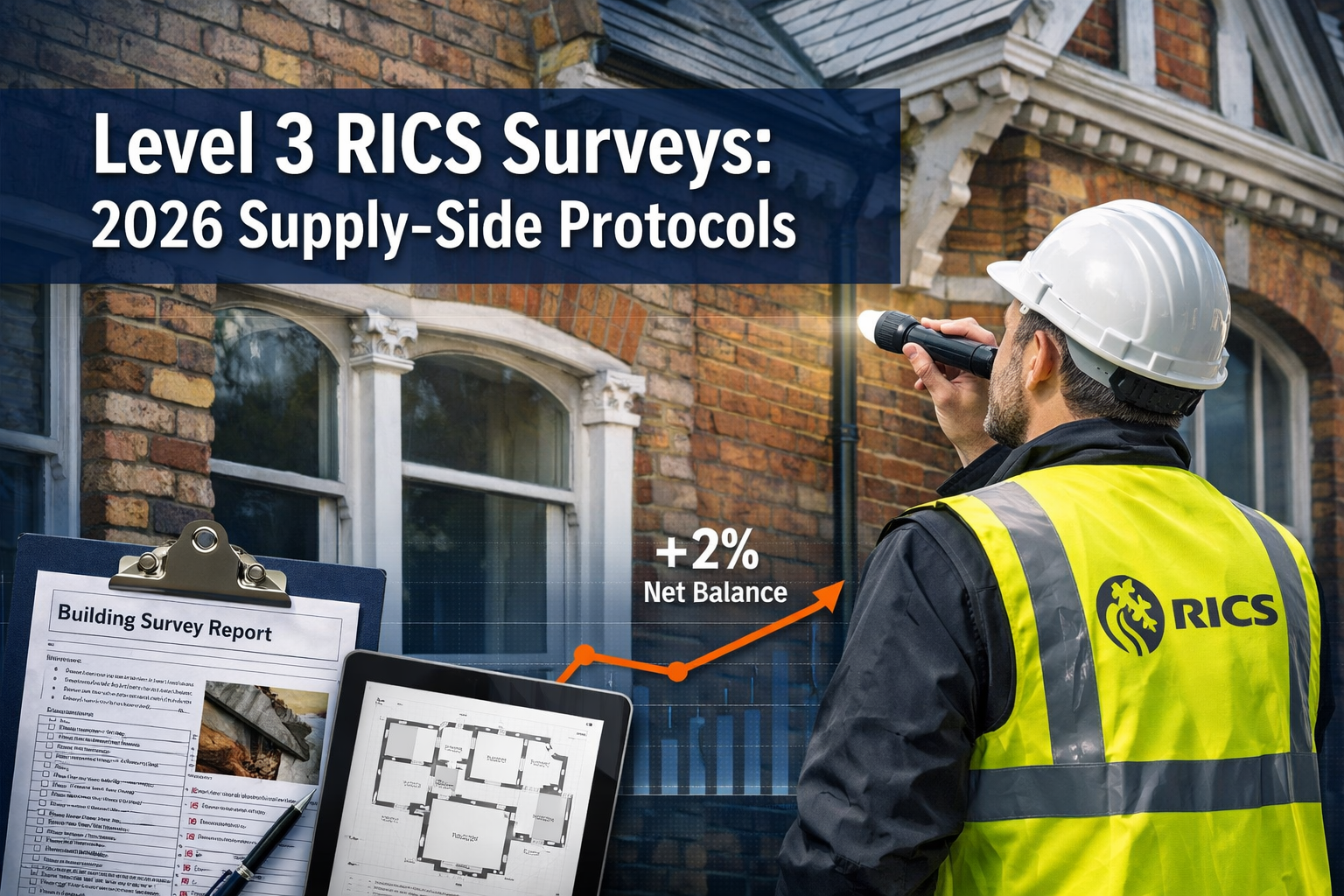
The UK residential property market has entered a pivotal phase in 2026, with new instructions stabilising at a +2% net balance in February—a subtle but significant shift that demands attention from building surveyors and property professionals. This stabilisation, following January's +1% reading, signals that fresh property listings are neither surging nor declining materially at the headline level[1]. For chartered surveyors conducting Level 3 RICS Surveys for 2026 Supply-Side Surge: Protocols When New Instructions Stabilise at +2% Net Balance, this market equilibrium presents both opportunity and challenge: how to capitalise on emerging supply without compromising the thoroughness that defines the Building Survey standard.
As market appraisals remain broadly unchanged[1], surveyors must refine their protocols to handle steady instruction flow efficiently while maintaining the rigorous inspection standards that protect buyers investing in older, larger, or structurally complex properties. The +2% net balance represents a delicate market moment—not overheated, not frozen—requiring strategic protocol adjustments that balance speed with comprehensive risk assessment.
Key Takeaways
✅ New instructions stabilised at +2% net balance in February 2026, indicating steady but modest growth in property listings coming to market[1]
✅ Level 3 Building Surveys remain essential for older, altered, or unusual properties, with costs typically ranging from £750–£1,500+ depending on property complexity[4]
✅ Protocol refinements must balance efficiency with thoroughness, ensuring surveyors can handle stable instruction flow without compromising inspection quality
✅ Market stability creates optimal conditions for detailed surveys, as neither buyer panic nor seller urgency distorts the inspection timeline
✅ Strategic protocol adaptations for 2026 include enhanced digital workflows, streamlined reporting templates, and clearer communication frameworks for steady market conditions
Understanding the 2026 Supply-Side Context and Market Stabilisation
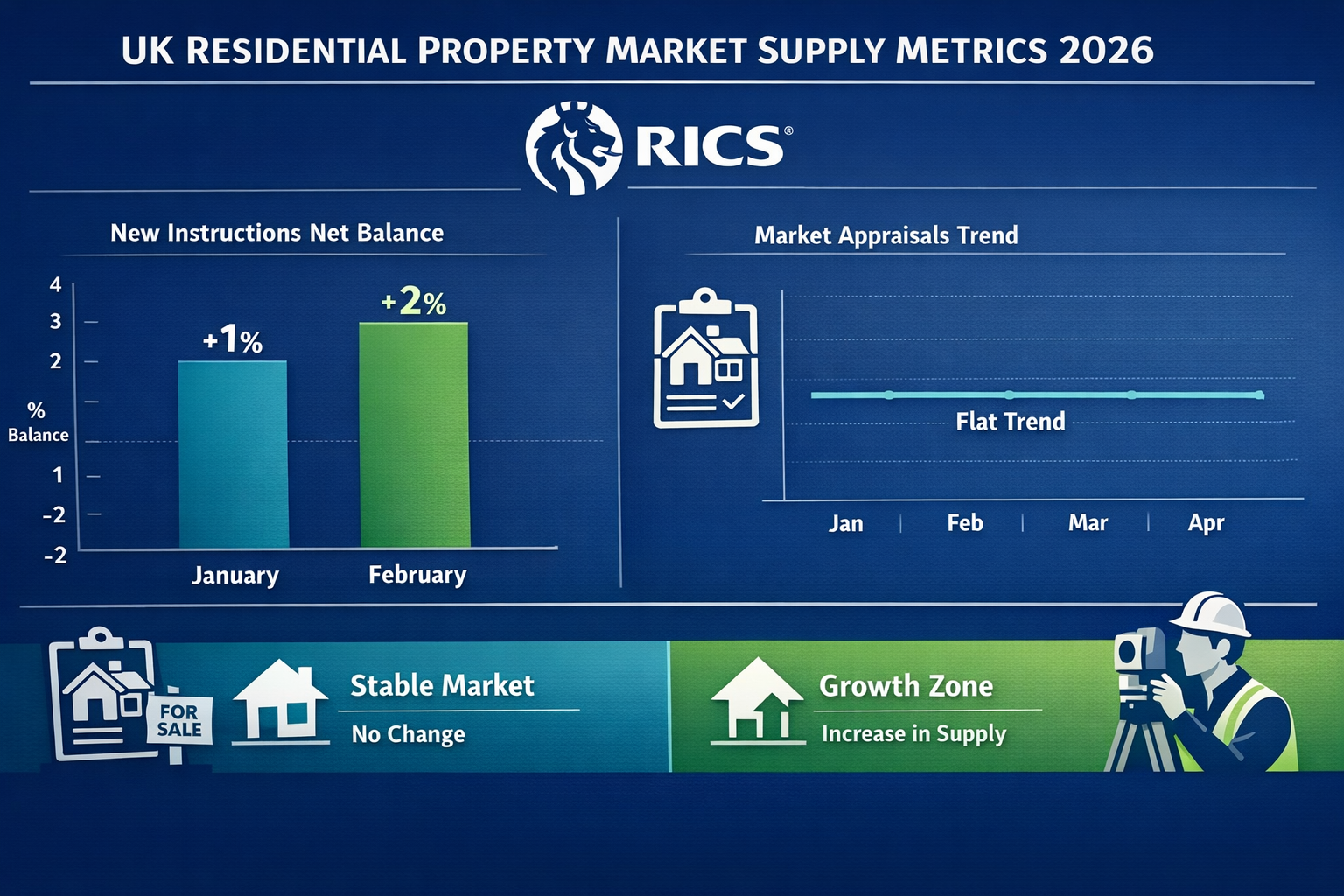
The +2% net balance in new instructions represents a critical metric that building surveyors must understand when planning Level 3 survey protocols for 2026. According to the latest RICS UK Residential Survey, this February 2026 reading follows January's +1%, suggesting a gradual but stable increase in properties entering the market[1][3]. Unlike volatile periods characterised by dramatic swings in supply, this modest positive balance indicates a normalising market environment where neither panic selling nor inventory drought dominates.
What Does +2% Net Balance Actually Mean? 📊
The net balance figure represents the difference between surveyors reporting increases versus decreases in new instructions. A +2% reading means:
- Slightly more RICS members reported rising new instructions than falling ones
- The market is experiencing gentle supply expansion rather than dramatic shifts
- Property owners are gradually gaining confidence to list their homes
- The pipeline of properties requiring surveys is stable and predictable
For professionals conducting building surveys, this stability translates into consistent workload planning—neither feast nor famine—allowing for optimised resource allocation and protocol refinement.
Market Appraisals and Pipeline Implications
The RICS data reveals that market appraisals were broadly unchanged in February 2026[1], providing additional context for survey demand. Market appraisals typically precede formal instructions by several weeks, serving as a leading indicator of future survey requirements. The unchanged appraisal level suggests:
| Market Indicator | February 2026 Status | Implication for Level 3 Surveys |
|---|---|---|
| New Instructions | +2% net balance | Modest increase in survey demand |
| Market Appraisals | Broadly unchanged | Stable pipeline for coming weeks |
| Supply-Demand Balance | Neutral to slightly positive | Optimal conditions for thorough surveys |
| Price Pressure | Minimal | Time available for detailed inspections |
This combination creates an ideal environment for comprehensive Level 3 surveys, as neither rushed transactions nor stagnant markets compromise inspection quality. Surveyors can implement refined protocols that maximise efficiency without sacrificing the detailed examination that older or complex properties demand.
Why Level 3 Surveys Matter in Stable Supply Conditions
When new instructions stabilise rather than surge dramatically, Level 3 Building Surveys become increasingly valuable for several reasons:
Property Quality Differentiation – In a balanced market, buyers have time to properly assess property condition, making the comprehensive nature of Level 3 surveys particularly appealing for older homes where hidden defects could significantly impact value.
Negotiation Leverage – Stable supply conditions mean buyers aren't competing in bidding wars, creating opportunities to negotiate property prices based on detailed survey findings.
Risk Mitigation – With costs ranging from £750–£1,500+ for Level 3 surveys[4], buyers investing in properties built before 1900, those with significant alterations, or unusual construction types benefit from thorough risk assessment that prevents costly post-purchase surprises.
The 2026 market context, characterised by this +2% stabilisation, represents a "Goldilocks moment" for building surveyors—not too hot, not too cold—where refined protocols can deliver maximum value to clients while maintaining professional standards.
Level 3 RICS Survey Protocols: Essential Adaptations for 2026 Supply Conditions
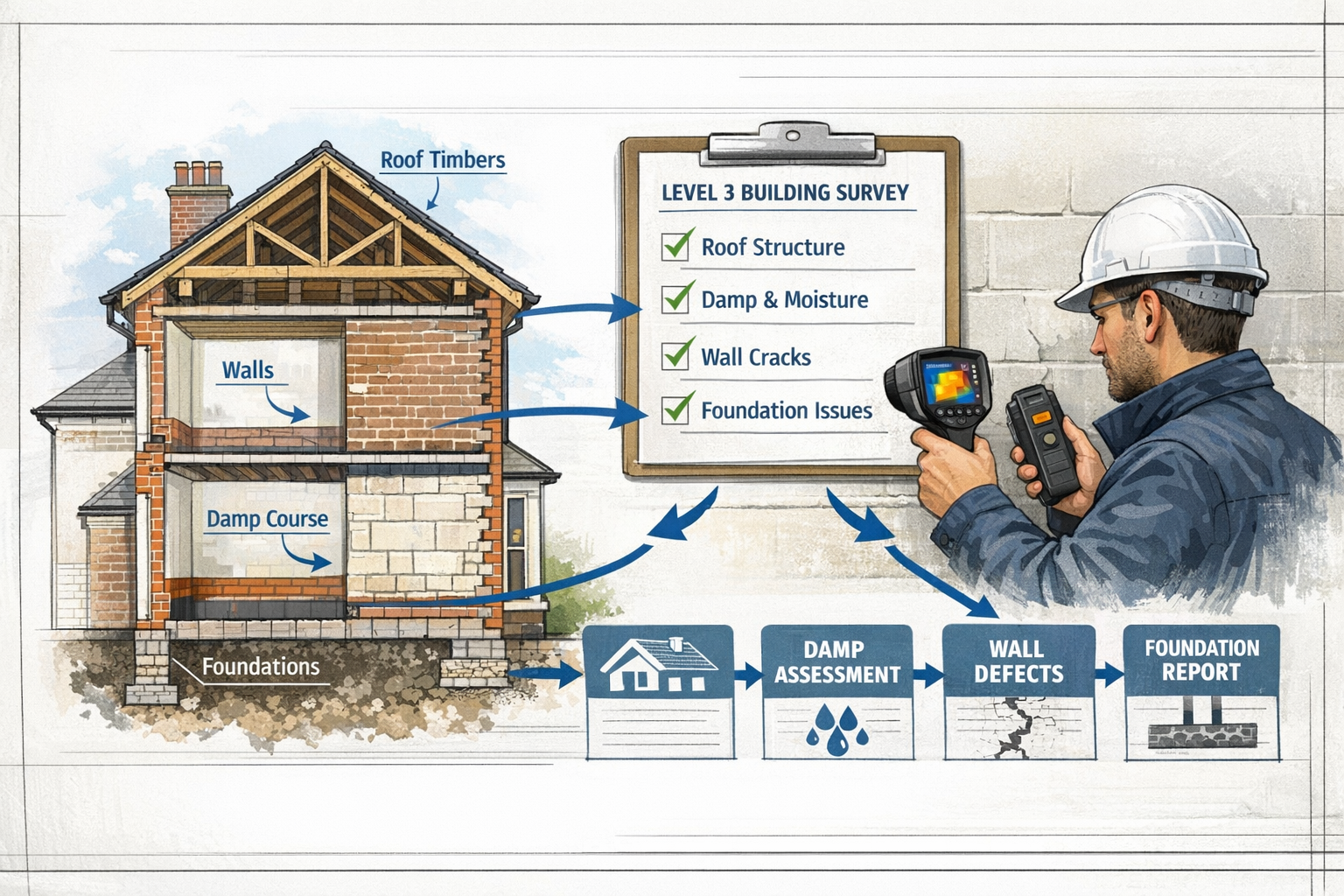
As the supply-side stabilises at +2% net balance, chartered surveyors must implement strategic protocol adaptations that address both the steady instruction flow and the evolving expectations of 2026 property buyers. The Level 3 Building Survey—the most comprehensive RICS inspection—requires particular attention to protocol refinement given its complexity and the vulnerable property types it typically covers.
Core Level 3 Survey Components in 2026 Context
The Level 3 Building Survey (formerly known as the Full Structural Survey) remains the gold standard for detailed property inspection, particularly suited for:
- Properties built before 1900 or of unusual construction
- Homes that have undergone significant alterations or extensions
- Properties in poor condition or requiring substantial renovation
- Buildings of unusual design or constructed with non-standard materials
- Properties where the buyer plans major works or conversions
In the context of stable 2026 supply conditions, surveyors conducting Level 3 inspections should refine protocols across these key areas:
1. Pre-Inspection Intelligence Gathering 🔍
With market appraisals unchanged and instruction flow predictable[1], surveyors have opportunity for enhanced preparation:
- Desktop research protocols – Allocate 30-45 minutes for comprehensive property history research, including planning applications, historical maps, and local authority records
- Client briefing standardisation – Implement structured pre-survey questionnaires that capture buyer concerns, planned use, and specific areas of interest
- Risk profiling systems – Develop property-specific risk matrices based on age, construction type, and location to guide inspection focus areas
This enhanced preparation doesn't extend timelines but optimises on-site inspection efficiency, ensuring surveyors focus detailed examination where risks are highest.
2. On-Site Inspection Protocol Enhancements
The stable supply environment allows for methodical, unhurried inspections without the pressure of overheated market timelines:
Structural examination protocols should include:
- Systematic roof space inspection with thermal imaging where accessible
- Foundation and sub-floor void examination (where accessible)
- Wall construction analysis including cavity wall tie condition assessment
- Detailed damp and timber surveys using calibrated moisture meters
- Service installation condition assessment (electrical, plumbing, heating, drainage)
For those requiring specialist investigations, linking to specific defect surveys or damp survey services ensures comprehensive risk coverage.
Time allocation standards for 2026:
- Small terraced property (pre-1900): 3-4 hours minimum
- Semi-detached/detached (pre-1900): 4-6 hours minimum
- Large or complex properties: 6-8+ hours, potentially requiring multiple visits
3. Digital Workflow Integration 💻
The 2026 supply-side context demands efficient digital protocols that maintain quality while handling steady instruction flow:
- Digital survey templates – Standardised but flexible reporting frameworks that ensure consistency across surveyors while capturing property-specific details
- Photographic documentation protocols – Minimum 100-150 photographs for typical Level 3 surveys, with clear labelling systems and defect close-ups
- Cloud-based collaboration – Real-time report drafting that allows for quality control review before finalisation
- Mobile inspection apps – Field-based data capture that reduces transcription errors and speeds report production
These digital enhancements support the stable +2% supply growth without compromising the thoroughness that defines Level 3 standards.
4. Reporting Standards and Turnaround Protocols
With market conditions neither urgent nor stagnant, Level 3 survey reports in 2026 should balance comprehensiveness with accessibility:
Report structure essentials:
- Executive summary highlighting critical defects and cost implications (1-2 pages)
- Detailed room-by-room analysis with condition ratings
- Prioritised recommendations (urgent, short-term, long-term)
- Estimated repair cost brackets for major defects
- Maintenance advice and future considerations
Turnaround time standards:
- Standard Level 3 reports: 5-7 working days post-inspection
- Complex properties requiring specialist input: 10-14 working days
- Rush service (where appropriate): 3-4 working days with premium fee
Understanding which home survey is right for different scenarios helps clients make informed decisions, while clear communication about Level 3 timelines manages expectations in the stable 2026 market.
Quality Control Protocols for Steady Instruction Flow
The +2% net balance creates consistent workload that enables robust quality control without the chaos of market surges:
✅ Peer review systems – Implement structured review of 10-15% of completed Level 3 reports by senior surveyors
✅ Client feedback loops – Systematic collection of client satisfaction data to identify protocol improvement opportunities
✅ Continuing professional development – Regular training on emerging construction defects, modern materials, and updated building regulations
✅ Insurance and indemnity reviews – Annual review of professional indemnity coverage given the comprehensive nature of Level 3 advice
For first-time buyers navigating the survey process, resources like our first-time buyer building survey guide provide essential context for understanding Level 3 protocols.
Cost Management and Fee Structures for 2026
With Level 3 surveys typically costing £750–£1,500+[4], transparent fee structures become crucial in stable market conditions:
| Property Type | Typical Level 3 Fee Range | Factors Affecting Cost |
|---|---|---|
| Small terraced (pre-1900) | £750–£950 | Basic construction, limited accessibility |
| Semi-detached (pre-1900) | £950–£1,200 | Multiple floors, garden structures |
| Detached/large (pre-1900) | £1,200–£1,500 | Complexity, outbuildings, extensive grounds |
| Unusual/complex properties | £1,500–£2,500+ | Non-standard construction, listed status, extensive alterations |
Fee transparency protocols should clearly communicate:
- Base inspection and reporting costs
- Additional charges for specialist investigations (e.g., electrical testing, drainage surveys)
- Travel costs for properties outside standard service areas
- Rush service premiums where applicable
This pricing clarity supports the stable supply environment by building client trust and reducing transaction friction.
Strategic Implementation: Maximising Value from Level 3 RICS Surveys in 2026
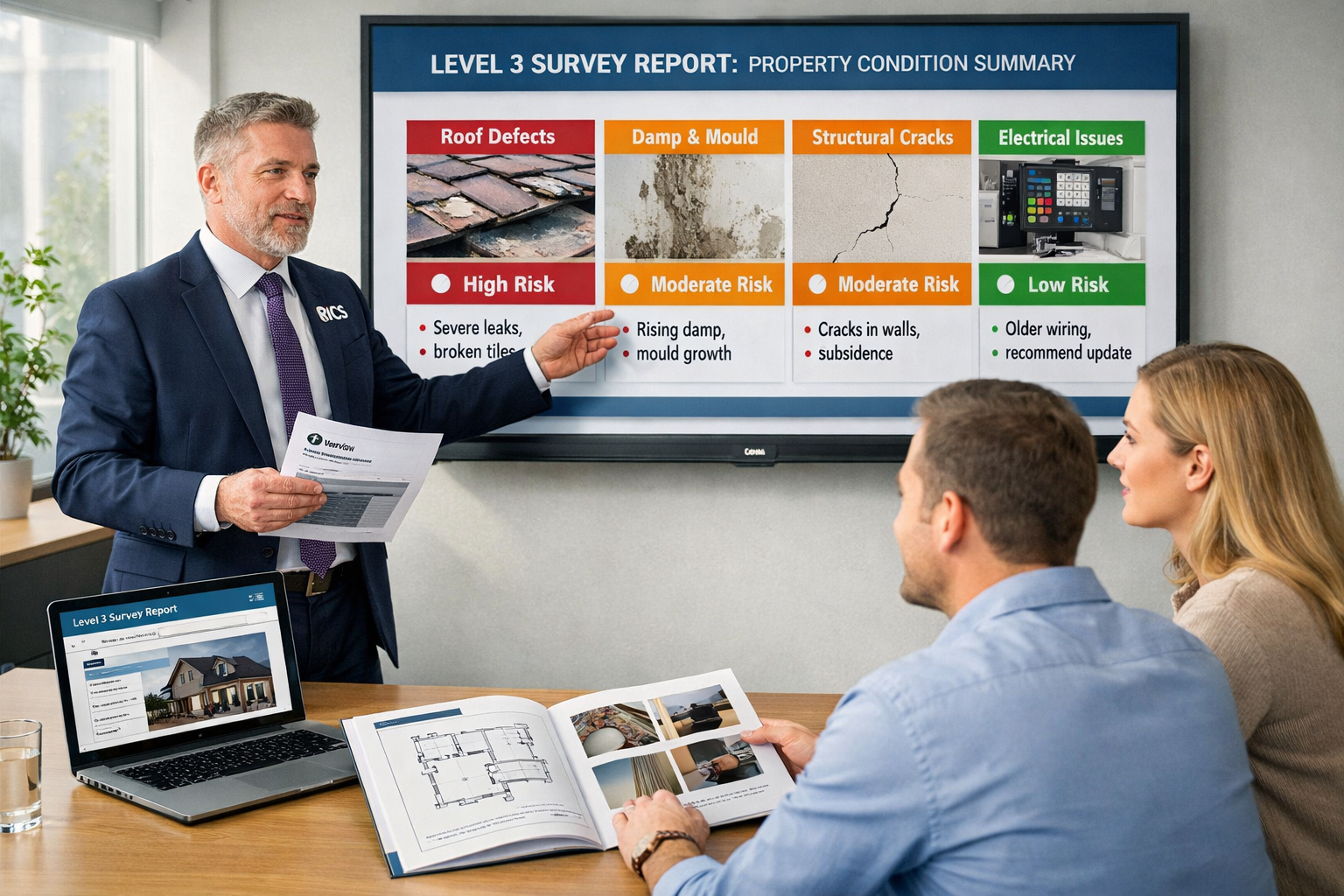
The stabilisation of new instructions at +2% net balance creates a strategic window for both surveyors and property buyers to maximise the value derived from Level 3 Building Surveys. Unlike volatile market periods where urgency compromises thoroughness or stagnation reduces motivation, the 2026 equilibrium enables optimised survey deployment that serves all stakeholders effectively.
For Chartered Surveyors: Protocol Implementation Checklist
Professionals conducting Level 3 RICS Surveys for 2026 Supply-Side Surge: Protocols When New Instructions Stabilise at +2% Net Balance should implement these strategic priorities:
Operational Excellence Framework 🎯
Capacity planning – With stable instruction flow, establish sustainable workload limits that prevent surveyor fatigue while maximising throughput:
- Target 2-3 Level 3 surveys per surveyor per week (allowing for inspection time, report writing, and quality control)
- Build buffer capacity for complex properties requiring extended examination
- Maintain flexibility for seasonal variations in instruction levels
Technology investment – The predictable 2026 market justifies investment in efficiency-enhancing tools:
- Thermal imaging cameras for non-invasive defect detection (£2,000-£5,000 investment)
- Advanced moisture detection equipment with data logging capabilities
- Drone technology for roof and chimney inspection (where appropriate and compliant)
- Professional survey software with template libraries and photo integration
Client communication protocols – Standardise communication touchpoints that build confidence:
- Confirmation within 24 hours of instruction with clear timeline expectations
- Pre-inspection briefing call or questionnaire (48 hours before inspection)
- Post-inspection preliminary findings discussion (same day or next day)
- Report delivery with follow-up consultation offer
- Post-purchase follow-up (3-6 months) to assess report accuracy and client satisfaction
Risk Management and Professional Standards
The stable supply environment enables enhanced risk management without time pressure compromising thoroughness:
Limitation documentation – Clearly record and communicate inspection limitations:
- Areas not inspected due to access restrictions
- Covered or concealed elements requiring specialist opening-up
- Services not tested (e.g., electrical circuits, drainage systems)
- Assumptions made where direct inspection was impossible
Professional indemnity considerations – Level 3 surveys carry higher liability exposure due to their comprehensive nature:
- Maintain adequate professional indemnity insurance (minimum £1 million, preferably £2-5 million for complex properties)
- Document decision-making processes and professional judgments
- Recommend specialist investigations where defects exceed surveyor expertise
- Maintain clear records of client instructions and scope agreements
Understanding common myths about property surveys helps manage client expectations and reduce liability exposure.
For Property Buyers: Maximising Level 3 Survey Value
Buyers investing in properties requiring Level 3 Building Surveys can leverage the stable 2026 market conditions to extract maximum value:
Strategic Survey Deployment 📋
Timing optimisation – The +2% net balance means buyers aren't competing in frenzied bidding wars, allowing time for:
- Pre-offer surveys where sellers are motivated and agreeable
- Thorough review of survey findings before exchange of contracts
- Negotiation based on detailed defect analysis and repair cost estimates
- Multiple specialist investigations if initial survey reveals concerns
Scope definition – Work with surveyors to define appropriate Level 3 survey scope:
- Standard comprehensive inspection for typical older properties
- Enhanced focus areas for properties with known issues or planned alterations
- Coordination with specialist investigations (e.g., structural engineers for significant cracking, damp specialists for persistent moisture issues)
- Budget planning support based on survey findings
Report utilisation – Maximise the value of the £750–£1,500+ investment[4]:
- Use findings to negotiate purchase price reductions or seller-funded repairs
- Prioritise post-purchase works based on surveyor recommendations
- Budget accurately for short-term and long-term maintenance requirements
- Share relevant sections with contractors when obtaining repair quotations
Reviewing homebuyer report examples provides context for understanding survey report structures and recommendations.
Integration with Broader Property Transaction Protocols
The Level 3 RICS Surveys for 2026 Supply-Side Surge: Protocols When New Instructions Stabilise at +2% Net Balance don't exist in isolation—they integrate with wider property transaction processes:
Coordination with Legal and Financial Processes
Conveyancing alignment – Survey findings inform legal due diligence:
- Share survey reports with solicitors to identify potential legal issues (e.g., unapproved alterations, boundary disputes)
- Coordinate timing so survey results are available before exchange of contracts
- Use survey evidence to support contract special conditions or retention agreements
Mortgage valuation coordination – While Level 3 surveys exceed lender requirements, coordination remains important:
- Understand that lender valuations are distinct from building surveys
- Use Level 3 findings to address potential lender concerns proactively
- Provide survey reports to mortgage advisors where property condition might affect lending decisions
Insurance implications – Comprehensive survey findings support insurance applications:
- Declare known defects to insurers based on survey findings
- Obtain specialist insurance for properties with specific issues (e.g., subsidence history, non-standard construction)
- Use survey recommendations to demonstrate proactive risk management
Post-Survey Action Planning
The stable 2026 market allows methodical post-survey planning:
Immediate actions (pre-purchase):
- Review survey report thoroughly, highlighting critical defects
- Obtain specialist quotations for major repair works
- Negotiate with seller based on documented evidence
- Adjust offer price or request seller remediation
- Consider walking away if defects exceed acceptable risk levels
Short-term actions (0-12 months post-purchase):
- Address urgent defects identified in survey (safety issues, weather protection)
- Implement recommended monitoring for progressive defects
- Complete essential maintenance to prevent deterioration
- Obtain necessary consents for remedial works
Long-term planning (1-5+ years):
- Budget for recommended renewal works (roof, services, decorations)
- Plan improvements based on surveyor's maintenance advice
- Maintain records of completed works for future sale
- Schedule periodic re-inspections for monitored defects
Measuring Protocol Effectiveness
Surveyors implementing refined Level 3 RICS Survey protocols for 2026 should establish metrics to assess effectiveness:
Efficiency metrics:
- Average inspection time per property type
- Report turnaround time from inspection to delivery
- Client satisfaction scores (target: 4.5+/5.0)
- Repeat instruction rate from satisfied clients
Quality metrics:
- Defect identification accuracy (verified through client feedback and post-purchase outcomes)
- Complaint or dispute rate (target: <1% of instructions)
- Professional indemnity claims frequency
- Peer review scores for report quality
Business performance metrics:
- Level 3 survey volume trends (should align with +2% market growth)
- Revenue per surveyor (optimising without compromising quality)
- Market share within service area
- Referral rates from estate agents, solicitors, and previous clients
The stable supply-side conditions of 2026 create an ideal environment for protocol refinement and optimisation, with sufficient instruction volume to justify investment but without the chaos that compromises quality.
Conclusion
The stabilisation of new instructions at a +2% net balance in February 2026 represents a pivotal moment for the UK residential property market and the chartered surveyors who serve it[1]. This modest but steady supply-side growth, combined with broadly unchanged market appraisals, creates optimal conditions for implementing refined Level 3 RICS Survey protocols that balance efficiency with the thoroughness essential for protecting buyers of older, complex, or unusual properties.
For chartered surveyors, the 2026 market context demands strategic protocol adaptations across pre-inspection preparation, on-site examination, digital workflow integration, and reporting standards. The stable instruction flow enables sustainable capacity planning, technology investment, and quality control systems that would be impossible during market volatility. With Level 3 surveys typically costing £750–£1,500+[4], maintaining rigorous standards while optimising efficiency ensures these comprehensive inspections deliver exceptional value to clients navigating property purchases in a balanced market.
Property buyers benefit from this stability through enhanced negotiation leverage and time for thorough due diligence. Unlike overheated markets where bidding wars compress timelines, or stagnant markets where motivation wanes, the +2% net balance creates space for detailed survey review, specialist investigations where needed, and evidence-based price negotiations that reflect true property condition.
Next Steps for Stakeholders
For Chartered Surveyors:
- Review and update Level 3 survey protocols to align with 2026 market conditions
- Invest in efficiency-enhancing technology while maintaining inspection thoroughness
- Implement structured quality control and client communication frameworks
- Monitor instruction flow trends and adjust capacity planning accordingly
- Maintain professional development to address emerging construction defects and materials
For Property Buyers:
- Commission Level 3 Building Surveys for properties built before 1900, with significant alterations, or of unusual construction
- Allow adequate time for comprehensive inspection and report review (typically 5-7 working days)
- Use survey findings strategically in price negotiations and post-purchase planning
- Budget appropriately for identified defects and recommended maintenance
- Engage specialist investigations where Level 3 surveys identify areas beyond general surveyor expertise
For Industry Professionals:
- Recognise that stable supply conditions create opportunities for protocol optimisation
- Coordinate survey timing with conveyancing and mortgage processes
- Share best practices for handling steady instruction flow without compromising quality
- Monitor RICS market data for early indicators of supply-side shifts requiring protocol adjustment
The Level 3 RICS Surveys for 2026 Supply-Side Surge: Protocols When New Instructions Stabilise at +2% Net Balance represent more than technical procedures—they embody the profession's commitment to protecting property buyers through rigorous, independent assessment. As the market continues to evolve through 2026, maintaining this balance between efficiency and thoroughness will define surveying excellence in an era of measured, sustainable property market growth.
For expert guidance on Level 3 Building Surveys and comprehensive property inspections across London and surrounding areas, contact qualified RICS chartered surveyors who understand the nuances of 2026 market conditions and can deliver the detailed analysis your property purchase deserves.
References
[1] Uk Residential Survey February 2026 – https://www.rics.org/news-insights/uk-residential-survey-february-2026
[2] Adapting Building Surveys For The 2026 Buyer Demand Surge Protocols For Faster Transactions And Risk Mitigation – https://nottinghillsurveyors.com/blog/adapting-building-surveys-for-the-2026-buyer-demand-surge-protocols-for-faster-transactions-and-risk-mitigation
[3] Uk Residential Market Survey January 2026 – https://www.rics.org/content/dam/ricsglobal/documents/market-surveys/uk-residential-market-survey/UK-Residential-Market-Survey_January-2026.pdf
[4] Rics Survey Cost – https://surveymatch.co.uk/rics-survey-cost/
[5] Homebuying Reform Impacts On Building Surveys Preparing For Mandatory Upfront Condition Assessments In 2026 – https://nottinghillsurveyors.com/blog/homebuying-reform-impacts-on-building-surveys-preparing-for-mandatory-upfront-condition-assessments-in-2026
[6] Uk Resi Survey Jan 2026 Report Shows Early Signs Market Recovery Despite Caution – https://www.rics.org/news-insights/uk-resi-survey-jan-2026-report-shows-early-signs-market-recovery-despite-caution