
Northern Ireland's property market is experiencing unprecedented growth in 2026, with regional price increases outpacing many UK counterparts. As demand surges and competition intensifies, buyers face a critical challenge: how can they protect their investment when purchasing properties in a rapidly appreciating market? The answer lies in comprehensive Level 3 Building Surveys for Northern Ireland Price Surge: Capturing 2026 Valuation and Condition Assessment Opportunities—a strategic tool that reveals hidden defects, validates valuations, and provides powerful negotiating leverage in today's competitive landscape.
With older housing stock dominating Northern Ireland's property portfolio and buyers increasingly competing for limited inventory, the risk of overpaying for properties with concealed structural issues has never been higher. Level 3 surveys offer the most thorough assessment available, uncovering problems that could cost thousands to repair and providing the detailed intelligence needed to make informed purchasing decisions during this price surge.
Key Takeaways
- 🏠 Level 3 surveys in Northern Ireland typically cost £630–£1,500 for standard properties, with complex or period properties ranging from £1,250–£2,000+ in 2026 [1][3]
- 📈 Northern Ireland's price surge makes comprehensive condition assessments critical for avoiding costly surprises in a competitive market where properties sell quickly
- 🔍 Level 3 surveys provide the most detailed structural analysis, recommended for properties built before 1900, altered buildings, or those requiring renovation work [7]
- 💰 Survey findings enable average price reductions of 3-7% on purchase offers, potentially saving buyers £6,000–£20,000 on typical Northern Ireland properties
- ⚡ Strategic timing of surveys during 2026's price surge helps buyers validate inflated asking prices and identify properties with genuine value versus those with hidden liabilities
Understanding Level 3 Building Surveys in Northern Ireland's 2026 Market Context
What Makes Level 3 Surveys Essential During Price Surges
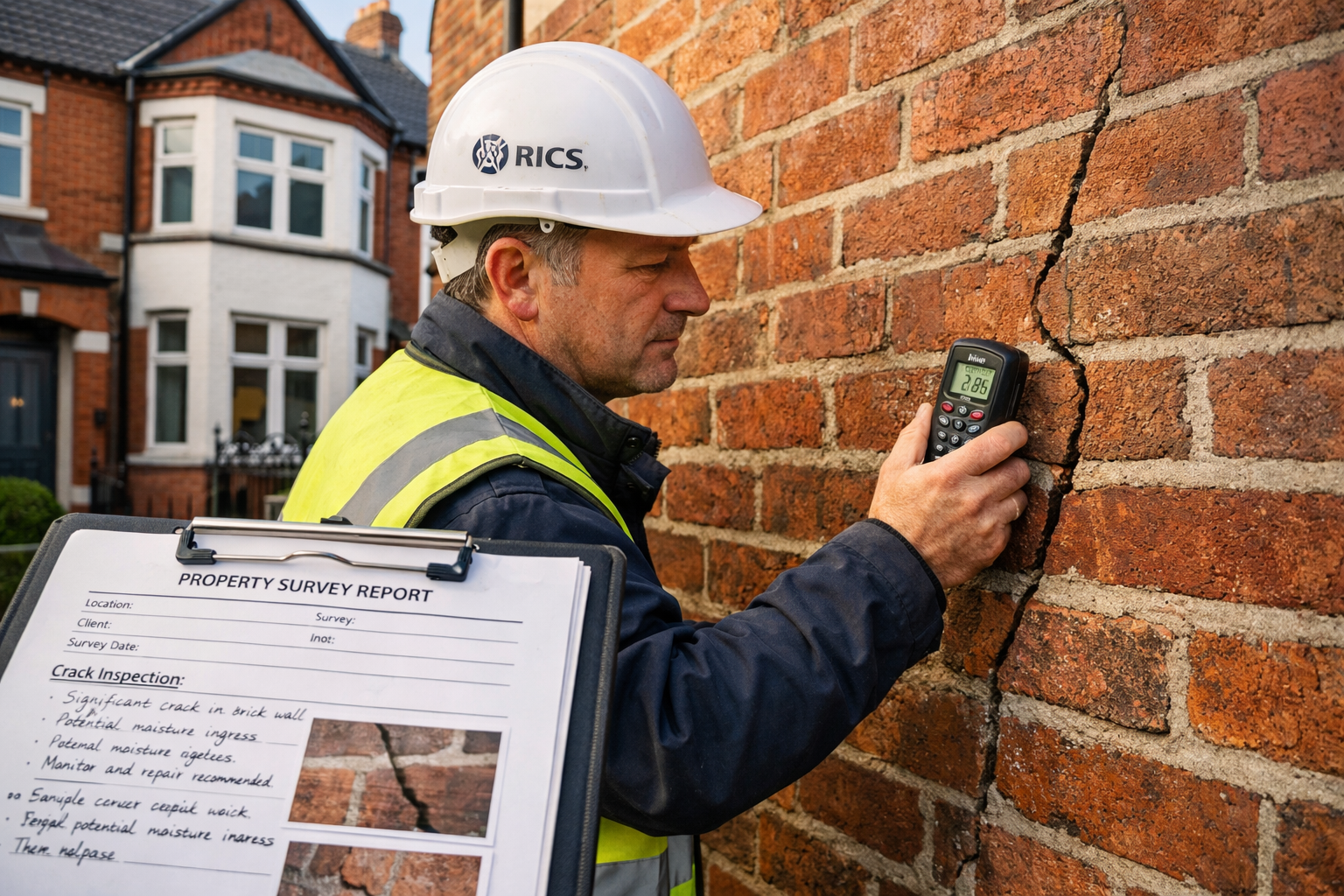
Level 3 building surveys—also known as full building surveys or structural surveys—represent the most comprehensive property assessment available to buyers in Northern Ireland. Unlike basic valuation reports or mid-tier homebuyer surveys, Level 3 assessments provide exhaustive analysis of a property's condition, structural integrity, and potential defects [5].
In 2026's surging market, these detailed surveys serve multiple critical functions:
Validation of Inflated Valuations: When prices rise rapidly, asking prices may exceed actual property value. A RICS building survey provides objective evidence of condition that supports or challenges seller pricing.
Risk Mitigation: Competitive bidding environments pressure buyers to make quick decisions. Comprehensive surveys reveal hidden problems before commitment, protecting against expensive post-purchase discoveries.
Negotiation Leverage: Documented defects provide concrete justification for price renegotiation, particularly valuable when market momentum favors sellers.
Core Components of Level 3 Survey Assessments
A thorough Level 3 survey in Northern Ireland examines every accessible part of the property, including:
| Survey Component | Assessment Details |
|---|---|
| Structural Elements | Foundations, walls, floors, roof structure, load-bearing components |
| External Fabric | Brickwork, render, windows, doors, guttering, drainage systems |
| Internal Condition | Plasterwork, ceilings, joinery, staircases, built-in fixtures |
| Services | Electrical systems, plumbing, heating, ventilation (visual inspection) |
| Damp & Timber | Moisture ingress, condensation, timber decay, insect infestation |
| Grounds | Boundary walls, outbuildings, drainage, landscaping impacts |
The surveyor provides detailed descriptions of defects, their likely causes, and estimated repair costs—information that proves invaluable when negotiating purchase prices during competitive market conditions.
When Level 3 Surveys Become Non-Negotiable
RICS guidance emphasizes that Level 3 surveys are particularly appropriate for [7]:
- Properties built before 1900 (common in Northern Ireland's housing stock)
- Buildings that have been significantly altered or extended
- Properties in poor or deteriorating condition
- Unusual construction types or non-standard materials
- Properties where major renovation or conversion is planned
- Listed buildings or those in conservation areas
Given Northern Ireland's substantial inventory of Victorian and Edwardian terraced housing, along with rural properties featuring traditional construction methods, Level 3 surveys provide essential due diligence for a significant proportion of transactions.
Level 3 Building Surveys for Northern Ireland Price Surge: Cost Analysis and Investment Value
2026 Pricing Structure for Northern Ireland Properties
Understanding the investment required for Level 3 surveys helps buyers budget appropriately and recognize the value proposition. Current UK-wide pricing provides context for Northern Ireland expectations:
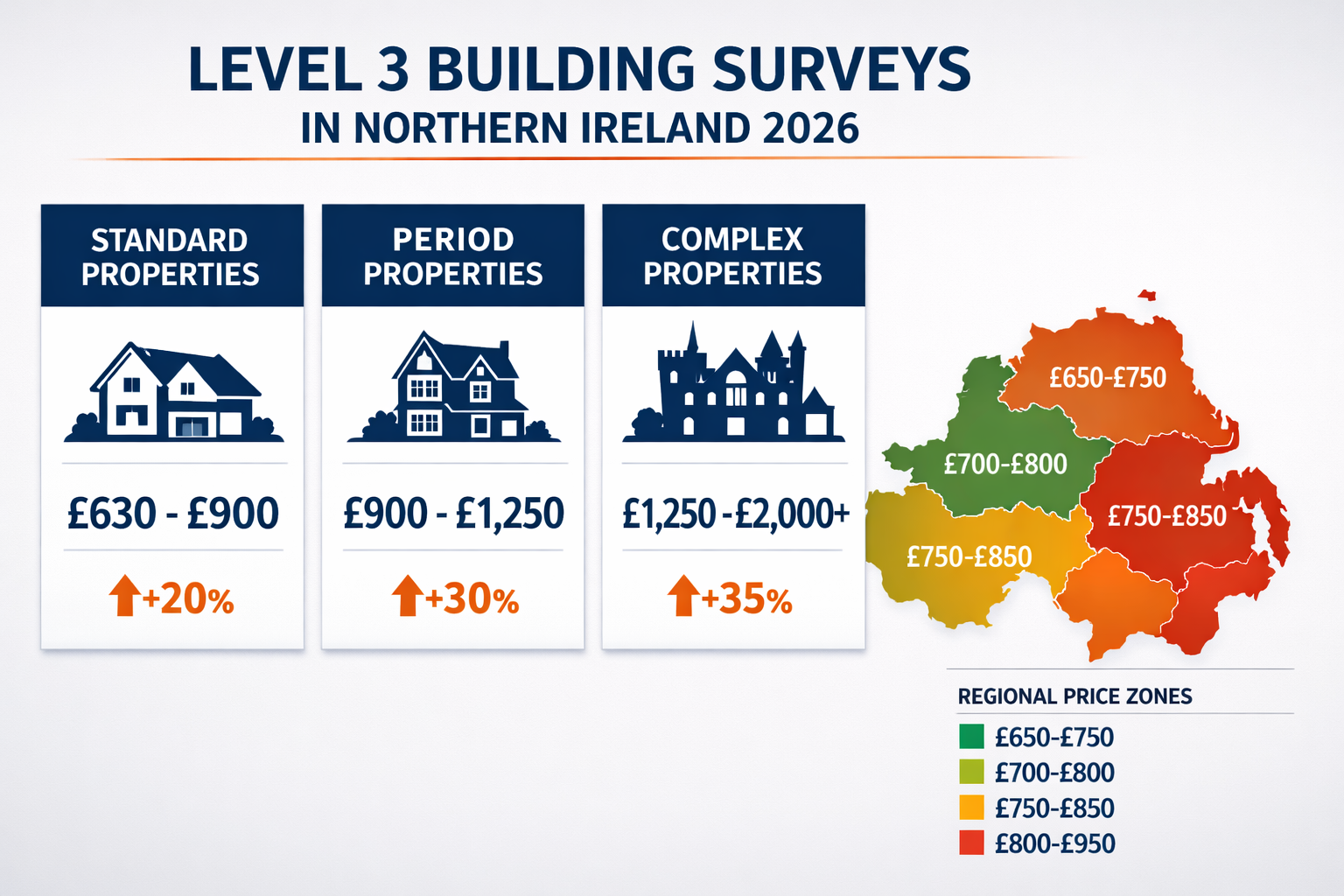
Standard Property Costs: Level 3 surveys for typical Northern Ireland properties (terraced houses, semi-detached homes under £300,000) generally range from £630 to £900 in 2026 [1][6]. This baseline covers properties with straightforward access and conventional construction.
Period Property Premium: Victorian, Edwardian, and Georgian properties—which comprise a substantial portion of Northern Ireland's housing stock—typically command survey fees of £900 to £1,250 due to their age, construction complexity, and higher likelihood of defects [3].
Complex Property Pricing: Properties with significant extensions, unconventional construction, multiple outbuildings, or substantial acreage can cost £1,250 to £2,000+ for comprehensive Level 3 assessment [3]. Large rural properties or those with suspected serious structural issues fall into this category.
Cost Factors Specific to Northern Ireland Properties
Several factors influence Level 3 survey pricing in Northern Ireland's unique property landscape:
🏘️ Property Age: Pre-1900 properties require more detailed assessment of traditional construction methods, lime mortar, solid walls, and period features.
📏 Property Size: Square footage directly impacts inspection time, with properties over 2,000 sq ft commanding premium fees.
🔧 Complexity: Multiple roof levels, extensions, conversions, and non-standard construction increase assessment requirements.
📍 Location: Rural properties may incur travel surcharges, while urban properties with difficult access present their own challenges.
⚠️ Condition: Properties showing obvious signs of neglect or damage require more extensive investigation and documentation.
Return on Investment: How Surveys Pay for Themselves
The cost of a Level 3 survey represents a fraction of potential savings and risk mitigation. Consider these financial benefits:
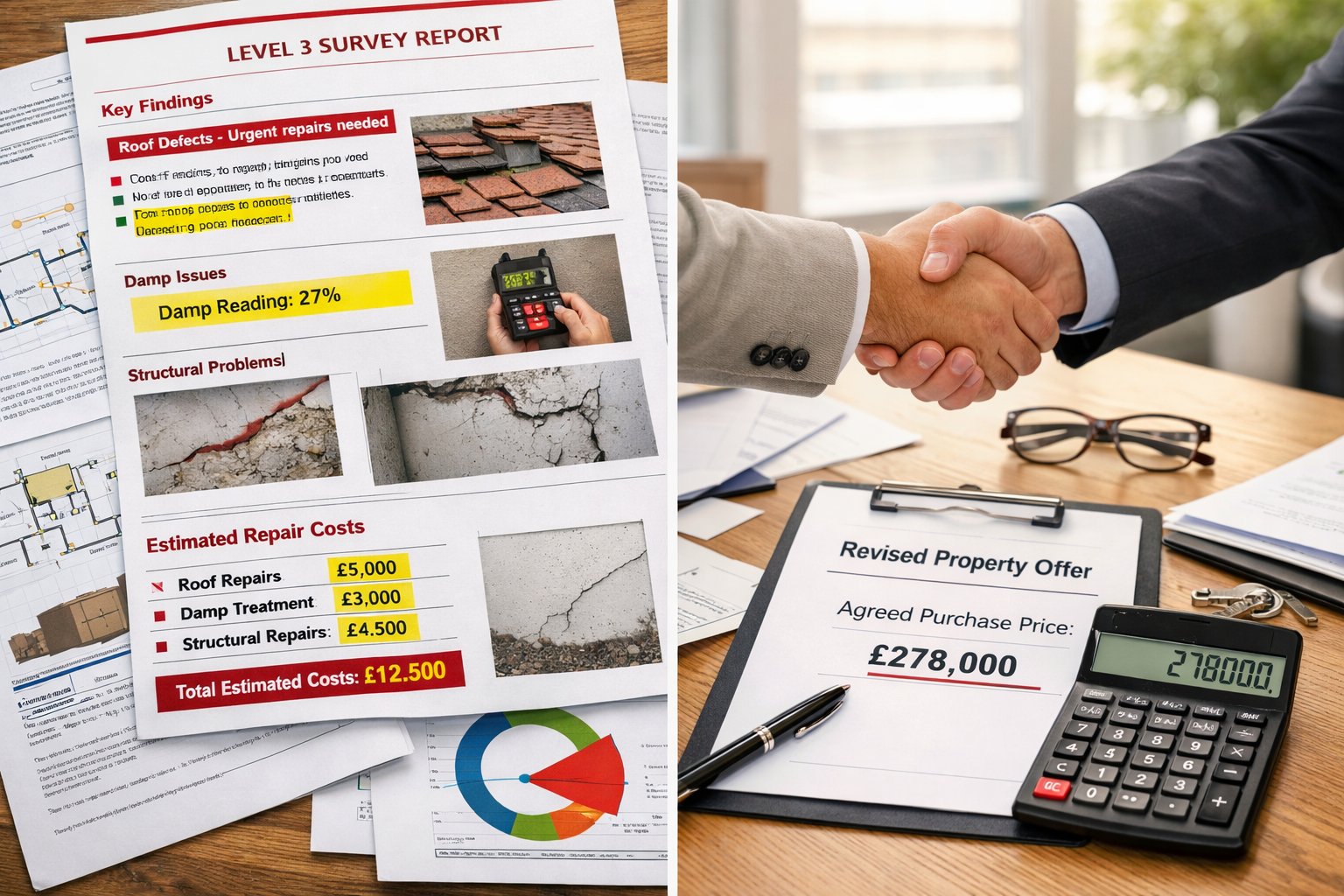
Price Reduction Potential: Research indicates that buyers achieve average price reductions of 3-7% when negotiating with survey evidence. On a £250,000 Northern Ireland property, this translates to £7,500 to £17,500 in savings—far exceeding the £800-£1,000 survey investment.
Avoided Catastrophic Costs: Undiscovered structural issues can cost £20,000-£50,000+ to remedy. A comprehensive survey identifies these problems before purchase, allowing buyers to either negotiate repairs, adjust their offer, or walk away entirely.
Informed Budgeting: Even when proceeding with purchase, knowing exact repair costs enables accurate financial planning and prevents post-purchase financial strain.
"In Northern Ireland's 2026 market, a £900 Level 3 survey that uncovers £15,000 in hidden structural repairs provides immediate 16:1 return on investment—either through price reduction or avoided purchase."
Leveraging Level 3 Surveys for Strategic Advantage During Northern Ireland's 2026 Price Surge
Timing Your Survey for Maximum Negotiating Power
Strategic survey timing maximizes leverage in competitive markets. Follow this optimal sequence:
1. Offer Acceptance: Submit your initial offer subject to survey and contract. This establishes your position while preserving exit options.
2. Immediate Survey Booking: Schedule your Level 3 survey within 48-72 hours of offer acceptance. Delays reduce negotiating power as sellers develop emotional attachment to the sale.
3. Rapid Report Review: Professional surveyors typically deliver Level 3 reports within 5-7 working days. Review findings immediately with your surveyor to understand severity and cost implications.
4. Strategic Renegotiation: Present documented defects to sellers within 10-14 days of initial offer, while momentum remains strong but before legal costs accumulate significantly.
Converting Survey Findings into Price Reductions
Effective negotiation transforms survey findings into financial advantage. Successful strategies include:
Quantified Repair Costs: Present specific cost estimates for identified defects. "The survey identified £12,000 in essential roof repairs" carries more weight than vague concerns about roof condition.
Priority Categorization: Focus negotiations on urgent repairs (structural issues, damp, electrical hazards) rather than cosmetic concerns. Sellers respond more favorably to safety and structural arguments.
Reasonable Compromise: Request 50-75% of major repair costs rather than full amounts. This demonstrates good faith while achieving substantial savings.
Alternative Solutions: Propose seller-funded repairs, retention clauses, or completion credits as alternatives to direct price reduction when sellers resist lowering asking price.
For detailed guidance on post-survey negotiations, review strategies for renegotiating after poor survey results.
Identifying Genuine Opportunities vs. Money Pits
Level 3 surveys help distinguish between properties offering renovation potential and those representing financial traps:
Positive Indicators ✅:
- Cosmetic issues with sound underlying structure
- Repairable defects with clear remediation paths
- Problems isolated to specific areas rather than systemic failures
- Property priced appropriately for condition once adjusted
Warning Signs ⚠️:
- Structural movement requiring underpinning (£15,000-£50,000+)
- Widespread damp penetration indicating fundamental construction failures
- Extensive timber decay throughout multiple floor levels
- Outdated electrical systems requiring complete rewiring
- Multiple serious defects suggesting prolonged neglect
Understanding these distinctions enables confident decision-making during Northern Ireland's competitive 2026 market, where pressure to proceed quickly can cloud judgment.
Maximizing Survey Value: Specialist Assessments and Follow-Up Actions
When to Commission Additional Specialist Reports
Level 3 surveys identify potential issues, but certain findings warrant specialist investigation:
Damp Surveys: When Level 3 surveys reveal moisture issues, dedicated damp specialists provide detailed analysis of causes, extent, and remediation costs. Damp survey costs typically range from £200-£500 but provide essential clarity on potentially expensive problems.
Structural Engineering Reports: Significant cracks, movement, or subsidence concerns require structural engineer assessment, providing calculations and remediation specifications that general surveyors cannot offer.
Electrical Condition Reports: Properties with outdated wiring or safety concerns benefit from qualified electrician inspection, documenting compliance issues and upgrade requirements.
Timber and Damp Specialists: When decay or infestation is suspected, specialist companies provide treatment specifications and guarantees that add value during resale.
Comparing Survey Levels: When Level 3 Becomes Essential
Understanding the differences between survey levels helps buyers select appropriate assessment depth:
Level 2 (Homebuyer Survey): Suitable for conventional properties in reasonable condition, built within the last 100 years, using standard construction methods. Provides overview of condition but limited detail on defects.
Level 3 (Building Survey): Essential for older properties, unusual construction, poor condition, or when detailed repair specifications are needed. Provides comprehensive analysis of all accessible elements.
Given Northern Ireland's housing stock characteristics—with substantial pre-1900 inventory and traditional construction methods—Level 3 surveys represent the prudent choice for most period property purchases during the 2026 price surge.
Integrating Survey Findings into Purchase Strategy
Transform survey intelligence into actionable strategy:
Budget Adjustment: Add identified repair costs to your purchase budget, ensuring realistic financial planning for property improvement.
Phased Renovation Planning: Prioritize urgent repairs (structural, damp, safety) over cosmetic improvements, creating realistic timelines for property enhancement.
Insurance Considerations: Disclose known defects to insurers, avoiding policy invalidation while potentially negotiating coverage for specific risks.
Future Sale Preparation: Address major defects documented in your purchase survey, ensuring smoother resale process and higher eventual valuation.
Mortgage Lender Communication: Share survey findings with lenders proactively, addressing potential valuation concerns before they derail financing.
Northern Ireland-Specific Considerations for 2026 Property Assessments
Regional Construction Characteristics
Northern Ireland properties present unique features requiring specialized survey attention:
Traditional Construction Methods: Solid wall construction, lime mortar, and traditional roof coverings remain common in period properties, requiring surveyors familiar with these techniques.
Climate Impacts: Northern Ireland's wet climate increases damp risks, making moisture assessment particularly critical during comprehensive surveys.
Rural Property Considerations: Septic systems, private water supplies, agricultural outbuildings, and land drainage issues feature prominently in rural Northern Ireland property surveys.
Listed Building Complexities: Northern Ireland's substantial inventory of listed buildings requires surveyors experienced with conservation requirements and appropriate repair methodologies.
Market-Specific Timing Considerations
Northern Ireland's 2026 property market presents unique timing dynamics:
Competitive Bidding Environment: Multiple offer situations require rapid survey commissioning to maintain purchase momentum while protecting buyer interests.
Seasonal Variations: Winter surveys may reveal heating system performance and weather-related defects less apparent during summer months, providing valuable intelligence.
Price Growth Trajectory: Ongoing price increases make survey-supported negotiations increasingly valuable, as even modest percentage reductions translate to substantial absolute savings.
Regulatory and Professional Standards
Ensure your surveyor meets appropriate professional standards:
RICS Qualification: Select surveyors holding Royal Institution of Chartered Surveyors membership, ensuring professional standards, insurance, and complaint procedures.
Local Experience: Prioritize surveyors with demonstrated Northern Ireland experience, familiar with regional construction methods, common defects, and local market conditions.
Professional Indemnity Insurance: Verify adequate insurance coverage (typically £1 million minimum) protecting against negligent survey performance.
Clear Reporting Standards: Confirm the surveyor provides comprehensive written reports with photographs, defect descriptions, cause analysis, and repair cost estimates.
Conclusion: Strategic Property Investment Through Comprehensive Assessment
Level 3 Building Surveys for Northern Ireland Price Surge: Capturing 2026 Valuation and Condition Assessment Opportunities represent far more than routine property inspections—they function as strategic intelligence tools that protect investments, enable informed decision-making, and provide powerful negotiating leverage during competitive market conditions.
As Northern Ireland's property market continues its upward trajectory in 2026, the risk of overpaying for properties with concealed defects intensifies. Buyers face mounting pressure to make rapid decisions while competing against multiple offers, creating perfect conditions for expensive mistakes. Comprehensive Level 3 surveys counter these pressures by providing objective, detailed analysis of property condition that validates valuations and reveals hidden liabilities.
The investment of £630-£1,500 for thorough Level 3 assessment delivers substantial returns through price reductions averaging 3-7%, avoided catastrophic repair costs, and confident purchase decisions backed by professional intelligence. For Northern Ireland's predominantly period housing stock—with its traditional construction methods, age-related defects, and climate-related challenges—Level 3 surveys represent prudent due diligence rather than optional extras.
Actionable Next Steps
For Buyers Currently Under Offer:
- Commission your Level 3 survey within 48 hours of offer acceptance
- Select RICS-qualified surveyors with Northern Ireland experience
- Budget 5-7 working days for comprehensive report delivery
- Review findings with your surveyor before initiating renegotiation
- Present quantified repair costs to sellers within 10-14 days
For Buyers Beginning Property Search:
- Research qualified surveyors before viewing properties
- Budget £800-£1,200 for Level 3 survey costs in your purchase planning
- Understand building survey benefits before making offers
- Consider saving money through strategic survey use
- Prepare negotiation strategies for various defect scenarios
For Properties Requiring Specialist Assessment:
- Commission Level 3 survey as foundation assessment
- Request specialist reports for significant damp, structural, or electrical concerns
- Obtain multiple quotes for identified repair work
- Factor specialist report costs (£200-£500 each) into budget
- Use combined intelligence for comprehensive negotiation strategy
The Northern Ireland property market's 2026 price surge creates both opportunities and risks. Buyers who invest in comprehensive Level 3 building surveys gain the detailed intelligence needed to navigate competitive conditions confidently, negotiate effectively, and secure properties that represent genuine value rather than expensive liabilities. In a market where properties sell rapidly and prices continue climbing, professional survey assessment provides the strategic advantage that separates successful investments from costly mistakes.
Take control of your Northern Ireland property purchase by commissioning a thorough Level 3 building survey—the investment that protects all others.
References
[1] How Much Does A House Survey Cost – https://hoa.org.uk/advice/guides-for-homeowners/i-am-buying/how-much-does-a-house-survey-cost/
[2] How Much Does A House Survey Cost – https://www.comparemymove.com/guides/surveying/how-much-does-a-house-survey-cost
[3] How Much Does A Level 3 Survey Cost – https://lmsurveyors.co.uk/how-much-does-a-level-3-survey-cost/
[5] Rics Residential Surveys – https://www.nisurveys.co.uk/rics-residential-surveys/
[6] How Much Does A House Survey Cost In 2026 – https://sdlsurveying.co.uk/news/how-much-does-a-house-survey-cost-in-2026/
[7] House Surveys Uk The Costs Types And Benefits Of An Rics Home Survey – https://www.rics.org/consumer-guides/house-surveys-uk-the-costs-types-and-benefits-of-an-rics-home-survey