
The property market is about to experience its most significant shake-up in decades. With Homebuying Reforms 2026: How Mandatory Condition Surveys Will Transform Building Surveyors' Workloads set to revolutionize the traditional transaction process, building surveyors across England and Wales face an unprecedented surge in demand. Announced in October 2025, these reforms aim to tackle the staggering £1.5 billion annual cost of failed property transactions by shifting survey responsibility from buyers to sellers—a fundamental change that will reshape how building surveyors operate.[1]
For professionals in the surveying industry, this transformation presents both enormous opportunity and significant operational challenges. The shift from buyer-commissioned surveys to mandatory seller-led property condition assessments means surveyors must prepare for dramatically increased workloads, faster turnaround expectations, and new professional protocols.
Key Takeaways
- 🏠 Sellers must commission property condition surveys before marketing properties, shifting costs and responsibility from buyers to sellers starting in 2026
- 💷 Average survey spending will jump from £38 to £380 per transaction, creating substantial new revenue opportunities for building surveyors
- ⏱️ Surveyors face pressure to deliver faster turnarounds as upfront surveys become mandatory at the listing stage rather than during negotiations
- 📋 New training and standardization requirements will emerge as the industry adapts to consistent condition reporting frameworks
- 🔄 Buyer surveys will still be necessary in most cases, meaning surveyors may conduct multiple assessments per property transaction
Understanding the Homebuying Reforms 2026 Framework
The Economic Problem Driving Change
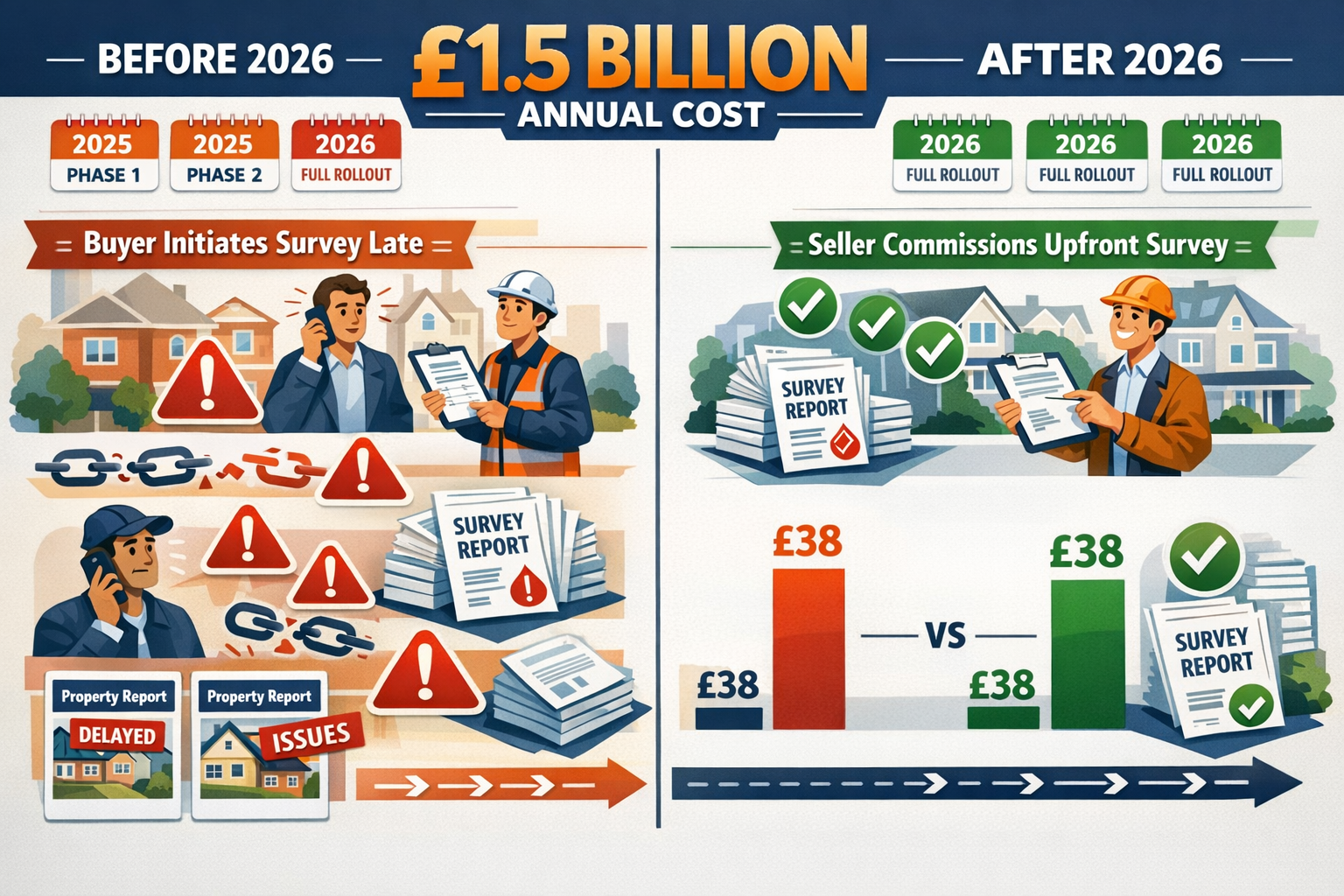
The current property transaction system in England and Wales has long been criticized for inefficiency and high failure rates. The government estimates that failed property transactions cost the UK economy approximately £1.5 billion annually—a staggering figure that prompted the announcement of major homebuying reforms on October 6, 2025.[1]
Under the traditional system, buyers typically commission surveys late in the transaction process, often after making offers and investing significant time and money in legal work. When building condition assessments reveal unexpected defects or structural issues, negotiations frequently collapse or restart at lower prices, wasting resources for all parties involved.
Core Elements of the 2026 Reforms
The Housing Reform 2026 package introduces several interconnected changes designed to create a more transparent and efficient homebuying process:[2]
Mandatory Upfront Surveys: Sellers—typically working with estate agents—must commission a property condition survey or provide equivalent verified material information prior to marketing their properties. This represents a fundamental shift from the traditional buyer-led approach.
Comprehensive Property Information: Sellers must provide structured information including:
- Overview of structural condition and building integrity
- Disclosure of known defects and previous repairs
- Financial information (leasehold charges, ground rent, service fees)
- Relevant legal matters (restrictions, easements, encumbrances)
Required Property Searches: Upfront searches include local authority searches, drainage and water searches, environmental assessments, and locality-specific risk evaluations such as mining or chalk subsidence issues.[3]
Earlier Binding Agreements: The reforms introduce options for earlier binding contracts to prevent last-minute withdrawals, reducing the situation where successive buyers must repeat condition surveys.[1]
Geographic Scope and Phased Implementation
The reforms apply specifically to England and Wales, with gradual implementation beginning in 2026. Scotland already operates under its established Home Reports system (mandatory since 2008), while Northern Ireland follows its own separate property transaction framework.[2]
The phased rollout allows the industry time to adapt infrastructure, train professionals, and develop standardized reporting frameworks before full enforcement.
How Mandatory Condition Surveys Will Transform Building Surveyors' Workloads
Dramatic Increase in Survey Volume
The most immediate impact of Homebuying Reforms 2026: How Mandatory Condition Surveys Will Transform Building Surveyors' Workloads will be a substantial increase in survey commissions. When every property listed for sale requires an upfront condition assessment, the volume of work for building surveyor services will multiply exponentially.
Consider the market dynamics:
| Metric | Pre-2026 | Post-2026 |
|---|---|---|
| Average survey cost per transaction | £38 | £380 |
| Survey commission timing | Late stage (buyer-led) | Upfront (seller-led) |
| Properties requiring surveys | ~60% (buyer discretion) | ~100% (mandatory) |
| Total seller fixed costs | Variable | ~£710 |
This tenfold increase in average survey spending—from £38 to £380 per transaction—reflects both the mandatory nature of the new system and the comprehensive scope required.[3]
Pressure for Faster Turnaround Times
Under the traditional system, buyers commissioned surveys after offers were accepted, allowing surveyors reasonable timeframes to schedule inspections and prepare detailed reports. The new framework changes this dynamic significantly.
Sellers need surveys before listing, creating pressure for faster turnaround times. Estate agents will expect rapid service to avoid delayed marketing, and sellers will be reluctant to wait weeks for survey completion before putting properties on the market.
Building surveyors must adapt their operational models to accommodate:
- ⚡ Express booking systems for rapid scheduling
- 📱 Digital inspection tools to streamline on-site assessments
- 🤖 Automated reporting templates for faster report generation
- 👥 Expanded surveyor teams to handle increased volume
- 🗓️ Flexible scheduling including evenings and weekends
Shift in Client Relationships
The fundamental shift from buyer-commissioned to seller-commissioned surveys transforms the surveyor's client relationship and professional obligations.
Traditional Model: Surveyors worked for buyers, providing independent assessments to inform purchase decisions. The relationship was adversarial to sellers, with surveyors identifying defects that could reduce property values or derail transactions.
New Model: Surveyors increasingly work for sellers, creating different professional dynamics. While RICS standards require objective reporting regardless of who pays, surveyors must navigate:
- Seller expectations for favorable reports
- Potential pressure to minimize defect descriptions
- Questions about report sharing and confidentiality
- Liability considerations when multiple parties rely on reports
Professional building surveyors must maintain strict ethical standards while adapting to this new client base.
Standardization and Training Requirements
The mandatory nature of seller surveys necessitates greater standardization across the industry. Unlike the current system where buyers choose from various survey levels (homebuyers surveys, full structural surveys, or basic valuations), the new framework will likely establish minimum condition reporting standards.
This standardization requires:
Training Updates: Surveyors must familiarize themselves with new reporting templates, mandatory disclosure requirements, and regulatory compliance frameworks specific to seller-commissioned assessments.
Quality Assurance: Industry bodies will likely implement enhanced quality control measures to ensure consistency across reports that form the foundation of property transactions.
Technology Adoption: Digital platforms for report delivery, standardized data formats, and integration with property listing systems will become essential rather than optional.
Continuing Professional Development: Regular training on evolving standards, legal requirements, and best practices for the new system will be mandatory for practicing surveyors.
Dual Survey Phenomenon
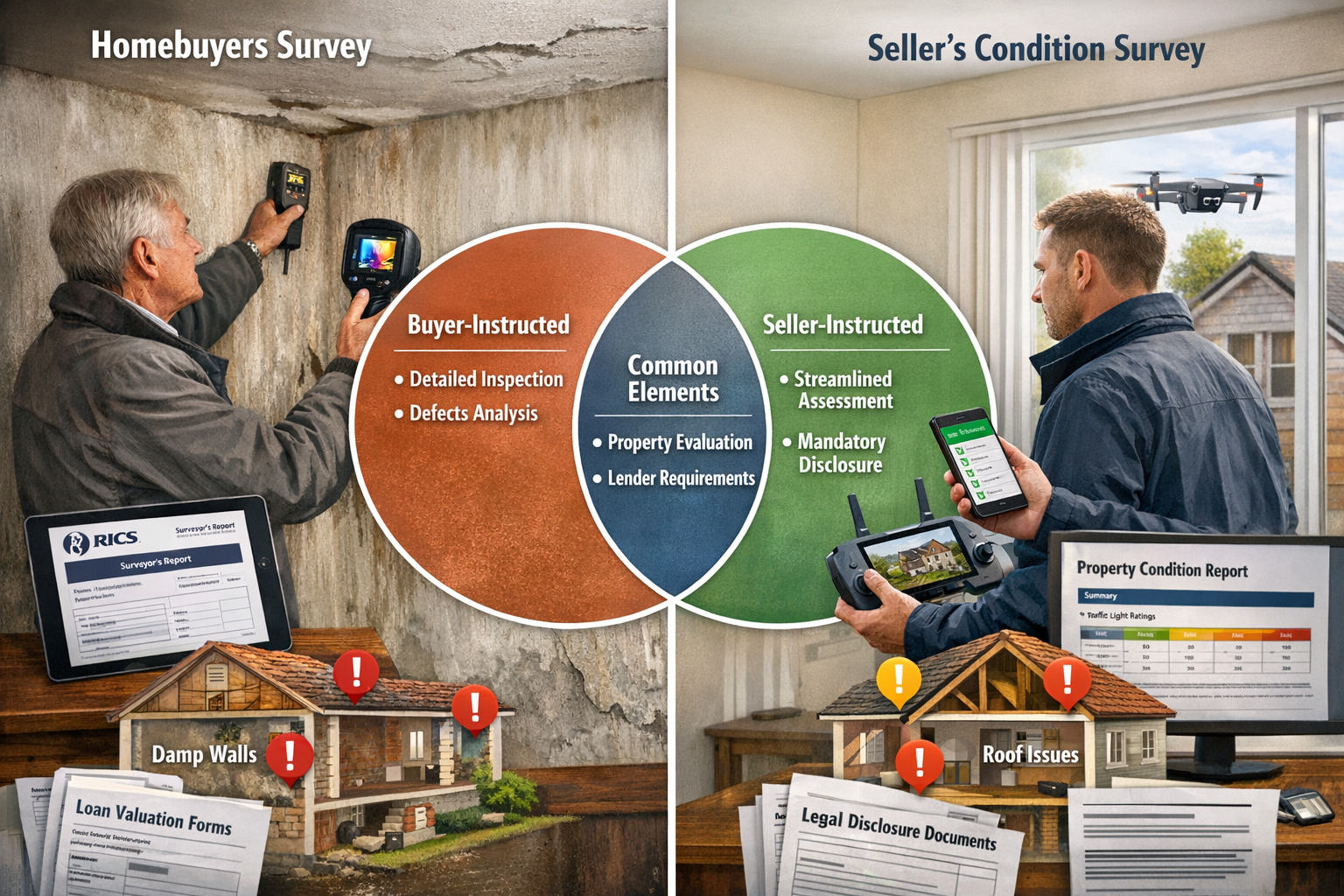
Despite upfront seller surveys, independent RICS surveys commissioned by buyers are expected to continue in most cases.[2] Seller surveys improve transparency but don't replace independent professional advice tailored to specific buyer circumstances.
This creates a potential "dual survey" scenario where:
- Seller commissions an initial condition survey for marketing
- Buyer commissions an independent homebuyers report for verification and detailed assessment
- Lender requires a separate valuation inspection for mortgage purposes
For building surveyors, this means even greater workload increases than the mandatory seller surveys alone would suggest. Properties may be surveyed multiple times during a single transaction cycle, creating both opportunities and potential confusion about report discrepancies.

Preparation Strategies for Building Surveyors
Operational Capacity Planning
Successful navigation of Homebuying Reforms 2026: How Mandatory Condition Surveys Will Transform Building Surveyors' Workloads requires proactive capacity planning. Surveying practices should assess:
Current Capacity: How many surveys can your practice complete monthly with existing staff and resources?
Projected Demand: Based on local property market volumes, what increase in survey requests should you anticipate when reforms take effect?
Gap Analysis: What additional resources (surveyors, administrative support, equipment) will you need to meet projected demand?
Recruitment Timeline: How long will it take to recruit, onboard, and train additional surveyors to meet increased demand?
Practices that begin capacity planning now will be better positioned than those waiting until reforms are fully implemented.
Technology Infrastructure Investment
Digital transformation becomes essential rather than optional under the new framework. Key technology investments include:
🖥️ Digital Inspection Tools: Tablets with survey software, thermal imaging cameras, moisture meters with digital logging, and drone equipment for roof and exterior inspections.
📊 Report Generation Systems: Automated reporting platforms that reduce time from inspection to final report delivery, with standardized templates meeting regulatory requirements.
📅 Scheduling and CRM Systems: Robust booking systems that handle high volumes, automated reminders, and integration with estate agent platforms.
☁️ Cloud-Based Collaboration: Secure platforms for report sharing, client communication, and team coordination across multiple simultaneous projects.
Building Strategic Partnerships
The shift to seller-commissioned surveys creates new partnership opportunities:
Estate Agent Relationships: Estate agents will be key referral sources as they guide sellers through the mandatory survey process. Building strong relationships with local agencies can secure steady work streams.
Conveyancer Networks: Solicitors handling property transactions will need reliable surveyor recommendations for their seller clients.
Property Developer Connections: Developers selling new builds or renovated properties will require volume survey services.
Surveyors should proactively reach out to these potential partners, explaining how their services align with the new regulatory framework and offering preferential terms for volume referrals.
Professional Development and Certification
Staying ahead of regulatory changes requires ongoing professional development:
- 📚 Regulatory Training: Attend workshops and courses on the new homebuying framework, mandatory disclosure requirements, and liability considerations
- 🎓 RICS Updates: Engage with Royal Institution of Chartered Surveyors guidance on best practices for seller-commissioned surveys
- 💼 Business Skills: Develop expertise in client management, report standardization, and efficient workflow optimization
- ⚖️ Legal Awareness: Understand liability implications when reports are relied upon by multiple parties in transactions
Consider pursuing specialized certifications or credentials that demonstrate expertise in the new framework, potentially creating competitive advantages.
Quality Control and Risk Management
With increased volume comes increased risk exposure. Robust quality control systems are essential:
Peer Review Processes: Implement systems where senior surveyors review reports before delivery, catching errors or inconsistencies.
Professional Indemnity Insurance: Review coverage limits and ensure policies adequately protect against increased exposure from higher survey volumes and seller-commissioned work.
Documentation Standards: Maintain meticulous records of inspections, findings, client communications, and report versions to defend against potential disputes.
Complaint Handling Procedures: Establish clear processes for addressing client concerns or report disputes quickly and professionally.
Market Implications and Future Outlook
Impact on Property Transaction Timelines
The primary goal of the reforms is reducing transaction failures and accelerating completion timelines. By providing comprehensive property information upfront, the system aims to:
✅ Reduce late-stage surprises that derail transactions
✅ Enable more informed initial offers based on actual property condition
✅ Decrease renegotiation frequency after surveys reveal unexpected issues
✅ Lower overall transaction failure rates through better transparency
For building surveyors, faster overall transactions mean quicker project turnover and potentially higher annual survey volumes even beyond the mandatory seller survey increase.
Scotland's Home Report Model as Precedent
Scotland's experience with mandatory Home Reports since 2008 provides valuable insights. The Scottish system requires sellers to provide:
- Single Survey (property condition report)
- Energy Report (EPC)
- Property Questionnaire
While initially controversial and facing implementation challenges, the system has become normalized in the Scottish property market. Surveyors in England and Wales can learn from Scottish colleagues' experiences adapting to similar requirements.
Key lessons include the importance of standardized reporting formats, clear liability frameworks, and realistic pricing structures that reflect the comprehensive nature of mandatory surveys.
Ongoing Role of Buyer Surveys
Despite seller-commissioned surveys becoming mandatory, buyers will continue commissioning independent assessments in many situations:[2]
High-Value Properties: Buyers of expensive properties typically want independent verification beyond seller-provided information.
Older or Complex Buildings: Properties with unique characteristics or potential issues warrant specific defect surveys beyond standard condition reports.
Mortgage Requirements: Lenders often require independent valuations separate from condition surveys, and some buyers prefer comprehensive assessments that combine valuation with detailed condition analysis.
Buyer Due Diligence: Prudent buyers may want independent verification of seller survey findings, particularly if reports are several months old or circumstances have changed.
This ongoing demand for buyer surveys means the total market for surveying services expands rather than simply shifting from buyer to seller commissioning.
Regional Variations and Market Recovery
The reforms coincide with expected property market recovery in 2026, creating a compound effect on surveyor workloads. Different regions may experience varying impacts:
High-Transaction Areas: London and major urban centers with high property turnover will see the most dramatic increases in survey demand. Surveyors in these markets should prioritize capacity expansion.
Rural and Lower-Volume Markets: Areas with fewer transactions may experience more modest increases, though the mandatory nature still requires adequate surveyor availability.
New Build vs. Existing Stock: Older properties typically require more detailed condition assessments than new builds, affecting survey complexity and time requirements across different market segments.
Surveyors should analyze their local market characteristics when planning for the reforms' impact.
Conclusion: Embracing Transformation in the Surveying Profession
Homebuying Reforms 2026: How Mandatory Condition Surveys Will Transform Building Surveyors' Workloads represents both challenge and opportunity for the surveying profession. The shift to mandatory seller-commissioned condition surveys will fundamentally reshape how building surveyors operate, requiring adaptation in operational capacity, technology infrastructure, client relationships, and professional practices.
The reforms aim to address the £1.5 billion annual cost of failed property transactions by creating greater transparency and reducing late-stage surprises. For building surveyors, this means dramatically increased demand, pressure for faster turnarounds, and the need for standardized reporting frameworks that serve multiple stakeholders.
Actionable Next Steps for Building Surveyors
Immediate Actions (Next 3 Months):
- 📊 Conduct capacity assessment of current survey volume capabilities
- 🤝 Begin building relationships with estate agents and conveyancers who will be key referral sources
- 💻 Research and evaluate digital survey tools and reporting platforms
- 📚 Attend training sessions on the upcoming regulatory framework
Medium-Term Preparation (3-12 Months):
- 👥 Develop recruitment and training plans for additional surveyor capacity
- 🔧 Implement new technology systems for digital inspections and automated reporting
- 📋 Create standardized templates and workflows for seller-commissioned surveys
- 🛡️ Review and update professional indemnity insurance coverage
Long-Term Strategy (12+ Months):
- 🎯 Position your practice as a specialist in the new framework
- 📈 Monitor market response and adjust capacity accordingly
- 🔄 Continuously refine processes based on early implementation experiences
- 🌟 Pursue specialized certifications or credentials in the new system
The surveyors who proactively prepare for these changes—investing in capacity, technology, training, and strategic partnerships—will be best positioned to capitalize on the substantial opportunities the reforms create. Those who delay adaptation risk being overwhelmed by demand or losing market share to better-prepared competitors.
For guidance on navigating these changes and ensuring your property transactions benefit from expert building inspection services, consider consulting with experienced professionals who understand both traditional and emerging frameworks. The transformation of the homebuying process in 2026 marks a new era for property transactions in England and Wales—one that places building surveyors at the center of creating more transparent, efficient, and reliable property markets.
Whether you're a building surveyor preparing for increased demand, a property professional adapting to new requirements, or a homebuyer or seller navigating the reformed system, understanding these changes is essential for success in the evolving property market landscape.
References
[1] Government Homebuying Reforms Upfront Surveys – https://www.surveyorlocal.co.uk/news/post/government-homebuying-reforms-upfront-surveys
[2] Housing Reform 2026 Key Changes – https://www.cjbloor.co.uk/news/housing-reform-2026-key-changes/
[3] Home Buying And Selling Reform – https://www.gov.uk/government/consultations/home-buying-and-selling-reform/home-buying-and-selling-reform