

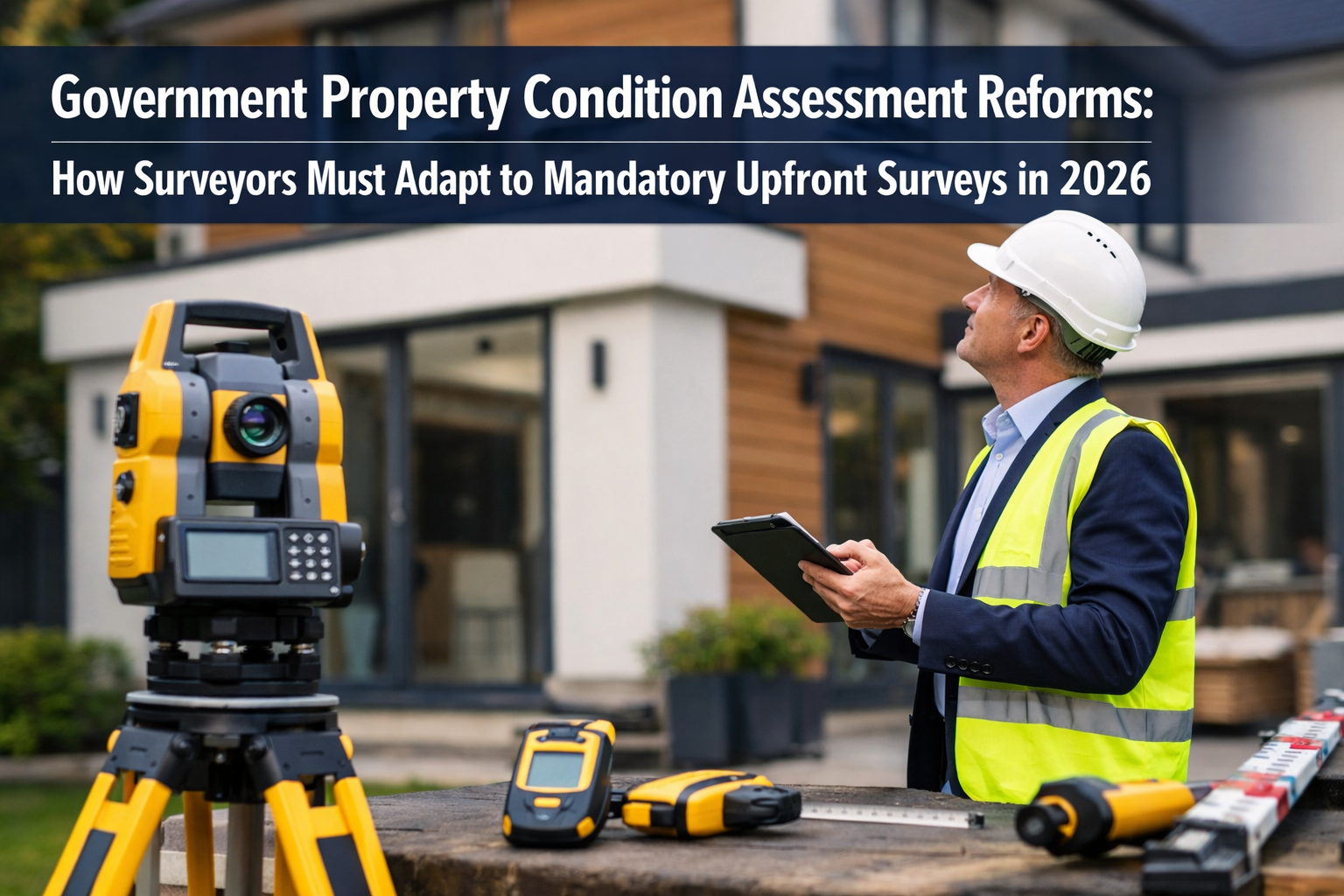
The UK property market stands on the brink of its most significant transformation in decades. As 2026 approaches, the government's proposed reforms to property condition assessment could fundamentally reshape how, when, and why surveyors conduct their evaluations. For chartered surveyors, building professionals, and property valuers, these changes represent both a challenge and an opportunity that demands immediate attention and strategic adaptation.
The Government Property Condition Assessment Reforms: How Surveyors Must Adapt to Mandatory Upfront Surveys in 2026 initiative aims to address long-standing inefficiencies in the UK property transaction process. Currently, property surveys typically occur midway through a purchase, often revealing issues that derail transactions and waste time and money for all parties involved. The proposed mandatory upfront survey requirement would shift this critical assessment to the very beginning of the sales process, creating a more transparent and efficient marketplace.
This fundamental shift in timing and responsibility has profound implications for surveying professionals. The traditional reactive model—where buyers commission surveys after making offers—will give way to a proactive system where sellers must provide comprehensive condition assessments before marketing their properties. This transformation will require surveyors to develop new workflows, update their professional standards, and potentially restructure their business models entirely.
Key Takeaways
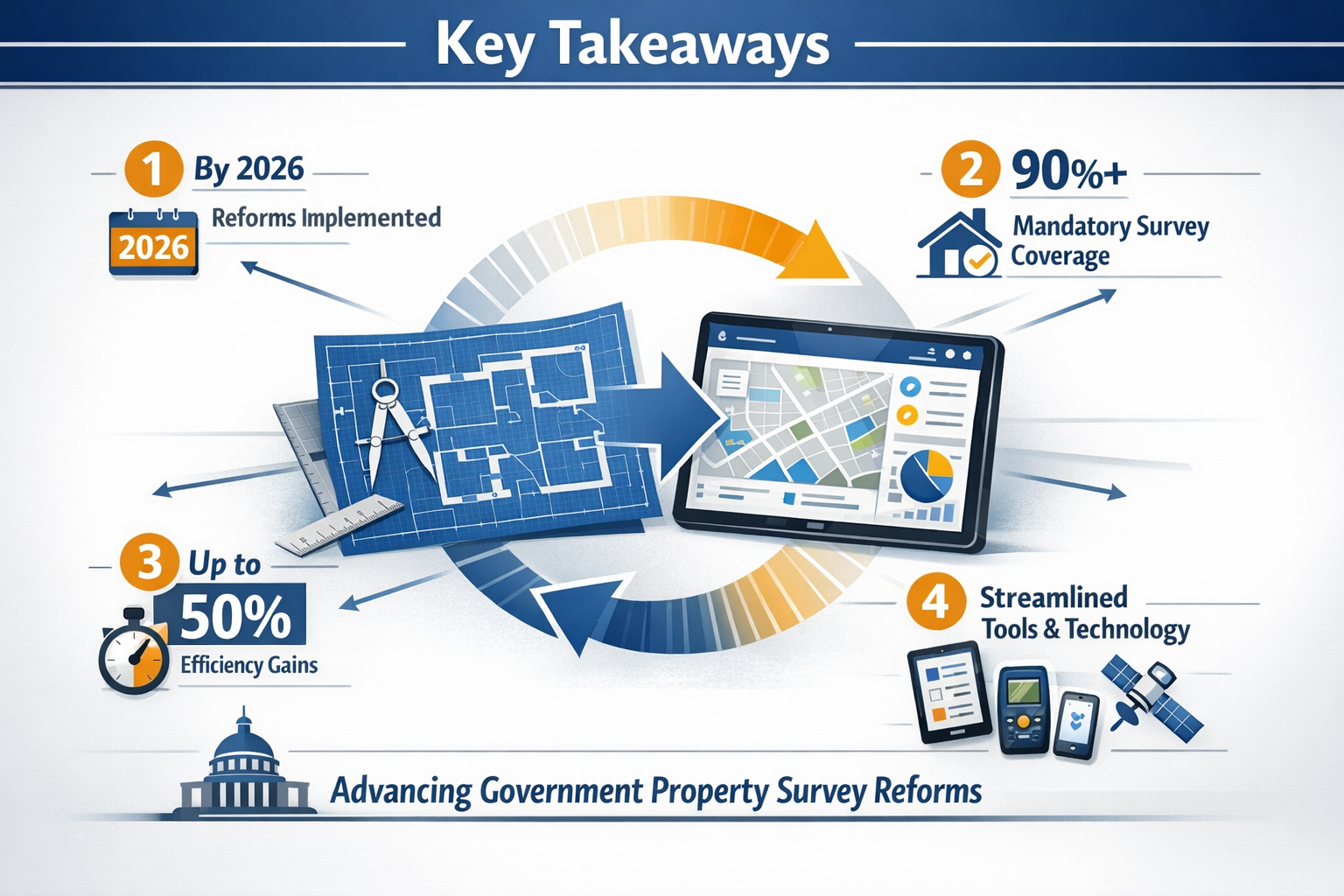
✅ Mandatory upfront surveys will become a legal requirement for property sales in 2026, shifting survey timing from mid-transaction to pre-marketing phase
✅ Surveyors must upgrade their technology, reporting standards, and professional competencies to meet new regulatory requirements and increased demand
✅ Business model transformation is essential as the surveying industry adapts to seller-commissioned rather than buyer-commissioned assessments
✅ Enhanced professional liability and insurance considerations will emerge as surveyors take on greater responsibility in the transaction process
✅ Continuous professional development and regulatory compliance training will be mandatory for all practicing surveyors to maintain their credentials
Understanding the Government Property Condition Assessment Reforms
The Policy Background and Rationale
The Government Property Condition Assessment Reforms represent a comprehensive overhaul of how property transactions are conducted in the UK. These reforms emerged from years of consultation with industry stakeholders, consumer protection groups, and property professionals who identified significant inefficiencies in the current system.
The traditional UK property buying process has long been criticized for its lack of transparency and high failure rate. According to industry estimates, approximately 30% of property transactions fall through after offers are accepted, with many failures occurring after surveys reveal unexpected defects or valuation issues. This creates substantial costs for buyers, sellers, and the broader economy through wasted legal fees, survey costs, and lost time.
The proposed reforms draw inspiration from similar systems already operating successfully in other jurisdictions. Countries like Australia and several European nations have implemented mandatory seller disclosure requirements that include professional property assessments. These international models demonstrate that upfront transparency can significantly reduce transaction failure rates and create more efficient property markets.
Key Components of the 2026 Reforms
The Government Property Condition Assessment Reforms: How Surveyors Must Adapt to Mandatory Upfront Surveys in 2026 encompass several critical elements that will reshape the surveying landscape:
Mandatory Pre-Marketing Surveys 📋
All residential properties listed for sale must have a professional condition assessment completed before marketing begins. This survey must be conducted by a qualified chartered surveyor and made available to all prospective buyers from the first viewing.
Standardized Reporting Frameworks
The reforms introduce uniform reporting standards that all surveyors must follow. These standardized formats ensure consistency across the industry and make it easier for buyers to compare properties and understand condition issues.
Enhanced Disclosure Requirements
Sellers will be legally obligated to disclose all known defects and provide the professional survey report to potential buyers. This creates a more transparent marketplace and reduces the risk of post-purchase disputes.
Digital Repository Systems
A centralized digital platform will store all property condition assessment reports, creating a comprehensive property history database that future buyers can access.
Extended Surveyor Liability Periods
Professional indemnity insurance requirements will increase, and liability periods may extend to cover both sellers and buyers who rely on the upfront survey reports.
Timeline and Implementation Schedule
The implementation of these reforms follows a carefully structured timeline designed to give the industry adequate preparation time:
| Phase | Timeline | Key Activities |
|---|---|---|
| Consultation Period | Q1-Q2 2025 | Industry feedback, regulatory refinement |
| Regulatory Finalization | Q3 2025 | Final regulations published, guidance issued |
| Industry Preparation | Q4 2025 – Q1 2026 | Surveyor training, system development |
| Soft Launch | Q2 2026 | Voluntary compliance period begins |
| Full Implementation | Q3 2026 | Mandatory compliance for all new listings |
| Review Period | Q1 2027 | First assessment of reform effectiveness |
This phased approach recognizes the significant adjustments required across the property industry. Surveyors, estate agents, solicitors, and technology providers all need time to adapt their systems and processes to the new requirements.
Regulatory Bodies and Oversight
Multiple regulatory organizations will oversee the implementation and enforcement of these reforms. The Royal Institution of Chartered Surveyors (RICS) will play a central role in establishing professional standards and ensuring surveyor compliance. The Property Ombudsman will handle disputes related to survey quality and disclosure requirements.
Additionally, local trading standards authorities will have enforcement powers to ensure sellers comply with the mandatory survey requirements. Non-compliance could result in significant penalties, including fines and potential delays in property sales.
How Surveyors Must Adapt to Mandatory Upfront Surveys in 2026
Operational Changes and Workflow Restructuring
The shift to mandatory upfront surveys requires fundamental changes to how surveying practices operate. Traditional business models built around buyer-commissioned surveys must evolve to accommodate seller-commissioned assessments conducted before properties reach the market.
Client Relationship Transformation 🔄
Surveyors will need to develop stronger relationships with estate agents, property sellers, and conveyancing solicitors rather than focusing primarily on buyer relationships. This requires different marketing approaches, communication strategies, and service delivery models.
Marketing efforts must now target sellers preparing to list properties rather than buyers in the middle of purchase negotiations. This shift demands new business development strategies and potentially different pricing structures that account for the earlier timing in the transaction cycle.
Capacity Planning and Resource Allocation
The concentration of survey demand at the pre-marketing stage will create new capacity challenges. Surveyors must prepare for potential surges in demand when properties first come to market, particularly during peak selling seasons. This may require:
- Expanding surveyor teams to handle increased volume
- Implementing scheduling systems that prioritize pre-marketing assessments
- Developing relationships with associate surveyors for overflow work
- Investing in technology that increases efficiency and throughput
Quality Assurance Protocols
With surveys serving a broader audience and carrying greater legal weight, quality assurance becomes paramount. Surveying firms must implement robust review processes to ensure every report meets the new standardized requirements and withstands scrutiny from multiple parties.
Our comprehensive guide to condition survey reports provides insights into the detailed assessment methodologies that will become even more critical under the new regulatory framework.
Technology Integration and Digital Transformation
The Government Property Condition Assessment Reforms: How Surveyors Must Adapt to Mandatory Upfront Surveys in 2026 demand significant technological upgrades across the surveying profession. Digital tools that were once optional will become essential for compliance and competitiveness.
Survey Software and Reporting Platforms 💻
Modern survey software that produces standardized, digitally-native reports will be mandatory. These platforms must:
- Generate reports in the government-mandated format
- Integrate with the centralized digital repository
- Include digital signature capabilities for authentication
- Support multimedia elements like photographs and diagrams
- Enable real-time collaboration and review processes
Inspection Technology Advancements
Advanced inspection technologies will help surveyors conduct more thorough and efficient assessments:
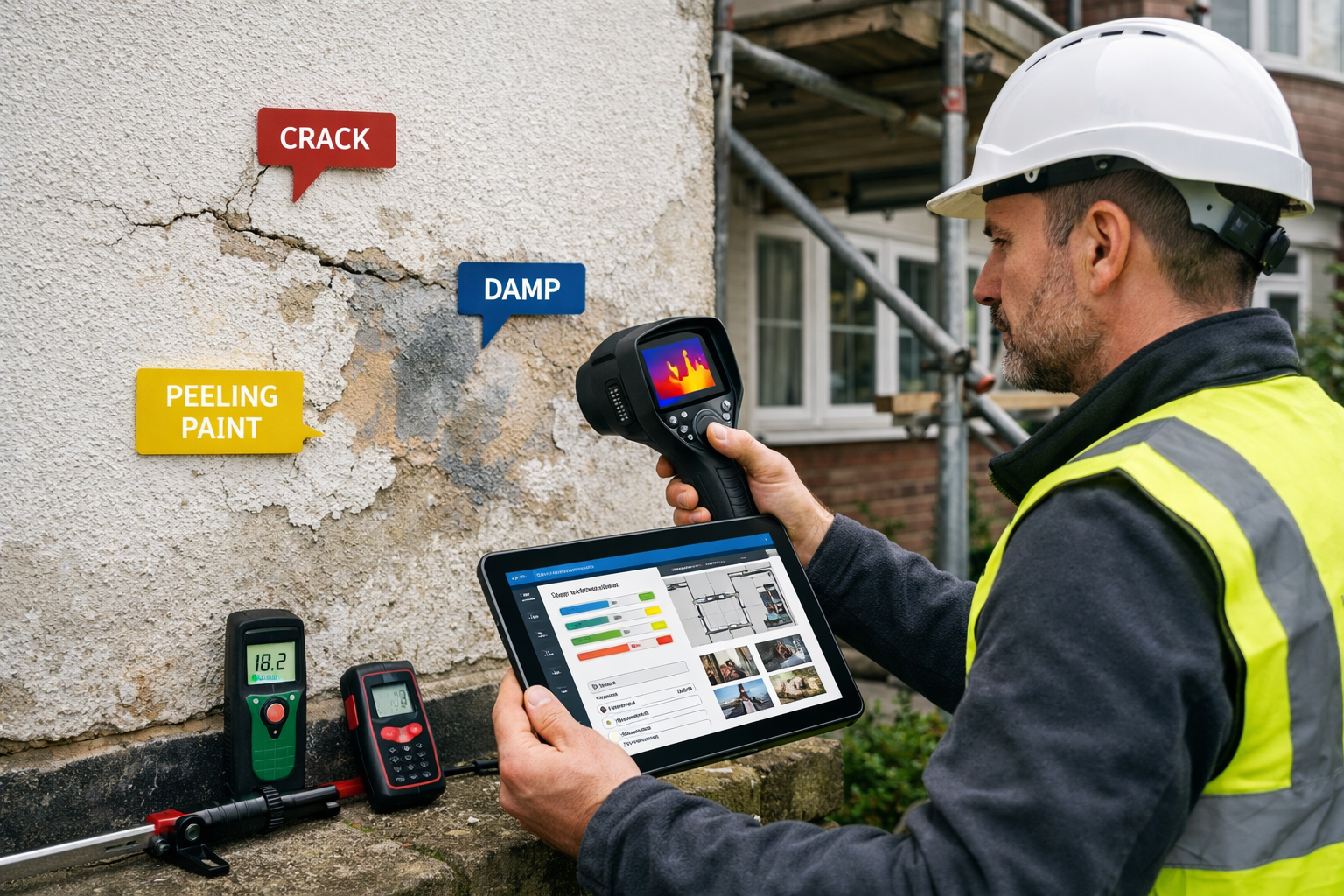
- Thermal imaging cameras to detect hidden moisture and insulation issues
- Drone technology for roof and chimney inspections without scaffolding
- Moisture meters and electronic detection equipment for damp assessment
- Laser measuring tools for accurate dimensional surveys
- 3D scanning technology for comprehensive property documentation
These technologies not only improve assessment accuracy but also create compelling visual evidence that enhances report credibility and client understanding.
Data Management and Security
With survey reports entering a centralized database accessible to multiple parties, data security and management become critical concerns. Surveyors must implement:
- Secure cloud storage systems with encryption
- Access control protocols that protect client confidentiality
- Backup and disaster recovery procedures
- Compliance with GDPR and data protection regulations
- Digital archiving systems for long-term record retention
Professional Development and Training Requirements
Adapting to the new regulatory environment requires comprehensive professional development across the surveying profession. The reforms introduce new competency requirements that all practicing surveyors must meet.
Mandatory Training Modules 📚
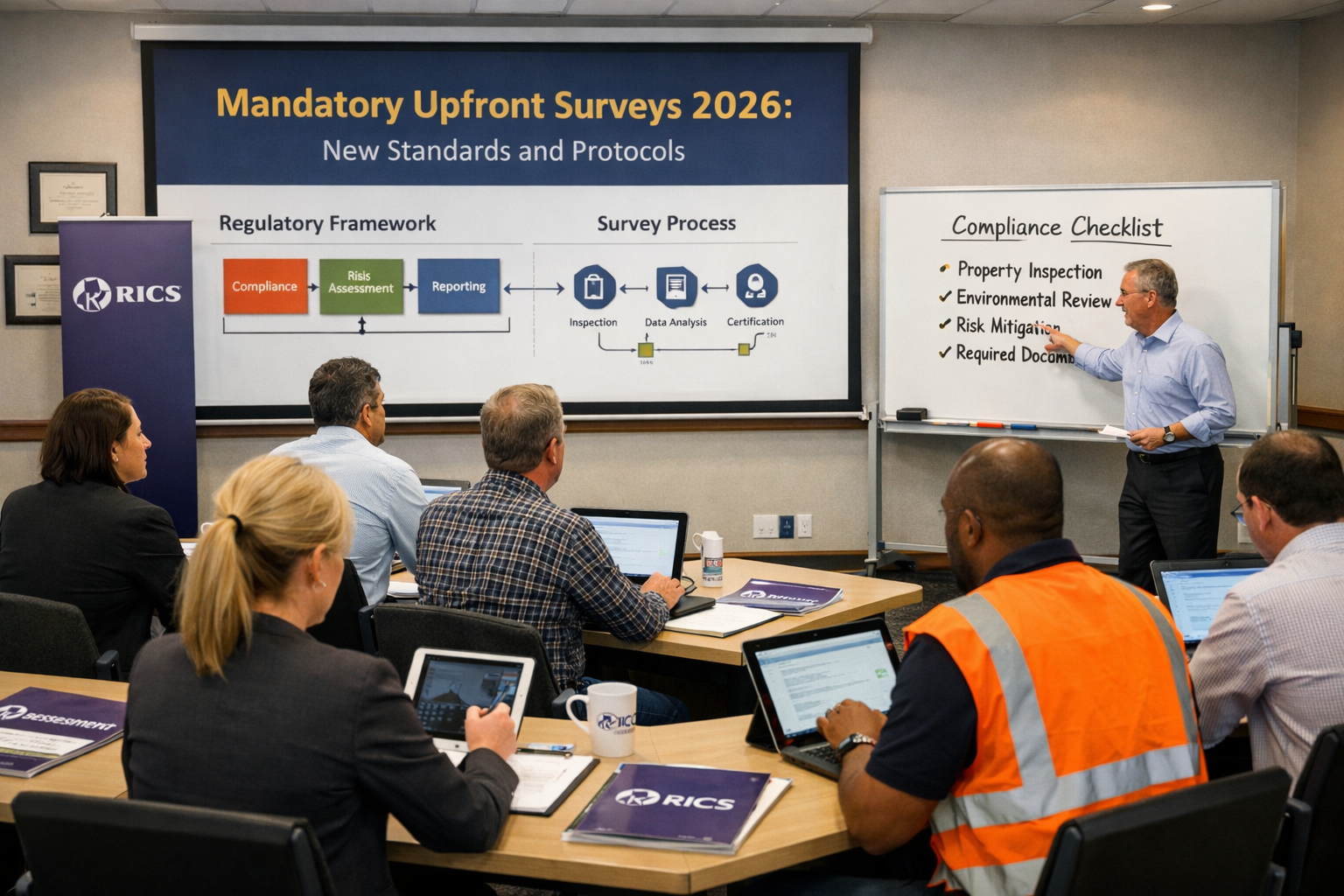
RICS and other professional bodies will likely introduce mandatory continuing professional development (CPD) requirements specifically addressing:
- New standardized reporting formats and requirements
- Enhanced legal obligations and liability considerations
- Digital platform usage and technology integration
- Updated building pathology and defect identification
- Communication skills for multi-party stakeholder engagement
Surveyors must allocate time and resources for this training, which may include both online learning modules and in-person workshops. Failure to complete mandatory training could result in suspension of professional credentials.
Specialization Opportunities
The reforms create opportunities for surveyors to develop specialized expertise in specific property types or assessment areas:
- Period property specialists with expertise in heritage buildings
- New build assessment experts focusing on modern construction methods
- Environmental assessment specialists evaluating energy efficiency and sustainability
- Structural engineering integration for complex defect analysis
Developing these specializations can differentiate surveying practices and command premium fees in competitive markets.
Professional Accreditation Updates
Existing chartered surveyors may need to update their accreditations to reflect the new competency requirements. This could involve:
- Submitting evidence of relevant experience with upfront assessments
- Passing updated assessment examinations
- Demonstrating proficiency with required technology platforms
- Maintaining enhanced professional indemnity insurance coverage
Understanding common myths about property surveys helps surveyors educate clients about the value and limitations of different assessment types under the new regulatory framework.
Insurance and Liability Considerations
The expanded role of surveyors in the reformed transaction process brings significant changes to professional liability and insurance requirements.
Enhanced Professional Indemnity Coverage 🛡️
Insurance providers are already preparing for the increased risk exposure that mandatory upfront surveys create. Surveyors should expect:
- Higher premium costs reflecting extended liability periods
- Increased coverage limits to protect against larger claims
- More stringent underwriting requirements and risk assessments
- Potential exclusions for certain property types or defect categories
Surveying firms must budget for these increased insurance costs and factor them into pricing structures for upfront assessment services.
Extended Liability Periods
Unlike traditional buyer-commissioned surveys where liability primarily extends to the commissioning party, upfront surveys may create liability to:
- The seller who commissioned the survey
- All prospective buyers who relied on the report
- Subsequent owners who discover undisclosed defects
- Lenders who based financing decisions on the assessment
This extended liability landscape requires more meticulous documentation, comprehensive assessments, and careful language in report disclaimers and limitations.
Risk Management Strategies
Surveyors must implement robust risk management practices to minimize liability exposure:
- Thorough site investigation protocols that leave no area unexamined
- Detailed photographic documentation of all accessible areas
- Clear communication of assessment limitations and areas not inspected
- Recommendations for specialist investigations when appropriate
- Regular peer review of reports before publication
Business Model Innovation for Surveying Practices
Pricing Strategy Adjustments
The shift from buyer-commissioned to seller-commissioned surveys fundamentally changes the economics of surveying services. Pricing strategies must adapt to reflect the new value proposition and market dynamics.
Value-Based Pricing Models 💰
Rather than competing primarily on price, surveyors can emphasize the value their upfront assessments provide to sellers:
- Transaction acceleration through reduced fall-through rates
- Competitive advantage for sellers with clean survey reports
- Price optimization by identifying and addressing defects before marketing
- Reduced negotiation as buyers have full information upfront
This value-based approach allows surveyors to command premium fees for comprehensive, high-quality assessments that genuinely benefit sellers.
Tiered Service Offerings
Developing tiered service packages allows surveyors to serve different market segments effectively:
| Service Level | Scope | Typical Property | Price Range |
|---|---|---|---|
| Essential | Basic condition assessment, mandatory compliance | Newer properties, flats | £400-£600 |
| Comprehensive | Detailed inspection, defect analysis, recommendations | Standard residential | £800-£1,200 |
| Premium | Extensive investigation, specialist reports, pre-sale advice | Period properties, complex buildings | £1,500-£3,000+ |
This tiered approach ensures accessibility while allowing surveyors to offer enhanced services that justify higher fees for properties requiring more detailed assessment.
Package Deals and Partnerships
Innovative surveyors are developing package deals with estate agents and conveyancing solicitors that bundle services:
- Pre-sale preparation packages including survey, EPC, and legal documentation
- Estate agent partnerships offering discounted surveys for their vendor clients
- Conveyancer collaborations streamlining the entire transaction process
These partnerships create referral networks and steady workflow while providing convenience and value to property sellers.
Marketing and Client Acquisition Strategies
With the target client shifting from buyer to seller, marketing strategies must evolve accordingly.
Seller-Focused Marketing Campaigns 📢
Marketing messages must now address seller concerns and priorities:
- "Get Your Property Sale-Ready with a Professional Assessment"
- "Avoid Surprises: Identify Issues Before Buyers Do"
- "Speed Up Your Sale with an Upfront Survey Report"
- "Maximize Your Property Value with Pre-Marketing Assessment"
These messages emphasize proactive preparation rather than reactive problem-solving, appealing to sellers who want smooth, successful transactions.
Estate Agent Relationship Building
Estate agents become crucial referral partners in the reformed landscape. Surveyors should:
- Develop preferred supplier agreements with local agencies
- Offer agent training on the benefits of quality upfront surveys
- Provide co-branded marketing materials for agent clients
- Create streamlined referral processes with quick turnaround times
Strong agent relationships can generate consistent workflow and establish surveyors as trusted partners in the property sales process.
Digital Marketing and Online Presence
A robust online presence becomes essential for attracting seller clients:
- SEO-optimized website content targeting sellers preparing to list properties
- Educational blog posts explaining the new requirements and benefits
- Video content demonstrating the survey process and professionalism
- Online booking systems for convenient scheduling
- Client testimonials from satisfied sellers
For surveyors operating in specific geographic areas, optimizing for local search is crucial. Our London property surveyors page demonstrates effective local SEO strategies that can be replicated across different service areas.
Competitive Differentiation Strategies
As the market adapts to mandatory upfront surveys, competition among surveyors will intensify. Differentiation becomes critical for success.
Technology Leadership 🚀
Surveyors who embrace cutting-edge technology can differentiate themselves through:
- Interactive digital reports with clickable floor plans and multimedia elements
- Virtual property tours integrated with survey findings
- Mobile apps allowing clients to track survey progress in real-time
- AI-assisted analysis identifying patterns and potential issues
These technological advantages create superior client experiences and demonstrate professional sophistication.
Specialization and Niche Expertise
Rather than trying to serve all property types, some surveyors may find success through specialization:
- Heritage property experts serving the period property market
- New build specialists focusing on modern construction defects
- Commercial property assessors adapting the reforms to business premises
- Leasehold specialists addressing unique flat and apartment issues
Specialization allows surveyors to develop deep expertise, command premium fees, and become recognized authorities in their chosen niches.
Service Excellence and Client Experience
In a competitive market, exceptional service creates loyal clients and referrals:
- Rapid turnaround times getting surveys completed within 48-72 hours
- Clear communication keeping clients informed throughout the process
- Accessible surveyors available to answer questions and explain findings
- Follow-up support helping sellers understand and address identified issues
These service excellence factors create positive experiences that generate word-of-mouth referrals and repeat business.
Compliance and Regulatory Requirements
Understanding Legal Obligations
The Government Property Condition Assessment Reforms: How Surveyors Must Adapt to Mandatory Upfront Surveys in 2026 create new legal obligations for surveyors that extend beyond traditional professional standards.
Statutory Compliance Requirements ⚖️
Surveyors must ensure their assessments meet all statutory requirements:
- Minimum inspection standards defining what must be examined and reported
- Mandatory disclosure requirements for specific defect categories
- Report format specifications ensuring consistency and accessibility
- Timeframe requirements for survey completion and report delivery
- Digital submission protocols for the centralized repository system
Failure to meet these statutory requirements could result in professional sanctions, financial penalties, and liability exposure.
Professional Standards Integration
RICS and other professional bodies will update their standards to align with the new statutory requirements. Surveyors must maintain compliance with both:
- RICS Red Book valuation standards where applicable
- RICS Home Survey Standards for residential assessments
- Building pathology guidance for defect identification and reporting
- Professional conduct rules governing surveyor behavior and ethics
Staying current with these evolving standards requires active engagement with professional body communications and regular review of updated guidance documents.
Quality Assurance and Peer Review
The increased importance of upfront surveys demands robust quality assurance processes within surveying practices.
Internal Review Procedures ✅
Surveying firms should implement systematic review processes:
- Peer review of all reports before release to clients
- Checklist systems ensuring all mandatory elements are addressed
- Technical review by senior surveyors for complex properties
- Compliance audits verifying adherence to statutory requirements
These internal controls reduce error rates, improve report quality, and minimize liability exposure.
External Audit and Accreditation
Professional bodies may introduce external audit programs to verify compliance:
- Random sampling of submitted reports for quality review
- Practice inspections assessing systems and procedures
- Continuing accreditation requirements based on audit performance
- Remedial training for surveyors with compliance deficiencies
Preparing for these external audits requires maintaining comprehensive documentation and demonstrating consistent adherence to professional standards.
Data Protection and Confidentiality
The digital nature of the reformed system creates significant data protection obligations for surveyors.
GDPR Compliance 🔒
Survey reports contain personal data about property owners and must be handled in compliance with data protection regulations:
- Lawful basis for processing personal information
- Data minimization including only necessary information
- Security measures protecting data from unauthorized access
- Retention policies defining how long reports are stored
- Subject access rights allowing individuals to request their data
Surveyors must implement comprehensive data protection policies and train staff on compliance requirements.
Confidentiality Considerations
While upfront surveys are shared with prospective buyers, surveyors must still protect:
- Seller personal information not relevant to property condition
- Financial information about the property or transaction
- Sensitive information about property defects until appropriate disclosure
- Third-party information obtained during the assessment
Balancing transparency requirements with confidentiality obligations requires careful judgment and clear policies.
Preparing Your Surveying Practice for 2026
Strategic Planning and Implementation
Successful adaptation to the Government Property Condition Assessment Reforms: How Surveyors Must Adapt to Mandatory Upfront Surveys in 2026 requires strategic planning beginning immediately.
Assessment of Current Capabilities 📊
Surveying practices should conduct honest assessments of their readiness:
- Technology infrastructure – Do current systems support digital reporting and repository integration?
- Staff competencies – Do surveyors possess the skills and knowledge required under new standards?
- Capacity levels – Can the practice handle increased demand for pre-marketing surveys?
- Financial resources – Are adequate funds available for necessary investments?
- Insurance coverage – Does current professional indemnity insurance meet new requirements?
This assessment identifies gaps that must be addressed before the reforms take effect.
Investment Planning
Based on the capability assessment, practices should develop investment plans covering:
| Investment Area | Priority | Estimated Cost | Timeline |
|---|---|---|---|
| Survey software upgrade | High | £5,000-£15,000 | Q1 2026 |
| Inspection equipment | High | £3,000-£8,000 | Q4 2025 |
| Staff training | High | £2,000-£5,000 | Q4 2025-Q1 2026 |
| Insurance upgrade | High | £3,000-£10,000 annual | Q2 2026 |
| Marketing materials | Medium | £1,000-£3,000 | Q1 2026 |
| Website redesign | Medium | £2,000-£8,000 | Q4 2025 |
These investments position practices to compete effectively in the reformed marketplace.
Change Management Processes
Implementing significant operational changes requires structured change management:
- Staff engagement ensuring team members understand and support the changes
- Pilot programs testing new processes on a small scale before full rollout
- Feedback mechanisms allowing staff to identify issues and suggest improvements
- Gradual implementation phasing in changes to avoid disruption
- Performance monitoring tracking key metrics to assess effectiveness
Effective change management minimizes disruption and increases the likelihood of successful adaptation.
Building Strategic Partnerships
No surveying practice operates in isolation. Strategic partnerships enhance capability and create competitive advantages.
Technology Vendor Relationships 🤝
Selecting the right technology partners is crucial:
- Survey software providers offering platforms that meet regulatory requirements
- Digital repository integrators ensuring seamless data submission
- Equipment suppliers providing reliable inspection technology and support
- IT service providers maintaining systems and ensuring data security
Strong vendor relationships ensure reliable technology performance and responsive support when issues arise.
Professional Network Development
Collaboration with other property professionals creates value for clients:
- Estate agent networks generating referrals and streamlining processes
- Conveyancing solicitors coordinating transaction timelines
- Specialist consultants providing expertise for complex issues (structural engineers, damp specialists, etc.)
- Insurance providers offering appropriate professional indemnity coverage
These networks create comprehensive service offerings that address all client needs.
For surveyors working across different geographic areas, understanding local market dynamics is essential. Resources like our guides to Wandsworth property surveyors and Lewisham property surveyors demonstrate the importance of local expertise.
Continuous Improvement and Adaptation
The reformed landscape will continue evolving beyond the initial 2026 implementation. Successful surveying practices embrace continuous improvement.
Performance Metrics and KPIs 📈
Tracking key performance indicators helps practices assess their adaptation success:
- Report turnaround time – Average days from instruction to report delivery
- Client satisfaction scores – Feedback from sellers and buyers
- Repeat business rate – Percentage of clients returning for additional services
- Referral conversion – Percentage of referrals that become instructions
- Compliance audit results – Performance on external quality reviews
- Revenue per surveyor – Productivity and efficiency measures
Regular review of these metrics identifies areas requiring attention and demonstrates progress over time.
Feedback Systems and Client Listening
Understanding client experiences drives improvement:
- Post-survey questionnaires gathering immediate feedback
- Annual client surveys assessing overall satisfaction
- Focus groups exploring client needs in depth
- Complaint analysis identifying recurring issues
- Testimonial collection capturing positive experiences for marketing
This client feedback informs service enhancements and ensures practices remain responsive to market needs.
Industry Engagement and Knowledge Sharing
Active participation in professional communities keeps surveyors informed:
- RICS events and conferences providing updates and networking
- Local surveyor networks sharing experiences and best practices
- Online forums and discussion groups addressing common challenges
- Industry publications staying current with developments
- Regulatory consultations influencing future policy direction
This engagement ensures surveyors remain at the forefront of industry developments and can adapt quickly to further changes.
The Broader Impact on the Property Market
Transaction Efficiency Improvements
The Government Property Condition Assessment Reforms: How Surveyors Must Adapt to Mandatory Upfront Surveys in 2026 aim to create fundamental improvements in property transaction efficiency.
Reduced Transaction Failure Rates 📉
By identifying property condition issues before offers are made, the reforms should significantly reduce the percentage of transactions that fall through:
- Buyers make offers with full knowledge of property condition
- Fewer surprises emerge during the transaction process
- Price negotiations occur upfront rather than mid-transaction
- Lenders receive comprehensive information earlier in the process
Industry projections suggest transaction failure rates could drop from the current 30% to below 15%, saving buyers, sellers, and the economy substantial costs.
Faster Completion Times
With surveys completed before marketing, the timeline from offer acceptance to completion should shorten:
- Elimination of the survey waiting period mid-transaction
- Reduced renegotiation delays when defects are discovered
- Streamlined conveyancing with fewer unexpected issues
- Faster lender approvals with comprehensive property information
Average completion times could potentially decrease from the current 12-16 weeks to 8-10 weeks, improving market liquidity and reducing stress for all parties.
Market Transparency and Consumer Protection
The reforms create unprecedented transparency in the residential property market.
Informed Decision-Making 🔍
Prospective buyers gain access to professional property assessments before making offers:
- Comprehensive understanding of property condition
- Ability to compare properties on an equal information basis
- Realistic expectations about repair costs and property value
- Reduced risk of purchasing properties with hidden defects
This transparency empowers consumers and creates a more balanced marketplace where information asymmetry no longer disadvantages buyers.
Enhanced Consumer Confidence
Professional upfront surveys increase buyer confidence in property transactions:
- Third-party verification of property condition
- Standardized reporting enabling easy comparison
- Professional accountability through extended surveyor liability
- Reduced post-purchase disputes and disappointment
This increased confidence should stimulate market activity and support healthy transaction volumes.
Challenges and Potential Drawbacks
While the reforms offer significant benefits, they also present challenges that must be acknowledged and addressed.
Increased Upfront Costs for Sellers 💷
Mandatory surveys create additional costs for property sellers:
- Survey fees of £500-£1,500+ depending on property type
- Potential repair costs if defects are identified
- Possible delays if issues must be addressed before marketing
- Financial burden for sellers who may already be stretched
These costs could be particularly challenging for sellers in lower-value properties or those facing financial difficulties.
Market Access Concerns
The additional upfront costs might create barriers for some sellers:
- Elderly homeowners on fixed incomes
- Executors selling inherited properties
- Landlords with multiple properties to sell
- Sellers already in financial distress
Policymakers may need to consider support mechanisms or exemptions for vulnerable sellers to ensure the reforms don't inadvertently restrict market access.
Implementation Complexity
The transition to the new system will create temporary challenges:
- Surveyor capacity constraints during the initial implementation period
- Learning curve for all market participants
- Technology integration issues and teething problems
- Potential for regulatory confusion and compliance errors
These transitional challenges should diminish over time as the industry adapts, but they may create short-term disruption.
Future Trends and Long-Term Implications
Evolution of Surveying Technology
The mandatory upfront survey requirement will accelerate technological innovation in the surveying profession.
Artificial Intelligence Integration 🤖
AI and machine learning will increasingly support surveyor assessments:
- Automated defect detection using image recognition technology
- Predictive analytics forecasting future maintenance requirements
- Comparative analysis benchmarking properties against similar buildings
- Report generation assistance streamlining documentation processes
These technologies will enhance surveyor capabilities rather than replace professional judgment, creating more comprehensive and insightful assessments.
Remote and Hybrid Inspection Methods
Technology will enable new inspection approaches:
- Virtual reality walkthroughs allowing remote preliminary assessments
- Drone surveys providing comprehensive exterior documentation
- Thermal imaging integration revealing hidden defects without invasive investigation
- 3D modeling creating detailed property records
These methods increase efficiency while maintaining assessment quality and thoroughness.
Professional Specialization Trends
As the surveying market matures under the reformed system, increasing specialization will emerge.
Property Type Specialists 🏘️
Surveyors will develop deep expertise in specific property categories:
- Victorian and Edwardian specialists understanding period construction methods
- New build experts familiar with modern materials and warranties
- Flat and leasehold specialists addressing unique apartment issues
- Listed building assessors navigating heritage property complexities
This specialization creates value for clients with specific property types and allows surveyors to command premium fees for their expertise.
Defect Category Experts
Some surveyors may specialize in particular defect types:
- Structural specialists with engineering backgrounds
- Damp and timber experts focusing on moisture-related issues
- Energy efficiency assessors evaluating thermal performance
- Environmental specialists addressing contamination and sustainability
These specialists can provide detailed supplementary assessments when general surveys identify issues requiring deeper investigation.
Understanding which home survey is right for different situations becomes even more important as surveying services diversify and specialize.
Regulatory Evolution and Further Reforms
The 2026 reforms likely represent the beginning rather than the end of property transaction modernization.
Potential Future Developments 🔮
Additional reforms may follow the initial implementation:
- Extension to commercial properties applying similar requirements to business premises
- Integration with planning systems linking survey data with local authority records
- Mandatory maintenance planning requiring sellers to provide property maintenance histories
- Energy efficiency requirements incorporating sustainability assessments into standard surveys
- Digital property passports creating comprehensive lifetime property records
These potential developments would further transform the surveying profession and create additional opportunities for forward-thinking practitioners.
International Harmonization
As property markets become increasingly global, international standardization may emerge:
- Alignment of UK standards with European property assessment frameworks
- Recognition of qualifications across borders
- International best practice sharing and adoption
- Cross-border property transaction facilitation
Surveyors who understand international standards and practices will be well-positioned to serve increasingly global property markets.
Conclusion: Embracing Change and Seizing Opportunity
The Government Property Condition Assessment Reforms: How Surveyors Must Adapt to Mandatory Upfront Surveys in 2026 represent a watershed moment for the UK property market and the surveying profession. While these reforms present significant challenges requiring substantial adaptation, they also create unprecedented opportunities for surveyors who embrace change and position themselves strategically.
The shift from reactive, buyer-commissioned surveys to proactive, seller-commissioned assessments fundamentally transforms the surveying business model. Surveyors must develop new client relationships, upgrade their technology infrastructure, enhance their professional competencies, and restructure their operational workflows. These changes demand investment, commitment, and strategic planning beginning immediately.
However, the reforms also elevate the surveying profession to a more central role in property transactions. Upfront surveys become essential gatekeepers to the market rather than optional risk management tools. This increased importance brings greater professional recognition, expanded liability, and the potential for enhanced fees reflecting the critical value surveyors provide.
Actionable Next Steps for Surveying Professionals
Immediate Actions (Q4 2025) ✅
- Conduct a comprehensive capability assessment of your current practice
- Research and evaluate survey software platforms meeting new requirements
- Review and upgrade professional indemnity insurance coverage
- Begin mandatory CPD training on new regulatory requirements
- Develop relationships with estate agents and conveyancing solicitors
Short-Term Priorities (Q1-Q2 2026) 📅
- Implement new technology systems and train staff on their use
- Develop standardized workflows for upfront survey delivery
- Create marketing materials targeting seller clients
- Establish quality assurance and peer review processes
- Participate in industry forums sharing implementation experiences
Long-Term Strategic Initiatives (2026 and Beyond) 🎯
- Consider specialization in specific property types or defect categories
- Invest in advanced inspection technologies for competitive differentiation
- Build strategic partnerships creating comprehensive service offerings
- Monitor performance metrics and continuously improve processes
- Engage with regulatory consultations influencing future policy development
The surveyors who thrive in this reformed landscape will be those who view these changes not as burdens to be endured but as opportunities to be seized. By embracing technology, enhancing professional standards, and focusing relentlessly on client value, forward-thinking surveying practices can position themselves as indispensable partners in property transactions.
The property market of 2026 and beyond will be more transparent, more efficient, and more professional than ever before. Surveyors who adapt successfully to these reforms will find themselves at the center of this transformed marketplace, providing essential services that protect consumers, facilitate transactions, and maintain the integrity of the UK property market.
For those seeking professional guidance on property condition assessments or comprehensive building surveys, working with qualified chartered surveyors who understand these evolving requirements ensures you receive the highest quality service in this new regulatory environment.
The future of property surveying is arriving in 2026. The time to prepare is now.
References
[1] 2025 26 Legislative Session Key Developments In Housing Land Use And Transportation Policy Area – https://www.counties.org/news-and-media-article/2025-26-legislative-session-key-developments-in-housing-land-use-and-transportation-policy-area/
[2] State Budget Bill Includes Landmark Ceqa And Housing Law Changes – https://www.ceqadevelopments.com/2025/07/15/state-budget-bill-includes-landmark-ceqa-and-housing-law-changes/
[3] Californias 2026 Housing Laws What You Need To Know – https://www.hklaw.com/en/insights/publications/2025/12/californias-2026-housing-laws-what-you-need-to-know
[4] California Enacts Significant Ceqa Reforms For Housing And Advanced Manufacturing Projects 7 29 2025 – https://www.klgates.com/California-Enacts-Significant-CEQA-Reforms-for-Housing-and-Advanced-Manufacturing-Projects-7-29-2025
[5] 2026 California Housing Law Updates Key Changes And Impacts – https://www.publicceo.com/2026/02/2026-california-housing-law-updates-key-changes-and-impacts/
[6] 2026 Federal Housing Policy Preview – https://ternercenter.berkeley.edu/blog/2026-federal-housing-policy-preview/
[7] What Smart Cre Players Are Doing Differently In 2026 – https://www.partneresi.com/resources/articles/what-smart-cre-players-are-doing-differently-in-2026/