
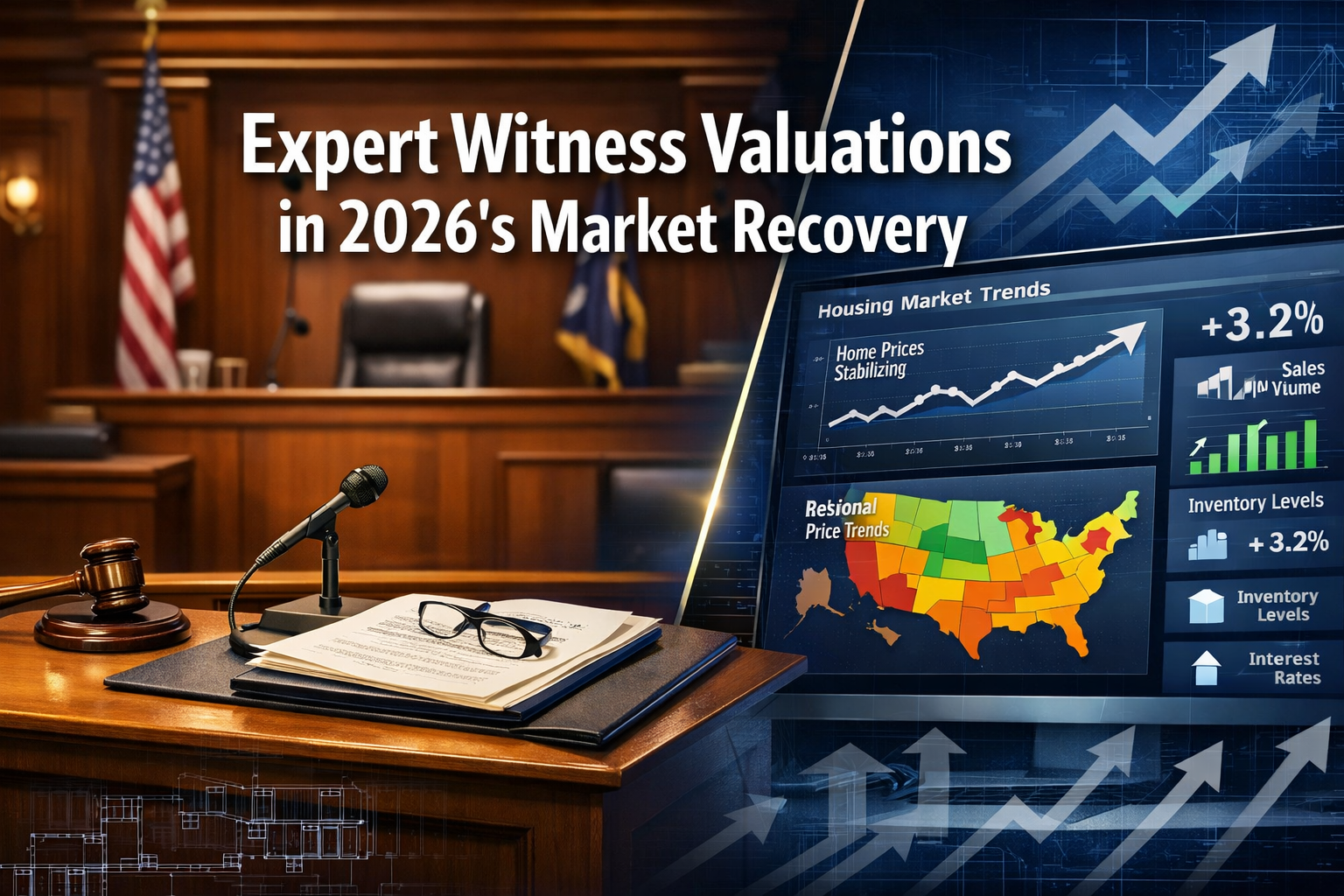
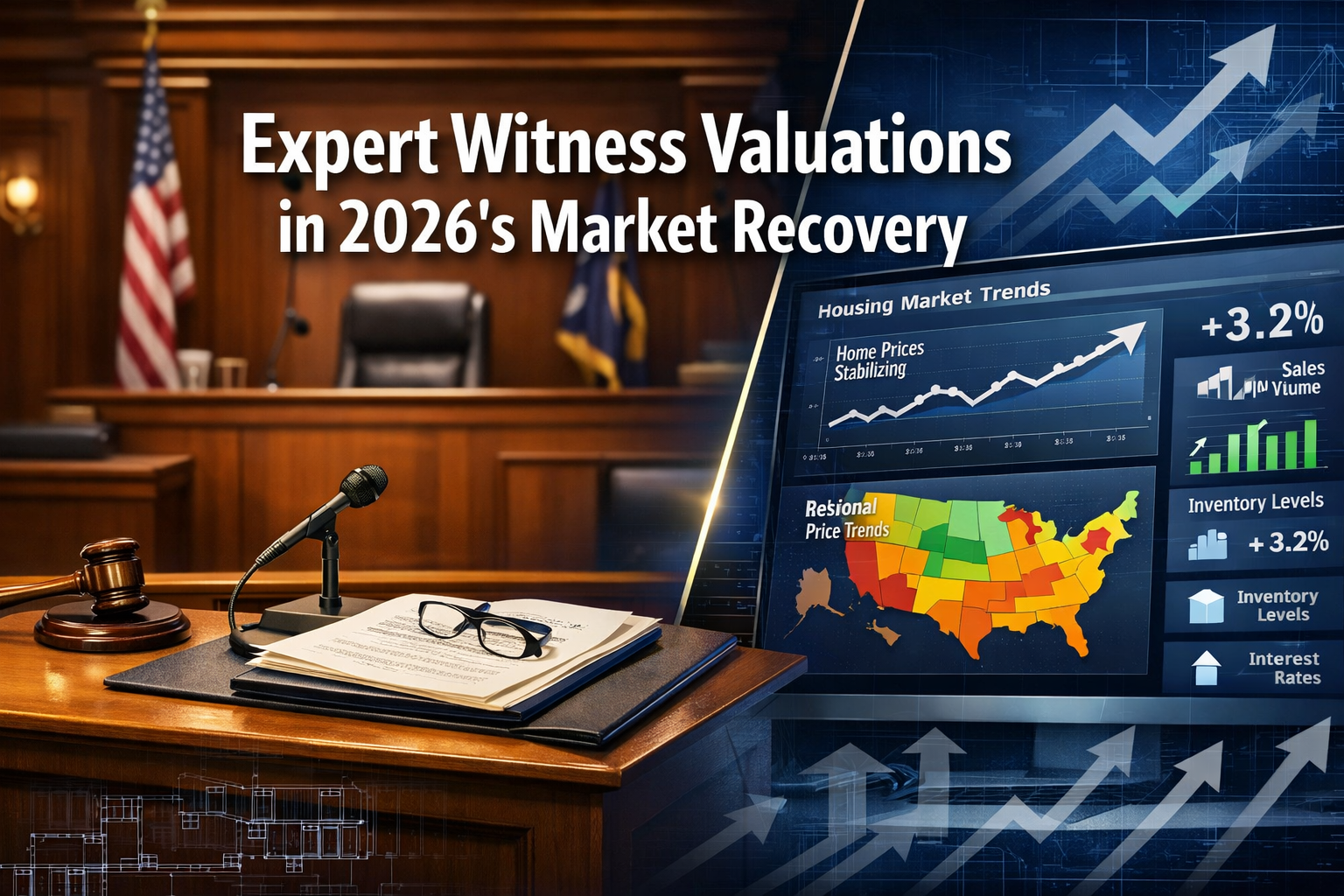
As property markets across the UK show signs of stabilization in 2026, a new challenge emerges for legal professionals and property experts alike. Expert Witness Valuations in 2026's Market Recovery: Building Court-Ready Cases Amid Stabilizing Prices and Regional Divergence has become increasingly complex as transaction volumes rise and valuation disputes multiply. The tentative nature of the current recovery, coupled with stark regional variations in property values, demands a sophisticated approach to building defensible cases that can withstand rigorous courtroom scrutiny.
The landscape has shifted dramatically. While some regions experience robust price growth, others remain stagnant or continue declining. This divergence creates unprecedented challenges for expert witnesses who must navigate conflicting data points, justify valuation methodologies, and present compelling evidence in an environment where market signals remain mixed.
Key Takeaways
✅ Market stabilization doesn't mean uniformity – Regional price divergence requires location-specific valuation approaches and comparable evidence tailored to local market conditions
✅ Court-ready cases demand robust methodology – Expert witnesses must document every assumption, justify methodology choices, and prepare for challenges to credibility in cross-examination
✅ Data quality trumps data quantity – Selecting appropriate comparables and market evidence requires careful filtering to account for recovery timing and regional variations
✅ Professional standards are non-negotiable – RICS Red Book compliance and adherence to established valuation frameworks provide essential defensibility in legal proceedings
✅ Regional expertise matters more than ever – Understanding local market dynamics, planning constraints, and economic drivers strengthens expert testimony and case outcomes
Understanding the 2026 Market Recovery Context
The Stabilization Pattern
The property market in 2026 presents a complex picture of recovery. After the turbulence of 2023-2024, when interest rate increases and economic uncertainty created significant price corrections, markets have entered a stabilization phase characterized by:
- Moderate transaction volume increases 📈
- Price stability in prime locations
- Continued weakness in secondary markets
- Regional performance gaps widening
This environment creates unique challenges for expert witnesses. Unlike periods of uniform growth or decline, the current market requires nuanced analysis that accounts for micro-market variations and timing differences in recovery patterns.
Regional Divergence Explained
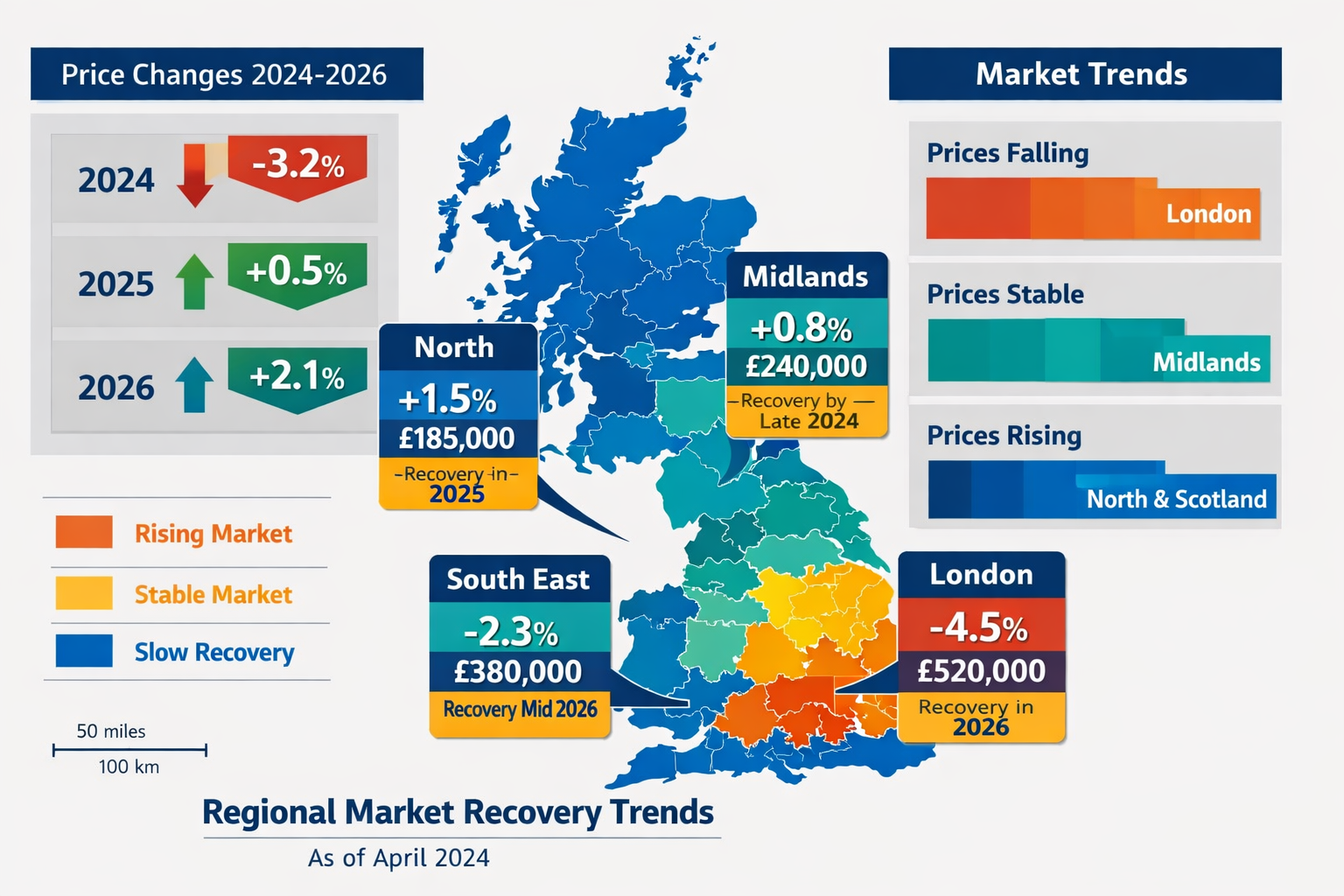
The gap between high-performing and struggling regions has widened considerably. London and the Southeast show resilience, with prices stabilizing or showing modest growth. Meanwhile, certain Northern regions and areas heavily dependent on specific industries continue experiencing price pressure.
| Region | Price Change (2025-2026) | Market Characteristics |
|---|---|---|
| Central London | +2% to +4% | Strong international demand, limited supply |
| Southeast | +1% to +3% | Commuter appeal, employment stability |
| Midlands | -1% to +1% | Mixed performance, city vs. rural divide |
| Northern England | -2% to +1% | Affordability improving, but demand weak |
| Scotland | 0% to +2% | Stable, regional variations significant |
This divergence means expert witnesses cannot rely on national trends or broad market indicators. Building survey data and local comparable evidence become critical components of defensible valuations.
Building Robust Valuation Methodologies for Court
Selecting Appropriate Valuation Approaches
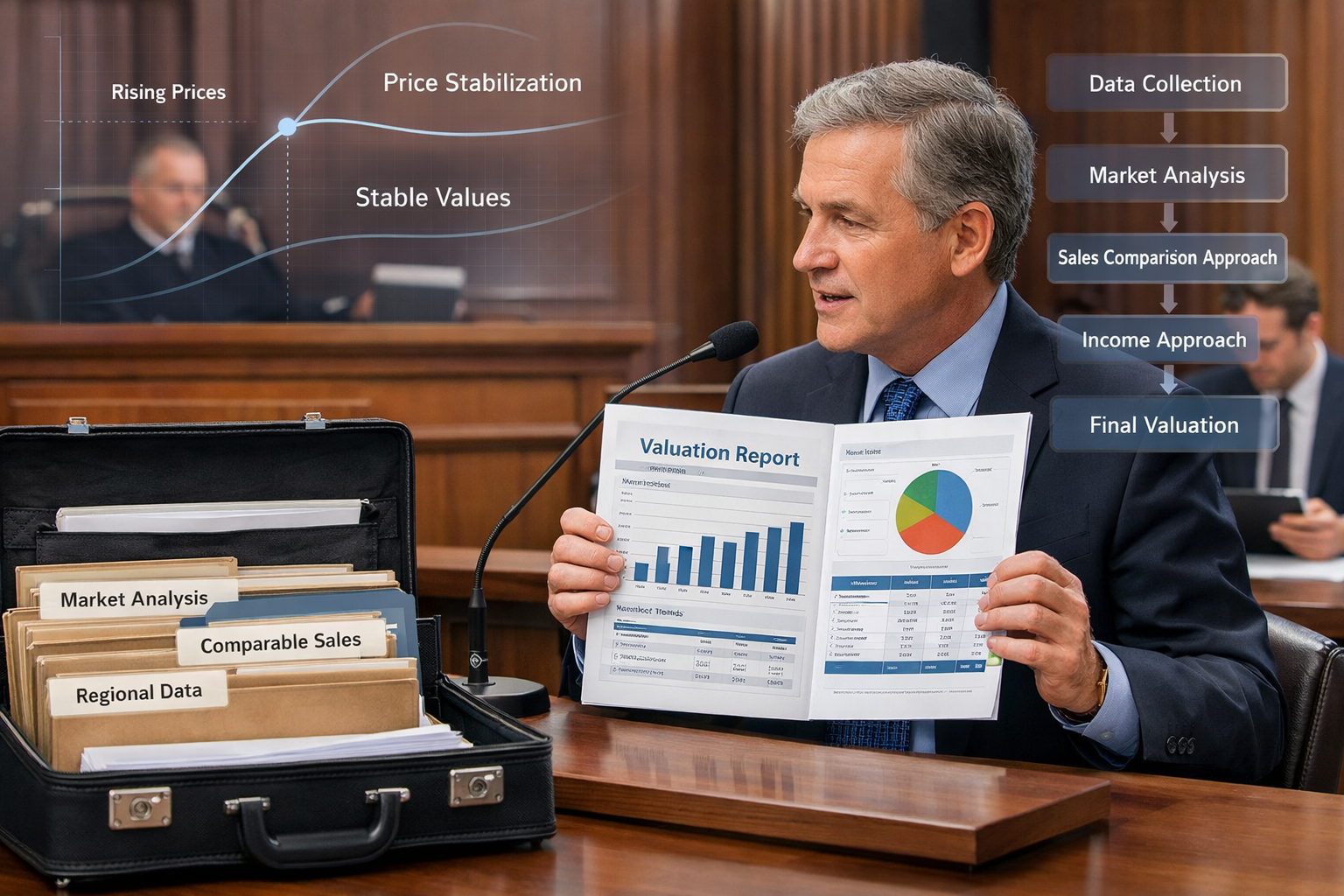
Expert Witness Valuations in 2026's Market Recovery: Building Court-Ready Cases Amid Stabilizing Prices and Regional Divergence requires careful selection of valuation methodology. The three primary approaches remain:
1. Comparable Sales Method 🏘️
The most commonly used approach, but fraught with challenges in 2026's divergent market. Expert witnesses must:
- Select comparables from the same micro-market
- Adjust for timing differences in the recovery cycle
- Account for property-specific factors with precision
- Document why each comparable was selected and others rejected
2. Income Capitalization Approach
Particularly relevant for investment properties, this method requires:
- Current rental market analysis specific to the location
- Appropriate yield selection reflecting risk and recovery stage
- Consideration of tenant quality and lease terms
- Regional economic outlook assessment
3. Cost Approach
Less commonly used but valuable for unique properties or new builds:
- Current construction cost data
- Appropriate depreciation calculations
- Land value assessment in recovering markets
- Consideration of market acceptance
Documentation Standards
Court-ready cases require meticulous documentation. Every assumption, adjustment, and conclusion must be traceable and defensible. Expert witnesses should maintain:
- Detailed comparable search records showing properties considered and rejected
- Adjustment worksheets with clear rationale for each modification
- Market data sources with dates and verification methods
- Methodology selection justification explaining why chosen approach is most appropriate
- Sensitivity analysis showing how value changes with different assumptions
When conducting valuations, adherence to RICS Red Book standards provides essential credibility and defensibility in legal proceedings.
Addressing Market Uncertainty
The tentative nature of 2026's recovery requires expert witnesses to acknowledge and address uncertainty professionally. This includes:
Confidence Intervals: Rather than single-point valuations, consider providing ranges that reflect market uncertainty while maintaining defensibility.
Scenario Analysis: Present valuations under different market assumptions (continued recovery, stagnation, renewed decline) to demonstrate thorough analysis.
Temporal Considerations: Clearly state the valuation date and acknowledge how rapidly changing conditions might affect conclusions.
"In a recovering but divergent market, the expert witness's greatest asset is transparency about assumptions and limitations. Courts appreciate honesty about uncertainty more than false precision." – Professional Valuation Standards
Navigating Regional Price Variations in Expert Testimony
Micro-Market Analysis Techniques
Expert Witness Valuations in 2026's Market Recovery: Building Court-Ready Cases Amid Stabilizing Prices and Regional Divergence demands sophisticated understanding of local market dynamics. Expert witnesses must:
Identify Market Boundaries 🗺️
Define the relevant market area precisely. In 2026's divergent environment, comparable properties from even a few miles away may reflect entirely different market conditions.
Analyze Local Economic Drivers
Understanding what drives value in each micro-market is essential:
- Employment centers and major employers
- Transportation links and commute times
- School quality and catchment areas
- Planning permissions and development pipeline
- Local amenity quality and accessibility
Track Recovery Timing
Different areas entered recovery at different times. A comparable sale from six months ago in an early-recovery area may not reflect current values in a late-recovery location.
Handling Conflicting Data Points
When regional data conflicts with national trends, expert witnesses must:
- Acknowledge the conflict openly in reports and testimony
- Explain the divergence with reference to local factors
- Prioritize local evidence over national statistics
- Document the reasoning for weighting decisions
This approach strengthens credibility and prepares the expert for cross-examination challenges.
Using Technology and Data Analytics
Modern expert witnesses leverage technology to strengthen their cases:
- Automated Valuation Models (AVMs) as supporting evidence (not primary valuation)
- Geographic Information Systems (GIS) to analyze location factors
- Market trend databases with granular regional data
- Transaction timing analysis to identify recovery patterns
However, technology must supplement, not replace, professional judgment. Courts expect experts to explain and defend their conclusions, not simply rely on algorithmic outputs.
Preparing Court-Ready Documentation and Reports
Report Structure and Content
A court-ready expert witness report in 2026 must follow a clear structure that facilitates understanding and withstands scrutiny:
Executive Summary 📋
Concise overview of the property, valuation conclusion, and key methodology points. This section should be understandable to non-experts while maintaining professional rigor.
Property Description
Detailed description including:
- Physical characteristics and condition
- Location analysis and micro-market positioning
- Planning status and constraints
- Recent improvements or defects
Comprehensive building surveys provide essential foundation for this section, particularly when property condition affects value.
Market Analysis
Critical in 2026's divergent environment:
- Regional market overview with recovery context
- Local market conditions and trends
- Supply and demand dynamics
- Recent transaction analysis
Valuation Methodology
Transparent explanation of:
- Approach selection rationale
- Comparable selection criteria
- Adjustment methodology and calculations
- Assumptions and limiting conditions
Valuation Conclusion
Clear statement of value with:
- Date of valuation
- Purpose and intended use
- Any qualifications or conditions
- Confidence level or range if appropriate
Supporting Documentation
Appendices containing:
- Comparable sales data sheets
- Market data sources
- Photographs and maps
- Professional qualifications and experience
Common Pitfalls to Avoid
Expert witnesses must avoid these credibility-damaging errors:
❌ Over-reliance on outdated comparables – In a recovering market, data from 12+ months ago may be irrelevant
❌ Insufficient adjustment documentation – Every adjustment must be explained and justified
❌ Ignoring regional divergence – National trends cannot override local market evidence
❌ Advocacy rather than objectivity – Expert witnesses serve the court, not the party engaging them
❌ Inadequate qualification statements – Assumptions and limitations must be clearly stated
❌ Poor comparable selection – Using convenient rather than truly comparable properties undermines credibility
Cross-Examination Preparation
Effective expert witnesses prepare thoroughly for cross-examination by:
Anticipating Challenges 🎯
- Review opposing expert reports carefully
- Identify weaknesses in your own analysis
- Prepare explanations for methodology choices
- Practice explaining technical concepts simply
Maintaining Professional Demeanor
- Remain calm and objective under pressure
- Acknowledge limitations and uncertainties honestly
- Avoid defensive responses to legitimate questions
- Stick to areas of expertise and qualification
Supporting Your Conclusions
- Bring comprehensive working papers to court
- Reference specific data points and sources
- Explain reasoning step-by-step when challenged
- Distinguish between facts and professional opinions
Understanding how surveys help negotiate property prices provides valuable context for explaining valuation adjustments in legal proceedings.
Integrating Professional Standards and Best Practices
RICS Red Book Compliance
The RICS Valuation – Global Standards (Red Book) provides the framework for defensible expert witness valuations. In 2026's complex market, strict adherence to these standards is essential:
Competence Requirements
Expert witnesses must demonstrate:
- Appropriate qualifications and experience
- Knowledge of the specific property type and market
- Understanding of current market conditions
- Continuing professional development
Independence and Objectivity
The Red Book emphasizes that valuers must:
- Avoid conflicts of interest
- Provide unbiased opinions
- Disclose any factors affecting independence
- Serve the court's interests, not the instructing party
Methodology and Reporting
Standards require:
- Appropriate valuation approaches for the purpose
- Clear explanation of methodology
- Transparent assumptions and limitations
- Comprehensive supporting documentation
Ethical Considerations
Expert witnesses face unique ethical obligations:
Truth Over Advocacy ⚖️
The primary duty is to the court, not to the party paying fees. This means:
- Presenting balanced analysis even when unfavorable
- Acknowledging weaknesses in one's own position
- Fairly considering alternative viewpoints
- Changing opinions if new evidence warrants
Fee Arrangements
Ethical expert witnesses:
- Charge time-based fees, not contingent on outcomes
- Provide clear fee agreements upfront
- Avoid financial incentives tied to case results
- Disclose fee arrangements if requested
Professional Boundaries
Maintaining appropriate boundaries includes:
- Not communicating with opposing parties without permission
- Avoiding ex parte discussions with judges
- Respecting confidentiality requirements
- Declining instructions outside areas of competence
Leveraging Market Data and Comparable Evidence
Sourcing Reliable Data in 2026
The quality of market data directly impacts valuation defensibility. Expert witnesses should:
Primary Data Sources 📊
- Land Registry transaction data (public record)
- Professional databases (CoStar, EGi, Rightmove)
- Local estate agent market reports
- Auction results and withdrawn listings
- Direct market participant interviews
Data Verification
In 2026's recovering market, verifying data accuracy is crucial:
- Cross-reference multiple sources
- Confirm transaction terms (were discounts given?)
- Verify property details through site visits or surveys
- Check timing relative to market recovery phase
Filtering for Relevance
Not all transactions provide useful comparable evidence:
- Distressed sales may not reflect market value
- Related-party transactions require scrutiny
- Unusual terms or conditions need adjustment
- Timing must align with valuation date
Comparable Selection Criteria
Expert Witness Valuations in 2026's Market Recovery: Building Court-Ready Cases Amid Stabilizing Prices and Regional Divergence requires rigorous comparable selection:
Location Similarity 🏘️
- Same micro-market or demonstrably comparable area
- Similar accessibility and amenity access
- Comparable planning environment
- Similar market recovery stage
Physical Comparability
- Similar property type and age
- Comparable size and configuration
- Similar condition (or adjustable differences)
- Similar quality of construction and finishes
Transaction Characteristics
- Arms-length market transactions
- Similar transaction timing
- Comparable market conditions
- Normal financing terms
Adjustment Transparency
When comparables require adjustments:
- Document each adjustment with clear rationale
- Use market-derived adjustment factors when possible
- Apply adjustments consistently
- Limit total adjustments to maintain credibility (generally under 25-30%)
Understanding price reductions after surveys helps expert witnesses make appropriate condition-related adjustments.
Case Study Applications and Practical Examples
Divorce Settlement Valuation
Scenario: Valuing a family home in a partially recovered suburban market for divorce proceedings.
Challenges:
- Emotional attachment affecting parties' value perceptions
- Limited recent comparable sales in specific neighborhood
- Property condition issues requiring adjustment
- Disagreement over appropriate valuation date
Expert Witness Approach:
- Conducted thorough property inspection with professional building survey
- Expanded comparable search to adjacent similar neighborhoods
- Made documented adjustments for location, condition, and timing
- Provided sensitivity analysis showing value range
- Maintained objectivity despite pressure from both parties
Outcome: Court accepted valuation; parties settled based on expert opinion.
Commercial Property Dispute
Scenario: Lease renewal dispute involving retail property in recovering city center.
Challenges:
- Changing retail landscape post-pandemic
- Limited comparable lease renewals
- Landlord and tenant with vastly different value opinions
- Regional recovery lagging national trends
Expert Witness Approach:
- Analyzed local retail market trends and recovery indicators
- Used income capitalization with regional yield data
- Considered comparable lease terms in similar recovery-stage markets
- Addressed e-commerce impact on retail values
- Provided range reflecting market uncertainty
Outcome: Tribunal used expert evidence to determine fair market rent.
Compulsory Purchase Compensation
Scenario: Determining compensation for property acquired for infrastructure project.
Challenges:
- No-scheme world valuation requirement
- Development potential considerations
- Regional market showing early recovery signs
- Hope value and special purchaser considerations
Expert Witness Approach:
- Valued property excluding scheme influence
- Analyzed comparable sales in similar recovery-stage markets
- Assessed development potential with planning expertise
- Documented assumptions about market trajectory
- Prepared for challenge on hope value inclusion
Outcome: Compensation award aligned closely with expert valuation.
Technology and Innovation in Expert Witness Valuations
Digital Tools and Platforms
Modern expert witnesses leverage technology to enhance analysis quality and presentation:
Data Analytics Platforms 💻
- Real-time market data aggregation
- Statistical analysis of price trends
- Automated comparable searching with filters
- Visual data presentation tools
Visualization Software
- Heat mapping for regional price variations
- Interactive charts for court presentations
- 3D property modeling for complex cases
- Timeline graphics showing market recovery progression
Collaboration Tools
- Secure document sharing with legal teams
- Virtual site inspections when appropriate
- Remote expert conferences
- Digital evidence management systems
Artificial Intelligence and Machine Learning
While AI tools are increasingly available, expert witnesses must use them appropriately:
Appropriate Uses ✅
- Initial comparable property identification
- Market trend pattern recognition
- Data quality checking and verification
- Supporting analysis for manual valuation
Inappropriate Uses ❌
- Replacing professional judgment
- Primary valuation methodology
- Unexplained "black box" conclusions
- Substituting for market knowledge
Courts expect expert witnesses to explain their reasoning. AI-generated valuations without professional oversight lack the transparency and defensibility required for legal proceedings.
Managing Complex Valuation Scenarios
Properties with Unique Characteristics
Some properties present special challenges in 2026's recovering market:
Listed Buildings and Heritage Properties 🏛️
- Limited comparable sales data
- Specialized buyer market
- Maintenance cost considerations
- Planning restriction impacts
Properties with Defects
- Quantifying repair cost impacts on value
- Distinguishing between cosmetic and structural issues
- Market acceptance of disclosed defects
- Negotiation implications of survey findings
Development Properties
- Residual valuation methodology
- Planning risk assessment
- Construction cost uncertainty
- Market timing for completed development
Mixed-Use Properties
- Multiple valuation approaches for different components
- Allocation of value between uses
- Synergy or conflict between uses
- Appropriate yield selection
Handling Valuation Date Issues
The valuation date significantly impacts conclusions in a recovering market:
Retrospective Valuations
When valuing as of a past date:
- Use only data available at that date
- Avoid hindsight bias
- Reconstruct market conditions as they existed
- Document information sources from the relevant period
Current Valuations
For present-day valuations:
- Use most recent comparable evidence
- Acknowledge current market uncertainty
- Consider forward-looking indicators
- State assumptions about continued recovery
Prospective Valuations
When future value is relevant:
- Clearly state assumptions about market trajectory
- Provide scenario analysis
- Acknowledge uncertainty explicitly
- Avoid false precision
Conclusion: Excellence in Expert Witness Valuations
Expert Witness Valuations in 2026's Market Recovery: Building Court-Ready Cases Amid Stabilizing Prices and Regional Divergence requires a sophisticated blend of technical expertise, professional judgment, and communication skills. As markets stabilize unevenly across regions, expert witnesses must adapt their approaches to reflect local conditions while maintaining rigorous professional standards.
The key to success lies in:
🎯 Methodological Rigor – Selecting appropriate valuation approaches and documenting every step of the analysis process
🎯 Regional Expertise – Understanding micro-market dynamics and local recovery patterns rather than relying on broad national trends
🎯 Professional Independence – Maintaining objectivity and serving the court's interests above all other considerations
🎯 Clear Communication – Presenting complex technical analysis in accessible language that judges and juries can understand
🎯 Ethical Practice – Adhering to RICS standards and professional codes while acknowledging limitations and uncertainties
Actionable Next Steps
For professionals seeking to enhance their expert witness capabilities:
- Invest in continuing education focused on current market conditions and regional variations
- Develop robust documentation systems that create defensible audit trails for all valuations
- Build regional market expertise through active market participation and data collection
- Practice testimony skills through mock cross-examinations and professional training
- Maintain professional networks with other experts to share insights and best practices
- Stay current with technology while maintaining professional judgment as the foundation
- Review and learn from past cases to continuously improve methodology and presentation
The recovering property market of 2026 presents both challenges and opportunities for expert witnesses. Those who combine technical excellence with professional integrity will find their services increasingly valuable as transaction volumes rise and valuation disputes multiply. By building court-ready cases grounded in sound methodology, comprehensive documentation, and regional market expertise, expert witnesses can provide the clarity and confidence that legal proceedings demand.
For property professionals seeking to understand valuation complexities, engaging qualified building surveyors and RICS-certified experts ensures access to the expertise necessary for navigating 2026's divergent market landscape.