

The UK property market in 2026 presents a fascinating paradox: while northern regions surge ahead with robust growth, southern markets show unexpected sluggishness. This divergence has created a minefield for property tribunals, where expert witness valuations have become the cornerstone of resolving disputes worth millions of pounds. As RICS-reported data reveals a widening North-South divide, surveyors acting as expert witnesses face unprecedented challenges in providing credible tribunal evidence amid national growth forecasts ranging from 2-4%.
Understanding Expert Witness Valuations in 2026 Regional House Price Disputes: North-South Divide Case Studies has never been more critical for property professionals, legal practitioners, and stakeholders navigating this complex landscape.
Key Takeaways
- 📊 Regional divergence in 2026 shows northern UK markets outperforming southern regions by 2-3 percentage points, creating valuation challenges
- ⚖️ Expert witness protocols require standardized methodologies to address the 2-4% national growth variance in tribunal settings
- 🏘️ Case study evidence demonstrates how comparable selection and regional adjustment factors determine dispute outcomes
- 📋 RICS professional standards mandate specific documentation and evidence presentation for expert witnesses in regional price disputes
- 💼 Tribunal acceptance depends on transparent methodology, robust data analysis, and clear communication of regional market dynamics
Understanding the 2026 North-South Property Market Divide
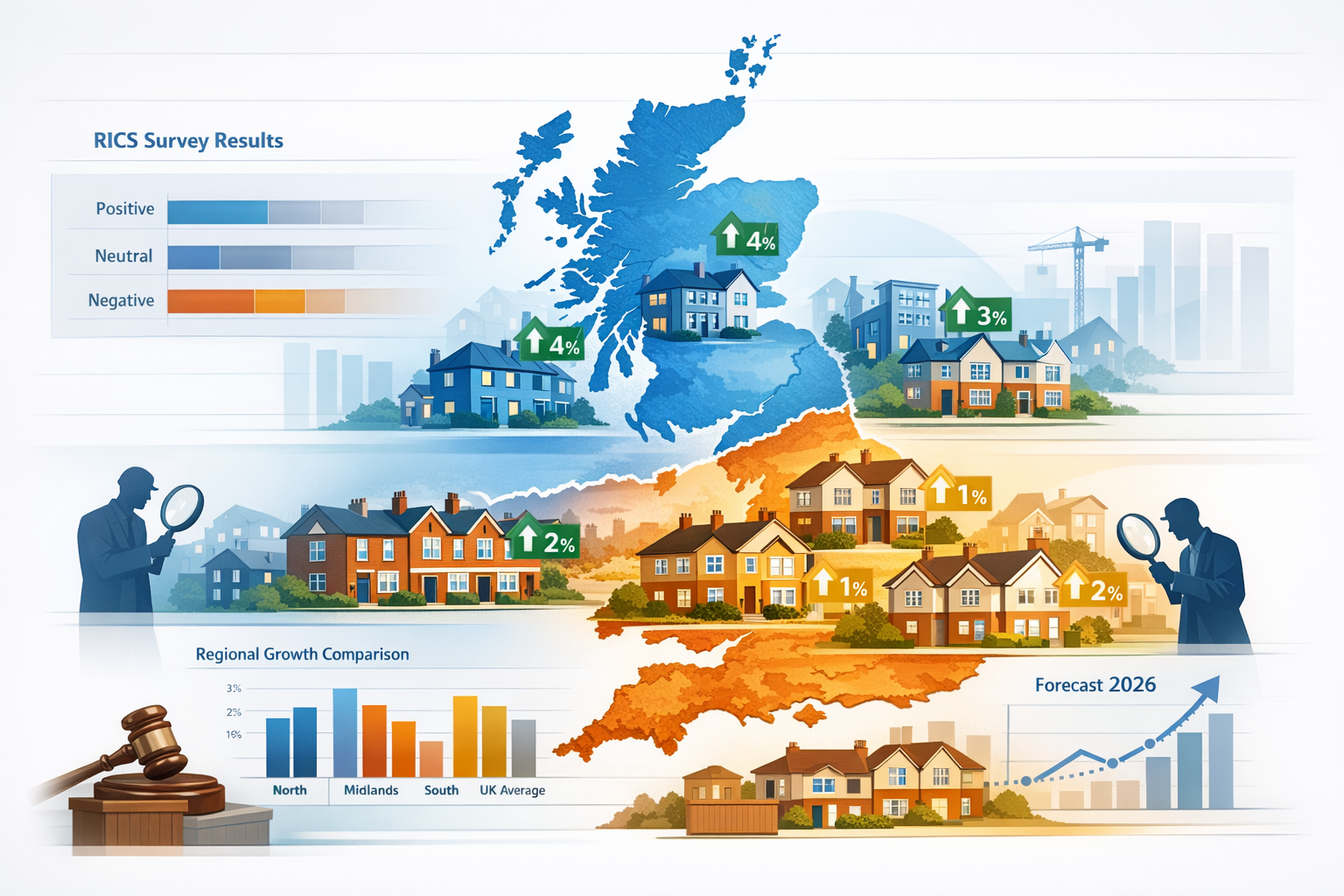
The UK housing market has historically experienced regional variations, but 2026 marks a significant shift in traditional patterns. Northern regions, including Manchester, Leeds, and Newcastle, are experiencing growth rates of 3.5-4.2%, while southern markets in areas traditionally considered premium—such as parts of Surrey, Sussex, and even outer London boroughs—are seeing more modest increases of 1.2-2.1%.
What's Driving Regional Divergence?
Several factors contribute to this unprecedented divide:
Economic Factors:
- Remote working patterns established post-pandemic have become permanent
- Northern cities offer superior value propositions for businesses
- Infrastructure investment concentrated in northern regions
- Cost of living differentials attracting migration northward
Market Dynamics:
- Southern market saturation after years of premium pricing
- First-time buyer affordability crisis more acute in the South
- Investment yields favor northern rental markets
- Commercial property renaissance in northern city centers
This regional disparity creates significant challenges when RICS property valuations are required for dispute resolution, particularly in tribunal settings where precision and defensibility are paramount.
Impact on Valuation Practice
Property surveyors must now navigate a landscape where national averages mask regional realities. A valuation approach that applies blanket assumptions across regions will fail scrutiny in tribunal proceedings. Expert witnesses need robust, region-specific methodologies that account for:
- Local market velocity and transaction volumes
- Regional economic indicators and employment trends
- Infrastructure development timelines
- Demographic shifts and migration patterns
- Comparable evidence pools specific to micro-markets
Expert Witness Valuations in 2026 Regional House Price Disputes: Protocols and Standards
When property disputes escalate to tribunal proceedings, the role of the expert witness becomes critical. In 2026, with regional markets behaving so differently, establishing credible valuation protocols is essential for tribunal acceptance and case resolution.
The Expert Witness Role in Property Tribunals
An expert witness in property valuation disputes carries specific responsibilities that extend beyond standard chartered surveyor duties:
Primary Obligations:
- Duty to the tribunal (not to the instructing party)
- Provide objective, unbiased professional opinion
- Present evidence clearly and comprehensively
- Acknowledge limitations and uncertainties
- Respond to cross-examination professionally
"The expert witness must remember their primary duty is to the tribunal, not to the party instructing them. In regional price disputes, this means presenting regional data objectively, even when it doesn't favor your client's position." – RICS Expert Witness Guidance 2026
Standardized Methodology for Regional Disputes
To address the North-South divide effectively, expert witnesses should adopt a structured five-stage approach:
| Stage | Activity | Regional Considerations |
|---|---|---|
| 1. Market Analysis | Establish regional context | Identify local vs. national trends |
| 2. Comparable Selection | Gather evidence | Apply regional filters and adjustments |
| 3. Adjustment Methodology | Calculate differences | Account for regional growth differentials |
| 4. Reconciliation | Arrive at opinion of value | Weight regional factors appropriately |
| 5. Reporting | Document findings | Present regional data transparently |
Evidence Requirements for 2026 Tribunals
Tribunals in 2026 expect comprehensive evidence packages that demonstrate:
✅ Regional market data from authoritative sources (Land Registry, RICS, local authority data)
✅ Comparable transaction evidence with detailed adjustment rationale
✅ Economic indicators specific to the region (employment, infrastructure, demographics)
✅ Methodology transparency showing how regional factors influenced conclusions
✅ Alternative scenarios acknowledging uncertainty in forecasts
When dealing with neighbour disputes or boundary issues that involve valuation questions, expert witnesses must also consider how regional market conditions affect the valuation impact of specific property features or defects.
Documentation Standards
Expert witness reports for regional price disputes should include:
- Executive summary stating the valuation question and conclusion
- Regional market overview with statistical evidence
- Comparable evidence schedule with full adjustment details
- Methodology statement explaining approach and regional adjustments
- Assumptions and limitations clearly articulated
- Supporting appendices with source data and calculations
Professional expert building evaluation practices require meticulous documentation that can withstand cross-examination and tribunal scrutiny.
North-South Divide Case Studies: Tribunal Evidence in Practice
Examining real-world applications of Expert Witness Valuations in 2026 Regional House Price Disputes: North-South Divide Case Studies provides invaluable insights into effective tribunal practice.
Case Study 1: Manchester vs. Surrey Comparable Dispute
Background:
A property development company challenged a compulsory purchase valuation, arguing that comparable evidence from Surrey (where the company's directors resided) should inform the Manchester property valuation.
Expert Witness Challenge:
The appointed expert witness needed to demonstrate why regional market differences made Surrey comparables inappropriate while defending a valuation methodology that reflected Manchester's stronger growth trajectory.
Methodology Applied:
- Presented Land Registry data showing 3.8% Manchester growth vs. 1.4% Surrey growth over 12 months
- Demonstrated employment growth differential (Manchester +2.1%, Surrey +0.3%)
- Analyzed transaction velocity showing Manchester market liquidity
- Applied regional adjustment factors to any cross-regional comparables
- Provided sensitivity analysis showing valuation range under different scenarios
Outcome:
The tribunal accepted the expert's regional analysis and rejected the Surrey comparables. The case established precedent for regional market segmentation in comparable selection.
Key Learning:
Expert witnesses must educate tribunals on regional market dynamics with clear, data-driven presentations that make complex economic factors accessible.
Case Study 2: London Fringe Lease Extension Valuation
Background:
A lease extension dispute in outer London involved conflicting valuations differing by £47,000, with disagreement centered on whether to apply central London or outer regional growth rates.
Expert Witness Challenge:
Two expert witnesses presented opposing views on applicable growth rates, with one applying 2.8% based on Greater London averages and another using 1.6% based on specific borough data.
Methodology Comparison:
Expert A (Greater London approach):
- Used London-wide RICS data
- Applied blanket growth assumptions
- Limited micro-market analysis
- Weak comparable adjustment methodology
Expert B (Borough-specific approach):
- Analyzed specific borough transaction data
- Demonstrated divergence from London averages
- Provided granular comparable evidence
- Applied transparent adjustment factors
Outcome:
The tribunal favored Expert B's approach, emphasizing the importance of micro-market analysis over broad regional generalizations.
Key Learning:
In 2026's fragmented market, granular analysis trumps broad assumptions. Expert witnesses must drill down to the most specific relevant market segment.
Case Study 3: Northern New-Build Development Dispute
Background:
A dispute between a developer and local authority regarding affordable housing contributions hinged on projected values for a Leeds development, with forecasts ranging from 3.2% to 4.5% annual growth.
Expert Witness Challenge:
Provide credible growth forecasts for a three-year development period in a rapidly appreciating northern market while acknowledging forecast uncertainty.
Methodology Applied:
- Historical analysis: 10-year growth patterns for comparable Leeds developments
- Economic modeling: Employment, infrastructure, and demographic projections
- Scenario planning: Best case (4.5%), base case (3.8%), worst case (2.9%)
- Sensitivity analysis: Impact of each scenario on affordable housing calculations
- Risk assessment: Probability weighting for each scenario
Outcome:
The tribunal adopted the expert's base case scenario (3.8%) while acknowledging the range of possibilities. The expert's transparent scenario planning approach was commended for its professional rigor.
Key Learning:
When dealing with forecasts in volatile markets, expert witnesses should present multiple scenarios with clear reasoning rather than single-point predictions.
Common Themes Across Case Studies
Analyzing these Expert Witness Valuations in 2026 Regional House Price Disputes: North-South Divide Case Studies reveals consistent success factors:
🎯 Data-driven analysis beats anecdotal evidence
🎯 Regional specificity outperforms national generalizations
🎯 Transparent methodology builds tribunal confidence
🎯 Scenario planning acknowledges uncertainty professionally
🎯 Clear communication makes complex analysis accessible
Best Practices for Expert Witnesses in Regional Valuation Disputes

Drawing from 2026 case law and professional standards, expert witnesses should adopt these proven practices when handling regional price disputes.
Pre-Instruction Considerations
Before accepting an expert witness appointment in a regional dispute:
Competence Assessment:
- Do you have specific experience in the relevant regional market?
- Can you access reliable regional data sources?
- Do you understand local market dynamics and drivers?
- Are you familiar with recent comparable transactions?
Conflict Checking:
- Have you previously valued properties for either party?
- Do you have ongoing relationships that might compromise objectivity?
- Can you maintain independence throughout proceedings?
When finding a surveyor for expert witness work, parties should verify regional market expertise and tribunal experience.
Data Collection and Analysis
Robust data collection forms the foundation of credible expert evidence:
Essential Data Sources:
- Land Registry Price Paid Data (transaction-level detail)
- RICS Market Surveys (regional sentiment and forecasts)
- ONS Regional Statistics (economic indicators)
- Local Authority Planning Data (development pipeline)
- Proprietary Databases (CoStar, EGi, Rightmove analytics)
Analysis Framework:
- Establish regional market boundaries
- Identify relevant time periods for comparison
- Filter data for property type and characteristics
- Apply appropriate statistical methods
- Test conclusions for sensitivity and robustness
Comparable Evidence Selection
The selection and adjustment of comparable evidence requires particular rigor in regional disputes:
Selection Criteria:
- Geographic proximity: Prioritize same micro-market
- Temporal relevance: Recent transactions weighted more heavily
- Property similarity: Match key characteristics
- Transaction quality: Arms-length, market-driven sales
- Data completeness: Full details available for analysis
Adjustment Methodology:
When comparables cross regional boundaries, apply systematic adjustments:
Adjusted Value = Sale Price × Location Factor × Time Factor × Physical Factor × Market Condition Factor
Each adjustment must be:
- Evidenced with market data
- Calculated transparently
- Documented comprehensively
- Defensible under cross-examination
Report Writing for Tribunal Proceedings
Expert witness reports for regional valuation disputes should follow this structure:
1. Introduction and Instructions
- Your qualifications and experience
- Scope of instruction
- Property and dispute details
- Inspection details
2. Regional Market Analysis
- Economic context and drivers
- Transaction volume and velocity
- Price trends and forecasts
- Comparative regional performance
3. Valuation Methodology
- Approach selection and justification
- Comparable evidence presentation
- Adjustment methodology
- Calculations and reconciliation
4. Opinion of Value
- Concluded value or range
- Confidence level
- Assumptions and limitations
- Alternative scenarios if appropriate
5. Declaration
- Duty to tribunal statement
- Independence confirmation
- Qualifications summary
The average price reduction after survey article demonstrates how survey findings influence negotiations—a principle that extends to expert witness valuations where defects or issues must be valued in regional context.
Giving Evidence Under Cross-Examination
Tribunal appearances require preparation and professional demeanor:
Preparation:
- Review all case documents thoroughly
- Refresh knowledge of comparable evidence
- Anticipate challenges to methodology
- Prepare clear explanations of technical concepts
During Evidence:
- Answer questions directly and concisely
- Admit limitations or uncertainties honestly
- Maintain objectivity and professionalism
- Refer to supporting documentation when needed
- Avoid advocacy for the instructing party
Common Cross-Examination Challenges:
- "Why didn't you use comparables from [different region]?"
- "How can you be certain of your growth forecast?"
- "Isn't your methodology biased toward [party's position]?"
- "What if your regional assumptions are wrong?"
Prepare clear, evidence-based responses that demonstrate professional judgment rather than partisan advocacy.
Regulatory and Professional Standards Framework
Expert witnesses operating in 2026 must navigate evolving regulatory requirements and professional standards.
RICS Standards and Guidance
The Royal Institution of Chartered Surveyors provides comprehensive guidance for expert witnesses:
Key Standards:
- RICS Practice Statement: Surveyors Acting as Expert Witnesses (4th Edition)
- RICS Valuation – Global Standards (Red Book)
- RICS UK National Supplement
- Guidance Note: Comparable Evidence in Property Valuation
These standards emphasize:
- Independence and objectivity
- Competence in the specific market
- Transparent methodology
- Comprehensive reporting
- Professional conduct in proceedings
Civil Procedure Rules (CPR) Part 35
In England and Wales, expert witnesses must comply with CPR Part 35, which establishes:
Expert's Overriding Duty:
- Help the court on matters within expertise
- Duty to the court overrides duty to instructing party
- Provide objective, unbiased opinion
- Not act as advocate
Content Requirements:
- Statement of truth
- Qualifications and experience
- Instructions received
- Assumptions and limitations
- Range of opinion in the field
Understanding court costs and construction law frameworks helps expert witnesses navigate the broader legal context of their work.
Professional Indemnity Insurance
Expert witness work carries significant liability exposure:
Coverage Considerations:
- Ensure PII covers expert witness activities
- Verify limits are adequate for dispute values
- Understand exclusions and conditions
- Maintain run-off cover for past cases
Risk Management:
- Maintain detailed file notes and working papers
- Document all communications and instructions
- Follow professional standards meticulously
- Seek peer review for complex cases
Technology and Data Analytics in 2026 Valuations
The expert witness toolkit in 2026 leverages advanced technology for more robust analysis.
Data Analytics Platforms
Modern expert witnesses utilize sophisticated data analysis tools:
Market Analysis Software:
- Real-time transaction databases
- Automated comparable searches
- Statistical analysis and visualization
- Regression modeling for adjustments
- Scenario planning and sensitivity analysis
Geographic Information Systems (GIS):
- Spatial analysis of market patterns
- Heat mapping of price trends
- Proximity analysis for comparables
- Infrastructure impact modeling
Artificial Intelligence and Machine Learning
AI tools support but don't replace professional judgment:
Appropriate Applications:
- Pattern recognition in large datasets
- Automated comparable identification
- Anomaly detection in transaction data
- Predictive modeling for growth forecasts
Limitations and Risks:
- Black box algorithms lack transparency
- Training data may not reflect current markets
- Cannot replace market knowledge and judgment
- Tribunal skepticism of unexplained AI outputs
Best Practice:
Use AI as a supporting tool, but ensure all conclusions can be explained through traditional valuation methodology and professional judgment.
Presentation Technology
Effective communication of complex regional analysis requires visual tools:
Tribunal Presentation Tools:
- Interactive dashboards showing regional data
- Animated charts demonstrating trends over time
- Comparative visualizations of North-South differences
- Clear, accessible graphics for non-technical audiences
The key is making complex analysis understandable without oversimplification.
Financial Implications and Fee Structures

Understanding the economics of expert witness work helps both practitioners and instructing parties.
Expert Witness Fee Structures
Typical fee arrangements for regional valuation disputes:
Hourly Rates:
- Senior RICS valuers: £200-350/hour
- Partners with extensive tribunal experience: £350-500/hour
- Specialists in complex regional disputes: £400-600/hour
Fixed Fees:
- Report preparation: £3,000-8,000 depending on complexity
- Tribunal attendance: £2,000-5,000 per day
- Conference attendance: £1,500-3,000 per session
Factors Affecting Fees:
- Complexity of regional analysis required
- Number of comparables to analyze
- Urgency and timeline constraints
- Tribunal duration and preparation time
- Expert's experience and reputation
Understanding financial implications helps parties budget appropriately for expert witness costs.
Cost-Benefit Analysis for Parties
When considering expert witness appointment:
When Expert Evidence Adds Value:
- Dispute value exceeds £50,000
- Significant regional market complexity
- Opposing party has appointed expert
- Technical valuation issues central to case
- Settlement negotiations have failed
When to Consider Alternatives:
- Low-value disputes (under £25,000)
- Straightforward valuation questions
- Clear comparable evidence available
- Parties willing to accept independent valuation
Cost Recovery and Tribunal Awards
Successful parties may recover expert witness costs:
Typical Recovery Rates:
- 60-80% of reasonable expert costs
- Full recovery if opponent's case deemed unreasonable
- Reduced recovery if expert evidence excessive or unhelpful
Maximizing Recovery:
- Ensure fees are reasonable and proportionate
- Keep detailed time records
- Demonstrate value added to case resolution
- Avoid unnecessary work or over-elaboration
Future Trends and Emerging Issues
Looking beyond 2026, several trends will shape expert witness valuations in regional disputes.
Evolving Regional Patterns
The North-South divide may not persist indefinitely:
Potential Shifts:
- Southern market recovery as affordability improves
- Leveling-up policy impacts on northern growth
- Climate change affecting coastal and flood-risk areas
- Infrastructure projects (HS2, Northern Powerhouse Rail) changing accessibility
Expert Witness Implications:
Maintain flexibility in methodology and avoid rigid assumptions about regional patterns. What holds true in 2026 may shift significantly by 2028-2030.
Regulatory Developments
Anticipated changes in professional standards:
RICS Initiatives:
- Enhanced guidance on regional market analysis
- Standardized adjustment methodologies
- Technology use in valuation practice
- Climate risk integration in valuations
Legal Framework:
- Potential reforms to expert witness rules
- Greater emphasis on proportionality
- Enhanced disclosure requirements
- Alternative dispute resolution encouragement
Sustainability and ESG Factors
Environmental, Social, and Governance considerations increasingly affect regional valuations:
Regional Variations:
- Energy efficiency standards differ regionally
- Climate risk varies by geography
- Social housing requirements differ by local authority
- Green infrastructure investment concentrated in certain regions
Expert Witness Considerations:
Incorporate ESG factors into regional analysis, particularly for longer-term forecasts and development valuations.
Conclusion
Expert Witness Valuations in 2026 Regional House Price Disputes: North-South Divide Case Studies reveal a property market in flux, where traditional assumptions about regional performance no longer hold. The northern surge and southern stagnation create both challenges and opportunities for property professionals serving as expert witnesses in tribunal proceedings.
Success in this environment requires:
✅ Deep regional market knowledge supported by robust data analysis
✅ Transparent, defensible methodology that acknowledges uncertainty
✅ Clear communication making complex analysis accessible to tribunals
✅ Professional independence maintaining objectivity throughout proceedings
✅ Continuous learning staying current with evolving market dynamics
Actionable Next Steps
For Property Professionals:
- Enhance regional expertise through market research and transaction analysis
- Invest in data analytics tools to support robust evidence gathering
- Pursue expert witness training through RICS and legal education providers
- Build tribunal experience starting with smaller cases
- Maintain professional development in valuation methodology and regional economics
For Instructing Parties:
- Select experts carefully based on regional experience and tribunal track record
- Provide clear instructions defining the valuation question precisely
- Share all relevant information enabling comprehensive analysis
- Budget appropriately for quality expert evidence
- Consider early expert involvement to inform settlement negotiations
For Tribunals and Decision-Makers:
- Expect robust regional analysis not broad generalizations
- Require transparent methodology with clear adjustment rationale
- Encourage scenario planning acknowledging forecast uncertainty
- Value clear communication over technical complexity
- Consider joint expert instructions where appropriate for efficiency
The regional property market divergence of 2026 presents unprecedented challenges for valuation practice. However, by adhering to professional standards, leveraging appropriate technology, and maintaining rigorous analytical approaches, expert witnesses can provide the credible, objective evidence that tribunals need to resolve disputes fairly and efficiently.
As regional patterns continue to evolve, the principles established through these case studies—data-driven analysis, methodological transparency, and professional independence—will remain the foundation of effective expert witness practice in property valuation disputes.
For those seeking professional valuation services or expert building evaluation support, working with experienced chartered surveyors who understand regional market dynamics is essential. Whether you need assistance with property assessment or require expert witness services for tribunal proceedings, choosing professionals with proven regional expertise and tribunal experience will significantly impact dispute outcomes.