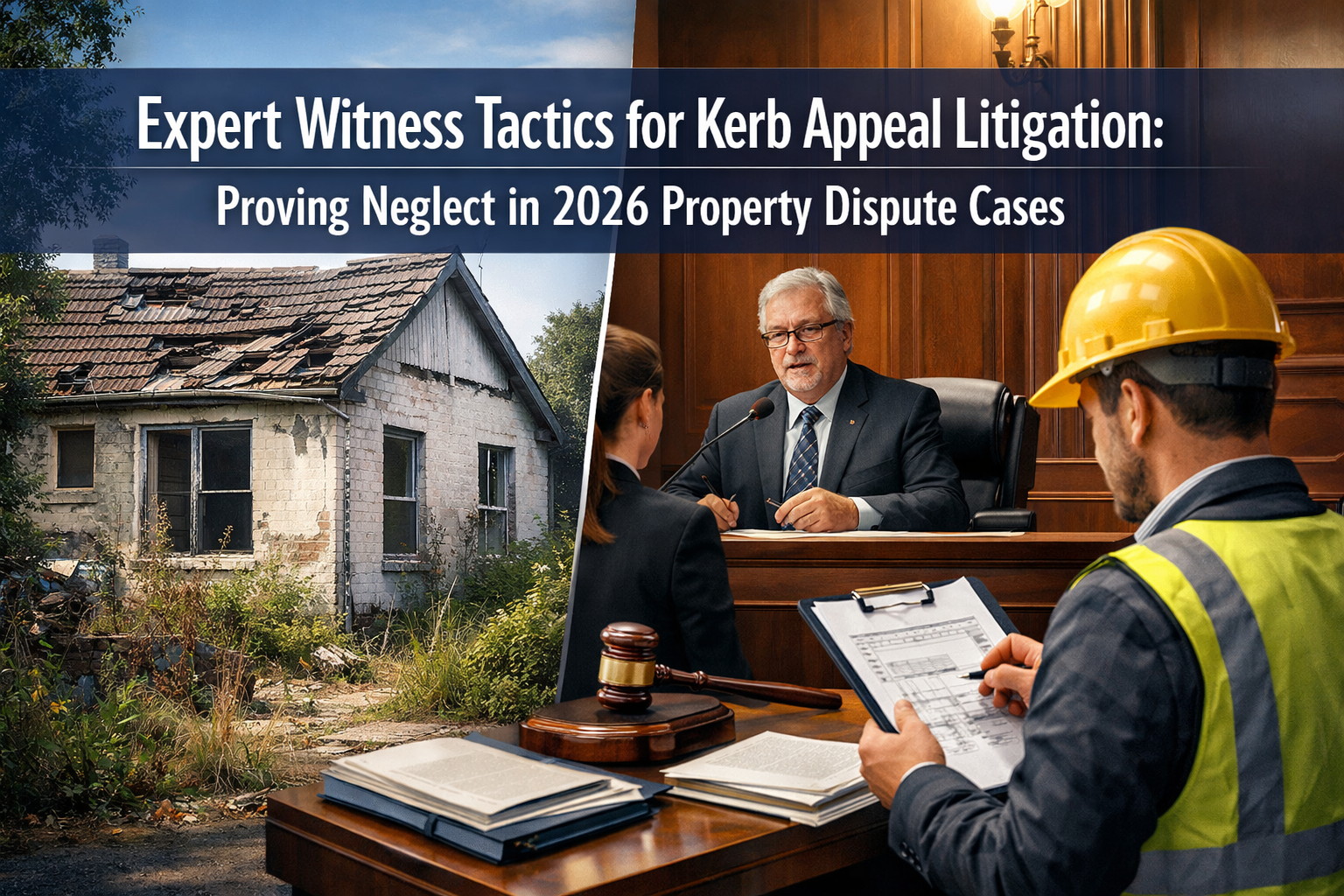
When a property sale collapses because buyers slash their offers after discovering deteriorating roof tiles, cracked render, or overgrown gardens, the financial consequences can be devastating. In 2026, property dispute cases increasingly hinge on one critical factor: proving that external property neglect directly caused measurable financial harm. Expert Witness Tactics for Kerb Appeal Litigation: Proving Neglect in 2026 Property Dispute Cases has become essential knowledge for legal professionals, property owners, and surveyors navigating these complex disputes. Recent survey evidence shows that visible external defects can reduce buyer offers by 15-30%, making expert testimony more crucial than ever in quantifying damages and establishing liability.
Key Takeaways
- 🏠 Quantifiable Impact: External property defects like roof damage, broken gutters, and neglected landscaping can reduce property values by 15-30% in 2026 market conditions
- 📊 Evidence-Based Testimony: Expert witnesses must provide timestamped photographic evidence, comparative market analysis, and detailed survey reports to prove neglect
- ⚖️ Credibility Standards: RICS-qualified surveyors with specialized property assessment experience provide the most compelling testimony in kerb appeal litigation
- 💰 Financial Documentation: Successful cases require clear linkage between specific defects and quantified financial losses, including lost sale proceeds and remediation costs
- 📝 Comprehensive Reports: Expert witnesses must prepare detailed condition surveys that meet current legal standards and withstand cross-examination scrutiny
Understanding Kerb Appeal Litigation in 2026 Property Disputes
Kerb appeal litigation represents a growing category of property disputes where one party claims that the external condition of a property caused financial harm. These cases typically arise when:
- Sellers fail to maintain visible property elements before listing
- Buyers withdraw offers or demand substantial price reductions after inspection
- Landlords neglect exterior maintenance, affecting property values
- Neighboring properties suffer value depreciation due to adjacent neglect
The Financial Stakes of External Property Neglect
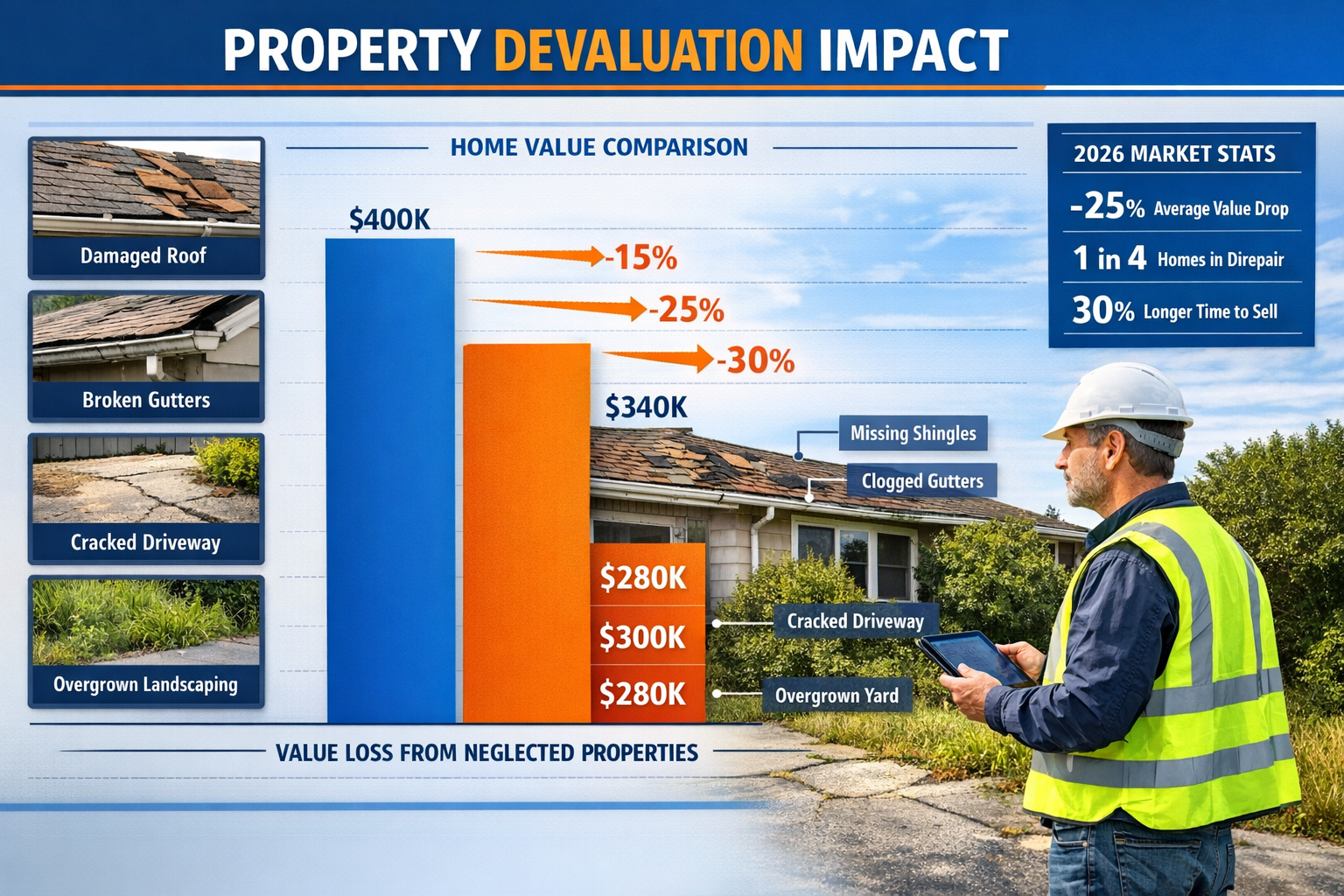
The 2026 property market has become increasingly sensitive to visual first impressions. Survey data demonstrates that properties with poor kerb appeal face significant financial penalties:
| Defect Type | Average Offer Reduction | Remediation Cost |
|---|---|---|
| Roof damage (missing/broken tiles) | 20-25% | £5,000-£15,000 |
| Damaged guttering/downpipes | 10-15% | £1,500-£4,000 |
| Cracked/damaged render | 15-20% | £3,000-£8,000 |
| Overgrown gardens/landscaping | 8-12% | £500-£2,500 |
| Broken/missing fencing | 5-10% | £1,000-£3,500 |
| Stained/damaged driveway | 10-15% | £2,000-£6,000 |
These figures underscore why expert witness testimony has become indispensable in proving the causal relationship between neglect and financial loss. Professional property surveyors in London regularly document these defects and their market impact.
Legal Framework for Proving Neglect
To successfully prove neglect in kerb appeal litigation, expert witnesses must establish four key elements:
- Duty of Care: The defendant had a responsibility to maintain the property
- Breach of Duty: The defendant failed to meet reasonable maintenance standards
- Causation: The neglect directly caused the financial harm
- Quantifiable Damages: The plaintiff suffered measurable financial losses
Expert witnesses play a pivotal role in establishing elements two through four, providing the technical and market analysis that courts require.
Essential Expert Witness Tactics for Kerb Appeal Litigation: Proving Neglect in 2026 Property Dispute Cases
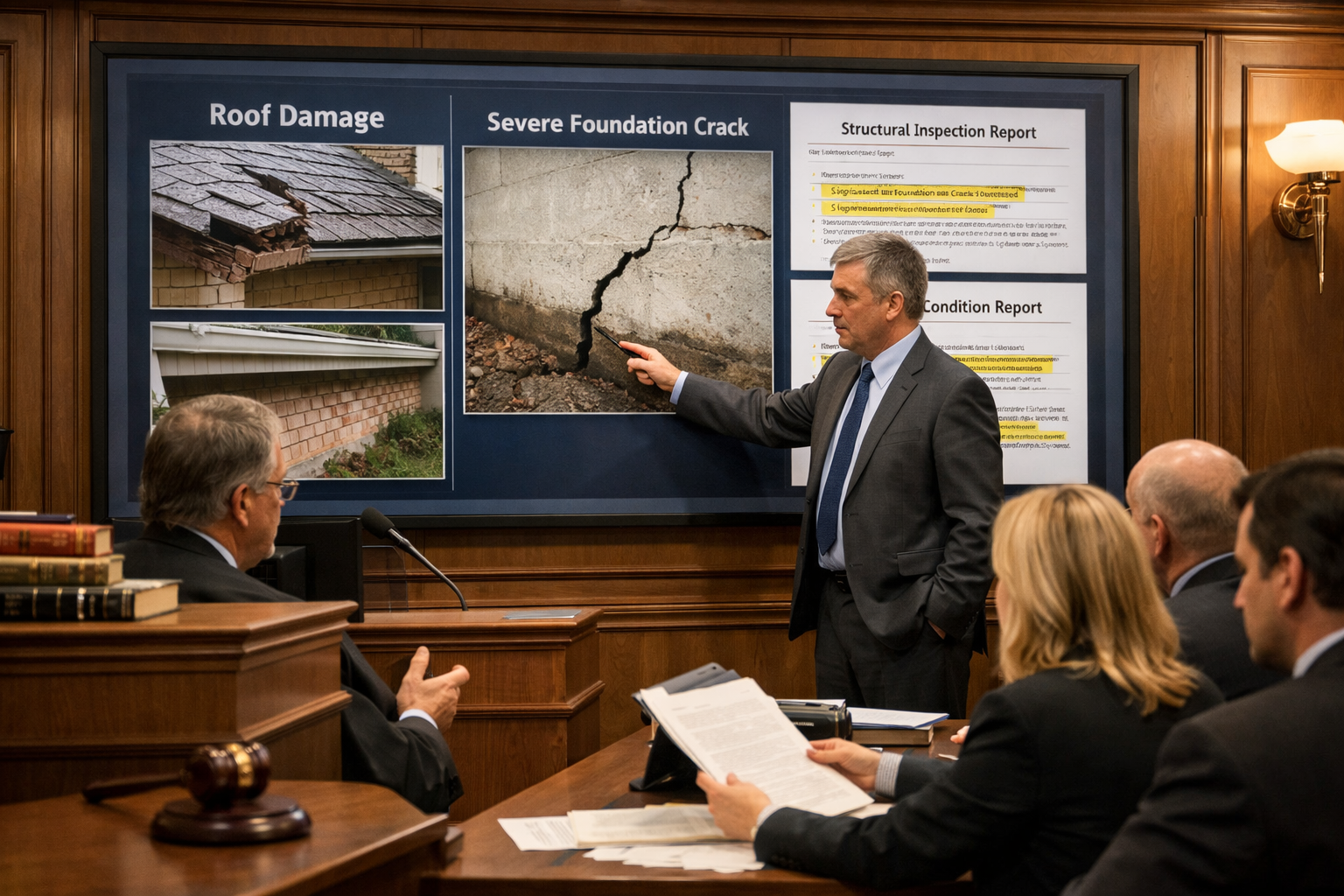
Effective expert witness testimony in kerb appeal litigation requires a strategic approach that combines technical expertise, clear communication, and comprehensive documentation. The following tactics have proven most successful in 2026 property dispute cases.
Comprehensive Property Condition Assessment
The foundation of any successful expert testimony begins with a thorough property assessment. Expert witnesses should:
Conduct Multi-Stage Inspections 📸
- Document current property conditions with timestamped, high-resolution photography
- Compare current conditions against historical images (listing photos, street view archives)
- Identify progressive deterioration patterns that indicate long-term neglect
- Use thermal imaging and moisture meters to reveal hidden defects affecting external appearance
Create Detailed Condition Reports
Professional building surveys form the backbone of expert testimony. These reports must include:
- Executive Summary: Clear statement of findings and opinions
- Methodology Section: Detailed explanation of inspection techniques
- Photographic Evidence: Annotated images showing specific defects
- Defect Analysis: Technical assessment of each identified issue
- Causation Opinion: Professional judgment on how defects developed
- Financial Impact Assessment: Quantified effect on property value
Establishing Timeline and Causation
One of the most challenging aspects of kerb appeal litigation involves proving when neglect occurred and who was responsible. Expert witnesses must:
Build a Chronological Narrative
- Obtain property maintenance records and service invoices
- Review previous survey reports and inspection documents
- Analyze weather data to assess environmental factors
- Interview contractors or neighbors about property history
- Examine planning applications and building control records
Differentiate Between Neglect and Normal Wear
Courts recognize that properties naturally age. Expert witnesses must clearly distinguish between:
- ✅ Actionable Neglect: Failure to perform reasonable maintenance (e.g., ignoring obvious roof damage for years)
- ❌ Normal Deterioration: Expected aging that reasonable maintenance couldn't prevent
This distinction often determines case outcomes. Specialists in boundary dispute resolution understand these nuanced assessments.
Quantifying Financial Impact with Market Data
"The most persuasive expert testimony translates technical defects into concrete financial consequences that judges and juries can understand." – Property Litigation Specialist
Expert witnesses must provide robust financial analysis demonstrating how neglect affected property value:
Comparative Market Analysis (CMA)
- Identify comparable properties in similar condition sold during relevant period
- Compare sale prices of well-maintained versus neglected properties
- Calculate percentage value reduction attributable to specific defects
- Account for market fluctuations and other value factors
Cost-to-Cure Analysis
Document the expense required to remedy identified defects:
- Obtain multiple contractor quotes for remediation work
- Include both immediate repairs and long-term maintenance costs
- Factor in consequential damages (e.g., interior damage from roof leaks)
- Consider temporary accommodation costs during major repairs
Lost Opportunity Costs
In cases where sales collapsed due to discovered defects:
- Calculate difference between original offer and subsequent sale price
- Document additional holding costs (mortgage, insurance, utilities)
- Assess market movement during extended sale period
- Quantify professional fees for repeated marketing efforts
Presenting Complex Technical Information Clearly
The most knowledgeable expert witness becomes ineffective if they cannot communicate clearly with legal professionals and fact-finders. Successful tactics include:
Visual Communication Tools 🎨
- Before-and-after comparison photographs
- Annotated diagrams highlighting specific defects
- 3D property models showing damage extent
- Video walkthroughs documenting property condition
- Infographics translating technical concepts
Plain Language Explanations
Avoid excessive jargon while maintaining technical accuracy:
- Define specialized terms when first introduced
- Use analogies to explain complex deterioration processes
- Provide context for technical standards and regulations
- Summarize key findings in accessible language
Professional surveyors offering other property services regularly develop these communication skills through client interactions.
Advanced Documentation Methods for Expert Witness Tactics for Kerb Appeal Litigation: Proving Neglect in 2026 Property Dispute Cases

The credibility of expert testimony depends heavily on the quality and comprehensiveness of supporting documentation. In 2026, courts expect expert witnesses to employ sophisticated evidence-gathering techniques.
Digital Documentation Standards
Modern expert witnesses leverage technology to create irrefutable evidence:
Timestamped Digital Evidence
- Use cameras with embedded GPS and timestamp metadata
- Employ blockchain-verified documentation platforms for evidence integrity
- Create hash-verified photo archives that prove images haven't been altered
- Maintain clear chain-of-custody documentation for all evidence
Advanced Measurement Technologies
- Laser scanning to create precise 3D property models
- Drone photography for comprehensive roof and elevation documentation
- Thermal imaging to identify moisture ingress and insulation failures
- Moisture meters to quantify dampness levels objectively
These technologies provide objective, measurable data that withstands cross-examination scrutiny. Experts conducting property assessments increasingly rely on these tools.
Compliance with Professional Standards
Expert witnesses must demonstrate adherence to recognized professional standards:
RICS Standards and Guidance 📋
- Follow RICS Practice Statement and Guidance Note on Expert Witness Work
- Maintain professional indemnity insurance adequate for litigation work
- Comply with continuing professional development requirements
- Adhere to RICS Code of Conduct regarding impartiality and integrity
Court-Specific Requirements
- Understand Civil Procedure Rules (CPR) Part 35 obligations
- Prepare reports meeting court-mandated format requirements
- Acknowledge duty to the court supersedes duty to instructing party
- Participate in expert discussions and joint statements when required
Creating Defensible Expert Reports
The written expert report serves as the primary vehicle for presenting opinions to the court. Effective reports include:
Essential Report Components
- Expert's Qualifications: Detailed CV demonstrating relevant experience
- Instructions Received: Clear statement of questions to be answered
- Inspection Details: Date, duration, attendees, conditions during inspection
- Factual Findings: Objective observations without opinion
- Technical Analysis: Application of expertise to observed facts
- Expert Opinion: Clear conclusions on key dispute issues
- Statement of Truth: Formal declaration of accuracy and impartiality
Common Pitfalls to Avoid ⚠️
- Advocating for the instructing party rather than maintaining impartiality
- Offering opinions outside area of expertise
- Failing to consider alternative explanations for observed conditions
- Overstating certainty of conclusions
- Inadequate photographic or documentary evidence
- Unclear methodology descriptions
Surveyors specializing in areas like Wandsworth or Islington develop these report-writing skills through extensive litigation experience.
Preparing for Cross-Examination
Even the most comprehensive report faces scrutiny during cross-examination. Expert witnesses should:
Anticipate Challenges
- Identify weaknesses in analysis and prepare responses
- Review all documentation thoroughly before testimony
- Understand opposing expert's opinions and methodology
- Prepare to explain technical concepts under pressure
Maintain Professional Demeanor
- Answer questions directly and concisely
- Acknowledge limitations of expertise when appropriate
- Avoid defensive or argumentative responses
- Remain calm when opinions are challenged
- Admit errors if mistakes are identified
Selecting the Right Expert Witness for Kerb Appeal Cases
Not all property professionals possess the skills and experience necessary for effective expert witness work. When selecting an expert for kerb appeal litigation, consider:
Essential Qualifications and Experience
Professional Credentials 🎓
- RICS-qualified Chartered Surveyor status
- Specialized training in building pathology and defect analysis
- Demonstrated expertise in property valuation
- Previous expert witness experience in similar cases
- Professional indemnity insurance with litigation coverage
Relevant Sector Knowledge
- Understanding of local property markets and values
- Familiarity with construction standards and building regulations
- Knowledge of typical maintenance requirements for property types
- Experience with various property defect types and remediation
Communication Skills
- Ability to explain technical concepts to non-specialists
- Experience presenting evidence in court or arbitration
- Strong written communication for report preparation
- Professional demeanor under cross-examination
Geographic and Market Expertise
Local market knowledge significantly enhances expert credibility. Specialists familiar with specific areas provide more accurate valuations and understand regional construction practices. Consider experts with experience in relevant locations such as Fulham, Chelsea, or other areas where the disputed property is located.
Independence and Impartiality
Courts place enormous weight on expert independence. The most effective expert witnesses:
- Have no financial interest in case outcome beyond professional fees
- Maintain equal professional relationships with claimants and defendants
- Clearly state limitations and uncertainties in their opinions
- Acknowledge valid points made by opposing experts
- Prioritize duty to court over loyalty to instructing party
Case Study: Successful Application of Expert Witness Tactics
Consider a 2026 case involving a Victorian terrace property in North London where the seller failed to disclose significant roof deterioration. The buyer's surveyor discovered extensive damage during inspection, leading to a £75,000 offer reduction. The seller disputed the valuation adjustment, claiming the defects were minor and the reduction excessive.
Expert Witness Strategy
The buyer's legal team engaged a RICS-qualified surveyor with extensive litigation experience who:
- Conducted Comprehensive Inspection: Documented 47 broken or missing roof tiles, damaged flashing, and evidence of water ingress
- Established Timeline: Obtained historical street view images showing progressive deterioration over 5+ years
- Quantified Financial Impact: Provided comparative market analysis demonstrating similar properties with sound roofs sold for 18-22% more
- Cost Analysis: Obtained three contractor quotes averaging £22,000 for complete roof restoration
- Consequential Damage Assessment: Identified interior ceiling damage and dampness requiring additional £8,000 remediation
Outcome
The expert's detailed report, supported by compelling photographic evidence and robust financial analysis, convinced the court that:
- The seller had reasonable opportunity to identify and address the defects
- The deterioration resulted from neglect rather than sudden failure
- The buyer's offer reduction was justified and reasonable
- Additional damages for inspection costs and delayed completion were appropriate
The court awarded the buyer £68,000 in damages plus legal costs, validating the expert witness tactics employed.
Future Trends in Kerb Appeal Litigation and Expert Testimony
As we progress through 2026, several trends are reshaping expert witness work in property disputes:
Technology Integration
Artificial Intelligence Analysis 🤖
- AI-powered defect detection systems analyzing property photographs
- Machine learning algorithms predicting maintenance requirements
- Automated valuation models incorporating condition factors
- Blockchain-verified property maintenance histories
Virtual Inspections
- High-resolution video inspections supplementing physical visits
- Remote expert consultations using augmented reality
- Digital twin property models for comprehensive analysis
Regulatory Developments
Enhanced Disclosure Requirements
New regulations may require sellers to provide comprehensive property condition reports, reducing disputes but increasing expert witness involvement in report preparation and verification.
Standardized Condition Grading
Industry movement toward universal property condition classification systems will provide clearer benchmarks for expert opinions on neglect versus acceptable wear.
Market Dynamics
Climate Change Impact
Increasing extreme weather events complicate causation analysis, requiring experts to distinguish between neglect and unprecedented environmental damage.
Sustainability Considerations
Growing emphasis on energy efficiency and environmental performance adds new dimensions to kerb appeal assessments, with experts evaluating external insulation, solar installations, and sustainable landscaping.
Conclusion
Expert Witness Tactics for Kerb Appeal Litigation: Proving Neglect in 2026 Property Dispute Cases requires a sophisticated blend of technical expertise, comprehensive documentation, clear communication, and professional integrity. As property disputes increasingly center on the financial impact of external defects, the role of qualified expert witnesses becomes ever more critical.
Successful expert testimony in kerb appeal cases depends on:
✅ Thorough property condition assessments using advanced documentation technologies
✅ Clear establishment of causation linking specific defects to financial harm
✅ Robust financial analysis quantifying damages with market data
✅ Professional report preparation meeting legal and industry standards
✅ Effective communication translating technical concepts for legal audiences
✅ Unwavering impartiality prioritizing duty to court over party loyalty
Next Steps for Property Professionals
For Legal Practitioners:
- Engage RICS-qualified experts early in case development
- Provide clear instructions defining scope of expert analysis
- Ensure experts have access to all relevant property documentation
- Budget adequately for comprehensive inspection and reporting
For Property Owners:
- Maintain detailed maintenance records to defend against neglect claims
- Address visible defects promptly to minimize liability exposure
- Obtain professional surveys before listing properties for sale
- Consider expert consultation when disputes arise
For Surveyors:
- Pursue specialized training in expert witness work
- Develop expertise in specific property defect types
- Build experience through shadowing established expert witnesses
- Maintain rigorous documentation standards on all inspections
The landscape of property litigation continues evolving, but the fundamental principles of expert witness work remain constant: technical competence, thorough documentation, clear communication, and absolute integrity. By mastering these Expert Witness Tactics for Kerb Appeal Litigation: Proving Neglect in 2026 Property Dispute Cases, professionals can effectively serve the interests of justice while protecting their clients' financial interests.
Whether you're a legal professional seeking expert support, a property owner facing a dispute, or a surveyor developing litigation expertise, understanding these tactics provides the foundation for successful case outcomes in the complex world of kerb appeal litigation.