
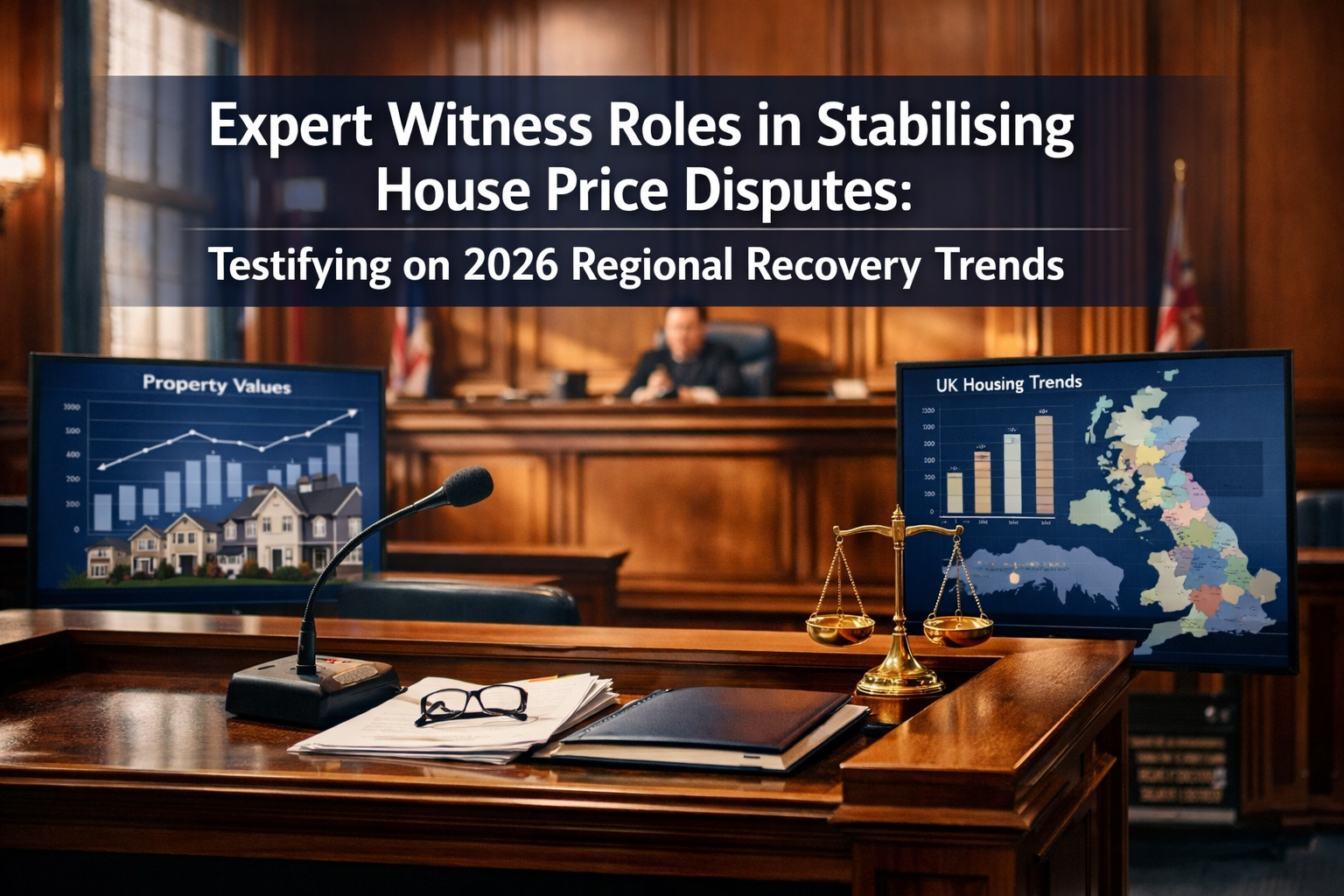
When property transactions collapse over valuation disagreements, or when divorce settlements hinge on accurate property assessments, the testimony of qualified expert witnesses becomes the cornerstone of justice. In 2026, as the UK housing market shows signs of stabilisation with national house price sentiment improving from -19% in October 2025 to -10% in January 2026[1], Expert Witness Roles in Stabilising House Price Disputes: Testifying on 2026 Regional Recovery Trends has never been more critical. These professionals navigate the complex intersection of property valuation, regional market variations, and legal proceedings to provide courts and arbitrators with the objective evidence needed to resolve contentious disputes.
The challenge facing expert witnesses today extends beyond simple property valuation. With significant regional variations in recovery patterns across the UK, experts must demonstrate not only technical competence but also an understanding of local market dynamics, economic indicators, and the legal framework governing their testimony. Recent case law has reinforced the importance of proper disclosure and scope management in expert testimony, with substantial financial consequences for procedural missteps.[2]
Key Takeaways
- National sentiment improvement from -19% to -10% between October 2025 and January 2026 creates complex valuation contexts requiring expert interpretation[1]
- Regional variations in recovery patterns demand location-specific expertise and market knowledge for credible testimony
- Strict disclosure requirements govern expert witness testimony scope, with recent cases demonstrating billion-dollar consequences for procedural violations[2]
- Dual-role capability in both courtroom litigation and alternative dispute resolution enhances expert witness value
- Evidence presentation standards require comprehensive documentation, comparative analysis, and adherence to RICS professional guidelines
Understanding Expert Witness Roles in Stabilising House Price Disputes: Testifying on 2026 Regional Recovery Trends
The Evolving Landscape of Property Valuation Disputes
Property disputes in 2026 have become increasingly sophisticated, reflecting the complexity of modern real estate markets. Expert witnesses specialising in property valuation serve multiple functions within legal proceedings. They provide independent, objective assessments of property values, explain market conditions to judges and juries unfamiliar with technical real estate concepts, and offer opinions on whether specific valuations align with professional standards.
The stabilisation of house prices nationally masks significant regional disparities. While the overall sentiment has improved substantially, certain regions experience robust recovery while others lag behind. This creates fertile ground for disputes when parties hold different expectations about property values based on conflicting regional data.
Expert witnesses must understand these nuances thoroughly. Their role extends beyond simple appraisal work to include:
- 📊 Market analysis interpretation – translating complex data into comprehensible testimony
- 🏘️ Regional trend expertise – explaining local market conditions and recovery patterns
- ⚖️ Professional standards compliance – ensuring all opinions align with RICS guidelines
- 📝 Documentation preparation – creating comprehensive reports that withstand cross-examination
- 🎯 Scope management – clearly defining the boundaries of expert opinion
For property professionals seeking to understand how expert building evaluation contributes to dispute resolution, the expert witness role represents the highest level of professional accountability.
Legal Framework Governing Expert Testimony in 2026
The legal landscape governing expert witness testimony has evolved significantly, with recent case law establishing stricter boundaries around disclosure requirements. A landmark California ruling from February 2026 demonstrated the severe consequences of scope violations, where an expert's undisclosed testimony about $1.98 billion in unrealized investment gains led to a $2 billion damages reduction in a real estate dispute.[2]
While this case originated in California, its principles resonate across jurisdictions, including the UK. The core requirements for expert witnesses include:
Disclosure Obligations:
- Complete transparency about all opinions to be offered
- Advance notice of testimony scope to opposing parties
- Written reports detailing methodology and conclusions
- Clear identification of assumptions and limitations
Professional Standards:
- Adherence to RICS valuation standards
- Independence from instructing parties
- Objective analysis free from advocacy
- Continuing professional development requirements
Duty to the Court:
- Primary obligation to tribunal rather than instructing party
- Honest assessment even when unfavorable to client
- Willingness to modify opinions based on new evidence
- Respectful engagement with opposing experts
These requirements ensure that expert testimony serves justice rather than partisan interests. Property professionals involved in boundary dispute resolution or other contentious matters must understand these obligations before accepting expert witness instructions.
Testifying on 2026 Regional Recovery Trends: Market Analysis and Evidence Preparation
Interpreting National and Regional Market Data
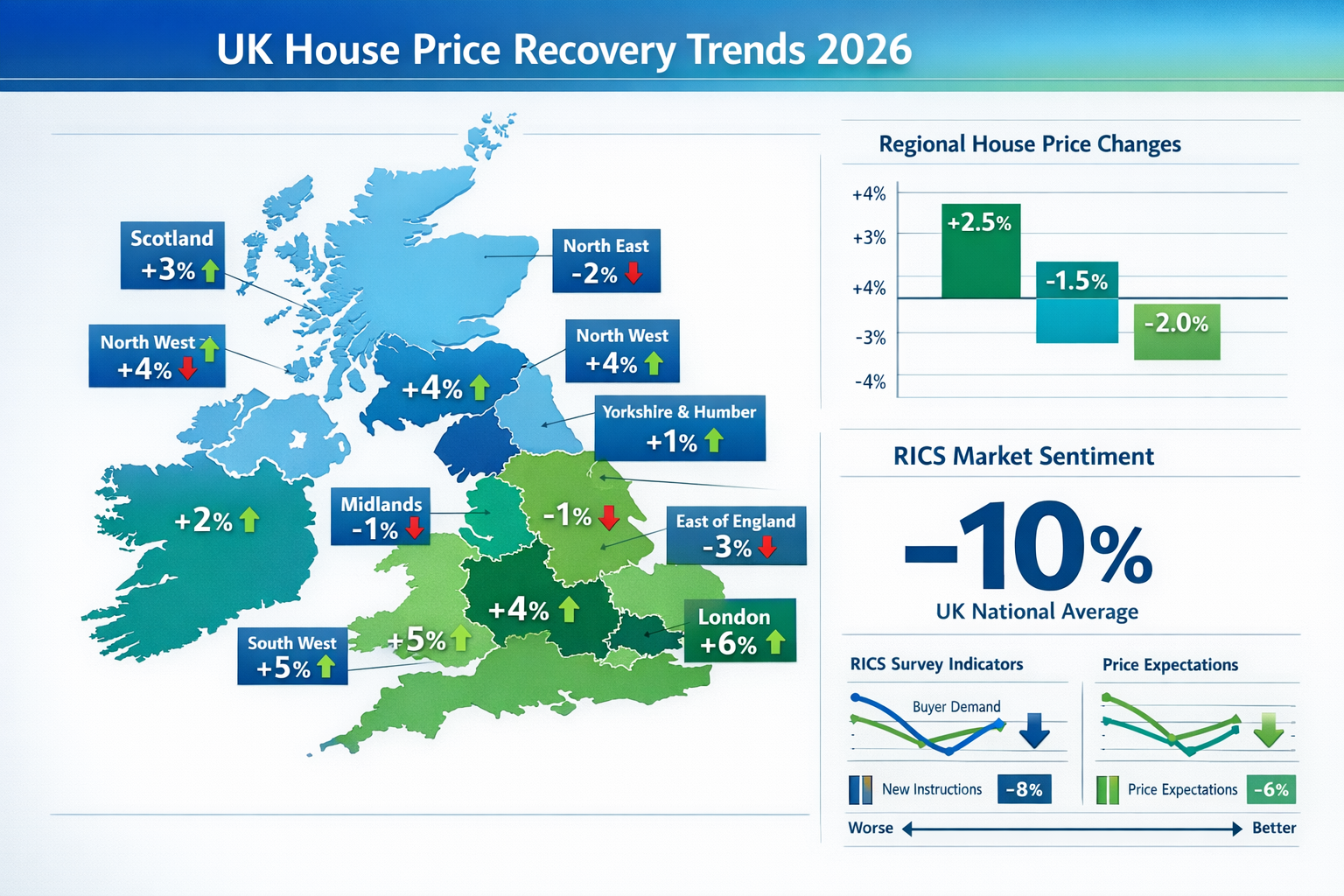
The improvement in national house price sentiment from -19% to -10% between October 2025 and January 2026 represents a 47% reduction in negative sentiment—a significant shift that expert witnesses must contextualize properly.[1] However, this national figure obscures important regional variations that frequently become the crux of valuation disputes.
Key Regional Patterns in 2026:
| Region | Recovery Status | Primary Drivers | Dispute Frequency |
|---|---|---|---|
| London | Moderate | Employment growth, international investment | High |
| South East | Strong | Commuter demand, infrastructure projects | Medium |
| North West | Variable | Urban regeneration, affordability factors | High |
| Midlands | Improving | Manufacturing recovery, connectivity | Medium |
| Scotland | Steady | Stable employment, policy support | Low |
Expert witnesses must master these regional distinctions to provide credible testimony. A valuation dispute in Manchester requires fundamentally different analysis than one in Kensington, despite both properties existing within the same national market context.
Building Comprehensive Evidence Packages
Effective expert testimony rests on thorough evidence preparation. The most persuasive expert witnesses in property disputes construct multi-layered evidence packages that include:
Comparative Market Analysis:
- Recent sales of genuinely comparable properties
- Adjustment calculations for property differences
- Time-based adjustments reflecting market movement
- Regional trend analysis supporting valuation conclusions
Technical Property Assessment:
- Detailed inspection findings
- Condition assessments affecting value
- Identification of defects or enhancements
- Building survey data integration
For professionals conducting RICS property valuations, these elements form the foundation of defensible expert opinions. The documentation must withstand rigorous cross-examination and potential challenges from opposing experts.
Market Context Documentation:
- Economic indicators affecting local property markets
- Planning policy impacts on values
- Infrastructure developments influencing desirability
- Demographic trends driving demand
Professional Methodology:
- Clear explanation of valuation approach selected
- Justification for methodology choices
- Compliance with RICS Valuation Standards
- Peer review where appropriate
The quality of evidence preparation often determines the outcome of property disputes. Courts and arbitrators give greater weight to opinions supported by comprehensive, well-organized documentation that demonstrates professional rigor.
Addressing Regional Variations in Recovery Patterns
One of the most challenging aspects of expert testimony in 2026 involves explaining regional recovery variations to legal decision-makers. The national improvement in sentiment does not translate uniformly across all markets, creating opportunities for conflicting expert opinions.
Factors Driving Regional Disparities:
🏭 Economic Base – Regions with diversified economies typically show more stable recovery patterns than those dependent on single industries
🚆 Infrastructure Investment – Areas benefiting from transport improvements or regeneration projects often outperform national trends
👥 Demographic Shifts – Migration patterns, particularly post-pandemic working arrangements, create localized demand variations
🏛️ Policy Environment – Regional planning policies, stamp duty variations, and local initiatives affect market dynamics
💰 Affordability Metrics – Price-to-income ratios influence recovery speed and sustainability
Expert witnesses must present this complexity clearly without overwhelming non-specialist audiences. Effective techniques include visual aids showing comparative trends, simplified explanations of economic drivers, and concrete examples from the specific locality in question.
For disputes involving properties requiring expert party wall advice or other technical considerations, regional context becomes even more important as local construction practices and regulatory environments vary significantly.
Expert Witness Roles in Stabilising House Price Disputes: Court vs. Arbitration Testimony
Courtroom Testimony: Procedures and Best Practices
Courtroom testimony represents the most formal setting for expert witness contributions to property disputes. The adversarial nature of litigation requires experts to present opinions with absolute confidence while remaining open to legitimate challenges.
Pre-Trial Responsibilities:
Before entering the courtroom, expert witnesses must complete several critical tasks:
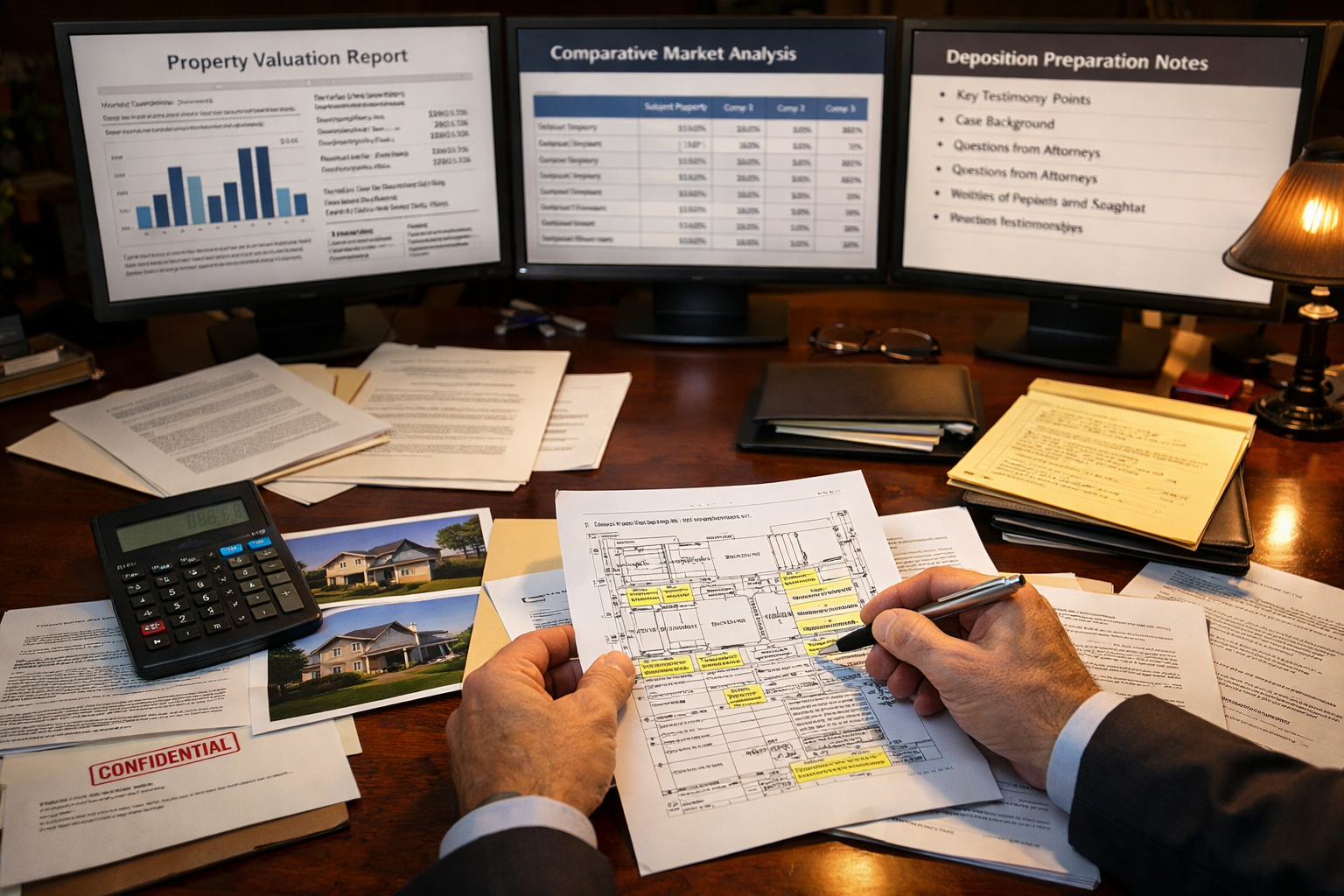
- Report Preparation – Comprehensive written reports become the foundation of testimony, requiring clear structure, professional language, and thorough documentation
- Conference with Legal Counsel – While maintaining independence, experts coordinate with instructing solicitors to understand case strategy and potential challenges
- Evidence Review – Thorough examination of all relevant documents, including opposing expert reports
- Deposition Preparation – In some jurisdictions, pre-trial depositions require experts to answer questions under oath
Courtroom Presentation Techniques:
Effective courtroom testimony requires specialized communication skills:
✅ Clarity over Complexity – Explaining technical concepts in accessible language without oversimplification
✅ Visual Aids – Using charts, photographs, and diagrams to illustrate key points
✅ Composure Under Cross-Examination – Maintaining professional demeanor when challenged aggressively
✅ Appropriate Certainty – Expressing appropriate confidence in firm opinions while acknowledging genuine uncertainties
✅ Responsive Answers – Addressing questions directly without unnecessary elaboration
The stakes in courtroom testimony are substantial. Property disputes often involve significant financial consequences, and expert testimony frequently proves decisive. Understanding how to renegotiate after a poor building survey result provides context for the types of disputes that may eventually require expert testimony.
Alternative Dispute Resolution: Arbitration and Mediation Contexts
Not all property disputes proceed to full litigation. Alternative dispute resolution (ADR) mechanisms, including arbitration and mediation, offer different contexts for expert witness involvement.
Arbitration Settings:
Arbitration combines formality with flexibility. Expert witnesses in arbitration proceedings experience:
- Streamlined Procedures – Less rigid evidentiary rules than courts
- Expert Arbitrators – Decision-makers often possess property expertise themselves
- Concurrent Evidence – "Hot-tubbing" where experts from both sides testify simultaneously
- Written Submissions – Greater emphasis on detailed written reports
Mediation Involvement:
In mediation, expert witnesses serve a different function:
- Joint Expert Appointments – Parties may agree to instruct a single expert
- Advisory Role – Providing technical input to facilitate settlement discussions
- Reality Testing – Helping parties understand strengths and weaknesses of their positions
- Valuation Ranges – Offering ranges rather than point estimates to enable negotiation
The choice between litigation and ADR affects expert witness strategy significantly. Understanding these distinctions helps property professionals determine the most appropriate dispute resolution mechanism for specific circumstances.
For matters involving boundary wall disputes or similar technical property issues, ADR often provides more efficient resolution while still benefiting from expert input.
Case Studies: Successful Expert Testimony in 2026 Disputes
Examining real-world applications illustrates how expert witnesses contribute to dispute resolution:
Case Study 1: Divorce Settlement Valuation Dispute
A high-value London property became contentious during divorce proceedings. The husband's expert valued the property at £3.2 million, citing local market weakness. The wife's expert assessed value at £3.8 million, emphasizing the property's unique features and recent comparable sales.
The appointed single joint expert conducted independent analysis, considering:
- Recent sales data showing £3.5 million average for comparable properties
- Adjustment for the subject property's superior condition
- Regional recovery trends indicating strengthening demand
- Professional inspection revealing undisclosed improvements
Outcome: The court accepted the joint expert's valuation of £3.65 million, splitting the difference but with clear justification based on evidence. Both parties accepted the decision as fair, avoiding costly appeals.
Case Study 2: Commercial Property Lease Dispute
A retail property lease dispute centered on market rent determination during rent review. The landlord's expert argued for £450,000 annual rent based on pre-pandemic comparable transactions. The tenant's expert contended £320,000 was appropriate given retail sector challenges and regional economic conditions.
The arbitrator heard detailed testimony about:
- Changing retail patterns post-pandemic
- Regional employment and consumer spending trends
- Comparable lease transactions adjusted for property differences
- Future market projections affecting rental values
Outcome: The arbitrator determined £380,000 as market rent, finding the tenant's expert more persuasive on regional economic factors but accepting the landlord's expert's comparable transaction analysis with appropriate adjustments.
Case Study 3: Development Land Valuation
A compulsory purchase dispute involved agricultural land designated for housing development. The landowner's expert valued the land at £8 million based on development potential. The acquiring authority's expert assessed value at £4.5 million, arguing planning uncertainties reduced development value.
Expert testimony addressed:
- Planning policy interpretation and likelihood of permission
- Comparable land sales with similar designations
- Development costs and profit margins
- Regional housing demand projections for 2026-2030
Outcome: The tribunal accepted a middle valuation of £6.2 million, finding both experts credible but giving greater weight to recent comparable transactions that supported higher values while acknowledging planning risks.
These cases demonstrate how expert witnesses navigate complex valuation issues, regional variations, and conflicting evidence to help decision-makers reach fair outcomes.
Professional Standards and Ethical Obligations for Property Expert Witnesses
RICS Requirements and Professional Conduct
The Royal Institution of Chartered Surveyors (RICS) establishes comprehensive standards governing expert witness work. Compliance with these requirements is non-negotiable for credible testimony.
RICS Practice Statement: Surveyors Acting as Expert Witnesses
This mandatory practice statement requires:
- Competence – Only accepting instructions within areas of genuine expertise
- Independence – Maintaining objectivity regardless of who pays fees
- Transparency – Disclosing any conflicts of interest or limitations
- Continuing Development – Maintaining current knowledge of market conditions and legal requirements
Key Ethical Principles:
🎯 Duty to Tribunal – The expert's primary obligation is to the court or arbitrator, not the instructing party
🎯 Objective Analysis – Opinions must be based on evidence and professional judgment, not desired outcomes
🎯 Complete Disclosure – All relevant information must be disclosed, including facts that may weaken the instructing party's case
🎯 Professional Courtesy – Respectful engagement with opposing experts and willingness to narrow areas of disagreement
For property professionals considering expert witness work, understanding these obligations is essential. The work differs fundamentally from advocacy or standard building surveyor services, requiring a judicial mindset rather than a client-service orientation.
Avoiding Common Pitfalls in Expert Testimony
Even experienced property professionals can encounter challenges when serving as expert witnesses. Common pitfalls include:
Scope Creep and Disclosure Violations
The 2026 California case involving $2 billion in damages reduction demonstrates the severe consequences of testifying beyond disclosed opinions.[2] Expert witnesses must:
- Clearly define the scope of their engagement in writing
- Provide comprehensive reports covering all intended testimony
- Notify opposing parties of any opinion changes before trial
- Decline to answer questions outside their expertise area
Advocacy Bias
The most damaging criticism an expert witness can face is accusation of bias. Maintaining objectivity requires:
- Conducting independent analysis before reviewing opposing expert reports
- Acknowledging weaknesses in one's own position
- Fairly considering alternative interpretations of evidence
- Avoiding language suggesting advocacy for a party
Insufficient Regional Knowledge
In disputes involving regional recovery trends, general market knowledge proves insufficient. Experts must demonstrate:
- Specific knowledge of the relevant local market
- Understanding of regional economic drivers
- Familiarity with local planning policies and infrastructure
- Awareness of neighborhood-specific factors affecting values
Inadequate Documentation
Weak documentation undermines even sound opinions. Best practices include:
- Maintaining detailed working papers supporting all conclusions
- Photographing properties and comparable sales
- Retaining all data sources and calculations
- Creating clear audit trails for valuation adjustments
Poor Communication Skills
Technical competence alone doesn't ensure effective testimony. Experts must develop:
- Ability to explain complex concepts simply
- Comfort with public speaking and cross-examination
- Skill in creating clear visual aids
- Patience when answering repetitive or hostile questions
Property professionals can enhance their expert witness capabilities by obtaining specialized training, observing experienced experts in action, and seeking mentorship from established practitioners in the field.
Preparing for Expert Witness Engagements: Practical Guidance
Initial Assessment and Engagement Acceptance
Not every request for expert witness services should be accepted. Careful initial assessment protects both the expert's reputation and the client's interests.
Questions to Ask Before Accepting Instructions:
- Does the matter fall within my specific area of expertise?
- Do I have sufficient knowledge of the relevant regional market?
- Are there any conflicts of interest or prior relationships with parties?
- Can I commit adequate time to thorough analysis and potential testimony?
- Am I comfortable with the ethical obligations of expert witness work?
Engagement Letter Essentials:
Clear engagement terms prevent misunderstandings:
- Scope of work and specific questions to be addressed
- Fee arrangements and payment terms
- Timeline for report delivery and potential testimony
- Confirmation of independence and duty to tribunal
- Limitations on expert's role and opinions
For property professionals familiar with standard surveying instructions, expert witness engagements require more detailed documentation and clearer boundaries. Understanding how RICS surveys help negotiate property prices provides context for the valuation work that may later become disputed.
Research and Analysis Methodology
Thorough research forms the foundation of credible expert testimony. Systematic methodology ensures comprehensive analysis:
Stage 1: Information Gathering
- Reviewing all case documents and pleadings
- Inspecting subject property thoroughly
- Researching comparable transactions
- Analyzing regional market data
- Identifying relevant planning and regulatory factors
Stage 2: Market Analysis
- Collecting regional economic indicators
- Reviewing RICS market surveys and sentiment data
- Analyzing price trends and transaction volumes
- Assessing supply and demand dynamics
- Evaluating future market projections
Stage 3: Valuation Analysis
- Selecting appropriate valuation methodology
- Identifying and analyzing comparable evidence
- Making necessary adjustments for differences
- Calculating valuation conclusions
- Testing conclusions against alternative approaches
Stage 4: Opinion Formation
- Synthesizing all evidence into coherent opinions
- Identifying areas of certainty and uncertainty
- Considering alternative interpretations
- Formulating clear, defensible conclusions
- Preparing for potential challenges
This systematic approach ensures that opinions rest on solid foundations and can withstand rigorous examination.
Report Writing and Documentation Standards
The expert witness report serves as the primary vehicle for communicating opinions. High-quality reports share common characteristics:
Essential Report Components:
- Executive Summary – Concise overview of key opinions and conclusions
- Instructions and Scope – Clear statement of questions addressed
- Expert Qualifications – Credentials establishing expertise
- Property Description – Detailed description of subject property
- Methodology – Explanation of approach and standards applied
- Market Analysis – Regional trends and relevant market context
- Comparable Evidence – Detailed analysis of comparable transactions
- Valuation Conclusions – Clear statement of opinions with supporting rationale
- Assumptions and Limitations – Explicit statement of any qualifications
- Declaration of Truth – Confirmation of independence and duty to tribunal
Writing Style Guidelines:
- Use clear, professional language accessible to non-specialists
- Structure content logically with clear headings and subheadings
- Include visual aids (photographs, maps, charts) to illustrate key points
- Cite all data sources and reference materials
- Avoid advocacy language or partisan tone
- Proofread carefully for errors that undermine credibility
The report must stand alone as a complete explanation of the expert's opinions, as decision-makers may review it without hearing oral testimony.
Testimony Preparation and Delivery
Even the most thorough analysis can be undermined by poor testimony delivery. Effective preparation includes:
Pre-Testimony Preparation:
- Reviewing all case materials and one's own report thoroughly
- Anticipating likely cross-examination questions
- Preparing clear explanations of complex technical points
- Creating or refining visual aids for testimony
- Conducting mock cross-examination with legal counsel
Courtroom Demeanor:
- Professional appearance and dress
- Confident but not arrogant bearing
- Direct eye contact with questioners and decision-makers
- Measured speech at appropriate pace
- Composure under aggressive questioning
Effective Answer Techniques:
✅ Listen Carefully – Ensure you understand questions before answering
✅ Answer Directly – Address the specific question asked without unnecessary elaboration
✅ Admit Limitations – Acknowledge when something falls outside your expertise or when you're uncertain
✅ Use Plain Language – Avoid unnecessary jargon while maintaining technical accuracy
✅ Refer to Evidence – Support opinions by referencing specific evidence in your report
✅ Stay Calm – Maintain professional composure even when challenged aggressively
Cross-Examination Strategies:
Cross-examination aims to undermine expert credibility or opinions. Effective responses include:
- Maintaining consistency with written report
- Acknowledging fair points made by opposing counsel
- Distinguishing between minor concessions and core opinions
- Avoiding defensive reactions to aggressive questioning
- Seeking clarification when questions are ambiguous
Property professionals transitioning from standard surveying work to expert witness roles often find testimony the most challenging aspect. Practice and experience build confidence and effectiveness over time.
Future Trends in Expert Witness Roles for Property Disputes
Technological Advancements in Evidence Presentation
The landscape of expert testimony continues evolving with technological advancement. In 2026 and beyond, expert witnesses increasingly leverage:
Digital Evidence Tools:
- Interactive 3D property models for courtroom presentation
- Real-time market data visualization
- Comparative analysis software demonstrating valuation adjustments
- Virtual site visits for remote proceedings
- Blockchain-verified transaction records
Enhanced Communication Methods:
- Remote testimony via high-quality video conferencing
- Digital exhibit sharing during testimony
- Augmented reality property demonstrations
- Cloud-based evidence repositories accessible during proceedings
These technologies enhance clarity and persuasiveness but require expert witnesses to develop new technical skills while maintaining focus on substantive analysis.
Increasing Complexity of Property Disputes
Trust and estate litigation in 2026 increasingly involves complex financial instruments and cross-border asset management, suggesting expert testimony requirements are expanding in complexity.[3] Property disputes reflect similar trends:
Emerging Dispute Categories:
- Cryptocurrency-funded property transactions
- International investment property portfolios
- Climate change impacts on property values
- Post-pandemic commercial property repurposing
- Build-to-rent portfolio valuations
- PropTech platform disputes
Expert witnesses must continuously expand their knowledge to address these evolving dispute types while maintaining core valuation competencies.
Professional Development and Specialization
The growing complexity of property disputes drives increased specialization among expert witnesses. Future trends include:
Niche Expertise Areas:
- Regional market specialists (e.g., Northern housing markets, London luxury sector)
- Property type specialists (e.g., student accommodation, care homes)
- Methodology specialists (e.g., residual valuation, discounted cash flow)
- Regulatory specialists (e.g., compulsory purchase, leasehold reform)
Enhanced Training Requirements:
- Specialized expert witness certification programs
- Continuing professional development in testimony skills
- Cross-examination training and simulation
- Ethics and professional responsibility courses
Property professionals considering expert witness work should invest in specialized training beyond standard RICS qualifications to build credibility and effectiveness.
Conclusion
Expert Witness Roles in Stabilising House Price Disputes: Testifying on 2026 Regional Recovery Trends represents a critical function within the UK property sector. As national house price sentiment improves but regional variations persist, the need for qualified, independent experts to assist courts and arbitrators in resolving valuation disputes has never been greater.
The role demands a unique combination of technical expertise, regional market knowledge, professional integrity, and communication skills. Expert witnesses must navigate complex legal requirements, maintain strict independence, and present sophisticated analysis in accessible formats. The consequences of expert testimony—both positive and negative—can reach into millions of pounds, making the responsibility substantial.
For property professionals considering expert witness work, the path forward involves:
Immediate Actions:
- Assess your qualifications and expertise honestly against potential engagement requirements
- Obtain specialized training in expert witness procedures and testimony skills
- Develop deep knowledge of specific regional markets where you can offer genuine expertise
- Build relationships with legal professionals who instruct expert witnesses
- Study recent case law and professional standards governing expert testimony
Ongoing Development:
- Maintain current knowledge of market conditions and regional trends
- Participate in continuing professional development focused on expert witness skills
- Observe experienced experts in courtroom and arbitration settings
- Build a portfolio of successful engagements demonstrating credibility
- Stay informed about technological and procedural developments affecting expert testimony
Professional Standards:
- Always prioritize duty to tribunal over client interests
- Maintain meticulous documentation supporting all opinions
- Decline instructions outside your genuine expertise area
- Disclose any conflicts or limitations promptly
- Engage respectfully with opposing experts and legal professionals
The stabilization of house prices nationally, combined with persistent regional variations, ensures continued demand for expert witnesses who can navigate these complexities with professional competence and integrity. Those who develop the necessary skills and maintain the highest professional standards will find expert witness work both professionally rewarding and intellectually stimulating.
Whether disputes involve average price reduction after survey negotiations that escalate to litigation, boundary disputes requiring technical resolution, or complex commercial property valuations, expert witnesses provide the objective analysis essential for fair outcomes.
The future of property dispute resolution will increasingly rely on experts who combine traditional valuation skills with regional market expertise, technological proficiency, and exceptional communication abilities. By meeting these evolving requirements, property professionals can contribute meaningfully to justice while advancing their careers in this specialized field.
References
[1] Expert Witness Strategies For Northern Housing Boom Disputes Leveraging 2026 Rics Data In Courtroom Valuations – https://nottinghillsurveyors.com/blog/expert-witness-strategies-for-northern-housing-boom-disputes-leveraging-2026-rics-data-in-courtroom-valuations
[2] Expertwitnessdisclosure 022626 – http://www.metnews.com/articles/2026/expertwitnessdisclosure_022626.htm
[3] How Expert Testimony Strengthens Trust And Estate Litigation Cases In 2026 – https://www.criminaldefenselawcenterwestmichigan.com/how-expert-testimony-strengthens-trust-and-estate-litigation-cases-in-2026/