


The UK property market experienced an unprecedented surge in early 2026, with buyer demand skyrocketing by 57% in the two weeks following Christmas compared to the fortnight before the holiday season[1][2]. This dramatic shift, coupled with a record-breaking 2.8% monthly price increase in January 2026, has created a perfect storm of valuation disputes requiring expert witness testimony. As property prices reached an average of £368,031[1][2], the uneven distribution of price growth across regions and property types has thrust chartered surveyors and valuation experts into courtrooms with increasing frequency. Understanding the Expert Witness Roles in Rightmove's 57% Buyer Demand Surge: Handling 2026 Valuation Challenges has become essential for professionals navigating this volatile market landscape.
Key Takeaways
✅ Record demand surge: Buyer interest jumped 57% post-Christmas 2026, creating unprecedented valuation complexity and dispute potential across UK property markets[1][2]
✅ Expert witness necessity: RICS-qualified surveyors must provide credible testimony on volatile valuations, navigating between January's record 2.8% price spike and February's market stabilization[1][4]
✅ Common pitfall awareness: Valuation disputes frequently arise from regional price disparities, mortgage lending restrictions, and conflicting assessment methodologies during rapid market shifts
✅ Testimony best practices: Successful expert witnesses combine technical RICS Red Book compliance with clear communication, demonstrable independence, and robust documentation of methodology
✅ 2026 market context: With property stock at an 11-year high and mortgage rates at September 2022 lows, expert witnesses must contextualize valuations within broader economic indicators[1][4]
Understanding the 2026 Property Market Surge and Its Valuation Implications
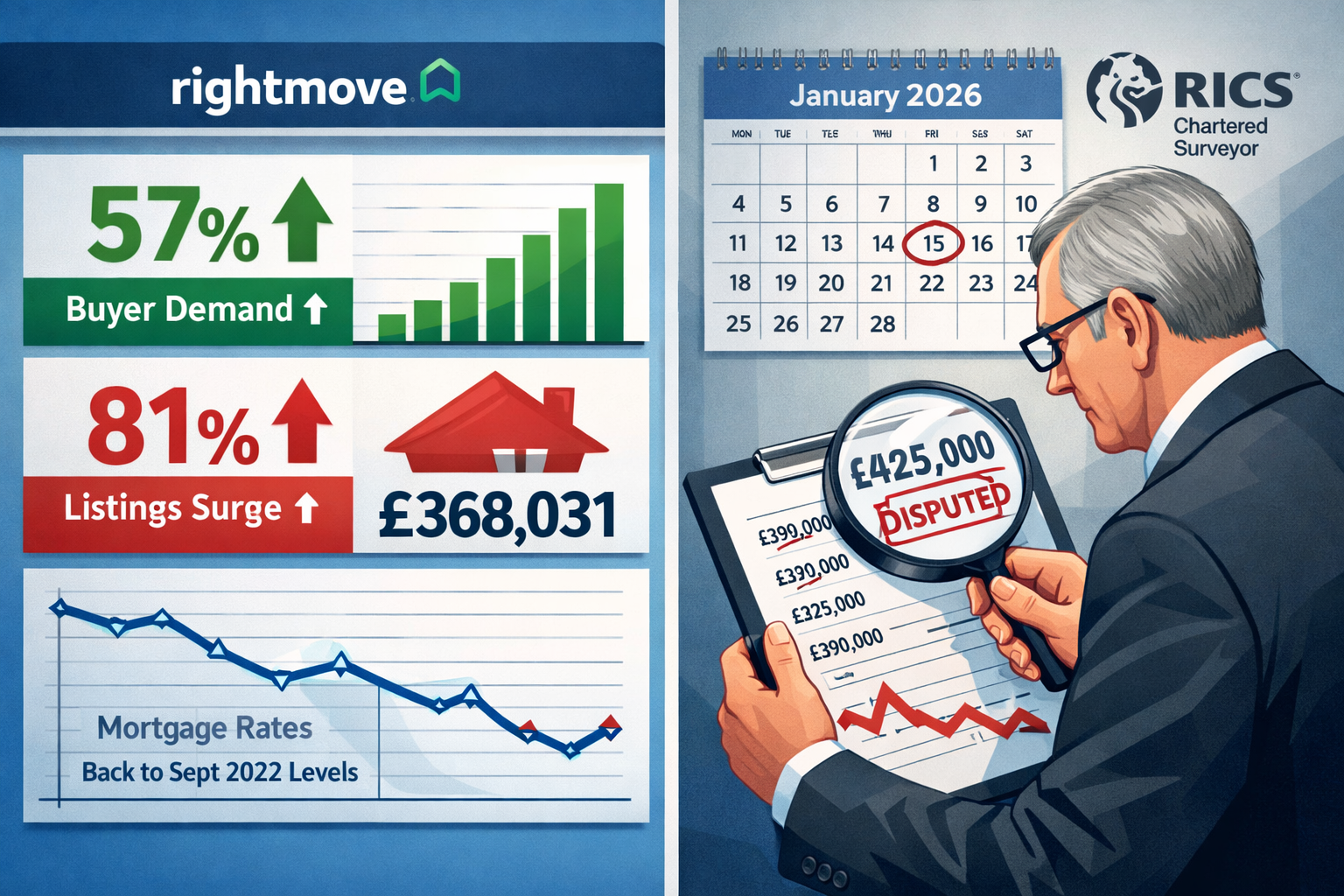
The early 2026 property market experienced a remarkable transformation that caught many industry professionals off guard. Rightmove recorded its busiest Boxing Day ever for platform visits[1][2], signaling a fundamental shift in buyer behavior and market dynamics. This unprecedented activity wasn't merely a seasonal blip—it represented a genuine market acceleration driven by multiple converging factors.
The Numbers Behind the Surge
The statistics paint a compelling picture of market intensity:
| Metric | Change | Period | Impact |
|---|---|---|---|
| Buyer Demand | +57% | Post-Christmas vs Pre-Christmas | Highest recorded surge[1][2] |
| New Listings | +81% | Same period | Supply response to demand[1][2] |
| January Price Increase | +2.8% | Monthly | Record for January[1][2] |
| Average Asking Price | £368,031 | January 2026 | New market peak[1][2] |
| Available Stock | 11-year high | February 2026 | Increased choice[4] |
The surge was particularly notable because it followed a period of relative market caution. Average two-year fixed mortgage rates had fallen to their lowest level since September 2022[1], making property purchases more financially accessible to a broader range of buyers. Additionally, average earnings rose 4.7% year-on-year[4], outpacing property price growth over the preceding three years and improving affordability ratios.
Why This Surge Creates Valuation Challenges
The rapid price acceleration created several valuation complications that frequently lead to disputes:
🏘️ Regional disparity: Not all areas experienced the 2.8% increase uniformly, creating confusion about appropriate comparable properties
📊 Temporal volatility: Properties valued in December 2025 versus January 2026 showed significant discrepancies, raising questions about valuation dates
💰 Lender conservatism: Mortgage providers remained cautious despite falling rates, often commissioning valuations that conflicted with asking prices
🔍 Methodology conflicts: Different valuation approaches (comparative, investment, residual) produced varying results in a rapidly moving market
For professionals seeking to understand the fundamentals of property assessment during volatile periods, our guide on homebuyers reports and building surveys provides essential context on choosing appropriate valuation methodologies.
The February Stabilization
Interestingly, by February 2026, the market had already begun to stabilize. Prices remained level with February 2025[4], showing no additional monthly increase after January's spike. This rapid stabilization created its own challenges for expert witnesses, who needed to explain why valuations conducted in January might differ significantly from those completed just weeks later in February.
The stabilization was partly driven by the substantial increase in available properties. With the number of homes for sale reaching an 11-year high[4], buyers gained more negotiating power, and the frenzied competition that characterized January began to moderate. Rightmove's forecast suggested asking prices would rise approximately 2% by the end of 2026[3], indicating expectations of modest growth rather than continued acceleration.
Expert Witness Roles in Rightmove's 57% Buyer Demand Surge: Navigating RICS Standards in Court
When valuation disputes arising from the 2026 market surge reach litigation, expert witnesses play a crucial role in helping courts understand complex property valuation principles. The Royal Institution of Chartered Surveyors (RICS) provides the professional framework within which these experts must operate, and adherence to RICS standards becomes paramount in establishing credibility.
The Core Responsibilities of Valuation Expert Witnesses
Expert witnesses in property valuation disputes carry distinct responsibilities that differ from their typical professional roles:
Primary duty to the court: Unlike standard surveying work where the client is the primary stakeholder, expert witnesses owe their primary duty to the court, not to the party instructing them. This fundamental principle requires complete objectivity, even when it may disadvantage the instructing party.
RICS Red Book compliance: All valuations presented as expert evidence must comply with the RICS Valuation – Global Standards (the "Red Book"). For those requiring formal valuations, understanding when you need a Red Book valuation becomes essential, particularly in litigation contexts.
Transparent methodology: Expert witnesses must clearly articulate their valuation methodology, including:
- Selection criteria for comparable properties
- Adjustments made for differences between comparables and subject property
- Market conditions analysis at the relevant valuation date
- Assumptions and special assumptions applied
- Limitations of the valuation approach
Challenges Specific to the 2026 Market Surge
The unique characteristics of the 2026 demand surge created specific challenges for expert witnesses:
1. Establishing the Correct Valuation Date
With prices increasing 2.8% in a single month[1][2], the precise valuation date became critically important. Expert witnesses needed to demonstrate:
- Market conditions on the specific valuation date
- How rapidly conditions were changing week-to-week
- Whether the valuation date fell during the surge or stabilization period
- Impact of market momentum on buyer behavior at that specific time
2. Selecting Appropriate Comparables
The 57% demand increase[1][2] meant that properties sold in November or December 2025 might not accurately reflect January 2026 values. Expert witnesses faced the challenge of:
- Finding sufficient comparable transactions from the relevant period
- Making appropriate adjustments for time differences
- Explaining why older comparables might be unreliable
- Balancing asking prices versus achieved prices during high-demand periods
3. Accounting for Regional Variations
While Rightmove reported national averages, the surge affected different regions and property types unevenly. Expert witnesses needed to:
- Demonstrate local market knowledge beyond national statistics
- Explain micro-market variations within broader trends
- Account for property-specific factors that might amplify or dampen surge effects
- Consider local supply constraints or surpluses
RICS Practice Statement and Guidance Note Requirements
RICS provides specific guidance for members acting as expert witnesses through its Practice Statement and Guidance Note on Surveyors Acting as Expert Witnesses. Key requirements include:
📋 Written terms of engagement: Clearly defining the scope, basis of valuation, and expert's role
🎓 Competence requirement: Only accepting instructions within areas of genuine expertise and local market knowledge
📝 Report structure: Following prescribed formats that ensure transparency and completeness
⚖️ Independence declarations: Explicitly stating any relationships or interests that might affect objectivity
🔄 Ongoing duty: Updating the court if opinions change based on new information
For professionals involved in expert building evaluation, understanding these standards ensures that technical assessments translate effectively into admissible expert evidence.
The Expert Witness Report Structure
A properly structured expert witness report for a 2026 valuation dispute typically includes:
1. Executive Summary: Concise overview of the property, valuation figure, and key conclusions
2. Instructions: Clear statement of what the expert was asked to determine
3. Property Description: Detailed physical description and location analysis
4. Market Context: Analysis of the 2026 surge, including relevant Rightmove data and local market conditions
5. Valuation Methodology: Explanation of approach, including why it's appropriate for this property and market conditions
6. Comparable Evidence: Detailed analysis of comparable transactions with adjustments explained
7. Valuation Conclusion: Final opinion with range if appropriate
8. Declaration: Statement of compliance with RICS standards and duty to court
9. Appendices: Supporting documentation, photographs, market data, calculations
Common Pitfalls in 2026 Valuation Disputes and Winning Testimony Techniques
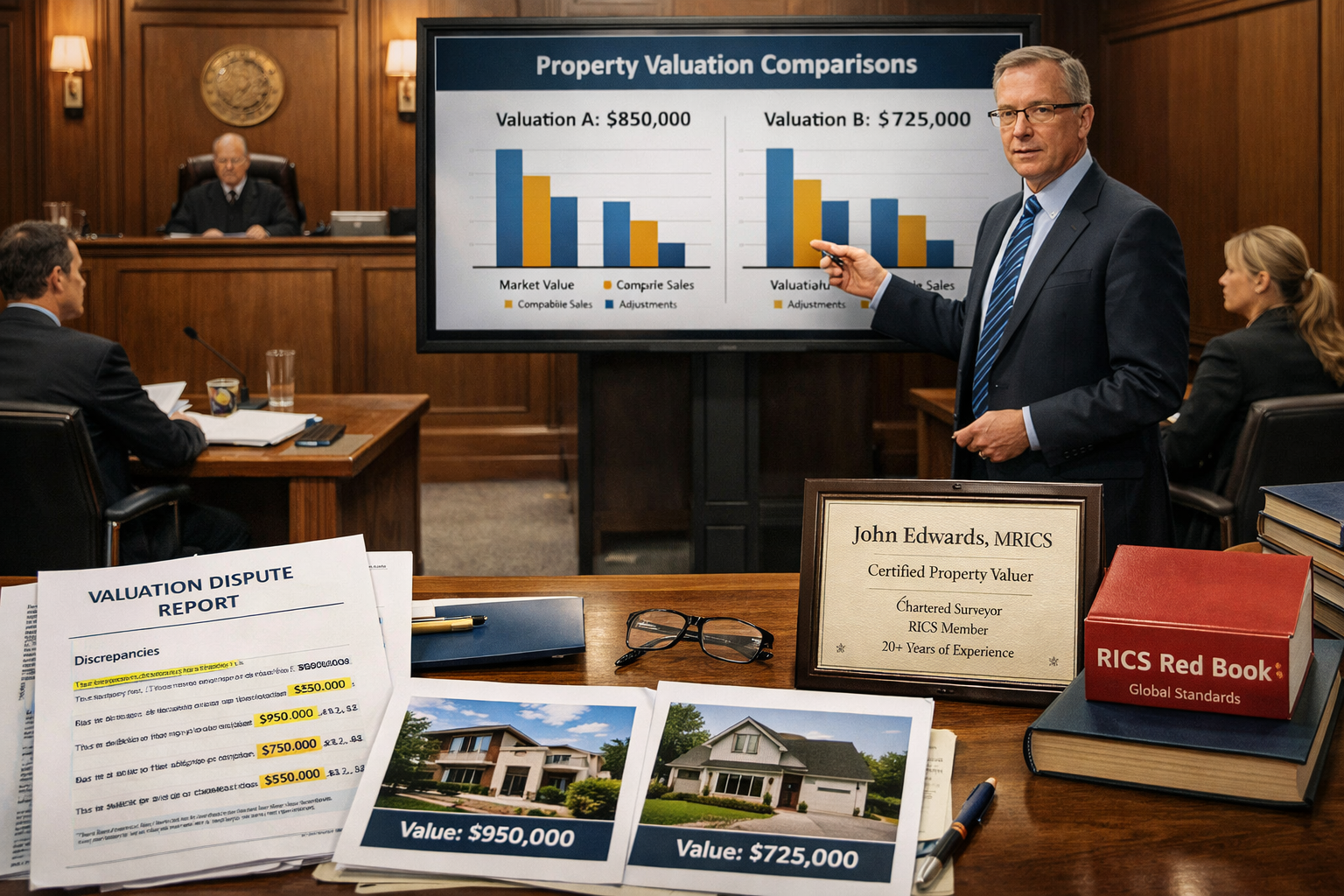
The volatile 2026 market created numerous opportunities for valuation errors and disputes. Understanding these common pitfalls helps expert witnesses provide more robust testimony and assists property professionals in avoiding disputes altogether.
Pitfall #1: Over-Reliance on Automated Valuation Models (AVMs)
During the rapid January surge, many parties relied on Automated Valuation Models that couldn't adequately account for the unprecedented 57% demand increase[1][2]. AVMs typically use historical transaction data and statistical modeling, making them inherently backward-looking.
Why this creates disputes:
- AVMs couldn't capture the real-time market shift
- Algorithm lag meant valuations were consistently understated in January
- Different AVM providers produced wildly varying results
- Lenders and buyers received conflicting automated valuations
Winning testimony technique: Expert witnesses should clearly explain AVM limitations while acknowledging their place in the valuation toolkit. Demonstrate through specific examples how AVM outputs diverged from market reality during the surge period, then show how professional judgment and current comparable evidence provided more accurate valuations.
"Automated models are valuable tools, but they cannot replace professional judgment during periods of rapid market change. The 57% demand surge in January 2026 represented a market shift that no algorithm trained on historical data could accurately predict."
Pitfall #2: Ignoring the February Stabilization
Many disputes arose when parties conducted negotiations based on January peak prices, only to find the market had stabilized by February with no additional monthly increase[4]. This created situations where agreed purchase prices seemed inflated just weeks later.
Why this creates disputes:
- Buyers felt they overpaid based on a temporary spike
- Sellers believed they were entitled to January peak values
- Mortgage lenders reassessed valuations downward in February
- Completion dates crossing the January-February boundary created confusion
Winning testimony technique: Expert witnesses must contextualize the valuation within the complete market cycle. Present clear timeline evidence showing:
- The pre-Christmas baseline
- The January surge and peak
- The February stabilization
- Projected market trajectory for remainder of 2026 (approximately 2% annual growth)[3]
Use visual aids such as graphs showing the price trajectory to help judges and juries understand the temporal context. For properties requiring detailed structural assessment during this period, understanding building surveys ensures that condition factors are properly weighted against market timing issues.
Pitfall #3: Inadequate Adjustment Methodology for Comparables
The rapid market movement meant that even properties sold just weeks apart required significant time adjustments. Many valuers failed to adequately quantify these adjustments or explain their reasoning.
Why this creates disputes:
- Opposing experts used different time adjustment percentages
- Lack of transparency in how adjustments were calculated
- Insufficient explanation of why certain comparables were selected
- Failure to account for property-specific differences beyond timing
Winning testimony technique: Develop and clearly present a robust adjustment framework:
Time Adjustment Framework Example:
Comparable Property A: Sold 15 December 2025
Subject Property Valuation Date: 15 January 2026
Market Movement: +2.8% over period[1][2]
Time Adjustment: +2.8% applied to Comparable A
Adjusted Comparable Value: £350,000 × 1.028 = £359,800
Then apply additional adjustments for:
- Size differences (£/sqm methodology)
- Condition variations (quantified repair costs)
- Location micro-differences (evidence-based percentage adjustments)
- Specific features (garages, extensions, gardens)
Pitfall #4: Failing to Address Mortgage Lending Constraints
Despite falling mortgage rates to September 2022 levels[1], lenders remained cautious about loan-to-value ratios during the surge. This created situations where properties had genuine market values that exceeded what lenders would support.
Why this creates disputes:
- Market value versus mortgage lending value confusion
- Buyers unable to complete purchases at agreed prices
- Sellers claiming buyers' lenders were undervaluing
- Different lenders producing different valuation figures
Winning testimony technique: Clearly distinguish between different valuation bases:
Market Value: The estimated amount for which an asset should exchange on the valuation date between a willing buyer and willing seller in an arm's length transaction
Mortgage Lending Value: A conservative assessment of future marketability, typically applying additional caution
Expert witnesses should explain that lender caution doesn't invalidate higher market valuations—it simply reflects different purposes and risk tolerances. Present evidence of actual achieved prices for comparable properties to demonstrate genuine market value, while acknowledging lender conservatism as a separate consideration.
Pitfall #5: Insufficient Local Market Knowledge
National statistics showing a 57% demand increase[1][2] masked significant regional variations. Expert witnesses lacking detailed local knowledge often produced unreliable opinions.
Why this creates disputes:
- National trends don't reflect micro-market realities
- Some areas saw much larger increases; others remained flat
- Property type variations (flats versus houses, new-build versus period properties)
- Local supply constraints or development impacts
Winning testimony technique: Demonstrate comprehensive local market knowledge through:
📍 Specific local transaction evidence: Present detailed analysis of transactions within a defined radius (typically 0.5-1 mile for urban areas)
📊 Local agent intelligence: Reference discussions with active local estate agents about market conditions
🏘️ Neighborhood-specific factors: Explain local amenities, transport links, school catchments, and development plans
📈 Historical local trends: Show how the local market performed relative to regional and national trends
For expert witnesses working across different areas, familiarity with local market dynamics is essential—whether dealing with properties in established areas or emerging markets.
Case Study: Successful Expert Testimony in a January 2026 Dispute
Background: A buyer agreed to purchase a property for £385,000 in early January 2026 during the peak of the surge. By late February, when the mortgage valuation was conducted, the lender valued the property at £365,000, creating a £20,000 shortfall. The buyer sued for return of their deposit, claiming misrepresentation.
Expert Witness Approach:
-
Established clear timeline: Demonstrated that the agreed price was reasonable based on market conditions in early January when comparable properties were achieving similar prices
-
Explained market evolution: Used Rightmove data to show the 2.8% January increase[1][2] followed by February stabilization[4], contextualizing both the purchase price and later valuation
-
Provided range valuation: Concluded that £365,000-£385,000 represented a reasonable range, with the variation explained by valuation date and purpose differences
-
Demonstrated methodology transparency: Presented detailed comparable analysis with clear adjustments, allowing the court to understand the reasoning
-
Maintained objectivity: Acknowledged valid points from both sides while providing balanced professional opinion
Outcome: The court found that both valuations were reasonable for their respective dates and purposes. The parties settled with a modest price reduction reflecting the market stabilization, avoiding the binary outcome of full contract enforcement or complete rescission.
Winning Cross-Examination Techniques for Expert Witnesses
When facing cross-examination in valuation disputes, expert witnesses should:
✅ Acknowledge limitations: Freely admit what you don't know or where uncertainty exists—it enhances credibility
✅ Explain, don't argue: Your role is to educate the court, not to win points against opposing counsel
✅ Use plain language: Avoid unnecessary jargon; when technical terms are necessary, define them clearly
✅ Reference your report: Base answers on your written report to maintain consistency
✅ Don't speculate: If asked about matters outside your expertise or evidence base, say so clearly
✅ Maintain composure: Remain professional even if opposing counsel becomes aggressive
✅ Clarify questions: If a question is unclear or contains multiple parts, ask for clarification before answering
For professionals seeking to develop comprehensive valuation skills, understanding various surveyor services provides the technical foundation necessary for expert witness work.
Practical Guidance for Property Professionals Navigating 2026 Valuation Challenges
Beyond courtroom testimony, property professionals can take proactive steps to minimize valuation disputes and prepare for potential expert witness roles in the current market environment.
Documentation Best Practices During Volatile Markets
The 2026 surge demonstrated the critical importance of thorough documentation:
📸 Photographic evidence: Comprehensive property photographs dated and time-stamped, capturing condition and features
📋 Comparable property records: Maintain detailed files on comparable transactions, including:
- Full property details and photographs
- Actual sale prices and dates
- Marketing periods and price changes
- Condition notes and any special circumstances
- Source verification (Land Registry, estate agents, personal inspection)
📝 Market condition notes: Regular written assessments of local market conditions, demand levels, and price trends
💬 Communication records: Save emails, letters, and notes from conversations with estate agents, buyers, sellers, and lenders
🗓️ Timeline documentation: Clear records of key dates (instruction, inspection, comparable research, report delivery)
For those working with download house valuation forms, ensuring comprehensive data capture from the outset provides essential evidence if disputes later arise.
Building Expert Witness Credentials
Property professionals aspiring to expert witness work should:
Obtain relevant qualifications:
- RICS membership (ideally FRICS status)
- Specialist valuation qualifications
- Expert witness training courses
- CPD focused on litigation and court procedures
Develop niche expertise:
- Specialize in particular property types or geographic areas
- Build deep knowledge of specific valuation challenges
- Maintain awareness of relevant case law and precedents
Establish track record:
- Start with smaller disputes and tribunals
- Seek mentorship from experienced expert witnesses
- Join expert witness directories and professional panels
- Publish articles or speak at conferences on valuation topics
Maintain professional indemnity insurance:
- Ensure coverage extends to expert witness work
- Verify coverage limits are adequate for potential disputes
- Understand any exclusions or conditions
Understanding Different Dispute Resolution Forums
Valuation disputes arising from the 2026 surge may be resolved through various forums:
Negotiation and mediation: Most disputes settle without formal proceedings. Expert witnesses may provide informal opinions or participate in joint expert meetings to narrow issues.
Adjudication: Common in construction and development disputes, adjudication provides rapid decisions on valuation disagreements.
Arbitration: Private dispute resolution where expert witnesses present evidence to arbitrators rather than judges.
Court proceedings: County Court or High Court litigation for significant disputes, requiring full expert witness reports and testimony.
Tribunal proceedings: Specialized tribunals (such as the First-tier Tribunal for leasehold valuation disputes) have specific procedures and expertise. For those dealing with lease extension valuations, understanding tribunal procedures becomes particularly important.
Responding to the Rightmove Data in Professional Practice
The Rightmove statistics provide valuable market intelligence that professionals should incorporate into their practice:
Use as market context: The 57% demand increase[1][2] and other Rightmove data provide essential context for explaining market conditions to clients and courts.
Understand limitations: Rightmove data reflects asking prices and platform activity, not necessarily achieved prices or completed transactions. Expert witnesses must distinguish between these metrics.
Supplement with additional sources: Combine Rightmove data with:
- Land Registry price paid data (actual transaction prices)
- Mortgage lender indices (Halifax, Nationwide)
- Local authority planning and development data
- Estate agent market reports
- Economic indicators (employment, earnings, mortgage rates)
Monitor ongoing trends: The prediction of approximately 2% price growth for 2026[3] provides a baseline expectation, but professionals should track actual market performance against forecasts.
Preparing for Future Market Volatility
The 2026 surge won't be the last period of rapid market change. Property professionals should:
🔄 Develop flexible methodologies: Create valuation frameworks that can adapt to changing market conditions while maintaining RICS compliance
📊 Enhance data systems: Invest in robust comparable evidence databases and market intelligence tools
🎓 Continuous learning: Stay current with market trends, regulatory changes, and valuation best practices
🤝 Build professional networks: Maintain relationships with other valuers, estate agents, and market participants for intelligence sharing
⚖️ Understand legal context: Keep abreast of relevant case law and legal developments affecting property valuation
For professionals working with homebuyers surveys, integrating market volatility awareness into standard survey practice helps clients make informed decisions during uncertain periods.
Ethical Considerations in Expert Witness Work
The 2026 market surge tested professional ethics as pressure mounted to support particular valuation positions:
Resist client pressure: Expert witnesses must provide honest opinions even when they disadvantage the instructing party. The duty to the court overrides client loyalty.
Avoid advocacy: Unlike solicitors or barristers, expert witnesses must not advocate for a position. Present balanced analysis and let the court draw conclusions.
Disclose conflicts: Any relationship with parties, properties, or localities that might affect objectivity must be disclosed immediately.
Maintain independence: Avoid financial arrangements that create incentives to reach particular conclusions (such as success fees or contingent payments).
Respect confidentiality: While maintaining court duties, protect confidential information appropriately and only disclose what's necessary for the proceedings.
The Future Outlook: Expert Witness Roles Beyond the 2026 Surge
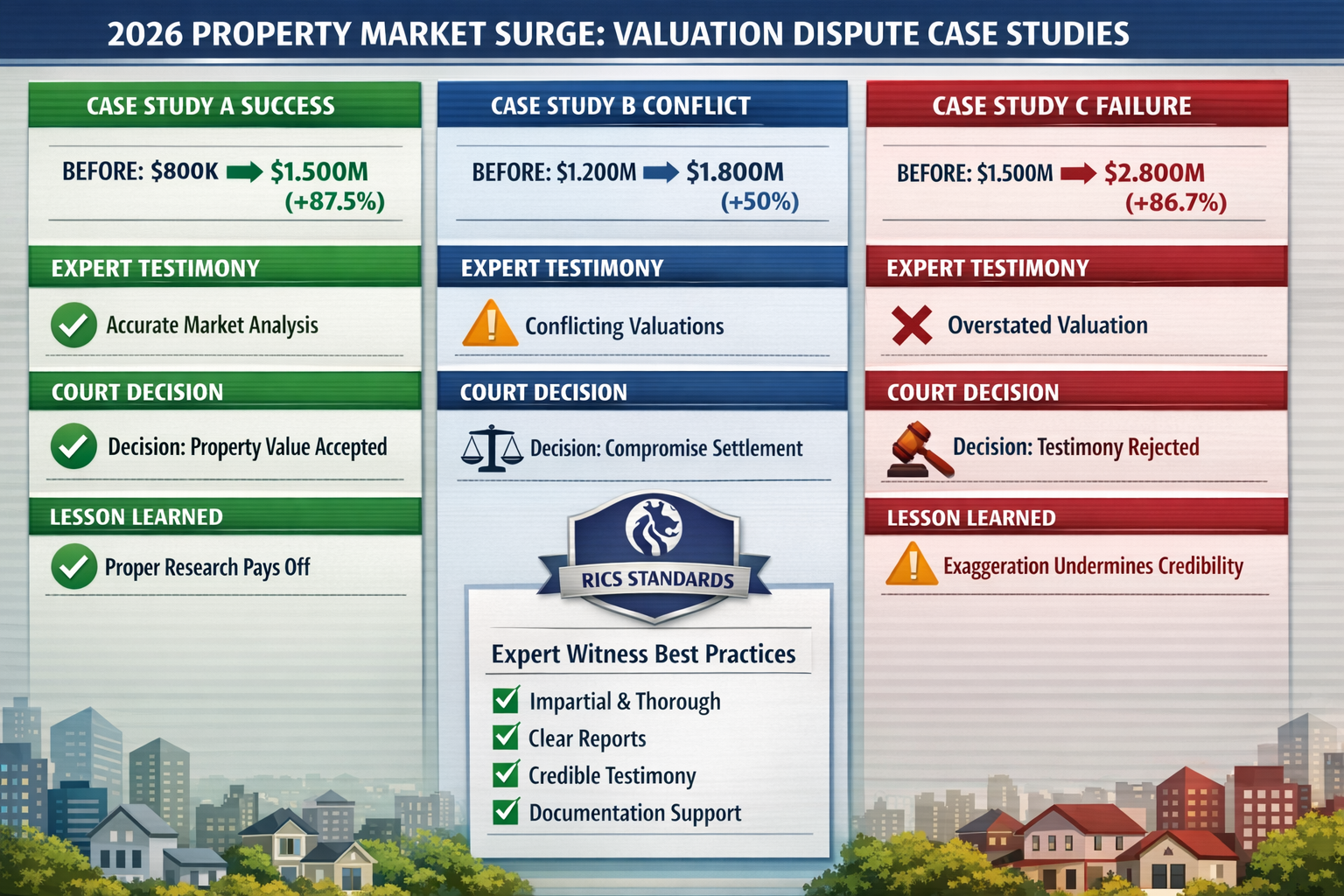
While the dramatic January 2026 surge has moderated, the lessons learned remain relevant for future market cycles and ongoing valuation challenges.
Long-Term Market Predictions and Their Implications
Rightmove's forecast of approximately 2% price growth for 2026[3] suggests a return to more moderate, sustainable market conditions. However, several factors will continue to create valuation challenges:
Interest rate uncertainty: Mortgage rates remain sensitive to Bank of England policy decisions and global economic conditions. Future rate changes will create valuation volatility.
Regional divergence: London and Southeast markets may perform differently from Northern regions, creating geographic valuation complexity.
Property type variations: Flats, houses, new-builds, and period properties will likely experience different demand patterns and price trajectories.
Economic factors: Employment levels, wage growth (currently at 4.7% year-on-year)[4], and consumer confidence will drive market conditions.
Regulatory changes: Potential reforms to leasehold, planning laws, or property taxation could significantly impact valuations.
Emerging Valuation Challenges
Expert witnesses will increasingly face new types of disputes:
🌱 Environmental and sustainability factors: EPC ratings, retrofit requirements, and climate risks are becoming material valuation considerations
🏗️ Cladding and building safety: Post-Grenfell regulations continue to affect flat valuations and create disputes
💻 Technology and data: Increasing sophistication of AVMs and big data analytics creates new methodology debates
🏡 Hybrid working impacts: Changing workplace patterns affect location premiums and property type preferences
📜 Leasehold reform: Ongoing legislative changes create uncertainty in leasehold valuations, particularly for lease extensions
Professional Development Priorities
To remain effective expert witnesses in evolving markets, professionals should prioritize:
Technical skills enhancement:
- Advanced statistical analysis and data interpretation
- Environmental and sustainability assessment
- Building pathology and defect diagnosis
- Financial modeling and investment appraisal
Communication skills development:
- Report writing clarity and structure
- Visual presentation of complex data
- Oral testimony and cross-examination techniques
- Plain language explanation of technical concepts
Market intelligence capabilities:
- Real-time market monitoring systems
- Predictive analytics and forecasting
- Micro-market analysis techniques
- Economic indicator interpretation
Regulatory knowledge:
- RICS standards updates and revisions
- Relevant legislation and case law
- Court procedure and evidence rules
- Professional conduct requirements
The Role of Technology in Future Expert Witness Work
Technology will increasingly support expert witness practice:
Digital evidence presentation: Interactive presentations, 3D property models, and dynamic comparable analysis tools will enhance courtroom testimony.
Blockchain and property records: Distributed ledger technology may provide more transparent and verifiable transaction histories.
AI-assisted analysis: Machine learning tools can help identify comparable properties and market trends, though professional judgment remains essential.
Virtual inspections: Remote property assessment technologies (developed during COVID-19) may supplement traditional physical inspections.
Data visualization: Sophisticated graphics and mapping tools help courts understand complex valuation evidence.
For professionals engaged in real estate appraisal, embracing these technological advances while maintaining traditional valuation principles creates competitive advantage.
Building Resilience for Future Market Volatility
The 2026 surge demonstrated that property markets can change rapidly and unpredictably. Expert witnesses should build resilience through:
✅ Diverse experience: Work across different property types, locations, and dispute types to develop adaptable skills
✅ Robust methodologies: Develop valuation frameworks that remain valid across different market conditions
✅ Professional networks: Maintain relationships with peers for knowledge sharing and professional support
✅ Continuous learning: Commit to ongoing professional development and market education
✅ Quality over quantity: Prioritize thorough, well-reasoned opinions over volume of instructions
✅ Reputation management: Build a track record of reliable, objective, well-supported expert opinions
Conclusion: Navigating Expert Witness Roles in an Evolving Property Market
The 57% buyer demand surge recorded by Rightmove in early 2026[1][2] created unprecedented valuation challenges that thrust expert witnesses into the spotlight. The subsequent record 2.8% monthly price increase in January[1][2], followed by rapid stabilization in February[4], demonstrated how quickly property markets can shift and how critical expert testimony becomes in resolving disputes arising from such volatility.
Expert Witness Roles in Rightmove's 57% Buyer Demand Surge: Handling 2026 Valuation Challenges requires a sophisticated understanding of RICS standards, robust valuation methodologies, clear communication skills, and unwavering professional ethics. The common pitfalls identified—over-reliance on automated valuations, ignoring market stabilization, inadequate comparable adjustments, failing to address lending constraints, and insufficient local knowledge—provide a roadmap for avoiding disputes and delivering compelling testimony when disputes are unavoidable.
Key Success Factors for Expert Witnesses
The most effective expert witnesses in 2026 valuation disputes demonstrated:
🎯 Technical excellence: Deep understanding of valuation principles and RICS Red Book requirements
📊 Market awareness: Comprehensive knowledge of the 2026 surge dynamics and local market conditions
💬 Communication clarity: Ability to explain complex concepts to legal professionals and judges
⚖️ Unwavering objectivity: Commitment to duty to the court above client interests
📋 Thorough documentation: Comprehensive evidence gathering and transparent methodology
🔍 Attention to detail: Precision in comparable analysis and adjustment calculations
Actionable Next Steps for Property Professionals
Whether you're a chartered surveyor seeking to develop expert witness capabilities or a property professional navigating the current market environment, consider these actionable steps:
Immediate actions:
- Review your documentation practices: Ensure you're capturing comprehensive evidence for all valuations, including photographs, comparable details, and market condition notes
- Update your market knowledge: Study the Rightmove data and other market indicators to understand current conditions in your operating areas
- Assess your RICS compliance: Review your valuation reports against Red Book requirements to ensure full compliance
- Identify knowledge gaps: Determine areas where your expertise needs development, whether technical skills, local market knowledge, or legal understanding
Medium-term development:
- Pursue relevant training: Enroll in expert witness courses, advanced valuation programs, or specialized property courses
- Build your comparable database: Develop comprehensive records of transactions in your areas of expertise
- Seek mentorship: Connect with experienced expert witnesses who can guide your development
- Enhance your professional profile: Write articles, speak at events, or join professional committees to build recognition
Long-term career building:
- Develop niche expertise: Specialize in particular property types, valuation challenges, or geographic areas where you can become a recognized authority
- Build a track record: Take on smaller expert witness instructions to develop experience and reputation
- Maintain continuous learning: Commit to ongoing professional development as markets, regulations, and best practices evolve
- Network strategically: Build relationships with solicitors, barristers, and other professionals who instruct expert witnesses
The 2026 property market surge has passed, but its lessons endure. The valuation disputes it generated have reinforced the critical importance of expert witnesses who combine technical excellence with clear communication and unwavering professional ethics. As property markets continue to evolve—whether through gradual growth, sudden surges, or unexpected corrections—the demand for credible, competent expert witnesses will remain strong.
For property professionals committed to excellence, developing expert witness capabilities represents both a professional responsibility and a career opportunity. By understanding the challenges revealed by the 2026 surge, learning from common pitfalls, and implementing best practices for testimony and documentation, surveyors and valuers can position themselves to serve the property market and the justice system effectively.
The future will undoubtedly bring new market conditions, regulatory changes, and valuation challenges. Those who invest in developing robust methodologies, comprehensive market knowledge, and strong professional ethics will be best positioned to navigate these changes—whether as expert witnesses in courtrooms or as trusted advisors helping clients avoid disputes altogether.
For comprehensive support with property valuations, surveys, and expert assessments, consider consulting with experienced chartered surveyors who understand both the technical and legal dimensions of property valuation in volatile markets.
References
[1] avocadopropertyagents.co.uk – https://avocadopropertyagents.co.uk/blog/january-2026-rightmove-house-price-index/55058
[2] Rightmove Hpi 19 January Final – https://www.rightmove.co.uk/news/content/uploads/2026/01/Rightmove-HPI-19-January-Final.pdf
[3] Market Forecasts For 2026 Point To Stability Not A Surge – https://www.embracefs.co.uk/blog/market-forecasts-for-2026-point-to-stability-not-a-surge
[4] Rightmove Hpi 16 February Final 1 – https://www.rightmove.co.uk/news/content/uploads/2026/02/Rightmove-HPI-16-February-Final-1.pdf