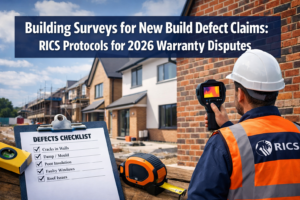

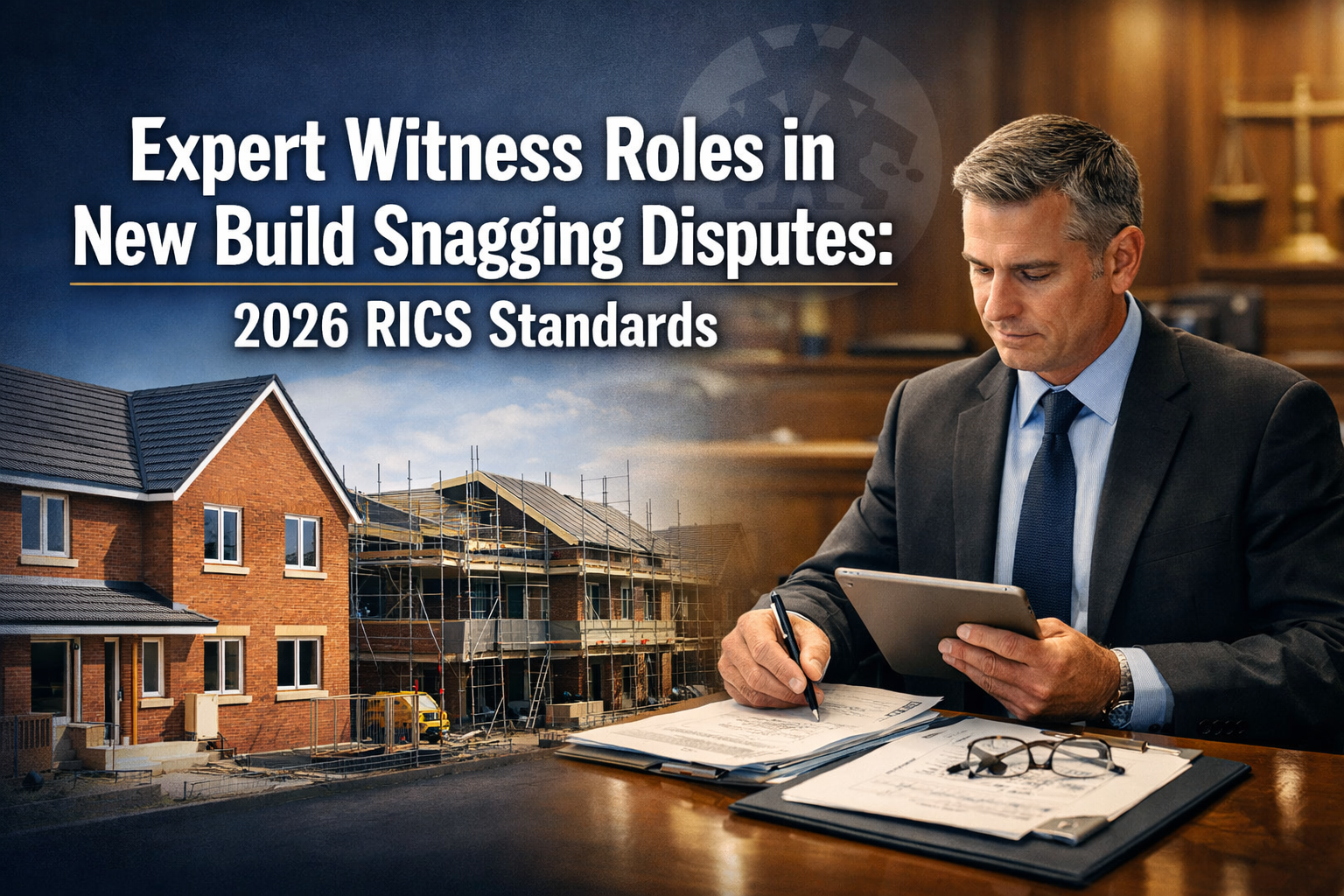
The surge in new build property purchases across the UK has brought an unwelcome companion: a dramatic increase in snagging disputes. As homebuyers discover defects ranging from cosmetic imperfections to structural failures, the role of expert witnesses in resolving these conflicts has never been more critical. With the 2026 RICS Home Survey Standard updates currently under review, surveyors acting as expert witnesses now have access to strengthened protocols that can robustly support snagging claims and provide courts with the technical clarity needed for fair resolutions. Understanding how Expert Witness Roles in New Build Snagging Disputes: Building Cases with 2026 RICS Home Survey Standard Updates intersect is essential for both property professionals and homeowners navigating this challenging landscape.
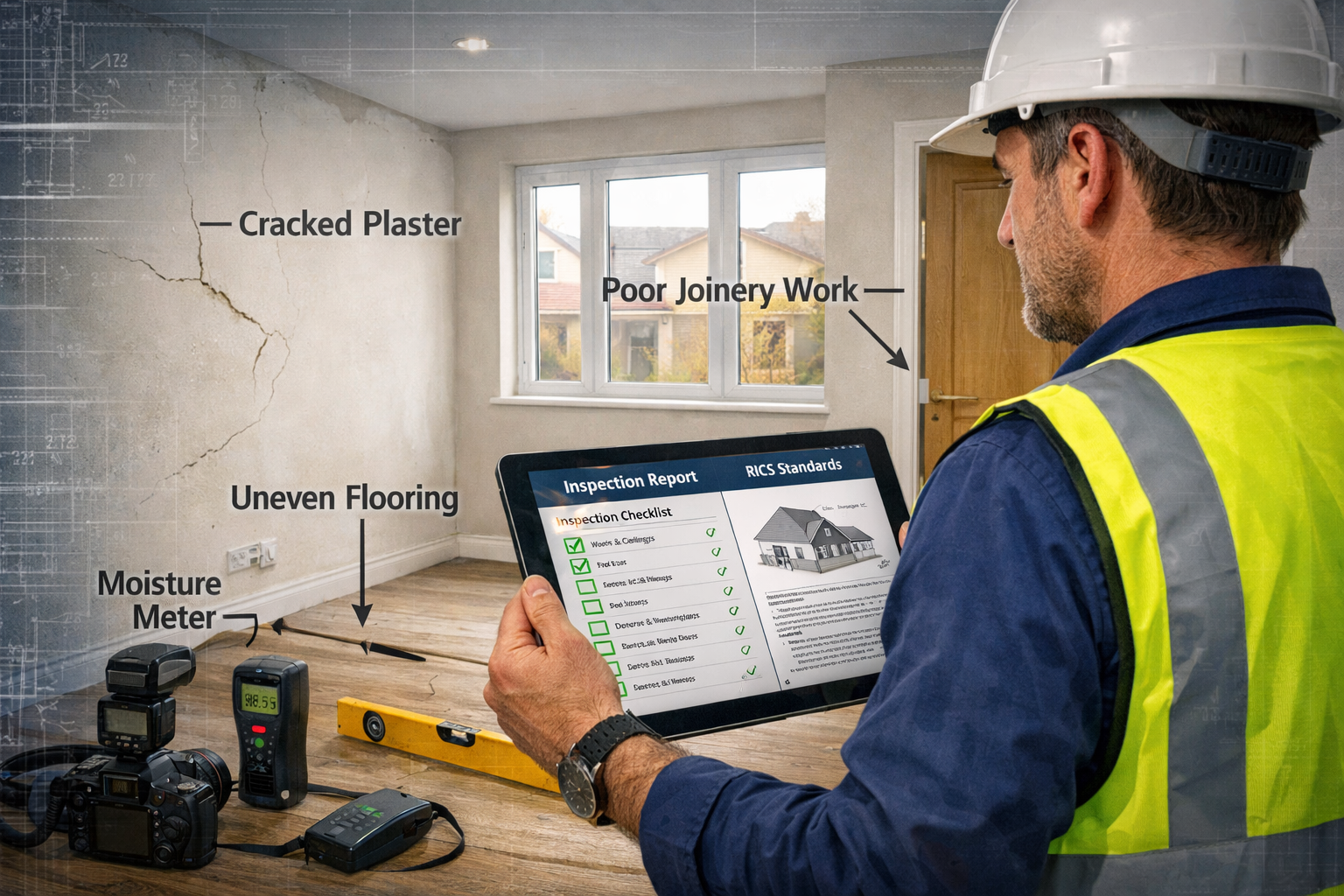
Key Takeaways
- 🏗️ New build snagging disputes require expert witnesses with specialized knowledge of construction standards and RICS protocols to provide credible testimony in legal proceedings
- 📋 The 2026 RICS Home Survey Standard updates introduce enhanced technology integration, including AI and drones, which strengthen the evidence-gathering capabilities of expert witnesses
- ⚖️ Expert witnesses must maintain independence and objectivity while providing technical opinions that help courts understand complex construction defects and their remediation costs
- 📊 The consultation process for the updated standards received over 1,000 comments from industry participants, reflecting widespread engagement with the new requirements [4]
- 🔍 Updated standards provide clearer guidance on "additional risk" dwellings and expanded reporting requirements that directly support expert witness testimony in dispute resolution
Understanding Expert Witness Responsibilities in Snagging Cases
When new build properties fail to meet expected quality standards, disputes between homeowners and developers often escalate beyond informal negotiations. This is where expert witnesses become invaluable. An expert witness in a snagging dispute serves as an independent professional who provides the court with specialized technical knowledge about construction defects, building standards, and appropriate remediation measures.
The Core Duties of an Expert Witness
Expert witnesses carry significant responsibilities that extend far beyond simply identifying defects. Their primary duty is to the court, not to the party instructing them. This fundamental principle ensures that testimony remains objective and focuses on technical accuracy rather than advocacy.
Key responsibilities include:
- Providing independent opinions based on professional expertise and recognized industry standards
- Preparing detailed reports that clearly explain technical issues in language accessible to non-specialists
- Maintaining objectivity throughout the proceedings, regardless of which party commissioned the report
- Staying current with industry standards, including the latest RICS guidance and building regulations
- Presenting evidence clearly and confidently under cross-examination
The role demands extensive experience in building surveyor services and comprehensive knowledge of construction methodologies. Expert witnesses must be able to distinguish between minor cosmetic issues and serious structural defects that compromise safety or habitability.
Qualifications and Credentials Required
Not every surveyor can serve effectively as an expert witness. The role requires specific qualifications and demonstrated expertise. Most courts and legal teams look for professionals who hold:
- RICS membership (typically MRICS or FRICS designation)
- Specialized training in expert witness procedures and court protocols
- Extensive practical experience conducting building surveys and identifying construction defects
- Professional indemnity insurance with appropriate coverage levels
- Proven track record of producing clear, defensible technical reports
The 2026 RICS Home Survey Standard updates place additional emphasis on continuing professional development (CPD) requirements, ensuring expert witnesses remain current with evolving construction technologies and assessment methodologies [1].
How 2026 RICS Home Survey Standard Updates Strengthen Expert Testimony
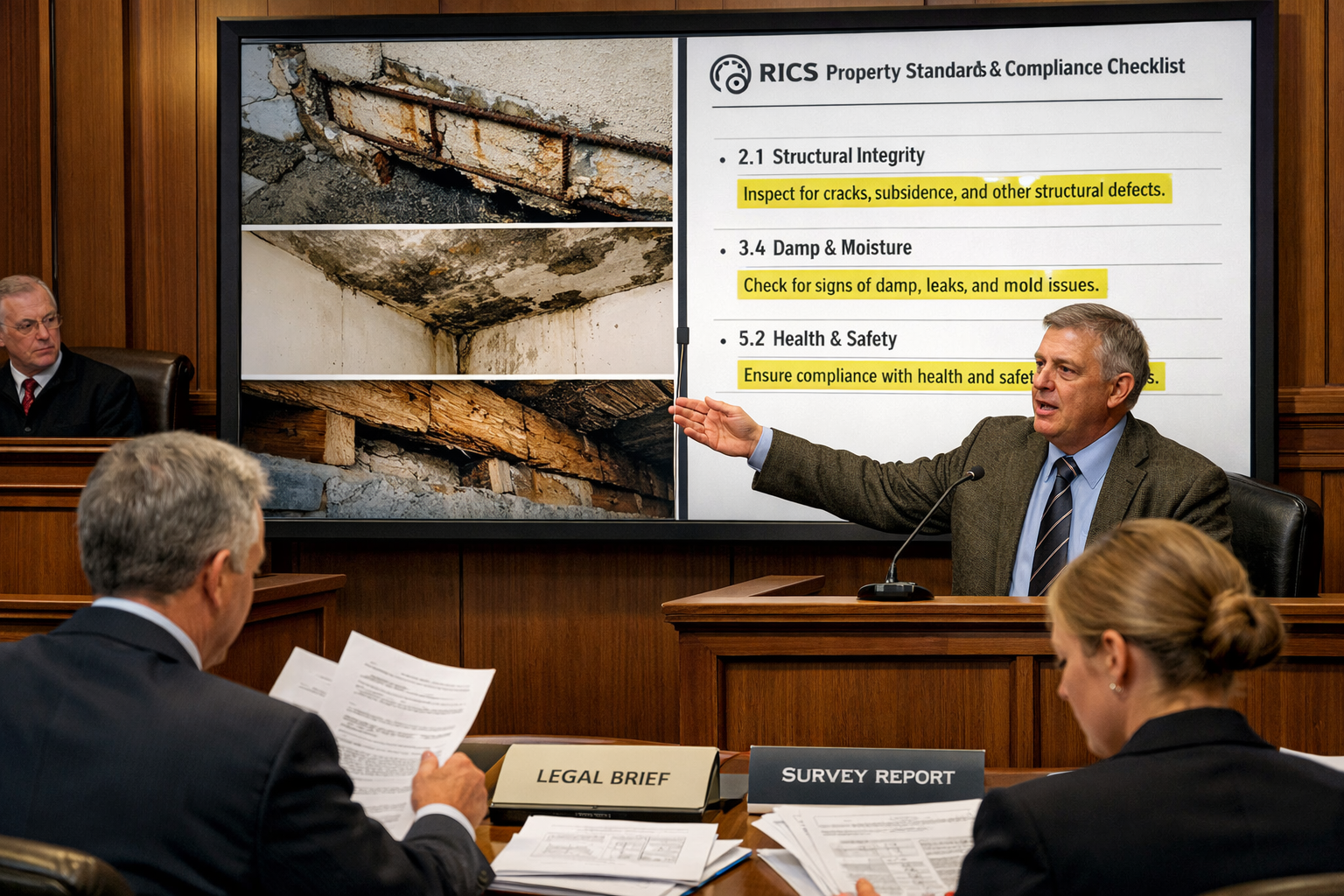
The Royal Institution of Chartered Surveyors has undertaken a comprehensive review of its Home Survey Standard, with the second edition currently progressing through a rigorous approval process. Following a public consultation that closed on October 14, 2025, RICS received over 1,000 comments from industry participants, demonstrating significant engagement with the proposed changes [4].
Key Updates Relevant to Expert Witness Work
The proposed updates introduce several enhancements that directly impact how expert witnesses conduct assessments and present evidence in snagging disputes:
Technology Integration
One of the most significant changes involves expanded guidance on technology use. The updated standard explicitly addresses:
- Artificial Intelligence (AI) applications for defect detection and pattern recognition
- Drone surveys for accessing difficult-to-reach areas like roofs and upper-story exteriors
- Camera poles for detailed visual inspection without scaffolding
- Thermal imaging for identifying insulation defects and moisture ingress
These technological advances provide expert witnesses with more comprehensive evidence-gathering tools, resulting in more detailed and defensible reports. When presenting cases involving building condition assessment, experts can now supplement traditional inspection methods with high-resolution imagery and data analytics.
Enhanced Reporting Requirements
The 2026 updates introduce more structured reporting frameworks that benefit expert witnesses by:
| Update Area | Benefit for Expert Witnesses |
|---|---|
| Standardized defect categorization | Clearer communication of severity levels to courts |
| Expanded risk assessment protocols | Better documentation of safety concerns |
| Detailed cost estimation guidance | More defensible remediation cost calculations |
| Enhanced photographic documentation standards | Stronger visual evidence presentation |
These improvements align with the need for expert witnesses to provide comprehensive property surveys that withstand legal scrutiny.
"Additional Risk" Dwelling Guidance
The updated standard provides specific guidance for assessing properties that present unusual challenges or risks. This category often includes:
- Properties with non-traditional construction methods
- Buildings with complex architectural features
- Homes with known historical issues in similar developments
- Properties with environmental risk factors
For expert witnesses handling snagging disputes in new build developments, this guidance provides a framework for identifying and documenting risks that might not be apparent in standard inspections.
The Consultation and Approval Process
Understanding the rigorous development process behind the 2026 updates reinforces their credibility when cited in expert testimony. The standard has undergone:
- Over 70 hours of meetings across 20+ sessions with the Author and Expert Group
- Industry presentations to more than 1,600 people at conferences and events
- Line-by-line review of all consultation feedback
- Multiple review stages including the Residential Professional Group Panel, Knowledge and Practice Committee, and Standards and Regulation Board [4]
As of February 2026, the standard remains in the analysis phase, with RICS carefully reviewing all feedback before proceeding to final approval. This thorough process ensures that the updated standards reflect current best practices and industry consensus.
Building Robust Cases: Practical Applications for Expert Witnesses
When expert witnesses apply the strengthened 2026 RICS Home Survey Standard protocols to snagging disputes, they create more compelling and defensible cases. The practical application of these standards requires both technical expertise and strategic thinking.
Conducting Comprehensive Pre-Litigation Assessments
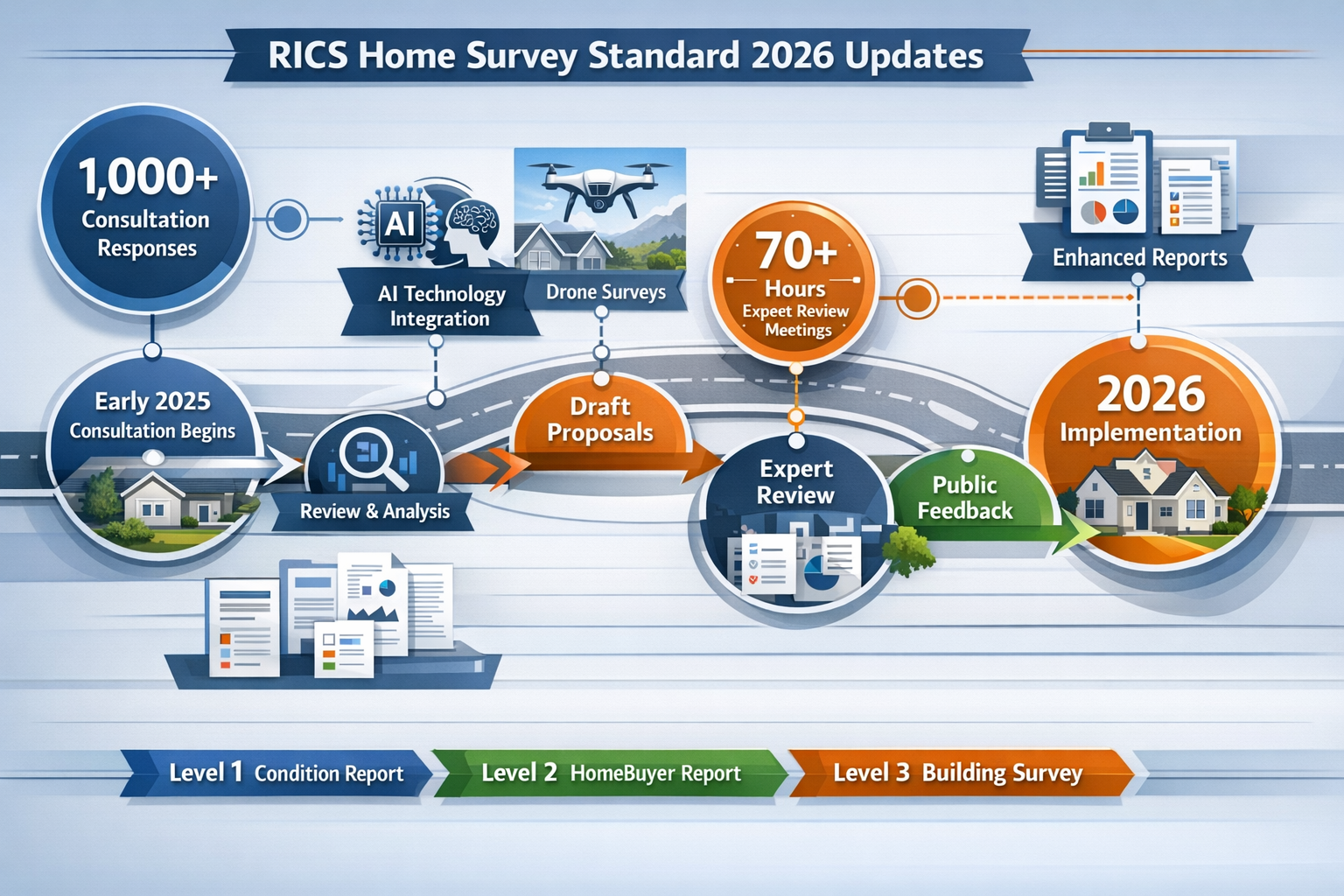
Before disputes reach formal legal proceedings, expert witnesses play a crucial role in assessing whether claims have merit. A thorough pre-litigation assessment following the 2026 standards includes:
Initial Site Inspection
- Systematic examination of all accessible areas
- Documentation using multiple methods (photographs, video, thermal imaging)
- Comparison against building regulations and developer specifications
- Assessment of defect severity using standardized categorization
Evidence Compilation
- Detailed photographic records with measurements and annotations
- Technical drawings highlighting defect locations
- Moisture readings and environmental assessments
- Review of original specifications and warranty documents
This comprehensive approach mirrors the thoroughness required when conducting home surveys and ensures that expert opinions rest on solid evidentiary foundations.
Preparing Expert Reports That Withstand Scrutiny
The quality of an expert report often determines the outcome of snagging disputes. Reports prepared under the 2026 RICS standards should include:
Executive Summary
- Clear statement of instructions received
- Summary of key findings and opinions
- Estimated remediation costs
- Overall assessment of defect severity
Detailed Findings Section
- Room-by-room or area-by-area analysis
- Technical description of each defect
- Photographic evidence with clear labeling
- Reference to relevant building standards and regulations
Professional Opinion
- Assessment of whether defects constitute breaches of building regulations
- Evaluation of whether work meets reasonable quality expectations
- Opinion on causation (workmanship vs. design vs. materials)
- Recommendations for remediation
Cost Analysis
- Detailed breakdown of remediation costs
- Justification for cost estimates based on current market rates
- Consideration of consequential losses (temporary accommodation, storage)
- Timeline for completion of remedial works
When preparing these reports, expert witnesses should consider whether the issues identified would typically be caught during a standard Level 2 or Level 3 survey, as this context helps courts understand the severity of defects.
Common Snagging Issues in New Build Properties
Expert witnesses frequently encounter recurring defects in new build developments. Understanding these common issues helps in building comprehensive cases:
Structural Concerns 🏗️
- Inadequate foundation work
- Structural movement and cracking
- Roof defects and water ingress
- Floor level irregularities
Building Envelope Failures 🌧️
- Poor weatherproofing and damp penetration
- Window and door installation defects
- Inadequate insulation
- Ventilation system failures
Internal Finishing Defects 🎨
- Poor plastering and decoration
- Defective joinery and carpentry
- Plumbing leaks and drainage issues
- Electrical installation problems
Compliance Issues ⚠️
- Building regulation non-compliance
- Fire safety deficiencies
- Energy performance discrepancies
- Accessibility requirement failures
Each category requires specific expertise and assessment methodologies. The 2026 RICS standards provide updated guidance on documenting and categorizing these issues in ways that support clear expert testimony.
Presenting Evidence in Court or Alternative Dispute Resolution
When cases proceed to formal hearings, expert witnesses must present their findings clearly and persuasively. The 2026 standards support this process by providing:
Standardized Terminology
Using consistent language when describing defects ensures clarity across all parties. The updated standards establish common terminology that reduces ambiguity and misunderstanding.
Visual Evidence Protocols
Enhanced guidance on photographic documentation ensures that visual evidence meets court requirements for admissibility and clarity. This includes standards for image quality, annotation, and contextual information.
Proportionate Assessment
The standards help expert witnesses distinguish between minor cosmetic issues and significant defects requiring immediate attention. This proportionality is crucial when courts assess damages and remediation requirements.
"The duty of an expert witness is to provide independent, unbiased opinion to assist the court in understanding technical matters. The 2026 RICS standards provide the framework that ensures consistency and credibility in that testimony."
Negotiating Settlements Based on Expert Findings
Many snagging disputes resolve through negotiation rather than formal litigation. Expert witness reports prepared under the 2026 standards facilitate settlement by:
- Providing objective assessments that both parties can accept as credible
- Establishing clear remediation costs based on industry standards
- Identifying priority issues that require immediate attention
- Offering practical solutions that balance cost and quality considerations
The ability to renegotiate after a poor building survey result often depends on having credible expert evidence that demonstrates the extent and cost of defects.
The Impact of Enhanced Standards on Dispute Resolution
The strengthened 2026 RICS Home Survey Standard updates represent a significant advancement in how snagging disputes are assessed and resolved. These changes benefit all stakeholders in the property transaction process.
Benefits for Homeowners
Homeowners facing snagging issues gain several advantages from the updated standards:
- Clearer documentation of defects that supports their claims
- More comprehensive assessments that identify issues beyond obvious visual defects
- Stronger negotiating position when dealing with developers
- Better understanding of remediation requirements and costs
The enhanced technology provisions mean that expert witnesses can now identify hidden defects that might have been missed under previous assessment methods, providing homeowners with more complete protection.
Advantages for Developers and Contractors
While it might seem that stronger standards create additional challenges for developers, they actually provide benefits:
- Reduced ambiguity about quality expectations
- Clearer specifications for what constitutes acceptable work
- More objective assessments that reduce frivolous claims
- Standardized remediation protocols that control costs
Developers who maintain high construction standards benefit from expert reports that distinguish their quality work from substandard competitors.
Improvements for Legal Professionals
Solicitors and barristers handling snagging disputes benefit from expert reports prepared under the 2026 standards through:
- More consistent reporting formats that facilitate case preparation
- Clearer technical explanations that help non-specialist lawyers understand issues
- Better evidence quality that strengthens case presentation
- Reduced need for supplementary reports due to comprehensive initial assessments
The standardization reduces the time and cost associated with preparing cases for court or alternative dispute resolution.
Selecting the Right Expert Witness for Your Snagging Dispute
Whether you're a homeowner seeking to pursue a claim or a developer defending against allegations, selecting an appropriately qualified expert witness is crucial. The 2026 RICS standards provide helpful guidance on the qualifications and experience required.
Essential Selection Criteria
When evaluating potential expert witnesses, consider:
Technical Expertise 🔧
- Demonstrated experience with new build construction methods
- Knowledge of current building regulations and standards
- Familiarity with common defects in similar property types
- Understanding of remediation techniques and costs
RICS Compliance 📋
- Current RICS membership in good standing
- Commitment to following the 2026 Home Survey Standard protocols
- Regular CPD participation to maintain current knowledge
- Professional indemnity insurance coverage
Communication Skills 💬
- Ability to explain technical issues clearly to non-specialists
- Experience presenting evidence in court or arbitration
- Track record of producing well-structured, comprehensible reports
- Professional demeanor under cross-examination
Independence and Objectivity ⚖️
- No conflicts of interest with parties involved
- Reputation for impartial assessment
- Willingness to acknowledge limitations of expertise
- Commitment to duty to the court over party interests
Questions to Ask Potential Expert Witnesses
Before engaging an expert witness, ask:
- How many snagging dispute cases have you handled as an expert witness?
- Are you familiar with the 2026 RICS Home Survey Standard updates?
- What technology do you use for inspections and evidence gathering?
- Can you provide examples of previous expert reports?
- What is your typical timeline for completing assessments and reports?
- Have you ever had an expert report challenged or excluded in court?
- What are your fee structures for assessment, report preparation, and court attendance?
Working with Local Specialists
Engaging expert witnesses with local knowledge can provide additional advantages. Professionals familiar with regional construction practices, local developers' track records, and area-specific building challenges offer valuable context. Consider consulting with building surveyors in Knightsbridge or other location-specific specialists who understand local market conditions and construction standards.
Future Developments and Ongoing Considerations
The property surveying profession continues to evolve, and expert witnesses must stay ahead of emerging trends and regulatory changes to maintain their effectiveness.
Anticipated Further Updates
While the 2026 RICS Home Survey Standard represents a significant advancement, the profession anticipates ongoing refinements:
- Expanded AI integration guidance as machine learning applications mature
- Enhanced environmental assessment protocols addressing climate change considerations
- Updated technology standards as new inspection tools become available
- Refined risk assessment frameworks based on emerging data about construction defects
Expert witnesses should maintain awareness of these developments through regular engagement with RICS publications and industry forums [3].
The Role of Continuing Professional Development
The 2026 standards emphasize the importance of CPD for all surveyors, particularly those serving as expert witnesses. Recommended CPD activities include:
- Attending conferences and seminars on construction defects and dispute resolution
- Participating in expert witness training programs
- Staying current with building regulation changes
- Learning about new construction technologies and materials
- Reviewing case law related to construction disputes
Emerging Technologies and Their Impact
Beyond the AI and drone technologies explicitly addressed in the 2026 standards, expert witnesses should prepare for additional technological advances:
3D Scanning and Modeling
Creating detailed three-dimensional models of properties allows for precise measurement and visualization of defects, providing compelling evidence in dispute resolution.
Predictive Analytics
Machine learning algorithms can analyze patterns across multiple properties to identify systemic issues in developments, strengthening cases involving widespread defects.
Blockchain Documentation
Emerging applications of blockchain technology may provide tamper-proof records of inspection findings and remediation work, enhancing evidence credibility.
Remote Assessment Tools
Advanced remote inspection capabilities may allow expert witnesses to conduct preliminary assessments more efficiently, though on-site inspections will remain essential for detailed work.
Conclusion
The intersection of Expert Witness Roles in New Build Snagging Disputes: Building Cases with 2026 RICS Home Survey Standard Updates represents a critical evolution in property dispute resolution. As new build purchases continue to grow across the UK, the need for qualified expert witnesses who can apply strengthened RICS protocols has never been greater.
The 2026 RICS Home Survey Standard updates provide expert witnesses with enhanced tools, clearer guidance, and more robust frameworks for assessing construction defects. The extensive consultation process—involving over 1,000 industry comments and 70+ hours of expert review meetings—ensures these standards reflect current best practices and industry consensus [4].
For homeowners facing snagging issues, engaging an expert witness who understands and applies these updated standards can mean the difference between successful dispute resolution and costly, protracted litigation. For developers and contractors, working with qualified experts helps ensure fair assessment of alleged defects and appropriate remediation measures.
Actionable Next Steps
If you're involved in a new build snagging dispute:
- Engage a qualified expert witness early in the dispute process to assess the merits of your case
- Ensure your expert is current with the 2026 RICS Home Survey Standard updates and their implications
- Request comprehensive documentation including photographic evidence, technical reports, and cost estimates
- Consider alternative dispute resolution before proceeding to formal litigation, using expert reports as the basis for negotiation
- Maintain all original documentation including purchase contracts, developer specifications, and warranty information
- Act promptly as many warranty periods and limitation periods have strict time constraints
The strengthened 2026 RICS standards provide the framework for fair, objective assessment of new build defects. By understanding how expert witnesses apply these standards, all parties to snagging disputes can work toward equitable resolutions that protect homeowner interests while ensuring proportionate responses to construction defects.
Whether you're a homeowner seeking redress for poor construction quality, a developer defending against claims, or a legal professional representing either party, the combination of qualified expert witnesses and robust RICS standards offers the best path to successful dispute resolution in 2026 and beyond.
References
[1] Home Survey Standards – https://www.rics.org/profession-standards/rics-standards-and-guidance/sector-standards/building-surveying-standards/home-surveys/home-survey-standards
[2] Rics Launches Consultation Updated Home Survey Standard – https://www.rics.org/news-insights/rics-launches-consultation-updated-home-survey-standard
[3] Home Surveys – https://www.rics.org/profession-standards/rics-standards-and-guidance/sector-standards/building-surveying-standards/home-surveys
[4] Home Survey Standard 2nd Edition A Progress Update – https://www.rics.org/news-insights/home-survey-standard-2nd-edition-a-progress-update