

The London property market in 2026 presents a complex landscape where affordability challenges continue to strain relationships between buyers, sellers, and lenders—even as broader market conditions show signs of recovery. When disputes arise over property valuations, structural conditions, or comparable evidence, expert witness testimony from qualified surveyors becomes the cornerstone of legal resolution. Understanding Expert Witness Roles in Affordability Disputes: How Surveyors Can Strengthen Cases Amid 2026 Market Pressures is essential for property professionals navigating an increasingly litigious environment where technical expertise can make or break a case.
The stakes have never been higher. Recent legal developments, including the U.S. Supreme Court's landmark decision in Berk v. Choy, have fundamentally reshaped how expert witnesses are deployed in property disputes, removing procedural barriers and reducing upfront costs for plaintiffs.[2] Meanwhile, the growing complexity of property transactions in the South East demands multidisciplinary approaches that combine surveying, architectural, engineering, and legal expertise to produce comprehensive, court-admissible reports.[4]
Key Takeaways
✅ Recent legal changes have eliminated costly certificate of merit requirements in federal court, making expert witness deployment more affordable and accessible for property dispute cases.[2]
✅ Multidisciplinary expert teams combining surveyors, architects, and engineers produce more comprehensive reports that efficiently resolve disputes and fairly attribute issues between parties.[4]
✅ Niche specialization in specific dispute types (boundary conflicts, standard-of-care assessments, valuation challenges) allows surveyors to command premium fees while providing superior value to clients.[1]
✅ Established reputation and proven track records of successful testimony enable expert witnesses to charge substantially higher rates than novice practitioners, reflecting the market value of credibility.[1]
✅ Strategic expert selection based on relevant credentials, communication skills, and litigation experience directly impacts case outcomes in affordability disputes throughout 2026.[3][5]
Understanding the Evolving Landscape of Expert Witness Requirements in 2026
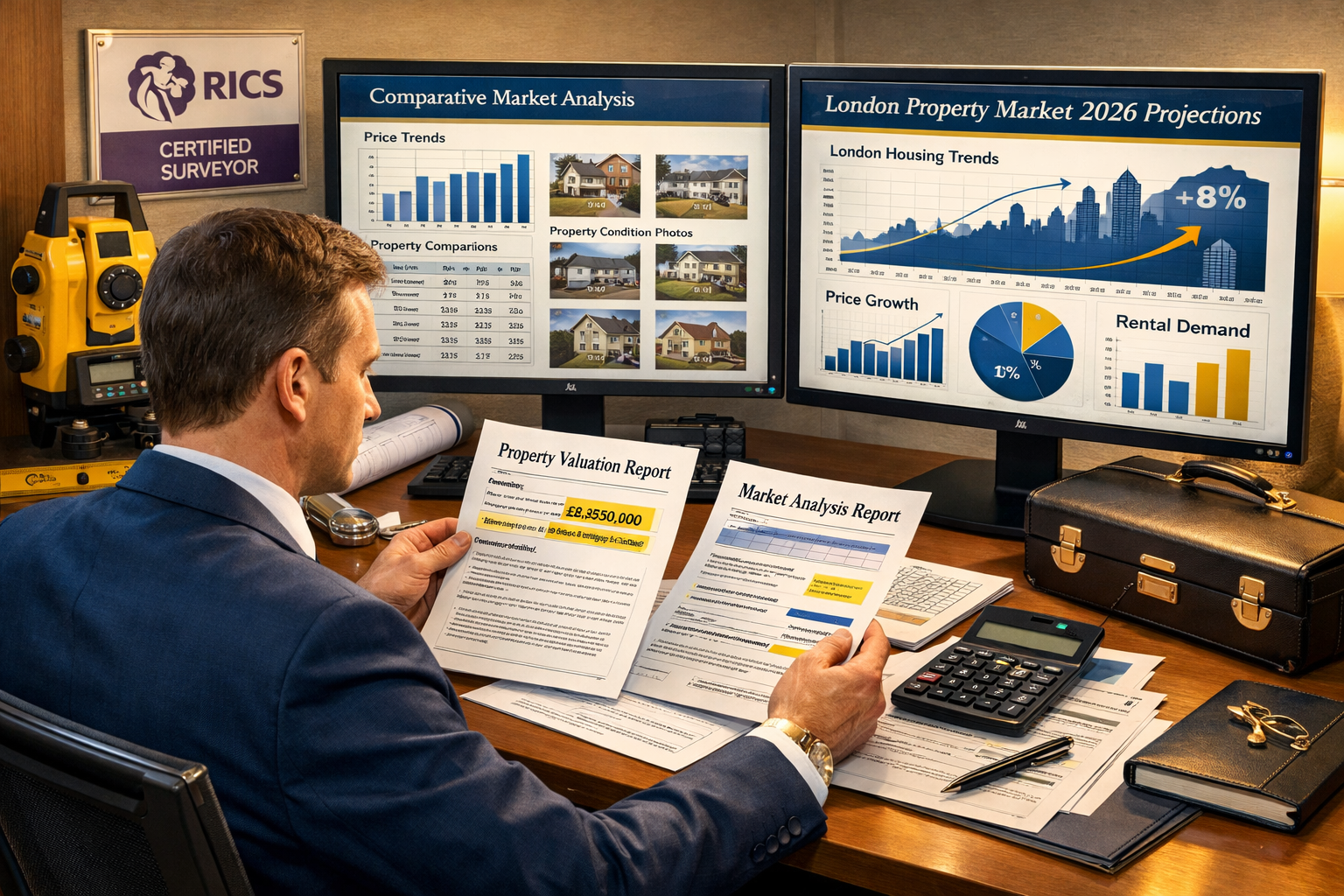
The Impact of Recent Legal Developments on Affordability Disputes
The legal framework governing expert witness testimony underwent significant transformation in January 2026 when the Supreme Court issued its decision in Berk v. Choy. This ruling fundamentally changed federal expert witness procedures by determining that state-law certificate of merit requirements do not apply in federal court proceedings.[2] For property professionals and their clients, this decision carries meaningful consequences that directly affect the economics of pursuing affordability disputes.
Previously, plaintiffs in professional negligence cases against architects, engineers, and land surveyors faced substantial upfront burdens. They needed to prepare costly certificates of merit requiring extensive expert analysis before even accessing defendant documents or discovery materials.[2] This procedural gatekeeping often disadvantaged property owners at the litigation outset, particularly in cases involving disputed valuations or condition assessments where affordability was already a central concern.
The elimination of this requirement makes federal court substantially more attractive for construction and property matters. For large disputes, removing this "substantial upfront burden" and "procedural hurdle" improves affordability in pursuing professional negligence claims.[2] This shift has direct implications for how surveyors position their expert witness services and structure their engagement models.
Why Affordability Disputes Require Specialized Surveyor Expertise
Property affordability disputes in 2026 encompass far more than simple disagreements over asking prices. They involve complex technical questions about:
- Valuation methodology and comparable property analysis
- Structural condition assessments that affect market value
- Boundary disputes and encroachments that impact usability
- Standard-of-care evaluations for professional services
- Adverse possession claims requiring historical analysis
- Easement disputes affecting property rights and value
Each category demands specialized knowledge that general practitioners cannot provide. Surveyors, appraisers, and land planners serve critical expert witness functions in these disputes, offering testimony grounded in technical standards, professional experience, and market knowledge.[3][5]
The 2026 market environment intensifies these needs. Despite broader recovery signals, London and the South East continue experiencing affordability pressures that create friction between stakeholder expectations. Buyers challenge valuations they believe are inflated. Sellers dispute condition reports that reduce negotiating power. Lenders require independent verification before approving financing on properties with questionable assessments.
In this environment, expert witnesses don't simply provide opinions—they provide the evidentiary foundation that courts and arbitrators rely upon to resolve disputes fairly and efficiently.
The Growing Demand for Multidisciplinary Expert Approaches
Modern property disputes rarely involve single-issue questions. A disagreement over affordability might simultaneously implicate structural defects, boundary uncertainties, planning permission complications, and valuation methodology disputes. This complexity drives increasing demand for multidisciplinary expert witness teams that can address interconnected issues comprehensively.[4]
Construction expert witnesses increasingly employ teams from architecture, surveying, party wall expertise, health and safety, and engineering fields. This collaborative approach produces "more well-rounded" reports that help fairly attribute issues and resolve disputes between parties more efficiently than single-discipline assessments.[4]
For surveyors seeking to strengthen their expert witness practice in 2026, this trend presents both opportunity and challenge. The opportunity lies in positioning oneself as either a coordinator of multidisciplinary teams or a specialist whose niche expertise complements broader team assessments. The challenge involves developing collaborative frameworks and communication protocols that ensure seamless integration across disciplines.
How Surveyors Can Strengthen Cases Through Expert Witness Roles in Affordability Disputes Amid 2026 Market Pressures
Establishing Credibility Through Specialized Knowledge and Track Record
The foundation of effective expert witness testimony rests on credibility—the court's or tribunal's confidence that the expert possesses genuine specialized knowledge and applies it objectively. For surveyors navigating affordability disputes in 2026, establishing this credibility requires strategic attention to qualifications, experience, and reputation.
Professional Credentials and Certifications 🎓
Courts give substantial weight to recognized professional credentials. RICS (Royal Institution of Chartered Surveyors) membership, specialized certifications in valuation or building surveying, and continuing professional development demonstrate commitment to technical excellence. RICS surveyors benefit from the institution's rigorous standards and ethical requirements, which enhance credibility in legal proceedings.
Beyond basic qualifications, surveyors should pursue specialized credentials relevant to dispute work:
- Expert witness training programs that cover legal procedures, report writing, and testimony techniques
- Advanced valuation certifications for complex property types
- Boundary dispute specializations for encroachment and easement cases
- Building pathology qualifications for condition-related disputes
Litigation Track Record and Reputation
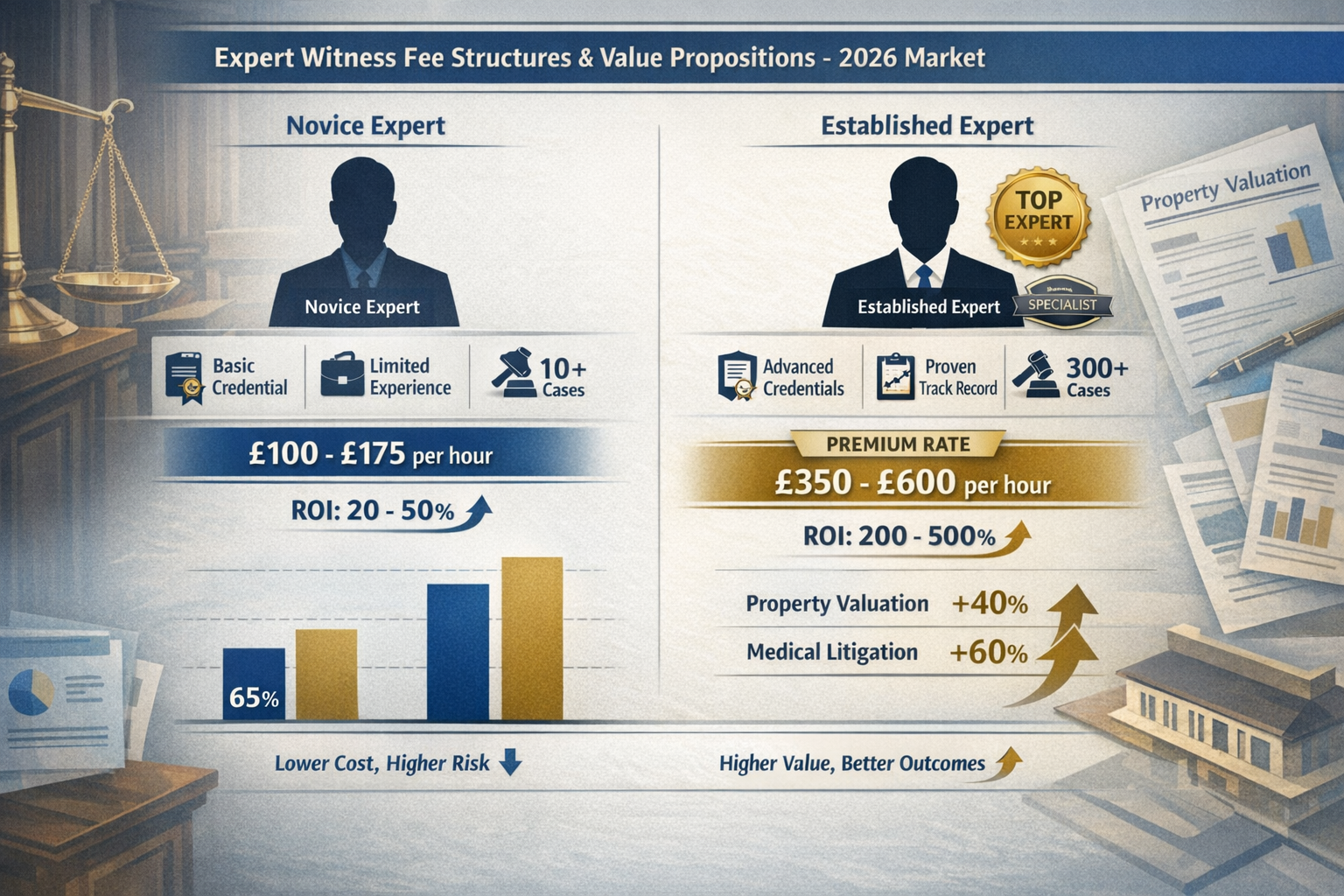
Established experts with proven track records of writing quality reports and successfully defending opinions during depositions command substantially higher rates than novices.[1] This premium reflects market recognition that reputation matters in legal proceedings. Attorneys selecting experts consider:
- Number of cases where the expert has provided testimony
- Success rate in cases where the expert's opinions were accepted
- Cross-examination performance and ability to withstand opposing counsel challenges
- Judicial comments or recognition in published decisions
- Peer recommendations from other legal professionals
New expert witnesses cannot charge the same hourly rates as established practitioners. Those without litigation track records must position themselves as "affordable alternatives" by demonstrating relevant expertise and strong communication skills.[1] However, this positioning should be temporary—a strategic entry point rather than a permanent market position.
Developing Niche Specializations That Command Premium Fees
The path from affordable alternative to premium expert witness runs through niche specialization. Surveyors can increase their hourly rates by carving out specialized expertise in particular areas, as growing demand from lawyers correlates with ability to command higher fees.[1]
Strategic Niche Selection for 2026 Market Conditions
Effective niche selection balances three factors:
- Market demand for the specific expertise
- Limited competition from other qualified experts
- Personal experience and interest that enables deep knowledge development
For affordability disputes in the current market, particularly valuable niches include:
| Niche Specialization | Market Demand Driver | Competitive Advantage |
|---|---|---|
| High-value residential valuation disputes | Continued luxury market activity in prime London locations | Requires deep local market knowledge and comparable analysis expertise |
| New build defect assessment | Increased scrutiny of developer quality and affordability claims | Combines construction knowledge with valuation impact analysis |
| Leasehold valuation and extension disputes | Growing friction over ground rent and service charge affordability | Specialized statutory framework knowledge required |
| Heritage property condition assessment | Unique challenges in listed building markets | Requires conservation expertise and specialized valuation approaches |
| Boundary and encroachment disputes | Persistent issue across all market segments | Technical surveying skills combined with legal framework knowledge |
Surveyors who establish themselves as go-to experts in specific niches receive more requests than they can handle, enabling them to raise rates accordingly.[1] This reputation-building process typically requires 3-5 years of consistent quality work, but the resulting premium positioning justifies the investment.
Producing Court-Admissible Reports That Meet Civil Procedure Requirements
The expert witness report represents the primary deliverable in most affordability disputes. Courts and tribunals rely on these documents to understand technical issues, evaluate competing claims, and reach informed decisions. Understanding how to produce reports that meet civil procedure requirements while effectively communicating complex technical information is essential.
Essential Components of Expert Witness Reports
Expert witness reports in property disputes must align with civil procedure rules for admissibility.[4] Key components include:
1. Expert Qualifications and Instructions 📋
The report must clearly establish the expert's qualifications and describe the instructions received. This section demonstrates that the expert possesses relevant expertise and understands the specific questions requiring analysis.
2. Factual Investigation and Evidence Review
Comprehensive reports document all evidence reviewed, including:
- Property inspection findings and photographs
- Construction plans and site surveys
- Historical records and documentation
- Comparable property data
- Relevant standards and regulations
- Interviews with involved parties
3. Technical Analysis and Methodology
The heart of the report explains the analytical approach, technical standards applied, and reasoning process. This section must be detailed enough for another expert to understand and potentially replicate the analysis, while remaining accessible to non-technical readers including judges and attorneys.
For building condition assessments, this might involve explaining defect identification methodology, severity classification systems, and repair cost estimation approaches. For valuation disputes, it requires transparent explanation of comparable selection criteria, adjustment methodology, and market analysis techniques.
4. Opinions and Conclusions
Expert opinions must be clearly distinguished from factual observations. The report should explain how the technical analysis supports specific conclusions relevant to the legal dispute. Critically, experts must acknowledge limitations, uncertainties, and alternative interpretations where appropriate—demonstrating objectivity rather than advocacy.
5. Declaration of Truth and Independence
Civil procedure rules typically require experts to declare that they understand their duty to the court supersedes any obligation to the instructing party. This declaration reinforces the expert's role as an independent technical advisor rather than an advocate.
Leveraging Technology and Data to Strengthen Expert Testimony
The surveying profession in 2026 benefits from advanced technologies that enhance both the accuracy of technical analysis and the persuasiveness of expert presentation. Surveyors who effectively integrate these tools into their expert witness practice deliver superior value and strengthen case outcomes.
Digital Survey Technologies 📱
Modern surveying technology provides unprecedented precision and documentation capabilities:
- 3D laser scanning creates detailed point clouds that document existing conditions with millimeter accuracy
- Drone photogrammetry captures comprehensive site context and inaccessible areas
- Thermal imaging reveals hidden defects affecting property condition and value
- Moisture meters and non-destructive testing provide objective evidence of building pathology
These technologies generate data that is difficult to dispute and highly persuasive in legal proceedings. When presenting expert testimony, the ability to show judges or arbitrators precise measurements, thermal anomalies, or 3D visualizations significantly enhances credibility and comprehension.[7]
Data Analytics and Comparable Evidence
Affordability disputes frequently hinge on valuation questions that require robust comparable evidence. Advanced data analytics enable surveyors to:
- Access comprehensive transaction databases covering broader geographic areas
- Apply statistical methods to adjust comparables for differences
- Identify market trends and anomalies relevant to dispute timing
- Generate visualizations that clearly communicate valuation methodology
The persuasiveness of expert testimony often correlates with the breadth and quality of comparable evidence presented. Surveyors who leverage technology to access superior data and present it effectively gain significant advantages in dispute resolution.
Visual Communication Tools
Complex technical information becomes accessible through effective visualization. Expert witnesses should develop capabilities in:
- Annotated photography highlighting specific defects or features
- Comparison graphics showing before/after or actual versus expected conditions
- Timeline visualizations for disputes involving construction sequences or deterioration progression
- Interactive presentations that allow real-time exploration of 3D models or data sets
These tools transform abstract technical concepts into concrete visual evidence that non-technical decision-makers can understand and remember.
Navigating Fee Structures and Market Positioning for Expert Witness Services
Understanding the Economics of Expert Witness Rates in 2026
The financial aspects of expert witness work require careful consideration. Surveyors must balance competitive positioning with appropriate compensation for specialized knowledge, litigation risk, and time commitment. Understanding market dynamics enables strategic pricing that reflects value while remaining accessible for affordability dispute cases.
Factors Influencing Expert Witness Rates 💰
Multiple variables affect appropriate hourly rates for expert witness services:
Experience and Track Record
As noted earlier, established experts with proven litigation track records command substantially higher rates than newcomers.[1] The market recognizes that experienced experts deliver:
- Higher quality reports requiring less revision
- More effective deposition and trial testimony
- Greater likelihood of opinions withstanding challenge
- Reduced risk of case complications from expert deficiencies
Niche Specialization Premium
Experts who develop recognized specializations in specific dispute types can charge premium rates reflecting limited competition and high demand.[1] A surveyor known as the leading expert in heritage property valuation disputes commands higher fees than a generalist offering the same service among many others.
Geographic Market Considerations
London and South East rates typically exceed those in other UK regions, reflecting higher costs of practice and greater case complexity. However, surveyors should consider whether geographic premium positioning remains sustainable as remote expert services become more common.
Case Complexity and Risk
High-value disputes with substantial stakes justify higher expert rates, as the consequences of expert deficiencies scale with case value. Similarly, cases involving novel legal questions or unusual technical challenges warrant premium pricing reflecting additional research and analysis requirements.
Structuring Engagement Terms That Protect Both Expert and Client
Beyond hourly rates, engagement structure significantly affects both expert and client satisfaction. Well-designed terms clarify expectations, manage scope, and ensure appropriate compensation for all work performed.
Retainer and Advance Payment Models
Most expert witness engagements require advance retainers to ensure payment security. Typical structures include:
- Initial retainer covering anticipated first-phase work (typically report preparation)
- Replenishment triggers requiring additional funds when retainer falls below specified threshold
- Final reconciliation at case conclusion with refund of unused amounts
This approach protects experts from non-payment risk while giving clients predictability about funding requirements.
Scope Definition and Change Management
Clear scope definition prevents disputes about what services the engagement includes. Effective engagement letters specify:
- Included services (document review, site inspection, report preparation, etc.)
- Excluded services (deposition testimony, trial testimony, expert meetings)
- Change procedures for scope modifications
- Additional service rates for work beyond original scope
Many affordability disputes evolve as discovery proceeds, revealing issues not initially apparent. Flexible change management procedures accommodate this evolution while protecting both parties' interests.
Billing Practices and Transparency
Regular, detailed billing promotes trust and enables clients to manage costs effectively. Best practices include:
- Itemized time records showing specific activities and durations
- Regular billing cycles (typically monthly) preventing large unexpected invoices
- Expense documentation with receipts for significant costs
- Progress updates explaining work completed and anticipated next steps
Transparency in billing reinforces the expert's credibility and professionalism—qualities that extend to how courts and opposing counsel perceive the expert's work.
Strategic Deployment of Expert Witness Testimony in Different Dispute Resolution Forums
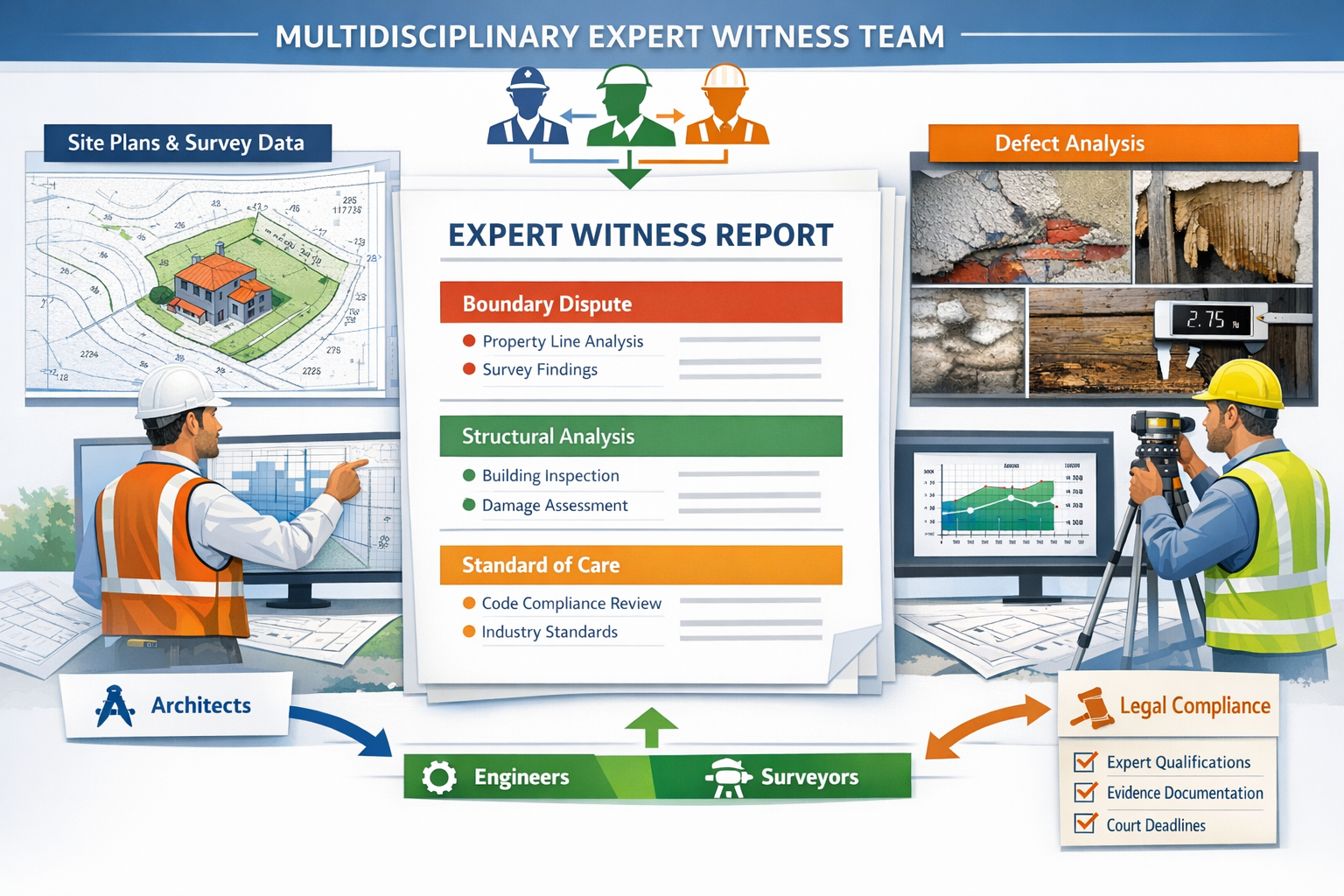
Expert Roles in Court Litigation Versus Alternative Dispute Resolution
Affordability disputes in 2026 resolve through multiple forums, each with distinct procedural requirements and strategic considerations. Understanding how expert witness roles differ across these settings enables surveyors to provide appropriately tailored services.
Traditional Court Litigation
Court proceedings follow formal rules of evidence and civil procedure. Expert witnesses in litigation must:
- Prepare detailed written reports meeting court requirements
- Participate in expert witness conferences or joint statements
- Provide deposition testimony subject to cross-examination
- Potentially testify at trial before judges or juries
- Withstand rigorous challenges to methodology and conclusions
The formality and adversarial nature of litigation demand experts who can maintain composure under pressure, defend their opinions against skilled opposing counsel, and communicate complex technical matters to lay audiences. Expert building evaluation skills must combine technical precision with communication effectiveness.
Arbitration Proceedings
Property arbitration offers streamlined dispute resolution with expert witness roles that differ from court litigation:
- Flexible procedural rules often allow more informal expert presentations
- Technical arbitrators may possess property expertise themselves, enabling more sophisticated technical discussion
- Concurrent expert evidence ("hot tubbing") where experts from both sides discuss issues jointly
- Reduced formality in report requirements and testimony procedures
Surveyors serving as experts in arbitration should adapt their approach to the specific arbitrator's preferences and the procedural rules governing the proceeding.
Mediation and Settlement Negotiations
In mediation, experts serve different functions than in adjudicative proceedings:
- Technical advisors helping parties understand strengths and weaknesses
- Reality testing challenging unrealistic positions with objective analysis
- Settlement valuation providing independent assessments of reasonable resolution ranges
- Creative problem-solving suggesting technical solutions that address underlying concerns
The collaborative nature of mediation rewards experts who can build consensus and identify common ground, rather than emphasizing adversarial positioning.
Preparing for Cross-Examination and Maintaining Credibility Under Pressure
For surveyors providing expert witness testimony in adversarial proceedings, cross-examination represents the ultimate test of expertise, preparation, and credibility. Opposing counsel's goal is to undermine the expert's opinions, expose weaknesses in methodology, or demonstrate bias. Effective preparation and testimony techniques protect credibility and strengthen case outcomes.
Pre-Testimony Preparation Strategies 📚
Successful cross-examination performance begins long before entering the witness box:
1. Master the File Completely
Experts must know every document in the case file, every statement in their report, and every assumption underlying their analysis. Cross-examination frequently involves detailed questioning about specific documents or prior statements, attempting to catch experts unprepared or inconsistent.
2. Anticipate Challenges and Prepare Responses
Working with instructing attorneys, experts should identify likely cross-examination topics:
- Qualifications or experience gaps
- Methodology choices and alternatives
- Assumptions that favor the instructing party
- Inconsistencies with other experts or published standards
- Prior testimony in other cases
Preparing clear, concise explanations for each anticipated challenge enables confident, credible responses.
3. Review Prior Testimony and Publications
Opposing counsel will review the expert's prior testimony transcripts and published writings, seeking contradictions or statements that undermine current opinions. Experts should conduct the same review, ensuring consistency or preparing to explain legitimate differences in approach based on case-specific factors.
Testimony Techniques That Preserve Credibility
During cross-examination, specific techniques help maintain credibility:
Listen Carefully and Answer Only What's Asked
Many cross-examination problems arise from experts who answer questions not asked or volunteer information beyond the question scope. Brief, direct answers prevent giving opposing counsel ammunition.
Acknowledge Limitations and Uncertainties
Attempting to appear infallible damages credibility more than acknowledging genuine limitations. When appropriate, experts should:
- Admit when information is unavailable or analysis is uncertain
- Explain how limitations affect confidence in conclusions
- Distinguish between high-confidence and lower-confidence opinions
This honesty reinforces the expert's objectivity and strengthens credibility on core opinions.
Maintain Professional Composure
Cross-examination can be confrontational, with opposing counsel attempting to provoke emotional reactions or defensive responses. Maintaining calm, professional demeanor throughout demonstrates confidence and expertise.
Explain Technical Matters Clearly
Even under cross-examination pressure, experts must communicate technical concepts clearly to judges, juries, or arbitrators. Using accessible language, analogies, and examples helps non-technical audiences understand complex issues—and recognize when opposing counsel mischaracterizes technical matters.
Ethical Considerations and Professional Standards for Expert Witnesses
Balancing Advocacy and Objectivity in Affordability Disputes
The fundamental ethical tension in expert witness work involves balancing the instructing party's interests with the expert's duty to provide objective, unbiased opinions. This tension intensifies in affordability disputes where financial pressures create strong incentives to favor particular outcomes.
The Overriding Duty to the Court ⚖️
In UK proceedings, experts owe their primary duty to the court rather than to the instructing party. This principle requires:
- Objective analysis based on technical standards and professional judgment
- Complete disclosure of relevant facts, including those unfavorable to the instructing party
- Acknowledgment of limitations in methodology, data, or conclusions
- Independence from pressure to modify opinions for tactical advantage
Violating this duty can result in professional sanctions, disqualification from cases, and reputational damage that ends expert witness careers.
Common Ethical Pitfalls to Avoid
Several situations create particular ethical risks:
1. Advocacy Creep
Repeated engagement by the same attorneys or party types can unconsciously bias experts toward positions favoring those clients. Maintaining objectivity requires conscious attention to this risk and willingness to reach unfavorable conclusions when evidence requires.
2. Selective Analysis
Analyzing only evidence favorable to the instructing party while ignoring contradictory information violates objectivity duties. Comprehensive analysis must consider all relevant evidence, explaining why certain information receives more or less weight.
3. Methodology Shopping
Choosing analytical methodology based on which approach produces favorable results, rather than which is most appropriate for the specific question, undermines credibility and violates professional standards.
4. Contingent Fee Arrangements
Accepting compensation contingent on case outcome creates obvious bias concerns. Expert fees should be based on time and expertise, never on whether the instructing party prevails.
Professional Standards and Regulatory Compliance
Beyond general ethical principles, expert witnesses must comply with specific professional standards and regulatory requirements relevant to their disciplines.
RICS Practice Standards for Expert Witnesses
RICS publishes detailed practice standards for members serving as expert witnesses, covering:
- Competence requirements ensuring experts only accept instructions within their expertise
- Conflicts of interest identification and disclosure procedures
- Report content standards specifying required elements and format
- Continuing professional development in expert witness skills
Compliance with these standards protects both the expert's professional standing and the quality of service provided to clients and courts.
Civil Procedure Rules and Court Directions
Expert witnesses must understand and comply with applicable civil procedure rules, which vary by jurisdiction and court. Key requirements typically include:
- Report format and content specifications
- Disclosure deadlines for expert reports and supplemental materials
- Expert discussion requirements for joint statements or meetings
- Testimony procedures for depositions and trials
Failure to comply with procedural requirements can result in report exclusion or testimony limitations that undermine the instructing party's case—the opposite of the expert's intended contribution.
Practical Steps for Surveyors Seeking to Develop Expert Witness Practices
Building the Foundation: Training, Credentials, and Initial Engagements
For surveyors seeking to develop expert witness capabilities, strategic foundation-building accelerates reputation development and positions for sustainable practice growth.
Formal Expert Witness Training 🎯
Specialized training programs teach critical skills that technical education doesn't address:
- Legal system fundamentals and civil procedure basics
- Report writing techniques for court admissibility
- Testimony skills including direct examination and cross-examination
- Ethical requirements and professional standards
- Case study analysis of successful and unsuccessful expert witness work
Investment in quality training demonstrates commitment to excellence and provides practical skills that immediately improve service delivery.
Strategic Credential Development
Beyond basic professional qualifications, targeted credential development enhances expert witness credibility:
- Advanced technical certifications in specialized areas (valuation, building pathology, etc.)
- Expert witness accreditations from recognized professional bodies
- Published research or articles demonstrating thought leadership
- Speaking engagements at professional conferences or legal education programs
These credentials signal expertise to potential instructing attorneys and differentiate the surveyor from competitors.
Securing Initial Engagements
Breaking into expert witness work requires strategic networking and positioning:
1. Attorney Relationship Development
Property litigation attorneys are the primary source of expert witness instructions. Building relationships involves:
- Attending legal education programs and networking events
- Publishing articles in legal journals or property law publications
- Offering to speak at attorney continuing education programs
- Joining professional organizations where attorneys and experts interact
2. Competitive Initial Positioning
As discussed earlier, new experts must position as affordable alternatives while demonstrating relevant expertise.[1] Initial engagements might involve:
- Lower hourly rates reflecting limited litigation track record
- Smaller or less complex cases that provide experience and references
- Collaborative roles supporting established experts on larger matters
3. Exceptional Quality Delivery
Initial engagements represent critical reputation-building opportunities. Delivering exceptional quality—detailed reports, responsive communication, reliable testimony—generates referrals and repeat business that accelerate practice growth.
Marketing Expert Witness Services Effectively in 2026
While expert witness work depends primarily on reputation and referrals, strategic marketing accelerates visibility and generates opportunities.
Digital Presence and Thought Leadership
In 2026, attorneys researching potential experts invariably conduct online searches. Effective digital presence includes:
- Professional website highlighting qualifications, experience, and case types
- Published articles and whitepapers demonstrating expertise
- LinkedIn profile with detailed experience and recommendations
- Expert witness directory listings on recognized platforms
Content marketing through blogs, articles, and social media establishes thought leadership and improves search visibility for relevant terms.
Referral Network Development
The most valuable expert witness business comes through referrals from satisfied attorneys and other experts. Cultivating referral networks involves:
- Exceptional service delivery that motivates attorneys to recommend the expert
- Relationships with complementary experts who refer work outside their specialties
- Professional association involvement creating visibility among potential referral sources
- Maintaining contact with past clients through periodic updates and relevant information sharing
Niche Positioning and Specialization Communication
As discussed earlier, niche specialization enables premium positioning.[1] Effective marketing communicates this specialization through:
- Focused website content emphasizing specific expertise areas
- Case studies (maintaining confidentiality) demonstrating specialized experience
- Speaking and writing on niche topics at relevant forums
- Professional association leadership in specialized practice sections
Clear specialization messaging helps attorneys identify the expert as the right choice for specific case types, generating higher-quality instructions and supporting premium fees.
Conclusion: Strengthening Property Dispute Resolution Through Expert Surveyor Testimony
The landscape of Expert Witness Roles in Affordability Disputes: How Surveyors Can Strengthen Cases Amid 2026 Market Pressures reflects both challenge and opportunity. Affordability tensions persist across London and the South East despite broader market recovery, generating disputes that require sophisticated technical analysis and credible expert testimony for fair resolution. Recent legal developments have reduced procedural barriers and upfront costs, making expert witness deployment more accessible while increasing demand for qualified professionals.[2]
Surveyors who develop expert witness capabilities position themselves to provide essential services that strengthen case outcomes while building sustainable, premium-priced practices. Success requires attention to multiple dimensions:
Technical Excellence 🏆
Mastery of relevant technical disciplines—valuation methodology, building condition assessment, boundary determination, standard-of-care evaluation—provides the foundation for credible opinions. Continuous professional development and specialization in high-demand niches enable surveyors to deliver superior value.
Communication Effectiveness
The most technically sophisticated analysis provides no value if courts, arbitrators, or opposing parties cannot understand it. Developing clear writing skills, visual communication capabilities, and testimony techniques transforms technical knowledge into persuasive evidence.
Professional Credibility
Reputation for objectivity, thoroughness, and reliability determines long-term success in expert witness work. Maintaining ethical standards, delivering exceptional quality, and building track records of successful engagements creates the credibility that commands premium fees and generates referrals.
Strategic Business Development
Thoughtful positioning, targeted marketing, relationship cultivation, and appropriate fee structures enable sustainable practice growth. Understanding market dynamics and competitive positioning accelerates the transition from affordable alternative to recognized specialist.
Actionable Next Steps for Surveyors
For surveyors seeking to develop or enhance expert witness capabilities in 2026:
-
Assess current qualifications and identify gaps in credentials, training, or experience that limit expert witness effectiveness
-
Invest in formal expert witness training to develop report writing, testimony, and ethical compliance skills
-
Identify niche specialization opportunities based on market demand, personal expertise, and competitive landscape
-
Develop digital presence through professional website, published content, and expert directory listings
-
Cultivate attorney relationships through networking, speaking, writing, and professional association involvement
-
Deliver exceptional quality on initial engagements to generate referrals and build reputation
-
Leverage technology including advanced surveying tools and data analytics to enhance analysis and presentation
-
Structure engagement terms that protect both expert and client interests while ensuring appropriate compensation
The property market's complexity and affordability pressures ensure continued demand for expert surveyor testimony in dispute resolution. Those who develop the technical expertise, communication skills, professional credibility, and business acumen required for effective expert witness work will find substantial opportunities to strengthen cases, serve clients, and build rewarding practices throughout 2026 and beyond.
For property owners, buyers, sellers, and lenders facing affordability disputes, engaging qualified expert witnesses early in the dispute resolution process provides strategic advantages. Whether you need assistance with boundary disputes, valuation challenges, condition assessments, or professional negligence claims, working with experienced professional surveyors who understand both technical requirements and legal procedures significantly improves prospects for favorable outcomes.
The intersection of technical expertise and legal process creates unique value that only qualified expert witnesses can provide. As affordability disputes continue challenging property stakeholders across the South East in 2026, surveyors who master expert witness roles will remain essential to fair, efficient dispute resolution.
References
[1] How Should New Expert Witnesses Establish An Hourly Rate – https://www.expertpages.com/library/how-should-new-expert-witnesses-establish-an-hourly-rate
[2] High Court Ruling Could Block Expert 4378849 – https://www.jdsupra.com/legalnews/high-court-ruling-could-block-expert-4378849/
[3] Land Surveying Expert Witness – https://www.seakexperts.com/specialties/land-surveying-expert-witness
[4] Expert Witness Reports – https://westernbuildingconsultants.com/wbc-services/expert-witness-reports/
[5] Property Dispute Resolution Methods – https://www.realpha.com/blog/property-dispute-resolution-methods
[6] Real Estate Disputes And Advocacy – https://www.hklaw.com/en/services/practices/real-estate-hospitality-and-leisure/real-estate-disputes-and-advocacy
[7] Doubling Down On Digital Top 6 Surveying Trends Shaping 2026 From Trimble Experts – https://nottinghillsurveyors.com/blog/doubling-down-on-digital-top-6-surveying-trends-shaping-2026-from-trimble-experts