The UK property market stands at a pivotal moment in 2026. With proposed homebuying reforms mandating upfront condition assessments, a new landscape of potential disputes is emerging. When buyers, sellers, and lenders disagree about property conditions revealed in mandatory surveys, expert witnesses become the critical bridge between technical property knowledge and legal resolution. Understanding Expert Witness Roles in 2026 Upfront Condition Assessment Disputes: Preparing Evidence for Homebuying Reform Consultations is now essential for property professionals navigating this regulatory transition.
As the government pushes forward with reforms designed to reduce transaction fall-throughs and increase transparency, the role of qualified surveyors as expert witnesses has never been more important. These professionals must not only assess properties accurately but also present their findings in ways that withstand legal scrutiny during consultation processes and potential litigation.
Key Takeaways
- 🏛️ Expert witnesses provide RICS-backed testimony on upfront condition assessments, bridging technical survey findings with legal requirements during homebuying reform transitions
- 📋 Proper evidence preparation requires comprehensive documentation, photographic records, technical analysis, and adherence to professional standards before consultation hearings
- ⚖️ Qualified expert witnesses must demonstrate independence, technical competence, and clear communication skills when presenting property condition evidence
- 🔍 Disputes commonly arise from disagreements over defect severity, repair cost estimates, and liability determinations in mandatory upfront surveys
- 📊 The 2026 regulatory landscape demands expert witnesses stay current with evolving homebuying reform guidelines and consultation frameworks
Understanding the 2026 Homebuying Reform Context
The Shift Toward Mandatory Upfront Assessments
The UK property market has historically operated on a "buyer beware" principle, where purchasers commissioned surveys after agreeing to purchase. This system contributed to significant transaction failures—approximately 30% of agreed sales fell through, often after expensive surveys revealed unexpected defects.
In 2026, the regulatory landscape is transforming. Upfront condition assessments are being introduced to provide transparency before offers are made. Sellers must now commission comprehensive property surveys before marketing their homes, creating a fundamental shift in how property transactions unfold.
This change brings numerous benefits:
- Reduced transaction failures due to surprise defects
- Faster completion times with fewer renegotiations
- Greater market transparency for all parties
- More informed purchasing decisions from the outset
However, this reform also introduces new friction points. When mandatory surveys reveal defects, questions arise: How severe is the problem? What will repairs cost? Who bears responsibility? These disputes require expert resolution, making the role of expert witnesses increasingly critical.
Why Disputes Are Increasing Under New Regulations
The mandatory nature of upfront assessments creates several dispute scenarios that were less common under the old system:
Seller-Commissioned Survey Disputes: When sellers commission the upfront assessment, buyers may question the independence or thoroughness of the report. Disputes arise over whether the surveyor adequately investigated potential defects or whether findings were minimized to protect the seller's interests.
Valuation Disagreements: Lenders, buyers, and sellers may disagree about how identified defects should affect property valuation. A structural issue that one party considers minor might be viewed as significant by another, leading to disputes requiring expert property evaluation.
Liability Questions: When defects are discovered after purchase despite an upfront assessment, questions emerge about surveyor liability, seller disclosure obligations, and buyer due diligence responsibilities.
Repair Cost Estimates: Different professionals may provide vastly different estimates for remedying identified defects, creating disputes that require expert testimony to resolve.
These scenarios demand qualified expert witnesses who can provide authoritative, independent analysis during legal disputes and reform consultations.
Expert Witness Roles in 2026 Upfront Condition Assessment Disputes: Core Responsibilities
Defining the Expert Witness Function
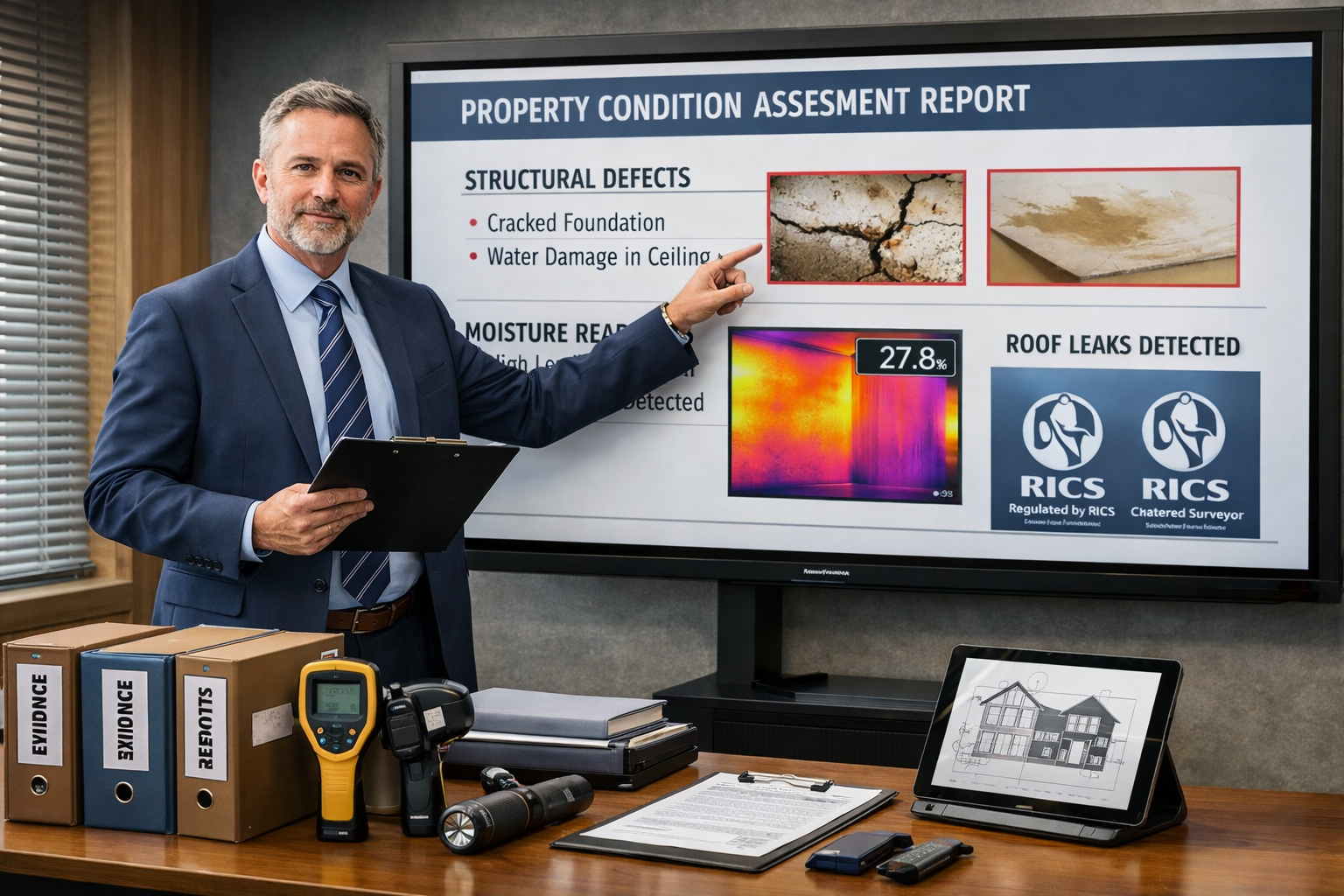
An expert witness in property condition disputes serves a unique function that differs from standard surveying work. While a typical surveyor assesses a property and reports findings to their client, an expert witness must provide independent, objective testimony that assists tribunals, courts, or consultation panels in understanding technical matters[1].
The core responsibilities include:
Independent Analysis: Expert witnesses must examine property condition evidence without bias toward any party. Their duty is to the truth and to the legal process, not to the party instructing them[1].
Technical Interpretation: Complex building pathology, structural engineering principles, and construction standards must be translated into clear language that non-technical decision-makers can understand.
Evidence-Based Opinions: All conclusions must be supported by verifiable evidence, industry standards, and recognized methodologies. Personal opinions without technical foundation have no place in expert testimony.
Professional Standards Compliance: Expert witnesses must demonstrate adherence to RICS standards, building regulations, and relevant professional guidelines when forming opinions about property conditions.
When dealing with upfront condition assessments, expert witnesses frequently address questions such as:
- Was the original survey conducted to appropriate professional standards?
- Are identified defects accurately described and properly categorized?
- Do repair cost estimates reflect realistic market conditions?
- Were any significant defects overlooked or inadequately investigated?
- How should specific defects affect property valuation?
Qualifications and Professional Standards
Not every surveyor qualifies as an expert witness. The role requires specific credentials and experience:
RICS Membership: Chartered surveyors with RICS (Royal Institution of Chartered Surveyors) accreditation bring recognized professional standing to their testimony. RICS members follow strict codes of conduct and continuing professional development requirements.
Relevant Experience: Expert witnesses should demonstrate substantial experience in the specific type of property assessment under dispute. A surveyor specializing in modern residential properties may not be qualified to provide expert testimony on historic building conservation issues.
Expert Witness Training: Specialized training in legal procedures, report writing, and courtroom testimony is essential. Understanding legal terminology, evidence rules, and cross-examination techniques separates competent expert witnesses from general practitioners.
Professional Indemnity Insurance: Adequate insurance coverage protects all parties and demonstrates professional credibility[1].
Continuing Education: The 2026 regulatory environment requires expert witnesses to stay current with evolving homebuying reform guidelines, updated building standards, and emerging construction technologies.
For those seeking RICS-qualified surveyors for expert witness roles, verifying these credentials is essential to ensuring testimony will withstand scrutiny.
Preparing Evidence for Homebuying Reform Consultations
Comprehensive Documentation Requirements
Effective expert witness testimony in upfront condition assessment disputes depends on meticulous evidence preparation. The documentation must be comprehensive, organized, and accessible to non-technical audiences.
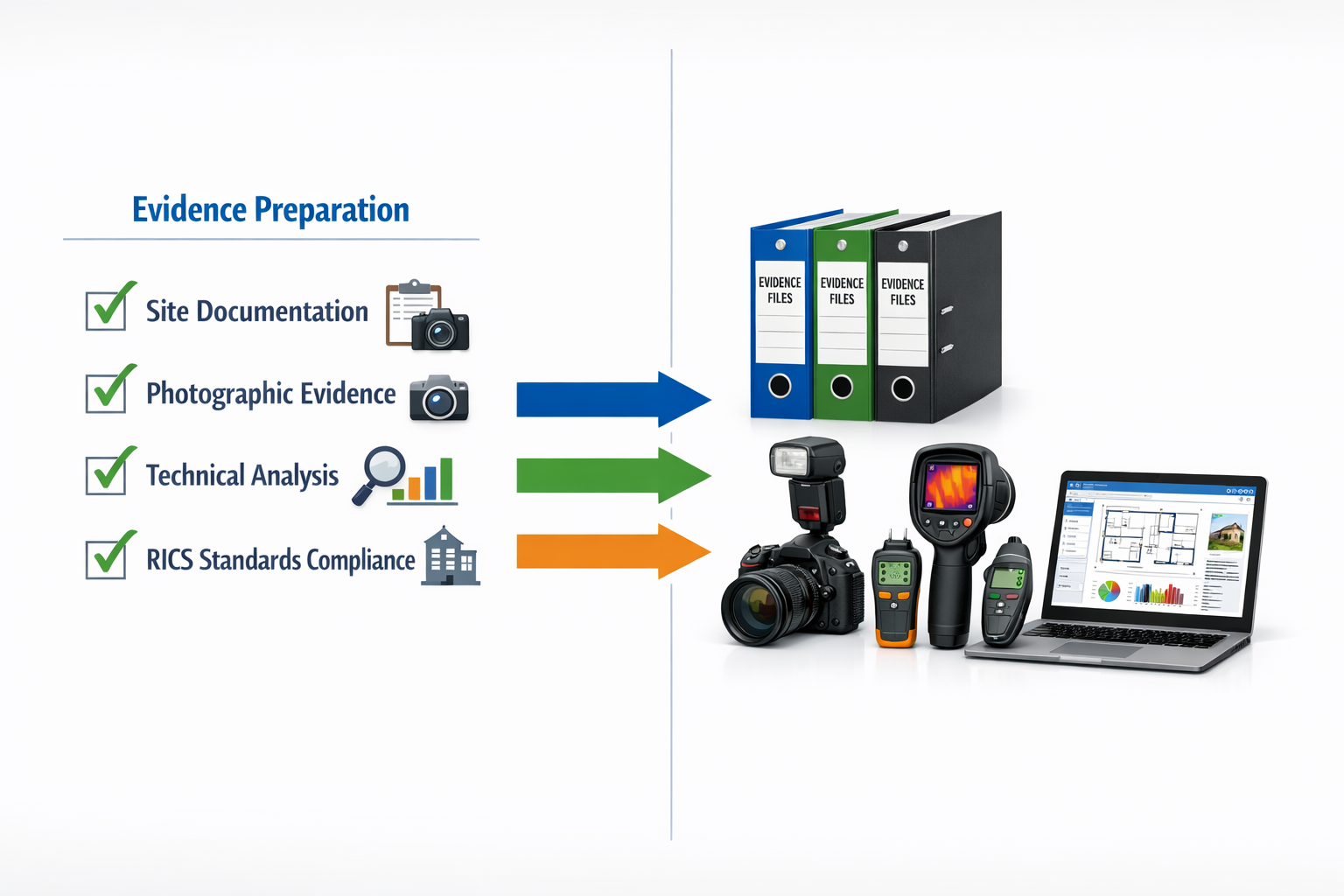
Site Inspection Records: Detailed notes from property inspections form the foundation of expert evidence. These should include:
- Date, time, and weather conditions during inspection
- Areas accessed and any limitations on inspection scope
- Specific observations with precise locations
- Measurements and technical readings
- Preliminary assessments made during the visit
Photographic Evidence: High-quality photographs provide visual support for written findings. Best practices include:
- Multiple angles of each defect or area of concern
- Scale references (measuring tapes, coins) to show defect size
- Context shots showing defect location within the property
- Close-up detail images of specific issues
- Date and location metadata embedded in image files
Technical Analysis: Supporting technical evidence strengthens expert opinions:
- Moisture meter readings for damp assessments
- Thermal imaging results showing heat loss or moisture patterns
- Structural calculations for load-bearing concerns
- Laboratory test results for materials analysis
- Historical records showing property modifications
Comparative Analysis: When disputes involve disagreements between surveys, expert witnesses must analyze multiple reports:
| Element | Original Survey | Expert Review | Variance Analysis |
|---|---|---|---|
| Structural Issues | Minor cracking noted | Significant structural movement | Original survey underestimated severity |
| Damp Problems | Surface condensation | Rising damp with timber decay | Different diagnosis requiring different remediation |
| Roof Condition | Generally sound | Multiple defects requiring replacement | Inadequate inspection scope |
This comparative approach helps consultation panels understand where and why professional opinions diverge.
Creating Clear, Defensible Reports
Expert witness reports must meet higher standards than standard survey reports. They serve as formal evidence and may be scrutinized by opposing experts, legal professionals, and decision-makers.
Report Structure: A well-organized expert witness report typically includes:
- Executive Summary: Concise overview of key findings and conclusions
- Instructions Received: Clear statement of questions to be addressed
- Methodology: Detailed explanation of inspection and analysis methods
- Findings: Comprehensive presentation of evidence discovered
- Analysis: Technical interpretation of findings
- Conclusions: Clear answers to instructed questions
- Declarations: Statement of independence and qualifications
Writing for Accessibility: Expert reports must be understandable to non-specialists while maintaining technical accuracy. Strategies include:
- Defining technical terms when first introduced
- Using visual aids like diagrams, annotated photographs, and charts
- Providing context for technical standards and regulations
- Explaining implications of technical findings in practical terms
- Avoiding jargon or explaining it clearly when necessary
Supporting Documentation: Appendices should include:
- Curriculum vitae demonstrating qualifications
- Relevant professional certifications
- Detailed photographic records
- Technical calculations and test results
- Referenced industry standards and guidance documents
When preparing evidence related to building surveys or homebuyers reports, expert witnesses should ensure their documentation exceeds the standards of routine survey reports.
Addressing Common Dispute Scenarios
Scenario 1: Disputed Defect Severity
A seller's upfront assessment describes wall cracks as "minor settlement" while a buyer's expert identifies "progressive structural movement." The expert witness must:
- Examine crack patterns, widths, and locations
- Assess whether movement is ongoing or historic
- Reference building standards for acceptable tolerances
- Provide evidence-based severity classification
- Estimate repair requirements and costs
Scenario 2: Overlooked Defects
A buyer discovers significant damp problems shortly after purchase despite a clean upfront assessment. The expert witness investigates:
- Whether the defect was reasonably discoverable during the original survey
- Whether inspection scope was adequate
- Whether the defect developed after the assessment
- Whether the original surveyor met professional standards
- Appropriate allocation of responsibility
Scenario 3: Repair Cost Disputes
Parties disagree on the cost to remedy identified defects, with estimates ranging from £15,000 to £45,000. The expert witness provides:
- Detailed specification of required remedial works
- Multiple contractor quotations for verification
- Analysis of cost estimate methodologies
- Consideration of property-specific factors affecting costs
- Realistic range reflecting current market conditions
For properties with specific concerns like roof condition or subsidence issues, expert witnesses must demonstrate specialized knowledge in these areas.
Navigating the Consultation Process
Understanding Consultation Frameworks in 2026
Homebuying reform consultations in 2026 involve multiple stakeholders: government departments, industry bodies, consumer protection organizations, and property professionals. Expert witnesses may be called to provide evidence during various consultation stages:
Pre-Legislative Consultations: Before regulations are finalized, expert witnesses help policymakers understand practical implications of proposed rules. Testimony might address:
- How proposed assessment standards will work in practice
- Potential unintended consequences of specific requirements
- Cost implications for different market segments
- Technical feasibility of proposed timelines
Industry Working Groups: Expert witnesses contribute to technical working groups developing implementation guidelines, helping ensure regulations are practical and achievable.
Dispute Resolution Consultations: When specific disputes arise under new regulations, consultation panels may seek expert testimony to inform their decisions.
Effective Testimony and Presentation Skills
Written reports form the foundation of expert evidence, but oral testimony during consultations or hearings often proves equally important. Effective expert witnesses develop strong presentation skills:
Clear Communication: Technical expertise means nothing if it cannot be communicated effectively. Successful expert witnesses:
- Use plain language whenever possible
- Provide analogies to explain complex concepts
- Respond directly to questions asked
- Acknowledge limitations of their expertise
- Admit uncertainty when appropriate rather than speculating
Visual Aids: Well-designed visual presentations enhance understanding:
- Annotated photographs highlighting key issues
- Diagrams showing structural relationships
- Charts comparing different assessment approaches
- Timeline graphics showing defect progression
- Cost breakdown tables
Professional Demeanor: Expert witnesses must maintain credibility through:
- Calm, measured responses even under challenging questioning
- Respect for all parties and opposing experts
- Focus on technical matters rather than advocacy
- Consistency between written and oral evidence
- Transparency about methodology and assumptions
Handling Cross-Examination: When opposing parties challenge expert testimony, effective witnesses:
- Listen carefully to questions before responding
- Request clarification when questions are unclear
- Distinguish between facts and opinions in their responses
- Acknowledge valid points raised by questioners
- Defend their methodology and conclusions with evidence
"The expert witness's primary duty is to the tribunal or consultation panel, not to the party instructing them. Independence and objectivity are non-negotiable."
Collaboration with Legal Teams
Expert witnesses working on upfront condition assessment disputes typically collaborate with solicitors, barristers, or in-house legal teams. Effective collaboration requires:
Clear Instructions: Legal teams should provide written instructions specifying:
- Questions the expert should address
- Relevant documents and evidence to review
- Timeline for report delivery
- Format requirements for reports
- Budget constraints if applicable
Regular Communication: Throughout the evidence preparation process, experts and legal teams should maintain dialogue about:
- Emerging findings that may affect case strategy
- Additional information or access needed
- Technical clarifications for legal arguments
- Coordination with other expert witnesses
- Preparation for oral testimony
Understanding Legal Context: While experts focus on technical matters, understanding the legal framework helps them provide more useful evidence. This includes awareness of:
- Relevant property law principles
- Burden of proof requirements
- Admissibility standards for evidence
- Consultation or tribunal procedures
- Precedent cases involving similar issues
For disputes involving party wall matters or leasehold properties, expert witnesses may need to coordinate with specialists in those specific areas.
Best Practices for Expert Witnesses in 2026
Maintaining Independence and Objectivity
The credibility of expert witness testimony depends entirely on independence. Several practices help maintain objectivity:
Conflict of Interest Screening: Before accepting instructions, expert witnesses should:
- Verify they have no prior relationship with the property
- Confirm they have not previously advised any party to the dispute
- Disclose any professional or personal connections to involved parties
- Decline instructions where conflicts cannot be resolved
Fee Structures: Expert witness fees should never be contingent on case outcomes. Fixed fees or hourly rates maintain independence, while success-based fees create bias[1].
Balanced Analysis: Expert witnesses must present evidence that supports their conclusions, even when it may not favor the instructing party. Cherry-picking favorable evidence while ignoring contradictory findings destroys credibility.
Peer Review: Having reports reviewed by colleagues before submission helps identify weaknesses, ensures technical accuracy, and demonstrates commitment to quality.
Staying Current with Regulatory Changes
The 2026 homebuying reform environment is dynamic, with regulations, guidance, and best practices evolving rapidly. Expert witnesses must:
Monitor Regulatory Updates: Regular review of publications from:
- Ministry of Housing, Communities & Local Government
- RICS policy statements and practice guidance
- Law Commission recommendations
- Consumer protection bodies
- Professional surveying organizations
Continuing Professional Development: Attending training on:
- Updated survey standards and methodologies
- New building technologies and materials
- Emerging defect patterns and remediation techniques
- Legal developments affecting property transactions
- Expert witness skills and procedures
Industry Engagement: Participating in professional networks allows expert witnesses to:
- Share experiences with challenging cases
- Learn from peers' approaches to common problems
- Contribute to development of industry best practices
- Stay informed about market trends affecting property assessment
Technology and Innovation in Evidence Preparation
Modern expert witnesses leverage technology to enhance evidence quality and presentation:
Digital Documentation: Cloud-based systems for organizing evidence provide:
- Secure storage with access controls
- Version tracking for document management
- Easy sharing with legal teams and other experts
- Search functionality for large evidence sets
Advanced Inspection Tools: Technologies enhancing property assessment include:
- Thermal imaging cameras revealing hidden moisture and insulation issues
- Drone photography for roof and chimney inspections
- 3D scanning creating detailed property models
- Moisture mapping systems tracking damp patterns
Presentation Software: Professional presentation tools help expert witnesses:
- Create compelling visual evidence for consultations
- Annotate photographs and diagrams effectively
- Build interactive timelines and comparison tools
- Produce professional-quality reports
Remote Testimony Capabilities: Video conferencing technology enables expert witnesses to participate in consultations without travel, increasing efficiency while maintaining effectiveness.
When conducting RICS surveys that may later require expert witness testimony, incorporating these technologies from the outset creates stronger evidence foundations.
Practical Guidance for Property Professionals
For Surveyors Conducting Upfront Assessments
Surveyors performing upfront condition assessments in 2026 should recognize that their reports may later be scrutinized as evidence in disputes. Best practices include:
Comprehensive Documentation: Even when not expecting disputes, document thoroughly:
- Detailed descriptions of inspection methodology
- Clear photographs with location references
- Precise measurements and technical readings
- Explanations of any inspection limitations
- References to relevant standards and guidance
Conservative Reporting: When uncertain about defect severity or causes, err on the side of caution. Phrases like "further investigation recommended" protect all parties and maintain professional credibility.
Clear Limitations: Explicitly state inspection scope limitations, areas not accessed, and conditions affecting assessment quality. This transparency prevents later disputes about overlooked issues.
Professional Standards: Ensure all work meets or exceeds RICS standards, even when commercial pressures encourage shortcuts. Choosing the right property assessment level for each property protects surveyors from liability.
For Buyers and Sellers
Property buyers and sellers navigating the 2026 upfront assessment system should:
Understand Report Limitations: No survey can identify every defect. Understanding what different survey levels cover helps set realistic expectations.
Seek Clarification: When survey reports contain unclear language or technical terms, request clarification before disputes arise. Most surveyors willingly explain their findings in detail.
Commission Independent Reviews: When significant concerns arise from an upfront assessment, commissioning an independent expert review can either confirm findings or identify discrepancies early.
Document Everything: Keep detailed records of all communications, reports, and agreements related to property condition. This documentation proves invaluable if disputes later require expert witness involvement.
Consider Timing: Understanding what to do when your property offer has been accepted includes planning for potential survey-related negotiations.
For Legal Professionals
Solicitors and barristers working on upfront condition assessment disputes should:
Engage Experts Early: Bringing expert witnesses into cases early allows them to:
- Identify evidence that should be preserved
- Suggest additional investigations that may strengthen the case
- Provide preliminary views on case merits
- Estimate realistic timelines for evidence preparation
Provide Clear Instructions: Written instructions should specify exactly what questions the expert should address, avoiding overly broad or vague requests.
Budget Appropriately: Quality expert witness services require appropriate investment. Underfunding expert evidence often proves more expensive when weak evidence leads to unfavorable outcomes.
Facilitate Access: Ensure expert witnesses can access properties, documents, and other parties' experts as needed for thorough analysis.
Prepare for Testimony: Work with expert witnesses to prepare for consultations or hearings, ensuring they understand procedures and anticipate likely challenges to their evidence.
Future Trends and Emerging Issues
Evolution of Upfront Assessment Standards
As the 2026 homebuying reforms mature, assessment standards will continue evolving:
Standardization Efforts: Industry bodies are working toward more standardized assessment protocols, reducing variation between surveyors and minimizing disputes about appropriate inspection scope.
Technology Integration: Emerging technologies like artificial intelligence for defect detection and blockchain for survey record-keeping may transform how assessments are conducted and verified.
Risk-Based Approaches: Future regulations may adopt risk-based assessment frameworks, with inspection intensity varying based on property age, type, and known risk factors.
Consumer Protection Enhancements: Ongoing consultations may strengthen protections for buyers relying on seller-commissioned assessments, potentially including mandatory insurance or warranty schemes.
The Growing Importance of Expert Witnesses
Several factors suggest expert witness roles will expand in coming years:
Increased Dispute Volume: As mandatory upfront assessments become universal, the absolute number of disputes will likely increase, even if the percentage of problematic transactions decreases.
Regulatory Complexity: As homebuying regulations become more sophisticated, technical expertise will be increasingly necessary to interpret and apply them correctly.
Professional Specialization: The expert witness field is professionalizing, with more surveyors pursuing specialized training and focusing significant practice time on expert witness work.
Cross-Border Issues: As property investment becomes increasingly international, expert witnesses may need to navigate complex questions about how different jurisdictions' standards apply to UK properties.
Preparing for Regulatory Consultations
The 2026 regulatory landscape remains fluid, with ongoing consultations about implementation details. Expert witnesses can prepare by:
Monitoring Consultation Opportunities: Government departments and industry bodies regularly seek input on proposed regulations. Expert witnesses should watch for relevant consultations and consider submitting evidence.
Building Evidence Bases: Collecting data about how upfront assessments work in practice—success rates, common dispute types, cost implications—provides valuable evidence for future policy discussions.
Engaging Professional Bodies: RICS and other professional organizations play crucial roles in regulatory consultations. Expert witnesses should engage with these bodies to ensure practitioner perspectives inform policy development.
Documenting Case Studies: Anonymized case studies of disputes and their resolutions provide concrete examples that help policymakers understand practical implications of regulatory choices.
Understanding common myths about property surveys helps expert witnesses educate stakeholders during consultation processes.
Conclusion
Expert Witness Roles in 2026 Upfront Condition Assessment Disputes: Preparing Evidence for Homebuying Reform Consultations represents a critical intersection of property assessment, legal process, and regulatory reform. As mandatory upfront condition assessments reshape the UK property market, qualified expert witnesses provide essential independent analysis that helps resolve disputes and inform policy development.
The most effective expert witnesses in this evolving landscape combine:
✅ Technical expertise grounded in RICS standards and comprehensive property assessment experience
✅ Independence and objectivity that prioritizes truth over advocacy
✅ Clear communication skills that make complex technical matters accessible
✅ Meticulous documentation that creates defensible evidence
✅ Regulatory awareness that keeps pace with homebuying reform developments
Actionable Next Steps
For Property Professionals:
- Pursue specialized expert witness training through RICS or other recognized providers
- Develop comprehensive documentation practices that exceed minimum standards
- Build relationships with legal professionals who may require expert witness services
- Stay current with regulatory developments through continuing professional development
For Buyers and Sellers:
- Commission appropriate survey levels for properties being purchased
- Seek clarification on any unclear survey findings before disputes arise
- Maintain detailed records of all property condition documentation
- Consider independent expert reviews when significant concerns emerge
For Legal Practitioners:
- Engage qualified expert witnesses early in upfront assessment disputes
- Provide clear, written instructions specifying questions to be addressed
- Budget appropriately for quality expert evidence preparation
- Facilitate access to properties and evidence for thorough expert analysis
For Policymakers:
- Seek expert witness input during regulatory consultations
- Consider practical implementation challenges identified by practitioners
- Monitor dispute patterns to identify areas where regulations need refinement
- Support professional development initiatives that enhance expert witness quality
The 2026 homebuying reforms offer tremendous potential to improve property transactions, reducing failed sales and increasing market transparency. Realizing this potential requires expert witnesses who can bridge the gap between technical property assessment and legal resolution, ensuring disputes are resolved fairly and policy decisions are informed by practical expertise.
As the regulatory landscape continues evolving, the demand for qualified expert witnesses will only increase. Those who invest in developing the necessary skills, maintaining professional standards, and staying current with regulatory changes will find themselves well-positioned to contribute meaningfully to this important aspect of property market reform.
Whether you're a surveyor considering expert witness work, a property buyer navigating the new assessment requirements, or a legal professional handling upfront condition disputes, understanding these expert witness roles is essential for success in the transformed 2026 property market.
References
[1] Damages Expert Witness Roles Selection Guide – https://capitalexpertservices.com/articles/damages-expert-witness-roles-selection-guide/
[2] Expert Witness Roles In 2026 Lettings Market Disputes Navigating Tenant Demand Surge And Landlord Constraints – https://nottinghillsurveyors.com/blog/expert-witness-roles-in-2026-lettings-market-disputes-navigating-tenant-demand-surge-and-landlord-constraints