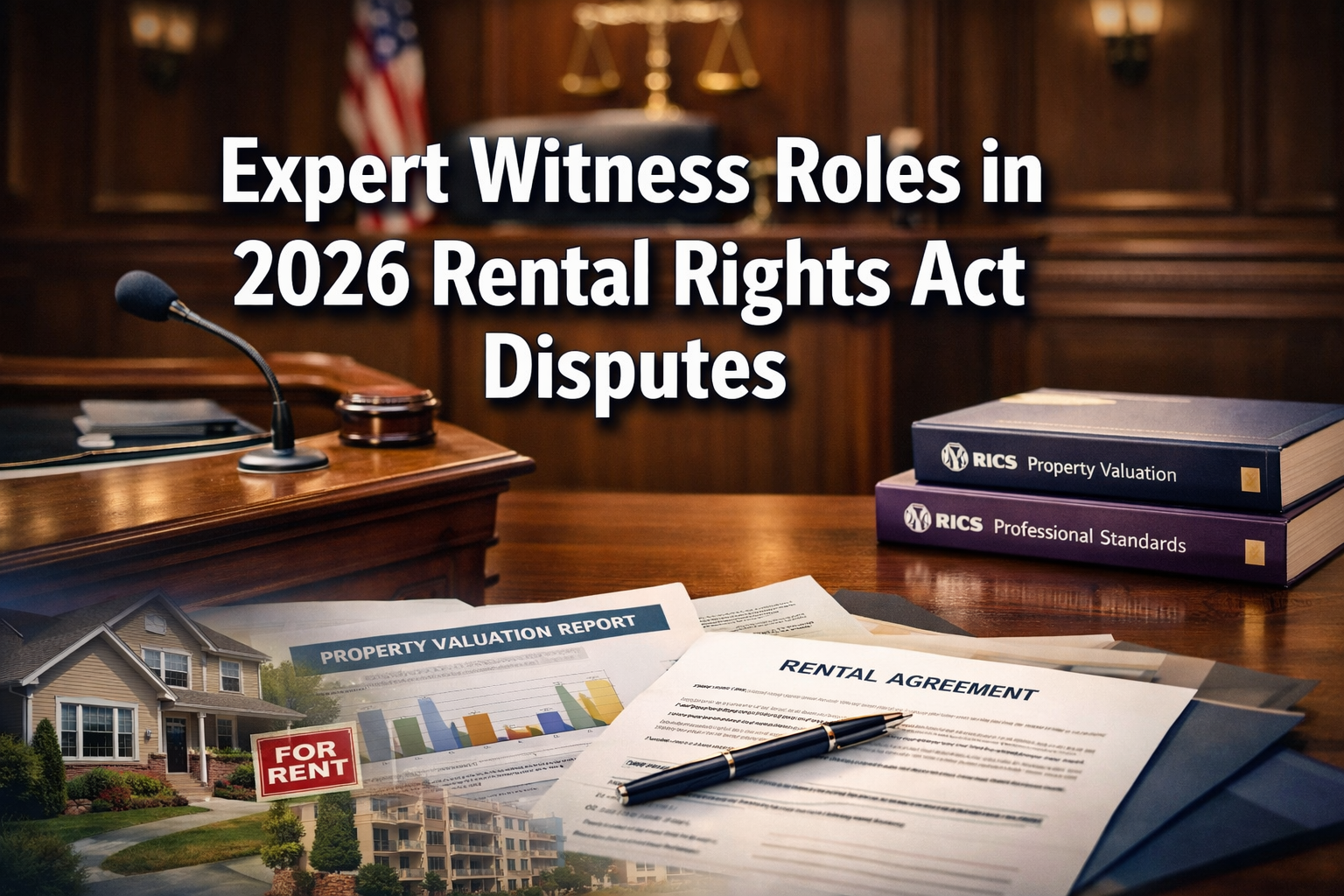
The rental landscape has transformed dramatically in 2026, and Expert Witness Roles in 2026 Rental Rights Act Disputes: Valuations Under New Landlord Regulations have become critical to resolving conflicts between landlords and tenants. As the Renters' Rights Act reshapes property valuations and rental practices, chartered surveyors and valuation experts find themselves at the center of complex legal disputes. This comprehensive guide explores how RICS-qualified professionals navigate testimony requirements, valuation methodologies, and regulatory compliance in this new era of tenant protections.
Key Takeaways
- 🏛️ Expert witnesses in rental disputes must follow strict RICS protocols when testifying about property valuations affected by new tenant protection measures
- 📊 Portfolio restructuring and tenant rights provisions have significantly impacted property valuations, requiring specialized expertise to quantify financial effects
- ⚖️ Compensation for expert witnesses typically ranges from $175 to $450+ per hour, depending on qualifications and case complexity[1]
- 📋 RICS Red Book valuation standards remain the foundation for credible expert testimony in landlord-tenant disputes
- 🔍 Expert witnesses must demonstrate independence and objectivity while addressing rent control impacts, eviction restrictions, and security deposit regulations
Understanding the 2026 Rental Rights Act Framework

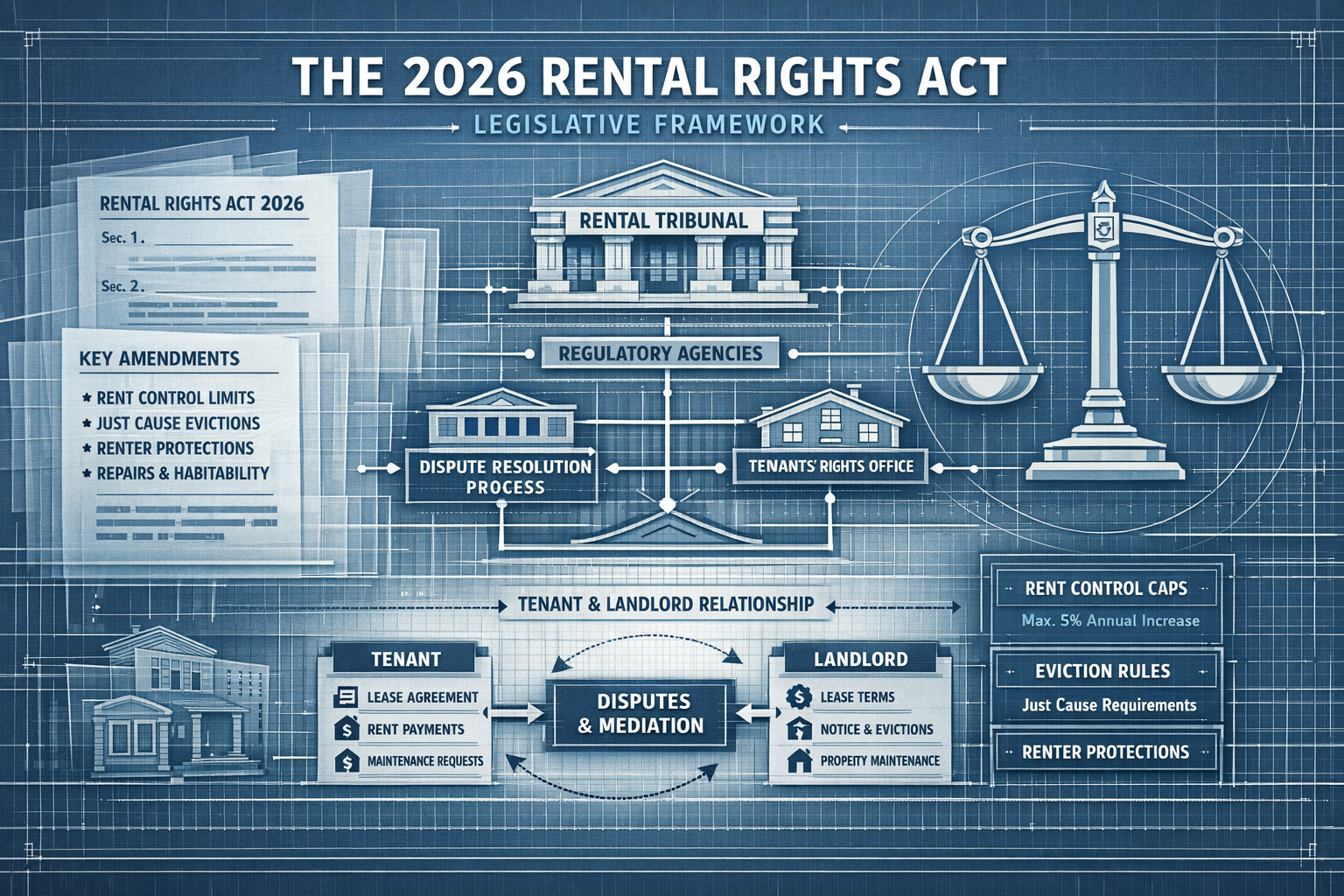
The Renters' Rights Act represents a fundamental shift in how landlords and property managers operate across the UK. Landlords must adapt to new regulatory standards[6] that prioritize tenant protections, fair housing practices, and transparent rental processes. These changes have created unprecedented demand for expert witnesses who can accurately assess how regulations impact property values.
Key Provisions Affecting Property Valuations
The Act introduces several provisions that directly influence rental property assessments:
- Enhanced tenant security measures limiting no-fault evictions
- Rent increase restrictions requiring careful review and justification[7]
- Improved property maintenance standards mandating higher quality accommodations
- Extended notice periods for tenancy terminations
- Strengthened deposit protection requirements
Each provision carries valuation implications that expert witnesses must quantify when disputes arise. For instance, restrictions on rent increases may reduce projected income streams, while mandatory maintenance upgrades require capital expenditure adjustments in property valuation calculations.
Expert Witness Roles in 2026 Rental Rights Act Disputes: Core Responsibilities
Expert witnesses serving in rental disputes under the new regulations shoulder significant responsibilities. Their testimony can determine case outcomes involving thousands or even millions of pounds in disputed valuations.
Primary Duties and Obligations
Qualified experts in landlord-tenant matters provide opinions on multiple aspects of rental property disputes[1]:
| Responsibility Area | Specific Focus |
|---|---|
| Lease Agreement Analysis | Interpretation of terms under new regulatory framework |
| Property Maintenance Standards | Assessment of compliance with enhanced requirements |
| Security Deposit Disputes | Evaluation of proper handling and deductions |
| Eviction Proceedings | Analysis of lawful grounds under restricted criteria |
| Tenant Rights Compliance | Review of landlord adherence to new protections |
| Rental Valuation | Market rent determination considering regulatory constraints |
RICS Standards for Expert Testimony
RICS chartered surveyors must adhere to rigorous professional standards when serving as expert witnesses. The Royal Institution of Chartered Surveyors mandates that experts:
✅ Provide independent, unbiased opinions regardless of who engages them
✅ Base testimony on factual evidence and recognized methodologies
✅ Clearly distinguish between proven facts and professional opinions
✅ Disclose any conflicts of interest that might affect objectivity
✅ Present findings in clear, accessible language for legal proceedings
"The expert witness owes their primary duty to the court or tribunal, not to the party instructing them. This independence is fundamental to credible testimony in rental disputes."
Valuation Methodologies Under New Landlord Regulations
Expert Witness Roles in 2026 Rental Rights Act Disputes: Valuations Under New Landlord Regulations require sophisticated understanding of how tenant protections affect property values. Traditional valuation approaches must be adapted to account for regulatory constraints.
Red Book Valuation Compliance
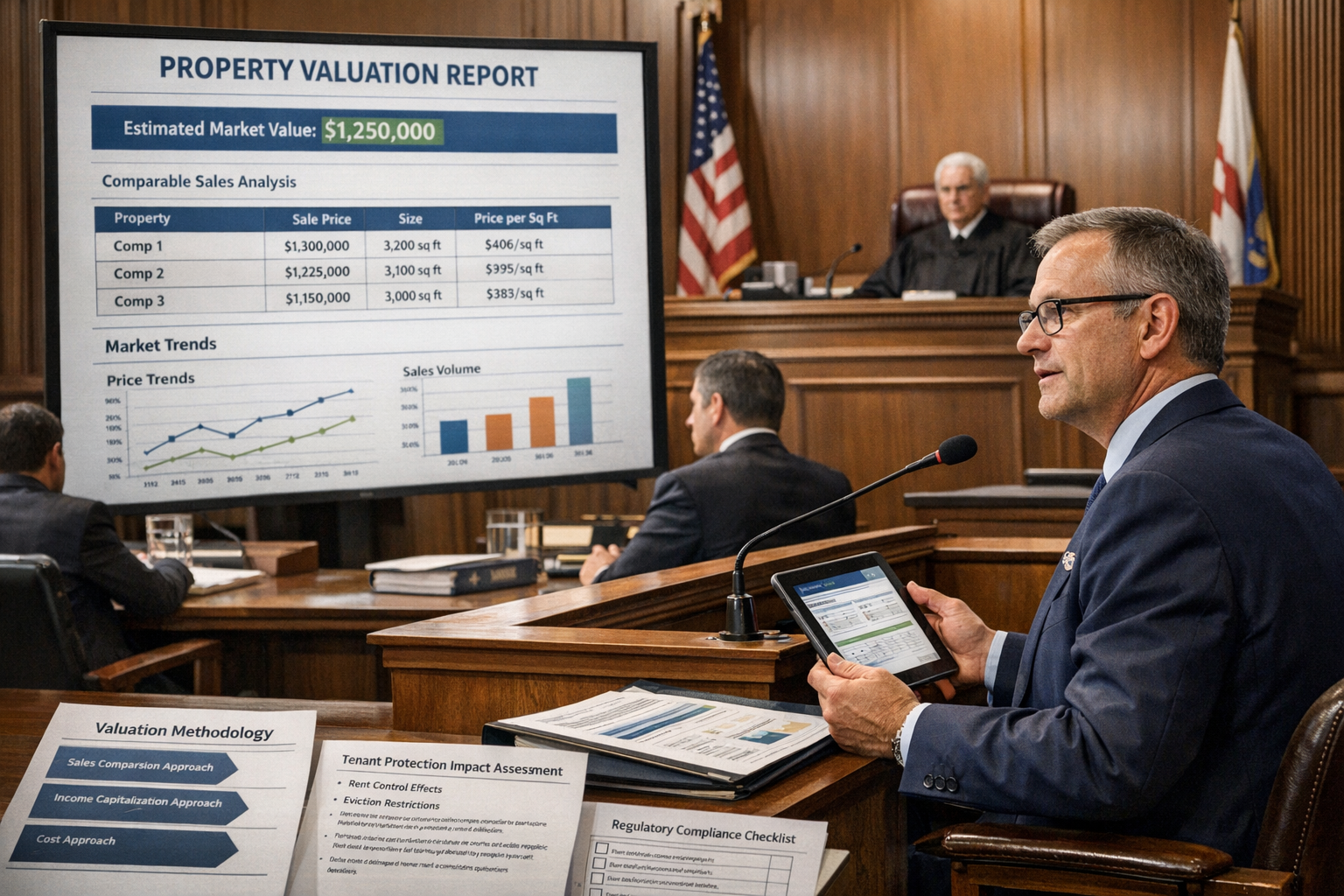
Red Book valuations remain the gold standard for expert witness testimony in rental disputes. The RICS Valuation – Global Standards (Red Book) provides the framework for credible, defensible valuations that courts recognize and respect.
When preparing valuations for Renters' Rights Act disputes, experts must:
- Identify the appropriate basis of value (market value, investment value, fair value)
- Clearly state all assumptions and special assumptions related to regulatory impacts
- Provide comprehensive comparable evidence adjusted for tenant protection provisions
- Quantify the impact of specific regulations on income potential and capital value
- Document methodology thoroughly to withstand cross-examination
Adjusting for Tenant Protection Impacts
The 2026 regulations create measurable valuation impacts that experts must quantify:
Income Approach Adjustments:
- Reduced rental growth assumptions due to rent control provisions
- Increased void periods from extended notice requirements
- Higher management costs for compliance administration
- Reduced exit yields reflecting regulatory risk premiums
Capital Value Considerations:
- Deferred maintenance obligations becoming immediate requirements
- Portfolio restructuring costs for non-compliant properties
- Reduced investor appetite for heavily regulated rental stock
- Increased insurance and legal costs
Expert witnesses must provide clear mathematical calculations showing how each regulatory provision affects the final valuation figure. This transparency is essential for court acceptance and withstanding opposing counsel scrutiny.
Portfolio Restructuring and Expert Witness Analysis
Many landlords face portfolio restructuring challenges[7] as they adapt to 2026 regulations. Expert witnesses frequently testify on the financial implications of compliance strategies versus divestment decisions.
Evaluating Compliance Costs vs. Asset Disposal
Landlords often engage expert witnesses to assess whether upgrading properties to meet new standards makes financial sense compared to selling assets. This analysis requires:
- Detailed cost estimates for bringing properties into compliance
- Revised income projections under new regulatory constraints
- Market analysis of buyer demand for non-compliant properties
- Tax implications of disposal versus continued ownership
- Financing availability for compliance upgrades
Expert testimony in these matters helps courts understand whether landlords acted reasonably when making portfolio decisions that affect tenants.
Quantifying Regulatory Impact on Investment Returns
A critical aspect of Expert Witness Roles in 2026 Rental Rights Act Disputes: Valuations Under New Landlord Regulations involves demonstrating how regulations affect investment performance. Experts typically prepare detailed financial models showing:
📉 Before-and-after yield comparisons
📉 Internal rate of return (IRR) calculations under different regulatory scenarios
📉 Net present value (NPV) analyses of compliance investments
📉 Cash flow projections incorporating increased costs and restricted income
These quantitative analyses provide courts with objective data to assess disputed claims about regulatory impacts.
Common Dispute Types Requiring Expert Valuation Testimony
Several dispute categories have emerged prominently in 2026 as landlords and tenants navigate new regulations.
Rent Increase Justification Disputes
With rent increase management becoming a critical focus area[7], expert witnesses frequently testify on whether proposed increases comply with regulations and reflect genuine market conditions. These cases require:
- Comprehensive comparable rental evidence from similar properties
- Analysis of local market trends and supply-demand dynamics
- Assessment of property improvements justifying increases
- Evaluation of inflation adjustments versus regulatory caps
Security Deposit Disagreements
Enhanced deposit protection requirements create disputes over proper handling and deductions. Expert witnesses may opine on:
- Fair wear and tear versus tenant damage
- Reasonable repair costs for claimed damages
- Proper deposit protection compliance by landlords
- Market-based cleaning and repair charges
Property Condition and Maintenance Standards
The Act's improved maintenance standards generate disputes over whether properties meet required quality levels. Condition survey reports prepared by qualified surveyors become crucial evidence in these cases.
Expert witnesses assess:
- Compliance with Decent Homes Standard and enhanced requirements
- Necessary remedial works to achieve compliance
- Reasonable timescales for landlords to complete improvements
- Interim rent reductions justified by substandard conditions
Expert Witness Qualifications and Selection Criteria
Not all property professionals qualify as credible expert witnesses in Expert Witness Roles in 2026 Rental Rights Act Disputes: Valuations Under New Landlord Regulations cases. Courts and legal teams seek specific credentials and experience.
Essential Professional Credentials
Minimum qualifications for rental dispute expert witnesses include:
✓ RICS membership (MRICS or FRICS designation)
✓ Specialist knowledge in residential lettings and valuations
✓ Current market experience in relevant geographic areas
✓ Understanding of landlord-tenant law and regulations
✓ Expert witness training in courtroom procedures and report writing
Experience Requirements
Beyond credentials, effective expert witnesses demonstrate:
- Minimum 10+ years in property valuation and lettings
- Track record of instructing on similar dispute types
- Familiarity with local markets where disputed properties are located
- Up-to-date knowledge of 2026 regulatory changes
- Clear communication skills for explaining complex concepts
Avoiding Conflicts of Interest
Expert witnesses must disclose any relationships or interests that might compromise objectivity. This includes:
- Prior business relationships with parties to the dispute
- Financial interests in similar properties in the area
- Membership in landlord or tenant advocacy organizations
- Previous testimony in related cases involving the same parties
Preparing Expert Reports for Rental Rights Act Disputes
The expert report serves as the foundation for testimony in rental disputes. Courts rely heavily on written reports, making their quality and comprehensiveness critical.
Essential Report Components
A credible expert report for rental valuation disputes must include:
- Executive Summary – Key findings and opinions in accessible language
- Expert's Qualifications – Detailed CV and relevant experience
- Instructions Received – Clear statement of what the expert was asked to assess
- Factual Background – Property details, tenancy history, dispute context
- Methodology – Detailed explanation of valuation approach and standards applied
- Evidence Considered – All documents, inspections, and data reviewed
- Analysis and Findings – Detailed assessment with supporting calculations
- Opinions and Conclusions – Clear statements of professional judgment
- Declaration of Truth – Confirmation of independence and accuracy
Valuation Report Structure
When the dispute centers on property valuation, the report should follow Red Book standards and include:
- Terms of engagement and scope limitations
- Property description with photos and floor plans
- Tenure and tenancy details including lease terms
- Market analysis with comparable evidence
- Regulatory impact assessment specific to 2026 provisions
- Valuation calculations showing all adjustments
- Sensitivity analysis demonstrating impact of key assumptions
Common Pitfalls to Avoid
Expert witnesses should avoid these frequent mistakes:
❌ Advocacy for the instructing party rather than independent analysis
❌ Insufficient comparable evidence to support opinions
❌ Unclear methodology that cannot be replicated or verified
❌ Failure to address opposing arguments or alternative interpretations
❌ Overly technical language that obscures key points
❌ Inadequate consideration of regulatory impacts
Testifying in Court: Best Practices for Expert Witnesses
Written reports form only part of an expert witness's role. Courtroom testimony requires additional skills and preparation.
Pre-Hearing Preparation
Effective expert witnesses invest substantial time preparing for testimony:
- Review all case materials thoroughly, including opposing expert reports
- Anticipate challenging questions and prepare clear responses
- Practice explaining complex concepts in simple terms
- Prepare visual aids (charts, photos, diagrams) to clarify testimony
- Coordinate with legal counsel while maintaining independence
Courtroom Conduct Guidelines
During testimony, expert witnesses should:
✓ Speak clearly and confidently without arrogance
✓ Address answers to the judge or tribunal rather than lawyers
✓ Admit limitations in knowledge or available evidence
✓ Avoid speculation beyond professional expertise
✓ Remain calm and professional during cross-examination
✓ Take time to consider questions before responding
"The most credible expert witnesses acknowledge what they don't know as readily as what they do know. Courts value honesty over false certainty."
Handling Cross-Examination
Cross-examination tests an expert's credibility and the robustness of their opinions. Successful witnesses:
- Listen carefully to the complete question before answering
- Answer only what is asked without volunteering additional information
- Maintain composure when challenged aggressively
- Refer to their report when appropriate for accuracy
- Acknowledge valid points made by opposing counsel
- Clarify mischaracterizations of their testimony promptly
Compensation and Engagement Terms
Understanding expert witness compensation helps both parties budget appropriately and ensures fair engagement terms.
Typical Fee Structures
Expert witness fees for rental disputes vary based on qualifications and complexity[1]:
| Service Component | Typical Rate Range |
|---|---|
| Initial consultation | $175 – $300/hour |
| Report preparation | $250 – $450/hour |
| Court testimony | $300 – $500+/hour |
| Travel time | 50-100% of hourly rate |
| Cancellation fees | 50-100% of reserved time |
Highly specialized experts with extensive courtroom experience and advanced credentials may command premium rates exceeding these ranges.
Engagement Letter Essentials
Professional expert witnesses provide clear engagement letters specifying:
- Scope of work and deliverables expected
- Fee structure and payment terms
- Estimated total costs with ranges for uncertainties
- Timeline for report delivery and availability for testimony
- Cancellation and postponement policies
- Conflicts of interest disclosure
- Professional indemnity insurance coverage
Ethical Billing Practices
Credible expert witnesses maintain transparent billing practices:
✓ Detailed time records for all work performed
✓ Separate billing for different case phases
✓ Clear distinction between expert work and administrative tasks
✓ Advance notice of significant cost increases
✓ No success fees or contingency arrangements
The Future of Expert Witness Roles in Rental Disputes
As the 2026 Rental Rights Act matures, Expert Witness Roles in 2026 Rental Rights Act Disputes: Valuations Under New Landlord Regulations will continue evolving.
Emerging Trends and Challenges
Several developments are shaping the expert witness landscape:
Increased Demand for Specialists: Generic property valuers are giving way to experts with specific rental regulation expertise and demonstrated courtroom experience.
Technology Integration: Advanced data analytics and automated valuation models (AVMs) are supplementing traditional comparable analysis, requiring experts to understand and critique algorithmic approaches.
Regulatory Complexity: As regulations continue developing, experts must maintain current knowledge through continuing professional development and regular engagement with evolving standards.
Greater Scrutiny: Courts are applying more rigorous standards for expert evidence admissibility, requiring stronger methodological foundations and clearer reasoning.
Professional Development Priorities
Expert witnesses should prioritize:
- Regular CPD on rental regulations and valuation standards
- Expert witness training courses covering courtroom skills
- Market research to maintain current comparable databases
- Professional networking with legal practitioners and fellow experts
- Technical writing skills for clearer, more persuasive reports
Case Study Examples: Valuation Disputes in Practice
Portfolio Devaluation Claim
A landlord with 50 rental properties claimed the 2026 regulations reduced portfolio value by 25%, seeking compensation. The expert witness analyzed:
- Pre-regulation valuations based on historical yields
- Post-regulation income projections with rent control impacts
- Compliance costs for meeting new maintenance standards
- Market evidence of actual transaction prices for similar portfolios
Finding: The expert determined actual devaluation was approximately 12-15%, significantly less than claimed, based on comparable sales evidence and realistic income modeling.
Rent Increase Dispute
A tenant challenged a 15% rent increase as excessive under new regulations. Expert testimony addressed:
- Local market rent growth over the relevant period
- Comparable properties' rental levels
- Property improvements justifying increases
- Regulatory compliance of the increase methodology
Finding: The expert concluded a 7-8% increase was supportable by market evidence, with the excess attributable to landlord's attempt to recover compliance costs inappropriately.
Selecting the Right Expert Witness for Your Case
Whether you're a landlord, tenant, or legal representative, choosing the appropriate expert witness is crucial for case success.
Key Selection Criteria
For Landlords:
- Expertise in investment property valuation
- Understanding of portfolio management challenges
- Experience with compliance cost analysis
- Credibility with institutional investors and lenders
For Tenants:
- Knowledge of tenant rights and protections
- Experience with property condition assessments
- Understanding of fair market rents
- Track record of independent, unbiased testimony
For Legal Teams:
- Strong communication and presentation skills
- Availability for required timeline
- Robust methodology that withstands scrutiny
- Professional demeanor under cross-examination
Questions to Ask Potential Experts
Before engaging an expert witness, ask:
- How many rental dispute cases have you testified in?
- What percentage of your work involves expert witness services?
- Can you provide references from previous legal instructions?
- What is your familiarity with the specific regulations at issue?
- Do you have any conflicts of interest in this matter?
- What is your typical timeline for report preparation?
- What are your fee structures and estimated total costs?
Integration with Related Property Services
Expert Witness Roles in 2026 Rental Rights Act Disputes: Valuations Under New Landlord Regulations often intersect with other property services that support comprehensive case preparation.
Complementary Professional Services
Expert witnesses frequently work alongside:
- Party wall surveyors when disputes involve structural issues affecting rental properties
- Building surveyors providing condition surveys documenting property state
- Lease extension specialists when valuation disputes involve leasehold properties
- Legal counsel coordinating case strategy and evidence presentation
Coordinated Approach Benefits
Integrating expert witness services with comprehensive property assessments provides:
✓ Consistent evidence across different aspects of the dispute
✓ Cost efficiencies through coordinated inspections and analysis
✓ Stronger cases with multiple professional perspectives
✓ Reduced timeline through parallel work streams
Conclusion
Expert Witness Roles in 2026 Rental Rights Act Disputes: Valuations Under New Landlord Regulations have become indispensable to resolving conflicts in the transformed rental landscape. RICS-qualified surveyors and valuation experts provide the objective, methodologically sound analysis that courts require to adjudicate complex disputes involving tenant protections, portfolio restructuring, and regulatory compliance.
The key to effective expert witness service lies in maintaining strict independence while applying rigorous Red Book valuation standards adapted for regulatory impacts. As the rental market continues adjusting to 2026 provisions, demand for qualified expert witnesses will only increase.
Actionable Next Steps
For Landlords:
- Engage qualified experts early when disputes arise
- Maintain detailed records of compliance efforts and costs
- Obtain professional valuations before and after regulatory changes
- Consider property valuation services for portfolio assessment
For Tenants:
- Understand your rights under the 2026 Rental Rights Act
- Document property conditions and communications thoroughly
- Seek expert advice when challenging rent increases or deposit deductions
- Request condition surveys to support claims
For Legal Practitioners:
- Build relationships with credible, experienced expert witnesses
- Brief experts thoroughly on case specifics and legal context
- Allow adequate time for comprehensive report preparation
- Coordinate expert testimony with overall case strategy
For Property Professionals:
- Pursue expert witness training and accreditation
- Maintain current knowledge of rental regulations
- Develop specialized expertise in valuation impacts
- Build track record through smaller cases before major instructions
The rental property sector's regulatory transformation creates both challenges and opportunities. Those who invest in understanding Expert Witness Roles in 2026 Rental Rights Act Disputes: Valuations Under New Landlord Regulations will be well-positioned to navigate this complex landscape successfully.
References
[1] Landlord Tenant S 526 – https://www.jurispro.com/category/landlord-tenant-s-526
[2] Public Housing – https://www.expertinstitute.com/expert-witness/public-housing/
[3] Fair Housing Expert Witness – https://www.seakexperts.com/keywords/fair-housing-expert-witness
[4] Ensuring The Renters Rights Act Raises Standards Tds Charitable Foundation Evidence To The Hclg Co – https://www.tdsgroup.uk/post/ensuring-the-renters-rights-act-raises-standards-tds-charitable-foundation-evidence-to-the-hclg-co
[5] Professional Writing Expert Witness – https://www.wordrake.com/resources/blog/professional-writing-expert-witness
[6] The Renters Rights Bill – https://www.rpclegal.com/thinking/construction/the-renters-rights-bill/
[7] Looking In The Rear View Mirror And Anticipating Challenges For Housing Providers In 2026 – https://aptnewsinc.com/news/looking-in-the-rear-view-mirror-and-anticipating-challenges-for-housing-providers-in-2026/
[8] Renters Rights – https://www.nrla.org.uk/resources/renters-rights