
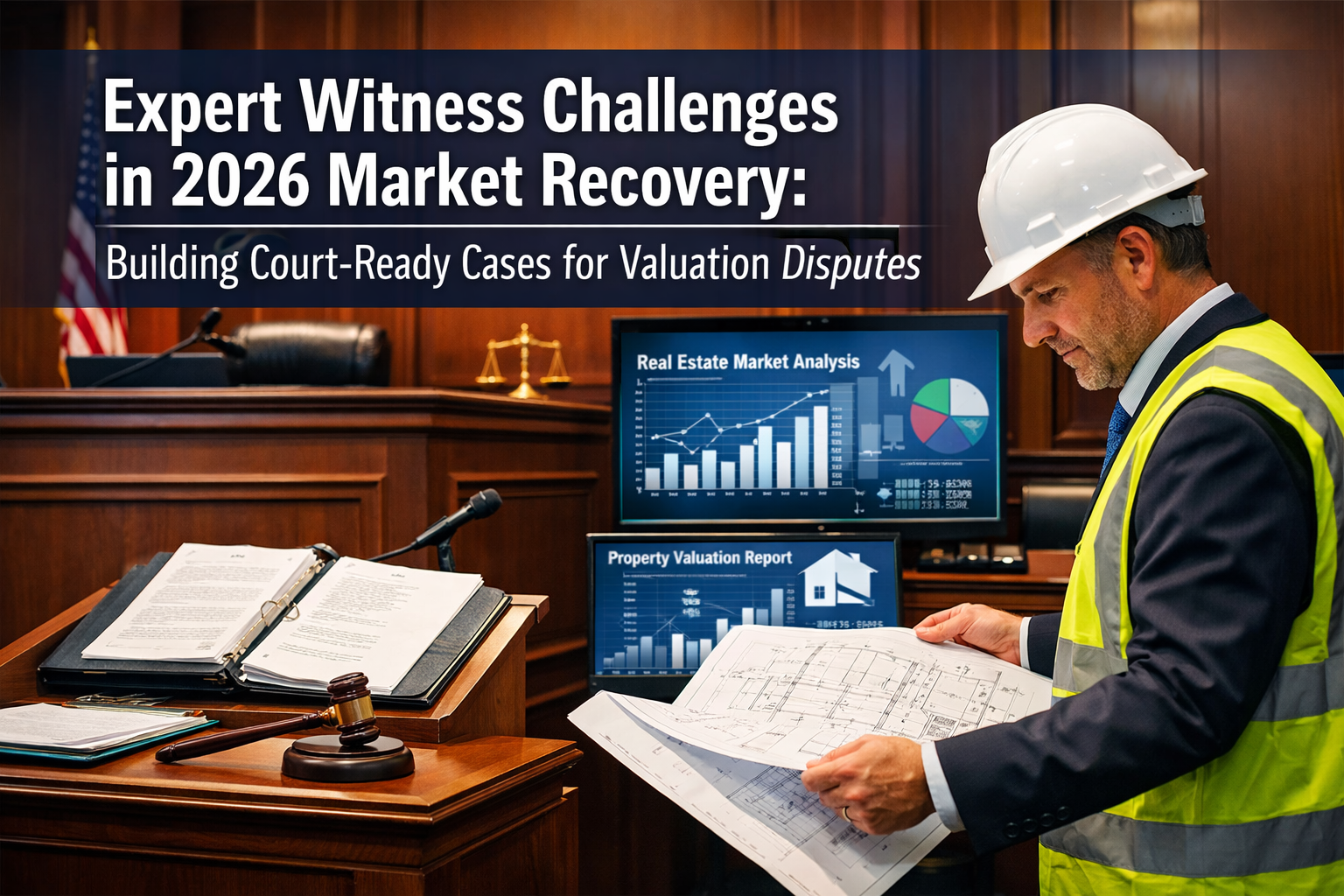
The UK property market in 2026 presents a unique paradox for surveyors and legal professionals. As prices stabilize after years of volatility, the number of valuation disputes reaching courtrooms has surged dramatically. When market conditions shift from rapid growth or decline to more moderate territory, disagreements over property values become more nuanced—and more contentious. Understanding Expert Witness Challenges in 2026 Market Recovery: Building Court-Ready Cases for Valuation Disputes has never been more critical for professionals navigating this complex landscape.
The current market recovery brings regional divergences that complicate valuation work. While London properties show modest gains, certain northern markets continue adjusting downward. This creates fertile ground for disputes in divorce settlements, partnership dissolutions, compulsory purchase cases, and lease premium negotiations. Surveyors acting as expert witnesses must now demonstrate unprecedented rigor in their methodologies and documentation.
Key Takeaways
⭐ Regional market divergences in 2026 create more valuation disputes as different areas experience varying recovery patterns, requiring experts to justify location-specific adjustments with robust comparable evidence.
⭐ Amended admissibility standards under Rule 702 (effective December 2023) now require experts to affirmatively demonstrate reliability, shifting the burden of proof and raising the bar for court acceptance.
⭐ RICS Red Book compliance remains essential for credibility, with courts increasingly scrutinizing whether experts properly identified valuation dates, premises of value, and appropriate methodologies.
⭐ Evidence gathering must be meticulous, with contemporaneous market data, properly adjusted comparables, and clear documentation trails that withstand cross-examination.
⭐ Expert reports must avoid common pitfalls including data timeliness errors, damages double-counting, and failure to distinguish professional expertise from basic arithmetic.
Understanding Expert Witness Challenges in 2026 Market Recovery
The 2026 property market recovery differs fundamentally from previous cycles. Rather than uniform national trends, the current landscape features pronounced regional variations that challenge traditional valuation approaches. London's prime central areas show 3-4% annual growth, while certain Midlands markets remain flat or slightly negative. This divergence creates disputes when parties rely on different geographic comparables or market timing assumptions.
The New Admissibility Landscape
Recent amendments to Federal Rule of Evidence 702 have transformed how courts evaluate expert testimony. The December 2023 changes require experts to affirmatively demonstrate that their opinions are reliable and based on sufficient facts and data. This represents a significant shift from previous standards where methodology questions were often treated as matters of weight for juries rather than admissibility thresholds for judges.
For surveyors providing RICS property valuations, this means:
- Stronger documentation requirements for all assumptions and adjustments
- Explicit justification of methodology selection
- Clear demonstration that conclusions follow logically from the data
- Transparency about limitations and alternative approaches considered
The January 2026 Federal Circuit decision in Barry v. DePuy Synthes Sales, Inc. clarified that while courts maintain gatekeeping responsibilities, credibility disputes and disagreements about expert application of sound principles remain jury questions. However, experts must first clear the higher admissibility bar.
Regional Market Complexity in Valuation Work
The 2026 recovery's regional nature creates specific challenges for expert witnesses:
| Region | 2026 Trend | Valuation Challenge |
|---|---|---|
| Prime Central London | +3.5% growth | Justifying premium over comparable areas |
| Outer London Boroughs | +1.8% growth | Distinguishing micro-market variations |
| Southeast Commuter Belt | +2.2% growth | Transport link impact quantification |
| Northern Cities | -0.5% to +1% | Selecting appropriate recovery assumptions |
| Rural Markets | Mixed results | Limited comparable transaction data |
These variations mean experts must carefully justify their selection of comparable properties and market adjustment factors. A valuation dispute involving a Wimbledon property, for example, requires demonstrating why specific comparables were chosen over alternatives and how market conditions on the valuation date differed from transaction dates of comparables.
Building Court-Ready Cases: Evidence Gathering and RICS Standards
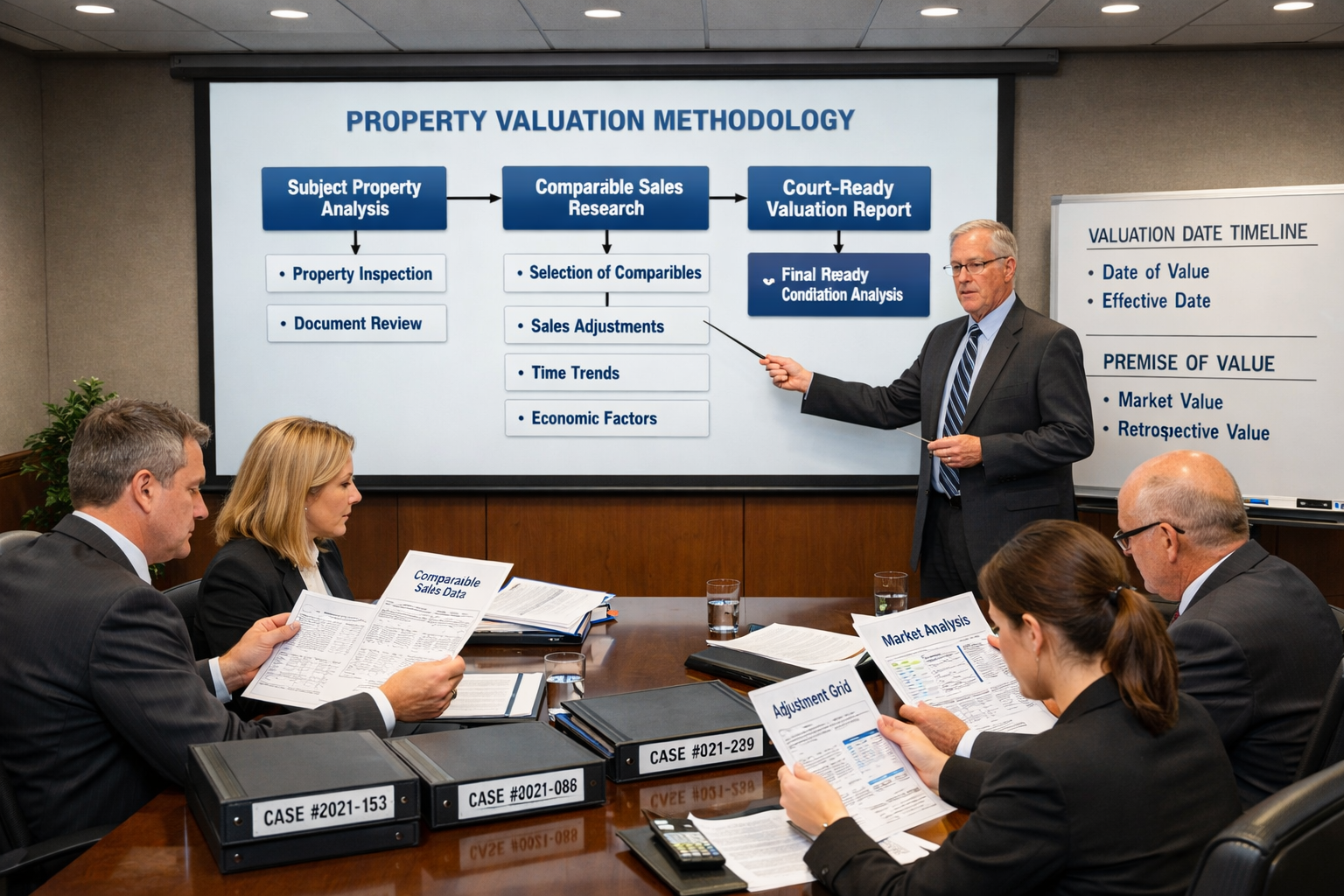
Creating defensible valuation opinions requires systematic evidence gathering that anticipates cross-examination. The foundation of any court-ready case rests on contemporaneous market data that would have been known or knowable as of the valuation date.
Critical Evidence Components
1. Comparable Sales Data 📊
The cornerstone of most valuation approaches requires meticulous documentation:
- Transaction dates within appropriate timeframe (typically 3-6 months)
- Property characteristics with detailed comparisons
- Adjustment rationale for differences in size, condition, location
- Market conditions on both valuation date and comparable transaction dates
- Source verification for all comparable data
Experts must avoid the common pitfall of using information that emerged after the valuation date. Courts have excluded testimony from experts who relied on financial statements or market data that weren't available when the valuation opinion should have been formed.
2. Valuation Date Precision 📅
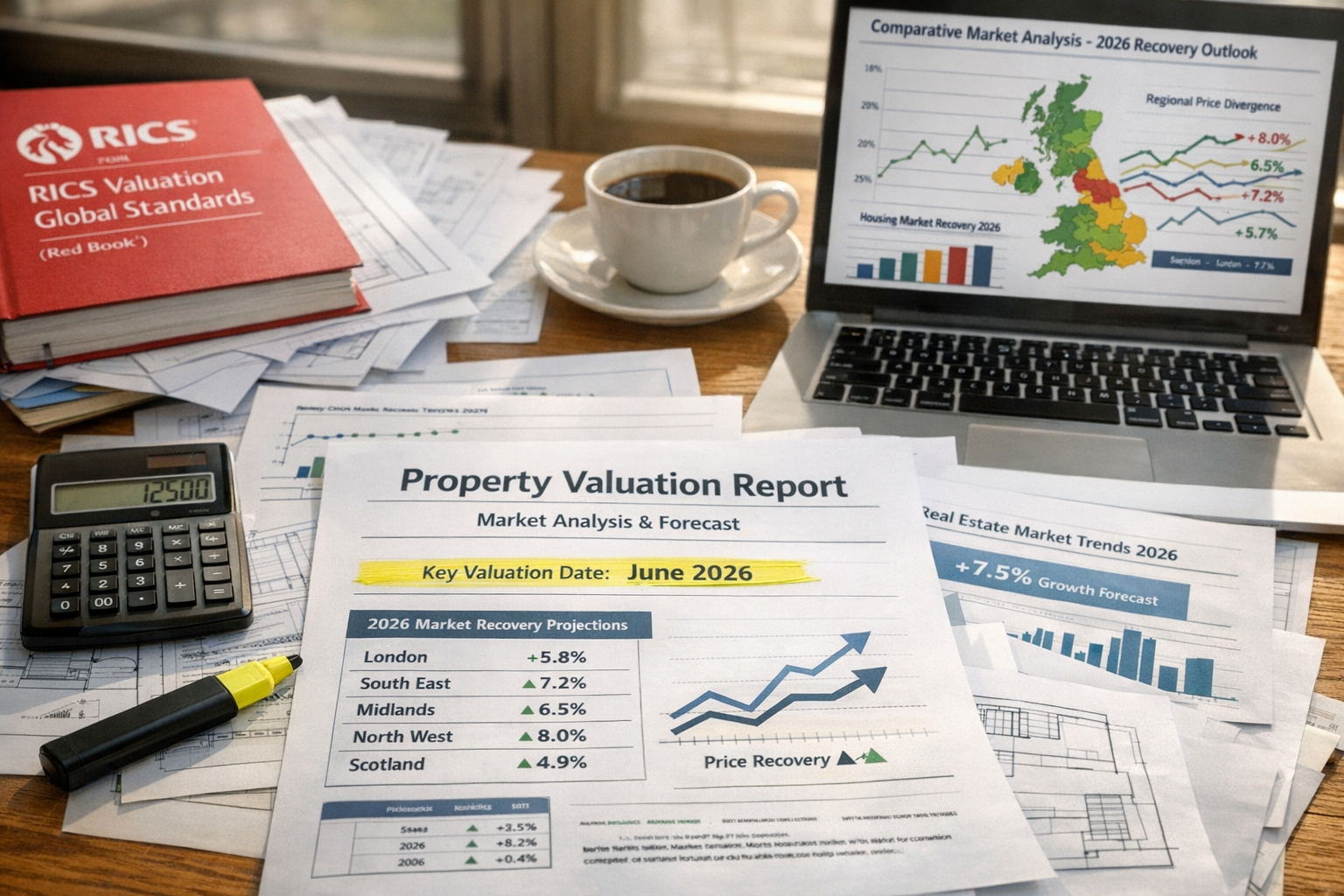
One of the most frequent grounds for expert exclusion involves improper valuation date application. The effective date must be clearly identified and all market data, assumptions, and conclusions must reflect conditions as of that specific date.
"The valuation date is not merely a formality—it fundamentally determines what information the expert can properly consider and what market conditions apply to the opinion."
For surveyors working on Red Book valuations, RICS standards require explicit identification of:
- The purpose of the valuation
- The effective date of value
- The premise of value (market value, fair value, investment value, etc.)
- Any special assumptions or departures from standard conditions
3. Premise of Value Appropriateness
Courts scrutinize whether experts applied the correct valuation premise for the legal context. Common scenarios include:
- Going concern vs. liquidation value in business property disputes
- Market value vs. synergistic value in partnership dissolutions
- Fair value vs. fair market value in shareholder disputes
- Existing use vs. alternative use in compulsory purchase cases
Applying synergistic value when fair value was required, or valuing a property as a going concern when liquidation was appropriate, creates grounds for exclusion.
RICS Standards for Expert Witness Work
The RICS Practice Statement and Guidance Note on Surveyors Acting as Expert Witnesses (4th edition) establishes clear requirements for professionals providing expert testimony. Compliance with these standards enhances credibility and reduces vulnerability to challenges.
Key RICS Requirements:
✅ Independence and objectivity – The expert's duty is to the court, not the instructing party
✅ Competence verification – Experts must only accept instructions within their area of expertise
✅ Transparent methodology – All approaches, assumptions, and limitations must be clearly disclosed
✅ Compliance with Red Book – Valuation opinions must follow RICS Valuation Global Standards
✅ Complete expert reports – Reports must contain all opinions, supporting facts, and qualifications
For building surveyor services extending into expert witness roles, maintaining RICS standards provides crucial protection against credibility challenges during cross-examination.
Common Evidence Gathering Mistakes
Mistake #1: Data Timeliness Errors ⚠️
Using market data, financial information, or property condition assessments that weren't available on the valuation date undermines the entire opinion. Experts must demonstrate they relied only on information that was known or reasonably knowable at the relevant time.
Mistake #2: Insufficient Comparable Adjustments
Simply identifying comparable properties without rigorous adjustment analysis invites challenge. Each adjustment must be:
- Quantified with supporting rationale
- Based on market evidence where possible
- Consistently applied across all comparables
- Documented with calculation methodology
Mistake #3: Inadequate Inspection Documentation
Property condition significantly impacts value, yet many experts fail to adequately document their inspection findings. Detailed photographs, measurements, and condition notes create essential support for valuation conclusions.
Mistake #4: Ignoring Alternative Methodologies
Experts who apply only one valuation approach without considering or explaining why alternatives were rejected appear less credible. Strong expert reports address multiple methodologies and explain the weight given to each.
Overcoming Expert Witness Challenges: Practical Strategies for 2026 Disputes
Successfully navigating Expert Witness Challenges in 2026 Market Recovery: Building Court-Ready Cases for Valuation Disputes requires proactive strategies that address both technical and procedural requirements.
Strategy 1: Front-Load Report Compliance with Rule 26 Requirements
Federal Rule of Civil Procedure 26(a)(2)(B) mandates specific expert report contents. Non-compliance creates grounds for exclusion or sanctions. Required elements include:
- Complete statement of all opinions to be expressed
- Basis and reasons for each opinion
- Facts and data considered in forming opinions
- Exhibits to be used as summary or support
- Expert qualifications including credentials and experience
- Compensation for the study and testimony
- Publications authored in previous 10 years
- Prior testimony as expert witness (previous 4 years)
Many experts fail on element #1 by reserving opinions for trial or supplemental reports. Courts increasingly reject this approach, requiring comprehensive disclosure in the initial expert report.
Strategy 2: Distinguish Expertise from Arithmetic
A critical challenge for valuation experts involves demonstrating that their testimony provides value beyond basic calculations a jury could perform. The distinction lies in explaining that professional expertise determines what to add and subtract, not merely how to perform the arithmetic.
Weak approach: "I added the comparable sales prices and divided by three to get an average."
Strong approach: "Based on my analysis of market conditions, property characteristics, and transaction circumstances, I weighted the three comparables differently—giving 50% weight to Comparable A due to its superior similarity in location and condition, 30% to Comparable B, and 20% to Comparable C. This weighting reflects professional judgment about which transactions provide the most reliable value indication."
The second approach demonstrates specialized knowledge that assists the trier of fact, satisfying Rule 702's "helpfulness" requirement.
Strategy 3: Avoid Damages Double-Counting
In commercial property disputes, experts must carefully delineate damage categories to avoid claiming duplicative recovery. Common double-counting scenarios include:
- Lost rental income AND diminished property value for the same period
- Repair costs AND diminished value when repairs fully restore value
- Business interruption losses AND lost business value covering identical timeframes
Experts should clearly explain the relationship between different damage categories and ensure their opinions don't create overlapping recovery for the same economic harm.
Strategy 4: Prepare for Enhanced Cross-Examination
The 2026 market recovery's complexity means cross-examination will focus intensely on:
Regional market selection justification 🎯
- Why were specific geographic boundaries chosen?
- How do micro-market conditions affect the valuation?
- What evidence supports regional trend assumptions?
Comparable adjustment methodology 🎯
- What market data supports each adjustment percentage?
- Why were certain property differences weighted more heavily?
- How were adjustment ranges determined?
Valuation date market conditions 🎯
- What market indicators were available on the valuation date?
- How did conditions differ from comparable transaction dates?
- What adjustments account for market movement?
Preparation should include creating detailed backup documentation for every assumption, adjustment, and conclusion that might face challenge.
Strategy 5: Leverage Technology for Evidence Management
Modern valuation disputes generate enormous volumes of data. Effective evidence management systems help experts:
- Track data sources with automatic date stamping
- Organize comparables with filterable databases
- Document adjustments with calculation audit trails
- Manage versions of reports and supporting materials
- Prepare exhibits that clearly communicate complex analyses
Technology also facilitates collaboration with legal teams and ensures consistency across expert reports, deposition testimony, and trial presentations.
Strategy 6: Maintain Professional Development
The evolving legal and regulatory landscape requires ongoing education. Surveyors acting as expert witnesses should:
- Complete RICS expert witness training programs
- Stay current with case law affecting admissibility standards
- Understand jurisdiction-specific procedural rules
- Participate in professional forums addressing valuation methodology
- Review published decisions involving expert testimony challenges
Professional development demonstrates commitment to competence and enhances credibility when qualifications face scrutiny.
Strategy 7: Collaborate Effectively with Legal Counsel
While maintaining independence, effective experts work closely with instructing solicitors to understand:
- Legal theories driving the case
- Burden of proof requirements
- Key disputed issues requiring expert analysis
- Opposing expert positions and anticipated challenges
- Trial strategy and testimony coordination
This collaboration ensures expert opinions address legally relevant questions while maintaining the objectivity required by RICS standards and court rules.
For professionals seeking guidance on construction law matters intersecting with valuation work, understanding the legal framework enhances expert effectiveness.
Emerging Trends Affecting Valuation Disputes in 2026
Several developing trends will shape Expert Witness Challenges in 2026 Market Recovery: Building Court-Ready Cases for Valuation Disputes throughout the year:
Increased Scrutiny of Automated Valuation Models (AVMs)
As technology advances, parties increasingly rely on AVMs to support or challenge traditional appraisals. Expert witnesses must be prepared to:
- Explain limitations of algorithmic approaches
- Demonstrate superior accuracy of professional judgment
- Address data quality issues in automated systems
- Reconcile discrepancies between AVM outputs and professional opinions
Climate Risk Integration
Property valuations increasingly must account for climate-related risks including flood exposure, coastal erosion, and energy efficiency requirements. Experts should incorporate:
- Environmental data relevant to long-term value
- Regulatory compliance costs for energy standards
- Insurance availability and premium impacts
- Market perception of climate-vulnerable properties
Leasehold Reform Impacts
Ongoing leasehold reform discussions create uncertainty affecting valuations of leasehold properties. Experts must stay current with legislative developments and their potential value implications, particularly for lease extension valuations.
Post-Pandemic Use Pattern Changes
Evolving work-from-home patterns continue affecting residential and commercial property values differently across regions. Expert witnesses should address:
- Commuting distance value impacts
- Home office space premiums
- Commercial vacancy trends affecting comparable selection
- Mixed-use development valuation complexities
Quality Assurance for Expert Reports
Before submitting expert reports, rigorous quality assurance processes reduce vulnerability to challenges:
Pre-Submission Checklist
✔️ Valuation date clearly identified and consistently applied throughout
✔️ Premise of value appropriate for the legal context and explicitly stated
✔️ All data sources documented with verification of availability on valuation date
✔️ Comparable properties thoroughly analyzed with detailed adjustment rationale
✔️ Methodology selection explained with consideration of alternatives
✔️ Assumptions clearly disclosed and distinguished from verified facts
✔️ Limitations acknowledged where appropriate
✔️ RICS standards compliance verified throughout
✔️ Rule 26 requirements satisfied with complete disclosures
✔️ Internal consistency checked across all opinions and exhibits
✔️ Calculations verified with independent review
✔️ Professional presentation with clear organization and formatting
Peer Review Benefits
Engaging qualified peers to review expert reports before submission provides valuable quality control. Peer reviewers can identify:
- Methodology weaknesses
- Unsupported assumptions
- Calculation errors
- Unclear explanations
- Missing documentation
- Inconsistent positions
This investment in quality assurance often prevents costly challenges and strengthens overall case positioning.
Conclusion
Expert Witness Challenges in 2026 Market Recovery: Building Court-Ready Cases for Valuation Disputes demands unprecedented rigor from surveyors and valuation professionals. The combination of regional market divergences, enhanced admissibility standards, and evolving RICS requirements creates a complex environment where only thoroughly prepared experts will succeed.
The stabilizing market conditions paradoxically increase dispute frequency as valuation disagreements become more nuanced. When rapid price movements give way to modest regional variations, the professional judgment required to distinguish value differences intensifies. Experts must demonstrate not just technical competence, but also meticulous evidence gathering, transparent methodology, and complete compliance with procedural requirements.
Actionable Next Steps for Surveyors
Immediate Actions: 🎯
- Review current expert report templates against Rule 26 requirements and RICS standards
- Audit evidence management systems to ensure proper documentation of data sources and dates
- Complete RICS expert witness training if not current
- Establish peer review relationships for quality assurance
Ongoing Practices: 🎯
- Maintain detailed comparable databases with regional market segmentation
- Document all methodology decisions contemporaneously during valuation work
- Stay current with case law affecting expert admissibility
- Develop cross-examination preparation protocols for all expert engagements
- Invest in technology supporting evidence management and exhibit preparation
Strategic Positioning: 🎯
- Build relationships with legal professionals who understand valuation complexity
- Publish thought leadership on emerging valuation challenges
- Participate in professional forums addressing expert witness issues
- Develop specialized expertise in high-dispute areas like leasehold valuations or commercial properties
The surveyors who thrive as expert witnesses in 2026 will be those who recognize that technical valuation skills, while essential, represent only part of the equation. Success requires understanding legal frameworks, anticipating challenges, maintaining impeccable documentation standards, and communicating complex analyses with clarity and credibility.
For professionals seeking to strengthen their expert witness capabilities, partnering with professional surveyor services that maintain rigorous quality standards and RICS compliance provides valuable support. The market recovery presents both challenges and opportunities—those who invest in building court-ready cases will find themselves well-positioned to serve clients effectively in this demanding environment.
The path forward requires commitment to excellence, continuous professional development, and unwavering dedication to the independence and objectivity that define credible expert testimony. By implementing the strategies outlined in this guide, surveyors can navigate Expert Witness Challenges in 2026 Market Recovery: Building Court-Ready Cases for Valuation Disputes with confidence and professional distinction.