
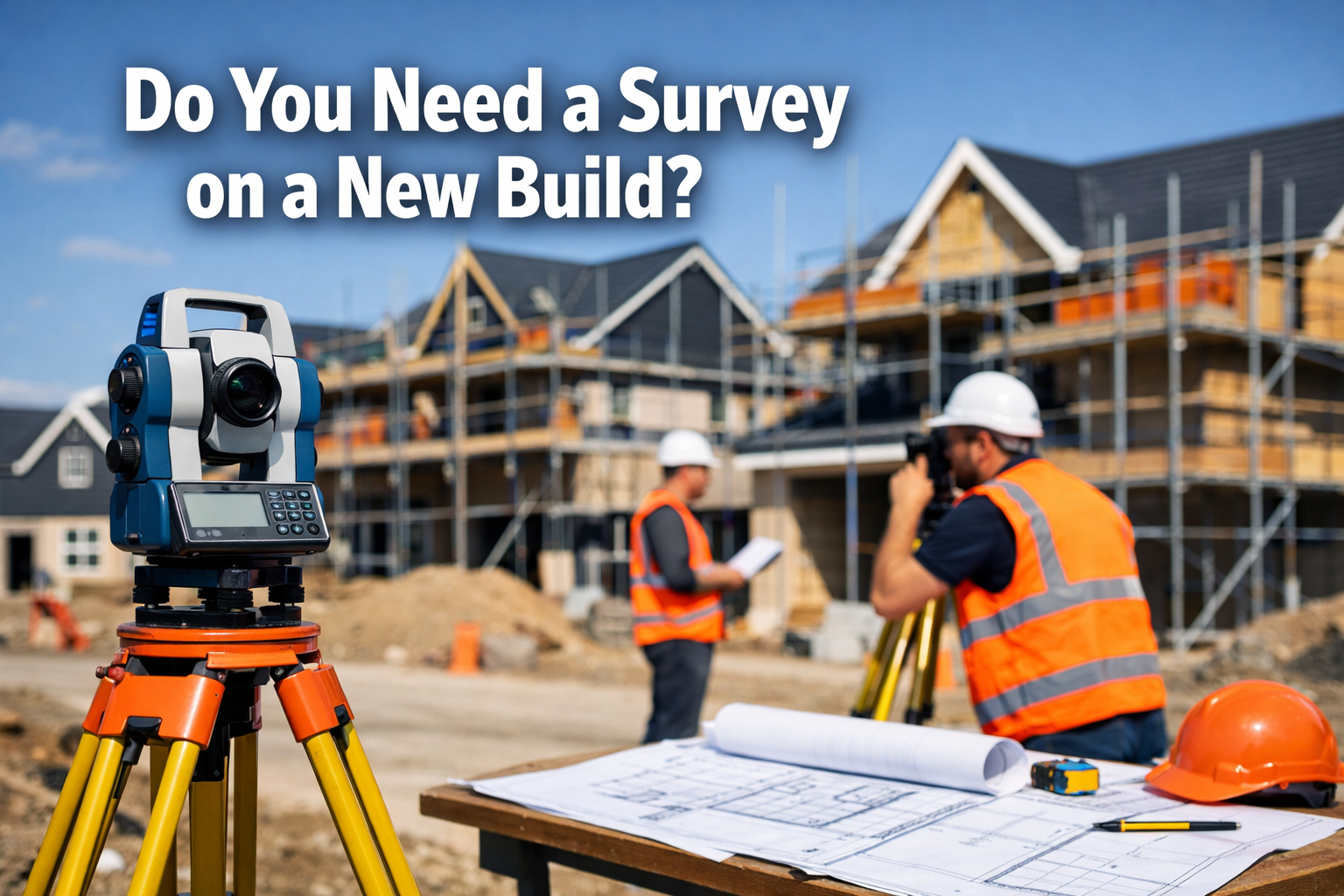
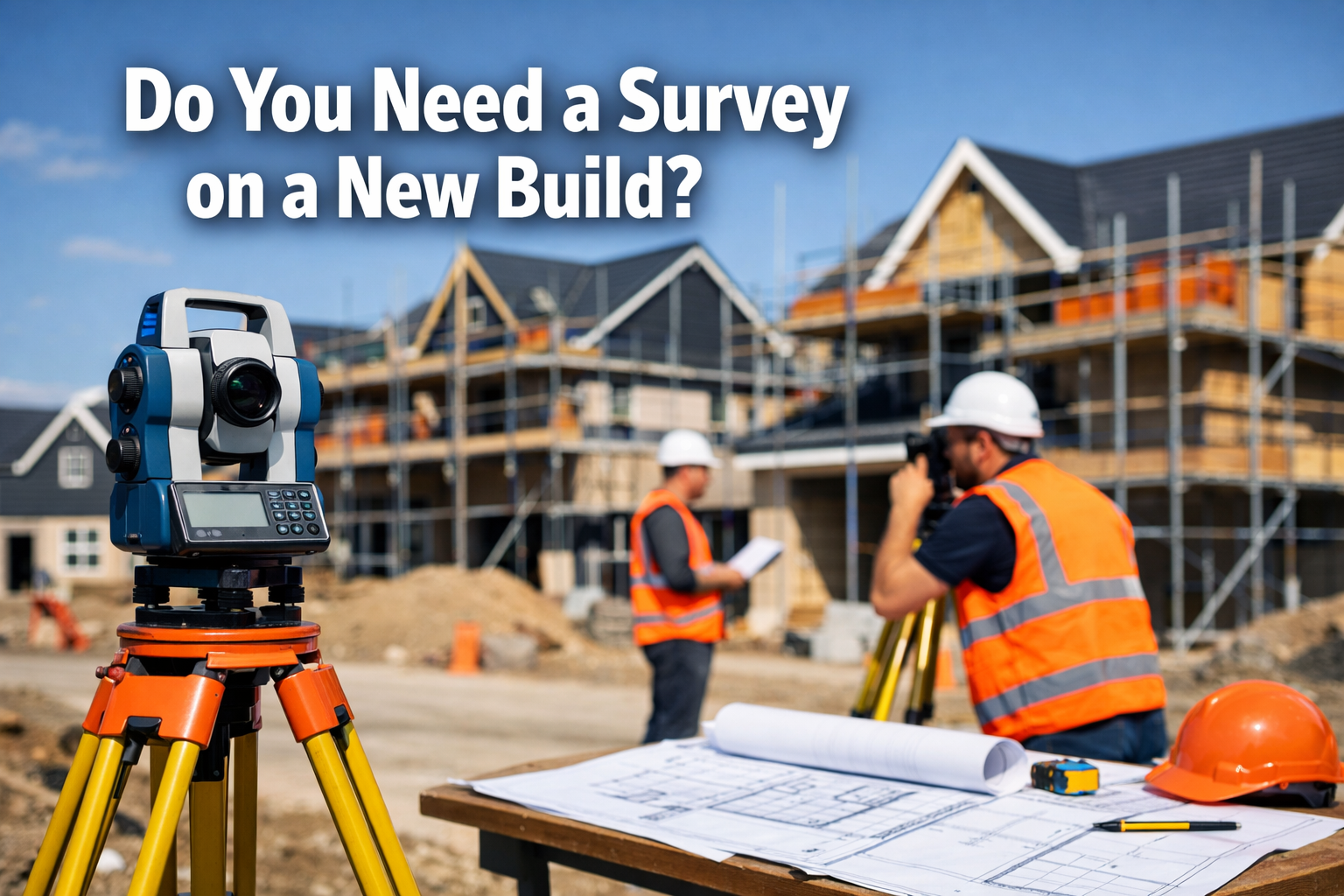
Do You Need a Survey on a New Build? The Essential Guide for 2026
Imagine signing the contracts on your dream new build home, only to discover months later that the foundations are settling unevenly, the roof is leaking, or the electrical work doesn’t meet building regulations. While new builds come with warranties and the promise of modern construction standards, thousands of buyers each year face costly defects that could have been identified before completion. So, do you need a survey on a new build? The answer might surprise you.
Many homebuyers assume that purchasing a newly constructed property eliminates the need for professional inspection. After all, the property has never been lived in, it meets current building codes, and it typically comes with a 10-year warranty from the National House Building Council (NHBC) or similar provider. However, the reality of new build construction reveals a different story—one where surveys can save buyers from expensive headaches and provide crucial negotiating power.
Key Takeaways
- New build warranties don’t cover everything: NHBC and similar warranties have significant exclusions and require defects to be reported within strict timeframes
- Construction defects are surprisingly common: Industry data shows that over 90% of new builds have some form of defect or snagging issue at completion
- Different survey types serve different purposes: From comprehensive RICS Building Surveys to specialized snagging surveys, choosing the right inspection is crucial
- Surveys provide negotiating leverage: Professional reports can help buyers secure price reductions or require developers to fix issues before completion
- 2026 brings updated survey standards: New ALTA/NSPS standards implemented in February 2026 enhance precision and transparency in property surveys[1][2]
Understanding New Build Properties in 2026
What Qualifies as a New Build?
A new build property is typically defined as a home that has never been previously occupied and has been constructed within the last two years. In 2026, new builds range from individual custom homes to large-scale housing developments built by national developers. These properties must comply with current Building Regulations and are usually covered by structural warranties.
The construction landscape has evolved significantly, with modern new builds incorporating:
- 🏗️ Energy-efficient designs meeting updated 2025 Building Regulations
- 🔌 Smart home technology integrated during construction
- ♻️ Sustainable materials and construction methods
- 🛡️ Enhanced insulation standards for improved thermal performance
Common Misconceptions About New Builds
Many buyers operate under false assumptions when purchasing new construction:
Myth #1: “It’s new, so nothing can be wrong”
Reality: Construction defects occur even in brand-new properties due to rushed timelines, subcontractor errors, or material defects.
Myth #2: “The warranty covers everything”
Reality: NHBC and similar warranties have specific exclusions and time-limited coverage for different defect types.
Myth #3: “Building Control inspections are sufficient”
Reality: Building Control inspectors check compliance with regulations at specific stages but don’t conduct comprehensive property assessments.
Myth #4: “Developers will fix problems after I move in”
Reality: Getting developers to address issues becomes significantly harder after completion and occupancy.
Do You Need a Survey on a New Build? Weighing the Evidence
The Case for Getting a Survey
The question “do you need a survey on a new build” becomes clearer when examining the compelling reasons to commission one:
Protection Beyond Warranties
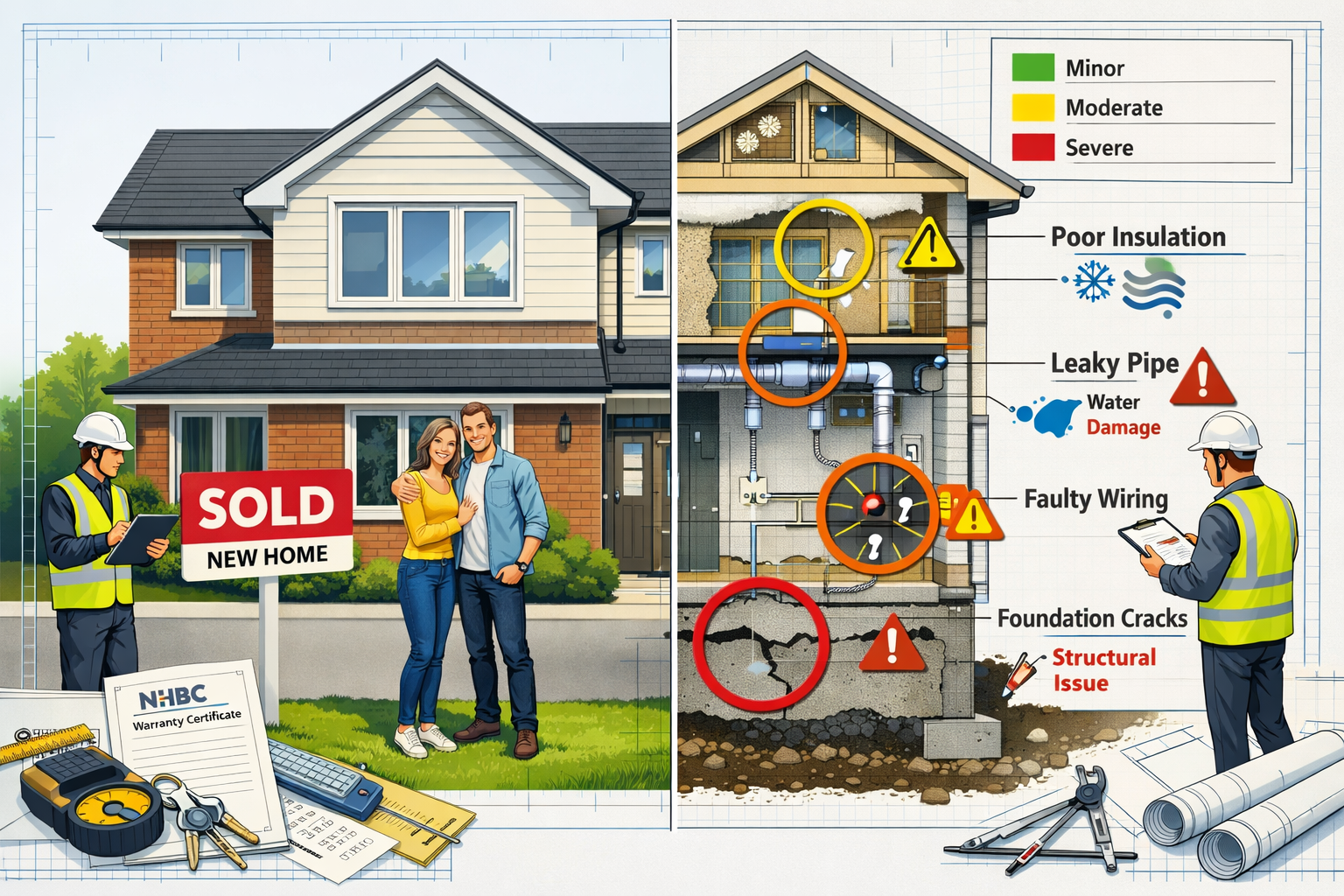
While NHBC warranties provide 10 years of structural coverage, they operate on a tiered system:
- Years 1-2: Builder responsible for fixing defects
- Years 3-10: NHBC covers major structural defects only
A professional survey identifies issues before you complete the purchase, when you have maximum leverage. After moving in, proving defects existed at completion becomes significantly more difficult.
Construction Quality Concerns
The pressure on developers to meet deadlines and maximize profits can compromise construction quality. Common issues identified in new build surveys include:
| Defect Category | Frequency | Typical Cost to Repair |
|---|---|---|
| Plumbing issues | 68% | £500-£3,000 |
| Electrical problems | 54% | £300-£2,500 |
| Poor finishes | 91% | £200-£5,000 |
| Drainage concerns | 42% | £1,000-£8,000 |
| Structural defects | 12% | £5,000-£50,000+ |
These statistics demonstrate why asking “do you need a survey on a new build” deserves serious consideration.
Financial Leverage
Professional survey reports provide documented evidence for negotiations. Our guide on average price reduction after survey shows that buyers typically recover 3-5 times the survey cost through price reductions or required repairs.
The Case Against Getting a Survey
Some situations may justify proceeding without a comprehensive survey:
Self-Build Projects with Professional Oversight
If you’ve personally managed construction with chartered professionals monitoring each stage, additional surveys may be redundant.
Limited Budget Constraints
Buyers at maximum financial stretch might prioritize funds for deposits and legal fees. However, this represents a calculated risk that could prove costly.
Developer Reputation and Track Record
Premium developers with exceptional quality reputations and comprehensive pre-completion inspections may present lower risk, though surveys still provide independent verification.
Types of Surveys for New Build Properties
Understanding which survey type addresses your needs is essential when determining whether you need a survey on a new build.
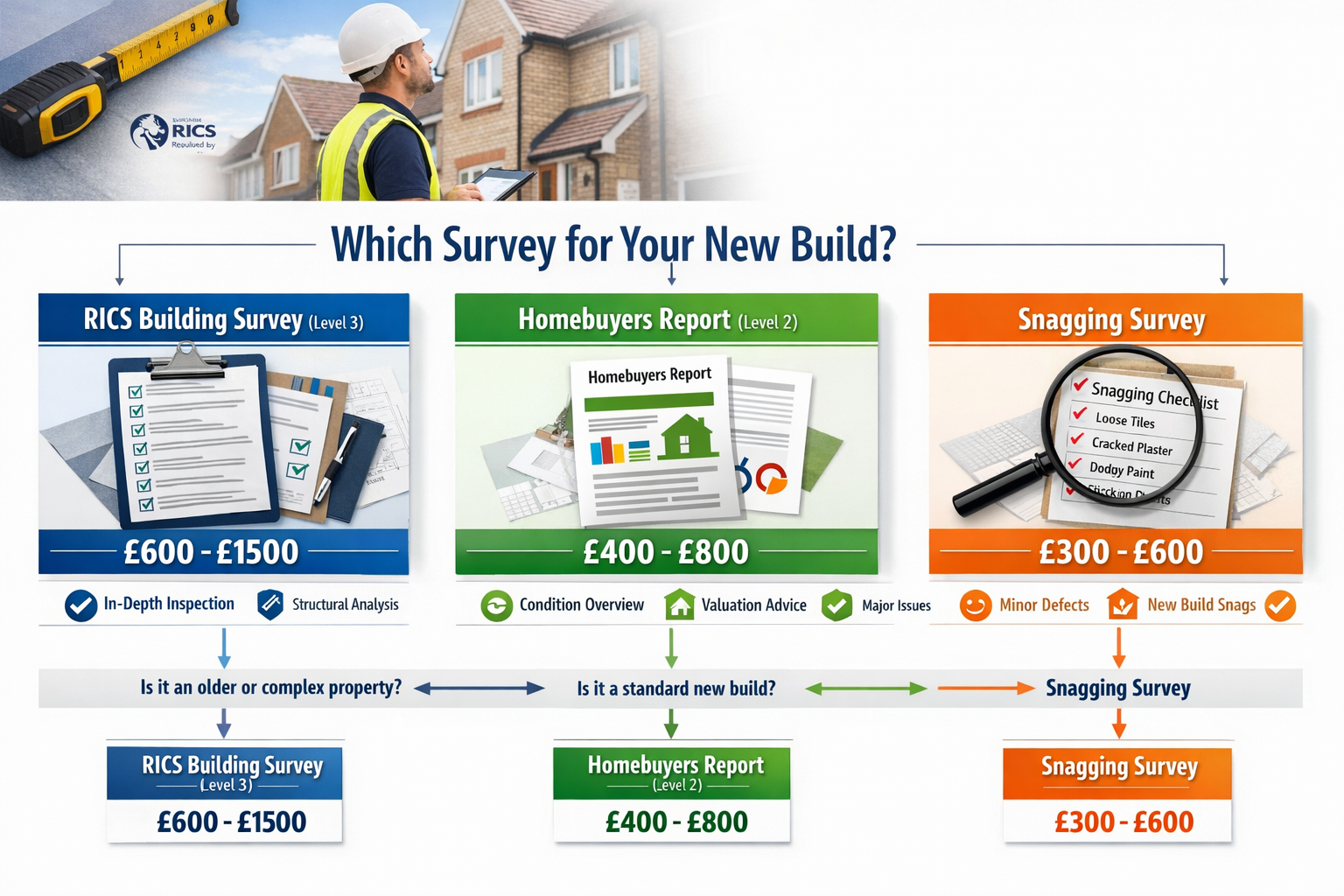
RICS Building Survey (Level 3)
The most comprehensive option, a RICS Building Survey provides detailed analysis of:
- Structural integrity and construction methods
- Material quality and installation standards
- Building services (electrical, plumbing, heating)
- Compliance with Building Regulations
- Future maintenance requirements and costs
Cost: £800-£1,500 for typical new builds
Timeline: 3-5 hours on-site, report within 5-7 days
Best for: High-value properties, complex designs, or buyers wanting maximum detail
RICS Homebuyers Report (Level 2)
A mid-tier option that balances cost and coverage. Our article on choosing between a Homebuyers Report or Building Survey explains the key differences.
Coverage includes:
- Traffic light rating system for defects
- Valuation assessment
- Major defect identification
- Repair cost estimates
Cost: £400-£800
Best for: Standard new builds from established developers
Snagging Survey
Specifically designed for new builds, snagging surveys identify cosmetic and minor defects that developers should rectify before handover:
✅ Paint finish issues
✅ Tile alignment problems
✅ Door and window fitting
✅ Kitchen and bathroom installation quality
✅ Flooring defects
Cost: £300-£600
Best for: Buyers wanting basic quality assurance without comprehensive structural analysis
New Build Structural Survey
Combines elements of building surveys with new build-specific considerations:
- Foundation and structural frame inspection
- Damp-proofing and waterproofing assessment
- Roof construction and covering
- Compliance verification
- Comparison with approved plans
Cost: £700-£1,200
Best for: Buyers concerned about structural integrity specifically
For first-time buyers, understanding these options helps make informed decisions about survey investment.
The 2026 Survey Standards Update
What Changed in February 2026?
The 2026 ALTA/NSPS Land Title Survey Standards took effect on February 23, 2026, replacing the 2021 version[1][2]. While these standards primarily apply to commercial land title surveys in the United States, they reflect broader industry trends toward enhanced precision and transparency.
Key updates include:
Revised Relative Positional Precision (RPP) Definition
The 2026 standards refine how surveyors measure and report the statistical accuracy of boundary location measurements[1]. This improved precision helps prevent boundary disputes and ensures construction occurs within proper property lines.
Enhanced Documentation Requirements
Surveyors must now provide clearer documentation of their methodologies, data sources, and precision limitations[1]. This transparency helps buyers, lenders, and title insurers understand exactly what the survey covers.
Improved Stakeholder Communication
The standards emphasize early communication between surveyors, lenders, buyers, and title insurers about required detail levels and “Table A items”—optional survey elements that parties can request[1].
Implications for UK New Build Buyers
While ALTA/NSPS standards apply primarily to US commercial surveys, UK survey practices continue evolving in parallel directions:
- Greater standardization across survey types
- Enhanced digital reporting with interactive elements
- Clearer scope definitions to prevent misunderstandings
- Improved precision standards for boundary determinations
UK buyers should ensure their surveyor follows current RICS (Royal Institution of Chartered Surveyors) standards, which represent the gold standard for property surveys in Britain.
Construction Surveys vs. Post-Construction Surveys
During Construction: Construction Surveys
Construction surveys ensure structures are built in correct locations and orientations[3]. These surveys typically cost between £1,000 and £5,000 depending on project scope and complexity[3].
For self-build projects or custom homes, construction surveys verify:
- Foundation placement accuracy
- Building footprint compliance with plans
- Setback requirements from boundaries
- Elevation accuracy
- Utility connection locations
After Construction: As-Built Surveys
As-built surveys document actual dimensions after construction completion[4]. These surveys provide records to compare constructed structures with proposed designs and support final building approvals[4].
As-built surveys are particularly valuable for:
- Confirming compliance with approved plans
- Creating accurate records for future renovations
- Resolving disputes about construction accuracy
- Supporting final mortgage valuations
Pre-Purchase Surveys
For buyers, the most relevant survey type occurs before completing the purchase. This timing provides maximum leverage for negotiations and ensures informed decision-making.
Understanding what to do after a bad building survey report helps buyers navigate challenging situations when surveys reveal significant defects.
When Do You Definitely Need a Survey on a New Build?
High-Risk Scenarios
Certain situations make surveys essential rather than optional:
🚩 Small or Unknown Developers
Developers without established track records or those building their first projects present higher risk. Survey investment provides crucial protection when developer reputation can’t be verified.
🚩 Complex Architectural Designs
Properties with:
- Unconventional structural systems
- Extensive glazing or cantilevers
- Basement conversions or excavations
- Complex roof designs
- Non-standard materials
These features increase the likelihood of construction challenges and potential defects.
🚩 Fast-Track Construction
Developments completed on aggressive timelines often experience quality control issues. If construction occurred in under 6 months for a standard house, heightened scrutiny is warranted.
🚩 Off-Plan Purchases
Buying before construction completes means you can’t physically inspect the property. Commissioning a survey before final completion provides essential quality verification.
🚩 Converted Properties
New builds created through barn conversions, commercial-to-residential conversions, or similar projects involve complex structural work where surveys are crucial.
Medium-Risk Scenarios
These situations benefit from surveys, though the urgency is less critical:
- Established developers with occasional quality issues
- Standard designs in large developments
- Properties at the higher end of your budget (where unexpected costs would strain finances)
- Locations with known ground conditions (clay soils, mining areas, flood zones)
Lower-Risk Scenarios
Situations where surveys provide less critical value:
- Premium developers with exceptional quality reputations
- Simple designs using conventional construction methods
- Properties where you’ve monitored construction personally
- Buyers with significant financial reserves for unexpected repairs
Even in lower-risk scenarios, the question “do you need a survey on a new build” often deserves a “yes” answer for peace of mind and negotiating power.
The Financial Equation: Cost vs. Benefit
Survey Costs in 2026
Current market rates for new build surveys:
| Survey Type | Price Range | Value Proposition |
|---|---|---|
| Snagging Survey | £300-£600 | Basic defect identification |
| Homebuyers Report | £400-£800 | Moderate coverage, good value |
| Building Survey | £800-£1,500 | Comprehensive analysis |
| Specialist Structural | £700-£1,200 | Focused structural assessment |
Potential Savings
Research shows that surveys on new builds identify an average of £3,500-£8,000 in defects requiring remediation. Benefits include:
Direct Financial Recovery
- Price reductions averaging 2-5% on properties with significant defects
- Developer-funded repairs before completion
- Avoided post-purchase repair costs
Indirect Benefits
- Informed decision-making about purchase viability
- Enhanced negotiating position
- Peace of mind and reduced stress
- Documentation for warranty claims
Our guide on saving money with building surveys provides detailed analysis of financial returns.
Return on Investment
Calculating survey ROI:
Scenario 1: £500,000 new build, £900 Building Survey
- Survey identifies £12,000 in defects
- Negotiated price reduction: £8,000
- ROI: 789% (£8,000 return on £900 investment)
Scenario 2: £350,000 new build, £500 Snagging Survey
- Survey identifies £4,500 in cosmetic defects
- Developer agrees to fix all items before completion
- ROI: 800% (£4,500 value from £500 investment)
Scenario 3: £750,000 new build, £1,200 Comprehensive Survey
- Survey identifies major structural concern worth £35,000 to repair
- Buyer withdraws from purchase, avoiding catastrophic expense
- ROI: Incalculable (avoided financial disaster)
How to Choose and Instruct a Surveyor
Qualifications to Look For
When selecting a surveyor for new build inspection:
✅ RICS Chartered Status (MRICS or FRICS designation)
✅ New build experience specifically
✅ Local market knowledge of your area
✅ Professional indemnity insurance (minimum £1 million)
✅ Clear, detailed reporting samples available
✅ Positive client testimonials and reviews
Our guide on how to find the best local surveyor near you provides comprehensive selection criteria.
Questions to Ask Before Booking
About Their Experience:
- How many new build surveys have you conducted?
- What’s your experience with [developer name]?
- Have you surveyed properties in this development?
About the Survey Process:
- What exactly does your survey include?
- How long will the inspection take?
- When will I receive the report?
- What format will the report take?
About Follow-Up:
- Do you provide telephone consultations to discuss findings?
- Can you attend meetings with the developer if needed?
- Do you offer post-survey support for negotiations?
Timing Your Survey
Optimal timing for new build surveys:
- Pre-Exchange (after reservation, before contracts): Provides maximum negotiating leverage
- Pre-Practical Completion (when substantially finished): Allows identification of issues while developer is still on-site
- Before Final Payment: Ensures leverage for securing remedial work
Avoid surveying:
- Too early in construction (incomplete work makes assessment difficult)
- After legal completion (minimal leverage for negotiations)
What Happens After the Survey?
Understanding Your Report
Professional survey reports typically include:
Executive Summary
- Overall condition rating
- Critical issues requiring immediate attention
- Recommended actions
Detailed Findings
- Room-by-room analysis
- Photographic evidence
- Severity ratings (often traffic light system)
- Repair cost estimates
Technical Appendices
- Construction methodology assessment
- Compliance verification
- Maintenance recommendations
Understanding homebuyers survey reports helps buyers interpret findings effectively.
Negotiating with Developers
Armed with a professional survey report, buyers can:
Request Price Reductions
Calculate total defect remediation costs and request equivalent price reduction. Developers often prefer price adjustments to coordinating repairs.
Demand Pre-Completion Repairs
Require developer to fix identified issues before legal completion. This approach works well for significant defects affecting property value or safety.
Seek Retention Agreements
Negotiate to retain portion of purchase price in escrow until developer completes specified repairs post-completion.
Withdraw from Purchase
If defects are severe enough, survey findings may justify withdrawing from the transaction entirely. Our article on whether you can renegotiate after a poor survey explores this option.
Working with Your Solicitor
Share survey reports with your conveyancing solicitor, who can:
- Draft contractual provisions requiring repairs
- Negotiate retention clauses
- Advise on warranty implications
- Document defects for future warranty claims
Alternative Protections for New Build Buyers
NHBC and Other Warranties
Understanding warranty coverage helps determine survey necessity:
NHBC Buildmark Coverage:
- Year 1-2: Builder fixes defects
- Years 3-10: Major structural defects only
- Exclusions: Cosmetic issues, normal wear, defects you caused
Other Warranty Providers:
- Premier Guarantee
- LABC Warranty
- Checkmate
- Build-Zone
Key Limitation: Warranties require you to identify and report defects within specific timeframes. Surveys help ensure nothing is missed.
Building Control Inspections
Local Authority Building Control or Approved Inspectors verify compliance with Building Regulations through staged inspections:
- Foundation inspections
- Drainage testing
- Structural frame checks
- Final completion inspection
Important: Building Control inspections verify regulatory compliance, not overall quality or workmanship standards. They don’t replace comprehensive surveys.
Professional Snagging Companies
Specialist snagging companies offer defect identification services, typically costing £250-£500. These provide good value for cosmetic defect identification but lack the structural expertise of chartered surveyors.
Regional Considerations Across the UK
London and Southeast England
The high-value London market makes surveys particularly cost-effective, with potential savings far exceeding survey costs. Properties in areas like Wimbledon, Knightsbridge, and Kensington warrant comprehensive surveys given property values.
Areas with Ground Movement Risk
Regions with clay soils (much of Southeast England) or mining history require enhanced scrutiny of foundations and structural movement.
Flood Risk Zones
New builds in flood zones should receive surveys specifically examining:
- Flood resistance measures
- Drainage systems
- Damp-proofing quality
Our damp survey guide provides relevant information for moisture-related concerns.
Expert Recommendations: The Verdict
When Surveys Are Essential
Professional consensus indicates surveys are essential for:
- All properties over £400,000 (survey cost becomes negligible relative to property value)
- Any property from unknown developers
- Complex or non-standard designs
- Properties where you lack construction expertise
- Buyers at maximum financial stretch (who can’t afford unexpected repair costs)
When Surveys Are Highly Recommended
Surveys provide significant value for:
- Standard new builds from established developers
- Properties in the £250,000-£400,000 range
- First-time buyers unfamiliar with property condition assessment
- Investment properties where defects affect rental value
When Surveys Are Optional
Surveys provide marginal additional value for:
- Self-build projects with professional oversight throughout
- Properties from premium developers with exceptional quality reputations
- Buyers with construction expertise who can assess quality personally
- Very low-value properties where survey costs represent significant percentage of purchase price
Conclusion: Making Your Decision
So, do you need a survey on a new build? For the vast majority of buyers, the answer is yes. The combination of common construction defects, limited warranty coverage, and substantial negotiating leverage makes surveys one of the most cost-effective investments in the home-buying process.
The modest cost of £400-£1,500 for professional survey services pales in comparison to the potential savings of £3,500-£8,000 in identified defects, not to mention the peace of mind that comes from independent verification of your new home’s condition.
Your Action Plan
Step 1: Assess Your Risk Level
Review the risk factors discussed in this guide to determine your property’s risk profile.
Step 2: Choose the Right Survey Type
Select between snagging surveys (£300-£600), Homebuyers Reports (£400-£800), or comprehensive Building Surveys (£800-£1,500) based on your needs and budget. Our guide comparing survey levels can help you decide.
Step 3: Find a Qualified Surveyor
Engage a RICS-chartered surveyor with specific new build experience in your area.
Step 4: Schedule Strategically
Book your survey after reservation but before exchange of contracts for maximum negotiating leverage.
Step 5: Act on Findings
Work with your solicitor to negotiate price reductions, required repairs, or retention agreements based on survey findings.
Step 6: Document Everything
Maintain comprehensive records of all defects and remediation for future warranty claims and resale purposes.
The question isn’t really whether you can afford a survey on your new build—it’s whether you can afford not to have one. In 2026’s competitive property market, informed buyers with professional survey reports consistently achieve better outcomes than those who skip this crucial step.
Don’t let the excitement of buying a brand-new home cloud your judgment. Protect your investment, secure your negotiating position, and gain the peace of mind that comes from knowing exactly what you’re buying. Commission a professional survey—your future self will thank you.
References
[1] New 2026 Minimum Standard Detail 3684174 – https://www.jdsupra.com/legalnews/new-2026-minimum-standard-detail-3684174/
[2] 20251125 Key Updates To The 2026 Altansps Land Title Survey Standards – https://www.alta.org/news-and-publications/news/20251125-Key-Updates-to-the-2026-ALTANSPS-Land-Title-Survey-Standards
[3] Blog Land Survey Costs 2026 – https://www.thelandgeek.com/blog-land-survey-costs-2026/
[4] Types Of Land Surveys – https://goldenstatede.com/types-of-land-surveys/
SEO Meta Title and Description
Meta Title: Do You Need a Survey on a New Build? Expert Guide 2026
Meta Description: Discover whether you need a survey on a new build property. Expert analysis of costs, benefits, survey types, and when inspections are essential for new homes.
{“@context”:”https://schema.org”,”@type”:”Article”,”headline”:”do you need a survey on a new build”,”description”:”Discover whether you need a survey on a new build property. Expert analysis of costs, benefits, survey types, and when inspections are essential for new homes.”,”image”:”https://zsxkvszxbhpwnvzxdydv.supabase.co/storage/v1/object/public/generated-images/kie/2b9257d7-086d-4a86-86b5-e35cc70fef62/slot-0-1769817505674.png”,”datePublished”:”2026-01-30T23:55:02.334502+00:00″,”dateModified”:”2026-01-30T23:59:21.698Z”,”author”:{“@type”:”Organization”,”name”:”Wimbledon Surveyors”},”publisher”:{“@type”:”Organization”,”name”:”Wimbledon Surveyors”}}