
Do I Need a Survey on a New Build? Your Complete Guide for 2026
Buying a brand-new home seems like the perfect solution to avoid the headaches of older properties—no worn-out boilers, no crumbling brickwork, no mysterious damp patches. But here’s a surprising truth that catches many homebuyers off guard: new builds can have serious defects too. The question “do I need a survey on a new build” is one that thousands of property buyers ask themselves each year, often assuming the answer is automatically “no” because everything is fresh from the builder. This assumption could cost you thousands of pounds in repairs and endless frustration.
In 2026, the property landscape has evolved significantly, with new construction standards, updated surveying protocols, and changing lender requirements all playing crucial roles in your decision-making process. Whether you’re a first-time buyer excited about a pristine property or an experienced investor expanding your portfolio, understanding when and why you need a survey on new construction is essential for protecting your investment.
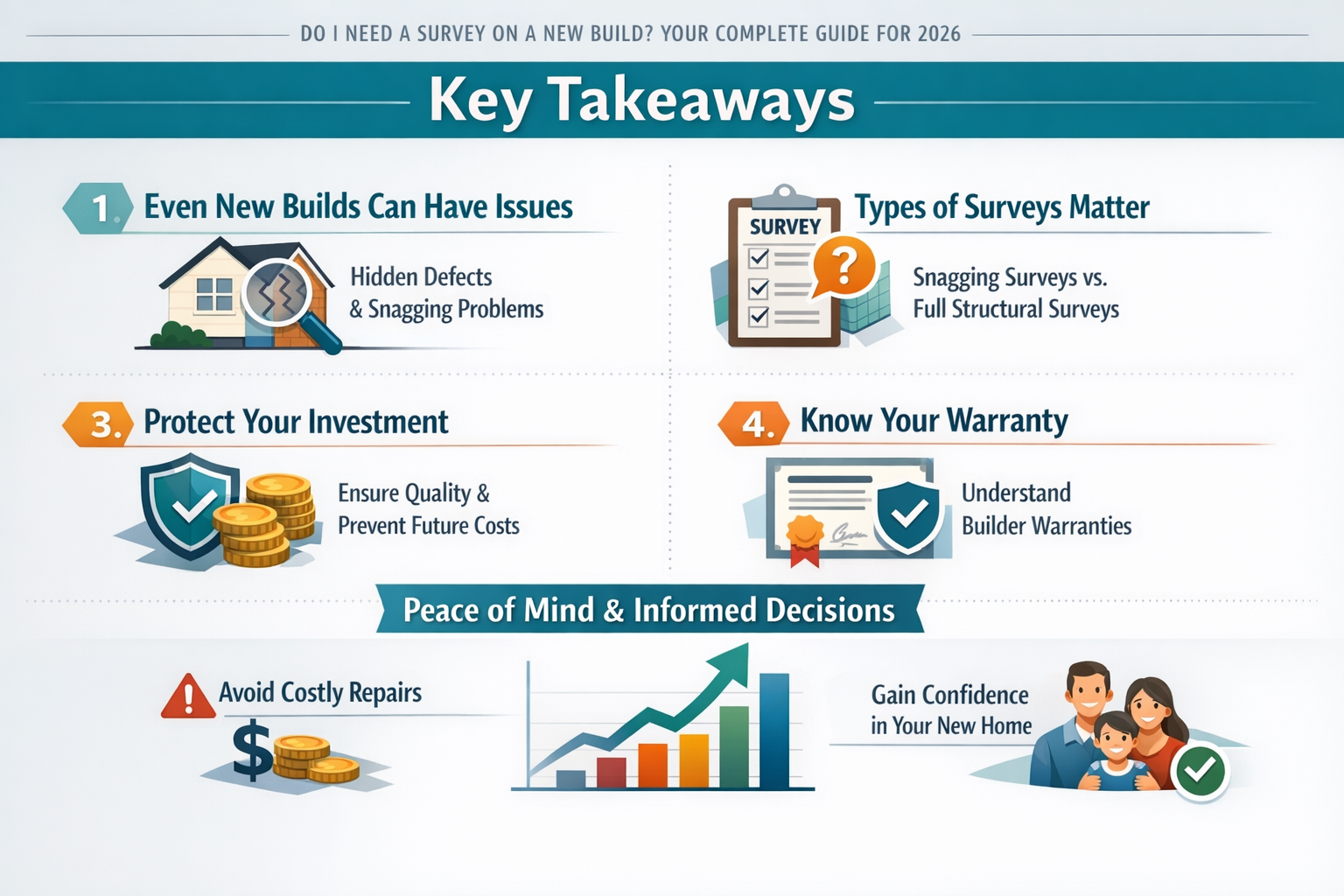
Key Takeaways
- New builds are not defect-free: Studies show that up to 99% of new homes have at least one defect or snagging issue that requires attention
- NHBC warranties have limitations: While 10-year warranties provide coverage, they don’t cover everything and require you to identify defects within specific timeframes
- Lender requirements vary: Some mortgage providers mandate surveys on new builds, while others don’t—knowing your lender’s policy is crucial
- Different survey types serve different purposes: Snagging surveys, full building surveys, and NHBC inspections each offer unique benefits for new construction properties
- Early detection saves money: Identifying defects before completion or during the warranty period prevents costly out-of-pocket repairs later
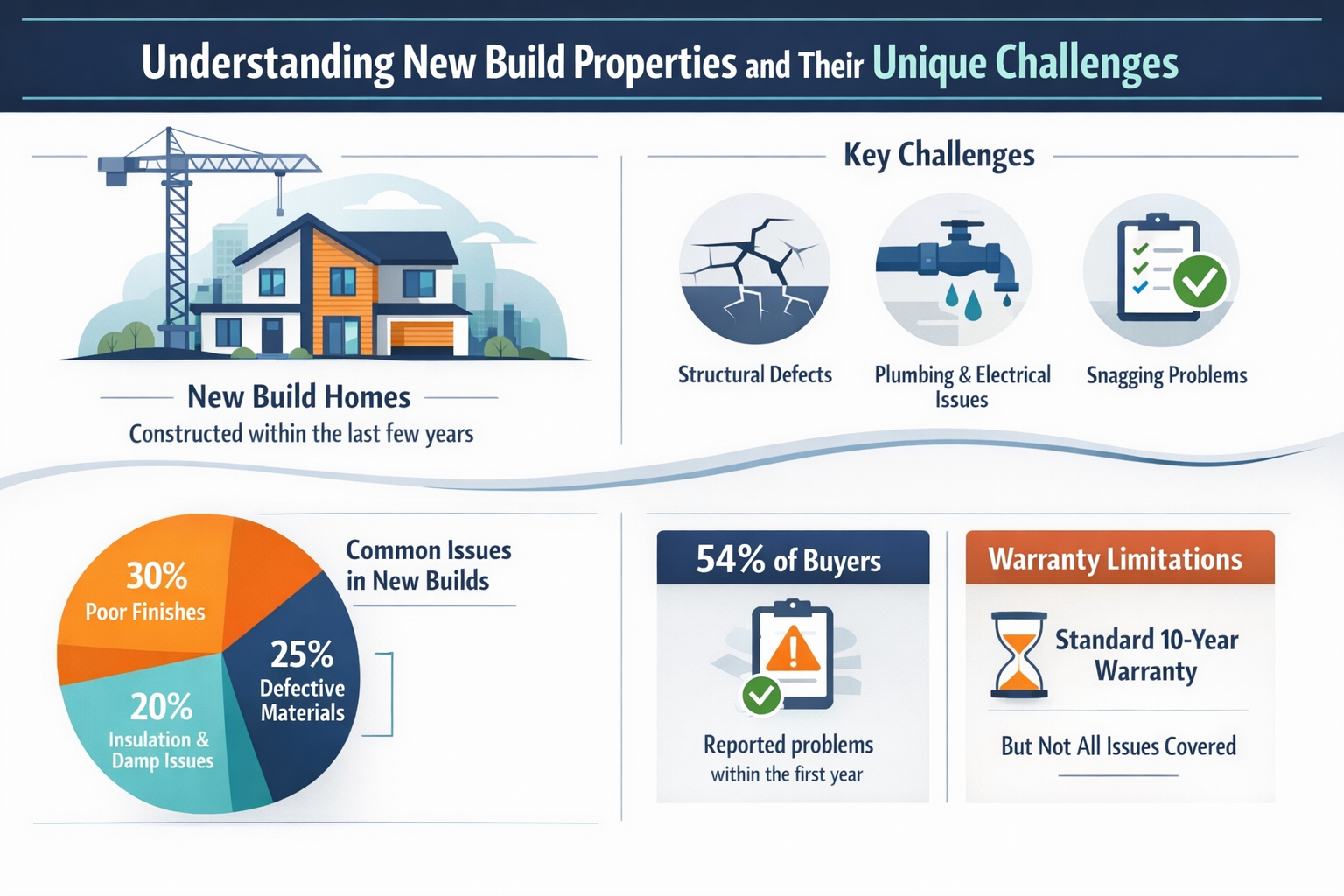
Understanding New Build Properties and Their Unique Challenges
What Qualifies as a New Build?
A new build property typically refers to a home that has never been lived in before and was recently constructed. In the UK property market, this usually means:
- Brand new homes built by developers and sold directly from the construction company
- Properties under 2 years old that haven’t been previously occupied
- Converted buildings that have been substantially reconstructed and are being sold for the first time as residential properties
New builds come with certain advantages that make them attractive to buyers. They’re energy-efficient, meet current building regulations, and often include modern amenities and layouts. Most importantly, they come with NHBC (National House Building Council) warranties or similar protection schemes that cover structural defects for up to 10 years.
Common Defects Found in New Construction
Despite rigorous building regulations and quality control measures, new builds frequently contain defects. Here are the most common issues professional surveyors discover:
Cosmetic and Finishing Issues:
- Poor paintwork and uneven surfaces
- Incorrectly fitted doors and windows
- Damaged or poorly laid flooring
- Incomplete snagging work
Structural and Building Concerns:
- Inadequate insulation installation
- Plumbing leaks and heating system problems
- Electrical faults and incomplete installations
- Drainage issues and poor external grading
- Roof defects including missing tiles or improper flashing
Modern Construction Challenges:
- Rushed construction timelines leading to quality compromises
- Subcontractor coordination issues
- Material shortages causing substitutions
- Inadequate site supervision
A comprehensive building survey can identify these issues before they become expensive problems. The reality is that construction sites operate under tight deadlines, and quality can sometimes suffer as a result.
Do I Need a Survey on a New Build? The Critical Factors
Mortgage Lender Requirements in 2026
Whether you need a survey on a new build often depends on your mortgage lender’s specific requirements. In 2026, lending institutions have varying policies:
Lenders Who Typically Require Surveys:
- Some lenders mandate a basic valuation survey for all properties, including new builds
- Higher loan-to-value mortgages (above 90%) often trigger additional survey requirements
- Certain building types (converted properties, non-standard construction) always require surveys
Lenders Who May Not Require Surveys:
- Many lenders accept NHBC warranties or similar guarantees in lieu of surveys
- Lower loan amounts on standard new builds may only need desktop valuations
- Properties purchased through Help to Buy schemes sometimes have reduced survey requirements
💡 Pro Tip: Always check with your specific lender early in the process. Even if they don’t require a survey, that doesn’t mean you shouldn’t get one for your own protection.
NHBC Warranties: What They Cover and What They Don’t
The NHBC Buildmark warranty is the most common protection scheme for new builds in the UK. Understanding its coverage is crucial when deciding whether you need an additional survey.
NHBC Coverage Breakdown:
| Time Period | What’s Covered | What’s NOT Covered |
|---|---|---|
| First 2 Years | Builder’s warranty covers defects in materials and workmanship | Cosmetic issues, normal wear and tear, damage caused by homeowner |
| Years 3-10 | Major structural defects only (foundations, load-bearing walls, roof structure) | Non-structural defects, appliances, fixtures, finishes |
Critical Limitations:
- You must report defects within specific timeframes
- The builder must be given opportunity to fix issues first
- Claims processes can be lengthy and complicated
- Not all defects qualify for coverage
- The warranty only applies if the builder was NHBC-registered
This is where the question “do I need a survey on a new build” becomes particularly relevant. An independent survey identifies defects before you complete the purchase, giving you leverage to negotiate repairs or price reductions. For first-time buyers, this professional insight is invaluable.
Your Personal Risk Tolerance and Investment Size
Consider these personal factors when deciding about surveys:
High-Value Purchases 🏡
If you’re spending £400,000 or more, a survey costing £500-£1,000 represents less than 0.25% of your investment—excellent insurance against potential problems.
Future Resale Considerations
Undiscovered defects can affect your property’s value when you sell. A survey now protects your future equity.
Peace of Mind
Some buyers simply sleep better knowing a qualified professional has examined their property thoroughly. This psychological benefit shouldn’t be underestimated.
Financial Buffer
If you’re stretching your budget to afford the property, unexpected repair costs could be devastating. A survey helps you budget accurately.
Types of Surveys Available for New Build Properties
Snagging Surveys: The New Build Specialist
A snagging survey is specifically designed for new construction properties. It focuses on identifying minor defects, finishing issues, and incomplete work that builders need to address before you move in.
What Snagging Surveys Cover:
- Cosmetic defects in paintwork, tiling, and finishes
- Incorrectly fitted fixtures and fittings
- Incomplete construction work
- Minor plumbing and electrical issues
- External finishing problems
Typical Cost: £300-£600 depending on property size and location
Best For: Buyers who want to ensure all finishing touches are completed properly and create a comprehensive list for the builder to remedy.
Timing: Ideally conducted just before completion, giving the builder time to fix issues before you move in.
RICS Building Surveys: Comprehensive Protection
A full RICS Building Survey (formerly called a structural survey) provides the most detailed examination of a property. While more commonly associated with older buildings, they offer significant value for new builds too.
What Building Surveys Include:
- Detailed examination of all accessible areas
- Assessment of construction quality and materials
- Identification of structural defects or concerns
- Evaluation of building regulation compliance
- Advice on necessary repairs and maintenance
- Estimated costs for remedial work
Typical Cost: £500-£1,500+ depending on property value and size
Best For: High-value properties, non-standard construction, converted buildings, or buyers who want maximum detail and peace of mind.
Timing: Before exchange of contracts, allowing you to renegotiate or withdraw if serious issues are discovered.
NHBC Independent Inspections
Some buyers opt for independent inspections that specifically verify NHBC compliance and building regulation adherence.
Benefits:
- Confirms construction meets current building standards
- Identifies issues that would qualify for NHBC warranty claims
- Provides documentation useful for future warranty claims
- Often less expensive than full building surveys
Limitations:
- Narrower scope than comprehensive surveys
- May miss cosmetic or finishing defects
- Doesn’t provide detailed repair cost estimates
Choosing the Right Survey Type
Consider this decision framework:
Choose a Snagging Survey if:
- You’re buying a standard new build from a reputable developer
- The property has an NHBC warranty
- You primarily want to ensure finishing quality
- Budget is a significant concern
Choose a Full Building Survey if:
- The property is high-value (£500,000+)
- It’s a converted building or non-standard construction
- You want comprehensive protection and detailed reporting
- You’re purchasing off-plan and want inspection at key construction stages
Choose Both if:
- You want maximum protection
- The property represents a significant portion of your wealth
- You have concerns about build quality or the developer’s reputation
Understanding which home survey is right for you requires balancing cost against the level of protection and detail you need.
The Financial Case: When Surveys Pay for Themselves
Real-World Cost-Benefit Analysis
Let’s examine realistic scenarios where surveys on new builds demonstrate clear financial value:
Scenario 1: The £450,000 New Build Apartment
- Survey cost: £600
- Defects identified: Poor waterproofing in bathroom, incomplete cavity wall insulation, faulty window seals
- Negotiated price reduction: £8,500
- Net benefit: £7,900
Scenario 2: The £325,000 New Build House
- Survey cost: £500
- Defects identified: Minor snagging issues totaling £2,000 in repairs
- Builder agreed to fix all issues before completion
- Net benefit: £1,500 (avoided costs)
Scenario 3: The £680,000 Converted Warehouse
- Survey cost: £1,200
- Defects identified: Structural concerns with beam installation, inadequate fire protection, ventilation issues
- Buyer withdrew from purchase
- Net benefit: Avoided potentially £50,000+ in remedial work
Hidden Costs of Skipping Surveys
When you don’t get a survey on a new build, you risk these financial consequences:
Immediate Post-Purchase Costs:
- Emergency repairs for issues not covered by warranty: £2,000-£10,000+
- Professional fees for defect assessment after problems emerge: £500-£1,500
- Legal costs if disputes arise with builders: £3,000-£15,000+
Long-Term Financial Impact:
- Reduced property value due to unresolved defects: 5-10% of property value
- Higher maintenance costs over time: £500-£2,000 annually
- Difficulty selling property with known defects: Extended selling time, price reductions
Stress and Time Costs:
- Hours spent managing builder disputes and warranty claims
- Time off work for repair appointments and inspections
- Emotional stress of living with defects and ongoing issues
According to industry data, the average cost to remedy defects found after moving into a new build (when they’re no longer the builder’s responsibility) is £4,200. A survey costing £500-£800 suddenly looks like excellent value.
The Survey Process for New Builds: What to Expect
Booking Your Survey
Timing Considerations:
For new builds, timing is crucial. Here’s the optimal survey schedule:
Off-Plan Purchases:
- Initial survey during foundation/frame stage (if permitted by developer)
- Second survey when property is substantially complete
- Final snagging survey 1-2 weeks before completion
Completed New Builds:
- Survey as soon as offer is accepted
- Allow 5-7 days for survey completion
- Receive report 3-5 days after inspection
- Factor in 1-2 weeks for negotiations based on findings
Booking Process:
- Contact qualified surveyors (preferably RICS-registered)
- Provide property details and purchase timeline
- Receive quote and confirm booking
- Arrange access with developer or estate agent
- Receive and review comprehensive report
What Surveyors Examine in New Builds
A qualified surveyor conducting a new build inspection will systematically examine:
External Elements:
- Roof covering, flashings, and guttering
- External walls, render, and brickwork
- Windows, doors, and seals
- Drainage and external ground levels
- Driveways, paths, and boundaries
Internal Elements:
- Wall and ceiling finishes
- Floor levels and coverings
- Joinery and fitted items
- Plumbing installations and fixtures
- Electrical installations and consumer units
- Heating systems and controls
- Ventilation and insulation
Technical Assessments:
- Building regulation compliance
- Energy efficiency measures
- Damp and moisture testing
- Thermal imaging (in comprehensive surveys)
- Structural integrity verification
Understanding Your Survey Report
Survey reports for new builds typically include:
Executive Summary:
Quick overview of critical issues requiring immediate attention
Detailed Findings:
Room-by-room or element-by-element breakdown of all defects and observations
Risk Ratings:
Issues categorized by urgency (typically using a 1-3 or color-coded system)
Photographic Evidence:
Images documenting defects and concerns
Recommendations:
Suggested actions, further investigations needed, and repair priorities
Cost Estimates:
Approximate costs for remedial work (in building surveys)
When you receive your report, focus first on any items rated as urgent or high-priority. These are the issues you’ll want to address with the developer before completion. You might find that renegotiating after a poor building survey result is entirely possible and expected.
Negotiating with Developers Based on Survey Findings
Your Rights and Leverage
When a survey identifies defects in a new build, you have several options:
Option 1: Request Repairs Before Completion
This is often the most straightforward approach. Present the survey report to the developer and request that all identified defects be remedied before you complete the purchase.
✅ Advantages:
- Issues fixed by professionals familiar with the build
- No cost to you
- Quality assured before you move in
❌ Disadvantages:
- May delay completion
- You must verify repairs are completed satisfactorily
Option 2: Negotiate Price Reduction
If repairs can wait or you prefer to manage them yourself, negotiate a price reduction equivalent to the repair costs.
✅ Advantages:
- Immediate financial benefit
- You control repair quality and timing
- Faster completion possible
❌ Disadvantages:
- You assume responsibility for organizing repairs
- Costs may exceed estimates
- Potential warranty complications
Option 3: Request Retention
Your solicitor can arrange for a portion of the purchase price to be held in retention until defects are remedied.
✅ Advantages:
- Ensures developer has financial incentive to complete repairs
- Protects you if developer becomes unresponsive
❌ Disadvantages:
- Requires developer agreement
- More complex legal arrangements
- May delay completion
Effective Negotiation Strategies
1. Present Professional Evidence
A detailed survey report from a qualified RICS surveyor carries significant weight. Developers take professional assessments seriously.
2. Prioritize Issues
Focus negotiations on structural and significant defects rather than minor cosmetic issues. This demonstrates reasonableness while protecting your interests.
3. Know Your Walk-Away Point
Be prepared to withdraw from the purchase if critical defects aren’t addressed. This leverage is strongest before exchange of contracts.
4. Document Everything
Keep written records of all communications, agreements, and commitments from the developer regarding repairs.
5. Use Professional Advisors
Your solicitor and surveyor can provide valuable guidance on reasonable expectations and industry standards. Understanding the average price reduction after survey helps set realistic negotiation goals.
Developer Response Patterns
Reputable Developers:
- Usually responsive to legitimate survey findings
- Have established processes for addressing defects
- Want to maintain reputation and avoid negative reviews
- Often fix issues promptly to maintain sales momentum
Less Cooperative Developers:
- May dispute survey findings
- Claim issues are “cosmetic” or “within tolerance”
- Delay responses or repairs
- Require persistent follow-up
If you encounter resistance, remember that you have the ultimate leverage: the ability to walk away from the purchase. In a competitive market, developers are often motivated to resolve issues rather than lose a sale.
Regional Considerations and Local Requirements
Building Standards Across the UK
While building regulations are largely consistent across the UK, there are some regional variations that affect new builds:
England and Wales:
- Building Regulations 2010 (as amended)
- Part L energy efficiency requirements updated regularly
- NHBC or similar warranty schemes standard
Scotland:
- Scottish Building Standards (more stringent in some areas)
- Different warranty schemes may apply
- Additional energy efficiency requirements
Northern Ireland:
- Building Regulations (Northern Ireland) 2012
- Different approval processes
- Warranty requirements may vary
These regional differences mean that survey requirements and focus areas may vary depending on location. A surveyor familiar with local building standards and common regional issues provides the most valuable assessment.
Updated Survey Standards for 2026
The surveying industry continues to evolve with new technologies and standards. In 2026, several updates affect land and property surveys:
Recent updates to survey standards emphasize greater transparency and detail in reporting [1]. These changes benefit property buyers by ensuring more comprehensive information about new build properties.
Professional survey organizations have introduced enhanced requirements for documenting construction quality and building regulation compliance [2]. This means surveys conducted in 2026 provide more detailed assessments than ever before.
For buyers, these updated standards translate to:
- More detailed photographic documentation
- Enhanced thermal imaging and moisture detection
- Clearer risk categorization
- More specific repair cost estimates
- Digital delivery options for faster access to reports
Special Circumstances: When Surveys Are Essential
Non-Standard Construction Methods
If your new build uses modern methods of construction (MMC) or non-traditional building techniques, a survey becomes even more critical:
Timber Frame Construction:
- Requires specific expertise to assess properly
- Moisture protection is critical
- Some lenders have specific requirements
Modular/Prefabricated Homes:
- Joint sealing and weatherproofing need careful examination
- Transportation and installation quality varies
- Warranty coverage may differ from traditional builds
Steel Frame Buildings:
- Corrosion protection assessment essential
- Fire protection measures need verification
- Thermal bridging concerns
Eco-Builds and Sustainable Construction:
- Specialized materials require expert knowledge
- Innovative systems may have limited track record
- Performance verification important
For these property types, ensure your surveyor has specific experience with the construction method used. A specific defect survey focusing on particular concerns may be appropriate.
Converted Properties Sold as “New”
Barn conversions, warehouse apartments, and other converted buildings sold as new construction require especially careful scrutiny:
Additional Concerns:
- Original structure integrity and compatibility with new elements
- Adequate damp-proofing in older structures
- Building regulation compliance for change of use
- Listed building considerations
- Unusual layouts or structural configurations
For conversions, a full building survey is almost always recommended, regardless of the NHBC warranty status.
Off-Plan Purchases
Buying off-plan (before construction is complete) presents unique challenges:
Survey Timing Options:
- Foundation Stage: Verify ground conditions and foundation quality
- Frame Complete: Assess structural elements before they’re hidden
- First Fix Complete: Examine plumbing, electrical, and HVAC installations
- Near Completion: Final snagging survey before handover
Benefits of Multiple Inspections:
- Identify issues while they’re easier and cheaper to fix
- Ensure developer maintains quality throughout construction
- Document progress for your records
- Verify specifications match what was promised
Challenges:
- Developer may restrict access during construction
- Additional survey costs
- Coordination with construction schedule
Many buyers find that a mid-construction inspection plus a final snagging survey provides optimal protection for off-plan purchases.
Making Your Decision: A Practical Framework
The Survey Decision Checklist
Use this checklist to determine whether you need a survey on your new build:
✓ You Should Definitely Get a Survey If:
- The property costs more than £400,000
- It uses non-standard construction methods
- It’s a conversion rather than ground-up new build
- The developer has negative reviews or quality concerns
- Your mortgage lender requires it
- You’re buying off-plan with staged payments
- The property has been on the market for an unusually long time
- You’re stretching your budget and can’t afford unexpected repairs
✓ You Should Strongly Consider a Survey If:
- This is your first property purchase
- The property is in a flood risk area
- The plot has unusual ground conditions (former industrial site, clay soil, etc.)
- The development has been rushed to completion
- You want maximum peace of mind
- The property will be a rental investment
- You plan significant renovations or extensions soon
✓ You Might Skip a Survey If:
- The property is under £250,000
- It’s from a highly reputable national developer
- You have a comprehensive NHBC warranty
- Your lender doesn’t require one
- You have significant financial reserves for unexpected repairs
- You’re comfortable accepting higher risk for cost savings
Cost vs. Benefit Analysis Template
Calculate your personal cost-benefit ratio:
Survey Cost: £_______ (get quotes from 2-3 surveyors)
Property Value: £_______
Survey Cost as % of Property Value: _______%
Potential Defect Repair Costs (industry average): £4,200
Your Risk Tolerance (Low/Medium/High): _______
Financial Buffer for Unexpected Costs: £_______
Decision: _______
If the survey cost is less than 0.5% of your property value and you have low-to-medium risk tolerance, a survey typically represents excellent value.
Questions to Ask Before Deciding
About the Property:
- Who is the developer, and what is their reputation?
- What warranty coverage is included?
- Has the property been independently inspected during construction?
- Are there any known issues with the development?
- What building methods and materials were used?
About Your Situation:
- What is my total budget including contingency funds?
- Can I afford unexpected repairs in the first year?
- How long do I plan to own this property?
- What is my risk tolerance for property defects?
- Do I have the knowledge to assess building quality myself?
About the Survey:
- What type of survey best suits my needs?
- Which surveyors are RICS-qualified in my area?
- What is included in the survey scope?
- How long will the survey process take?
- What happens if the survey identifies serious defects?
Beyond the Survey: Protecting Your New Build Investment
Documenting Everything
Whether or not you commission a survey, thorough documentation protects your interests:
Before Completion:
- Photograph every room and detail
- Video walk-through of the entire property
- Document any visible defects or concerns
- Keep all correspondence with the developer
- Retain copies of specifications and floor plans
After Moving In:
- Report any defects to the builder immediately in writing
- Keep a defect log with dates and descriptions
- Photograph new issues as they arise
- Maintain records of all repair requests and responses
- File warranty claim documentation carefully
Understanding Your Warranty Rights
NHBC Buildmark Coverage Timeline:
Months 0-24: Builder’s warranty
- Report all defects immediately
- Builder must be given opportunity to remedy
- Keep detailed records of all communications
- Escalate to NHBC if builder is unresponsive
Years 3-10: NHBC structural warranty
- Covers major structural defects only
- Requires evidence that defect existed from construction
- Claims process can take several months
- Professional survey evidence strengthens claims
Alternative Warranties:
- Premier Guarantee
- LABC Warranty
- BuildZone (formerly MD Insurance Services)
- Checkmate
Each has slightly different coverage and claim processes. Understand your specific warranty’s terms and conditions.
Ongoing Maintenance and Monitoring
New builds require specific maintenance attention:
First Year Priorities:
- Monitor for settlement cracks (common and usually minor)
- Check all seals around windows and doors
- Verify heating system operates efficiently
- Test all appliances and systems
- Watch for any water ingress or damp issues
- Ensure adequate ventilation to prevent condensation
Annual Checks:
- Boiler servicing (often required for warranty)
- Roof and gutter inspection
- External drainage checks
- Seal and caulk inspection
- Ventilation system cleaning
If you notice recurring issues or patterns, consider commissioning a specific defect survey or monitoring survey to track whether problems are worsening.
Conclusion: Making an Informed Decision About New Build Surveys
So, do you need a survey on a new build? The answer isn’t a simple yes or no—it depends on your specific circumstances, risk tolerance, and the property in question. However, the evidence strongly suggests that for most buyers, the relatively small cost of a survey provides substantial protection and peace of mind.
The key points to remember:
🏗️ New builds aren’t defect-free: Even with warranties and building regulations, construction defects are common and can be costly to remedy after completion.
📋 Surveys provide leverage: Identifying issues before completion gives you negotiating power to ensure repairs are made or prices adjusted.
💰 Financial protection: The average cost to fix defects discovered after moving in (£4,200) far exceeds typical survey costs (£500-£1,000).
📊 Different surveys serve different purposes: Match the survey type to your property and needs—snagging surveys for standard new builds, full building surveys for high-value or non-standard properties.
🔍 Professional expertise matters: RICS-qualified surveyors bring specialized knowledge and experience that protects your investment far better than visual inspections alone.
Your Next Steps
If you’ve decided to commission a survey on your new build:
- Contact qualified surveyors in your area and request quotes—compare services, not just prices
- Schedule the survey as soon as your offer is accepted to allow time for negotiations
- Review the report carefully with your surveyor, solicitor, and mortgage advisor
- Negotiate confidently using professional evidence to support your requests
- Document everything throughout the process for future reference
If you’ve decided to proceed without a survey:
- Conduct your own thorough inspection using a detailed checklist
- Understand your warranty coverage completely, including claim processes
- Build a financial contingency of at least £5,000 for unexpected repairs
- Document the property’s condition extensively before completion
- Report any defects immediately to preserve your warranty rights
Remember, purchasing a property is likely the largest financial commitment you’ll make. Whether you choose a comprehensive RICS Building Survey, a focused snagging inspection, or decide to rely on warranties alone, make that decision based on informed analysis rather than assumptions about new builds being problem-free.
The question isn’t just “do I need a survey on a new build?”—it’s “can I afford not to have one?” For most buyers, the answer is clear: professional survey advice is an investment that pays for itself many times over through avoided costs, successful negotiations, and the priceless benefit of knowing exactly what you’re buying.
Take control of your property purchase, protect your investment, and move into your new home with confidence—whether that includes a professional survey or a carefully considered decision to proceed without one.
References
[1] Understanding The 2026 Alta Nsps Land Survey Standards Whats New And Why It Matters – https://millmanland.com/company-news/understanding-the-2026-alta-nsps-land-survey-standards-whats-new-and-why-it-matters/
[2] New 2026 Minimum Standard Detail 3684174 – https://www.jdsupra.com/legalnews/new-2026-minimum-standard-detail-3684174/