

The Complete Guide to Understanding the Difference Between Level 2 and Level 3 Survey
When purchasing a property in 2025, one of the most crucial decisions buyers face is selecting the right type of survey. The difference between level 2 and level 3 survey options can significantly impact your understanding of a property’s condition and your future financial obligations. This comprehensive guide will help you navigate these important property assessment tools and make an informed decision that protects your investment.
Property surveys serve as your safety net in the complex world of real estate transactions. They reveal hidden issues, structural problems, and potential costly repairs that could affect your purchase decision. Understanding which survey level suits your specific needs can save you thousands of pounds and prevent future headaches.
Key Takeaways
• Level 2 surveys are ideal for conventional properties in reasonable condition, offering a balanced approach between cost and detail
• Level 3 surveys provide comprehensive structural analysis, perfect for older properties, listed buildings, or those with visible defects
• Cost differences typically range from £400-800 for Level 2 to £600-1,500 for Level 3 surveys
• Time investment varies significantly, with Level 2 taking 2-4 hours and Level 3 requiring 4-8 hours on-site
• Your property type, age, and condition should be the primary factors in determining which survey level to choose
What Are Property Survey Levels? 📋
Property surveys in the UK follow a standardized system established by the Royal Institution of Chartered Surveyors (RICS). This system categorizes surveys into three distinct levels, each designed to meet different property assessment needs and buyer requirements.
The survey levels represent increasing degrees of investigation and detail. Level 1 offers basic valuation, Level 2 provides intermediate inspection, and Level 3 delivers comprehensive structural analysis. Most property buyers choose between Level 2 and Level 3 surveys, as Level 1 typically doesn’t provide sufficient detail for major purchase decisions.
These standardized levels ensure consistency across the surveying profession and help buyers understand exactly what they’re purchasing. Each level follows specific guidelines regarding inspection depth, reporting requirements, and professional standards.
Understanding these levels helps buyers match their survey choice to their property type, risk tolerance, and budget constraints. The right survey level can reveal critical information that influences negotiation strategies and future maintenance planning.
Understanding Level 2 Surveys (Homebuyers Report)
What is a Level 2 Survey?
A Level 2 survey, commonly known as a Homebuyers Report, represents the middle ground in property assessment services. This survey type focuses on identifying visible defects and issues that could affect the property’s value or pose safety concerns to occupants.
The survey covers all accessible areas of the property, including the roof space (if safely accessible), main building structure, and visible services. Surveyors use a traffic light system to categorize findings: green for no issues, amber for defects requiring attention, and red for serious problems needing immediate action.
Level 2 surveys include market valuation and insurance reinstatement costs, making them particularly valuable for mortgage purposes. The report also provides maintenance advice and highlights areas requiring specialist investigation.
Key Features of Level 2 Surveys
Inspection Scope 🔍
- Visual examination of accessible areas
- Basic structural assessment
- Identification of obvious defects
- Services overview (heating, plumbing, electrical)
Reporting Format
- Traffic light rating system
- Market valuation included
- Insurance reinstatement figure
- Maintenance recommendations
Typical Duration
- 2-4 hours on-site inspection
- Report delivery within 5-10 working days
- Suitable for most conventional properties
Cost Range
- £400-800 depending on property size and location
- Often combined with mortgage valuation
- Good value for standard residential properties
When to Choose Level 2 Surveys
Level 2 surveys work best for conventional properties built after 1900 in reasonable condition. They’re particularly suitable for:
- Modern homes with standard construction methods
- Properties under 100 years old without obvious defects
- First-time buyers seeking balanced assessment
- Budget-conscious purchasers wanting professional insight without extensive costs
Consider Level 2 if you’re buying a property that appears well-maintained and doesn’t show signs of significant structural issues. This survey level provides sufficient detail for most standard residential transactions while maintaining cost-effectiveness.
Many property buyers in London find Level 2 surveys adequate for modern apartments and houses in good condition. The survey helps identify immediate concerns while providing valuable market valuation information.
Understanding Level 3 Surveys (Building Survey)
What is a Level 3 Survey?
A Level 3 survey, also called a Building Survey or Full Structural Survey, represents the most comprehensive property assessment available. This detailed investigation goes beyond surface-level inspection to examine the property’s construction, condition, and structural integrity thoroughly.
Unlike Level 2 surveys, Level 3 assessments don’t use the traffic light system. Instead, they provide detailed narrative descriptions of each element, explaining the significance of findings and their potential implications. This approach offers greater depth and context for decision-making.
The survey covers all accessible areas with extensive investigation of structural elements, building services, and potential defects. Surveyors may recommend opening up concealed areas or specialist investigations when necessary.
Comprehensive Features of Level 3 Surveys
Detailed Investigation 🏗️
- Thorough structural analysis
- Comprehensive defect identification
- Construction method assessment
- Detailed services evaluation
Extensive Reporting
- Narrative format with detailed explanations
- Photographic evidence of issues
- Prioritized repair recommendations
- Cost estimates for major works
Professional Depth
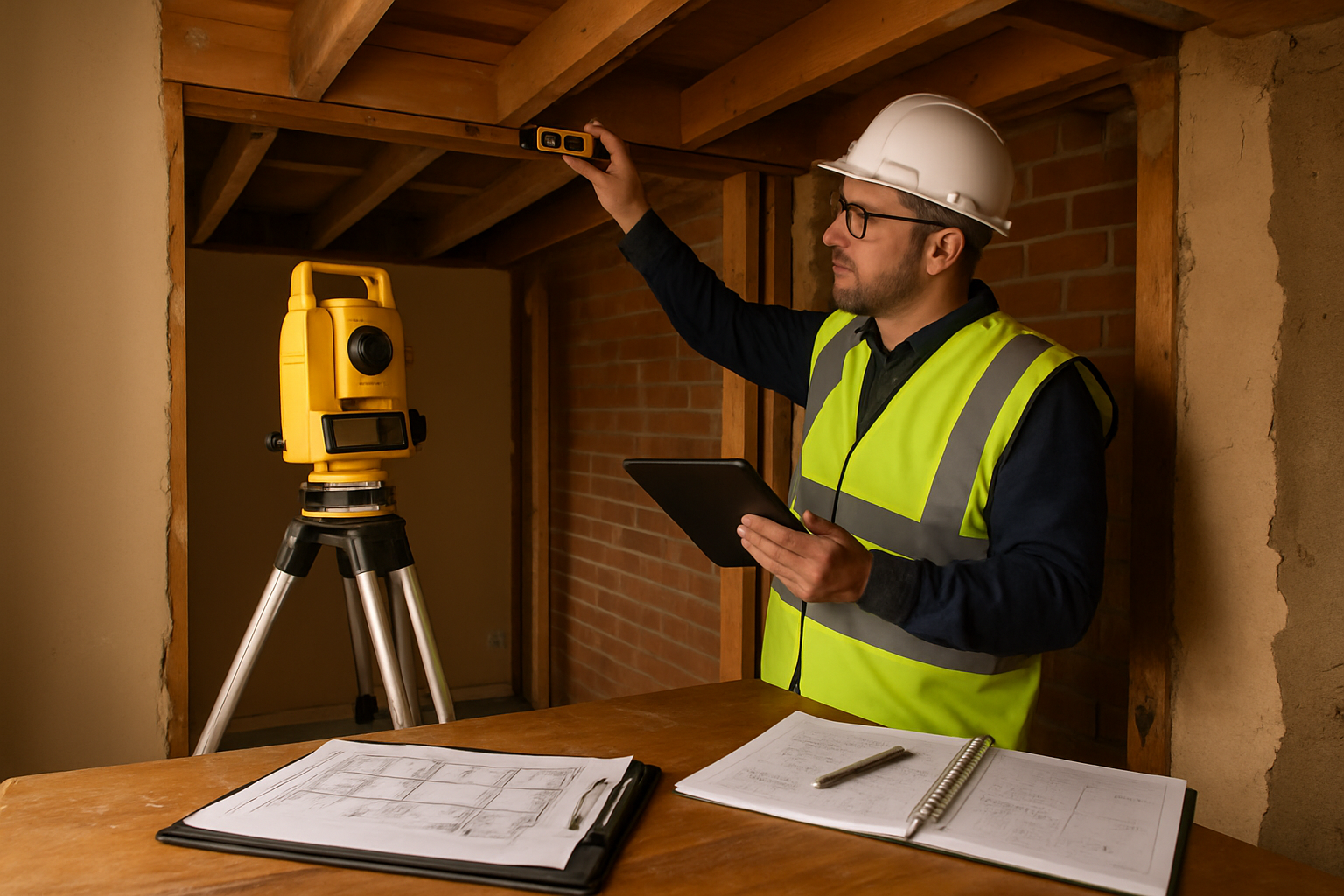
- 4-8 hours on-site inspection
- Specialist equipment usage
- Expert analysis and interpretation
- Comprehensive maintenance planning
Investment Protection
- Detailed condition assessment
- Future maintenance forecasting
- Structural integrity evaluation
- Risk identification and mitigation
When Level 3 Surveys Are Essential
Level 3 surveys become crucial for older properties, listed buildings, or those with visible defects. They’re particularly important for:
- Period properties over 100 years old
- Listed or historic buildings with unique construction
- Properties with obvious defects requiring detailed investigation
- Unusual construction methods or materials
- Large or complex properties with multiple building phases
Choose Level 3 when you need comprehensive understanding of a property’s condition and potential future costs. This survey level provides the detailed information necessary for major renovation planning and long-term ownership strategies.
Professional building surveyors recommend Level 3 surveys for properties where understanding structural integrity and future maintenance requirements is crucial for informed decision-making.
Key Differences Between Level 2 and Level 3 Survey Options
Inspection Depth and Methodology
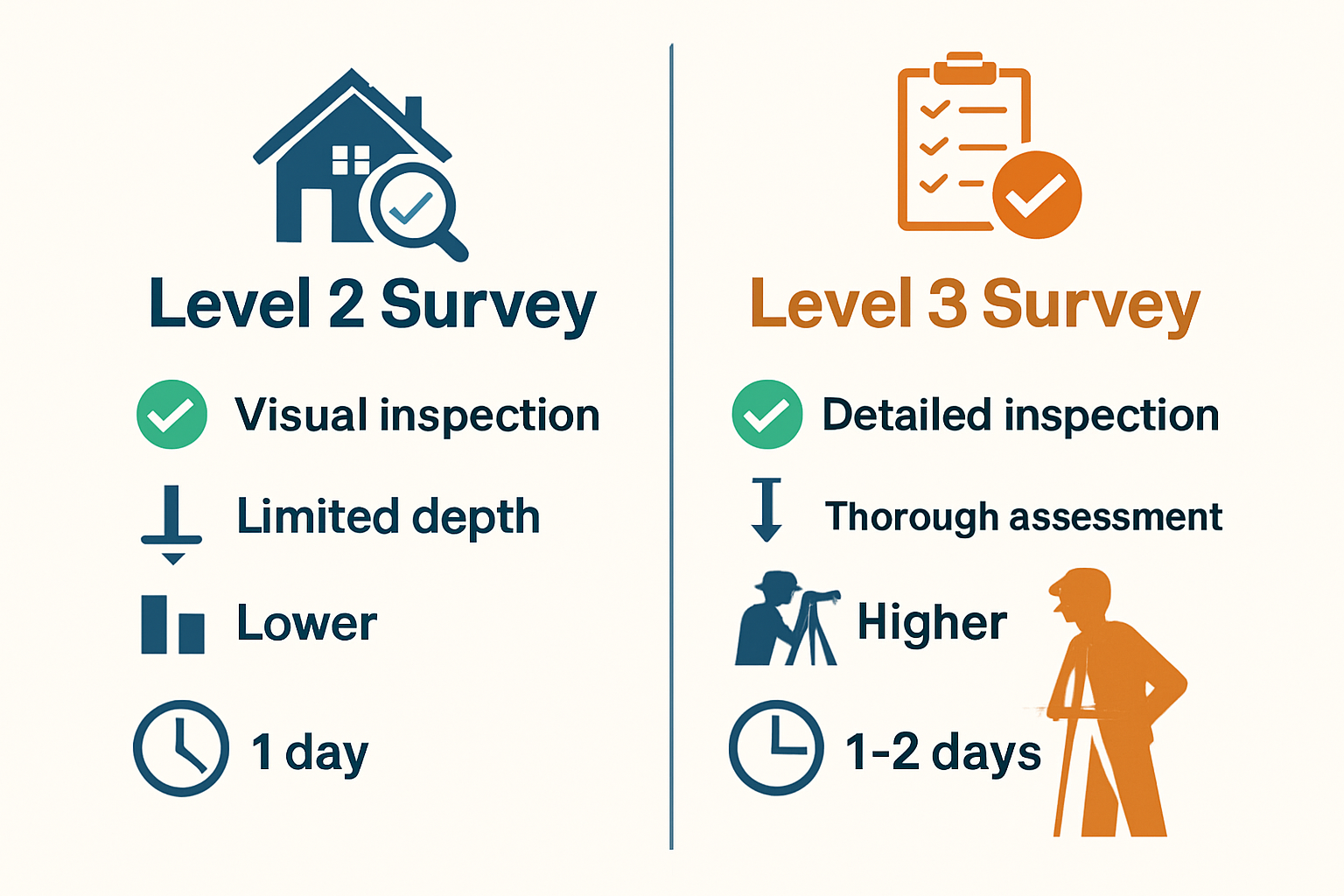
The difference between level 2 and level 3 survey approaches becomes most apparent in their inspection methodologies. Level 2 surveys focus on visible defects and obvious issues, while Level 3 surveys conduct comprehensive structural analysis of all building elements.
Level 2 Inspection Approach:
- Visual assessment of accessible areas
- Basic structural overview
- Standard defect identification
- Limited investigation depth
Level 3 Inspection Approach:
- Detailed structural examination
- Comprehensive building analysis
- Extensive defect investigation
- Thorough construction assessment
Reporting Differences
The reporting formats highlight another crucial difference between level 2 and level 3 survey options:
| Aspect | Level 2 Survey | Level 3 Survey |
|---|---|---|
| Format | Traffic light system | Detailed narrative |
| Length | 15-20 pages | 30-50+ pages |
| Detail Level | Summary findings | Comprehensive analysis |
| Photographs | Key issues only | Extensive documentation |
| Recommendations | Basic maintenance | Detailed repair priorities |
Cost and Time Investment
Understanding the difference between level 2 and level 3 survey costs helps budget planning:
Level 2 Survey Costs:
- £400-800 for typical properties
- 2-4 hours inspection time
- 5-10 working days for report delivery
- Cost-effective for standard properties
Level 3 Survey Costs:
- £600-1,500 depending on complexity
- 4-8 hours inspection time
- 10-15 working days for detailed reporting
- Higher investment for comprehensive assessment
The time difference reflects the thoroughness of investigation. Level 3 surveys require significantly more on-site time for detailed examination and analysis.
Professional Expertise Required
Both survey levels require qualified chartered surveyors, but Level 3 surveys demand additional expertise and experience. The complex analysis and detailed reporting require surveyors with extensive knowledge of building construction, defect diagnosis, and structural assessment.
Many buyers find that understanding these differences helps them make informed decisions about which survey level matches their specific needs and risk tolerance. The choice often depends on property characteristics, buyer experience, and long-term ownership plans.
Choosing the Right Survey Level for Your Property
Property Age and Construction Considerations
Property age serves as a primary indicator for survey level selection. The difference between level 2 and level 3 survey requirements often correlates directly with building age and construction methods.
Properties Built After 1980:
- Level 2 surveys typically sufficient
- Modern construction standards
- Fewer structural concerns
- Standard building materials
Properties Built 1900-1980:
- Consider property condition carefully
- Level 2 adequate for well-maintained properties
- Level 3 recommended if defects visible
- Mixed construction methods possible
Properties Built Before 1900:
- Level 3 surveys strongly recommended
- Traditional construction methods
- Potential structural issues
- Historical building techniques
Budget and Risk Assessment 💰
Your budget and risk tolerance significantly influence the appropriate survey choice. Consider both immediate survey costs and potential future repair expenses.
Budget-Conscious Approach:
- Level 2 provides good value for standard properties
- Balances cost with essential information
- Suitable for first-time buyers
- Adequate for most residential transactions
Risk-Averse Strategy:
- Level 3 offers comprehensive protection
- Detailed understanding of all issues
- Better for expensive properties
- Ideal for long-term ownership plans
Property Type Specific Recommendations
Different property types benefit from specific survey approaches:
Modern Apartments and Houses:
- Level 2 surveys generally appropriate
- Focus on immediate defects
- Standard construction assessment
- Cost-effective choice
Period Properties and Character Homes:
- Level 3 surveys provide necessary detail
- Complex structural analysis required
- Historical construction understanding
- Comprehensive defect identification
Properties with Obvious Issues:
- Level 3 surveys essential regardless of age
- Detailed investigation required
- Professional diagnosis needed
- Risk mitigation crucial
Making the Final Decision
Consider these factors when choosing between survey levels:
- Property characteristics (age, type, condition)
- Your experience with property ownership
- Budget constraints and cost-benefit analysis
- Risk tolerance and peace of mind requirements
- Future plans for the property
Many experienced buyers consult with professional surveyors to discuss their specific situation and receive personalized recommendations based on property characteristics and individual circumstances.
The decision ultimately depends on balancing comprehensive information needs with budget constraints while ensuring adequate protection for your property investment.
Cost Analysis and Value Comparison
Understanding Survey Pricing Structures
The difference between level 2 and level 3 survey costs reflects the varying levels of investigation and expertise required. Pricing structures typically consider property size, location, complexity, and surveyor qualifications.
Level 2 Survey Pricing Factors:
- Property size and number of rooms
- Geographic location and accessibility
- Surveyor qualifications and experience
- Additional services included (valuation)
Level 3 Survey Pricing Factors:
- Property complexity and age
- Structural investigation requirements
- Detailed reporting needs
- Specialist expertise required
Regional Cost Variations
Survey costs vary significantly across different UK regions:
London and Southeast:
- Level 2: £500-900
- Level 3: £800-1,800
- Higher costs due to property values and demand
Northern England and Scotland:
- Level 2: £350-600
- Level 3: £500-1,200
- More competitive pricing structures
Wales and Southwest:
- Level 2: £400-700
- Level 3: £600-1,400
- Moderate pricing with regional variations
Return on Investment Analysis 📊
Consider the long-term value of survey investment:
Level 2 Survey ROI:
- Identifies immediate issues requiring attention
- Provides negotiation leverage for price reduction
- Prevents unexpected repair costs
- Offers peace of mind for standard properties
Level 3 Survey ROI:
- Comprehensive understanding of all property issues
- Detailed repair cost estimates
- Long-term maintenance planning
- Maximum protection for significant investments
Many buyers find that survey costs represent a small percentage of total property purchase costs while providing substantial protection against unexpected expenses.
Hidden Cost Considerations
Beyond the initial survey fee, consider potential additional costs:
Follow-up Investigations:
- Specialist reports (damp, structural, electrical)
- Invasive investigations
- Expert consultations
- Additional surveyor visits
Negotiation Benefits:
- Price reduction opportunities
- Seller repair agreements
- Insurance claim support
- Future sale preparation
Understanding these factors helps evaluate the true difference between level 2 and level 3 survey value propositions and make informed investment decisions.
Professional advice from qualified surveyors can help assess whether survey costs align with property risks and potential benefits for your specific situation.
Common Misconceptions and Expert Insights
Debunking Survey Level Myths
Several misconceptions persist about the difference between level 2 and level 3 survey options. Understanding these myths helps buyers make more informed decisions.
Myth 1: “Level 2 surveys are just basic inspections”
Reality: Level 2 surveys provide comprehensive assessment of visible defects and structural elements. They include professional valuation and detailed reporting suitable for most conventional properties.
Myth 2: “Level 3 surveys are only for old buildings”
Reality: While older properties often benefit from Level 3 surveys, any property with complexity, unusual construction, or visible defects may require this detailed assessment level.
Myth 3: “More expensive surveys always provide better value”
Reality: The best survey choice depends on property characteristics and buyer needs. Level 2 surveys often provide optimal value for standard residential properties.
Professional Surveyor Insights 🏠
Experienced chartered surveyors offer valuable perspectives on survey selection:
Property Assessment Expertise:
- Professional surveyors evaluate multiple factors beyond property age
- Construction methods and materials significantly influence survey needs
- Local building practices and regional issues affect survey requirements
- Individual property history and maintenance impact survey choice
Risk Evaluation Strategies:
- Surveyors assess visible indicators of potential hidden problems
- Professional experience identifies properties requiring deeper investigation
- Risk-based approach balances thoroughness with cost-effectiveness
- Client consultation helps match survey level to specific needs
Industry Best Practices
Professional surveying organizations recommend following established best practices:
RICS Guidelines:
- Clear explanation of survey limitations and scope
- Transparent reporting of findings and recommendations
- Professional indemnity insurance protection
- Continuing professional development requirements
Quality Assurance:
- Standardized inspection procedures
- Consistent reporting formats
- Professional peer review processes
- Client feedback and improvement systems
Many property professionals emphasize that understanding survey limitations helps set realistic expectations and ensures appropriate survey level selection for individual circumstances.
Expert building survey specialists stress the importance of discussing specific property concerns and buyer objectives to determine the most suitable survey approach.
Conclusion
Understanding the difference between level 2 and level 3 survey options empowers property buyers to make informed decisions that protect their investments and provide peace of mind. Level 2 surveys offer excellent value for conventional properties in good condition, while Level 3 surveys provide comprehensive analysis for older, complex, or problematic properties.
The choice between survey levels should consider property age, condition, complexity, and your risk tolerance. Level 2 surveys typically cost £400-800 and suit most modern residential properties, while Level 3 surveys range from £600-1,500 and offer detailed structural analysis for properties requiring comprehensive assessment.
Key decision factors include:
- Property age and construction methods
- Visible defects or structural concerns
- Budget considerations and value expectations
- Long-term ownership and maintenance plans
- Professional surveyor recommendations
Next Steps for Property Buyers
- Assess your property characteristics and specific concerns
- Consult with qualified surveyors about appropriate survey levels
- Compare quotes from RICS chartered surveyors
- Schedule your survey early in the purchase process
- Review findings carefully and seek clarification when needed
- Use survey results for negotiation and future planning
Professional guidance from experienced chartered surveyors ensures you select the appropriate survey level for your specific situation and receive maximum value from your investment.
Remember that survey costs represent a small fraction of total property purchase expenses while providing crucial protection against unexpected issues and repair costs. The right survey choice gives you confidence in your property purchase and valuable information for long-term ownership success.
Take action today by consulting with qualified professionals who can assess your specific property and recommend the most suitable survey approach for your needs and circumstances.