
The real estate landscape is experiencing a seismic shift. What once seemed like niche property types—senior living facilities, build-to-rent communities, and adaptive reuse industrial spaces—are rapidly becoming essential assets in the portfolios of savvy investors and developers. Understanding Demographics Defining Real Estate Demand: Surveying Strategies for Niche Markets in 2026 has never been more critical as demographic transformations reshape where and how people live.
As the first baby boomers turn 80 this year, single-person households outnumber traditional families, and first-time buyers face historic affordability challenges, the properties that succeed will be those precisely calibrated to serve these emerging demographic realities. The question is no longer whether these niche markets matter—it's how to properly assess and capitalize on them through strategic surveying approaches.
This comprehensive guide explores the demographic forces reshaping real estate demand and provides actionable surveying strategies for evaluating multifamily properties, industrial conversions, and other niche opportunities that are becoming mainstream necessities in 2026.
Key Takeaways
- 🏘️ Baby boomers turning 80 in 2026 create unprecedented demand for senior housing with limited new supply and record-high occupancy levels requiring specialized surveying for accessibility and wellness features
- 👩 Single female buyers and shrinking households (only 25% of buyers have children) are driving demand for compact, tech-enabled properties that require different assessment criteria than traditional family homes
- 🏗️ Build-to-rent communities with over 100,000 homes in development pipelines target affordability-challenged demographics, necessitating surveys focused on community amenities and long-term durability
- 📊 Single-family rental growth (2.3%) significantly outpaces multifamily (0.3%) in 2026, making proper condition surveys essential for identifying profitable investment opportunities
- 🔍 Strategic surveying for niche markets must incorporate demographic-specific features including accessibility compliance, technology infrastructure, and adaptive reuse potential to maximize property value
Understanding the Demographic Shifts Reshaping Real Estate in 2026
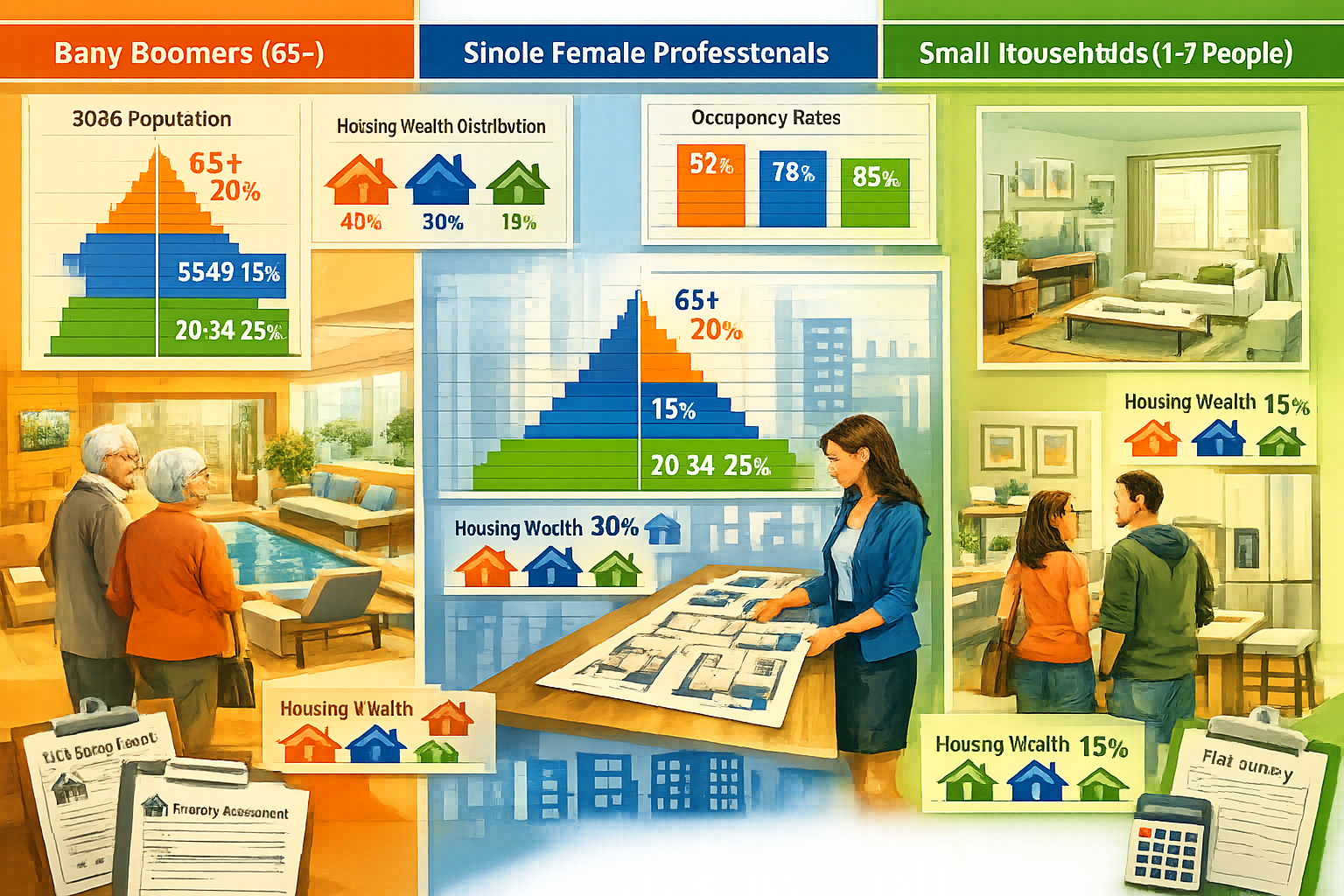
The real estate market in 2026 is fundamentally different from previous decades, driven by powerful demographic currents that are transforming traditional buyer and renter profiles. These shifts are creating distinct niche markets that require specialized understanding and assessment strategies.
Baby Boomers: The Dominant Market Force
Baby boomers continue to wield enormous influence in the housing market, possessing substantial housing wealth that enables them to relocate near family members and make property trades without major financial concessions[1]. However, 2026 marks a historic inflection point: the first members of this generation are turning 80 years old[2].
This milestone has profound implications for senior housing demand. Occupancy levels in senior living facilities have reached record highs, yet new supply remains severely limited[2]. Developers are responding by diversifying their offerings beyond traditional assisted living models to include:
- Active adult communities featuring "independent living lite" options
- Wellness-focused facilities with integrated healthcare services
- Tech-enabled senior housing incorporating smart home technology and telehealth capabilities
For property surveyors and investors, this demographic reality demands specialized assessment approaches. When conducting RICS building surveys on properties targeting senior demographics, evaluators must prioritize accessibility features, safety modifications, and wellness amenities that align with this population's specific needs.
Single Female Buyers: An Emerging Powerhouse
One of the most significant demographic shifts in 2026 is the rise of single women as a dominant force in real estate transactions. This trend reflects broader societal changes including lower marriage rates and declining birth rates[1].
Single female buyers typically prioritize:
- Security features and safe neighborhoods
- Proximity to employment centers and public transportation
- Compact, efficient layouts rather than large family homes
- Community amenities that facilitate social connections
This demographic shift requires surveyors to recalibrate their assessment criteria. Properties that might have been considered "too small" or "lacking family features" in previous decades are now highly desirable to this growing market segment.
Shrinking Household Composition
The traditional nuclear family is no longer the dominant household type purchasing homes. In 2026, only 25% of current home buyers have children[1]. This dramatic shift reflects:
- A larger share of retirees in the market
- Fewer buyers with young children
- Increasing numbers of single-person households
- Couples choosing to delay or forgo parenthood
Consequently, average home sizes are shrinking and household sizes are declining[1]. This trend creates opportunities for properties that previous generations might have overlooked—compact condos, studio apartments with efficient layouts, and smaller single-family homes in urban locations.
When conducting condition surveys, professionals must recognize that features like multiple bedrooms, large yards, and proximity to schools may be less valuable to this demographic than previously assumed.
First-Time Buyers: A Struggling Demographic
Despite their desire for homeownership, first-time home buyers represent the lowest share of the market since 1981[3]. This historic low creates a significant demographic gap with far-reaching implications for the entire real estate ecosystem.
The challenges facing first-time buyers include:
- Affordability constraints: Middle-income buyers can currently afford only 21% of available homes compared to 50% pre-pandemic[1]
- Limited inventory in starter-home price ranges
- Competition from all-cash buyers with greater purchasing power
- High mortgage rates restricting qualifying household pools
However, there's a critical unlock mechanism: a one percentage-point drop in mortgage rates could expand the qualifying household pool by approximately 5.5 million, including 1.6 million renters who could transition to first-time homeownership[1]. This sensitivity to interest rates makes mortgage rate trends a crucial factor in demographic forecasting for 2026.
For surveyors assessing properties aimed at first-time buyers, the focus should be on identifying structural defects early and providing clear, actionable reports that help these budget-conscious buyers make informed decisions.
Demographics Defining Real Estate Demand: Surveying Niche Property Types
As demographic shifts create new market realities, certain property types that were once considered niche are becoming essential components of the real estate landscape. Understanding how to properly survey and assess these properties is critical for investors, developers, and buyers in 2026.
Multifamily Properties: Navigating Supply and Demand Dynamics
The multifamily sector presents a complex picture in 2026. While the sector is expected to see positive net demand throughout the year, substantial newly delivered apartment units remain unleased, particularly in Sun Belt and Midwest regions[6]. This oversupply situation requires landlords to prioritize tenant retention strategies.
Key surveying considerations for multifamily properties:
| Assessment Area | Critical Factors | Demographic Alignment |
|---|---|---|
| Unit Mix | Studio and 1-bedroom ratios | Single professionals, small households |
| Amenity Spaces | Co-working areas, fitness centers, pet facilities | Remote workers, wellness-focused renters |
| Technology Infrastructure | High-speed internet, smart home features | Tech-savvy millennials and Gen Z |
| Common Area Condition | Maintenance quality, appeal | Tenant retention and attraction |
| Accessibility Features | ADA compliance, universal design | Aging population, disability accommodation |
When conducting surveys on multifamily properties, professionals should utilize comprehensive assessment resources to evaluate not just structural integrity but also the demographic fit of amenities and unit configurations.
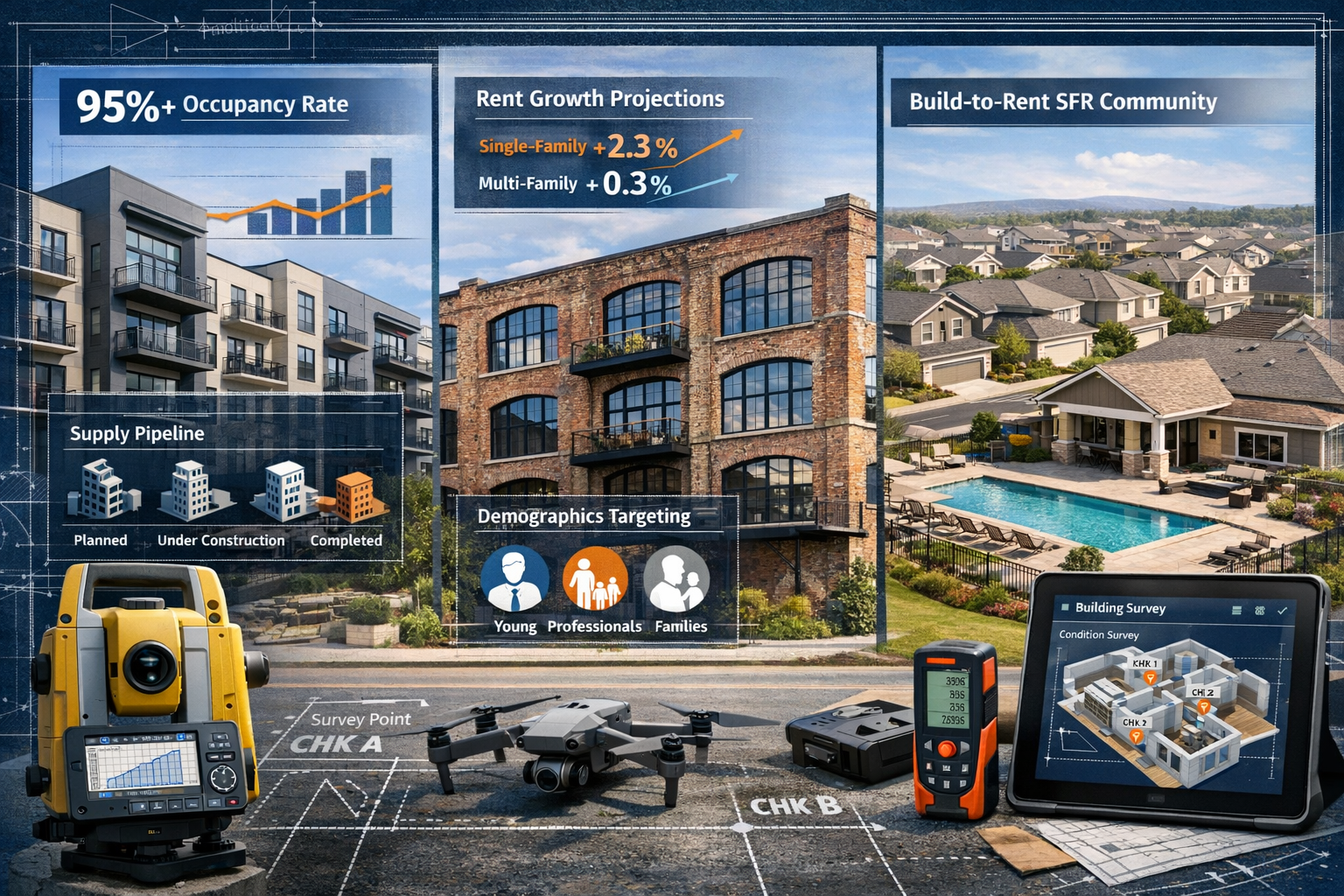
Rent growth projections further illustrate the importance of proper assessment. While multifamily rent growth is projected at just 0.3% in 2026, the sector still requires careful evaluation to identify properties positioned for outperformance[5].
Build-to-Rent Communities: The New Suburban Model
Build-to-rent (BTR) communities represent one of the fastest-growing property types in 2026. Nearly 39,000 new single-family rental homes came online in 2024, with over 100,000 additional homes in the development pipeline as of 2025[3].
This model specifically targets families and individuals priced out of homeownership while seeking community-oriented living experiences. BTR communities offer:
- Single-family home layouts without ownership responsibilities
- Community amenities (pools, parks, clubhouses)
- Professional management and maintenance
- Flexibility without long-term mortgage commitments
Surveying strategies for BTR properties:
When assessing build-to-rent developments, surveyors must evaluate both individual unit quality and community-wide features. Critical assessment areas include:
- Construction Quality: BTR properties must withstand higher turnover than owner-occupied homes
- Durability of Materials: Long-term ownership by institutional investors demands materials that minimize maintenance costs
- Community Infrastructure: Roads, drainage, common areas must support sustained use
- Amenity Functionality: Pools, playgrounds, and clubhouses require regular assessment for safety and appeal
The demographic driving BTR demand—middle-income families unable to purchase—makes affordability and value proposition central to property success. Surveyors should evaluate whether rent levels align with local income levels and whether properties deliver sufficient value to retain tenants long-term.
Single-Family Rentals: Outpacing Traditional Apartments
Single-family rentals (SFR) are experiencing remarkable growth in 2026, with rent growth projected at 2.3%—significantly outpacing the 0.3% growth in multifamily properties[5]. This divergence reflects sustained demand from renters unable to purchase homes who prefer single-family living over apartment life.
Why single-family rentals are thriving:
- 🏡 Privacy and space that apartments cannot provide
- 🌳 Yards and outdoor areas for families and pet owners
- 🔇 Reduced noise compared to shared-wall multifamily buildings
- 🚗 Parking convenience with garages and driveways
- 🏫 Access to suburban school districts without homeownership
For property surveyors, single-family rentals require a different assessment approach than traditional rental apartments. Building surveys for first-time buyers provide a useful framework, as SFR properties often compete with entry-level homes for purchase.
Critical SFR survey elements:
- Roof condition and remaining lifespan (major expense for landlords)
- HVAC system age and efficiency (affects operating costs and tenant satisfaction)
- Plumbing and electrical systems (costly to replace, critical for functionality)
- Foundation and structural integrity (essential for long-term investment viability)
- Exterior maintenance requirements (landscaping, siding, fencing impact curb appeal)
Given the strong rent growth projections, identifying undervalued SFR properties through thorough surveying can unlock significant investment opportunities in 2026.
Senior Housing: Meeting Historic Demand
With baby boomers reaching 80 in 2026, senior housing demand is approaching unprecedented levels. However, limited new supply and record-high occupancy create a challenging market dynamic[2].
Developers are diversifying senior housing offerings to include:
Active Adult Communities ("Independent Living Lite")
- Age-restricted (55+) but not requiring care services
- Emphasis on amenities: golf, fitness, social activities
- Single-family or attached homes with low-maintenance exteriors
- Proximity to healthcare facilities
Wellness-Focused Facilities
- Integrated fitness and nutrition programs
- Mental health and cognitive wellness services
- Preventive healthcare partnerships
- Holistic approach to aging
Tech-Enabled Senior Housing
- Smart home features for safety (fall detection, medication reminders)
- Telehealth capabilities for remote medical consultations
- Social connectivity technology to combat isolation
- Emergency response systems
Surveying considerations for senior housing:
When assessing properties targeting senior demographics, surveyors must evaluate specialized features:
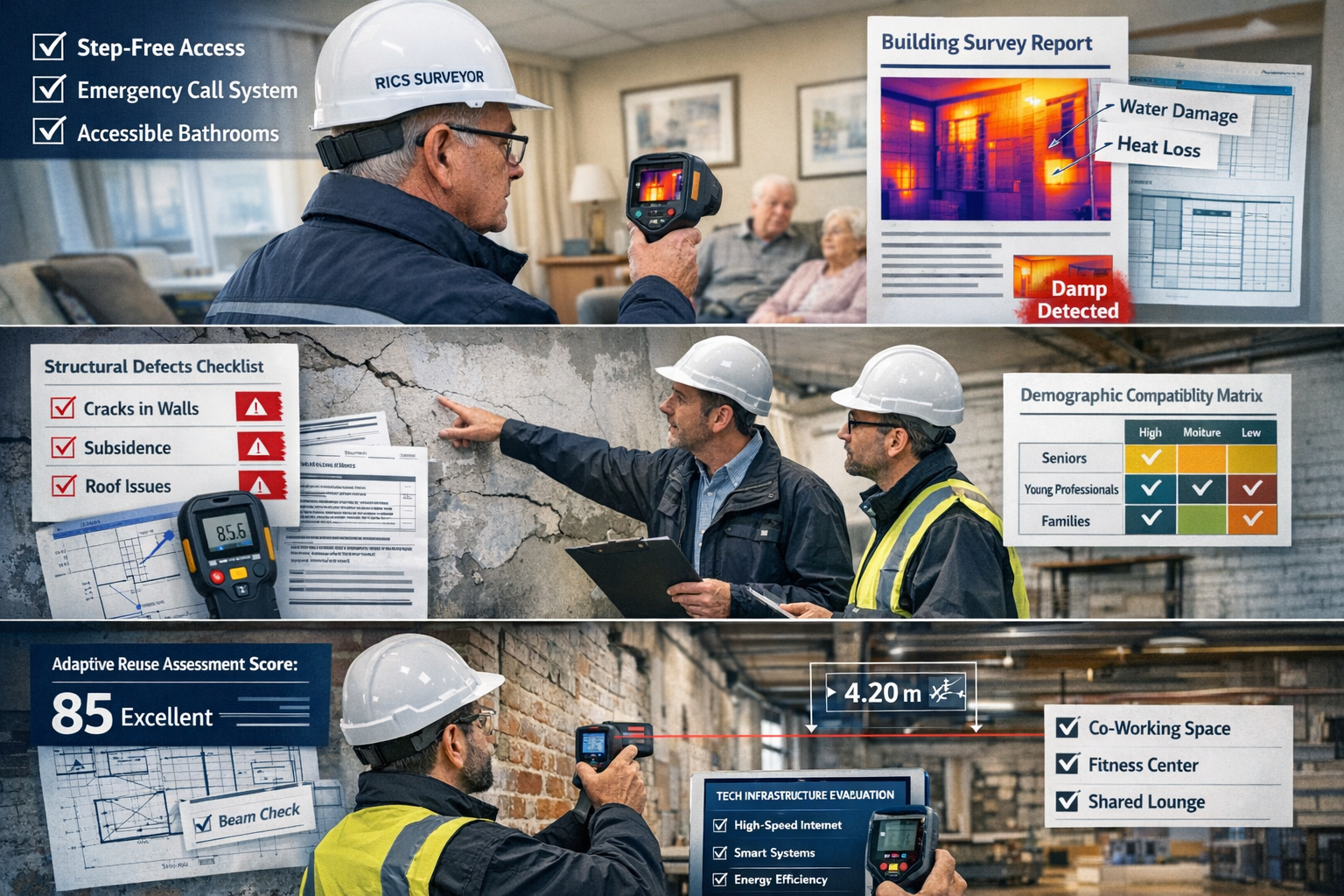
- ✅ Accessibility compliance: ADA standards, wheelchair accessibility, grab bars, zero-step entries
- ✅ Safety features: Non-slip flooring, adequate lighting, emergency call systems
- ✅ Healthcare infrastructure: Space for medical equipment, proximity to hospitals
- ✅ Technology integration: Wiring for smart home devices, internet connectivity
- ✅ Community spaces: Areas for social interaction, exercise, and activities
Damp surveys are particularly critical in senior housing, as moisture issues can exacerbate respiratory problems common in elderly populations and create slip hazards from mold or water damage.
Adaptive Reuse and Industrial Conversions
The transformation of industrial and commercial spaces into residential properties represents a growing niche market in 2026. This trend is driven by:
- Urban revitalization efforts repurposing obsolete industrial buildings
- Demand for unique living spaces with character and history
- Sustainability goals emphasizing reuse over new construction
- Location advantages of former industrial sites near urban cores
Common adaptive reuse conversions:
- Former warehouses → Loft apartments
- Old factories → Mixed-use developments
- Retail spaces → Residential units
- Office buildings → Micro-apartments or co-living spaces
Specialized surveying for adaptive reuse properties:
Adaptive reuse projects present unique assessment challenges requiring expertise beyond standard residential surveys:
- Structural Capacity: Industrial buildings may require reinforcement for residential loads
- Environmental Contamination: Former industrial sites may have soil or material contamination requiring remediation
- Building Systems: HVAC, plumbing, and electrical systems designed for commercial use must be evaluated for residential conversion feasibility
- Code Compliance: Historic buildings may have grandfathered non-compliant features requiring updates
- Preservation Requirements: Historic designation may limit modification options
When evaluating adaptive reuse opportunities, surveyors should work closely with architects and engineers to determine conversion viability and cost implications. Specific defect surveys can identify targeted issues that might derail conversion projects.
The demographic appeal of adaptive reuse properties—typically attracting young professionals, creatives, and urban enthusiasts—makes proper assessment critical for ensuring these unique spaces meet modern living standards while preserving their distinctive character.
Demographics Defining Real Estate Demand: Implementing Effective Surveying Strategies for Niche Markets in 2026
Successfully capitalizing on demographic-driven niche markets requires surveyors to adapt their methodologies and focus areas. Traditional residential survey approaches may miss critical factors that determine success in these specialized property types.
Developing Demographic-Specific Survey Protocols
For senior-focused properties:
Create survey checklists that prioritize age-friendly features:
- Mobility assessment: Doorway widths, hallway clearances, ramp grades, elevator functionality
- Safety evaluation: Lighting levels, flooring slip-resistance, bathroom grab bar installation points
- Healthcare readiness: Electrical capacity for medical equipment, emergency system infrastructure
- Cognitive support: Wayfinding clarity, natural lighting, noise reduction features
For single-professional properties:
Focus on features valued by this demographic:
- Technology infrastructure: Internet speed capabilities, smart home pre-wiring, charging stations
- Security systems: Entry controls, camera infrastructure, secure package delivery
- Efficiency: Storage solutions, multi-functional spaces, energy efficiency
- Location connectivity: Proximity to transit, walkability scores, urban amenities access
For family-oriented rentals:
Emphasize durability and functionality:
- Wear resistance: Flooring durability, wall surface resilience, fixture quality
- Safety: Fencing condition, window security, stair railings, outlet covers
- Storage: Closet space, garage functionality, attic or basement condition
- Outdoor spaces: Yard drainage, play area safety, fence integrity
Leveraging Technology in Demographic-Focused Surveys
Modern surveying technology enables more comprehensive assessments aligned with demographic needs:
Thermal Imaging for Energy Efficiency
- Critical for cost-conscious first-time buyers and middle-income renters
- Identifies insulation gaps affecting heating/cooling costs
- Reveals moisture intrusion that could lead to expensive repairs
3D Scanning and Virtual Tours
- Allows remote assessment by out-of-state investors
- Enables demographic-specific spatial analysis (accessibility measurements, furniture placement)
- Creates baseline documentation for adaptive reuse projects
Drone Surveys for Large Properties
- Essential for build-to-rent community assessments
- Provides roof condition analysis without physical access
- Documents site drainage and community layout
Smart Home System Evaluation
- Increasingly important for tech-savvy demographics
- Assesses existing automation infrastructure
- Identifies upgrade opportunities to increase property appeal
Conducting Market-Aligned Condition Assessments
Understanding the demographic target market should inform the depth and focus of condition assessments. A homebuyers survey for a first-time buyer purchasing a starter home requires different emphasis than a commercial inspection of a 200-unit multifamily building.
Tiered assessment approach:
| Property Type | Assessment Depth | Key Focus Areas | Demographic Driver |
|---|---|---|---|
| Senior Housing | Comprehensive | Accessibility, safety, healthcare infrastructure | Baby boomers 80+ |
| BTR Community | Moderate-Deep | Durability, amenities, long-term maintenance | Middle-income families |
| Single-Family Rental | Moderate | Major systems, roof, foundation, curb appeal | Renters unable to buy |
| Adaptive Reuse | Very Deep | Structural capacity, code compliance, contamination | Urban professionals |
| Compact Urban Condo | Focused | Building systems, HOA health, unit efficiency | Single professionals |
Identifying Value-Add Opportunities Through Demographic Lens
Savvy surveyors don't just identify problems—they recognize opportunities to enhance property value by better aligning with demographic demand.
Value-add opportunities for different demographics:
Senior Housing Enhancements:
- Converting standard bathrooms to walk-in shower configurations
- Adding smart home safety features (fall detection, medication reminders)
- Creating wellness spaces (meditation rooms, fitness areas)
- Improving outdoor accessibility (ramps, railings, seating areas)
Single-Professional Appeal:
- Installing high-speed internet infrastructure
- Creating home office spaces from underutilized rooms
- Adding smart home automation systems
- Improving security features (cameras, smart locks, video doorbells)
Family Rental Improvements:
- Upgrading to durable, low-maintenance materials
- Adding storage solutions (built-in closets, garage organization)
- Creating outdoor living spaces (patios, fenced yards)
- Installing energy-efficient systems to reduce utility costs
Multifamily Competitive Advantages:
- Adding co-working spaces and business centers
- Creating pet-friendly amenities (washing stations, dog parks)
- Installing package lockers for secure delivery
- Upgrading common areas to encourage community interaction
Assessing Financial Viability Against Demographic Affordability
A critical but often overlooked aspect of demographic-focused surveying is evaluating whether property condition and required improvements align with target demographic affordability.
Affordability assessment framework:
- Determine target demographic income levels for the property location
- Calculate maximum affordable housing payment (typically 30% of gross income)
- Estimate required improvements from survey findings
- Project post-improvement market value or rent
- Evaluate whether improved property remains affordable to target demographic
This analysis is particularly crucial for middle-income housing, where buyers can currently afford only 21% of available homes[1]. Properties requiring extensive improvements may price out the very demographic they're intended to serve.
"The most successful niche market properties in 2026 aren't necessarily the newest or most luxurious—they're the ones that precisely match demographic needs at prices those demographics can afford."
Integrating Regulatory Compliance for Niche Markets
Different property types serving specific demographics face varying regulatory requirements that must be addressed during surveying:
Senior Housing Regulations:
- Fair Housing Act compliance for age-restricted communities
- ADA accessibility standards for common areas
- State-specific assisted living licensing requirements (if applicable)
- Healthcare facility regulations for properties offering services
Multifamily Compliance:
- Local occupancy codes and unit density regulations
- Fire safety systems and egress requirements
- Fair housing requirements for tenant selection
- Energy efficiency mandates in certain jurisdictions
Adaptive Reuse Considerations:
- Historic preservation requirements and tax credit compliance
- Environmental remediation standards for contaminated sites
- Building code updates for change-of-use permits
- Zoning compliance for residential conversion
Surveyors should identify potential regulatory obstacles during initial assessments, as compliance costs can significantly impact project viability.
Creating Actionable Reports for Different Stakeholder Groups
The presentation of survey findings should be tailored to the stakeholder receiving the report:
For Individual Buyers/Investors:
- Clear prioritization of issues (critical vs. cosmetic)
- Cost estimates for major repairs
- Timeline for addressing defects
- Impact on property value and demographic appeal
For Developers:
- Feasibility assessment for intended demographic target
- Regulatory compliance gaps
- Value engineering opportunities
- Competitive positioning analysis
For Institutional Investors:
- Portfolio-level risk assessment
- Long-term capital expenditure projections
- Demographic alignment scoring
- Comparative analysis against similar properties
For Lenders:
- Structural integrity confirmation
- Major system condition and remaining useful life
- Environmental concerns
- Collateral value protection
By customizing report format and content to stakeholder needs, surveyors add greater value and facilitate better decision-making in niche market investments.
Monitoring Demographic Trends for Future Opportunities
The most successful real estate professionals don't just respond to current demographic realities—they anticipate future shifts. Surveyors can add strategic value by incorporating trend analysis into their practice:
Emerging demographic trends to monitor:
📊 Migration patterns: Which regions are gaining population from which demographic groups?
📊 Household formation rates: Are millennials forming households later, and what does that mean for starter home demand?
📊 Remote work persistence: How permanent is work-from-home, and what property types does it favor?
📊 Aging in place vs. senior communities: What percentage of seniors prefer to age in existing homes versus moving to specialized housing?
📊 Wealth concentration: How is housing wealth distributed across age groups and geographies?
By staying informed about demographic trajectories, surveyors can advise clients not just on current property condition but on future market positioning and demographic alignment.
Practical Implementation: Case Studies in Demographic-Driven Surveying
Understanding theoretical frameworks is valuable, but practical application demonstrates how demographic-focused surveying creates real value. The following scenarios illustrate effective strategies for different niche markets in 2026.
Case Study 1: Senior Housing Conversion Assessment
Scenario: A developer is considering converting a 1980s-era apartment complex into an active adult community for residents 55+.
Demographic driver: Baby boomers turning 80 with limited senior housing supply and record-high occupancy rates[2].
Survey approach:
The surveying team conducted a comprehensive assessment focusing on:
- Accessibility audit: Measured doorway widths (many were only 30" wide, below the 32" minimum for wheelchair access), identified need for ramp installation at all entrances, evaluated bathroom layouts for grab bar installation potential
- Building systems evaluation: Assessed HVAC capacity for individual unit control (critical for elderly residents with varying temperature preferences), evaluated electrical capacity for medical equipment, inspected elevator systems for reliability
- Safety assessment: Identified inadequate lighting in hallways and parking areas, noted slippery tile in common areas requiring replacement, evaluated emergency exit accessibility
- Amenity potential: Identified underutilized community room that could become fitness center, evaluated outdoor spaces for walking path installation, assessed pool area for accessibility improvements
Key findings:
- Total conversion cost: £2.8 million
- Required improvements: Doorway widening, ramp installation, bathroom modifications, lighting upgrades, flooring replacement, elevator modernization
- Projected post-conversion value: £8.5 million
- Demographic alignment score: 85/100 (high demand, excellent location near healthcare facilities)
Outcome: Developer proceeded with conversion, pre-leasing 60% of units before completion. The detailed survey enabled accurate budgeting and identified the most critical improvements for target demographic appeal.
Case Study 2: Build-to-Rent Community Due Diligence
Scenario: An institutional investor is evaluating a newly constructed 150-home build-to-rent community targeting middle-income families.
Demographic driver: Middle-income buyers can afford only 21% of available homes, creating strong demand for quality rental alternatives[1].
Survey approach:
The assessment team deployed a multi-phase evaluation:
Phase 1 – Individual Home Sampling:
- Conducted detailed inspections on 15% of homes (representative sample)
- Focused on construction quality, material durability, and workmanship
- Identified several issues: inadequate attic ventilation, improper grading causing water pooling, HVAC ductwork leaks reducing efficiency
Phase 2 – Community Infrastructure:
- Evaluated roads, drainage systems, and utility infrastructure
- Assessed amenity facilities (clubhouse, pool, playground) for safety and functionality
- Reviewed landscape irrigation systems and common area maintenance needs
Phase 3 – Demographic Alignment:
- Analyzed unit mix against local family demographics (3-bedroom homes comprised 70% of community, aligning well with area family sizes)
- Evaluated school district quality and proximity
- Assessed rent levels against local median household incomes (rents at 28% of median income—affordable for target demographic)
Key findings:
- Construction quality: Generally good but requiring remediation of identified defects (estimated £180,000)
- Community infrastructure: Adequate but drainage improvements needed (£95,000)
- Demographic fit: Excellent—strong alignment with local family demographics and income levels
- Competitive positioning: Superior amenities compared to nearby apartment complexes
Outcome: Investor negotiated purchase price reduction to account for identified defects, proceeded with acquisition, and implemented recommended improvements. Property achieved 92% occupancy within six months.
Case Study 3: Adaptive Reuse Industrial Conversion
Scenario: A developer plans to convert a 1920s warehouse into 45 loft apartments targeting young urban professionals.
Demographic driver: Single professionals and small households (only 25% of buyers have children) seeking unique urban living spaces[1].
Survey approach:
This complex project required specialized expertise:
Structural Engineering Assessment:
- Evaluated load-bearing capacity for residential conversion
- Identified need for additional support columns in certain areas
- Assessed foundation condition (generally excellent due to original industrial requirements)
Environmental Investigation:
- Conducted Phase I and Phase II environmental assessments
- Identified minor soil contamination requiring remediation
- Tested building materials for asbestos and lead paint (found in some areas)
Building Systems Analysis:
- Determined existing systems entirely inadequate for residential use
- Designed new HVAC, plumbing, and electrical infrastructure
- Evaluated structural capacity for rooftop HVAC equipment
Code Compliance Review:
- Identified requirements for fire suppression systems
- Determined egress requirements for residential occupancy
- Assessed historic preservation restrictions (building is locally designated)
Demographic Appeal Assessment:
- Evaluated ceiling heights (14-16 feet—excellent for loft aesthetic)
- Assessed natural light potential from large industrial windows
- Analyzed location walkability and proximity to urban amenities (excellent—walk score of 92)
Key findings:
- Conversion feasibility: Viable but complex
- Total project cost: £8.2 million (£182,000 per unit)
- Environmental remediation: £320,000
- Required building systems: £2.1 million
- Historic preservation compliance: Restricts exterior modifications but allows interior flexibility
- Demographic appeal: Very high—unique character, excellent location, target demographic actively seeking this property type
Outcome: Developer proceeded with project, marketing units as "industrial chic" lofts. Pre-sales exceeded expectations with 35 of 45 units reserved before construction completion, validating the demographic assessment.
Navigating Challenges in Niche Market Surveying
While demographic-focused surveying offers significant opportunities, it also presents unique challenges that professionals must navigate effectively.
Challenge 1: Limited Comparable Data
Issue: Niche property types often lack sufficient comparable sales or rental data for accurate valuation and market analysis.
Solutions:
- Expand geographic search area for comparables
- Use proxy comparables from similar property types
- Weight demographic factors more heavily in analysis
- Leverage national trend data to inform local projections
- Develop custom valuation models incorporating demographic variables
Challenge 2: Rapidly Evolving Demographic Preferences
Issue: Demographic preferences can shift quickly, making properties designed for specific groups potentially obsolete.
Solutions:
- Design for flexibility and adaptability
- Focus on timeless quality rather than trendy features
- Build in conversion potential (e.g., home office that could become bedroom)
- Monitor demographic trend data continuously
- Recommend features with broad appeal across multiple demographics
Challenge 3: Regulatory Complexity
Issue: Niche properties often face complex, overlapping regulatory requirements that vary by jurisdiction.
Solutions:
- Develop relationships with specialized consultants (environmental, accessibility, historic preservation)
- Create jurisdiction-specific compliance checklists
- Budget for regulatory compliance early in feasibility analysis
- Engage with local planning departments proactively
- Document all compliance efforts thoroughly
Challenge 4: Financing Difficulties
Issue: Lenders may be unfamiliar with niche property types, making financing more difficult or expensive.
Solutions:
- Provide comprehensive survey reports that educate lenders
- Include demographic demand data in loan applications
- Identify lenders specializing in specific property types
- Consider alternative financing structures (private equity, crowdfunding)
- Build track record with smaller projects before scaling
Challenge 5: Balancing Specialization with Broad Appeal
Issue: Properties designed too narrowly for specific demographics may struggle if that demographic's preferences shift or if resale becomes necessary.
Solutions:
- Incorporate universal design principles that serve multiple demographics
- Avoid irreversible modifications that limit future use
- Focus on location quality (good locations appeal to many demographics)
- Design amenities with multiple potential uses
- Maintain flexibility in marketing approach
The Future of Demographics and Real Estate Demand Beyond 2026
While this article focuses on 2026, understanding longer-term demographic trajectories helps surveyors and investors position properties for sustained success.
Emerging Demographic Trends to Watch
Generation Z Entering the Market:
The oldest Gen Z members are now in their mid-20s and beginning to enter the housing market. This generation's preferences—shaped by climate concerns, technology immersion, and economic uncertainty—will increasingly influence real estate demand in coming years.
Continued Aging of Millennials:
As millennials age into their 40s and 50s, their housing needs will evolve from starter homes and urban apartments toward larger family homes and eventually downsizing options. Properties serving this lifecycle transition will see sustained demand.
Immigration Patterns:
International migration continues to power real estate demand in major hubs globally, with demographic dividends spurring growth in emerging markets like India, Saudi Arabia, and Vietnam[4]. Understanding immigration patterns helps identify growth markets.
Climate Migration:
Increasingly, climate factors are driving migration patterns, with people moving away from areas prone to extreme heat, flooding, or wildfire risk. This creates both challenges and opportunities in different geographic markets.
Multigenerational Living:
Economic pressures and cultural preferences are driving increased multigenerational household formation, creating demand for homes with separate living spaces, accessory dwelling units, and flexible layouts.
Positioning Properties for Long-Term Demographic Alignment
Adaptability as a Core Value:
Properties designed for easy modification and multiple use cases will maintain value across demographic shifts better than highly specialized spaces.
Location Fundamentals:
While demographic preferences for specific features may change, location quality remains consistently valuable. Properties in well-connected, amenity-rich areas serve multiple demographics across time.
Quality Construction:
Regardless of demographic trends, well-built properties with quality materials and systems maintain appeal and reduce ownership costs—factors valued by all demographics.
Sustainability Integration:
Environmental consciousness is increasing across all demographic groups, making energy efficiency, sustainable materials, and climate resilience increasingly important.
Technology Infrastructure:
As technology continues to evolve, properties with robust infrastructure (high-speed internet, smart home pre-wiring, electrical capacity) will adapt more easily to future innovations.
Conclusion: Mastering Demographics Defining Real Estate Demand: Surveying Strategies for Niche Markets in 2026
The real estate landscape of 2026 is fundamentally shaped by powerful demographic forces that are transforming niche properties into essential market segments. Baby boomers turning 80, single professionals dominating buyer pools, shrinking household sizes, and affordability-challenged first-time buyers are creating unprecedented demand for specialized property types—from senior housing and build-to-rent communities to adaptive reuse projects and single-family rentals.
Success in this transformed market requires surveyors, investors, and developers to move beyond traditional assessment approaches and embrace demographic-focused strategies. By understanding the specific needs, preferences, and constraints of target demographics, property professionals can identify opportunities others miss, assess properties with greater precision, and create value through strategic improvements aligned with market demand.
The surveying strategies outlined in this guide—from developing demographic-specific protocols and leveraging advanced technology to conducting market-aligned assessments and identifying value-add opportunities—provide a comprehensive framework for capitalizing on niche market opportunities in 2026 and beyond.
Actionable Next Steps
For property professionals looking to implement demographic-focused surveying strategies:
-
Analyze your local market demographics: Identify which demographic groups are growing, shrinking, or underserved in your area using census data and market reports
-
Develop specialized expertise: Choose one or two niche property types aligned with local demographic trends and build deep knowledge in assessing those properties
-
Update your survey protocols: Create demographic-specific checklists and assessment criteria that go beyond standard residential surveys
-
Invest in technology: Acquire tools like thermal imaging, 3D scanning, and drone capabilities that enable more comprehensive demographic-focused assessments
-
Build strategic partnerships: Develop relationships with specialists in accessibility, environmental assessment, historic preservation, and other niche areas
-
Monitor demographic trends continuously: Subscribe to industry research, attend conferences, and track demographic data to anticipate future market shifts
-
Customize your reporting: Tailor survey reports to different stakeholder needs and include demographic alignment analysis in your assessments
-
Educate your clients: Help buyers, investors, and developers understand demographic drivers and how they impact property value and market positioning
The properties that thrive in 2026 and beyond won't necessarily be the largest or most luxurious—they'll be those that precisely match demographic needs at prices those demographics can afford. By mastering the intersection of demographics and property assessment, surveyors and real estate professionals position themselves as indispensable strategic advisors in an increasingly complex and specialized market.
The demographic shifts reshaping real estate demand aren't temporary aberrations—they're fundamental transformations that will define the industry for decades to come. Those who recognize this reality and adapt their surveying strategies accordingly will discover that today's niche markets are tomorrow's mainstream opportunities.
References
[1] 2026 Real Estate Outlook What Leading Housing Economists Are Watching – https://www.nar.realtor/magazine/real-estate-news/2026-real-estate-outlook-what-leading-housing-economists-are-watching
[2] Emerging Trends In Real Estate United States And Canada 2026 – https://knowledge.uli.org/en/reports/emerging-trends/2026/emerging-trends-in-real-estate-united-states-and-canada-2026
[3] Real Estate Trends 2026 – https://www.avidxchange.com/blog/real-estate-trends-2026/
[4] The Themes That Will Shape Global Real Estate In 2026 – https://impacts.savills.com/market-trends/the-themes-that-will-shape-global-real-estate-in-2026.html
[5] 2026 Real Estate Market Trends – https://www.buildium.com/blog/2026-real-estate-market-trends/
[6] Us Real Estate Market Outlook 2026 – https://www.cbre.com/insights/books/us-real-estate-market-outlook-2026