

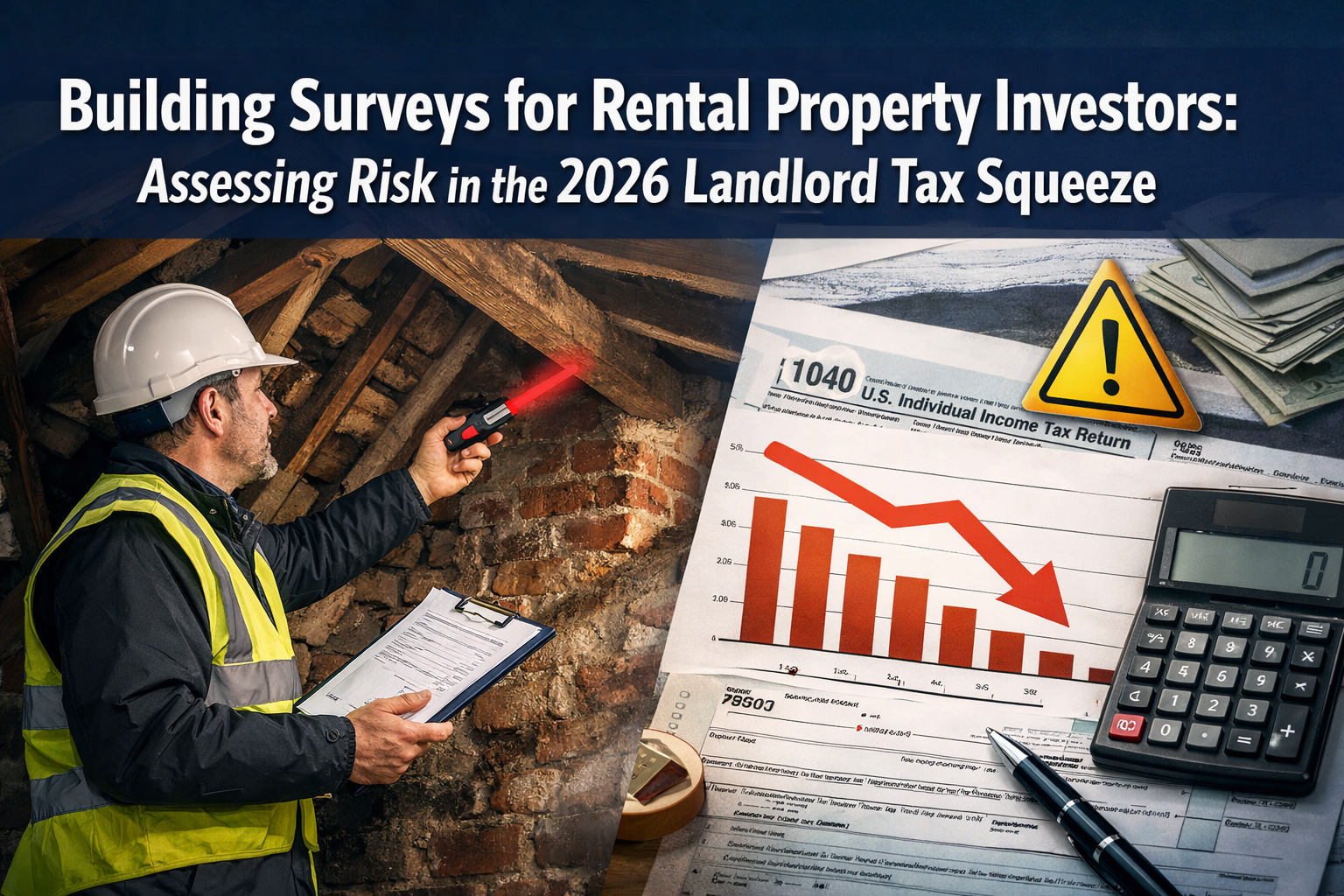
The landscape for rental property investors has shifted dramatically. With new tax regulations tightening profit margins and compliance requirements intensifying, landlords can no longer afford to overlook the structural integrity and maintenance needs of their portfolios. Building Surveys for Rental Property Investors: Assessing Risk in the 2026 Landlord Tax Squeeze has become essential for protecting investments and maximizing returns in an increasingly challenging market.
As Making Tax Digital (MTD) requirements roll out from April 2026, alongside continued Section 24 mortgage interest relief restrictions and the implementation of the Renters Reform Act 2026, property investors face unprecedented financial pressure. Every pound spent on unexpected repairs directly impacts already-squeezed profit margins. This makes comprehensive building surveys not just a purchase consideration, but a strategic tool for portfolio management and tax planning.
Key Takeaways
- 📊 Tax pressures demand precision: The 2026 landlord tax squeeze makes unexpected repair costs financially devastating, requiring detailed property condition assessments
- 🏗️ Building surveys protect margins: Comprehensive structural evaluations identify hidden defects that could erode rental yields by 15-30%
- 💰 Strategic survey timing saves money: Regular condition assessments enable tax-efficient capital expenditure planning and prevent emergency repair scenarios
- 📋 Compliance starts with condition: New regulatory requirements make documented property conditions essential for legal protection and tenant retention
- 🎯 Risk assessment drives decisions: Professional surveys provide data-driven insights for portfolio optimization, helping investors decide whether to repair, refinance, or divest
Understanding the 2026 Landlord Tax Environment
The Perfect Storm of Tax Changes
The year 2026 marks a critical inflection point for buy-to-let investors. Multiple tax policy changes converge to create significant financial challenges:
Section 24 Restrictions continue to limit mortgage interest relief to the basic rate of income tax (20%), rather than allowing deductions at the landlord's marginal rate. For higher-rate taxpayers, this effectively increases tax liability by thousands of pounds annually on each mortgaged property.
Making Tax Digital (MTD) for Income Tax becomes mandatory from April 2026 for landlords with property income above £50,000. This requires quarterly digital reporting and meticulous record-keeping of all income and expenses, including maintenance and repair costs.
Capital Gains Tax considerations have become more complex, with investors needing to carefully track capital improvements versus repairs to optimize tax positions when selling properties.
How Tax Pressure Amplifies Property Risk
When profit margins shrink, every unexpected expense becomes critical. A £10,000 emergency roof repair that might have been manageable in 2015 can now push a property into negative cash flow territory. Consider this comparison:
| Scenario | 2015 Tax Treatment | 2026 Tax Treatment |
|---|---|---|
| Rental Income | £18,000 | £18,000 |
| Mortgage Interest | £12,000 (fully deductible) | £12,000 (20% tax credit only) |
| Other Expenses | £3,000 | £3,000 |
| Unexpected Repairs | £10,000 | £10,000 |
| Net Position | -£7,000 loss | -£13,400 loss |
The tax treatment difference means landlords in 2026 face nearly double the financial impact from unexpected repairs compared to a decade ago. This reality makes professional building surveys an investment rather than an expense.
Building Surveys for Rental Property Investors: Strategic Risk Assessment
Types of Building Surveys for Rental Properties
Not all surveys serve the same purpose. Landlords need to understand which assessment type matches their specific risk profile:
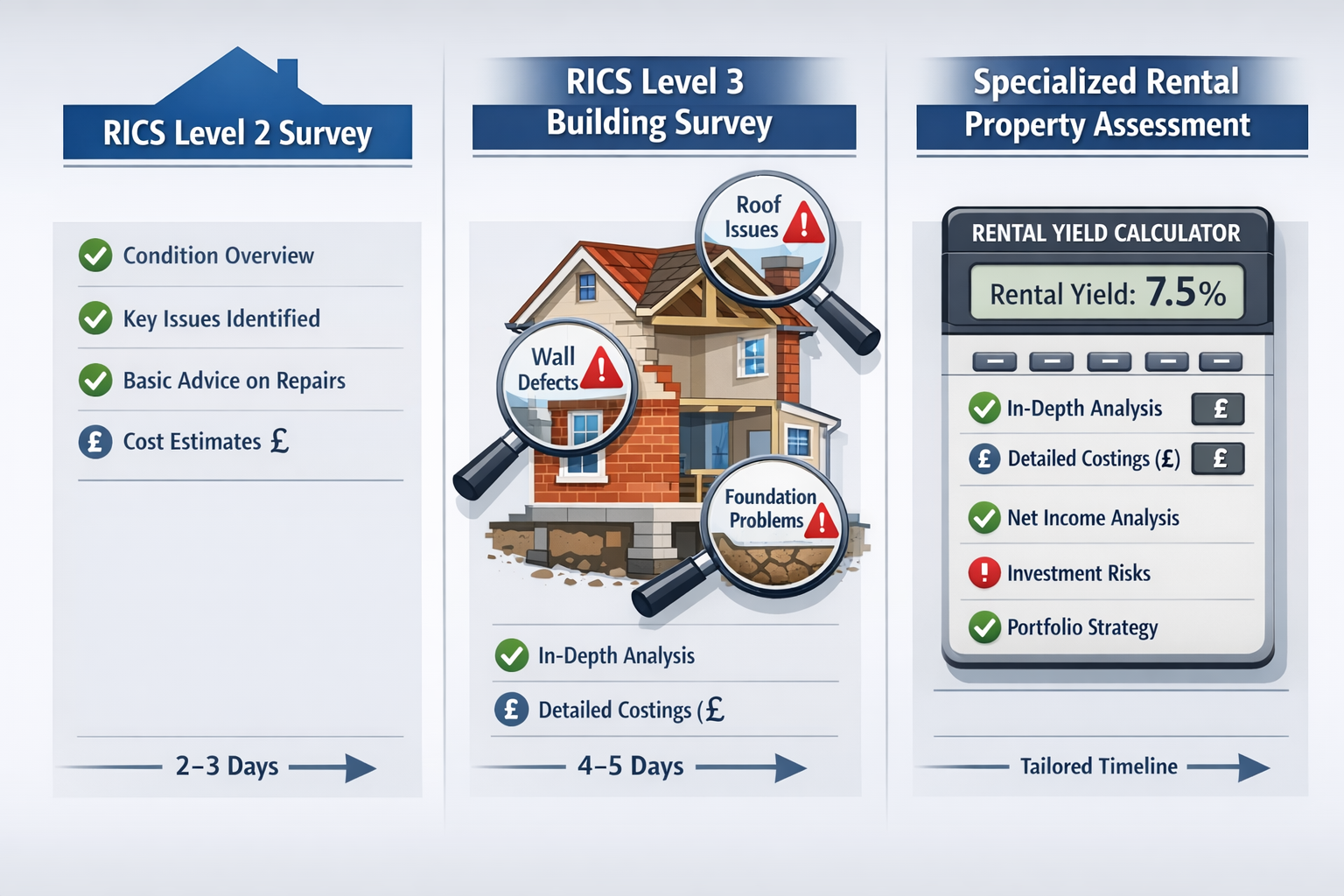
RICS Level 2 Survey (HomeBuyer Report) 🏠
- Suitable for: Conventional properties in reasonable condition
- Coverage: Visual inspection of accessible areas
- Cost: £400-£800 typically
- Best for: Standard residential rentals built after 1900
- Limitations: Won't identify hidden defects or structural issues requiring invasive investigation
RICS Level 3 Building Survey 🔍
- Suitable for: Older properties, unusual construction, or properties with visible defects
- Coverage: Comprehensive structural assessment including roof spaces, floors, walls, foundations
- Cost: £600-£1,500+ depending on property size
- Best for: Victorian/Edwardian properties, HMOs, properties requiring significant investment decisions
- Advantages: Detailed defect analysis with repair cost guidance
For detailed guidance on choosing between survey levels, review our comprehensive comparison of Level 2 and Level 3 surveys.
Specialized Rental Property Assessments 📋
- Focus areas: Rental yield impact, maintenance forecasting, compliance readiness
- Additional elements: Energy efficiency evaluation, tenant safety compliance, future regulatory risk
- Integration: Can be combined with standard RICS surveys for comprehensive risk profiling
What Building Surveys Reveal About Tax-Critical Issues
Professional building surveys identify problems that directly impact tax planning and investment returns:
Capital vs. Revenue Expenditure 💷
Surveys help distinguish between:
- Repairs (tax-deductible revenue expenses): Fixing existing features to maintain original condition
- Improvements (capital expenditure): Enhancing or replacing with superior alternatives
This distinction matters enormously for tax purposes. A survey documenting that a roof is "beyond economic repair" supports treating replacement as a deductible repair rather than capital improvement.
Maintenance Forecasting 📅
Detailed condition reports enable landlords to:
- Budget for predictable expenses over 5-10 year horizons
- Time major works to tax-efficient years
- Avoid emergency repairs that disrupt cash flow
- Plan capital allowances claims strategically
Compliance Risk Identification ⚠️
Surveys reveal issues affecting legal compliance:
- Fire safety deficiencies in HMOs
- Electrical installation concerns
- Damp and mold risks affecting tenant health
- Structural issues requiring Building Control notification
Early identification prevents costly emergency remediation and potential legal penalties under the Renters Reform Act 2026.
Property Condition Assessment: The Landlord's Risk Management Tool
How Surveys Protect Rental Investment Returns
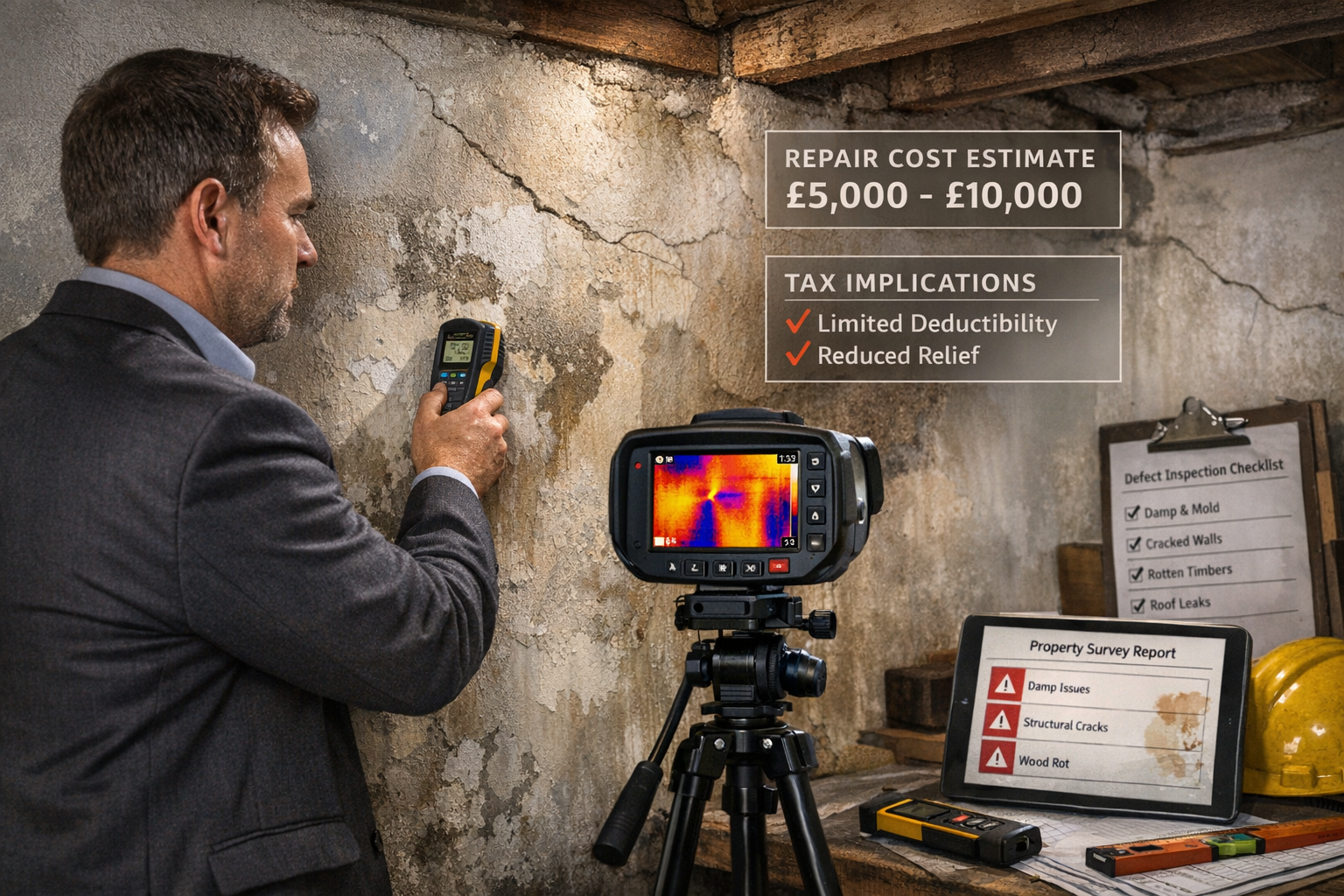
The relationship between property condition and rental yield is direct and measurable. Research shows properties with significant deferred maintenance typically achieve 15-25% lower rental values than comparable well-maintained properties.
Tenant Retention Economics 🏘️
- Average tenant turnover cost: £1,000-£2,000 (void periods, advertising, referencing)
- Properties in poor condition: 40% higher turnover rates
- Well-maintained properties: Tenants stay average 3.2 years vs. 1.8 years
A building survey identifying £8,000 in preventative maintenance might save £3,000+ annually in reduced turnover costs alone.
Insurance and Liability Protection 🛡️
Professional surveys provide documented evidence of:
- Property condition at acquisition
- Known vs. unknown defects
- Reasonable maintenance standards
This documentation proves invaluable if tenants claim landlord negligence or insurance disputes arise. Understanding what to do after receiving a concerning survey report helps investors respond strategically rather than reactively.
Survey-Driven Portfolio Optimization Strategies
Building Surveys for Rental Property Investors: Assessing Risk in the 2026 Landlord Tax Squeeze enables data-driven decision-making across entire portfolios:
The Repair-Refinance-Divest Matrix 📊
For each property, surveys inform three strategic options:
-
Repair and Hold ✅
- When: Structural condition good, repairs < 15% of property value
- Tax strategy: Maximize revenue deductions, time works efficiently
- Expected outcome: Improved yield, extended asset life
-
Refinance for Improvement 💰
- When: Good location, repairs 15-30% of value, strong rental demand
- Tax strategy: Capital improvements increase property value, potential for higher LTV refinancing
- Expected outcome: Portfolio value growth, improved energy efficiency
-
Strategic Divestment 🚪
- When: Repairs > 30% of value, poor location fundamentals, regulatory compliance costs excessive
- Tax strategy: Careful CGT planning, potential for 1031-style replacement
- Expected outcome: Capital redeployment to better-performing assets
"In the current tax environment, landlords cannot afford to be sentimental about properties. A comprehensive building survey provides the objective data needed to make rational financial decisions about each asset." – Senior RICS Surveyor
Timing Surveys for Maximum Tax Efficiency
Strategic survey timing optimizes tax outcomes:
Pre-Purchase Surveys 🔑
- Identify negotiation leverage (average price reduction: 5-8% when significant defects found)
- Inform financing decisions
- Enable immediate tax planning for known issues
- Learn more about saving money through strategic survey use
Portfolio Review Surveys 📆
- Conduct every 3-5 years for properties over 50 years old
- Annual reviews for HMOs and properties with known issues
- Schedule before tax year-end to inform capital expenditure decisions
- Coordinate with monitoring surveys for properties with ongoing structural concerns
Pre-Sale Surveys 💼
- Identify issues affecting marketability 6-12 months before intended sale
- Allow time for strategic repairs that maximize sale price
- Document condition for CGT capital improvements claims
- Reduce transaction fall-through risk
Regulatory Compliance and Building Condition in 2026
The Renters Reform Act and Property Standards
The Renters Reform Act 2026 introduces stricter property condition standards and enhanced tenant rights. Landlords face:
Awaab's Law provisions requiring:
- Rapid response to damp and mold issues (14-day investigation, repairs within timeframes)
- Documented property condition and maintenance records
- Potential unlimited fines for serious hazards
Decent Homes Standard expansion potentially requiring:
- Minimum Energy Performance Certificate (EPC) ratings
- Modern facilities and amenities
- Structural soundness certification
Building surveys provide the baseline documentation proving compliance and identifying gaps before enforcement action.
Survey Documentation for Legal Protection
Professional survey reports create legal protection in multiple scenarios:
Tenant Dispute Defense ⚖️
- Documented pre-tenancy condition
- Evidence of reasonable maintenance standards
- Timeline of known issues and remediation efforts
Regulatory Compliance Evidence 📑
- Demonstrates proactive property management
- Shows reasonable steps to identify and address hazards
- Supports defense against disproportionate enforcement
Insurance Claims Support 📄
- Establishes property condition before insured events
- Differentiates pre-existing conditions from new damage
- Supports accurate claims valuation
Maximizing ROI: Building Surveys as Investment Tools
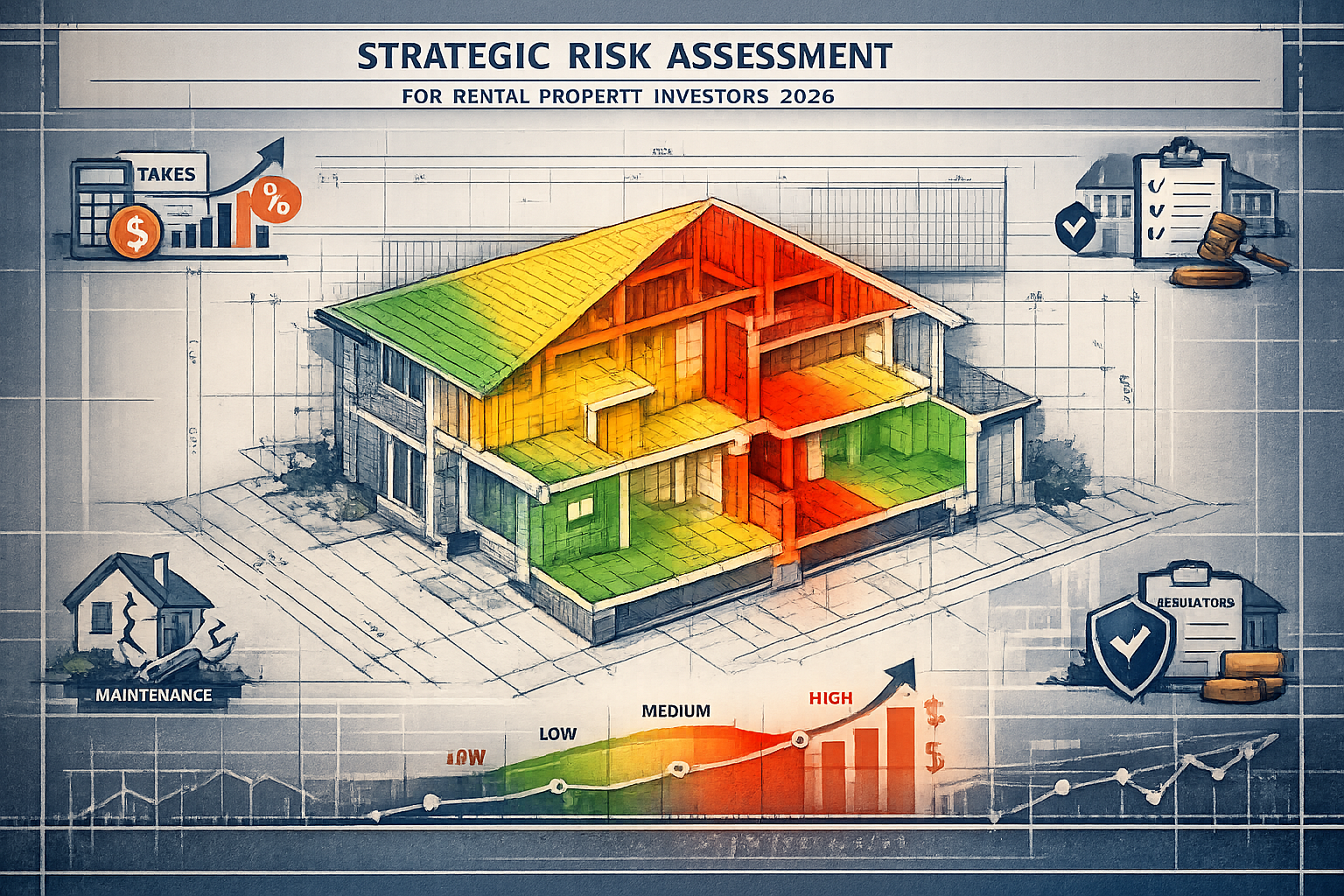
Cost-Benefit Analysis of Professional Surveys
The mathematics of survey investment are compelling:
Direct Financial Returns 💵
- Average purchase price negotiation: £8,000-£15,000 on £300,000 property
- Survey cost: £600-£1,200
- ROI: 600-2,400% on negotiation alone
Avoided Cost Returns 🛠️
- Unexpected major repairs avoided: £5,000-£25,000
- Insurance claim documentation value: £2,000-£10,000
- Tenant dispute legal costs avoided: £3,000-£15,000
Strategic Value 📈
- Informed portfolio optimization decisions: Priceless
- Tax planning accuracy: £1,000-£5,000 annual savings
- Peace of mind and reduced stress: Significant quality-of-life improvement
Integrating Surveys into Tax Planning
Building surveys become powerful tax planning tools when integrated strategically:
Capital Allowances Optimization 🏗️
Surveys identify qualifying fixtures and fittings:
- Heating and cooling systems
- Electrical installations
- Sanitary ware and water systems
- Potential claims: 10-30% of property value
Repair vs. Improvement Documentation 📋
Detailed condition reports support:
- Revenue deduction claims for genuine repairs
- Evidence that work restores rather than improves
- Defense against HMRC challenges
Loss Relief Planning 📉
For properties showing negative returns:
- Document repair costs thoroughly
- Time capital works strategically
- Consider loss carry-forward vs. carry-back options
Working with Surveyors as Strategic Partners
The most successful landlords in 2026 treat surveyors as ongoing advisors rather than one-time service providers:
Building Long-Term Relationships 🤝
- Use the same surveyor for portfolio consistency
- Request rental-specific focus in reports
- Ask for maintenance forecasting and budgeting guidance
- Seek tax-relevant documentation and phrasing
Questions to Ask Your Surveyor ❓
- "What's the likely lifespan of major components (roof, boiler, windows)?"
- "Which repairs are urgent vs. medium-term vs. long-term?"
- "How do these issues affect rental value and tenant appeal?"
- "What's the estimated cost range for addressing identified defects?"
- "Are there any compliance or safety issues requiring immediate attention?"
Specialized Survey Services 🔬
Consider additional assessments for rental properties:
- Damp and timber surveys for older properties
- Energy efficiency evaluations
- HMO compliance inspections
- Boundary surveys for properties with unclear demarcations
For properties with specific concerns, specialized assessments like damp surveys provide targeted insight.
Regional Considerations and Local Expertise
Why Local Survey Knowledge Matters
Property construction methods, common defects, and regulatory enforcement vary significantly by region. Local surveyors understand:
Regional Construction Characteristics 🏘️
- Victorian London terraces: Specific foundation and structural wall issues
- 1930s suburban semis: Cavity wall tie failure patterns
- Post-war construction: Concrete defects and non-standard materials
- Modern developments: Specific warranty and defect patterns
Local Regulatory Environment 📜
- Council-specific HMO licensing requirements
- Conservation area restrictions
- Local planning authority approaches
- Regional enforcement priorities
Market-Specific Rental Dynamics 📊
- Tenant expectations by area
- Competitive property standards
- Rental yield benchmarks
- Area-specific appreciation patterns
Whether investing in Wimbledon, Islington, or Stratford, local expertise ensures surveys address region-specific concerns.
Common Survey Findings and Their Tax Implications
High-Impact Defects for Rental Investors
Certain survey findings have disproportionate financial consequences:
Structural Movement 🏚️
- Tax implication: Major repairs often capital expenditure
- Rental impact: 20-30% yield reduction if visible to tenants
- Action: Obtain structural engineer assessment, consider monitoring surveys
Damp and Condensation 💧
- Tax implication: Usually revenue deductible repairs
- Rental impact: Tenant health issues, legal liability under Awaab's Law
- Action: Immediate remediation, document thoroughly for compliance
Roof Defects 🏠
- Tax implication: Repairs deductible, replacement may be capital
- Rental impact: Emergency repairs disrupt tenancy, insurance issues
- Action: Survey documentation supports repair classification
Electrical and Heating Systems ⚡
- Tax implication: Replacement often qualifies for capital allowances
- Rental impact: Legal compliance requirement, tenant safety critical
- Action: Obtain specialist reports, plan systematic upgrades
Subsidence and Foundation Issues ⚠️
- Tax implication: Complex – repairs deductible, betterment may be capital
- Rental impact: Insurance implications, mortgage lender concerns
- Action: Specialist investigation, insurance notification, careful documentation
Practical Implementation: Your Survey Strategy for 2026
Step-by-Step Survey Planning
For New Acquisitions 🆕
-
Pre-Offer Survey Consideration
- Commission survey before making formal offer when possible
- Factor survey cost into acquisition budget (0.2-0.4% of purchase price)
- Choose survey level based on property age, type, and visible condition
-
Survey Review and Negotiation
- Review report with tax advisor and property manager
- Quantify repair costs with contractor quotes
- Negotiate purchase price reduction or seller repairs
- Consider walking away if defects exceed acceptable risk
-
Post-Purchase Action Planning
- Categorize repairs: urgent/medium-term/long-term
- Classify as capital vs. revenue for tax purposes
- Create 5-year maintenance budget
- Schedule works to optimize tax efficiency
For Existing Portfolio 📁
-
Portfolio Risk Assessment
- Prioritize properties for survey: age, condition, rental performance
- Schedule rolling survey program (20-30% of portfolio annually)
- Budget 1-2% of portfolio value for survey and assessment costs
-
Survey-Driven Decision Making
- Analyze each property: repair/refinance/divest decision
- Model tax implications of different strategies
- Consider market timing and capital gains tax planning
- Implement decisions systematically over 12-24 months
-
Ongoing Monitoring
- Establish regular inspection schedule
- Document all maintenance and repairs
- Update condition assessments every 3-5 years
- Maintain comprehensive records for tax and compliance
Budgeting for Surveys and Repairs
Survey Cost Guidelines 💰
| Property Type | Survey Level | Typical Cost | Frequency |
|---|---|---|---|
| Modern flat | Level 2 | £400-£600 | At purchase + every 10 years |
| Standard house | Level 2 | £500-£800 | At purchase + every 7-10 years |
| Period property | Level 3 | £800-£1,200 | At purchase + every 5 years |
| Large/complex | Level 3 | £1,200-£2,000+ | At purchase + every 3-5 years |
| HMO | Level 3 + compliance | £1,500-£3,000 | At purchase + annually |
Repair Budget Planning 🔧
Prudent landlords budget:
- 1-2% of property value annually for routine maintenance
- Additional 3-5% reserve for major repairs identified in surveys
- Separate compliance budget for regulatory requirement changes
Conclusion: Surveys as Strategic Advantage in the 2026 Tax Squeeze
Building Surveys for Rental Property Investors: Assessing Risk in the 2026 Landlord Tax Squeeze represents a fundamental shift in how professional landlords approach property investment. The convergence of tax pressures, regulatory changes, and compliance requirements makes comprehensive property condition assessment not optional, but essential.
The strategic advantages are clear:
✅ Financial Protection: Surveys prevent unexpected repair costs that devastate already-squeezed profit margins
✅ Tax Optimization: Detailed condition documentation supports accurate capital vs. revenue classification and enables strategic expenditure timing
✅ Compliance Assurance: Professional assessments identify regulatory risks before they become legal liabilities
✅ Portfolio Optimization: Data-driven insights enable rational decisions about which properties to retain, improve, or divest
✅ Competitive Advantage: Well-maintained properties command premium rents, attract quality tenants, and appreciate faster
Your Next Steps
Immediate Actions 📋
- Assess your current portfolio – Identify properties lacking recent professional surveys
- Budget for surveys – Allocate 0.5-1% of portfolio value for assessment costs in 2026
- Engage qualified surveyors – Establish relationships with RICS-qualified professionals with rental property expertise
- Review existing reports – Analyze previous surveys for deferred maintenance now critical under tax pressure
- Integrate with tax planning – Share survey findings with accountants for strategic tax optimization
Long-Term Strategy 🎯
- Implement rolling survey program across portfolio
- Develop 5-10 year capital expenditure plan based on condition assessments
- Build survey costs into acquisition models for future purchases
- Maintain comprehensive documentation for tax and compliance purposes
- Monitor regulatory changes and adjust property standards accordingly
The landlords who thrive in 2026 and beyond will be those who treat building surveys as strategic investment tools rather than regulatory hurdles. By partnering with professional surveyors, documenting property conditions thoroughly, and using assessment data to drive financial decisions, rental property investors can navigate the tax squeeze successfully while building long-term portfolio value.
Don't wait for emergency repairs to force reactive decisions. Commission comprehensive building surveys now, understand your properties' true condition, and position your portfolio for success in the challenging years ahead.
For expert guidance on your rental property survey needs, explore our complete range of RICS survey services or request a quote to begin your strategic property assessment today.