
The housing market across Northern England is experiencing a remarkable transformation in 2026. Multi-generational homes—properties designed or adapted to house parents, children, and grandparents under one roof—are driving unprecedented demand and price increases. As families seek cost-effective solutions to rising living expenses and elderly care costs, building surveys for multi-generational homes in Northern price surge areas have become essential tools for protecting substantial property investments. Understanding the unique defect assessment requirements for these extended family living arrangements can mean the difference between a sound investment and a costly mistake.

Key Takeaways
✅ Multi-generational homes in Northern regions are experiencing price surges of 15-20% due to increased demand for extended family living arrangements
✅ Specialized building surveys must assess structural capacity, safety compliance, and defects across multiple dwelling units within single properties
✅ Common defects in converted multi-generational homes include inadequate electrical systems, plumbing overload, poor insulation, and structural modifications without proper approval
✅ Comprehensive defect assessments protect buyers from hidden costs averaging £15,000-£45,000 in remedial works for improperly converted properties
✅ Professional RICS surveys provide negotiating leverage, with average price reductions of 5-10% when significant defects are identified
Understanding the Multi-Generational Housing Boom in Northern Markets
The shift toward multi-generational living has accelerated dramatically in 2026, particularly across Northern England's property markets. Cities including Manchester, Leeds, Liverpool, Newcastle, and Sheffield are witnessing unprecedented demand for larger family homes capable of accommodating three or more generations [1].
Why Northern Regions Are Experiencing Price Surges
Several converging factors explain the Northern price surge in multi-generational properties:
Economic Pressures: Rising costs of living, increased care home expenses (averaging £40,000-£60,000 annually), and stagnant wage growth have made shared housing economically attractive [3]. Families can pool resources, share expenses, and provide mutual support while maintaining independence.
Cultural Shifts: The pandemic fundamentally altered perceptions of family living arrangements. Remote work flexibility enables multiple generations to coexist comfortably, while the desire for built-in childcare and elder care support has grown substantially [5].
Regional Affordability: Northern property markets offer significantly better value than Southern counterparts, with average prices 40-60% lower than London and the Southeast. This affordability enables families to purchase larger properties suitable for conversion or extension [6].
Housing Supply Constraints: Limited new construction combined with strong demand has created competitive markets. Properties with existing annexes, granny flats, or conversion potential command premium prices—often 15-25% above standard family homes [8].
The Extended Family Living Trend: Statistics and Projections
The numbers tell a compelling story about extended family living trends:
- 23% of UK households now include multiple adult generations, up from 17% in 2020 [3]
- Multi-generational home searches increased by 34% year-over-year in Northern markets [1]
- Property values for suitable multi-generational homes have risen 18% faster than standard housing stock in key Northern cities [4]
- Demographic projections suggest this trend will continue through 2030, with an estimated 30% of families considering or actively pursuing multi-generational arrangements [7]
Understanding these market dynamics is crucial when commissioning building surveys for potential multi-generational purchases.
Critical Defect Assessment Requirements for Multi-Generational Properties
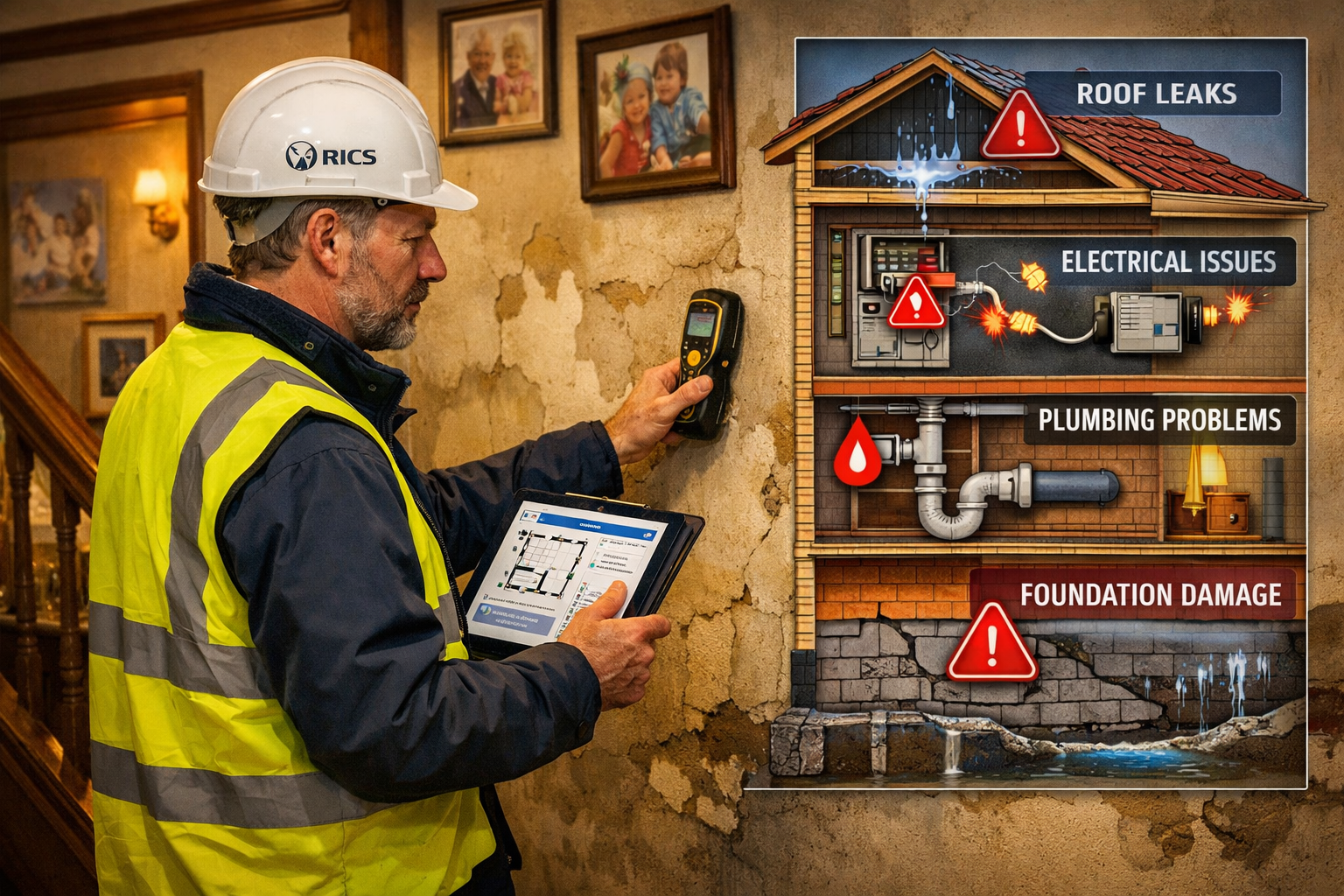
Building surveys for multi-generational homes in Northern price surge areas require specialized assessment protocols that extend beyond standard residential inspections. These properties present unique challenges that demand thorough evaluation.
Structural Capacity and Load-Bearing Assessments
Multi-generational homes often involve structural modifications—removing walls to create open-plan spaces, adding extensions, or converting lofts and basements. Critical assessment areas include:
Foundation Integrity: Extended families mean increased occupancy loads. Surveyors must evaluate whether foundations can support additional weight, particularly in older Victorian and Edwardian properties common in Northern cities. Signs of subsidence, settlement cracks, or inadequate foundation depth require immediate attention.
Load-Bearing Wall Modifications: Many conversions involve removing or altering load-bearing walls without proper structural calculations or building control approval. A comprehensive building condition assessment should identify unauthorized structural changes that compromise safety.
Floor Joist Capacity: Additional bathrooms, kitchens, or living spaces increase dead loads and live loads. Surveyors should assess whether existing floor joists meet current building regulations for the intended use.
Roof Structure: Loft conversions for additional bedrooms or living spaces require proper structural support. Inadequate reinforcement of roof trusses represents a significant safety hazard and expensive remedial work.
Electrical System Capacity and Safety Compliance
Electrical systems in multi-generational homes face substantially increased demands:
Consumer Unit Adequacy: Older properties may have outdated fuse boxes or consumer units insufficient for modern multi-family electrical loads. Properties should have modern consumer units with RCD protection and adequate circuit capacity.
Wiring Condition: Period properties often retain original wiring that's unsafe and inadequate. Surveyors should identify aluminum wiring, cloth-insulated cables, or installations over 30 years old requiring replacement.
Circuit Overloading: Multiple kitchens, additional bathrooms, and increased appliance use can overload circuits designed for single-family occupancy. Assessment should include circuit mapping and load calculations.
Safety Certification: Properties should have valid Electrical Installation Condition Reports (EICR) no older than five years. Absence of certification or identified defects require quotations for remedial works.
Plumbing Infrastructure and Water Supply
Water pressure and supply become critical concerns with multiple bathrooms, kitchens, and increased occupancy:
Mains Water Pressure: Insufficient pressure affects shower performance, appliance function, and overall comfort. Surveyors should test static and dynamic water pressure at multiple outlets.
Pipe Capacity: Original plumbing designed for single-family use may be inadequate for simultaneous multi-point usage. Undersized pipes cause pressure drops and flow restrictions.
Drainage Capacity: Increased wastewater from multiple bathrooms and kitchens can overwhelm existing drainage systems. Signs of slow drainage, gurgling, or previous blockages indicate capacity issues.
Hot Water Systems: Combi boilers suitable for standard homes often cannot meet hot water demands of multi-generational households. Assessment should evaluate boiler capacity, cylinder size, and heating distribution.
Damp, Moisture, and Insulation Defects
Northern England's climate makes moisture management particularly critical:
Rising Damp: Older properties frequently lack adequate damp-proof courses or have failed DPC systems. Damp surveys should use moisture meters and thermal imaging to identify affected areas.
Penetrating Damp: Roof leaks, failed pointing, damaged render, or defective guttering allow water ingress. These defects worsen rapidly and cause structural damage if unaddressed.
Condensation Issues: Increased occupancy generates more moisture through cooking, bathing, and breathing. Inadequate ventilation leads to condensation, mold growth, and health hazards. Properties should have adequate mechanical ventilation in bathrooms and kitchens.
Insulation Standards: Many period properties have minimal insulation, resulting in high heating costs and poor energy efficiency. With multiple generations sharing expenses, inadequate insulation significantly impacts running costs.
A thorough moisture damage assessment identifies current problems and potential future issues.
Fire Safety and Means of Escape
Fire safety becomes paramount in multi-generational homes, particularly those with self-contained units:
Smoke Detection: Properties should have interconnected smoke alarms on each floor and in sleeping areas, meeting current Building Regulations requirements.
Fire Doors: Conversions creating separate dwelling units require fire-rated doors and proper fire separation between units.
Escape Routes: Each habitable space should have adequate means of escape. Loft conversions and basement accommodations require specific escape window provisions or alternative escape routes.
Fire Spread Prevention: Cavity barriers, fire stopping around pipes and cables, and proper compartmentation prevent rapid fire spread—critical in multi-occupancy situations.
Building Regulations Compliance and Planning Permission
Many multi-generational adaptations require formal approvals:
Building Regulations: Extensions, loft conversions, electrical rewiring, and structural alterations typically require Building Regulations approval. Absence of completion certificates indicates non-compliant work that may need remediation.
Planning Permission: Separate annexes, substantial extensions, or material changes of use may require planning permission. Unauthorized development can result in enforcement action and affect property value.
Change of Use Considerations: Creating truly separate dwelling units may constitute a material change of use requiring planning permission. This particularly affects properties with self-contained annexes or converted outbuildings.
Understanding which home survey is right for you helps buyers select appropriate inspection levels for these complex properties.
Navigating Building Surveys for Multi-Generational Homes in Northern Price Surge Markets
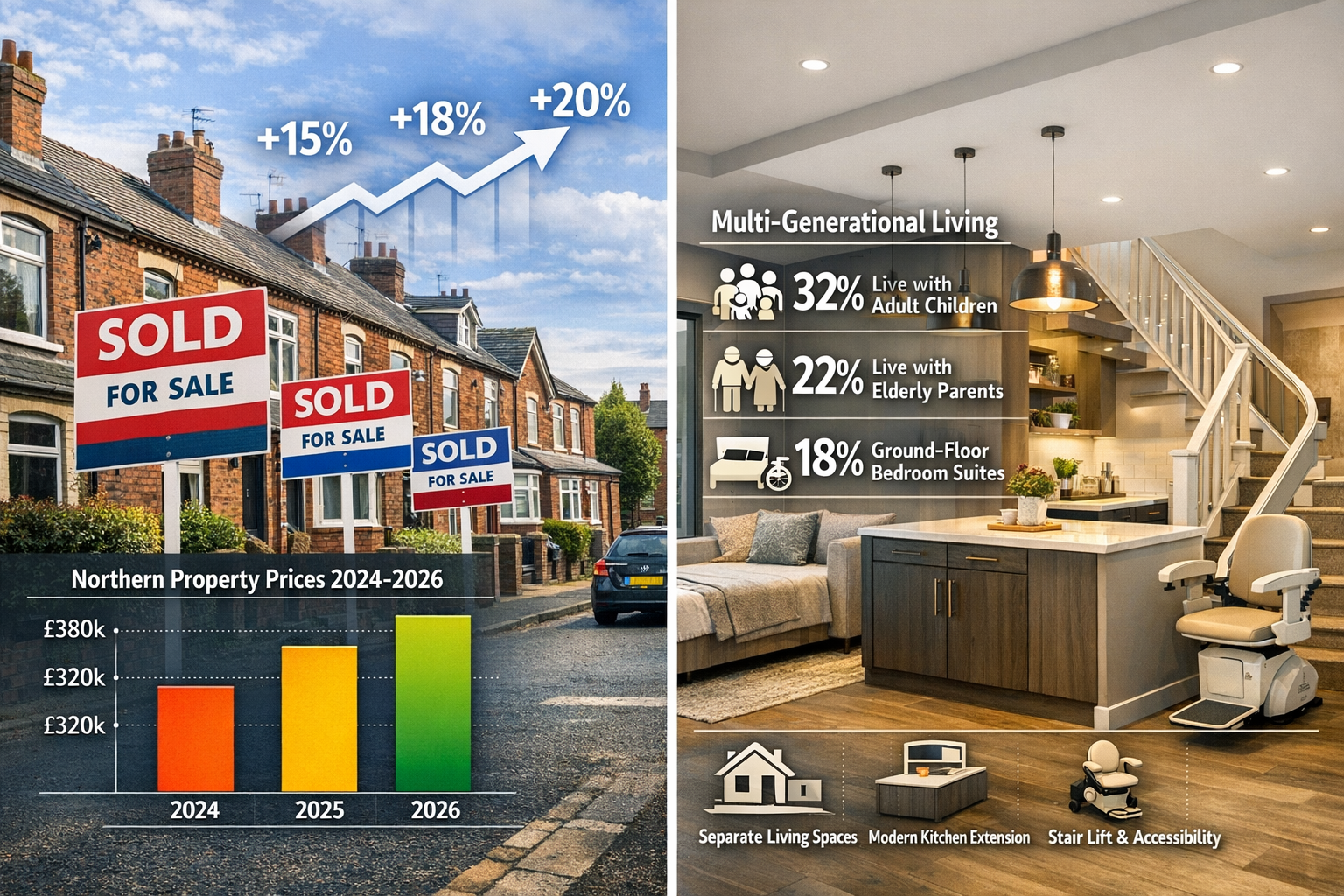
Successfully purchasing a multi-generational property in competitive Northern markets requires strategic approach to building surveys and defect assessments.
Selecting the Appropriate Survey Level
Multi-generational properties typically require comprehensive inspection due to their complexity:
Level 3 Building Survey: The most detailed inspection option, ideal for older properties, those with extensions or conversions, or any property intended for multi-generational use. This survey provides comprehensive defect analysis, structural assessment, and detailed recommendations exploring the key differences between Level 2 and Level 3 surveys helps buyers understand which option suits their needs.
Specialist Surveys: Properties with known issues or specific concerns may require additional specialist surveys:
- Structural engineer reports for significant structural concerns
- Electrical condition reports for properties with older wiring
- Damp surveys for moisture-related defects
- Drainage surveys for properties with suspected drainage issues
Understanding home survey levels 2 vs level 3 ensures appropriate inspection depth for your specific property.
Key Areas of Focus for Multi-Generational Property Surveys
Surveyors assessing multi-generational homes should prioritize:
| Assessment Area | Key Considerations | Common Defects Found |
|---|---|---|
| Structural Integrity | Foundation condition, load-bearing walls, floor joists, roof structure | Subsidence, unauthorized alterations, inadequate support beams |
| Electrical Systems | Consumer unit capacity, wiring condition, circuit adequacy | Outdated wiring, overloaded circuits, missing RCD protection |
| Plumbing & Drainage | Water pressure, pipe capacity, drainage adequacy, hot water provision | Undersized pipes, inadequate boiler capacity, drainage blockages |
| Damp & Insulation | Rising damp, penetrating damp, condensation, thermal performance | Failed DPC, roof leaks, inadequate ventilation, poor insulation |
| Fire Safety | Smoke alarms, fire doors, escape routes, fire separation | Missing detection, inadequate escape provisions, poor compartmentation |
| Compliance | Building Regulations, planning permission, completion certificates | Unauthorized works, missing certificates, non-compliant alterations |
Understanding Survey Reports and Defect Severity
Professional survey reports categorize defects by severity:
Condition Rating 1 (Green): No repair currently needed. Normal maintenance required.
Condition Rating 2 (Amber): Defects requiring repair or replacement but not urgent. Budget for works within planning period.
Condition Rating 3 (Red): Urgent defects requiring immediate attention. Serious problems affecting structural stability, safety, or weather-tightness.
For multi-generational properties, Condition Rating 3 defects commonly include:
- Significant structural movement or subsidence
- Dangerous electrical installations
- Severe damp or water ingress
- Fire safety deficiencies
- Major roof defects
These findings provide powerful negotiating leverage for price reductions.
Using Survey Findings to Negotiate Purchase Price
Building surveys for multi-generational homes in Northern price surge markets frequently identify defects requiring substantial remedial investment. Strategic negotiation can recover these costs:
Quantify Remedial Costs: Obtain quotations from qualified contractors for identified defects. Professional estimates provide objective evidence supporting price reduction requests.
Prioritize Safety and Structural Issues: Serious defects affecting safety, structural integrity, or legal compliance carry greatest negotiating weight. Vendors are typically more willing to negotiate on these items.
Consider Market Conditions: In competitive markets with multiple interested parties, vendors may be less flexible. However, significant defects often deter other buyers, strengthening your negotiating position.
Request Retention or Price Reduction: Options include:
- Direct price reduction equivalent to remedial costs
- Retention held by solicitors pending completion of agreed works
- Vendor completion of works before exchange
- Combination approach addressing most serious items
Research shows buyers achieve average price reductions of 5-10% when significant defects are identified, with reductions sometimes reaching 15-20% for properties with multiple serious issues.
Preparing for Your Building Survey
Maximize survey value by proper preparation:
Provide Complete Information: Share any concerns, observations from viewings, or information from estate agents about previous works or known issues.
Ensure Full Access: Arrange for surveyors to access all areas including lofts, basements, outbuildings, and annexes. Restricted access limits survey scope and may miss critical defects.
Request Specific Assessments: If you have particular concerns about electrical systems, damp, or structural issues, communicate these to your surveyor for focused attention.
Gather Documentation: Obtain any available documentation about previous works, Building Regulations certificates, planning permissions, or warranties.
Plan for Follow-Up: Budget time and resources for specialist surveys if initial findings indicate need for detailed investigation of specific issues.
Common Pitfalls to Avoid
Buyers of multi-generational properties should avoid these mistakes:
❌ Skipping surveys to save money: In competitive markets, some buyers waive surveys to strengthen offers. This creates enormous risk, particularly with complex multi-generational properties.
❌ Choosing inadequate survey levels: Basic valuation surveys don't identify defects. Multi-generational properties require comprehensive Level 3 surveys.
❌ Ignoring minor defects: Small issues like minor damp patches or hairline cracks can indicate more serious underlying problems requiring investigation.
❌ Failing to obtain remedial quotations: Without professional cost estimates, negotiating power is limited.
❌ Assuming recent renovations mean no defects: Cosmetic improvements often hide underlying problems. Always survey regardless of apparent condition.
Regional Considerations for Northern Multi-Generational Property Markets
Manchester and Greater Manchester
Manchester's multi-generational property market has experienced 17% price growth in suitable properties during 2025-2026 [4]. Victorian terraces in areas like Chorlton, Didsbury, and Levenshulme are particularly popular for conversion.
Common defects: Stone foundation issues, slate roof deterioration, original single-glazed sash windows, inadequate insulation, outdated electrical systems.
Leeds and West Yorkshire
Leeds has seen strong demand for multi-generational homes in suburbs including Headingley, Roundhay, and Chapel Allerton. Properties with existing annexes or conversion potential command significant premiums.
Common defects: Roof valley leaks, chimney stack deterioration, rising damp in solid-wall properties, inadequate drainage, cavity wall tie corrosion.
Liverpool and Merseyside
Liverpool's affordable property prices make it attractive for multi-generational buyers. Victorian and Edwardian properties in Aigburth, Allerton, and Crosby offer good conversion potential.
Common defects: Sandstone erosion, bay window structural issues, penetrating damp through solid walls, original lead plumbing, inadequate electrical capacity.
Newcastle and the Northeast
Newcastle's multi-generational market focuses on Gosforth, Jesmond, and Ponteland. The region's colder climate makes insulation and heating system adequacy particularly important.
Common defects: Roof insulation inadequacy, condensation issues, cavity wall insulation problems, outdated heating systems, window seal failures.
Sheffield and South Yorkshire
Sheffield's hilly terrain creates unique structural challenges. Properties in Ecclesall, Fulwood, and Dore are popular for multi-generational conversion.
Common defects: Slope-related foundation movement, retaining wall issues, surface water drainage problems, stone wall weathering, roof tile slippage.
Financial Implications and Investment Protection
Cost of Remedial Works for Common Defects
Understanding typical remedial costs helps buyers budget appropriately:
| Defect Category | Typical Cost Range | Urgency |
|---|---|---|
| Electrical rewiring (full house) | £5,000 – £12,000 | High |
| New boiler and heating system | £3,500 – £8,000 | Medium-High |
| Damp-proof course installation | £2,000 – £6,000 | High |
| Roof replacement (terraced house) | £8,000 – £15,000 | High |
| Structural repairs (underpinning) | £10,000 – £50,000+ | Critical |
| Window replacement (full property) | £8,000 – £20,000 | Medium |
| External repointing | £4,000 – £12,000 | Medium |
| Insulation improvements | £3,000 – £10,000 | Medium |
These costs significantly impact property affordability and should inform purchase decisions.
Long-Term Value Protection
Professional building surveys protect long-term investment value:
Informed Decision-Making: Comprehensive defect knowledge enables realistic assessment of total acquisition costs including remedial works.
Negotiating Power: Survey findings provide objective evidence supporting price negotiations, potentially saving tens of thousands of pounds.
Maintenance Planning: Understanding property condition enables prioritized maintenance planning and budget allocation.
Insurance Implications: Some defects affect insurance availability or premiums. Early identification allows proactive resolution.
Future Sale Considerations: Addressing defects properly maintains property value and marketability for eventual resale.
Insurance and Warranty Considerations
Multi-generational properties present unique insurance challenges:
Buildings Insurance: Insurers may require additional information about conversions, annexes, or structural modifications. Undisclosed alterations can void coverage.
Contents Insurance: Multiple households may require separate contents policies or specific multi-generational policy provisions.
Structural Warranties: New extensions or conversions should have appropriate warranties (typically 10 years for structural elements). Absence of warranties affects property value and buyer confidence.
Indemnity Insurance: For properties with building regulation or planning issues, indemnity insurance may provide coverage against enforcement action, though this doesn't remedy underlying defects.
Conclusion
The building surveys for multi-generational homes in Northern price surge markets represent a critical investment in property due diligence. As extended family living trends continue accelerating through 2026 and beyond, understanding the unique defect assessment requirements for these properties becomes increasingly important for buyers, investors, and families seeking to create successful multi-generational living arrangements.
Northern England's property markets—from Manchester to Newcastle—offer compelling opportunities for families seeking affordable, spacious homes suitable for multiple generations. However, the complexity of these properties, often involving conversions, extensions, and substantial modifications, demands thorough professional assessment to identify structural, safety, and compliance issues that could compromise both investment value and family wellbeing.
Key Action Steps for Prospective Buyers
✅ Commission comprehensive Level 3 building surveys for all multi-generational property purchases, regardless of apparent condition or recent renovations
✅ Engage RICS-qualified chartered surveyors with experience assessing complex, multi-occupancy properties and understanding of regional building characteristics
✅ Obtain specialist surveys for identified concerns including structural engineering assessments, electrical condition reports, and damp investigations
✅ Secure detailed remedial cost quotations from qualified contractors to support price negotiations and budget planning
✅ Verify building regulations compliance and planning permission for all conversions, extensions, and material alterations
✅ Prioritize safety-critical defects including structural integrity, electrical safety, fire protection, and means of escape
✅ Use survey findings strategically to negotiate fair purchase prices reflecting true property condition and required investment
✅ Plan long-term maintenance based on survey recommendations to protect property value and ensure safe, comfortable multi-generational living
The investment in professional building surveys—typically £800-£1,500 for comprehensive Level 3 assessments—provides exceptional value when considering the average £15,000-£45,000 in hidden defects commonly found in improperly converted multi-generational properties. With property prices in Northern markets continuing their upward trajectory and competition for suitable multi-generational homes intensifying, informed buyers who understand true property condition gain significant advantages in negotiations and long-term satisfaction.
As families increasingly embrace extended family living as a practical, economical, and emotionally rewarding housing solution, ensuring these homes are structurally sound, safe, and fit for purpose becomes paramount. Professional building surveys provide the foundation for confident decision-making, protecting both financial investment and family wellbeing for years to come.
References
[1] Why Multi Generational Homes Are Elizabeths 2026 Top Trend – https://cortizobrothers.com/why-multi-generational-homes-are-elizabeths-2026-top-trend/
[2] Emerging Multifamily Trends For 2026 – https://arbor.com/blog/emerging-multifamily-trends-for-2026/
[3] The Rise Of Multigenerational Housing – https://homebuyinginstitute.com/mortgage/the-rise-of-multigenerational-housing/
[4] 2026 Multifamily Predictions2026 Multifamily Predictions Multifamily Real Estate Outlook Private Real Estate Trends 2026 – https://origininvestments.com/2026-multifamily-predictions2026-multifamily-predictions-multifamily-real-estate-outlook-private-real-estate-trends-2026/
[5] Multigenerational Home Design Trend 2026 – https://www.housedigest.com/2081177/multigenerational-home-design-trend-2026/
[6] 2026 Real Estate Outlook What Leading Housing Economists Are Watching – https://www.nar.realtor/magazine/real-estate-news/2026-real-estate-outlook-what-leading-housing-economists-are-watching
[7] Why Multi Generational Living Is The Smartest 2026 Housing Trends – https://dbggai.com/f/why-multi-generational-living-is-the-smartest-2026-housing-trends?blogcategory=Buying
[8] 2026 National Housing Forecast – https://www.realtor.com/research/2026-national-housing-forecast/