The UK property market stands at a pivotal moment. As 2026 unfolds, government consultations are reshaping how property condition assessments integrate into the homebuying process. For surveyors, estate agents, and property professionals, understanding Building Surveys for Government Property Condition Assessment Reforms: Preparing for Upfront Survey Requirements in 2026 isn't just about compliance—it's about positioning services for a transformed marketplace where upfront transparency becomes the new standard.
The proposed reforms aim to make property condition assessments a mandatory upfront requirement, fundamentally changing when and how building surveys are commissioned. This shift promises to reduce transaction fall-throughs, improve buyer confidence, and create a more transparent property market. However, it also demands that surveyors adapt their service delivery, pricing models, and client communication strategies.
Key Takeaways
✅ Upfront survey requirements are being consulted on for 2026 implementation, moving property assessments to the beginning of the transaction process
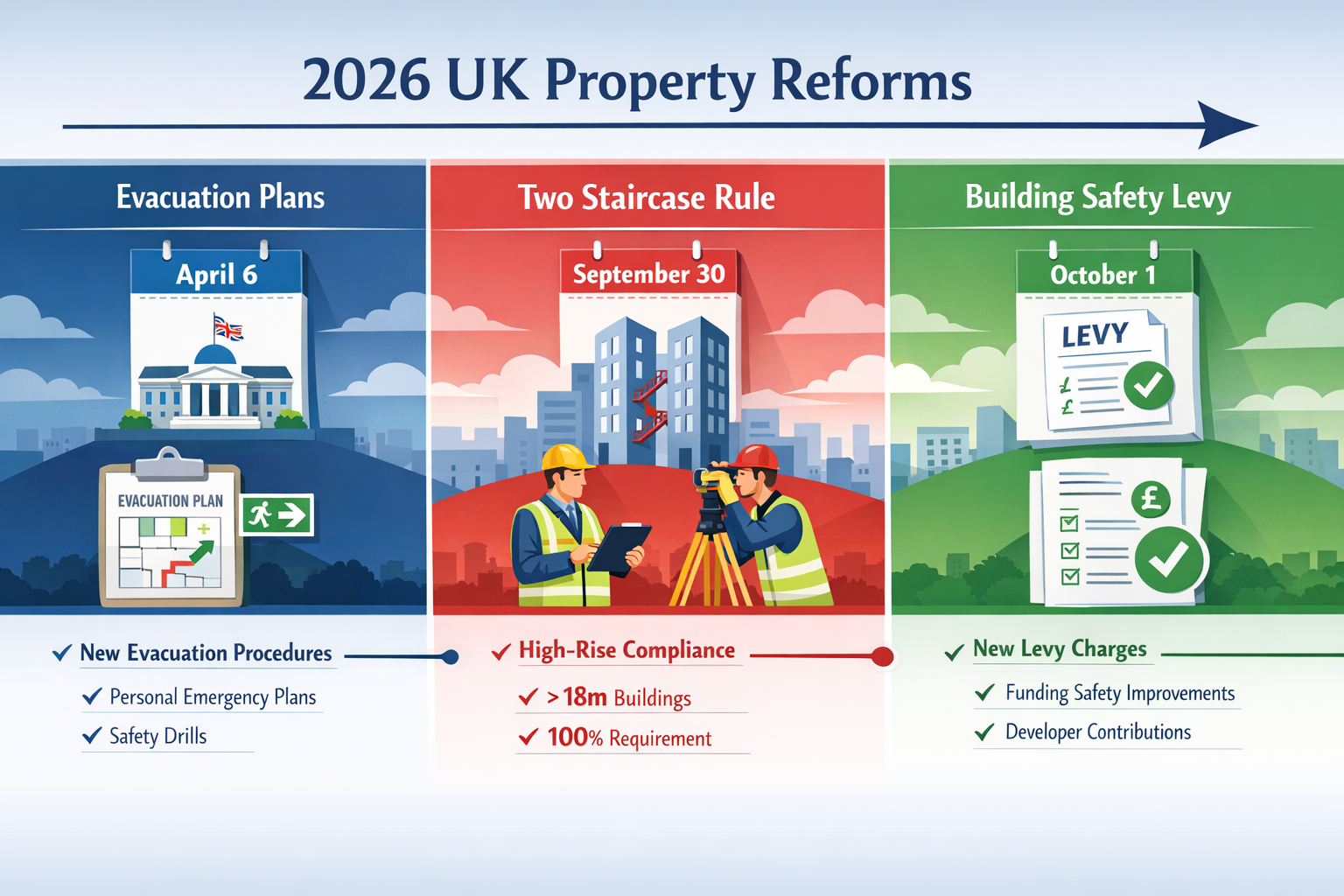
✅ Multiple regulatory changes converge in 2026, including the Building Safety Levy (October 1) and new evacuation plan requirements (April 6)
✅ Sustainability metrics are becoming integral to building condition assessments, with carbon footprint analysis now expected
✅ The Facility Condition Index (FCI) is emerging as a standardized benchmark for property condition reporting
✅ Service delivery models must evolve to accommodate earlier commissioning, faster turnaround times, and enhanced digital reporting
Understanding the 2026 Property Condition Assessment Reform Landscape
The Regulatory Timeline: What's Changing and When
The year 2026 represents a convergence of significant property regulations that will reshape how building surveys and property assessments are conducted across the UK. Understanding this timeline is essential for surveyors preparing their businesses.
April 6, 2026 marks the implementation of new evacuation planning requirements. Responsible persons must prepare comprehensive evacuation plans for certain high-rise buildings and identify residents who may need assistance during emergencies[1]. While this primarily affects building management, it influences property assessments by adding another layer of compliance scrutiny.
September 30, 2026 introduces a fundamental change to building design. All new residential buildings over 18 metres will require two staircases[1]. This regulation significantly impacts development viability assessments and adds costs that surveyors must factor into new-build evaluations.
October 1, 2026 sees the implementation of the Building Safety Levy, which applies to qualifying residential and Purpose-Built Student Accommodation (PBSA) building control applications, including mixed-use and retirement schemes[1]. This levy adds financial pressure to viability assessments and becomes a critical consideration in property condition reports.
| Reform Date | Requirement | Impact on Surveys |
|---|---|---|
| April 6, 2026 | Evacuation plans for high-rise buildings | Additional compliance checks required |
| September 30, 2026 | Two staircases for buildings >18m | Design viability assessments affected |
| October 1, 2026 | Building Safety Levy implementation | Cost implications for new developments |
Why Upfront Surveys Matter for Market Transparency
The proposed shift to upfront property condition assessments addresses long-standing inefficiencies in the UK property market. Currently, buyers typically commission surveys after making an offer, leading to:
- 🏚️ Transaction fall-throughs when surveys reveal unexpected defects
- 💰 Renegotiation delays that frustrate all parties
- 📉 Market inefficiency from repeated surveys on the same property
- 😰 Buyer anxiety from purchasing without full information
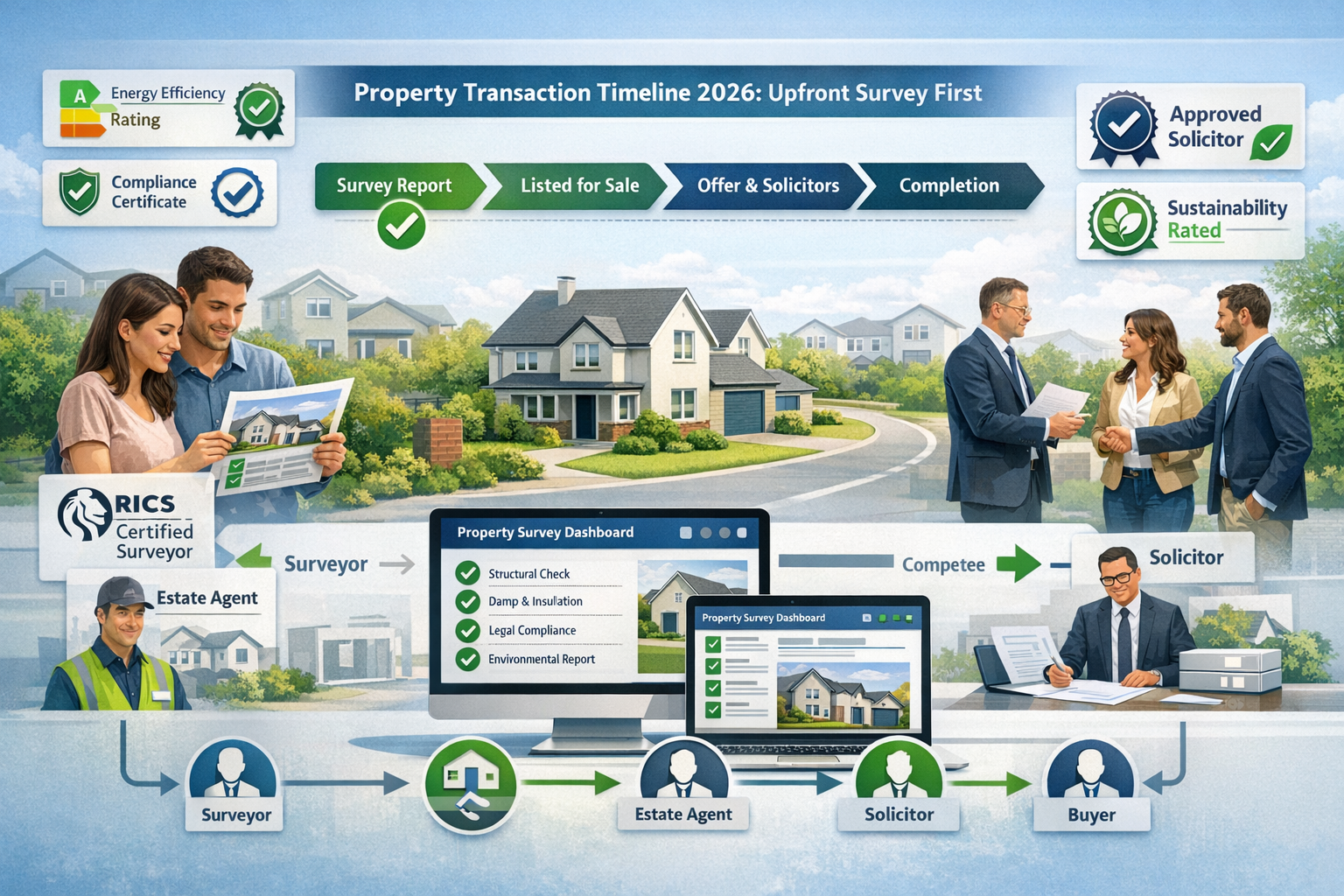
By requiring sellers to provide comprehensive property condition assessments upfront, the reforms aim to create a more transparent marketplace where buyers make informed decisions from the outset. This approach mirrors successful models in other countries and could significantly reduce the average time to complete property transactions.
For surveyors, this represents both opportunity and challenge. The opportunity lies in potentially surveying every property that comes to market, rather than only those where buyers commission assessments. The challenge involves adapting to earlier commissioning, managing seller expectations, and delivering reports that serve multiple prospective buyers.
Building Surveys for Government Property Condition Assessment Reforms: Key Components and Standards
The Evolution of Property Condition Assessments in 2026
Property condition assessments (PCAs) are expanding beyond traditional structural evaluation. In 2026, these assessments increasingly incorporate sustainability and carbon footprint analysis, reflecting emerging requirements that buildings remain compliant with future emissions standards[2].
Modern PCAs now typically include:
Structural Assessment Components:
- Foundation integrity and subsidence risk
- Roof condition and remaining lifespan
- Wall construction and damp penetration
- Window and door functionality
- Drainage and guttering systems
Enhanced 2026 Requirements:
- Energy Performance Certificate (EPC) alignment
- Carbon emissions baseline measurement
- Future retrofit potential assessment
- Climate resilience evaluation
- Accessibility compliance review
This expanded scope means surveyors must develop new competencies or partner with specialists to deliver comprehensive assessments. Property surveyors who embrace these broader evaluation criteria will be better positioned to meet government reform requirements.
Understanding the Facility Condition Index (FCI)
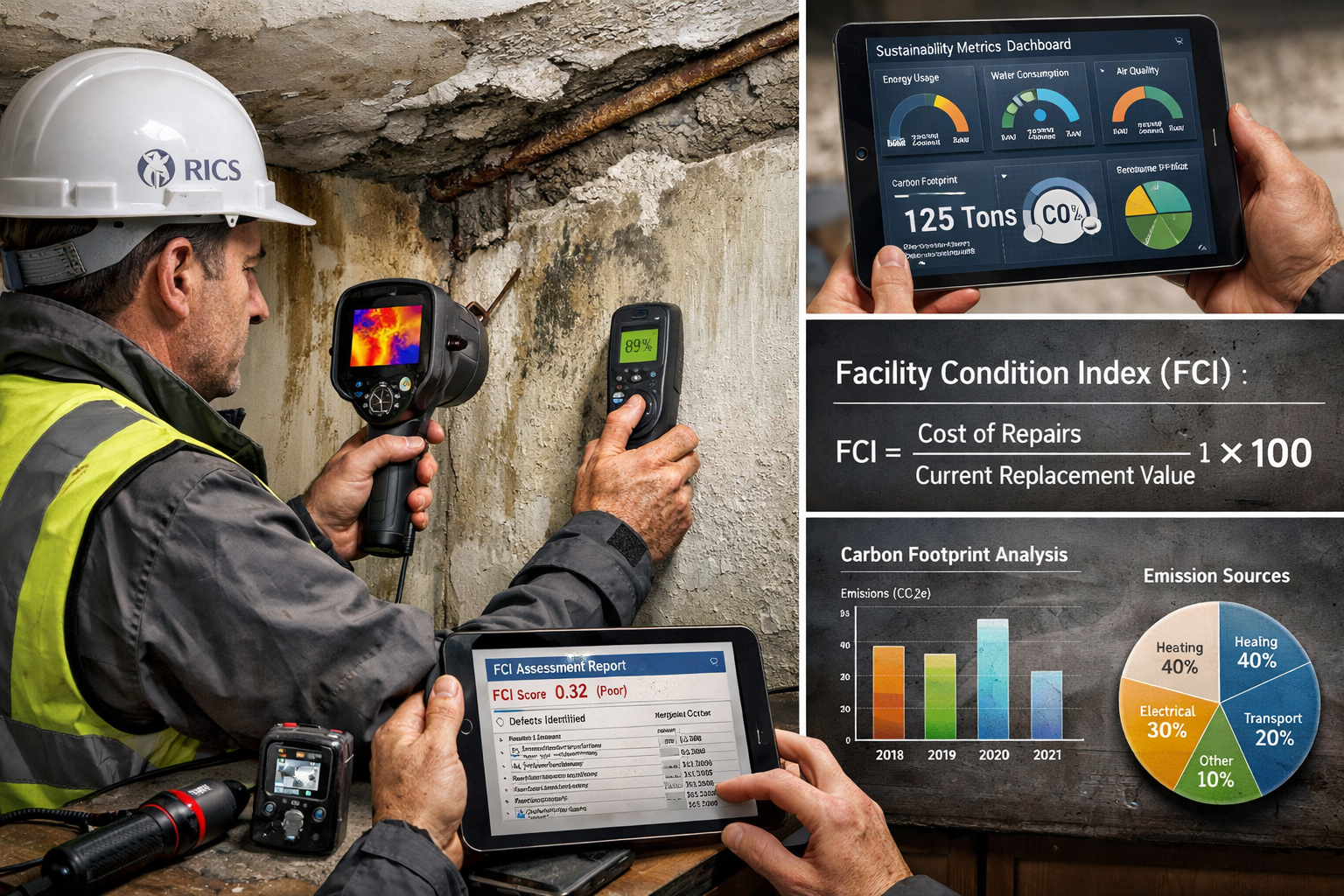
The Facility Condition Index (FCI) is becoming standard practice in property condition assessments as a quantifiable benchmark for property condition[2]. This metric provides stakeholders with a clear, comparable measure of a building's maintenance needs.
The FCI calculation is straightforward:
FCI = Total Cost of Deferred Maintenance ÷ Current Replacement Value
For example, if a property has £50,000 in deferred maintenance and a replacement value of £500,000, the FCI would be 0.10 or 10%.
FCI Interpretation Guidelines:
| FCI Range | Condition Rating | Recommended Action |
|---|---|---|
| 0-5% | Good | Routine maintenance |
| 6-10% | Fair | Planned improvements |
| 11-30% | Poor | Significant investment needed |
| 31%+ | Critical | Major renovation or replacement |
Incorporating FCI calculations into property condition reports provides buyers, sellers, and lenders with an objective metric that facilitates decision-making. This standardization aligns with government reform objectives of creating transparent, comparable property information.
Integrating Sustainability Metrics into Building Surveys
The 2026 regulatory environment increasingly demands that building condition assessments address environmental performance. Surveyors must now evaluate properties through a sustainability lens, considering:
Energy Efficiency Metrics:
- Current EPC rating and improvement potential
- Insulation quality and thermal performance
- Heating system efficiency and fuel type
- Renewable energy installation feasibility
Carbon Footprint Analysis:
- Embodied carbon in existing construction
- Operational carbon emissions baseline
- Retrofit pathway to net-zero compliance
- Future regulatory compliance risk
Climate Resilience Assessment:
- Flood risk and drainage adequacy
- Overheating risk in summer conditions
- Extreme weather vulnerability
- Adaptation measures required
This expanded scope reflects the government's commitment to achieving net-zero targets and ensuring the existing building stock can meet future environmental standards. Surveyors who develop expertise in these areas will differentiate their services in an increasingly competitive market.
Building Surveys for Government Property Condition Assessment Reforms: Practical Implementation Strategies
Adapting Service Delivery for Upfront Survey Requirements
The shift to upfront survey requirements fundamentally changes the surveying business model. Instead of buyers commissioning surveys after offers, sellers will increasingly commission assessments before marketing properties. This transition requires surveyors to adapt their approach in several key areas.
Client Relationship Management:
- Developing relationships with estate agents who will recommend upfront surveys
- Educating sellers on the benefits of pre-marketing assessments
- Creating service packages that appeal to sellers' needs
- Managing expectations around report content and presentation
Turnaround Time Optimization:
Sellers preparing properties for market will expect faster turnaround than traditional buyer-commissioned surveys. Implementing efficient processes becomes critical:
- Streamlined scheduling with online booking systems
- Digital inspection tools including tablets, thermal cameras, and moisture meters
- Template-based reporting that maintains quality while reducing drafting time
- Quality assurance protocols that prevent delays from errors or omissions
Pricing Strategy Considerations:
Upfront surveys may command different pricing than buyer-commissioned assessments. Consider:
- Volume discounts for estate agencies providing regular instructions
- Tiered pricing based on property value and complexity
- Package deals including re-inspection services for serious buyers
- Premium services for high-value or complex properties
Leveraging Technology for Enhanced Property Assessments
Technology adoption is no longer optional for surveyors preparing for 2026 reforms. Digital tools enable faster, more comprehensive assessments while providing the documentation transparency that upfront requirements demand.
Essential Technology Tools:
📱 Mobile Inspection Apps
- Real-time data capture during site visits
- Photo annotation and categorization
- Voice-to-text notes for efficiency
- Cloud synchronization for immediate access
🔍 Diagnostic Equipment
- Thermal imaging cameras for insulation and moisture detection
- Electronic moisture meters with data logging
- Laser distance measurers for accurate dimensioning
- Drone technology for roof and chimney inspection
💻 Report Generation Software
- Automated report compilation from inspection data
- Standardized templates ensuring consistency
- Client portals for secure report delivery
- Integration with property listing platforms
Digital Reporting Benefits:
Modern digital reports offer advantages that align perfectly with upfront survey requirements:
- Accessibility: Multiple prospective buyers can review the same report
- Transparency: Detailed photographic evidence supports findings
- Comparability: Standardized formats enable property-to-property comparison
- Updateability: Reports can be supplemented with additional information as needed
Surveyors investing in these technologies position themselves to handle increased volume while maintaining quality—essential for capitalizing on upfront survey requirements.
Quality Assurance and Professional Standards
With upfront surveys potentially influencing multiple buyers' decisions, maintaining rigorous quality standards becomes paramount. Poor-quality reports could expose surveyors to increased professional liability claims.
Quality Assurance Framework:
✅ Pre-Inspection Preparation
- Comprehensive desktop research including planning history
- Review of property particulars and listing information
- Identification of specific risk factors requiring attention
- Preparation of customized inspection checklists
✅ On-Site Inspection Protocols
- Systematic room-by-room examination methodology
- Photographic documentation of all significant defects
- Testing of services and systems where accessible
- Measurement and verification of property dimensions
✅ Report Review Process
- Peer review of complex or high-value property reports
- Technical review by senior surveyors before release
- Consistency checks against professional standards
- Client-facing language review for clarity
Professional Indemnity Considerations:
The shift to upfront surveys may affect professional indemnity insurance requirements. Surveyors should:
- Review coverage limits with insurers understanding the new market structure
- Ensure policies cover reports used by multiple parties
- Consider increased coverage for higher-value properties
- Maintain detailed records of all inspections and client communications
For guidance on professional standards, refer to resources on choosing RICS surveyors who maintain the highest quality benchmarks.
Regional Considerations and Market Variations
Geographic Factors in Building Survey Requirements
Property condition assessment requirements vary across different UK regions, influenced by local building characteristics, environmental risks, and market conditions. Surveyors must tailor their approach based on geographic factors.
London and Southeast England:
Properties in areas like Lewisham, Richmond, and Croydon face unique challenges:
- Victorian and Edwardian housing stock with specific defect patterns
- Subsidence risk in clay soil areas requiring detailed foundation assessment
- Conservation area restrictions affecting improvement options
- High property values demanding comprehensive reporting
Outer London Boroughs:
Areas including Newham, Redbridge, and Hounslow present different considerations:
- Mix of property ages and construction types
- Proximity to transport infrastructure affecting noise and vibration
- Varied flood risk requiring detailed environmental assessment
- Diverse property values necessitating flexible service offerings
Regional Building Characteristics:
Different regions exhibit distinct building patterns that inform survey focus:
| Region | Common Building Types | Key Survey Focus Areas |
|---|---|---|
| Southeast | Victorian terraces, 1930s semis | Subsidence, damp, roof condition |
| Northern England | Stone-built properties, terraces | Pointing, drainage, solid wall insulation |
| Scotland | Tenement flats, stone construction | Shared maintenance, common repairs |
| Wales | Rural properties, varied ages | Septic systems, structural timber, access |
Adapting to Local Market Conditions
Understanding local property market dynamics helps surveyors position their services effectively as upfront survey requirements take effect.
High-Value Markets:
In premium areas, buyers expect exceptionally detailed assessments. Surveyors should:
- Provide comprehensive reports exceeding minimum standards
- Include specialist assessments (e.g., timber surveys, electrical testing)
- Offer follow-up consultation services
- Maintain relationships with high-end estate agencies
First-Time Buyer Markets:
Areas with significant first-time buyer activity require different approaches:
- Clear, jargon-free reporting that educates inexperienced buyers
- Pricing strategies accessible to budget-conscious sellers
- Emphasis on helping buyers understand survey results
- Partnerships with mortgage brokers and conveyancers
Investment Property Markets:
Commercial and buy-to-let focused areas demand:
- Rental yield impact analysis
- Compliance with landlord regulations
- Future maintenance cost projections
- Investment return implications of identified defects
Preparing Your Surveying Practice for 2026 Reforms
Business Model Adaptation Strategies
Successfully navigating Building Surveys for Government Property Condition Assessment Reforms: Preparing for Upfront Survey Requirements in 2026 requires strategic business planning. Surveying practices must evolve their operational models to thrive in the reformed marketplace.
Revenue Diversification:
Upfront survey requirements create new revenue streams:
- Seller-commissioned surveys becoming the primary market segment
- Re-inspection services for buyers wanting updated assessments
- Specialist add-on services including energy assessments and accessibility audits
- Consultancy services advising sellers on pre-sale improvements
Capacity Planning:
Increased survey volume from upfront requirements demands careful resource management:
- Workforce planning: Recruiting additional surveyors or partnering with associates
- Technology investment: Tools that increase surveyor productivity
- Administrative support: Back-office systems handling increased report production
- Quality maintenance: Ensuring standards don't slip under volume pressure
Marketing and Positioning:
Surveyors must communicate their value proposition to a changing client base:
- Developing relationships with estate agencies as referral partners
- Creating educational content for sellers about upfront survey benefits
- Demonstrating expertise in emerging assessment areas (sustainability, FCI)
- Building reputation through online reviews and professional recognition
Training and Professional Development
The expanded scope of 2026 property condition assessments requires surveyors to develop new competencies beyond traditional structural evaluation.
Essential Training Areas:
🎓 Sustainability and Energy Assessment
- EPC assessment methodology and improvement recommendations
- Carbon footprint calculation for existing buildings
- Renewable energy technology evaluation
- Retrofit planning and feasibility assessment
🎓 Digital Technology Proficiency
- Thermal imaging interpretation
- Drone operation and aerial inspection techniques
- Digital reporting platform utilization
- Data analytics for property benchmarking
🎓 Regulatory Compliance
- Building Safety Act implications for assessments
- Fire safety evaluation requirements
- Accessibility standards and compliance
- Planning and conservation considerations
Professional Qualification Pathways:
Maintaining professional credentials becomes increasingly important:
- RICS AssocRICS and MRICS qualifications
- Specialist certifications in energy assessment
- Continuing Professional Development (CPD) in emerging areas
- Professional indemnity insurance compliance training
For those seeking comprehensive survey services, understanding which home survey is right depends on property characteristics and buyer needs.
Client Communication and Expectation Management
Upfront surveys serve different stakeholders than traditional buyer-commissioned assessments. Effective communication strategies must address this complexity.
Seller Communication:
Sellers commissioning upfront surveys need clear guidance:
- Purpose explanation: How upfront surveys facilitate smoother transactions
- Scope clarification: What the survey will and won't cover
- Findings management: How to respond to identified defects
- Disclosure obligations: Legal requirements for sharing survey results
Buyer Communication:
Prospective buyers reviewing seller-commissioned surveys require:
- Independence assurance: Confirming the surveyor's professional objectivity
- Limitation understanding: Recognizing that upfront surveys may not address buyer-specific concerns
- Additional assessment options: When buyers should commission supplementary surveys
- Negotiation guidance: Using survey findings in offer discussions
Estate Agent Communication:
Agents become key partners in the upfront survey ecosystem:
- Timing coordination: When to commission surveys in the marketing timeline
- Report presentation: How to incorporate survey findings into property marketing
- Defect disclosure: Best practices for transparent communication with buyers
- Transaction facilitation: Using surveys to reduce fall-through rates
Future-Proofing Property Assessments Beyond 2026
Emerging Trends in Property Condition Assessment
While 2026 brings specific regulatory changes, forward-thinking surveyors should anticipate longer-term trends reshaping property assessment.
Predictive Analytics and AI:
Technology is enabling more sophisticated property analysis:
- Machine learning algorithms predicting maintenance requirements
- Automated defect detection from photographic analysis
- Comparative market analysis integrated into condition reports
- Risk scoring models for various property defects
Whole-Life Cost Analysis:
Property assessments increasingly incorporate long-term financial implications:
- 30-year maintenance cost projections
- Energy cost modeling under various scenarios
- Retrofit investment return calculations
- Climate adaptation cost forecasting
Integrated Digital Property Passports:
The concept of comprehensive digital property records is gaining traction:
- Centralized repositories of all property documentation
- Continuous updating throughout property lifecycle
- Blockchain-secured authenticity verification
- Seamless transfer between property owners
These developments suggest that property condition assessments will become increasingly sophisticated, data-driven, and integral to property ownership rather than one-time transaction events.
Sustainability and Net-Zero Compliance
The trajectory toward net-zero carbon emissions will profoundly influence property assessments beyond 2026. Surveyors must prepare for increasingly stringent environmental requirements.
Emerging Regulatory Pressures:
- Minimum Energy Efficiency Standards (MEES) becoming more demanding
- Embodied carbon disclosure requirements for existing buildings
- Mandatory retrofit plans for properties below certain EPC ratings
- Carbon taxation or levies on inefficient properties
Assessment Implications:
Property condition reports will need to address:
- Retrofit pathways: Detailed plans for achieving net-zero compliance
- Cost-benefit analysis: Investment required versus energy savings and value uplift
- Technical feasibility: Building-specific constraints on improvement measures
- Regulatory timeline: When various compliance milestones must be achieved
Surveyor Positioning:
Professionals who develop deep expertise in sustainability assessment will command premium fees and client loyalty. This specialization may become as important as traditional structural assessment skills.
For properties with specific concerns, specialized assessments like damp surveys remain important components of comprehensive property evaluation.
Conclusion
Building Surveys for Government Property Condition Assessment Reforms: Preparing for Upfront Survey Requirements in 2026 represents a fundamental shift in how property transactions operate in the UK. The convergence of regulatory changes—including the Building Safety Levy, enhanced evacuation requirements, and proposed upfront survey mandates—creates both challenges and opportunities for property professionals.
Surveyors who adapt their business models, embrace technology, and develop expertise in emerging assessment areas like sustainability and FCI calculations will thrive in this reformed marketplace. The shift from buyer-commissioned to seller-commissioned surveys changes client relationships, pricing strategies, and service delivery models, but ultimately promises a more transparent, efficient property market.
Actionable Next Steps
For Surveying Practices:
- Review your technology stack and invest in digital inspection and reporting tools
- Develop relationships with estate agencies who will become key referral partners
- Enhance professional competencies in sustainability assessment and energy efficiency
- Update professional indemnity insurance to reflect the upfront survey model
- Create educational content explaining upfront survey benefits to sellers
For Property Professionals:
- Stay informed about regulatory developments through professional bodies
- Attend training on Building Safety Act implications and new assessment requirements
- Network with specialists in energy assessment, accessibility, and sustainability
- Review pricing strategies to reflect the changing market dynamics
- Implement quality assurance processes that maintain standards under increased volume
For Sellers and Buyers:
- Understand the benefits of upfront property condition assessments
- Commission comprehensive surveys from qualified RICS professionals
- Review reports carefully and seek clarification on technical findings
- Consider specialist assessments for properties with specific concerns
- Use survey findings constructively in negotiations and decision-making
The 2026 reforms represent an evolution toward greater transparency and professionalism in the UK property market. By preparing now, surveyors position themselves not just to comply with new requirements, but to lead the industry into a more efficient, sustainable future.
References
[1] Preparing For 2026 Key Real Estate Law Reforms – https://www.tlt.com/insights-and-events/insight/preparing-for-2026-key-real-estate-law-reforms
[2] Why A Property Condition Assessment Is The Foundation Of Your 2026 Asset Strategy – https://f7i.ai/blog/why-a-property-condition-assessment-is-the-foundation-of-your-2026-asset-strategy