


The property landscape across the United Kingdom is experiencing a dramatic transformation in 2026. Young professionals are abandoning London's eye-watering property prices and relocating to Northern England's vibrant cities—Manchester, Leeds, Liverpool, Birmingham, and Newcastle—seeking better value, improved quality of life, and genuine homeownership opportunities. This demographic shift represents a golden opportunity for building surveyors who understand the unique characteristics of Northern England's housing stock and the specific priorities of first-time buyers making this life-changing move.
Building surveys for first-time buyers in Northern England are becoming increasingly crucial as this migration accelerates. These relocating Londoners, often unfamiliar with Victorian terraces, stone-built cottages, and regional construction methods, need expert guidance to navigate their property purchases confidently. The stakes are high: while Northern properties offer remarkable affordability compared to London, they also present unique structural challenges that require professional assessment.
Key Takeaways
- 🏠 Northern England property prices average 50-60% less than London, creating unprecedented opportunities for first-time buyers to enter the market
- 📊 Migration from London to Northern cities accelerated by 35% in 2025-2026, driven by remote work flexibility and affordability concerns
- 🔍 Building surveys are essential for Northern properties, with Victorian terraces, stone construction, and damp issues requiring specialist knowledge
- 💰 First-time buyers can negotiate average price reductions of £15,000-£25,000 after comprehensive building surveys reveal defects
- ✅ RICS Level 3 Building Surveys provide the most comprehensive protection for buyers unfamiliar with regional property characteristics
Understanding the 2026 Migration Phenomenon: Why London Buyers Are Moving North
The Economics Driving the Exodus
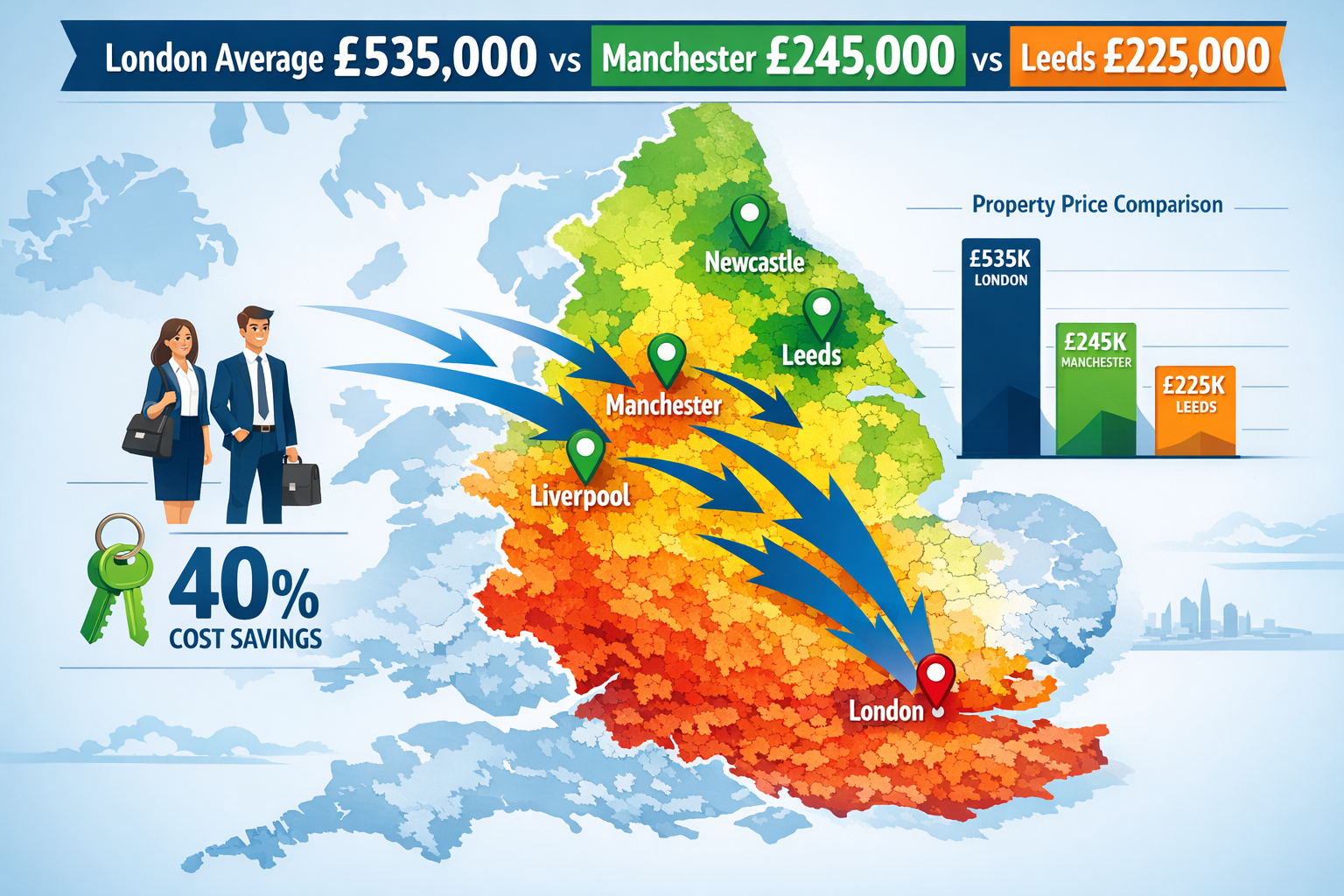
The financial mathematics behind the London-to-North migration are compelling and undeniable. In 2026, the average property price in London hovers around £535,000, while comparable properties in Manchester average £245,000, Leeds £225,000, and Liverpool £195,000. For first-time buyers struggling to accumulate deposits, this represents the difference between homeownership and perpetual renting.
Consider a typical young professional couple earning a combined £65,000 annually. In London, they would qualify for a mortgage of approximately £292,500 (4.5x income), requiring a property deposit of £242,500 to purchase an average home—an impossible target for most. The same couple relocating to Manchester could purchase a similar-quality property with a deposit of just £52,500, making homeownership achievable within 2-3 years of focused saving.
Remote Work Revolution and Geographic Freedom
The permanent shift to hybrid and remote working arrangements has fundamentally altered the employment-location equation. Technology, finance, marketing, and creative sectors now routinely offer flexible working arrangements, with employees required in London offices just 1-2 days weekly or less. High-speed rail connections mean Manchester is just 2 hours 10 minutes from London, Leeds 2 hours 20 minutes, and Birmingham 1 hour 24 minutes—making occasional office attendance entirely manageable.
This geographic freedom has unlocked Northern England's appeal. Cities like Manchester and Leeds offer vibrant cultural scenes, excellent restaurants, growing tech sectors, and genuine urban amenities while maintaining significantly lower living costs. The quality-of-life calculation increasingly favors relocation.
Demographic Shifts and Regional Investment
Population movements are reshaping regional economies. While comprehensive UK-wide internal migration data continues to evolve, regional housing market indicators show substantial increases in first-time buyer activity across Northern England throughout 2025-2026. Manchester, Leeds, and Birmingham have experienced particularly strong demand from London relocators, driving new development, infrastructure investment, and economic growth.
Northern city councils have responded with targeted initiatives to attract young professionals, including business rate incentives, co-working space development, and cultural investment. This creates a positive feedback loop: as more young professionals relocate, these cities become increasingly attractive destinations with expanding opportunities and amenities.
Building Surveys for First-Time Buyers in Northern England: Essential Considerations
Why Building Surveys Matter More in Regional Markets
First-time buyers relocating from London often underestimate the importance of comprehensive building surveys when purchasing Northern properties. While London's housing stock certainly has its challenges, Northern England's property landscape presents unique characteristics that demand specialist knowledge and thorough professional assessment.
The region's housing stock includes:
- Victorian and Edwardian terraced houses (1850-1920) with solid wall construction, aging infrastructure, and period-specific defects
- Stone-built properties using local materials with unique maintenance requirements
- Back-to-back terraces with limited natural light and ventilation challenges
- Converted mills and industrial buildings with complex structural considerations
- Inter-war semi-detached houses with cavity wall tie corrosion issues
- Post-war concrete construction requiring specialist assessment
Each property type presents specific survey considerations that London buyers may not recognize. A comprehensive RICS Building Survey provides the detailed analysis necessary to make informed purchasing decisions.
Common Defects in Northern England Properties
Understanding regional property characteristics helps first-time buyers appreciate why professional surveys are non-negotiable investments. Northern England properties frequently exhibit these issues:
Damp and Moisture Problems
The region's higher rainfall and humidity levels make damp a prevalent concern. Victorian properties with solid wall construction lack damp-proof courses, making them particularly vulnerable. Common damp issues include:
- Rising damp from ground moisture traveling up walls through capillary action
- Penetrating damp from deteriorating pointing, damaged guttering, or roof defects
- Condensation damp from inadequate ventilation in older properties
- Cellar dampness in properties with below-ground spaces
Professional surveyors use moisture meters and thermal imaging to identify damp sources accurately. Understanding damp survey costs and what to expect helps buyers budget appropriately for this essential assessment.
Structural Movement and Subsidence
Clay soil conditions in parts of Northern England, combined with aging foundations, create subsidence risks. Surveyors assess:
- Crack patterns indicating settlement, subsidence, or structural movement
- Foundation adequacy for property age and soil conditions
- Tree proximity and root damage potential
- Mining subsidence in areas with historical coal mining activity
- Lintel and arch integrity above windows and doors
Roof and Chimney Defects
Northern properties' pitched roofs and multiple chimneys require careful inspection:
- Slate and tile condition with typical 80-100 year lifespans
- Chimney stack stability and pointing deterioration
- Flashing failures around chimneys and roof junctions
- Roof timber condition including rafters, purlins, and ridge boards
- Gutter and downpipe adequacy for regional rainfall levels
Original Features and Period Characteristics
While period features add character and value, they also require maintenance understanding:
- Sash windows with deteriorating cords, frames, and glazing
- Original floorboards with gaps, movement, and joist concerns
- Plasterwork on lath with cracking and detachment risks
- Original fireplaces and chimney breasts with structural implications
A thorough building survey identifies these issues, estimates repair costs, and provides buyers with negotiating leverage and realistic budgeting information.
Choosing the Right Survey Type: Building Surveys for First-Time Buyers in Northern England
RICS Survey Levels Explained
The Royal Institution of Chartered Surveyors (RICS) defines three main survey types, each offering different levels of detail and protection. First-time buyers relocating to Northern England should carefully consider which survey type matches their property and risk tolerance.
Level 1: RICS Home Survey (Condition Report)
This basic survey provides a simple traffic light rating (red, amber, green) for major property elements. Not recommended for first-time buyers purchasing older Northern properties due to limited detail and no advice on repairs or maintenance.
Best for: Modern properties (less than 10 years old) in good condition
Typical cost: £300-£450
Level 2: RICS Home Survey (HomeBuyer Report)
This intermediate survey includes:
- Visual inspection of accessible areas
- Traffic light condition ratings with descriptive text
- Market valuation and insurance reinstatement cost
- Identification of urgent defects and potential legal issues
- General advice on maintenance and repairs
Best for: Conventional properties in reasonable condition built post-1900
Typical cost: £450-£800
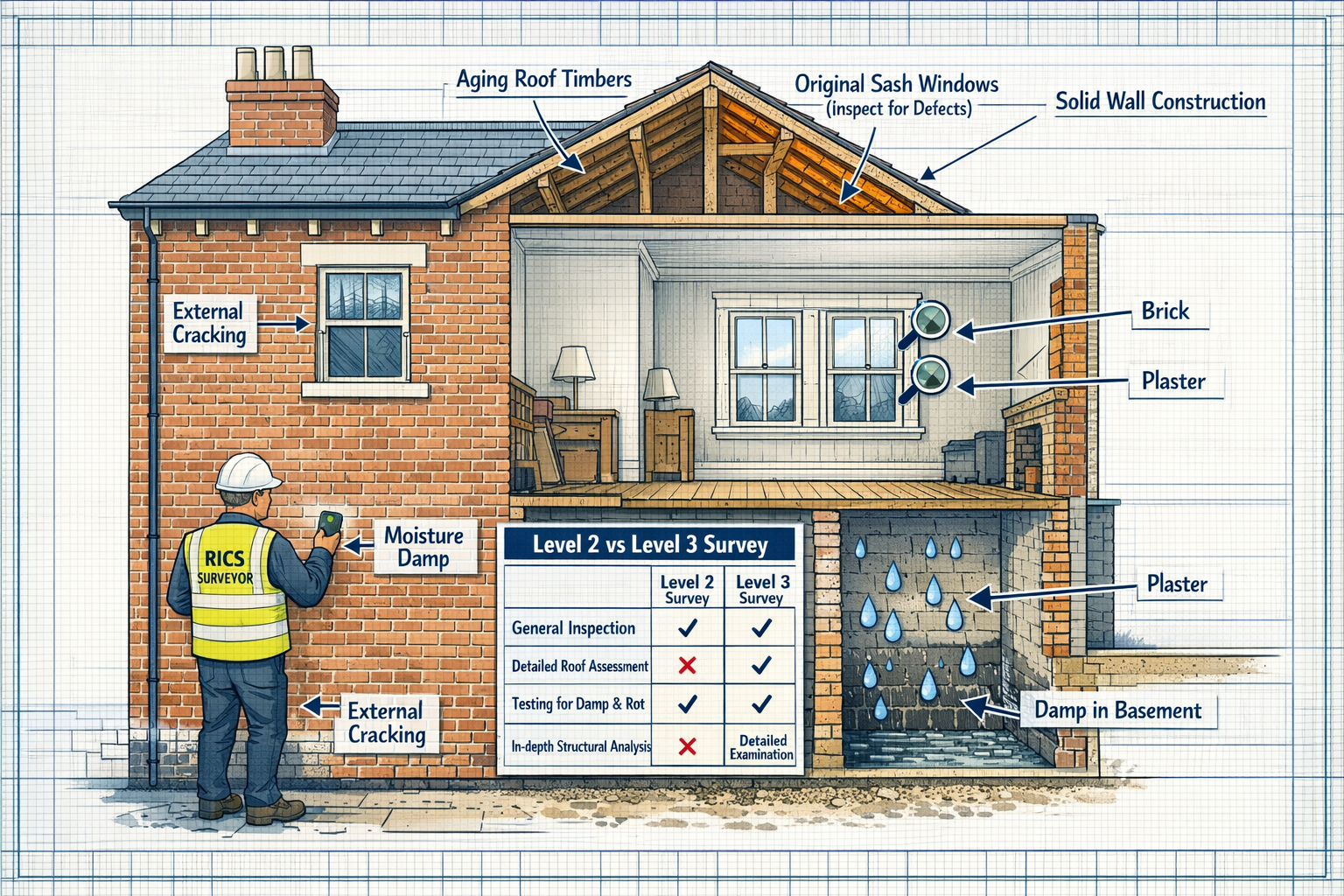
For many first-time buyers, understanding the differences between HomeBuyer Survey or Full Structural options is crucial for making informed decisions. Additionally, comparing Home Survey Levels 2 vs Level 3 helps clarify which option provides appropriate protection.
Level 3: RICS Building Survey (Full Structural Survey)
This comprehensive survey provides:
- Detailed inspection of all accessible areas
- In-depth analysis of construction, condition, and defects
- Comprehensive description of visible defects with causes
- Detailed repair and maintenance advice with urgency ratings
- Technical information about construction methods and materials
- Guidance on further specialist investigations if needed
Best for: Older properties (pre-1900), properties in poor condition, unusual construction, properties requiring renovation, or buyers unfamiliar with regional property types
Typical cost: £600-£1,500 depending on property size and complexity
Why First-Time Buyers Should Choose Level 3 Building Surveys
For London professionals relocating to Northern England, Level 3 Building Surveys offer the most comprehensive protection. Here's why this investment makes financial sense:
- Unfamiliarity with regional property types: London buyers may not recognize Northern construction methods, materials, or typical defects
- Older housing stock: Much of Northern England's affordable housing dates from Victorian and Edwardian periods, requiring detailed assessment
- Hidden defect risks: Comprehensive surveys identify issues that could cost tens of thousands to remedy
- Negotiating power: Detailed defect descriptions enable effective price negotiations (see average price reduction after survey)
- Future planning: Understanding all maintenance requirements helps budget for ownership costs
- Peace of mind: Thorough knowledge of property condition reduces post-purchase anxiety
The additional £200-£700 cost difference between Level 2 and Level 3 surveys is negligible compared to potential repair costs or the financial and emotional stress of discovering major defects after purchase.
Maximizing Value: How Building Surveys Protect First-Time Buyers' Investments
Identifying Deal-Breakers vs. Negotiable Issues
A professional building survey transforms the property purchasing process from emotional decision-making to informed negotiation. Surveyors categorize defects by urgency and severity, helping buyers understand which issues are:
Category 1: Serious defects requiring immediate attention
- Active structural movement or subsidence
- Roof failures causing water ingress
- Dangerous electrical installations
- Severe damp affecting structural integrity
- Unsafe chimneys or structural elements
Category 2: Defects requiring attention but not urgent
- Minor roof repairs needed within 1-2 years
- Window replacements needed medium-term
- Repointing required to prevent deterioration
- Heating system approaching end of life
- Minor damp issues requiring monitoring
Category 3: Defects requiring future attention
- Routine maintenance items
- Cosmetic improvements
- Long-term planning considerations
This categorization helps first-time buyers make rational decisions. Category 1 defects might justify walking away or demanding substantial price reductions, while Category 2 and 3 issues inform negotiation strategies and future budgeting.
Negotiating Purchase Prices with Survey Evidence
Building surveys provide concrete evidence for price negotiations. First-time buyers can leverage survey findings to:
- Request price reductions equivalent to repair costs plus a contingency
- Demand vendor repairs before completion
- Negotiate retention amounts held by solicitors until repairs are completed
- Adjust offers based on newly discovered information
Research shows that buyers armed with comprehensive building surveys achieve average price reductions of £15,000-£25,000 on properties with significant defects. On a £200,000 Northern England property, this represents 7.5-12.5% savings—far exceeding the survey cost.
Understanding how RICS surveys help negotiate property prices empowers buyers to approach negotiations confidently and achieve optimal outcomes.
Budgeting for Ownership: Beyond the Purchase Price
Comprehensive building surveys enable realistic ownership budgeting. First-time buyers should create 5-year maintenance plans based on survey findings, including:
| Timeframe | Typical Costs for Victorian Terrace | Priority Items |
|---|---|---|
| Year 1 (Immediate) | £5,000-£15,000 | Category 1 urgent repairs, essential safety works, damp remediation |
| Years 2-3 (Short-term) | £8,000-£20,000 | Window replacements, heating system upgrades, roof repairs, repointing |
| Years 4-5 (Medium-term) | £10,000-£25,000 | Kitchen/bathroom updates, rewiring if needed, external decoration |
| Ongoing Annual | £1,500-£3,000 | Routine maintenance, servicing, minor repairs, decorating |
These figures reflect typical Northern England property maintenance costs. Buyers should establish maintenance reserves immediately after purchase to avoid financial stress when repairs become necessary.
Building surveys also identify energy efficiency improvements that reduce ongoing costs:
- Loft insulation upgrades (£300-£500, saving £200+ annually)
- Cavity wall insulation where applicable (£500-£1,500, saving £300+ annually)
- Modern boiler replacement (£2,500-£4,000, saving £300+ annually)
- Double glazing installation (£5,000-£12,000, saving £200+ annually)
- Solar panel installation (£5,000-£8,000, generating £400+ annually)
Avoiding Common First-Time Buyer Mistakes
Building surveys help first-time buyers avoid costly errors that plague inexperienced purchasers:
❌ Mistake 1: Skipping surveys to save money
Reality: Survey costs are tiny compared to potential repair bills. A £1,000 survey might reveal £30,000 in necessary repairs.
❌ Mistake 2: Accepting vendor assurances without verification
Reality: Vendors may genuinely not know about defects or may minimize issues. Independent professional assessment is essential.
❌ Mistake 3: Choosing the cheapest survey option
Reality: Basic surveys miss critical defects. Comprehensive surveys provide proportionate protection for property value.
❌ Mistake 4: Not reading survey reports thoroughly
Reality: Survey reports contain crucial information. Buyers should read carefully, ask questions, and seek clarification on technical points.
❌ Mistake 5: Proceeding with purchases despite serious defects
Reality: Emotional attachment to properties can override rational judgment. Category 1 defects often justify walking away.
Understanding common myths about property surveys helps buyers approach the process with realistic expectations and appropriate priorities.
Regional Property Hotspots: Where Building Surveys for First-Time Buyers in Northern England Matter Most
Manchester: The Northern Powerhouse
Manchester leads Northern England's property renaissance, attracting the highest number of London relocators. The city offers:
- Thriving tech and creative sectors with MediaCityUK, Spinningfields business district, and growing startup ecosystem
- Excellent transport links including Manchester Airport, direct London trains, and comprehensive tram network
- Vibrant cultural scene with world-class museums, music venues, restaurants, and nightlife
- Multiple universities creating dynamic, youthful atmosphere
- Diverse neighborhoods from trendy Northern Quarter to family-friendly Chorlton
Average property prices (2026):
- City center apartments: £220,000-£350,000
- Victorian terraces (Chorlton, Didsbury): £280,000-£450,000
- Semi-detached family homes (suburbs): £250,000-£380,000
Common survey findings: Damp in Victorian properties, roof repairs needed, original sash window deterioration, cellar dampness, chimney stack issues.
Leeds: Commercial Hub with Residential Appeal
Leeds combines commercial strength with residential affordability, offering:
- Strong financial and professional services sector with major employers including KPMG, Deloitte, and PwC
- Growing tech scene with digital and creative agencies
- Excellent shopping and dining with Victoria Quarter, Trinity Leeds, and diverse restaurant scene
- Beautiful surrounding countryside with Yorkshire Dales nearby
- Strong rental market for investment-minded buyers
Average property prices (2026):
- City center apartments: £180,000-£280,000
- Victorian terraces (Headingley, Chapel Allerton): £220,000-£350,000
- Semi-detached homes (suburbs): £200,000-£320,000
Common survey findings: Stone property maintenance issues, roof slate replacement needed, solid wall damp, aging heating systems, structural movement in older terraces.
Liverpool: Cultural Capital with Exceptional Value
Liverpool offers the best value proposition for first-time buyers:
- UNESCO World Heritage waterfront with stunning architecture
- Thriving cultural scene with museums, galleries, music heritage, and festivals
- Growing economy with digital, creative, and maritime sectors
- Excellent affordability compared to other major cities
- Strong community atmosphere in established neighborhoods
Average property prices (2026):
- City center apartments: £150,000-£240,000
- Victorian terraces (Aigburth, Sefton Park): £180,000-£280,000
- Semi-detached homes (suburbs): £170,000-£260,000
Common survey findings: Render maintenance on Victorian properties, bay window structural issues, damp in basements, roof repairs, original feature deterioration.
Birmingham: Central Location and Economic Growth
Birmingham's central UK location and economic diversity attract relocating professionals:
- Major business hub with growing professional services sector
- HS2 development promising enhanced London connectivity (when completed)
- Diverse economy spanning manufacturing, services, and creative industries
- Multicultural atmosphere with exceptional food scene
- Regeneration investment transforming city center and neighborhoods
Average property prices (2026):
- City center apartments: £190,000-£300,000
- Victorian terraces (Moseley, Harborne): £240,000-£380,000
- Semi-detached homes (suburbs): £220,000-£340,000
Common survey findings: Victorian property damp issues, roof and chimney repairs, solid wall construction challenges, aging infrastructure, subsidence in clay soil areas.
Newcastle: Affordable Gateway to the North East
Newcastle offers exceptional value with vibrant city life:
- Growing tech and digital sector with strong startup support
- Outstanding nightlife and culture with theaters, galleries, and music venues
- Beautiful surrounding areas including Northumberland coast and countryside
- Friendly community atmosphere and lower living costs
- Strong regional identity and cultural heritage
Average property prices (2026):
- City center apartments: £140,000-£220,000
- Victorian terraces (Jesmond, Heaton): £200,000-£320,000
- Semi-detached homes (suburbs): £180,000-£280,000
Common survey findings: Stone property maintenance, roof condition issues, damp in older properties, chimney repairs, window replacements needed.
The Building Survey Process: What First-Time Buyers Should Expect
Selecting the Right Surveyor
Choosing a qualified, experienced surveyor is crucial for reliable property assessment. First-time buyers should prioritize:
RICS Accreditation
Only use Royal Institution of Chartered Surveyors (RICS) qualified surveyors who maintain professional standards, insurance, and continuing education requirements. RICS members use "MRICS" or "FRICS" designations after their names.
Local Knowledge
Surveyors with regional expertise understand Northern England property characteristics, local construction methods, common defects, and area-specific issues like mining subsidence or soil conditions.
Relevant Experience
Choose surveyors with proven experience assessing your property type—Victorian terraces, stone buildings, converted properties, or whatever matches your purchase.
Clear Communication
Effective surveyors explain technical findings in accessible language, answer questions patiently, and provide actionable advice rather than jargon-filled reports.
Comprehensive Insurance
Verify surveyors carry adequate professional indemnity insurance (minimum £1 million, preferably £2-5 million) protecting buyers if negligent surveys miss significant defects.
Understanding how to find the best local surveyor near you helps first-time buyers make informed selections and avoid substandard providers.
The Survey Appointment
Building surveys typically take 2-4 hours depending on property size and complexity. Surveyors will:
- Conduct external inspection examining roof, chimneys, walls, windows, doors, drainage, and boundaries
- Assess internal areas including all rooms, floors, ceilings, walls, fixtures, and fittings
- Inspect roof spaces where safely accessible to assess roof structure and insulation
- Examine cellars and basements for damp, structural issues, and drainage
- Test for damp using moisture meters in suspected problem areas
- Photograph defects documenting issues for the report
- Take measurements and notes for detailed reporting
Buyers need not attend the survey appointment, though some choose to join for the final 30 minutes to ask questions. Surveyors work independently to maintain objectivity.
Understanding Your Survey Report
Building survey reports typically contain 30-60+ pages of detailed information organized into sections:
Executive Summary
Concise overview highlighting the most significant findings, urgent issues, and overall property condition assessment.
Property Description
Details about construction type, approximate age, accommodation layout, and general characteristics.
Detailed Findings by Element
Comprehensive section-by-section analysis covering:
- Roof structure and coverings
- Chimneys and flues
- Rainwater goods (gutters and downpipes)
- External walls
- Windows and doors
- Internal elements
- Floors and ceilings
- Services (heating, plumbing, electrical)
- Drainage
- Grounds and boundaries
Each element receives condition ratings, defect descriptions, likely causes, implications, and recommended actions.
Specialist Recommendations
Identification of issues requiring further investigation by specialists (structural engineers, electrical contractors, damp specialists, etc.).
Repair Cost Estimates
Some surveyors provide approximate repair cost ranges, though detailed quotations require contractor involvement.
First-time buyers should:
- ✅ Read reports thoroughly, highlighting concerns
- ✅ Create prioritized action lists from findings
- ✅ Obtain clarification on technical terminology
- ✅ Request follow-up calls to discuss significant issues
- ✅ Share reports with solicitors for legal advice
- ✅ Obtain specialist quotes for major repairs before proceeding
Acting on Survey Findings
Survey reports empower informed decision-making. First-time buyers have several options:
Option 1: Proceed as Planned
If surveys reveal only minor, expected defects within budget tolerance, buyers can proceed confidently with purchases.
Option 2: Renegotiate Price
Present survey findings to vendors requesting price reductions reflecting repair costs. Most vendors negotiate reasonably when faced with professional evidence.
Option 3: Request Vendor Repairs
Ask vendors to complete specific repairs before completion, particularly urgent safety issues or significant defects.
Option 4: Withdraw from Purchase
If surveys reveal deal-breaking defects (major structural issues, extensive damp, unsafe construction), withdrawing protects buyers from catastrophic financial mistakes.
Option 5: Obtain Specialist Reports
Commission additional investigations (structural engineers, electrical surveys, damp specialists) to fully understand complex issues before deciding.
The survey investment provides options and control, transforming property purchasing from blind risk-taking to informed decision-making.
Financial Planning: Budgeting for Building Surveys and Beyond
Survey Costs and Value Proposition
Building survey costs represent tiny fractions of property values while providing substantial protection:
| Property Value | Level 2 Survey Cost | Level 3 Survey Cost | Cost as % of Value |
|---|---|---|---|
| £150,000 | £450-£600 | £600-£900 | 0.3-0.6% |
| £200,000 | £500-£700 | £700-£1,100 | 0.35-0.55% |
| £250,000 | £550-£800 | £800-£1,300 | 0.32-0.52% |
| £300,000 | £600-£900 | £900-£1,500 | 0.3-0.5% |
Survey costs are dwarfed by potential savings. Consider:
- Average price reduction after survey: £15,000-£25,000
- Potential undiscovered repair costs: £10,000-£50,000+
- Survey investment: £600-£1,500
- Return on investment: 1,000-4,000%
Viewing surveys as optional luxuries rather than essential protections represents false economy. Understanding how to save money with building surveys demonstrates their genuine value proposition.
Additional Purchase Costs for First-Time Buyers
Building surveys form part of broader purchase budgets. First-time buyers should budget for:
Upfront Costs (Due Before Completion)
- Deposit: 5-20% of property value (£10,000-£40,000 on £200,000 property)
- Mortgage arrangement fees: £0-£2,000
- Building survey: £600-£1,500
- Mortgage valuation: £250-£500 (if separate from survey)
- Legal fees: £850-£1,500
- Local authority searches: £250-£400
- Land Registry fees: £40-£910 depending on property value
- Stamp Duty: £0 (first-time buyers pay no stamp duty on properties up to £425,000 in 2026)
Total upfront costs: Approximately £12,000-£46,000 depending on deposit percentage
Post-Completion Costs (First Year)
- Removal costs: £400-£1,200
- Immediate repairs: £5,000-£15,000 (based on survey findings)
- Furniture and appliances: £2,000-£8,000
- Decorating and improvements: £1,000-£5,000
- Ongoing costs: Council tax, utilities, insurance, maintenance
Realistic budgeting prevents financial stress and ensures buyers can afford both purchase and ownership.
Mortgage Considerations and Lender Requirements
Mortgage lenders require property valuations to confirm properties provide adequate security for loans. These basic valuations differ significantly from building surveys:
Mortgage Valuations
- Purpose: Confirm property value for lending purposes
- Scope: Basic inspection focusing on value and major defects affecting security
- Benefit to buyer: Minimal—protects lender, not buyer
- Cost: £250-£500
- Recommendation: Never rely on mortgage valuations for purchase decisions
Building Surveys
- Purpose: Inform buyer about property condition
- Scope: Comprehensive assessment of all elements
- Benefit to buyer: Substantial—identifies defects, enables negotiation, informs budgeting
- Cost: £600-£1,500
- Recommendation: Essential for informed purchasing
First-time buyers should commission independent building surveys regardless of mortgage valuation requirements. Some surveyors offer combined services providing both mortgage valuation and building survey, potentially reducing overall costs.
Lenders may reduce loan offers or decline mortgages if valuations reveal significant defects. Building surveys conducted before mortgage applications help buyers avoid wasted application fees on unsuitable properties.
Specialist Surveys and Additional Investigations
When Standard Building Surveys Aren't Enough
Comprehensive building surveys occasionally identify issues requiring specialist investigation. First-time buyers should understand when additional surveys become necessary:
Structural Engineer Reports
Required when surveyors identify:
- Significant cracking patterns suggesting structural movement
- Subsidence or settlement concerns
- Unusual structural alterations or modifications
- Concerns about load-bearing wall removal
- Foundation adequacy questions
Cost: £500-£1,500 depending on complexity
Structural engineers provide detailed analysis, calculations, and remediation recommendations for structural concerns.
Electrical Condition Reports (EICR)
Recommended for properties with:
- Electrical installations over 25 years old
- Visible electrical defects or safety concerns
- Outdated fuse boxes or wiring systems
- No recent electrical certification
Cost: £150-£350
Qualified electricians test all circuits, identify safety issues, and certify installations or recommend remedial works.
Damp and Timber Surveys
Necessary when building surveys identify:
- Extensive damp affecting multiple areas
- Suspected timber decay or insect infestation
- Unusual moisture patterns requiring investigation
- Basement or cellar waterproofing needs
Cost: £200-£600
Specialist damp surveyors use advanced diagnostic equipment to identify damp sources, assess timber condition, and specify remediation treatments. Understanding damp and timber report pricing helps buyers budget appropriately.
Drainage Surveys (CCTV)
Recommended when surveyors suspect:
- Drainage defects or blockages
- Tree root ingress into drains
- Collapsed or damaged drainage pipes
- Shared drainage complications
Cost: £250-£500
Drainage specialists insert cameras into drainage systems, identifying defects and providing repair recommendations.
Integrating Specialist Reports into Purchase Decisions
Specialist investigations provide crucial information for final purchase decisions:
- Obtain reports quickly to avoid delaying transactions unnecessarily
- Share findings with solicitors who can advise on legal implications
- Request detailed quotations for remediation works from qualified contractors
- Renegotiate purchase prices reflecting newly discovered issues and repair costs
- Consider walking away if specialist reports reveal catastrophic defects with prohibitive repair costs
Specialist reports transform uncertainty into actionable information, enabling confident decision-making even when complex issues arise.
Long-Term Success: Maintaining Your Northern England Property

Creating Maintenance Schedules from Survey Findings
Building surveys provide roadmaps for property maintenance. First-time buyers should:
Immediate Actions (Months 1-3)
- Address all Category 1 urgent defects
- Complete essential safety works
- Establish maintenance fund (target: 1% of property value annually)
- Arrange annual service contracts (boiler, alarm systems)
- Document property condition with photographs
Short-Term Planning (Year 1-2)
- Schedule Category 2 repairs based on urgency
- Obtain multiple quotations for significant works
- Plan energy efficiency improvements
- Establish relationships with reliable contractors
- Review insurance coverage adequacy
Medium-Term Planning (Years 3-5)
- Budget for major replacements (roof, windows, heating)
- Plan kitchen and bathroom updates
- Consider value-adding improvements
- Maintain comprehensive maintenance records
- Conduct informal condition reviews annually
Long-Term Planning (5+ Years)
- Anticipate major expenditure cycles
- Build substantial maintenance reserves
- Plan significant renovations or extensions
- Monitor property market for refinancing opportunities
- Consider future sale or rental potential
Proactive maintenance prevents minor issues becoming major expenses while protecting property values.
Building Relationships with Local Tradespeople
Relocating buyers need reliable contractor networks. Effective strategies include:
- Requesting recommendations from neighbors, local community groups, and online forums
- Verifying credentials including trade association memberships, insurance, and references
- Starting with small projects to test reliability before commissioning major works
- Obtaining multiple quotations for significant projects (minimum three quotes)
- Checking online reviews while recognizing that very negative or very positive reviews may not represent typical experiences
- Documenting agreements in writing with clear specifications, timelines, and payment terms
- Paying fairly while avoiding large upfront payments before work commences
Quality tradespeople become valuable long-term assets, providing reliable service, fair pricing, and peace of mind.
Understanding Regional Building Regulations and Requirements
Northern England properties may require various permissions and compliance:
Planning Permission
Required for:
- Extensions and significant alterations
- Loft conversions changing roof lines
- Outbuildings exceeding size thresholds
- Changes to listed buildings
- Works in conservation areas
Building Regulations Approval
Required for:
- Structural alterations
- Electrical rewiring
- Heating system installations
- Window replacements (sometimes)
- Drainage modifications
Listed Building Consent
Required for any works affecting:
- Character or appearance of listed buildings
- Interior or exterior alterations
- Even minor changes in some cases
First-time buyers should:
- Research property listing status before purchasing
- Factor permission costs and timescales into renovation budgets
- Consult planning departments early in project planning
- Use qualified professionals familiar with local requirements
- Retain all permission documentation for future sales
Understanding regulatory requirements prevents costly mistakes and legal complications.
Conclusion: Empowering First-Time Buyers in Northern England's Property Market
The 2026 migration from London to Northern England represents a transformative opportunity for young professionals seeking homeownership, improved quality of life, and genuine financial sustainability. Cities like Manchester, Leeds, Liverpool, Birmingham, and Newcastle offer vibrant urban amenities, growing employment opportunities, and property prices 50-60% below London levels—making the homeownership dream achievable for thousands of first-time buyers.
However, opportunity comes with responsibility. Northern England's diverse housing stock—from Victorian terraces to stone-built cottages, converted mills to inter-war semi-detached homes—presents unique characteristics and challenges that demand professional assessment. Building surveys for first-time buyers in Northern England are not optional luxuries but essential protections, providing the detailed knowledge necessary to make informed purchasing decisions, negotiate effectively, and budget realistically for long-term ownership.
Comprehensive RICS Level 3 Building Surveys offer first-time buyers unfamiliar with regional property types the most robust protection. These detailed assessments identify structural issues, damp problems, aging infrastructure, and maintenance requirements that could cost tens of thousands of pounds to remedy. The £600-£1,500 survey investment delivers returns of 1,000-4,000% through negotiated price reductions, avoided catastrophic purchases, and informed maintenance planning.
Actionable Next Steps for First-Time Buyers
If you're considering relocating from London to Northern England, take these concrete actions:
- Research target cities thoroughly considering employment opportunities, transport links, amenities, and community atmosphere
- Establish realistic budgets including deposits, survey costs, legal fees, immediate repairs, and ongoing maintenance
- Secure mortgage agreements in principle before viewing properties to understand borrowing capacity
- Engage RICS-qualified surveyors with regional expertise and proven experience assessing your target property types
- Commission Level 3 Building Surveys for all older properties or those unfamiliar to you
- Read survey reports comprehensively and request clarification on technical findings
- Negotiate confidently using survey evidence to achieve fair pricing reflecting true property condition
- Budget for ownership based on survey findings, creating maintenance reserves and planning schedules
- Build local networks including reliable tradespeople, community connections, and regional knowledge
- Embrace regional opportunities while maintaining realistic expectations about property challenges and maintenance responsibilities
The building surveys for first-time buyers in Northern England provide the foundation for successful property ownership. By investing in professional assessment, understanding regional property characteristics, and planning proactively for maintenance, relocating Londoners can capitalize on the 2026 migration trend while protecting their financial futures and achieving the homeownership goals that drove their Northern relocation.
The Northern England property opportunity is real, substantial, and achievable—but only for buyers who approach purchases with professional guidance, comprehensive information, and realistic planning. Building surveys transform property purchasing from risky speculation into informed investment, empowering first-time buyers to build successful lives in Northern England's vibrant, affordable, and welcoming cities.
For expert guidance on your property survey needs, explore our comprehensive resources on which home survey is right for you and discover why choosing RICS surveyors provides the professional protection every first-time buyer deserves.
References
[1] Migration Is Changing Your Area Just Look At These Numbers – https://www.migrationwatchuk.org/news/2025/07/31/migration-is-changing-your-area-just-look-at-these-numbers/
[2] Net Migration Report Accessible – https://www.gov.uk/government/publications/migration-advisory-committee-report-on-net-migration/net-migration-report-accessible
[3] Migrants In The Uk An Overview – https://migrationobservatory.ox.ac.uk/resources/briefings/migrants-in-the-uk-an-overview/
[4] Long Term International Migration Flows To And From The Uk – https://migrationobservatory.ox.ac.uk/resources/briefings/long-term-international-migration-flows-to-and-from-the-uk/
[6] Leads World Concern Migration – https://news.gallup.com/poll/701990/leads-world-concern-migration.aspx