


The UK housing market in 2026 presents a unique opportunity for first-time buyers. With mortgage rates stabilizing and housing stock improving, experts predict that first-time purchasers will drive approximately 40% of all market activity this year.[1] However, this surge brings critical questions about property condition, structural integrity, and long-term investment protection. Building Surveys for First-Time Buyer Surge: Risk Protocols Amid Improved Affordability in 2026 have become essential tools for navigating this competitive landscape, particularly as nearly half of first-time buyers now opt for new-build properties where hidden defects can still lurk beneath fresh finishes.

The promise of improved affordability comes with important caveats. While house prices are expected to rise modestly by just 1-3% in 2026, creating a more accessible entry point, approximately 1.8 million fixed-rate mortgages are due to expire this year.[1] This creates both opportunities and risks for buyers entering the market. Understanding which type of building survey to commission—and what specific defects to prioritize—can mean the difference between a sound investment and a costly mistake.
Key Takeaways
- 🏠 First-time buyers will account for 40% of UK home purchases in 2026, making professional building surveys more critical than ever for protecting entry-level investments
- 📊 Nearly 47% of first-time buyers now purchase new-build properties, yet these still require thorough Level 2 or Level 3 surveys to identify construction defects and warranty limitations
- 🔍 Level 3 Building Surveys provide comprehensive structural analysis essential for older properties and entry-level homes with visible wear, while Level 2 suits newer constructions with fewer concerns
- 💷 Survey findings enable price renegotiation, with buyers typically achieving reductions of 5-15% when significant defects are discovered during professional inspections
- ⚠️ Regional price variations create different risk profiles, with London showing -40% price weakness while northern regions remain firmer, requiring location-specific survey protocols
Understanding the First-Time Buyer Landscape in 2026
Market Dynamics Driving First-Time Buyer Activity
The housing market in 2026 operates under fundamentally different conditions than previous years. First-time buyers have emerged as the dominant force, with industry forecasts predicting they will remain "the driving force for the market" throughout the year.[1] This shift reflects several converging factors: improved mortgage accessibility, modest price growth creating entry opportunities, and regulatory adjustments designed to help first-time and self-employed borrowers improve their borrowing options.
However, the picture isn't uniformly positive. The Royal Institution of Chartered Surveyors (RICS) February 2026 survey revealed that new buyer enquiries weakened significantly to a -26% net balance, down from -15% in January.[3] This indicates renewed concerns over interest rates are dampening enthusiasm despite improved affordability metrics. For those proceeding with purchases, this makes comprehensive building surveys more valuable than ever—when market sentiment weakens, buyers gain negotiating leverage through detailed property assessments.
The New-Build Preference Among Young Buyers
A striking trend defines the 2026 market: 61% of Gen Z homeowners live in new-build properties, compared to just 25% across all age groups.[2] This preference stems from practical considerations including desirable locations (cited by 28% of buyers) and favorable mortgage terms with higher loan-to-value ratios (20%).[2] The overall proportion of first-time buyers in new-builds has reached 47%, up from one quarter of all homeowners.[2]
This shift toward new construction creates specific survey requirements. Many first-time buyers mistakenly assume new-build properties don't require professional inspections, yet building surveys for new-builds remain essential. Construction defects, incomplete finishes, and warranty limitations can significantly impact long-term value and maintenance costs. The gap between developer priorities (customization options and digital infrastructure) and actual buyer priorities (gardens/green space and transport proximity) further emphasizes the need for independent professional assessment.[2]
Geographic Variations in Affordability and Risk
Regional divergence continues to shape the 2026 market landscape. London house prices show pronounced weakness with a -40% regional price net balance in February 2026, while northern regions and Scotland report firmer price trends.[3] This geographic variation creates different risk profiles for first-time buyers depending on location.
In weaker markets like London, buyers gain stronger negotiating positions when survey findings reveal defects. Conversely, in competitive northern markets, securing properties quickly while still conducting thorough due diligence requires strategic timing and clear understanding of survey protocols. The modest overall market activity—UK Finance expects 1.20 million house sales in 2026 and 2027, down slightly from 1.21 million in 2025—means less competition but also less comparable data for valuation purposes.[1]
Building Survey Types and Selection Criteria for First-Time Buyers
Level 2 HomeBuyer Report: When and Why
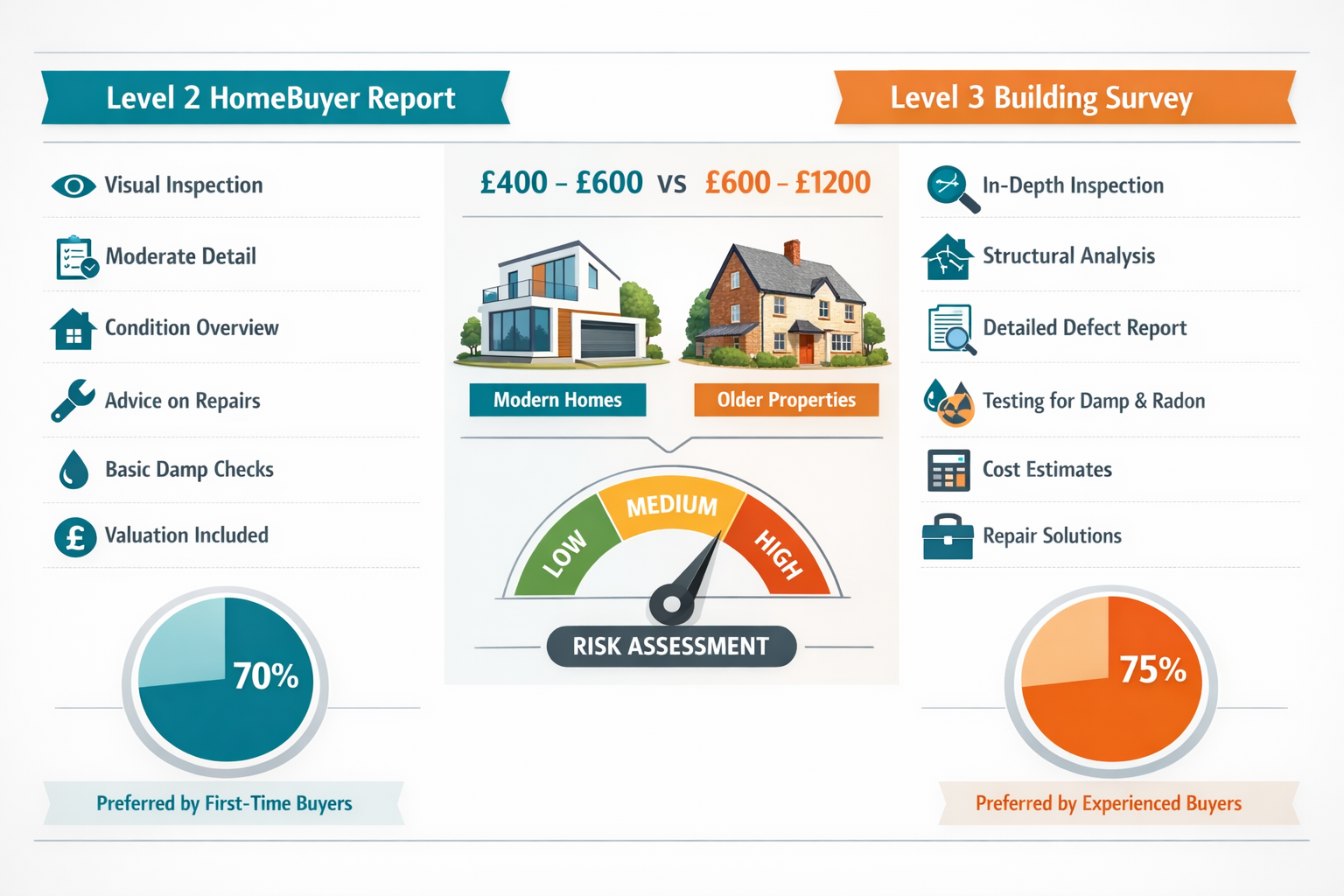
The Level 2 HomeBuyer Report (formerly known as RICS HomeBuyer Report) provides a middle-ground option suitable for conventional properties in reasonable condition. This survey type typically costs between £400-£600 and includes:
- Visual inspection of accessible areas without moving furniture or lifting floorboards
- Traffic light rating system (red, amber, green) for condition assessment of key elements
- Market valuation and insurance reinstatement cost
- Identification of urgent defects requiring immediate attention
- Legal issues affecting the property
For first-time buyers purchasing new-build or recently constructed properties (less than 10 years old) in good apparent condition, a Level 2 survey often provides sufficient protection. This is particularly relevant given that 47% of first-time buyers now purchase new-builds.[2] The survey identifies construction defects not covered by warranties and highlights maintenance issues that might emerge shortly after purchase.
When Level 2 is appropriate:
- Properties built after 1990 with no obvious defects
- Standard construction methods (brick, block, timber frame)
- No visible structural movement or dampness
- Properties where you're confident in general condition
- Budget-conscious buyers needing essential information
Level 3 Building Survey: Comprehensive Protection
The Level 3 Building Survey (formerly RICS Building Survey) offers the most comprehensive assessment available. Costing typically £600-£1,200 depending on property size and complexity, this detailed inspection provides:
- Extensive examination of all accessible areas including roof spaces, cellars, and outbuildings
- Detailed descriptions of construction methods and materials
- In-depth analysis of defects with severity ratings and repair cost estimates
- Maintenance advice and future deterioration predictions
- Technical information suitable for planning renovation work
For first-time buyers purchasing entry-level properties with visible wear, older homes (pre-1950), or properties requiring renovation, a Level 3 survey proves essential. Given that construction costs remain high—with one in four housebuilders reporting this as a major barrier[2]—understanding the full extent of required repairs prevents budget overruns.
When Level 3 is essential:
- Properties built before 1950 or of unusual construction
- Visible signs of structural movement, dampness, or deterioration
- Properties you plan to renovate or extend
- Listed buildings or those in conservation areas
- When purchasing at the upper limit of your budget
Decision Framework for First-Time Buyers
| Property Characteristic | Recommended Survey Level | Key Considerations |
|---|---|---|
| New-build (0-5 years) | Level 2 | Check construction defects, warranty coverage, snagging issues |
| Modern (6-30 years) | Level 2 | Assess maintenance quality, identify deferred repairs |
| Period property (30-100 years) | Level 3 | Structural integrity, original features condition, modernization needs |
| Pre-1900 property | Level 3 | Traditional construction methods, damp issues, structural movement |
| Visible defects present | Level 3 | Comprehensive defect analysis regardless of age |
| Planning major works | Level 3 | Detailed structural information for renovation planning |
Understanding the homebuying process helps first-time buyers time their survey appropriately—ideally after offer acceptance but before exchange of contracts, when withdrawal remains possible without financial penalty.
Risk Protocols: Essential Defect Checklists for Entry-Level Properties
Structural Integrity Concerns in Affordable Housing Stock
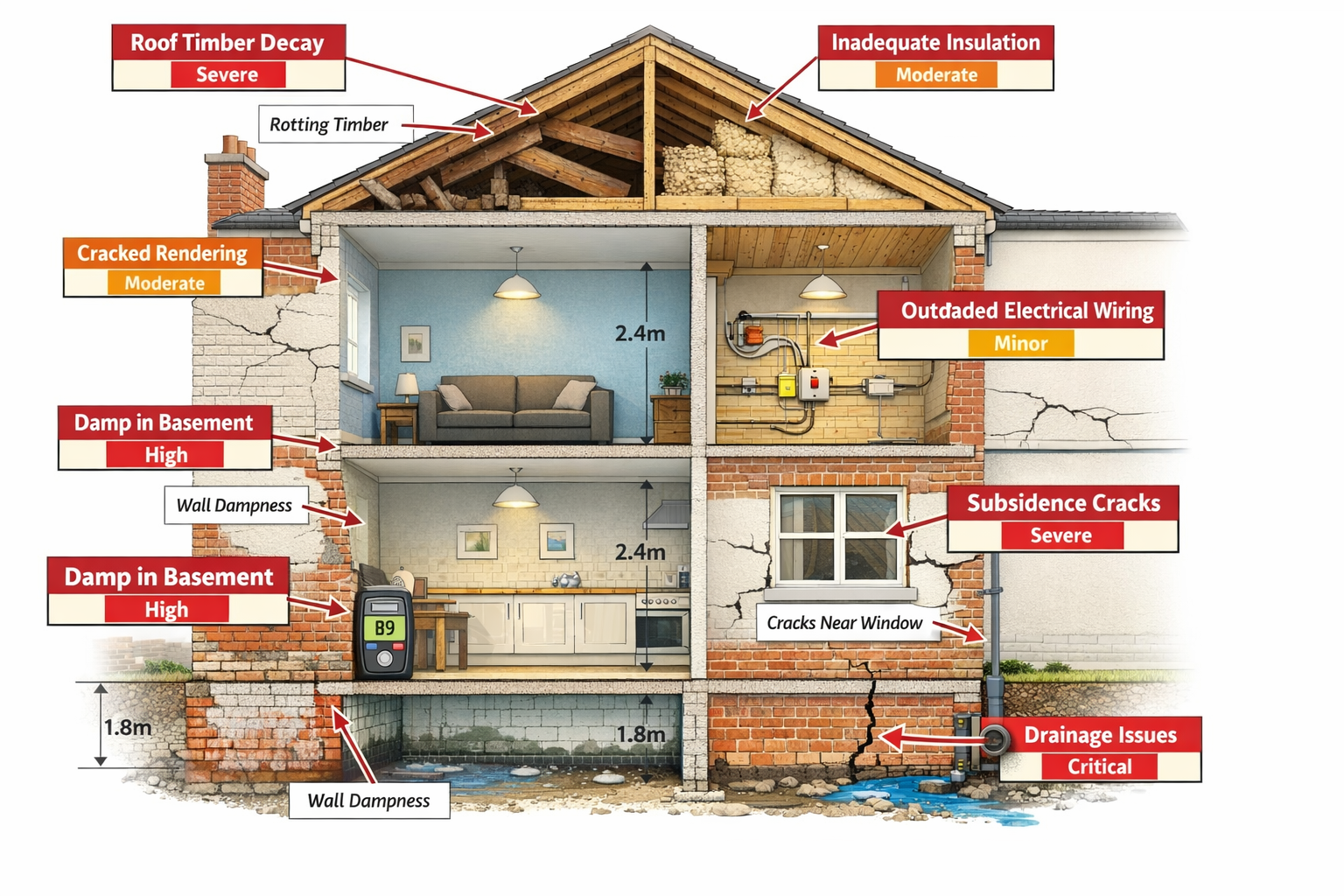
Entry-level properties often represent the older, less maintained segment of housing stock. Structural wear becomes a primary concern for first-time buyers operating within tight budgets. The following structural elements require particular scrutiny:
Foundation and Subsidence Issues:
- Cracking patterns in walls (vertical, horizontal, or stepped)
- Door and window alignment problems indicating movement
- Floor levelness and bounce suggesting structural weakness
- External ground levels too close to damp-proof course
- Drainage adequacy around property perimeter
Subsidence represents a major concern that can devastate first-time buyer budgets. Professional surveyors identify early warning signs and recommend monitoring or immediate remediation. Given the modest 1-3% house price growth expected in 2026,[1] structural issues can quickly eliminate any equity gains.
Load-Bearing Wall Assessment:
- Evidence of unauthorized alterations removing support
- Lintel condition above openings showing deflection
- Wall tie failure in cavity wall construction
- Bulging or leaning external walls
- Timber frame deterioration in older properties
Dampness and Water Ingress Detection
Dampness remains the most common defect in entry-level properties, affecting both older and newer constructions. With first-time buyers increasingly purchasing new-builds where construction quality varies,[2] comprehensive damp assessment proves essential:
Rising Damp Indicators:
- Tide marks on internal walls at low level
- Salt deposits and plaster deterioration
- Damp-proof course failure or bridging
- High moisture meter readings below 1 meter height
- Musty odors and mold growth patterns
Professional damp surveys identify the source and extent of moisture problems, distinguishing between rising damp, penetrating damp, and condensation—each requiring different remediation approaches and costs.
Penetrating Damp Sources:
- Roof defects including missing tiles, failed flashing, and gutter problems
- Defective rainwater goods causing water discharge against walls
- Pointing deterioration allowing water penetration
- Window and door seal failure
- Cavity wall insulation installed incorrectly causing bridging
Condensation and Ventilation:
- Inadequate ventilation in kitchens and bathrooms
- Single-glazed windows creating cold bridges
- Insufficient heating and insulation
- Mold growth patterns on cold external walls
- Lifestyle factors requiring occupant education
Roof and External Envelope Condition
The external envelope protects the entire property investment. For first-time buyers with limited maintenance budgets, understanding remaining roof life and repair requirements prevents unexpected major expenditure:
Roof Covering Assessment:
- Remaining life expectancy of tiles, slates, or felt
- Valley and flashing condition at junctions
- Chimney stack stability and pointing condition
- Roof timber condition including rafters and purlins
- Insulation adequacy meeting current standards
External Wall Condition:
- Render condition showing cracking or detachment
- Brickwork pointing requiring repointing
- Cavity wall tie corrosion in properties built 1920-1980
- Cladding condition and fire safety compliance
- Paint condition on timber or rendered surfaces
Services and Installation Condition
Modern living standards require functional, safe services. Outdated electrical, heating, and plumbing systems represent significant upgrade costs that first-time buyers must factor into affordability calculations:
Electrical Installation Safety:
- Consumer unit age and type (fuse box vs. modern RCD protection)
- Wiring age and condition (rubber/fabric vs. modern PVC)
- Earthing and bonding adequacy for safety
- Socket and switch condition indicating system age
- Periodic inspection report status and recommendations
Heating System Viability:
- Boiler age and expected remaining life (typically 10-15 years)
- Heating efficiency and running cost implications
- Radiator condition and system balance
- Controls adequacy including thermostats and programmers
- Servicing history and safety certificate status
Plumbing and Drainage:
- Pipe material (lead, iron, copper, plastic) and condition
- Water pressure adequacy throughout property
- Drainage system functionality and maintenance requirements
- Bathroom and kitchen fixture condition
- Water tank condition in loft spaces
Leveraging Survey Findings for Price Negotiation and Risk Mitigation
Strategic Negotiation Using Survey Evidence
Professional building surveys provide powerful negotiation tools. Research shows that buyers can typically achieve price reductions of 5-15% when significant defects are discovered. Understanding how to negotiate after a poor survey result maximizes this advantage.
Effective Negotiation Strategies:
- Quantify repair costs using surveyor estimates and contractor quotes
- Prioritize urgent defects requiring immediate attention
- Present evidence professionally through estate agents or solicitors
- Propose realistic adjustments based on documented costs
- Consider alternative solutions including retention funds or seller repairs
For first-time buyers in the current market where enquiries have weakened to -26% net balance,[3] sellers may be more receptive to negotiation than in previous years. The key lies in presenting survey findings as objective evidence rather than subjective concerns.
Negotiation Outcomes to Consider:
- Price reduction reflecting repair costs
- Seller completion of repairs before exchange
- Retention fund held by solicitors for post-completion repairs
- Warranty or insurance covering identified defects
- Extended completion timeline allowing buyer to arrange repairs
The average price reduction after survey varies by property type and market conditions, but documented defects consistently provide leverage for adjustment.
Risk Mitigation Through Conditional Offers
Making offers subject to satisfactory survey protects first-time buyers from commitment before full property assessment. This approach proves particularly valuable in the 2026 market where:
- Construction costs remain high, limiting repair affordability[2]
- Mortgage affordability is tight, leaving little buffer for unexpected costs
- Market activity is modest, reducing urgency to commit prematurely[1]
Conditional Offer Components:
- Clear survey contingency clause in offer documentation
- Specified timeframe for survey completion (typically 2-3 weeks)
- Right to withdraw or renegotiate based on findings
- Definition of "satisfactory" condition or defect thresholds
- Process for dispute resolution if parties disagree on adjustments
Insurance and Warranty Considerations
Building insurance premiums reflect property condition and risk factors. Survey findings directly impact:
- Standard coverage availability and exclusions
- Premium levels based on construction type and condition
- Excess amounts for subsidence or other specific risks
- Future claims where pre-existing defects are excluded
- Specialist coverage requirements for non-standard construction
For new-build properties where 61% of Gen Z buyers now purchase,[2] understanding warranty coverage limitations proves essential:
NHBC or Similar Warranty Coverage:
- Years 1-2: Builder's warranty covering defects and incomplete work
- Years 3-10: Structural warranty covering major defects only
- Exclusions: Normal wear, maintenance items, design issues accepted at purchase
- Claim process: Documentation requirements and dispute procedures
- Transferability: Warranty assignment to subsequent owners
Professional surveys identify defects that may not be covered by warranties, allowing buyers to address issues with builders before warranty periods expire or to negotiate price adjustments for excluded items.
Long-Term Maintenance Planning
Forward-looking maintenance budgets prevent financial strain after purchase. Surveyors typically provide guidance on:
| Property Element | Typical Lifespan | Replacement Cost Range | Annual Reserve |
|---|---|---|---|
| Roof covering | 40-60 years | £5,000-£15,000 | £150-£300 |
| Boiler/heating | 10-15 years | £2,500-£4,000 | £200-£350 |
| Kitchen | 15-20 years | £5,000-£20,000 | £300-£1,000 |
| Bathroom | 20-25 years | £3,000-£8,000 | £150-£350 |
| External decoration | 5-7 years | £2,000-£5,000 | £350-£700 |
| Windows/doors | 20-30 years | £5,000-£15,000 | £200-£600 |
For first-time buyers with limited savings after deposit and purchase costs, understanding these future obligations prevents financial distress. Setting aside £100-£200 monthly for property maintenance creates a buffer for inevitable repairs and replacements.
Selecting and Working with Qualified Surveyors

RICS Accreditation and Professional Standards
Royal Institution of Chartered Surveyors (RICS) membership provides assurance of professional competence, insurance, and ethical standards. When selecting a surveyor, first-time buyers should verify:
- RICS chartered status (MRICS or FRICS designation)
- Professional indemnity insurance covering potential negligence
- Relevant experience with property type and age
- Local market knowledge understanding regional construction methods
- Clear fee structure and scope of service
Finding the best local surveyor requires research beyond price comparison. The cheapest option may lack experience with specific defect types common in entry-level properties.
Preparing for the Survey Inspection
Maximizing survey value requires buyer preparation and cooperation:
Before the Survey:
- Provide surveyor with property details including age, construction type, and known issues
- Share estate agent particulars and seller's property information form
- Arrange access to all areas including lofts, cellars, and outbuildings
- Ensure utilities are connected for testing if property is vacant
- Request specific attention to areas of concern
During the Survey:
- Buyers typically don't attend, but can request follow-up site meeting for explanation
- Allow surveyor uninterrupted access for 2-4 hours depending on property size
- Ensure keys for all locked areas are available
- Provide contact details for questions during inspection
After the Survey:
- Review report thoroughly and highlight unclear sections
- Request clarification of technical terms or recommendations
- Obtain contractor quotes for major repairs identified
- Discuss negotiation strategy with surveyor if appropriate
- Consider specialist surveys if significant issues are identified (structural engineer, damp specialist)
Understanding Survey Report Limitations
Professional surveys have inherent limitations that first-time buyers must understand:
Standard Exclusions:
- Areas not accessible without damage (behind fixed units, under carpets)
- Services not tested (drainage, electrical circuits)
- Hidden defects not visible during inspection
- Future deterioration beyond current evidence
- Compliance with building regulations (unless specifically instructed)
Weather and Seasonal Factors:
- Dampness may not be visible during dry periods
- Condensation issues less apparent in summer
- Roof leaks may not show without recent rainfall
- Heating system efficiency difficult to assess in warm weather
Recommendations for Further Investigation:
- Surveyors often recommend specialist reports for specific concerns
- Structural engineer for significant movement or alterations
- Damp specialist for extensive moisture problems
- Electrical contractor for installation testing
- Arboricultural consultant for tree-related subsidence risk
- Environmental consultant for contamination concerns
Understanding these limitations prevents unrealistic expectations while still recognizing the substantial value professional surveys provide in risk identification and mitigation.
Conclusion: Protecting Your First-Time Purchase Investment
The 2026 housing market offers genuine opportunities for first-time buyers, with improved affordability conditions and strong market presence. However, the Building Surveys for First-Time Buyer Surge: Risk Protocols Amid Improved Affordability in 2026 make clear that professional property assessment remains non-negotiable for protecting what will likely be the largest financial commitment of your life.
With first-time buyers driving 40% of market activity[1] and nearly half purchasing new-build properties,[2] the temptation to skip comprehensive surveys or opt for minimal inspections can be strong. Yet the modest 1-3% house price growth expected this year[1] means that significant defects can quickly eliminate any equity gains, leaving buyers trapped in properties requiring expensive repairs they cannot afford.
Key actions for first-time buyers in 2026:
✅ Commission appropriate survey level based on property age, condition, and construction type—Level 2 for newer properties in good condition, Level 3 for older properties or those showing visible wear
✅ Engage RICS-qualified surveyors with relevant experience and local market knowledge, verifying professional indemnity insurance and credentials
✅ Use survey findings strategically for price negotiation, achieving realistic reductions based on documented repair costs and defect severity
✅ Plan long-term maintenance budgets setting aside monthly reserves for inevitable repairs and replacements identified in survey reports
✅ Understand warranty limitations on new-build properties, recognizing that professional surveys identify issues beyond warranty coverage
✅ Consider specialist investigations when surveyors recommend further assessment of structural, damp, or other significant concerns
The weakening buyer enquiries to -26% net balance[3] indicate that market conditions favor thorough due diligence over rushed decisions. Take advantage of this environment to conduct comprehensive property assessment, negotiate effectively based on evidence, and enter homeownership with clear understanding of your property's condition and future maintenance requirements.
For first-time buyers ready to take the next step, booking a first-time buyer building survey provides the professional insight needed to make informed decisions in this evolving market. The investment in professional survey services—typically 0.1-0.2% of property value—delivers protection worth many times its cost through defect identification, negotiation leverage, and long-term maintenance planning.
The surge of first-time buyers in 2026 represents a generational opportunity to establish property ownership. Protecting that opportunity through professional building surveys and comprehensive risk protocols ensures your first property purchase becomes a foundation for long-term financial security rather than a source of unexpected costs and regret.
References
[1] Housing Market First Time Buyers Mortgage Rates 2026 B2892886 – https://www.the-independent.com/news/uk/home-news/housing-market-first-time-buyers-mortgage-rates-2026-b2892886.html
[2] A Deep Dive Into How Uk Housebuilders Feel About 2026 – https://constructiondigital.com/news/a-deep-dive-into-how-uk-housebuilders-feel-about-2026
[3] Uk Residential Survey February 2026 – https://www.rics.org/news-insights/uk-residential-survey-february-2026