
The East Lancashire property market is experiencing a remarkable transformation in 2026. As landlords exit the rental sector in response to tightening regulations and rising compliance costs, thousands of former rental properties are flooding the sales market. This surge presents unprecedented opportunities for first-time buyers and investors seeking affordable housing—but these properties carry hidden risks that demand careful scrutiny. Building surveys for ex-rental properties in East Lancs: spotting risks in 2026 market accessibility boom has become essential knowledge for anyone navigating this evolving landscape, where affordability gains must be balanced against potential maintenance liabilities and deferred repairs.
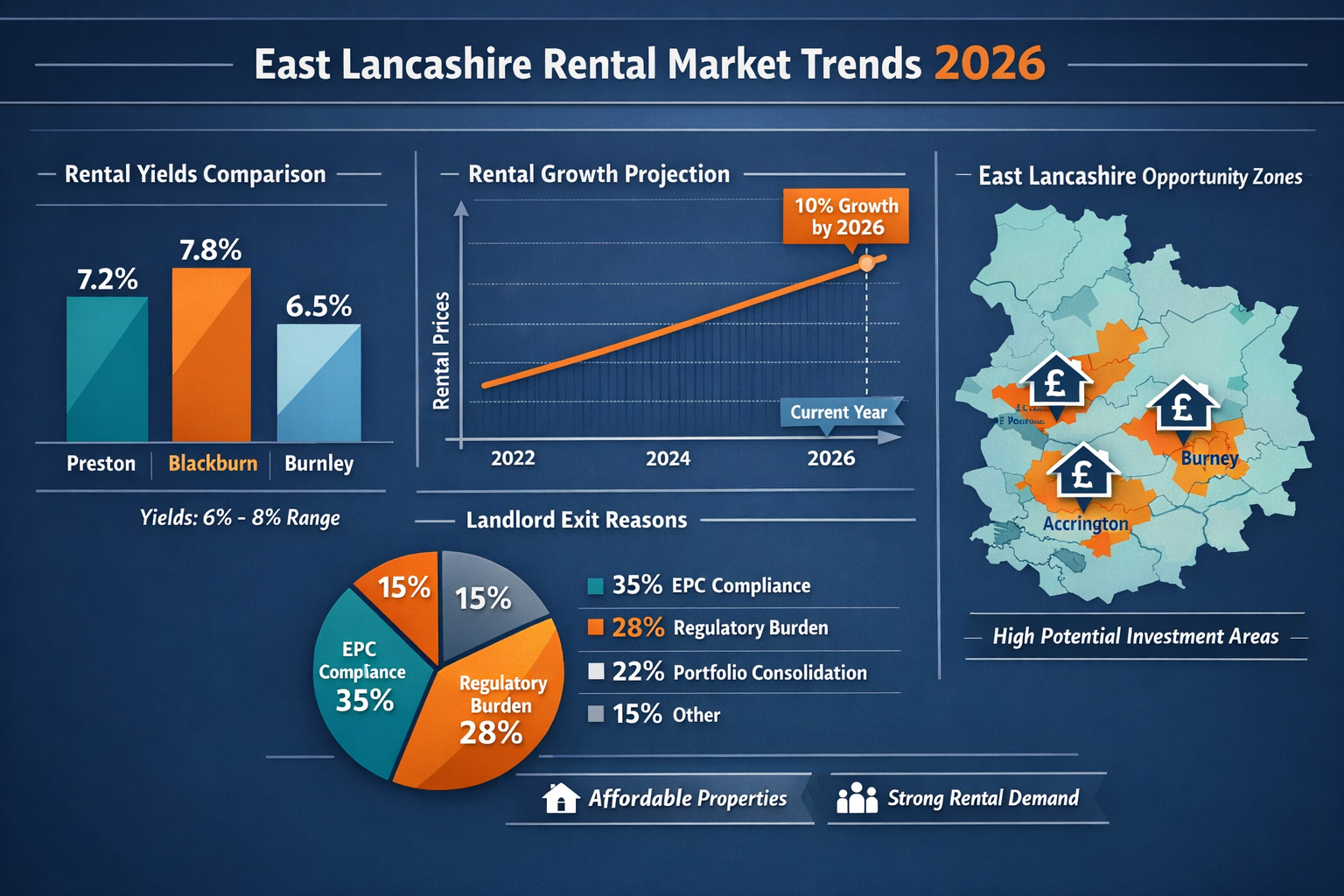
The North West recorded impressive rental yields of approximately 7.2% in 2025, with Preston alone seeing rental growth exceeding 10% year-on-year.[1] However, these strong returns have masked underlying property condition issues, as landlords facing the May 2026 Renters' Rights Act and upcoming EPC requirements choose to sell rather than invest in costly upgrades. For buyers, this creates a double-edged sword: accessible pricing coupled with properties that may have years of accumulated wear, inadequate maintenance, and compliance shortfalls.
Key Takeaways
- Ex-rental properties in East Lancashire are entering the market at competitive prices as landlords exit ahead of May 2026 regulatory changes, creating affordability opportunities alongside elevated defect risks.
- Comprehensive building surveys are critical for identifying deferred maintenance, tenant-related damage, and compliance gaps that standard valuations miss—particularly damp issues, electrical safety, and EPC shortfalls.
- Preston's 10%+ rental growth and strong tenant demand have incentivized landlords to maximize rental income while deferring non-essential repairs, increasing the likelihood of hidden structural and systems defects.[1]
- 55% of landlords anticipate needing EPC improvements costing over £5,000 to meet 2028/2030 requirements, meaning many ex-rental properties require immediate energy efficiency upgrades.[2]
- Strategic survey investment (£500-£1,200) provides negotiating leverage, prevents costly surprises, and ensures informed purchase decisions in a market where part-exchange deals and quick sales dominate.
Understanding the 2026 East Lancashire Ex-Rental Property Market
Why Landlords Are Exiting in Record Numbers
The East Lancashire rental market faces unprecedented regulatory pressure in 2026. The introduction of the Renters' Rights Act from May 1, 2026, coupled with council enforcement powers active since December 2025, has fundamentally altered the landlord calculation.[2] Local authorities can now inspect properties and access documentation with enhanced powers, creating compliance risks that many smaller landlords find untenable.
Energy Performance Certificate (EPC) requirements represent the most significant financial burden. Landlords must achieve a minimum EPC rating of C by 2028 for new tenancies and 2030 for existing tenancies.[2] With 55% of landlords expecting to need improvements and 29% anticipating costs exceeding £5,000, many are choosing to sell rather than invest.[2]
The North West's strong rental performance—average asking rents of £1,224 per calendar month and annual growth of 3.6%—has created attractive exit valuations.[1] Landlords can capitalize on property value appreciation while avoiding the substantial capital expenditure required for compliance upgrades.
East Lancashire's Unique Market Characteristics
East Lancashire encompasses diverse rental markets with distinct characteristics:
- Preston: University-driven demand with 10%+ rental growth, high property turnover, and mixed-quality housing stock[1]
- Blackburn: Affordable terraced housing with strong yields but older building stock requiring modernization
- Burnley: Value-focused market with Victorian terraces, often with deferred maintenance
- Lancaster: Dual academic and professional demand providing market stability[1]
The prevalence of Victorian and Edwardian terraced properties throughout East Lancashire creates specific survey considerations. These properties typically feature solid wall construction (challenging for EPC compliance), shared party walls, aging drainage systems, and susceptibility to damp penetration—all issues exacerbated by years of rental use.
The Affordability Opportunity and Hidden Costs
Ex-rental properties entering the market offer genuine affordability advantages. Sellers motivated by regulatory deadlines and compliance costs often price competitively, particularly for properties requiring EPC upgrades or cosmetic refurbishment. Part-exchange schemes and quick-sale incentives further enhance accessibility for first-time buyers.
However, the true cost extends beyond purchase price. Properties that have housed multiple tenants over years may require:
- Electrical system upgrades to current safety standards
- Boiler replacement (average rental boiler lifespan: 10-12 years)
- Damp remediation from inadequate ventilation or maintenance neglect
- Structural repairs deferred by landlords prioritizing cash flow
- EPC improvements costing £3,000-£8,000+ for solid-wall insulation
Understanding these potential costs through comprehensive building surveys transforms an apparent bargain into an informed investment decision.
Critical Defects in Ex-Rental Properties: What Building Surveys Reveal
Common Rental Wear Versus Serious Structural Issues
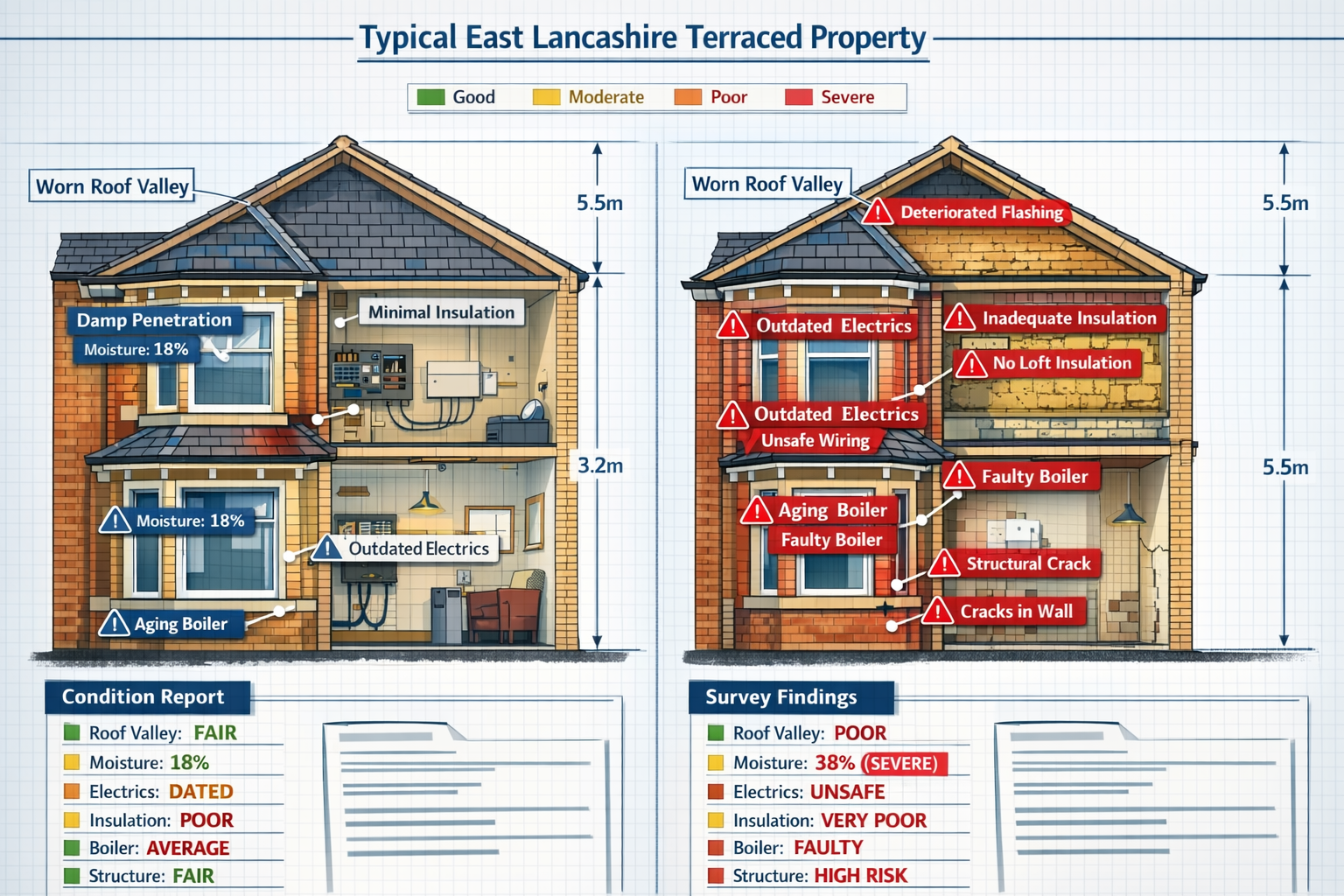
Distinguishing cosmetic rental wear from genuine structural defects represents a critical skill when evaluating ex-rental properties. Surface-level damage—scuffed walls, worn carpets, damaged kitchen units—is expected and easily remedied. However, these visible issues can mask more serious problems that only professional building inspection reveals.
High-priority structural concerns in East Lancashire ex-rental properties include:
| Defect Category | Common Manifestations | Survey Detection Method | Typical Repair Cost |
|---|---|---|---|
| Damp & Moisture | Rising damp, penetrating damp, condensation mold | Moisture meters, thermal imaging | £1,500-£5,000+ |
| Roof Defects | Valley leaks, missing tiles, failed flashing | Visual inspection, loft survey | £2,000-£8,000 |
| Electrical Safety | Outdated wiring, inadequate earthing, overloaded circuits | Electrical condition report | £2,500-£6,000 |
| Structural Movement | Subsidence cracks, lintel failure, wall bulging | Crack monitoring, structural analysis | £5,000-£25,000+ |
| Drainage Issues | Blocked drains, root damage, collapsed pipes | CCTV drainage survey | £1,000-£4,000 |
Damp: The Most Prevalent Ex-Rental Defect
Damp issues dominate ex-rental property surveys in East Lancashire. The region's climate, combined with solid-wall Victorian construction and inadequate tenant ventilation, creates ideal conditions for moisture problems. Landlords often address visible mold cosmetically (painting over) without resolving underlying causes.
A professional damp survey identifies:
- Rising damp: Failed or absent damp-proof courses in older terraces
- Penetrating damp: Roof leaks, defective pointing, or failed render
- Condensation: Inadequate ventilation, single-glazed windows, insufficient heating
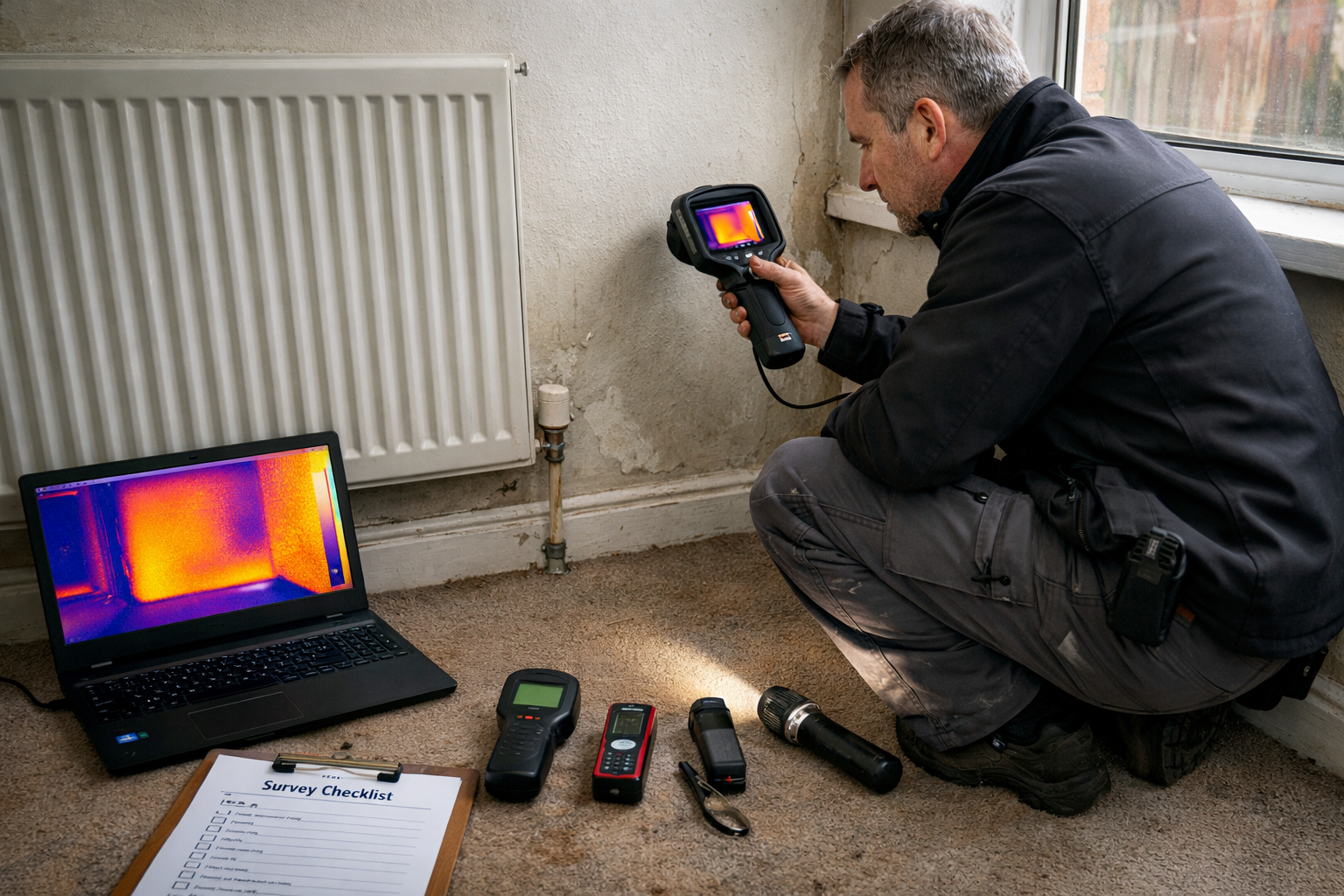
Thermal imaging technology reveals moisture patterns invisible to visual inspection, preventing buyers from inheriting expensive remediation projects. The cost of damp surveys represents a fraction of potential repair expenses, making them essential for ex-rental purchases.
Electrical and Heating System Failures
Rental properties experience intensive use of electrical and heating systems. Outdated wiring installed before current safety standards poses fire risks, while aging boilers approach end-of-life without replacement due to landlord exit timing.
Key electrical concerns include:
- ⚡ Consumer unit age: Pre-2008 units lack RCD protection
- ⚡ Aluminum wiring: Common in 1960s-1970s installations, requires replacement
- ⚡ Overloaded circuits: Insufficient sockets leading to dangerous extensions
- ⚡ Inadequate earthing: Particularly in older properties without modern upgrades
Heating system assessment should verify:
- Boiler age and service history (rental boilers often lack documentation)
- Radiator condition and system balance
- Controls and thermostat functionality
- Gas safety certificate validity
A Level 3 Building Survey includes recommendations for specialist electrical and heating inspections when deficiencies are identified, ensuring buyers understand full upgrade requirements.
Deferred Maintenance and Compliance Gaps
Landlords facing exit decisions often defer non-essential maintenance to preserve cash flow. This creates a backlog of repairs that buyers inherit. Building surveys for ex-rental properties in East Lancs: spotting risks in 2026 market accessibility boom must specifically assess:
Exterior maintenance deficits:
- Roof valley repairs postponed despite minor leaks
- Repointing work delayed on mortar deterioration
- Gutter and downpipe blockages causing water damage
- Window frame rot in original timber installations
Interior compliance shortfalls:
- Smoke and carbon monoxide detector inadequacy
- Fire door requirements in HMO conversions
- Kitchen and bathroom ventilation deficiencies
- Stair balustrade safety gaps
Energy efficiency gaps:
- Single-glazed windows requiring replacement
- Uninsulated solid walls (major EPC impediment)
- Inefficient heating controls
- Absent loft insulation or inadequate depth
Understanding these deferred items allows accurate budgeting and negotiation. Many sellers will adjust pricing when specific defects are professionally documented, making survey investment highly cost-effective.
Strategic Survey Selection for Ex-Rental Properties in East Lancashire
Choosing Between Survey Levels for Maximum Protection
The survey type selected dramatically impacts defect detection in ex-rental properties. While cost considerations tempt buyers toward basic valuations, the unique risks of former rental stock justify comprehensive assessment.
Survey level comparison for ex-rental properties:
Level 2 HomeBuyer Report:
- ✅ Suitable for: Modern properties (post-1990) in good condition
- ✅ Covers: Visible defects, urgent repairs, significant issues
- ❌ Limitations: No invasive investigation, limited roof access, no detailed costings
- 💷 Cost: £400-£700
Level 3 Building Survey:
- ✅ Suitable for: Older properties, ex-rentals, properties requiring renovation
- ✅ Covers: Comprehensive structural assessment, detailed defect analysis, maintenance advice
- ✅ Includes: Roof space inspection, floor level checks, damp investigation
- 💷 Cost: £600-£1,200
For ex-rental properties in East Lancashire, particularly Victorian and Edwardian terraces with rental history, a Level 3 Building Survey provides optimal protection. The comprehensive nature identifies hidden defects that surface-level inspections miss, while detailed costings enable accurate renovation budgeting.
Buyers should review common myths about property surveys to understand what surveys do and don't cover, avoiding false assumptions that lead to inadequate assessment.
Specialist Surveys and Additional Investigations
Comprehensive building surveys often recommend specialist follow-up investigations when specific concerns arise. Ex-rental properties frequently require:
Damp and timber surveys: Essential when moisture readings or visual evidence suggest problems. Specialist damp survey reports provide detailed analysis of moisture sources, extent of damage, and remediation specifications.
Electrical condition reports: Mandatory for properties with wiring older than 25 years or showing signs of electrical deficiency. These reports identify immediate safety hazards and provide upgrade specifications.
Drainage surveys: CCTV drainage investigations reveal blockages, root ingress, and structural damage in underground drainage—common issues in older terraced properties with shared drainage systems.
Structural engineer assessments: Required when significant cracking, movement, or subsidence is suspected. Engineers provide calculations, monitoring recommendations, and repair specifications for serious structural defects.
EPC assessments: While not technically a survey, obtaining an updated EPC assessment helps buyers understand energy efficiency upgrade requirements and costs before purchase completion.
Interpreting Survey Reports: Red Flags for Ex-Rental Properties
Professional survey reports use standardized condition ratings, but interpreting these within the ex-rental context requires specific awareness. Building surveys for ex-rental properties in East Lancs: spotting risks in 2026 market accessibility boom should trigger heightened concern when reports indicate:
Condition Rating 3 (Urgent repairs):
- Structural movement requiring immediate investigation
- Active roof leaks causing interior damage
- Electrical safety hazards requiring urgent remediation
- Severe damp with health implications
Condition Rating 2 (Repairs needed):
- Roof covering approaching end of life
- Damp-proof course failure requiring treatment
- Heating system replacement within 2-3 years
- Window replacement for energy efficiency
Multiple Category 2 issues in ex-rental properties often indicate systematic deferred maintenance. The cumulative cost of addressing these can exceed £20,000, fundamentally altering purchase viability.
Survey reports should also assess EPC improvement pathways. With 2028/2030 compliance deadlines approaching, understanding the cost to achieve EPC rating C is essential. Solid-wall insulation alone costs £8,000-£15,000 for typical terraced properties—a significant post-purchase expense.
Buyers should request clarification on any ambiguous findings and obtain quotations for recommended repairs before proceeding. The expert building evaluation provided by chartered surveyors offers negotiating leverage and protects against unforeseen costs.
Negotiating Power: Using Survey Findings to Secure Better Deals
Quantifying Defects for Price Renegotiation
Professional survey findings provide concrete evidence for price negotiation. When building surveys for ex-rental properties in East Lancs: spotting risks in 2026 market accessibility boom reveal significant defects, buyers gain substantial leverage with sellers motivated by regulatory deadlines.
Effective negotiation strategies:
- Obtain repair quotations: Secure written estimates from qualified contractors for major defects identified in the survey report
- Categorize by urgency: Separate immediate safety issues from longer-term maintenance needs
- Calculate EPC upgrade costs: Research solid-wall insulation, heating upgrades, and glazing replacement costs
- Present comprehensive evidence: Provide sellers with survey excerpts and contractor quotations supporting renegotiation
Typical negotiation outcomes:
- Price reduction: 5-15% for properties with multiple significant defects
- Retention funds: Agreed sum held by solicitors pending repair completion
- Seller remediation: Seller completes urgent repairs before completion
- Walk-away leverage: Survey findings justify withdrawal without penalty
Sellers facing the May 2026 regulatory deadline often prefer price adjustment to property remediation, particularly when defects require specialist contractors or extended timescales. The investment in a comprehensive survey typically returns 10-20 times its cost through negotiated savings.
Understanding Seller Motivations in 2026
The regulatory landscape creates distinct seller motivations that inform negotiation approaches. Landlord exit drivers include:
- EPC compliance avoidance: Sellers unwilling to invest £5,000+ in energy efficiency improvements[2]
- Regulatory burden reduction: Avoiding enhanced enforcement and inspection regimes
- Portfolio consolidation: Professional landlords retaining only compliant properties
- Retirement timing: Older landlords exiting before further regulation
Understanding these motivations helps buyers frame negotiations effectively. Sellers avoiding EPC compliance costs may readily accept price reductions equivalent to upgrade expenses, while those facing enforcement concerns prioritize quick, uncomplicated sales.
Part-exchange and quick-sale scenarios provide additional leverage. Developers and house builders offering part-exchange deals on ex-rental properties often have flexibility on pricing, particularly when survey findings reveal complications that might delay or prevent standard mortgage lending.
When to Walk Away: Survey Red Lines
Despite affordability attractions, some ex-rental properties present risks that no price reduction justifies. Survey findings that should trigger serious reconsideration:
🚫 Active structural movement: Progressive subsidence, heave, or settlement requiring underpinning (£15,000-£50,000+)
🚫 Severe damp with structural timber decay: Extensive rot requiring joist replacement and structural reinforcement
🚫 Major roof failure: Complete re-roofing needed across entire property (£8,000-£15,000 for terraced properties)
🚫 Electrical rewiring plus multiple major defects: Combined costs exceeding 20% of purchase price
🚫 Japanese knotweed presence: Creates mortgage difficulties and requires professional eradication programs (learn more about Japanese knotweed implications)
🚫 Unmortgageable condition: Properties failing to meet minimum lending standards regardless of price
The East Lancashire market's affordability should not override fundamental property viability. When survey findings indicate costs approaching or exceeding the purchase price discount, walking away preserves capital for better opportunities.
Maximizing Long-Term Value in Ex-Rental Property Purchases
Creating a Phased Remediation Plan
Successful ex-rental property purchases require strategic planning for identified defects. Rather than attempting simultaneous remediation of all issues, a phased approach manages costs and prioritizes critical items.
Phase 1 – Immediate Safety and Compliance (Months 0-3):
- Electrical safety hazards requiring urgent attention
- Gas safety issues identified in boiler or appliance inspection
- Structural concerns requiring temporary support or monitoring
- Severe damp causing health risks
Phase 2 – Weather Protection and Building Envelope (Months 3-12):
- Roof repairs preventing water ingress
- External repointing and render repairs
- Gutter and drainage improvements
- Window replacement for failed units
Phase 3 – Energy Efficiency and EPC Compliance (Months 12-24):
- Solid-wall insulation installation
- Heating system upgrades
- Remaining window replacements
- Loft insulation enhancement
Phase 4 – Cosmetic and Value-Adding Improvements (Months 24+):
- Kitchen and bathroom modernization
- Interior decoration and finishes
- Landscaping and external appearance
- Extensions or conversions (if applicable)
This phased approach prevents financial overextension while ensuring critical issues receive immediate attention. Many buyers secure additional renovation finance or use savings strategically across phases.
Leveraging Government Grants and Support Schemes
The 2026 regulatory environment includes support mechanisms for property energy efficiency improvements. Available schemes for ex-rental property buyers:
ECO4 (Energy Company Obligation): Provides funding for insulation and heating upgrades in properties with EPC ratings D-G. Eligibility depends on household income and property characteristics, with grants covering up to 100% of costs for qualifying households.
Local Authority Grants: Many East Lancashire councils offer additional support for energy efficiency improvements, particularly for first-time buyers and properties in regeneration areas. Preston, Blackburn, and Burnley councils have specific programs worth investigating.
Green Mortgages: Lenders increasingly offer preferential rates for properties achieving higher EPC ratings or buyers committing to energy efficiency improvements within specified timescales.
VAT Reductions: Certain renovation works qualify for reduced VAT rates (5%) rather than standard 20%, particularly for properties empty for extended periods.
Buyers should research available support before purchase completion, as some schemes require application before work commences. The cumulative value of grants and support can reduce EPC upgrade costs by 30-50%, significantly improving purchase viability.
Building a Trusted Professional Network
Successful ex-rental property renovation requires reliable contractors and specialists. Essential professional relationships include:
👷 Chartered Building Surveyor: For ongoing advice, progress monitoring, and defect assessment
🔧 NICEIC Registered Electrician: For electrical safety testing and rewiring work
🔥 Gas Safe Registered Engineer: For boiler servicing, replacement, and heating system upgrades
💧 Damp Specialist: For diagnosis and remediation of moisture issues
🏗️ Structural Engineer: For structural calculations, movement monitoring, and repair specifications
🎨 General Builder: For coordinating multiple trades and project management
Establishing these relationships early enables accurate quotations, phased work planning, and quality assurance. Many professional surveyor services provide contractor recommendations based on local knowledge and previous project experience.
Building Surveys for Ex-Rental Properties in East Lancs: Spotting Risks in 2026 Market Accessibility Boom – Final Considerations
The intersection of regulatory pressure, landlord exits, and affordability gains creates a unique market opportunity in East Lancashire throughout 2026. However, this opportunity demands informed navigation. Ex-rental properties carry inherent risks from intensive use, deferred maintenance, and compliance gaps that only comprehensive professional assessment reveals.
The investment in a thorough building survey—typically £600-£1,200 for Level 3 assessment—provides multiple returns:
- Risk mitigation: Identifying defects before legal commitment
- Negotiating leverage: Evidence-based price renegotiation
- Budget accuracy: Understanding true ownership costs
- Purchase confidence: Informed decision-making eliminating surprises
With Preston's rental growth exceeding 10%[1] and the North West maintaining strong yields of 7.2%[1], the underlying property fundamentals remain sound. The challenge lies in distinguishing well-maintained rental stock from properties requiring substantial investment.
Conclusion
The 2026 East Lancashire property market presents genuine accessibility opportunities as regulatory pressures drive landlord exits and former rental properties enter the sales market at competitive prices. However, building surveys for ex-rental properties in East Lancs: spotting risks in 2026 market accessibility boom has evolved from optional due diligence to essential protection.
The convergence of the May 2026 Renters' Rights Act, enhanced council enforcement powers, and approaching EPC compliance deadlines creates a seller market characterized by motivated vendors and properties with hidden defects. Preston's exceptional 10%+ rental growth[1] and the region's strong 7.2% yields[1] have incentivized landlords to maximize income while deferring maintenance—a combination that produces affordable purchase prices alongside elevated defect risks.
Key success factors for ex-rental property purchases:
✅ Invest in comprehensive Level 3 Building Surveys for Victorian and Edwardian properties with rental history
✅ Commission specialist investigations for damp, electrical, and drainage concerns identified in initial surveys
✅ Obtain detailed repair quotations before completing purchases, enabling accurate budget planning
✅ Negotiate assertively using survey evidence, particularly with sellers avoiding EPC compliance costs
✅ Plan phased remediation prioritizing safety, weather protection, and energy efficiency sequentially
✅ Research available grants and support schemes for energy efficiency improvements before commencing work
✅ Establish professional networks of chartered surveyors, contractors, and specialists for renovation support
The 55% of landlords anticipating EPC improvement needs[2] and 29% facing costs exceeding £5,000[2] demonstrate the scale of compliance challenges driving property sales. For informed buyers armed with comprehensive survey intelligence, these challenges translate to negotiating opportunities and long-term value creation.
The East Lancashire market's affordability, combined with strong rental fundamentals and regeneration initiatives across Preston, Blackburn, and Burnley, provides solid foundations for property investment. However, success depends entirely on understanding property condition through professional assessment, avoiding properties with prohibitive defect combinations, and planning realistic remediation timescales and budgets.
Take action today:
- Engage a chartered surveyor experienced in East Lancashire ex-rental properties before making offers
- Review survey options and select appropriate assessment levels based on property age and condition
- Budget realistically for survey costs (£600-£1,200) plus potential specialist investigations
- Prepare negotiation strategies based on anticipated defect findings and repair cost evidence
- Research local contractors for quotations on common ex-rental defects before purchase completion
The 2026 market accessibility boom in East Lancashire rewards informed, strategic buyers who combine affordability opportunities with rigorous professional assessment. By prioritizing comprehensive building surveys and understanding the specific risks inherent in former rental stock, buyers can navigate this unique market confidently, securing properties that deliver long-term value despite short-term remediation requirements.
For those willing to invest in proper due diligence and approach ex-rental properties with realistic expectations, the East Lancashire market offers genuine opportunities to establish property ownership at accessible price points—provided survey findings inform rather than surprise, and professional guidance shapes every purchase decision.
References
[1] Uk Rental Market Outlook 2026 National Trends North West Growth Analysis – https://www.farrellheyworth.co.uk/blog/uk-rental-market-outlook-2026-national-trends-north-west-growth-analysis/
[2] 2026 Predictions For Landlords – https://www.simplybusiness.co.uk/knowledge/rental/2026-predictions-for-landlords/