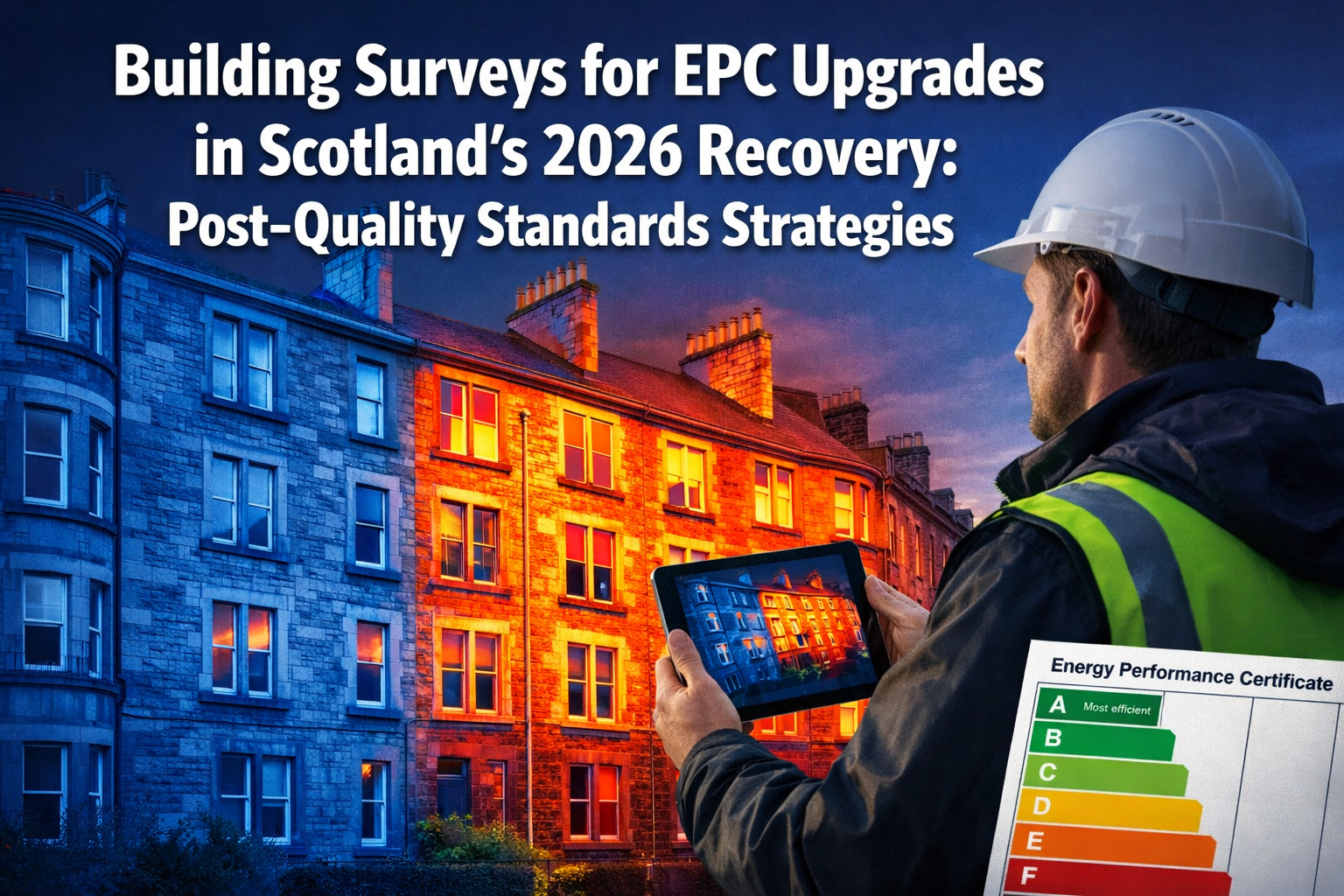
Scotland's property market is experiencing unprecedented momentum in 2026, driven by sweeping Energy Performance Certificate (EPC) reforms that fundamentally reshape how buildings are assessed, valued, and improved. As the nation transitions to a new rating methodology launching October 31, 2026, building surveyors face the critical challenge of integrating EPC compliance protocols into their assessment frameworks while maintaining adherence to RICS Quality Standards. The convergence of Scotland's economic recovery, stringent energy efficiency mandates, and evolving professional standards creates a unique environment where Building Surveys for EPC Upgrades in Scotland's 2026 Recovery: Post-Quality Standards Strategies becomes essential knowledge for property professionals, landlords, and prospective buyers navigating this transformative landscape.
The shift from traditional single-rating EPCs to a comprehensive three-metric system represents more than administrative change—it signals a fundamental recalibration of property value drivers in the Scottish market. Building surveyors must now deliver reports that not only identify structural defects but also provide actionable guidance on achieving compliance with increasingly demanding energy standards, particularly the 2028 deadline requiring private rented properties to achieve EPC Band C ratings[4].
Key Takeaways
🔑 New EPC System Launch: Scotland implements a revolutionary three-metric rating system on October 31, 2026, replacing single headline ratings with Heat Retention, Heating System, and Energy Cost assessments[1]
🏗️ Surveyor Integration Imperative: Building surveys must now incorporate comprehensive EPC upgrade assessments, retrofit feasibility analysis, and compliance pathway recommendations as standard practice
📊 Methodology Transformation: The transition from SAP/RdSAP to the UK Home Energy Model (HEM) requires surveyors to update technical knowledge and assessment protocols[1]
⏰ Critical 2028 Deadline: Private landlords face mandatory EPC Band C compliance by 2028, making survey-informed upgrade strategies essential for investment decisions[4]
💼 Enhanced Professional Standards: Post-RICS Quality Standards implementation demands rigorous documentation, client guidance, and evidence-based retrofit recommendations within survey reports
Understanding Scotland's 2026 EPC Reform Framework
The New Three-Metric Rating System
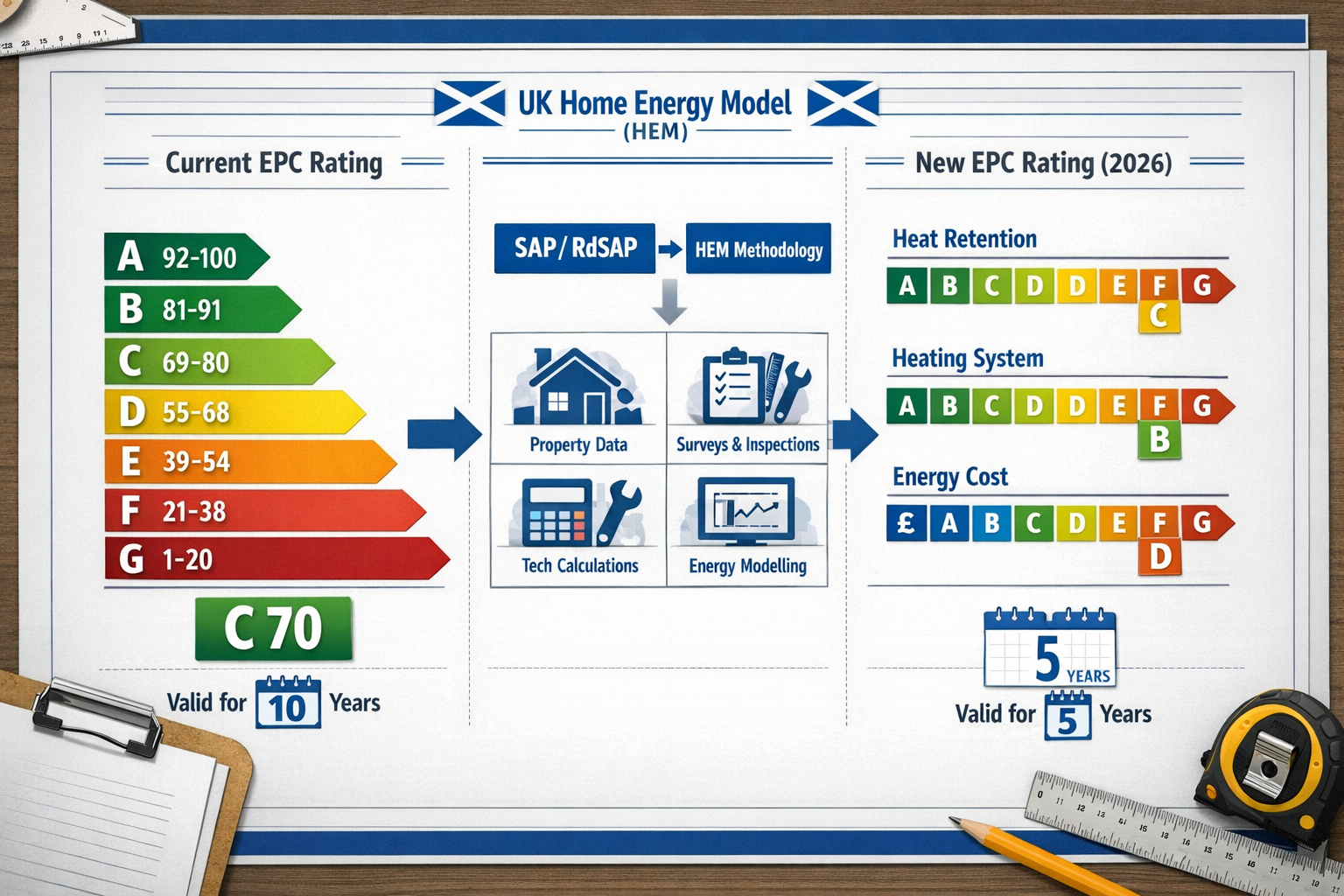
The Scottish Government's decision to implement comprehensive EPC reforms by October 31, 2026, marks the most significant change to energy performance assessment since the system's inception[1]. Unlike the previous single A-G rating that provided limited actionable insight, the new framework introduces three distinct metrics for domestic properties:
- Heat Retention Rating – Measures how effectively a property maintains warmth through insulation, glazing, and building fabric performance
- Heating System Rating – Evaluates the efficiency and environmental impact of heating equipment and controls
- Energy Cost Rating – Provides transparent estimates of annual energy expenditure for occupants
For commercial properties, the system introduces parallel metrics including Energy Performance Rating, Energy Use Rating, and Direct Emissions Rating[2]. This granular approach enables property owners, surveyors, and investors to identify specific improvement opportunities rather than pursuing generic upgrades.
Validity Period Reduction: Perhaps the most impactful change for building surveyors is the reduction of EPC validity from 10 years to just 5 years[1][2]. This accelerated renewal cycle creates sustained demand for building condition assessments integrated with energy performance evaluations, fundamentally altering the frequency and scope of professional survey work.
Transition from SAP to UK Home Energy Model (HEM)
The methodological shift from Standard Assessment Procedure (SAP) and Reduced Data SAP (RdSAP) to the UK Home Energy Model (HEM) represents a technical evolution that building surveyors cannot ignore[1]. HEM incorporates:
- More accurate modeling of real-world energy consumption patterns
- Enhanced consideration of occupant behavior and usage profiles
- Improved assessment of renewable energy system contributions
- Better integration of emerging heating technologies including heat pumps
Building surveyors conducting property condition assessments must familiarize themselves with HEM's data requirements and output interpretations to provide clients with accurate upgrade cost projections and compliance timelines.
The Transition Period: October 2026 to October 2027
Scotland has implemented a pragmatic 12-month transition period during which both old and new EPC formats may be used in limited circumstances[2]. This overlap creates complexity for building surveyors who must:
- Clarify which EPC format applies to specific transactions
- Explain rating differences between old and new systems to clients
- Advise on whether to obtain new-format EPCs before the transition deadline
- Assess properties using frameworks compatible with both rating methodologies
Property professionals should note that while existing valid EPCs remain legally acceptable during this period, the market increasingly values properties with new-format certificates that demonstrate compliance with 2026 standards[3].
Building Surveys for EPC Upgrades in Scotland's 2026 Recovery: Integration Protocols
Incorporating Energy Performance into Survey Scope
Traditional building surveys focused primarily on structural integrity, defect identification, and maintenance requirements. In 2026's regulatory environment, surveyors must expand their scope to include comprehensive energy performance assessments that inform upgrade strategies. This integration involves:
Pre-Survey Preparation:
- Obtaining existing EPC certificates and historical energy data
- Reviewing property age, construction type, and previous modifications
- Identifying applicable energy efficiency grant programs and incentives
- Researching local authority planning constraints affecting retrofit options
On-Site Assessment Enhancements:
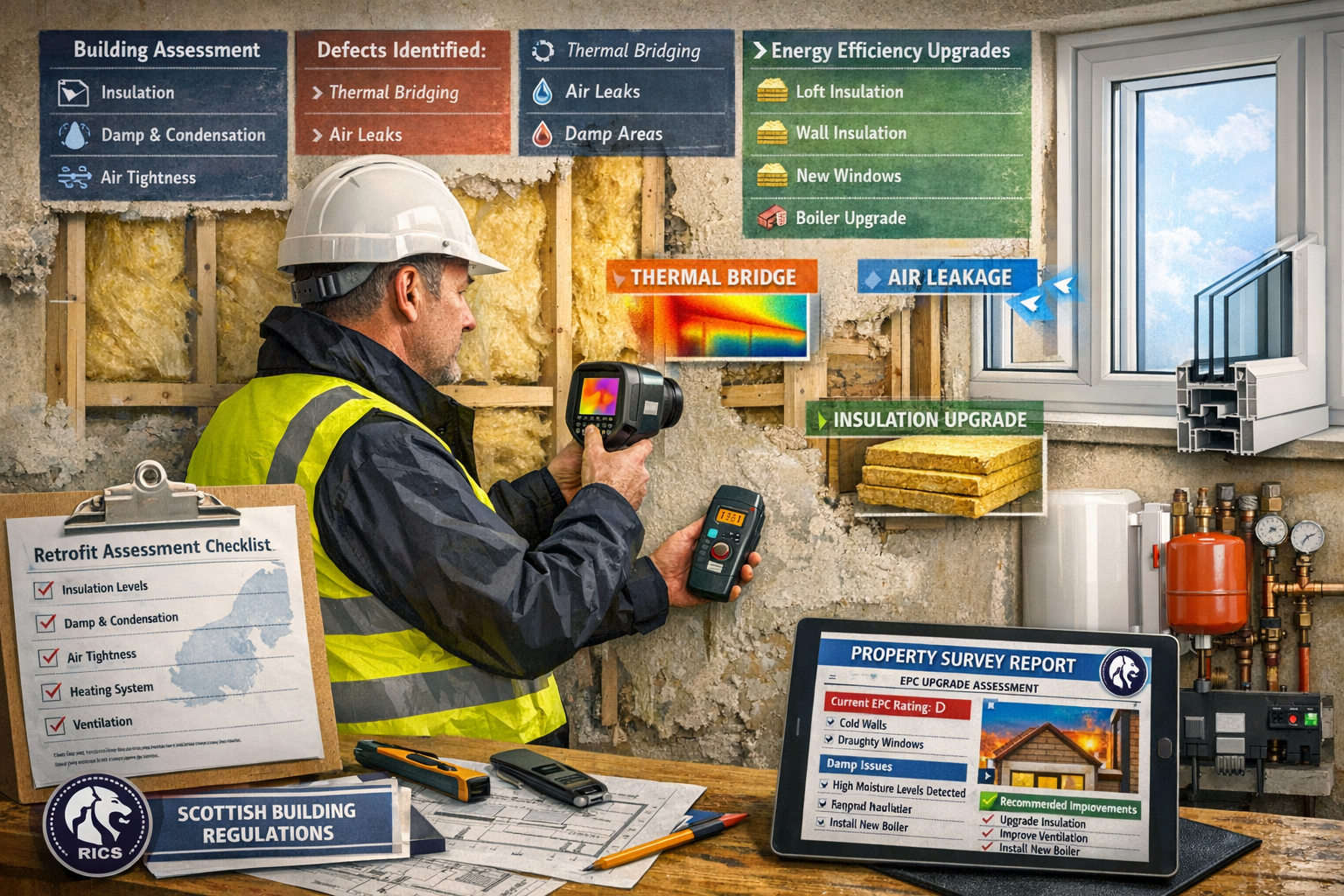
- Thermal imaging surveys to identify heat loss pathways
- Insulation depth measurements in accessible areas (lofts, cavities)
- Heating system age, efficiency rating, and control functionality evaluation
- Window and door performance assessment including U-values and air tightness
- Renewable energy installation feasibility (solar PV, heat pump suitability)
Reporting Requirements:
- Clear identification of EPC rating under both old and new systems
- Prioritized upgrade recommendations with cost-benefit analysis
- Compliance pathway to achieve Band C by 2028 deadline for rental properties
- Integration of energy improvements with structural repair recommendations
Building surveyors should leverage stock condition survey methodologies when assessing portfolios, enabling landlords to develop coordinated upgrade strategies across multiple properties.
Retrofit Assessment Protocols
The retrofit assessment component of modern building surveys requires systematic evaluation of improvement opportunities. Surveyors should structure this analysis using a tiered approach:
Tier 1: Quick Wins (Low Cost, High Impact)
| Upgrade Type | Typical Cost | EPC Impact | Implementation Complexity |
|---|---|---|---|
| Loft insulation to 270mm | £300-£500 | +2-5 points | Low |
| Cavity wall insulation | £500-£1,500 | +5-10 points | Medium |
| LED lighting throughout | £100-£300 | +1-2 points | Very Low |
| Heating controls upgrade | £200-£400 | +2-4 points | Low |
| Draught proofing | £100-£250 | +1-3 points | Low |
Tier 2: Medium-Term Improvements
- Double/triple glazing replacement (£4,000-£8,000)
- Condensing boiler replacement (£2,500-£4,000)
- External/internal wall insulation (£8,000-£15,000)
- Solar PV installation (£5,000-£8,000)
Tier 3: Major Retrofit Projects
- Heat pump installation (£10,000-£18,000)
- Whole-house ventilation systems (£3,000-£6,000)
- Comprehensive building fabric upgrades
- Listed building-appropriate solutions
When conducting specific defect surveys, surveyors should explicitly address how identified defects (damp, structural movement, roof deterioration) might impact or be impacted by energy efficiency improvements.
Post-RICS Quality Standards Compliance
The implementation of enhanced RICS Quality Standards for building surveys in recent years establishes rigorous expectations for professional practice. When addressing Building Surveys for EPC Upgrades in Scotland's 2026 Recovery: Post-Quality Standards Strategies, surveyors must ensure:
Documentation Standards:
- Photographic evidence of energy-relevant building elements
- Thermal imaging data with annotated interpretations
- Clear differentiation between observed facts and professional opinions
- Explicit statements of survey limitations regarding energy assessments
Client Communication:
- Plain-language explanations of complex energy regulations
- Realistic cost projections with appropriate contingency allowances
- Clear timelines for achieving compliance milestones
- Transparent disclosure of surveyor qualifications in energy assessment
Professional Competence:
- Continuing professional development in energy efficiency technologies
- Understanding of Scottish building regulations and energy standards
- Familiarity with grant programs including Home Energy Scotland schemes
- Knowledge of planning constraints affecting retrofit in conservation areas
Building surveyors should reference expert building evaluation best practices when establishing quality control processes for EPC-integrated survey reports.
Strategic Guidance for Property Stakeholders
For Prospective Buyers: Evaluating Energy-Efficient Properties
Scotland's property market in 2026 increasingly rewards energy-efficient homes with price premiums and faster sales. Prospective buyers should commission building surveys that specifically address:
Pre-Purchase EPC Analysis:
- Current rating under both old and new systems
- Estimated costs to achieve Band C or higher
- Identification of "easy wins" versus major retrofit requirements
- Assessment of whether seller's EPC reflects recent improvements
Long-Term Cost Projections:
Modern building surveys should provide buyers with 10-year total cost of ownership projections incorporating:
- Annual energy expenditure based on new Energy Cost Rating
- Anticipated improvement costs to maintain/enhance EPC rating
- Potential grant funding and tax incentives
- Projected property value impact of energy upgrades
Hidden Opportunity Identification:
Savvy buyers can leverage comprehensive building surveys to identify properties where:
- Current low EPC ratings result from easily remedied issues
- Structural characteristics support cost-effective heat pump installation
- Solar PV potential remains unexploited despite suitable roof orientation
- Previous owners neglected simple insulation improvements
Buyers should ensure their surveyor provides negotiation strategies based on identified EPC upgrade requirements, potentially reducing purchase price to offset improvement costs.
For Landlords: Navigating the 2028 Band C Deadline
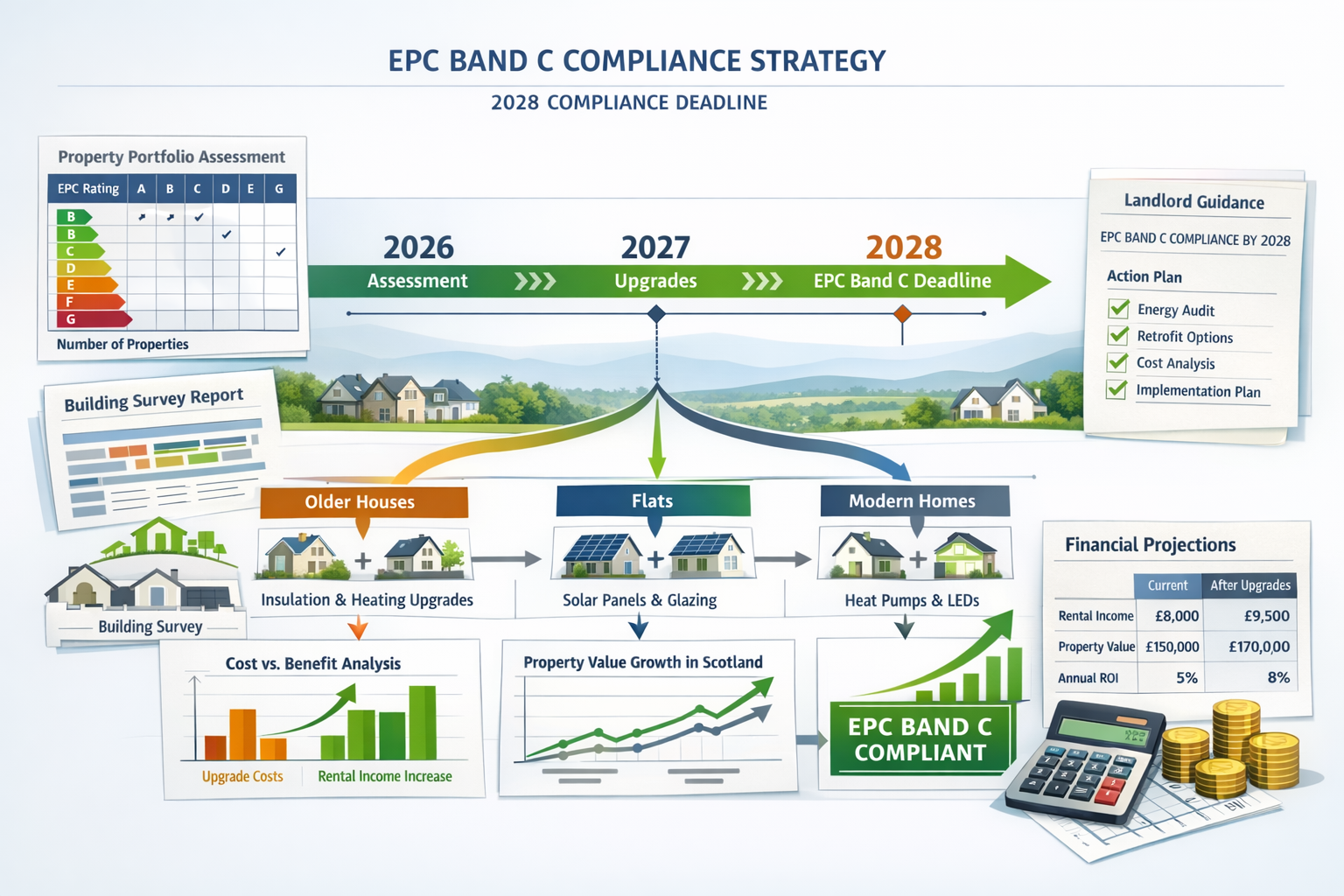
The 2028 deadline requiring private rented properties to achieve EPC Band C ratings creates urgent planning imperatives for Scottish landlords[4]. Building surveys commissioned in 2026-2027 should explicitly address compliance pathways:
Portfolio Prioritization Strategy:
- Immediate Action Properties – Currently Band E, F, or G requiring extensive upgrades
- Near-Compliance Properties – Band D properties needing targeted improvements
- Compliant Properties – Band C or higher requiring maintenance only
Financial Planning Framework:
- Upgrade cost estimates for each property
- Rental income impact during improvement works
- Available grant funding and tax relief opportunities
- Return on investment calculations for energy improvements
Tenant Communication Considerations:
- Timing improvements to minimize tenant disruption
- Rent adjustment negotiations following upgrades
- Marketing advantages of improved energy ratings
- Legal obligations regarding EPC disclosure
Landlords managing multiple properties should commission comprehensive stock condition surveys that enable coordinated retrofit programs, potentially achieving economies of scale through bulk contractor arrangements.
For Building Professionals: Expanding Service Offerings
The 2026 EPC reforms create significant opportunities for building surveyors to expand their service portfolios beyond traditional structural assessments:
Specialized EPC Upgrade Consultancy:
- Pre-improvement surveys establishing baseline conditions
- Retrofit specification and contractor tender evaluation
- Post-improvement verification surveys
- EPC rating optimization strategies
Energy Efficiency Audit Services:
- Thermal imaging surveys identifying heat loss pathways
- Air tightness testing and ventilation assessments
- Renewable energy feasibility studies
- Building fabric performance evaluations
Compliance Planning Services:
- Multi-year improvement roadmaps for landlord portfolios
- Grant funding application support
- Planning permission guidance for external insulation
- Listed building retrofit solution development
Building surveyors should develop partnerships with energy assessors, retrofit coordinators, and specialist contractors to provide clients with comprehensive, turnkey solutions for achieving EPC compliance.
Technical Considerations for Scottish Building Types
Traditional Stone Tenements
Scotland's iconic stone tenement buildings present unique challenges for EPC upgrades due to:
Solid Wall Construction:
- No cavity for traditional insulation installation
- External insulation potentially affecting building character
- Internal insulation reducing room dimensions
- Moisture management complications with retrofit insulation
Shared Building Elements:
- Common stairwells requiring collective decision-making
- Shared heating systems complicating individual upgrades
- Roof spaces with multiple ownership interests
- External appearance restrictions in conservation areas
Survey Recommendations for Tenements:
- Assessment of factors' willingness to coordinate improvements
- Evaluation of internal versus external insulation feasibility
- Identification of individual flat improvements (windows, heating)
- Analysis of common area upgrade opportunities (roof insulation, external doors)
Post-War Housing Stock
Properties constructed between 1945-1980 frequently feature:
Construction Characteristics:
- Cavity walls suitable for insulation (if not already filled)
- Original single-glazed metal-framed windows
- Outdated heating systems with poor controls
- Minimal or compressed loft insulation
Upgrade Priorities:
- Cavity wall insulation verification/installation
- Window replacement with high-performance units
- Loft insulation enhancement to current standards
- Heating system modernization
Modern New Builds
Even properties constructed within the last 15 years may require upgrades to meet 2026 standards:
Common Deficiencies:
- Thermal bridging at structural junctions
- Inadequate air tightness despite modern construction
- Oversized heating systems reducing efficiency
- Lack of renewable energy integration
Building surveyors should apply renovation needs analysis frameworks when assessing properties across all age categories, recognizing that construction period significantly influences optimal upgrade strategies.
Cost-Benefit Analysis Framework
Calculating Return on Investment for EPC Upgrades
Building surveyors providing Building Surveys for EPC Upgrades in Scotland's 2026 Recovery: Post-Quality Standards Strategies must equip clients with robust financial analysis:
Energy Cost Savings:
Annual Savings = (Current Energy Cost - Post-Upgrade Energy Cost)
Simple Payback Period = Upgrade Cost ÷ Annual Savings
Property Value Enhancement:
Research indicates properties with Band C or higher EPCs command 5-10% price premiums in Scottish markets compared to equivalent Band D-E properties[6]. Surveyors should incorporate this valuation impact into upgrade recommendations.
Rental Income Protection:
For landlords, the 2028 compliance deadline means properties failing to achieve Band C face:
- Prohibition on new tenancy agreements
- Inability to renew existing tenancies
- Potential rental voids during emergency upgrade works
- Reduced tenant demand even before legal prohibition
Grant Funding Integration:
Scotland offers various grant programs reducing net upgrade costs:
- Home Energy Scotland grants (up to £7,500 for certain improvements)
- Local authority-specific schemes
- Interest-free loans for energy improvements
- Tax relief on qualifying expenditures
Risk Assessment for Non-Compliance
Building surveys should explicitly address compliance risks for properties failing to meet evolving standards:
| Risk Category | Impact | Mitigation Strategy |
|---|---|---|
| Regulatory penalties | Fines up to £5,000 | Proactive upgrade planning |
| Rental income loss | 100% during prohibition | Early compliance achievement |
| Property value decline | 10-15% discount | Market-leading energy rating |
| Tenant acquisition costs | Increased marketing expenses | Premium positioning for efficient properties |
| Emergency upgrade premium | 20-30% contractor premium | Planned, scheduled improvements |
Regional Variations and Local Authority Requirements
Highland and Rural Considerations
Properties in Scotland's Highland regions face distinct challenges:
Off-Grid Properties:
- Oil/LPG heating systems with different efficiency calculations
- Limited mains gas availability affecting heat pump economics
- Renewable energy advantages (wind, hydro potential)
- Longer contractor travel times increasing upgrade costs
Listed Buildings and Conservation Areas:
Approximately 8% of Scottish properties have listed status or conservation area restrictions requiring:
- Planning permission for external alterations
- Specialist materials and techniques
- Heritage-sensitive retrofit solutions
- Extended approval timelines
Building surveyors should develop expertise in heritage-compatible energy improvements including secondary glazing, breathable insulation materials, and discreet renewable energy installations.
Urban Central Belt Dynamics
Properties in Edinburgh, Glasgow, and surrounding areas benefit from:
Infrastructure Advantages:
- Mains gas availability supporting efficient heating
- Greater contractor competition reducing upgrade costs
- Access to specialist heritage retrofit expertise
- Proximity to grant program administration
Market Pressures:
- Higher property values justifying premium upgrades
- Competitive rental markets rewarding efficient properties
- Greater buyer awareness of energy performance
- Stricter planning enforcement in conservation areas
Future-Proofing Strategies Beyond 2026
Anticipating Further Regulatory Tightening
Scotland's trajectory toward net-zero emissions by 2045 suggests EPC requirements will continue evolving beyond 2026. Building surveyors should advise clients on:
Probable Future Requirements:
- Band B minimum for rental properties by 2030-2033
- Prohibition on fossil fuel heating systems in coming decades
- Enhanced air quality and ventilation standards
- Embodied carbon considerations in retrofit specifications
Investment Hierarchy:
- Essential Compliance – Minimum requirements for current regulations
- Future-Proof Upgrades – Improvements exceeding current standards but anticipating likely future requirements
- Premium Positioning – Market-leading energy performance for competitive advantage
Technology Integration Opportunities
Building surveys should identify opportunities for emerging technologies:
Smart Home Integration:
- Advanced heating controls and zoning systems
- Energy monitoring and optimization platforms
- Integration with time-of-use electricity tariffs
- Automated ventilation and air quality management
Renewable Energy Systems:
- Solar PV with battery storage
- Heat pump installations (air source, ground source)
- Solar thermal for domestic hot water
- Micro-wind generation in suitable locations
Building Fabric Innovations:
- Advanced insulation materials with superior performance
- Vacuum insulated panels for space-constrained applications
- Phase-change materials for thermal mass enhancement
- Smart glazing with variable thermal properties
Professional Development for Building Surveyors
Essential Competencies for 2026 and Beyond
Building surveyors adapting to Building Surveys for EPC Upgrades in Scotland's 2026 Recovery: Post-Quality Standards Strategies should develop expertise in:
Technical Knowledge:
- UK Home Energy Model (HEM) methodology and outputs
- Heat pump technology and installation requirements
- Insulation materials and application techniques
- Renewable energy system performance characteristics
- Building physics and moisture management
Regulatory Framework:
- Scottish building regulations (Section 6: Energy)
- Planning requirements for energy improvements
- Listed building consent procedures
- EPC compliance timelines and penalties
Financial Analysis:
- Energy cost modeling and projection
- Grant funding program requirements
- Return on investment calculations
- Property valuation impacts of energy ratings
Client Communication:
- Plain-language explanation of complex regulations
- Visual presentation of thermal imaging data
- Prioritized upgrade recommendations
- Risk communication for non-compliance scenarios
Surveyors should pursue continuing professional development through organizations including RICS, the Chartered Institute of Building, and specialist energy efficiency bodies.
Quality Assurance and Professional Indemnity
The expanded scope of EPC-integrated building surveys creates enhanced professional liability considerations:
Documentation Requirements:
- Clear scope of service definitions
- Explicit limitations of energy assessments
- Photographic and thermal imaging evidence
- Third-party data sources and assumptions
Professional Indemnity Insurance:
- Coverage verification for energy-related advice
- Adequate limits for property value and upgrade cost errors
- Run-off cover for extended liability periods
- Specialist endorsements for retrofit specification services
Quality Control Processes:
- Peer review of complex retrofit recommendations
- Standardized reporting templates
- Client feedback and complaint procedures
- Continuing professional development tracking
Case Studies: Successful EPC Upgrade Integration
Case Study 1: Victorian Tenement Transformation
Property Profile:
- 1890s stone tenement flat, Edinburgh
- Original EPC: Band E (42 points, old system)
- Target: Band C by 2028 deadline
Survey Findings:
- No loft insulation (roof space accessible)
- Original sash windows with single glazing
- Gas central heating with 15-year-old boiler
- Solid stone walls with internal plaster
Recommended Upgrade Strategy:
- Phase 1 (2026): Loft insulation to 270mm, heating controls upgrade (Cost: £800, New rating: Band D)
- Phase 2 (2027): Secondary glazing installation, condensing boiler replacement (Cost: £4,200, New rating: Band C)
- Future Option: Internal wall insulation if further improvement desired
Outcome:
- Total investment: £5,000
- Annual energy cost reduction: £420
- Simple payback: 11.9 years
- Property value increase: £8,000-£12,000
- Rental compliance achieved 12 months ahead of deadline
Case Study 2: Rural Off-Grid Property
Property Profile:
- 1970s detached bungalow, Highland region
- Oil-fired heating, no mains gas
- Original EPC: Band F (35 points, old system)
- Owner-occupied, seeking maximum efficiency
Survey Findings:
- Minimal loft insulation (50mm)
- Unfilled cavity walls
- Oil boiler aged 20+ years
- Excellent south-facing roof for solar PV
Recommended Upgrade Strategy:
- Immediate: Cavity wall and loft insulation (Cost: £2,200)
- Medium-term: Air source heat pump installation (Cost: £12,000, Grant: £7,500)
- Concurrent: Solar PV 4kW system (Cost: £6,000)
Outcome:
- Total investment: £20,200
- Grant funding: £7,500
- Net cost: £12,700
- Annual energy cost reduction: £1,850
- New EPC rating: Band B
- Carbon emissions reduction: 75%
Case Study 3: Landlord Portfolio Strategy
Portfolio Profile:
- 12 properties across Glasgow and Edinburgh
- Mix of tenements, terraced houses, and flats
- EPC ratings: 3× Band D, 6× Band E, 3× Band F
Survey-Informed Strategy:
- Comprehensive portfolio assessment identifying common upgrade opportunities
- Bulk procurement of insulation and heating improvements
- Phased implementation prioritizing worst-performing properties
- Coordinated contractor scheduling reducing per-property costs
Outcome:
- All properties achieved Band C within 18 months
- Average upgrade cost: £3,800 per property
- Cost saving versus individual projects: 22%
- Rental income protection: £84,000 annually
- Portfolio value enhancement: £95,000
Common Pitfalls and How to Avoid Them
Survey Scope Misunderstandings
Pitfall: Clients assuming building surveys automatically include detailed EPC upgrade specifications.
Solution: Provide clear terms of engagement explicitly defining energy assessment scope, distinguishing between:
- Basic EPC rating commentary (included in standard survey)
- Detailed retrofit feasibility analysis (additional service)
- Contractor specification and tender support (separate engagement)
Overreliance on EPC Ratings
Pitfall: Focusing exclusively on achieving target EPC ratings without considering practical implications.
Solution: Building surveys should address:
- Actual energy consumption patterns versus theoretical ratings
- Occupant comfort and usability of proposed improvements
- Maintenance requirements of new systems
- Compatibility with building character and client lifestyle
Inadequate Cost Contingencies
Pitfall: Providing upgrade cost estimates without appropriate contingencies for unforeseen complications.
Solution: Apply structured contingency allowances:
- Standard improvements: 10-15% contingency
- Heritage properties: 20-30% contingency
- Properties with known defects: 25-40% contingency
- Complex system installations: 15-25% contingency
Neglecting Moisture Management
Pitfall: Recommending insulation improvements without addressing existing or potential moisture issues.
Solution: Building surveys must:
- Identify existing damp, condensation, or water penetration
- Assess ventilation adequacy before and after improvements
- Recommend breathable materials for solid wall properties
- Specify moisture barriers and vapor control layers appropriately
Understanding these pitfalls helps surveyors deliver expert building evaluations that genuinely serve client interests while maintaining professional standards.
Integrating Building Surveys with Broader Property Strategies
Coordinating with Other Property Professionals
Effective Building Surveys for EPC Upgrades in Scotland's 2026 Recovery: Post-Quality Standards Strategies require collaboration with:
Energy Assessors:
- Coordination on HEM data collection
- Interpretation of EPC rating calculations
- Verification of improvement impact projections
Retrofit Coordinators:
- Whole-house retrofit planning
- Sequencing of improvement works
- Quality assurance during implementation
Planning Consultants:
- Conservation area consent requirements
- Listed building approval strategies
- Permitted development rights clarification
Financial Advisors:
- Mortgage implications of energy improvements
- Tax relief optimization
- Grant funding application support
Aligning with Property Transaction Timelines
Building surveys integrated with EPC upgrade strategies must accommodate transaction pressures:
Pre-Offer Stage:
- Preliminary energy performance assessment
- Identification of deal-breaker compliance issues
- Rough cost estimates for budget planning
Post-Offer, Pre-Exchange:
- Comprehensive building and energy survey
- Detailed upgrade specifications and costs
- Negotiation strategies based on findings
Post-Purchase:
- Contractor tender support
- Implementation oversight
- Post-improvement verification
Conclusion: Positioning for Success in Scotland's Evolving Property Landscape
The convergence of Scotland's economic recovery, revolutionary EPC reforms, and enhanced professional standards creates both challenges and opportunities for building surveyors in 2026 and beyond. Building Surveys for EPC Upgrades in Scotland's 2026 Recovery: Post-Quality Standards Strategies represents not merely an expanded service offering but a fundamental evolution in how property professionals serve clients navigating increasingly complex regulatory and market environments.
Building surveyors who successfully integrate comprehensive energy performance assessments into their standard practice will:
✅ Differentiate their services in competitive markets through value-added expertise
✅ Protect client interests by identifying compliance risks and upgrade opportunities early in transaction processes
✅ Support Scotland's sustainability goals while maintaining commercial viability for property owners
✅ Future-proof their professional practice against continuing regulatory evolution toward net-zero targets
Actionable Next Steps
For Building Surveyors:
- Invest in professional development covering UK Home Energy Model, heat pump technology, and retrofit methodologies
- Update survey templates to incorporate systematic energy performance assessment protocols
- Develop strategic partnerships with energy assessors, retrofit coordinators, and specialist contractors
- Review professional indemnity insurance to ensure adequate coverage for expanded service scope
- Create client education materials explaining 2026 EPC reforms and compliance pathways
For Property Buyers:
- Commission comprehensive building surveys explicitly including EPC upgrade analysis before making offers
- Request 10-year cost of ownership projections incorporating energy expenses and improvement requirements
- Evaluate properties based on total cost including necessary upgrades, not just purchase price
- Investigate grant funding eligibility before committing to specific properties
- Prioritize energy-efficient properties recognizing long-term value and cost advantages
For Landlords:
- Conduct portfolio-wide assessments identifying properties requiring urgent attention for 2028 compliance
- Develop phased upgrade strategies balancing investment costs with rental income protection
- Engage building surveyors early to inform acquisition decisions and avoid purchasing non-compliant properties
- Explore bulk procurement opportunities for portfolio-wide improvements achieving cost efficiencies
- Document all improvements ensuring EPC certificates reflect completed works
For All Stakeholders:
- Stay informed about evolving regulations and grant programs through Scottish Government resources[5]
- Act proactively rather than waiting for compliance deadlines to approach
- Seek professional advice from qualified building surveyors with demonstrated energy efficiency expertise
- Consider future requirements when planning improvements, avoiding obsolescence of recent investments
- Embrace the transition as an opportunity to enhance property quality, reduce operating costs, and support sustainability goals
The transformation of Scotland's property landscape through EPC reforms represents a defining moment for building professionals. Those who adapt their practices to provide integrated, comprehensive guidance on energy performance alongside traditional structural assessment will not only thrive professionally but contribute meaningfully to Scotland's journey toward a sustainable, energy-efficient built environment. The strategies outlined in this guide provide a roadmap for navigating this transition successfully, positioning surveyors, property owners, and investors for long-term success in Scotland's evolving property market.
By embracing Building Surveys for EPC Upgrades in Scotland's 2026 Recovery: Post-Quality Standards Strategies as essential practice rather than optional enhancement, the property profession can lead Scotland's recovery while delivering exceptional value to clients facing unprecedented regulatory and market changes.
References
[1] Scottish Government Sets 2026 Date For Epc Reform Implementation – https://www.elmhurstenergy.co.uk/blog/2025/10/10/scottish-government-sets-2026-date-for-epc-reform-implementation/
[2] Scottish Epc Reform What Commercial Property Owners Need To Know Before 2026 – https://www.vitaldirect.co.uk/scottish-epc-reform-what-commercial-property-owners-need-to-know-before-2026/
[3] Scotlands Epc Changes – https://utopi.co.uk/news-and-insights/scotlands-epc-changes/
[4] The Inverness Green Guide Future Proofing Your Highland Property For 2026 Energy Standards – https://www.belvoir.co.uk/guides/inverness/the-inverness-green-guide-future-proofing-your-highland-property-for-2026-energy-standards/
[5] Energy Performance Certificates Guide – https://www.gov.scot/publications/energy-performance-certificates-guide/
[6] New Energy Efficiency Regulations Coming 2026 – https://cairnestateagency.com/new-energy-efficiency-regulations-coming-2026/
[7] Reforms To The Energy Performance Of Buildings Regime – https://www.gov.uk/government/consultations/reforms-to-the-energy-performance-of-buildings-regime/reforms-to-the-energy-performance-of-buildings-regime