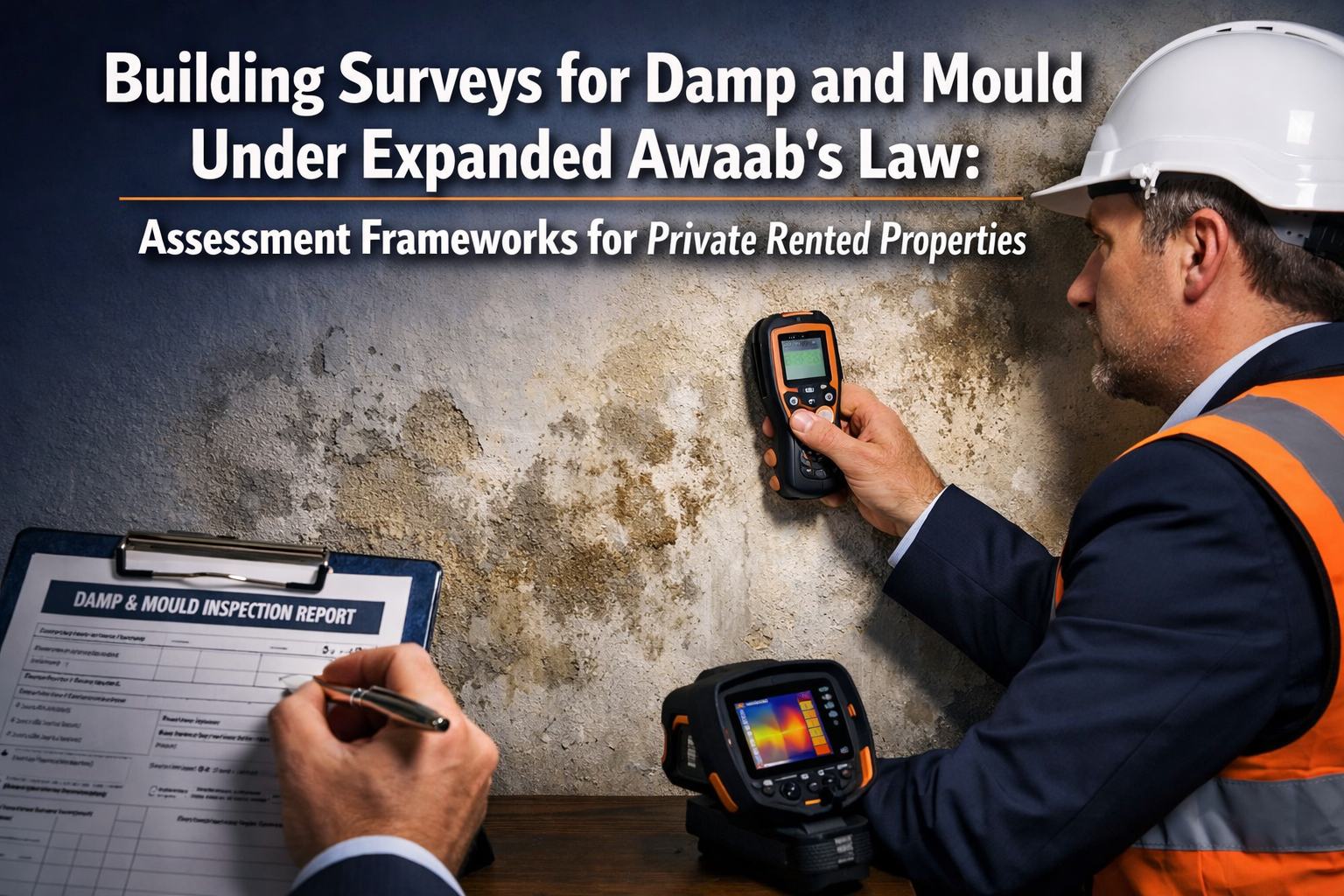
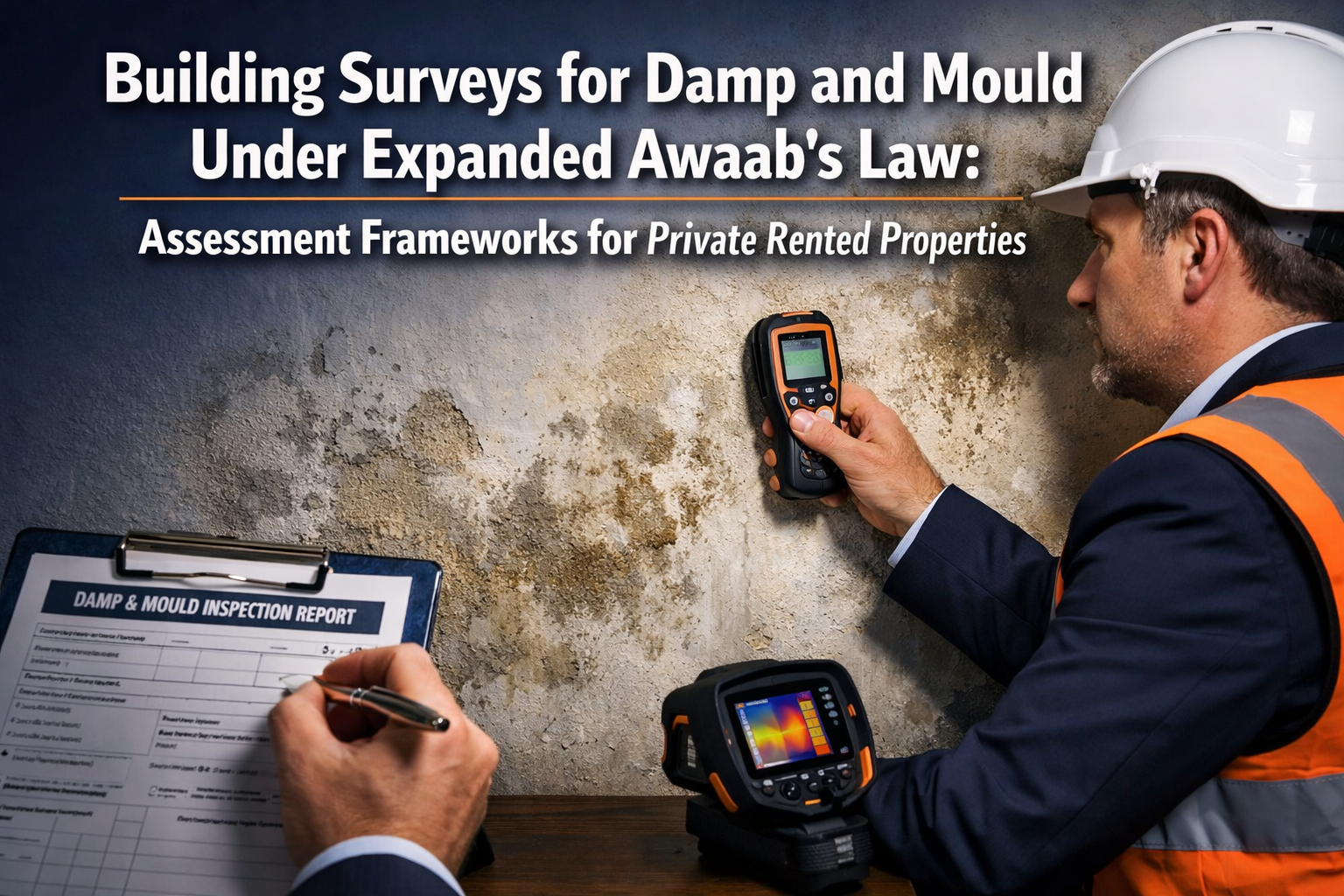
Awaab's Law has fundamentally transformed how damp and mould hazards must be addressed in rental properties, introducing strict investigation timeframes that leave no room for delayed responses. Social landlords now face mandatory 14-day investigation deadlines and 24-hour emergency response requirements—and the private rented sector is next in line for these same obligations in 2026[1][5]. The question facing landlords and property managers is no longer whether to conduct professional surveys, but how to implement assessment frameworks that satisfy the legislation's rigorous compliance standards.
The tragic death of two-year-old Awaab Ishak from prolonged exposure to mould in his family's social housing flat catalyzed this legislative response, establishing prescribed timeframes that prioritize tenant safety over administrative convenience[6]. As implementation extends to private rentals through the Renters' Rights Bill framework, Building Surveys for Damp and Mould Under Expanded Awaab's Law: Assessment Frameworks for Private Rented Properties have evolved from optional risk management tools to mandatory compliance requirements[1].
Key Takeaways
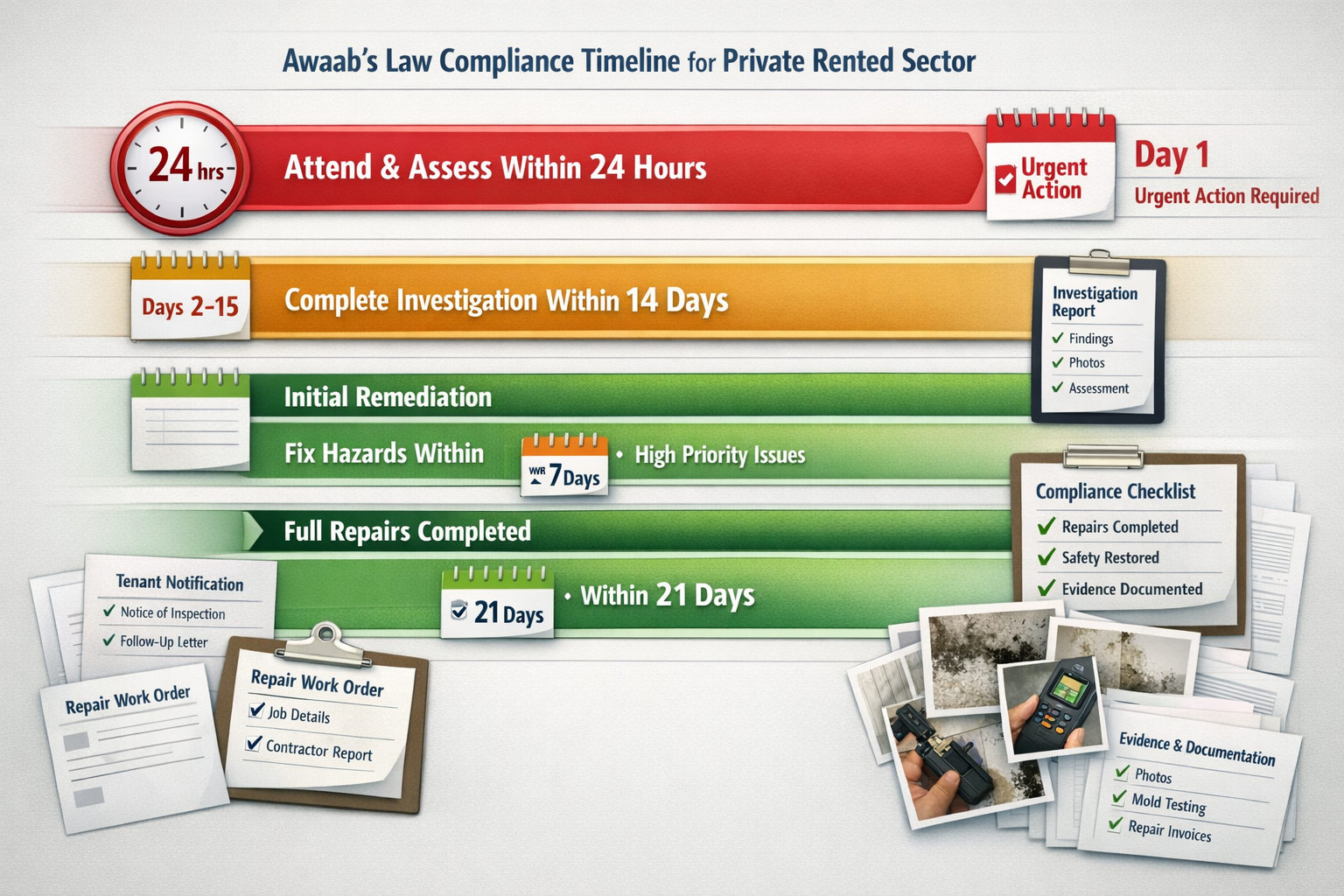
- Emergency hazards require investigation and remediation within 24 hours of being reported, while standard damp and mould complaints must be investigated within 14 calendar days[5][6]
- Professional building surveys have transitioned from optional extras to critical compliance evidence, providing independent documentation of adequate investigation and root cause identification[1]
- The legislation mandates substantive remediation based on professional assessment rather than temporary cosmetic fixes, requiring identification of underlying structural and ventilation issues[1][6]
- Landlords must maintain comprehensive records demonstrating prompt response, adequate investigation, root cause identification, and appropriate remedial action to avoid enforcement orders and compensation claims[1][7]
- Level 3 surveys incorporating moisture detection technology, thermal imaging, and forensic damp analysis now represent the gold standard for compliance documentation in anticipated private sector disputes[1]
Understanding Awaab's Law Extension to Private Rented Properties
Legislative Timeline and Implementation Framework
Awaab's Law came into force for the social rented sector on 27 October 2025, establishing the foundational framework that will extend to private rentals[6][7]. As of April 2026, registered social housing providers operate under full compliance requirements, while the UK Government has confirmed its intention to extend identical obligations to the private rented sector through the wider Renters' Rights Bill framework expected to take effect later in 2026[1][5].
This phased implementation provides private landlords with a critical window to establish compliant assessment protocols before enforcement begins. Property managers acting on behalf of landlords should prioritize properties where damp or mould risks have been previously identified and educate landlord clients on their upcoming obligations[5].
Prescribed Response Timeframes
The legislation establishes two distinct response categories based on hazard severity:
Emergency Hazards (24-Hour Response) ⚠️
Emergency hazards are defined as those posing "an imminent and significant risk of harm"—essentially any condition that a reasonable landlord would take steps to make safe within 24 hours[5][6]. For damp and mould issues, this typically includes:
- Severe water ingress causing immediate structural instability
- Extensive mould growth in sleeping areas affecting vulnerable occupants
- Complete ventilation system failure in properties with known condensation issues
- Sudden leaks affecting electrical systems or creating slip hazards
Standard Damp and Mould Reports (14-Day Investigation) 📋
Social landlords must investigate reports of damp or mould within 14 calendar days of notification, with findings provided to tenants in a written report within 48 hours and no later than 14 days after the complaint[3][6]. This investigation must identify moisture sources, determine root causes, and provide evidence-based remediation plans.
Understanding the distinction between these categories proves critical for compliance. Many landlords underestimate the urgency threshold, treating genuine emergency hazards as standard complaints and exposing themselves to enforcement action[5].
Building Surveys for Damp and Mould Under Expanded Awaab's Law: Level 3 Survey Techniques
Transitioning from Visual Inspection to Forensic Assessment
Traditional visual inspections no longer satisfy Awaab's Law requirements. The legislation explicitly prioritizes identifying underlying causes rather than surface appearance, requiring landlords to investigate structural and ventilation issues contributing to moisture problems[1]. This fundamental shift demands adoption of Level 3 survey methodologies incorporating advanced diagnostic technology.
Essential Survey Components for Compliance
A compliant Building Survey for Damp and Mould Under Expanded Awaab's Law: Assessment Framework for Private Rented Properties must include:
1. Moisture Detection Technology 💧
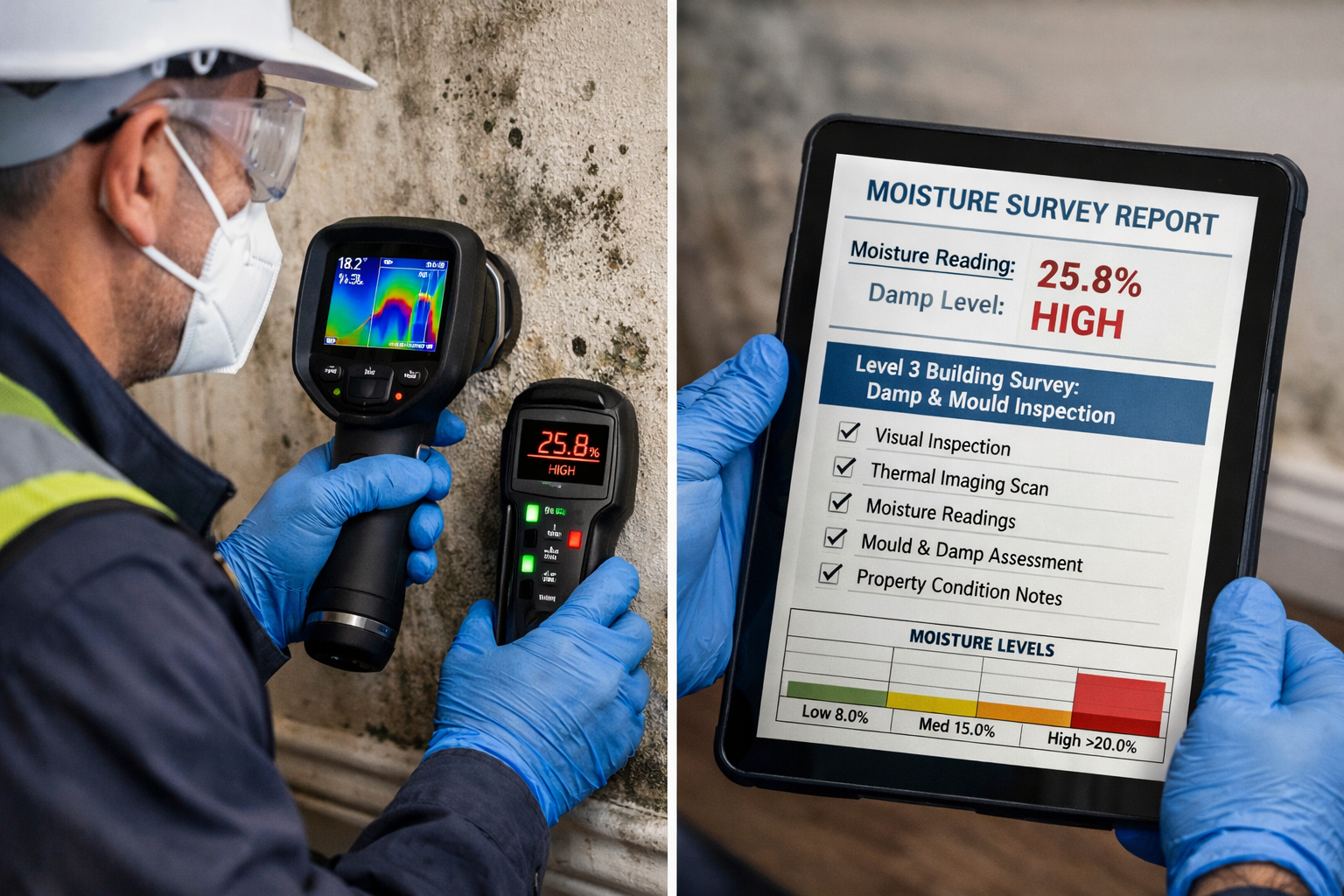
- Protimeter moisture meters for quantitative moisture content measurement in walls, floors, and ceilings
- Hygrometers for ambient humidity readings throughout the property
- Calcium carbide testing for precise moisture content in concrete substrates
- Documentation of all readings with photographic evidence and floor plan notation
2. Thermal Imaging Analysis 🌡️
Thermal cameras identify:
- Cold bridging and insulation defects
- Hidden water ingress behind finishes
- Ventilation pathway failures
- Temperature differentials indicating condensation risk zones
Thermal imaging provides visual evidence of conditions invisible to standard inspection, creating compelling documentation for compliance records and potential dispute resolution.
3. Ventilation System Assessment 🌀
Awaab's Law explicitly requires investigation of ventilation issues contributing to moisture problems[1][3]. Compliant surveys must evaluate:
- Mechanical ventilation system functionality and capacity
- Natural ventilation adequacy (window opening areas, trickle vents)
- Extract fan performance in kitchens and bathrooms
- Air brick and passive ventilation pathway integrity
- Compliance with Building Regulations Approved Document F
Many landlords fall short not through neglect but through relying on incomplete assessments that fail to identify ventilation deficiencies as root causes[1].
4. Structural Investigation 🏗️
Properties may require structural surveys to diagnose underlying causes of damp, and landlords must undertake relevant safety work while further investigations are underway[6]. This includes:
- Rising damp assessment with damp-proof course inspection
- Penetrating damp investigation (roof defects, pointing failure, drainage issues)
- Condensation risk analysis based on building fabric thermal performance
- Drainage system inspection for groundwater management
5. Mould Species Identification 🔬
While not always required, laboratory analysis of mould samples provides definitive evidence of:
- Mould species present (some species indicate specific moisture sources)
- Spore concentration levels
- Health risk categorization
- Remediation specification requirements
This forensic approach proves particularly valuable when disputes arise regarding the severity of conditions or appropriate remediation scope.
Documentation Standards
The legislation requires landlords to demonstrate they "carried out adequate investigations" and "kept clear records of all actions"[1]. Professional survey reports must include:
- Detailed photographic evidence with date stamps and location references
- Quantitative moisture readings recorded on floor plans
- Thermal imaging results with temperature differential annotations
- Root cause analysis clearly distinguishing between symptoms and underlying issues
- Evidence-based remediation recommendations with priority rankings
- Compliance statement confirming investigation adequacy under Awaab's Law
These documentation standards align with damp survey report requirements that provide comprehensive evidence for compliance purposes.
Assessment Frameworks for Private Rented Properties: Compliance Evidence Requirements
What Constitutes "Adequate Investigation"
Awaab's Law introduces a compliance burden that extends beyond simply responding to complaints. Landlords must demonstrate they:
- Responded promptly to complaints within prescribed timeframes
- Carried out adequate investigations using appropriate diagnostic methods
- Identified root causes of damp or mould rather than treating symptoms
- Took appropriate remedial action based on professional assessment
- Kept clear records of all actions taken[1]
The critical question becomes: what investigation methodology satisfies the "adequate" standard? Government guidance for social landlords provides instructive precedent that will likely apply to private rentals[6].
Compliant Investigation Framework Elements
Professional Damp and Mould Assessment ✅
The legislation has effectively mandated professional involvement. While technically landlords could conduct their own investigations, the evidentiary burden in potential disputes makes independent professional assessment the practical compliance standard[1]. Professional damp surveys provide:
- Independent verification of conditions
- Technical credibility in dispute resolution
- Comprehensive diagnostic methodology
- Compliance-standard documentation
- Expert witness potential if litigation arises
Identification of Moisture Sources 🔍
Compliant investigations must trace moisture to its source rather than simply documenting visible symptoms. Common source categories include:
| Moisture Source Category | Investigation Requirements | Common Diagnostic Tools |
|---|---|---|
| Rising Damp | DPC inspection, salt analysis, moisture profiling | Protimeter, calcium carbide test |
| Penetrating Damp | External envelope inspection, roof survey, pointing assessment | Visual inspection, moisture meter, thermal camera |
| Condensation | Ventilation assessment, thermal performance evaluation, occupancy analysis | Hygrometer, thermal imaging, ventilation flow testing |
| Plumbing Leaks | Pipework inspection, concealed leak detection, drainage testing | Moisture meter, thermal camera, pressure testing |
| Groundwater Ingress | Drainage inspection, water table assessment, tanking evaluation | External inspection, moisture profiling |
Clear Reporting with Recommendations 📄
Written reports must be provided to tenants within 48 hours and no later than 14 days after investigation[3][6]. Reports must include:
- Findings summary in plain language
- Root cause identification
- Remediation recommendations with timescales
- Interim measures if extended remediation required
- Tenant responsibilities (if any) regarding ventilation or heating
Evidence-Based Remediation Plans 🛠️
The legislation has less tolerance for temporary or cosmetic fixes that fail under scrutiny[1][6]. Remediation plans must:
- Address identified root causes rather than symptoms
- Specify appropriate materials and methodologies
- Include timescales for completion
- Consider interim measures to protect tenant health during works
- Incorporate post-remediation monitoring protocols
Landlords who apply mould-resistant paint over damp walls without addressing the underlying moisture source will find themselves in breach when mould inevitably returns.
Record-Keeping Requirements
Comprehensive documentation protects landlords in potential enforcement proceedings. Essential records include:
- Initial complaint documentation with date and description
- Investigation appointment records demonstrating timeline compliance
- Professional survey reports with full diagnostic findings
- Remediation specifications and contractor quotes
- Work completion certificates and photographic evidence
- Post-remediation inspection reports confirming resolution
- Tenant communication records including report provision
This documentation trail demonstrates the "adequate investigation" and "appropriate remedial action" required by the legislation[1]. Many first-time landlords benefit from establishing systematic record-keeping protocols before complaints arise.
Expert Witness Preparation for Awaab's Law Compliance Disputes
Anticipated Dispute Scenarios
As Awaab's Law extends to the private rented sector, several dispute categories will likely emerge:
Timeline Compliance Disputes ⏱️
Tenants may claim landlords failed to investigate within 14 days or respond to emergency hazards within 24 hours. Disputes often center on:
- When the landlord received actual notice of the condition
- Whether reported conditions constituted emergency hazards
- Whether investigations were genuinely "adequate" or merely perfunctory
Investigation Adequacy Disputes 🔎
Tenants may argue that landlord investigations failed to identify root causes, particularly when:
- Remediation fails to resolve recurring mould
- Landlords relied on visual inspection without diagnostic testing
- Ventilation or structural issues were overlooked
- Temporary fixes were implemented instead of substantive remediation
Remediation Appropriateness Disputes ⚖️
Disagreements regarding whether remediation adequately addressed identified issues, including:
- Scope of works relative to diagnosed problems
- Quality of workmanship and materials
- Timescales for completion
- Post-remediation monitoring and verification
Building Survey Evidence Standards for Litigation
When disputes escalate to formal proceedings, professional building surveys become critical evidence. Surveyors preparing reports for potential litigation should:
Adopt Expert Witness Protocols 👨⚖️
Even when initially commissioned for compliance purposes, surveys may later serve as expert evidence. Best practices include:
- Independence and objectivity: Reports must present unbiased technical findings regardless of who commissioned the work
- Comprehensive methodology disclosure: Clearly document all diagnostic techniques, equipment used, and limitations
- Factual basis for opinions: Distinguish between observed facts and professional opinions derived from those facts
- Compliance with CPR Part 35: If litigation proceeds, expert evidence must comply with Civil Procedure Rules
Photographic Evidence Standards 📸
Photographs must be:
- Date and time stamped
- Accompanied by written descriptions and location references
- Sufficient in quantity to document conditions comprehensively
- Taken with appropriate lighting and resolution
- Organized systematically in the report
Quantitative Data Documentation 📊
Subjective descriptions ("the wall appeared damp") lack evidentiary weight compared to quantitative measurements:
- Moisture meter readings with equipment calibration records
- Thermal imaging temperature differentials
- Humidity readings with ambient conditions
- Ventilation flow rates and air change calculations
Root Cause Analysis Methodology 🧪
Expert reports must clearly articulate the analytical process connecting observed symptoms to underlying causes:
- Symptoms documented: Visible mould, damp patches, condensation
- Diagnostic testing performed: Moisture readings, thermal imaging, ventilation assessment
- Potential causes evaluated: Rising damp, penetrating damp, condensation, leaks
- Causes eliminated: With technical justification for elimination
- Root cause identified: With supporting evidence and technical reasoning
- Remediation specified: Addressing identified root cause with technical justification
This structured approach demonstrates the "adequate investigation" standard and provides defensible evidence if challenged[1].
Enforcement Consequences and Mitigation
Non-compliance with Awaab's Law can result in:
- Enforcement orders requiring specific actions within prescribed timeframes
- Compensation payments to tenants for health impacts and inconvenience
- Legal cost awards requiring landlords to pay some or all of tenant legal costs
- Loss of rent if dwellings become uninhabitable pending remediation[7]
The financial consequences extend beyond direct penalties. Landlords facing enforcement action may experience:
- Increased insurance premiums
- Difficulty securing mortgage products for portfolio expansion
- Reputational damage affecting tenant attraction
- Reduced property values if enforcement becomes public record
Professional building surveys mitigate these risks by providing strong evidence of compliance with investigation and remediation obligations[1]. The cost of a comprehensive damp survey proves negligible compared to potential enforcement consequences.
Practical Implementation for Property Managers and Landlords
Establishing Compliant Response Protocols
Property managers should implement systematic protocols before complaints arise:
Complaint Intake Procedures 📝
- Standardized reporting forms capturing all relevant details
- Immediate categorization (emergency vs. standard hazard)
- Automated timeline tracking from receipt date
- Tenant acknowledgment confirming receipt and expected timescales
Emergency Response Activation 🚨
For reported conditions potentially constituting emergency hazards:
- Immediate property inspection (within hours, not days)
- Interim safety measures pending full investigation
- Professional surveyor engagement if emergency status uncertain
- Documentation of all actions taken within 24-hour window
Standard Investigation Scheduling 📅
For non-emergency damp and mould reports:
- Professional surveyor appointment within 7 days of receipt
- Comprehensive diagnostic survey within 14-day window
- Written report to tenant within 48 hours of survey completion
- Remediation specification and timeline communication
Remediation Management 🔧
- Contractor engagement based on surveyor recommendations
- Regular progress updates to tenants
- Interim measures if extended timescales required
- Post-completion verification survey
- Tenant confirmation of resolution
Cost Considerations and ROI
Landlords often question the financial justification for comprehensive professional surveys. The cost-benefit analysis strongly favors investment in compliant assessment:
Typical Survey Costs 💷
- Basic visual damp inspection: £150-£300
- Comprehensive Level 3 damp and mould survey with diagnostic testing: £400-£800
- Full building survey including structural assessment: £800-£1,500
Potential Enforcement Costs ⚠️
- Tenant compensation awards: £1,000-£10,000+
- Legal costs if disputes proceed to tribunal: £5,000-£20,000+
- Rent loss during remediation: £1,000-£3,000+ per month
- Enforcement order compliance costs: Variable, potentially substantial
The cost savings from comprehensive building surveys extend beyond regulatory compliance to include early identification of issues before they escalate and evidence for negotiating with contractors regarding appropriate remediation scope.
Portfolio Risk Assessment
Landlords with multiple properties should conduct proactive risk assessment:
High-Risk Property Characteristics 🏘️
- Properties with previous damp or mould complaints
- Older properties with limited insulation or ventilation
- Properties with vulnerable occupants (young children, elderly, health conditions)
- Properties with known structural issues or deferred maintenance
- Basement or ground-floor flats with limited natural light
Proactive Survey Strategy 🎯
Rather than waiting for complaints, consider:
- Scheduled damp surveys for high-risk properties
- Annual ventilation system inspections
- Thermal imaging surveys during winter months
- Tenant education regarding condensation management and reporting obligations
This proactive approach demonstrates good management practices and may mitigate enforcement consequences if issues subsequently arise despite preventive measures.
Tenant Communication and Education
Effective tenant communication serves dual purposes: promoting property care and establishing compliance evidence. Best practices include:
Initial Tenancy Information 📋
- Property-specific ventilation guidance (how to use extract fans, trickle vents)
- Heating and condensation management advice
- Clear reporting procedures for damp or mould concerns
- Landlord responsibilities under Awaab's Law
- Tenant responsibilities regarding property ventilation and reporting
Ongoing Communication 💬
- Periodic reminders regarding condensation management during winter
- Prompt acknowledgment of any reported concerns
- Clear timeline communication for investigations and remediation
- Transparency regarding findings and planned actions
This communication trail provides evidence that landlords took reasonable steps to prevent issues and responded appropriately when problems arose.
Selecting Qualified Surveyors for Awaab's Law Compliance
Professional Qualifications and Specialization
Not all surveyors possess equivalent expertise in damp and mould assessment. When selecting professionals for compliance surveys, prioritize:
RICS Qualification 🎓
Royal Institution of Chartered Surveyors (RICS) membership ensures professional standards, continuing education requirements, and professional indemnity insurance. Look for:
- MRICS or FRICS designation
- Building surveying specialism
- Residential property experience
Damp and Timber Specialization 🔬
General building surveyors may lack specific damp diagnosis expertise. Seek surveyors with:
- Certified Surveyor in Remedial Treatment (CSRT) qualification
- Property Care Association (PCA) membership
- Specialist damp and timber surveying experience
- Advanced diagnostic equipment (thermal imaging, moisture meters)
Expert Witness Experience ⚖️
If disputes appear likely, engage surveyors with:
- Previous expert witness experience in property disputes
- Understanding of Civil Procedure Rules Part 35
- Clear, defensible report writing
- Willingness to provide court testimony if required
Surveyor Brief and Scope Definition
Clear instruction ensures surveys address compliance requirements. Your surveyor brief should specify:
Compliance Context 📋
- Survey purpose: Awaab's Law compliance investigation
- Reported symptoms and tenant concerns
- Timeline requirements (14-day investigation window)
- Report delivery requirements (tenant copy within 48 hours)
Diagnostic Scope 🔍
- Comprehensive moisture source investigation
- Thermal imaging analysis
- Ventilation system assessment
- Structural investigation if indicated
- Mould species identification (if appropriate)
Reporting Requirements 📄
- Root cause identification and analysis
- Evidence-based remediation recommendations
- Compliance statement confirming investigation adequacy
- Plain language summary for tenant provision
- Photographic evidence with floor plan notation
Timeline and Deliverables ⏱️
- Site inspection date within 14-day window
- Draft report delivery timeline
- Final report delivery for tenant provision
- Availability for follow-up queries or clarification
Comprehensive briefing ensures the survey addresses all compliance elements and provides defensible evidence if disputes arise.
Conclusion: Preparing for Expanded Awaab's Law in the Private Rented Sector
The extension of Awaab's Law to private rented properties represents a fundamental shift in landlord obligations regarding damp and mould hazards. The legislation's prescribed response timeframes—24 hours for emergency hazards and 14 days for standard investigations—leave no room for delayed responses or inadequate assessments[5][6]. Professional building surveys have transitioned from optional risk management tools to mandatory compliance requirements, providing the independent evidence and technical rigor necessary to demonstrate adequate investigation and appropriate remediation[1].
Landlords and property managers who view compliance as merely a regulatory burden miss the broader opportunity: systematic assessment frameworks protect tenant health, preserve property values, and mitigate the substantial financial consequences of enforcement action. The cost of comprehensive professional surveys proves negligible compared to potential compensation awards, legal costs, and rent loss resulting from non-compliance[7].
Actionable Next Steps
For Landlords with Existing Damp or Mould Complaints 🚨
- Immediately engage qualified damp surveyors for comprehensive diagnostic assessment
- Ensure investigations occur within 14-day timeline with written reports to tenants
- Implement evidence-based remediation addressing root causes, not symptoms
- Maintain comprehensive documentation of all actions taken
- Conduct post-remediation verification surveys confirming resolution
For Property Managers Preparing for 2026 Implementation 📅
- Establish standardized complaint intake and response protocols
- Develop relationships with qualified surveyors for rapid engagement
- Educate landlord clients on upcoming obligations and compliance requirements
- Conduct proactive risk assessment of portfolio properties
- Implement tenant education programs regarding reporting procedures
For All Private Sector Landlords 🏘️
- Review properties for potential damp and mould risk factors
- Consider proactive surveys for high-risk properties before complaints arise
- Ensure adequate ventilation system functionality in all properties
- Establish comprehensive record-keeping systems for compliance documentation
- Budget for professional survey costs as standard property management expenses
The tragic circumstances that prompted Awaab's Law underscore the fundamental importance of safe, healthy housing. Landlords who embrace professional assessment frameworks and substantive remediation will not only achieve regulatory compliance but fulfill their ethical obligation to provide properties free from serious health hazards. The question is no longer whether to invest in comprehensive building surveys for damp and mould, but how quickly landlords can implement compliant assessment protocols before enforcement begins.
For expert guidance on building surveys tailored to regulatory compliance requirements, consult with RICS-qualified surveyors who understand both the technical requirements and evidentiary standards necessary for Awaab's Law compliance in 2026 and beyond.
References
[1] Awaabs Law Private Landlords 2026 – https://www.idealresponse.co.uk/blog/awaabs-law-private-landlords-2026/
[2] Awaabs Law Private Rented Sector Extension – https://awaabs-law.com/awaabs-law-private-rented-sector-extension
[3] Awaabs Law Technical Compliance Hvac Ventilation – https://www.arm-environments.com/resources/awaabs-law-technical-compliance-hvac-ventilation
[4] Awaabs Law 2026 Hazard Expansions Surveyor Protocols For Electrical Fire And Excess Heat Risks In Rentals – https://nottinghillsurveyors.com/blog/awaabs-law-2026-hazard-expansions-surveyor-protocols-for-electrical-fire-and-excess-heat-risks-in-rentals
[5] Awaabs Law – https://www.rpclegal.com/thinking/construction/awaabs-law/
[6] Awaabs Law Guidance For Social Landlords Timeframes For Repairs In The Social Rented Sector – https://www.gov.uk/government/publications/awaabs-law-guidance-for-social-landlords/awaabs-law-guidance-for-social-landlords-timeframes-for-repairs-in-the-social-rented-sector
[7] Awaabs Law Comes Into Force What Does It Mean For Construction – https://www.trowers.com/insights/2025/november/awaabs-law-comes-into-force-what-does-it-mean-for-construction
[8] Awaabs Law What Landlords Need To Know – https://www.lwrgroup.co.uk/blog/awaabs-law-what-landlords-need-to-know