
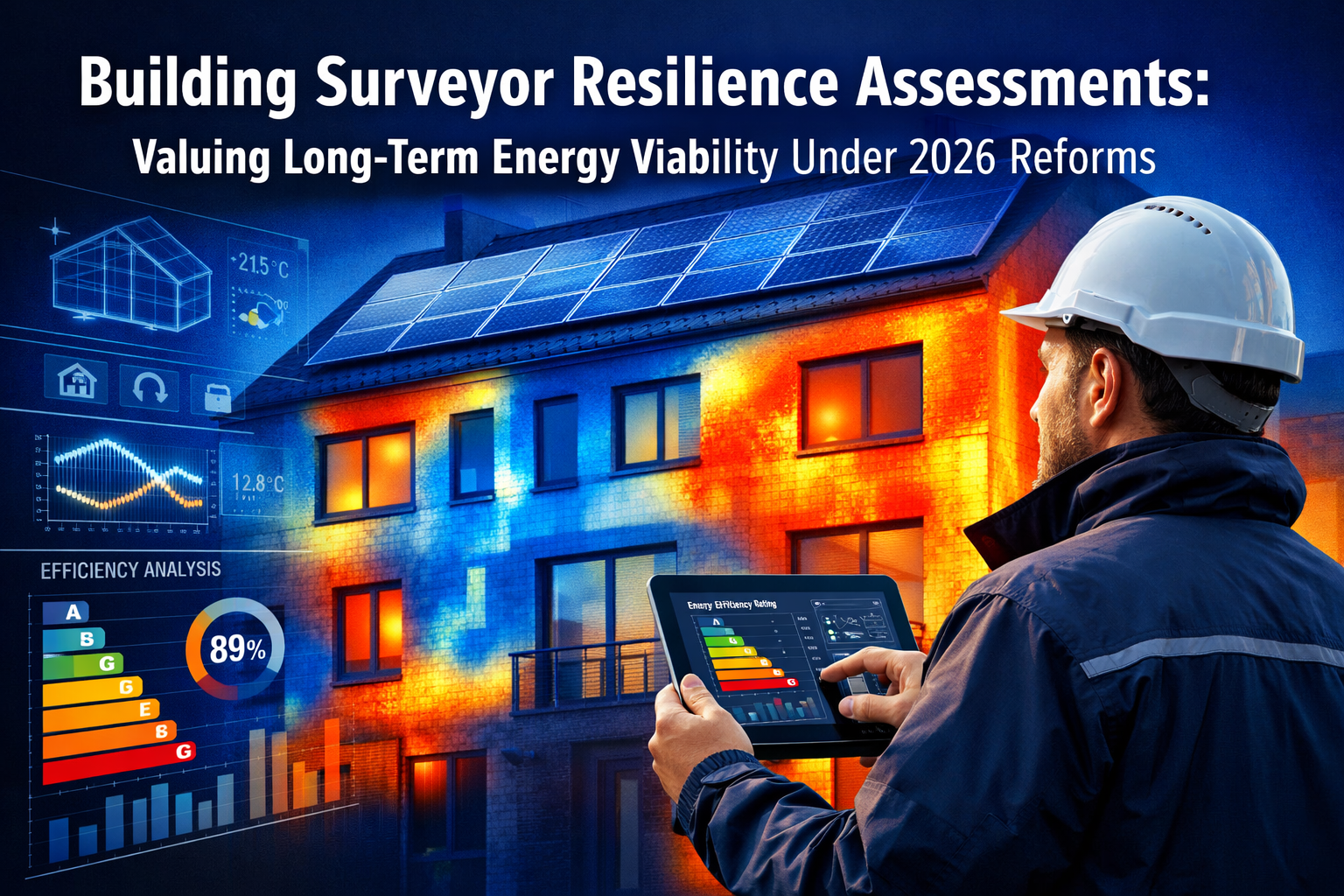
As of April 2026, Environmental, Social, and Governance (ESG) factors have become mandatory metrics in all real estate valuations across the UK.[5] This fundamental shift means that properties previously deemed acceptable may now face significant devaluation if they fail to meet new energy standards and resilience criteria. Building Surveyor Resilience Assessments: Valuing Long-Term Energy Viability Under 2026 Reforms represent a critical evolution in how professionals evaluate property worth, moving beyond traditional structural assessments to incorporate comprehensive future-proofing protocols that directly impact lending decisions and market value.
The regulatory landscape has transformed dramatically with the Building Safety Act 2026 introducing a new design and construction framework, while the Building Safety Regulator gained independence on 27 January 2026, creating specialized oversight that fundamentally changes surveyor responsibilities.[1][2] These reforms require surveyors to adopt new methodologies that assess not just current conditions but long-term viability under increasingly stringent environmental standards.
Key Takeaways
- ESG metrics are now mandatory in all property valuations as of April 2026, directly affecting lending decisions and market value assessments
- New regulatory frameworks require surveyors to evaluate buildings through multiple compliance gateways, particularly for higher-risk properties
- Energy performance standards must be assessed alongside traditional structural factors, with long-term viability projections extending 15-30 years
- Future-proofing protocols integrate climate adaptation, maintenance lifecycle costs, and regulatory compliance into comprehensive resilience assessments
- Lending institutions now require detailed energy viability reports before approving mortgages on properties with poor sustainability ratings
Understanding Building Surveyor Resilience Assessments: Valuing Long-Term Energy Viability Under 2026 Reforms
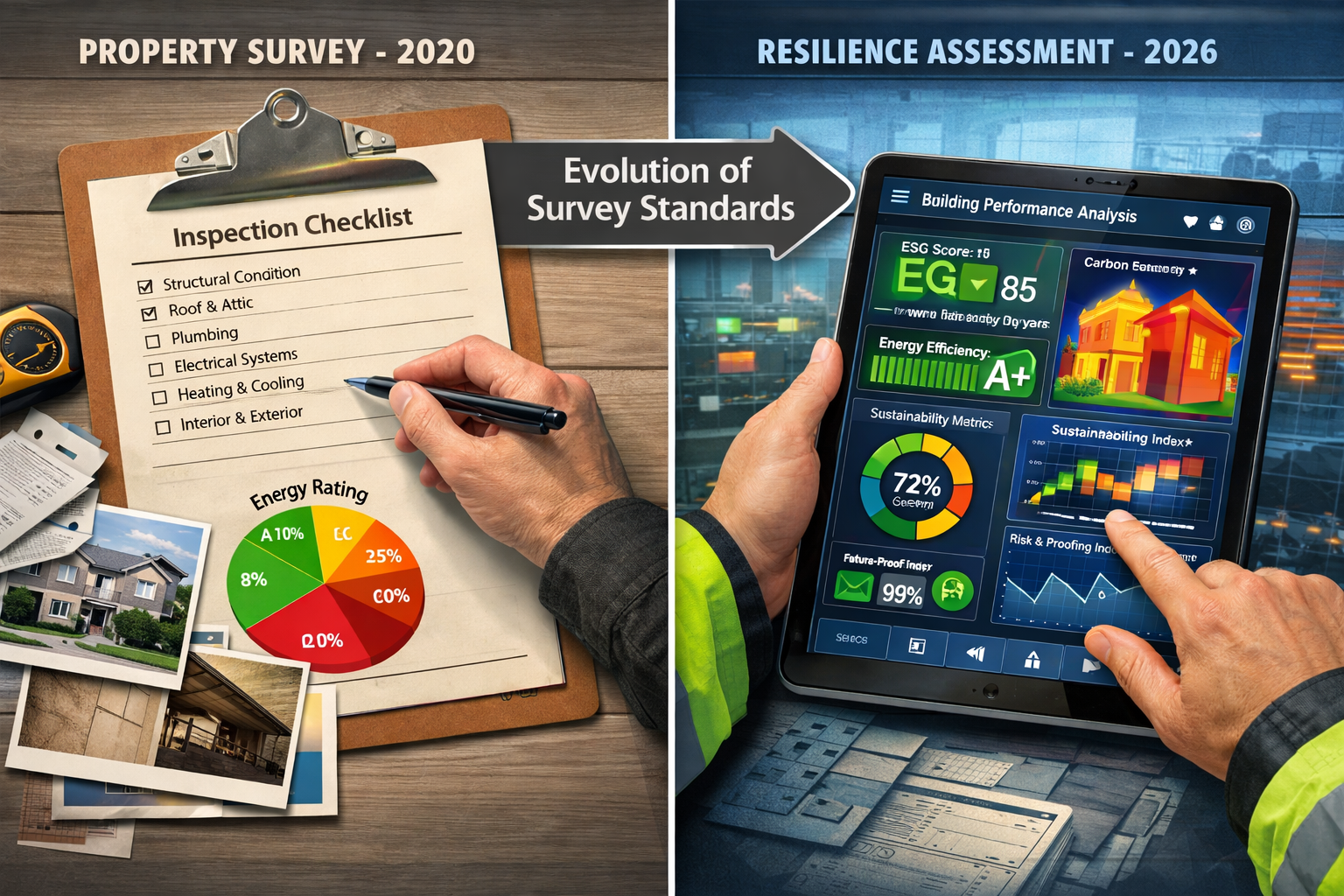
The concept of resilience assessments extends far beyond traditional building survey methodologies. While conventional surveys focus primarily on structural integrity, damp issues, and immediate defects, resilience assessments evaluate a property's capacity to maintain value and functionality under evolving regulatory requirements and environmental pressures.
The Regulatory Context of 2026
The Building Safety Act 2026 has established three critical gateways at key construction and design stages for higher-risk buildings.[1] These gateways require:
- Planning Gateway: Mandatory fire safety and structural integrity declarations before planning permission
- Pre-Construction Gateway: Detailed design approval from the Building Safety Regulator
- Completion Gateway: Comprehensive compliance certification before occupation
For existing properties, these reforms mean that surveyors must now assess whether buildings would meet current standards if constructed today, creating a "regulatory gap" metric that affects valuation.
The independence of the Building Safety Regulator as a standalone executive non-departmental public body has created more rigorous enforcement mechanisms.[2] Surveyors conducting resilience assessments must now reference BSR standards and guidance documents as part of their evaluation framework.
ESG Integration in Property Valuations
The mandatory inclusion of ESG factors represents perhaps the most significant change in surveying practice since the introduction of Energy Performance Certificates (EPCs). However, ESG assessment goes considerably deeper than simple energy ratings.
Environmental factors now assessed include:
- 🌱 Whole life carbon footprint calculations
- 💧 Water efficiency and sustainable drainage systems
- ♻️ Material sustainability and circular economy potential
- 🌡️ Climate adaptation capabilities (flooding, overheating, extreme weather)
- ⚡ Renewable energy integration capacity
Social factors encompass:
- 🏘️ Community impact and local infrastructure support
- 🔐 Health and safety provisions beyond minimum standards
- ♿ Accessibility and inclusive design features
- 🏗️ Construction impact on surrounding properties
Governance factors include:
- 📋 Compliance documentation quality and completeness
- 🔍 Transparency of building systems and maintenance records
- 👥 Stakeholder engagement history
- ⚖️ Legal compliance track record
The RICS Professional Standards for Whole Life Carbon Assessment (2nd Edition) provide the technical framework that surveyors must follow when evaluating these factors.[3]
Protocols for Assessing Future-Proofing in Building Surveyor Resilience Assessments
Implementing effective future-proofing protocols requires a systematic approach that combines traditional surveying expertise with new analytical frameworks. These protocols form the core of Building Surveyor Resilience Assessments: Valuing Long-Term Energy Viability Under 2026 Reforms.
Energy Standards Assessment Framework
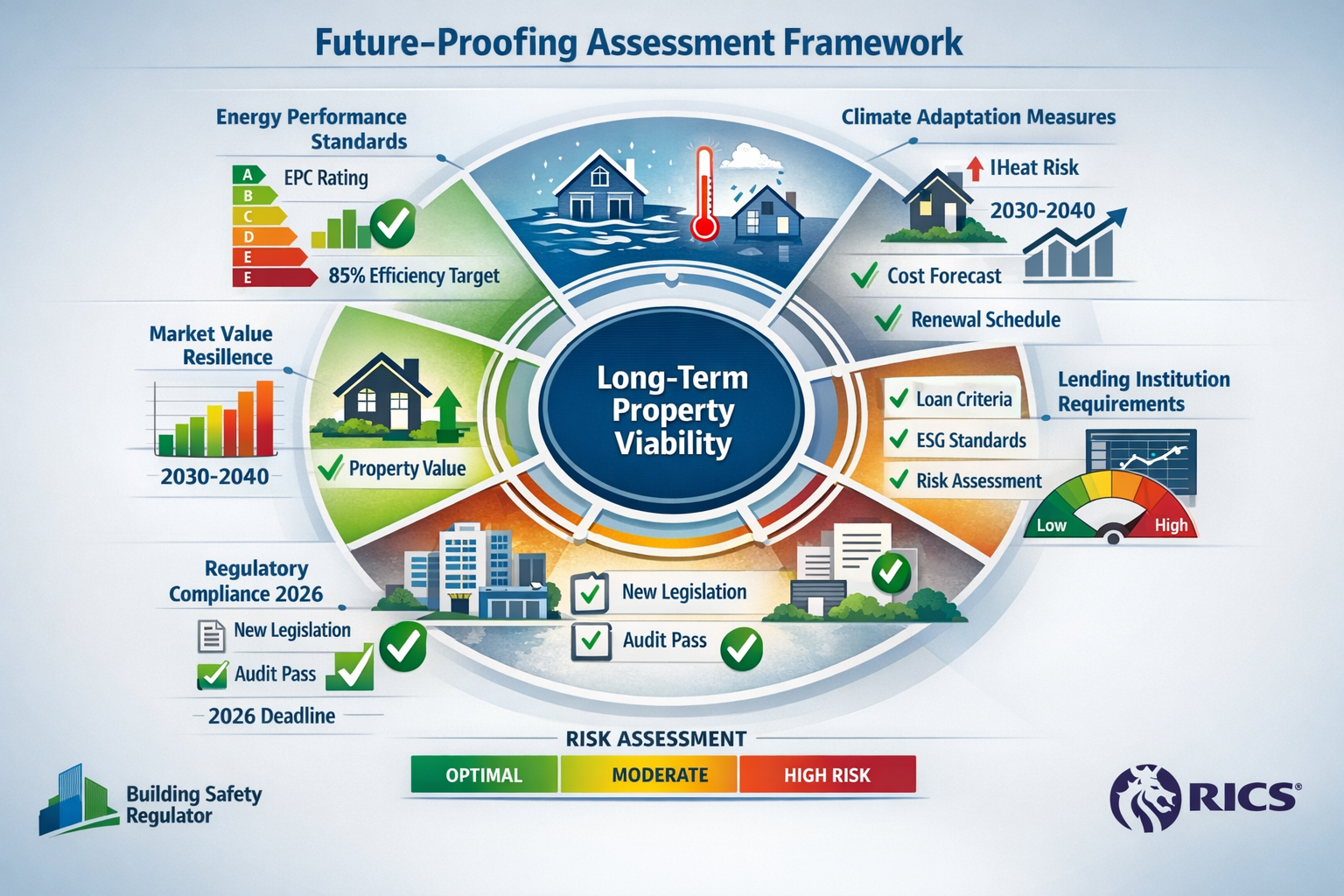
The energy standards component of resilience assessments operates on multiple timeframes, evaluating both current performance and projected compliance with anticipated regulations through 2040.
Current Performance Metrics:
| Assessment Area | Measurement Criteria | Compliance Threshold |
|---|---|---|
| EPC Rating | Current certificate grade | Minimum E (rental), C target by 2028 |
| Thermal Efficiency | U-values for walls, roof, floors | Building Regulations Part L standards |
| Heating Systems | Efficiency rating and fuel type | Gas boiler phase-out consideration |
| Renewable Integration | Solar, heat pump, or other systems | Percentage of energy from renewables |
| Smart Technology | Monitoring and control systems | IoT capability assessment |
Future Compliance Projections:
Surveyors must now project whether properties can reasonably achieve anticipated standards, including:
- 2028 targets: Minimum EPC C for rental properties
- 2030 goals: 68% carbon reduction from 1990 baseline
- 2035 projections: Potential gas boiler prohibition in new installations
- 2040 vision: Near-zero carbon operation for all residential properties
This forward-looking analysis requires surveyors to evaluate upgrade feasibility, estimating costs and technical constraints. Properties that cannot reasonably achieve future standards face significant valuation penalties, as lending institutions increasingly refuse mortgages on "stranded assets."
Maintenance and Lifecycle Cost Integration
Traditional surveys identify defects requiring immediate attention, but resilience assessments must project maintenance requirements and costs over extended periods, typically 15-30 years.
Lifecycle Assessment Components:
✅ Component Lifespan Analysis: Evaluating remaining useful life of major building elements (roof, windows, heating systems, electrical installations)
✅ Replacement Cost Projections: Calculating future replacement costs with inflation adjustments and technology evolution factors
✅ Energy Upgrade Pathways: Identifying sequential improvement opportunities with cost-benefit analysis
✅ Climate Adaptation Costs: Estimating expenditure required for flood defenses, cooling systems, or structural reinforcement
✅ Regulatory Compliance Costs: Projecting mandatory upgrades to meet evolving standards
This comprehensive approach allows property buyers and lenders to understand the total cost of ownership, not just the purchase price. Properties with high projected maintenance and compliance costs receive adjusted valuations that reflect these future liabilities.
When conducting a condition survey, surveyors now incorporate these lifecycle projections as standard practice, providing clients with 10-year and 20-year expenditure forecasts.
Lending Resilience Criteria
Financial institutions have rapidly adapted their lending criteria to incorporate resilience metrics, recognizing that properties failing to meet energy standards pose increased default risk as they become harder to sell or rent.
Key Lending Considerations:
📊 Loan-to-Value Adjustments: Properties with poor energy ratings may face reduced LTV ratios (typically 5-15% lower than equivalent energy-efficient properties)
📊 Interest Rate Premiums: Some lenders apply higher rates to properties below EPC C rating, reflecting increased risk
📊 Mortgage Term Restrictions: Properties requiring significant upgrades may face shorter mortgage terms or mandatory improvement conditions
📊 Green Mortgage Incentives: Conversely, high-performance properties may qualify for preferential rates and cashback offers
Surveyors conducting resilience assessments must explicitly address these lending factors, providing clear guidance on whether properties meet institutional requirements. This has become particularly important for building surveyor services focused on purchase transactions.
Implementing Comprehensive Resilience Assessment Methodologies
The practical implementation of Building Surveyor Resilience Assessments: Valuing Long-Term Energy Viability Under 2026 Reforms requires surveyors to adopt new tools, technologies, and reporting frameworks that extend beyond traditional survey formats.
Technology-Enhanced Assessment Tools
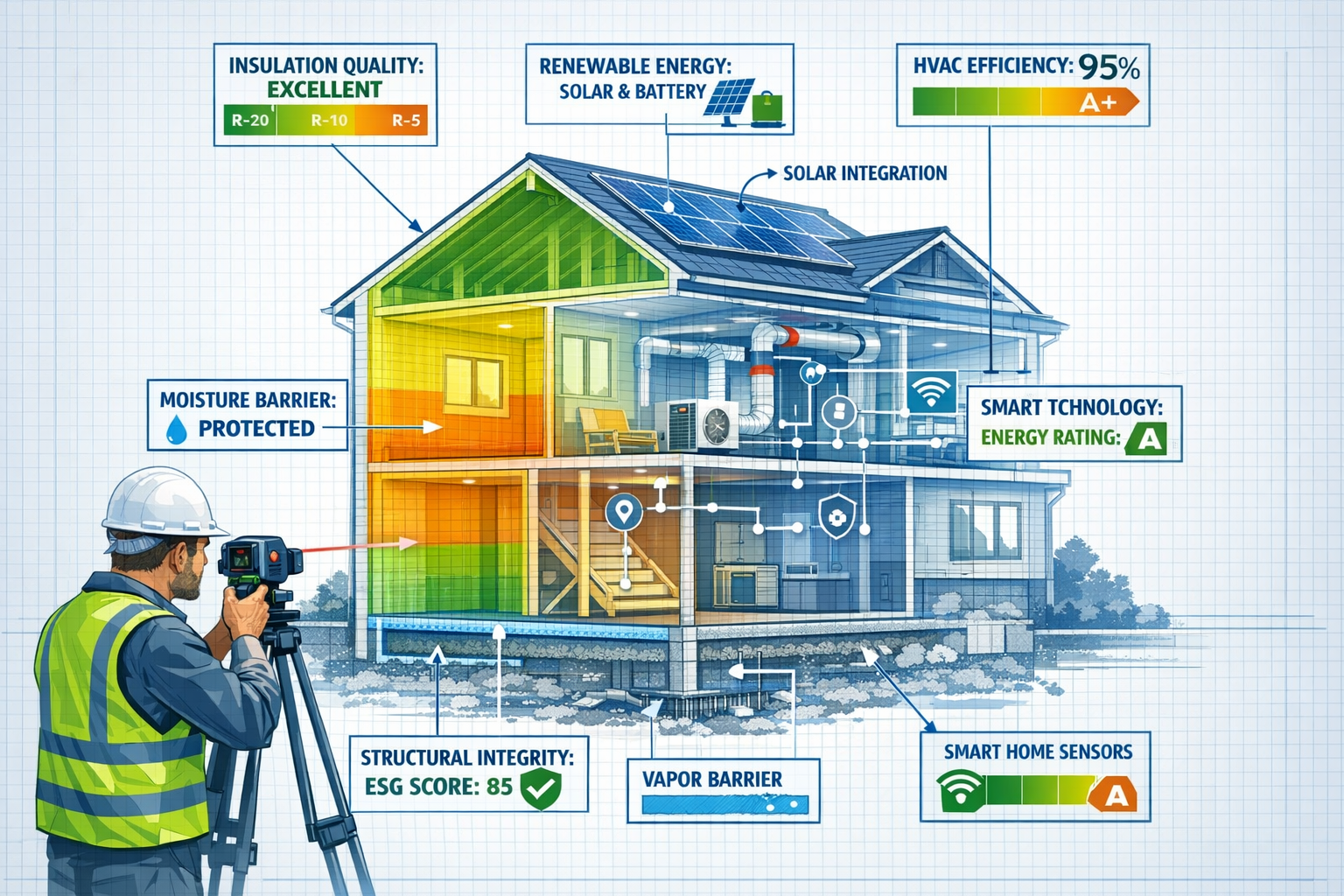
Modern resilience assessments leverage advanced technologies that provide more accurate and comprehensive data than traditional visual inspection alone.
Essential Technology Components:
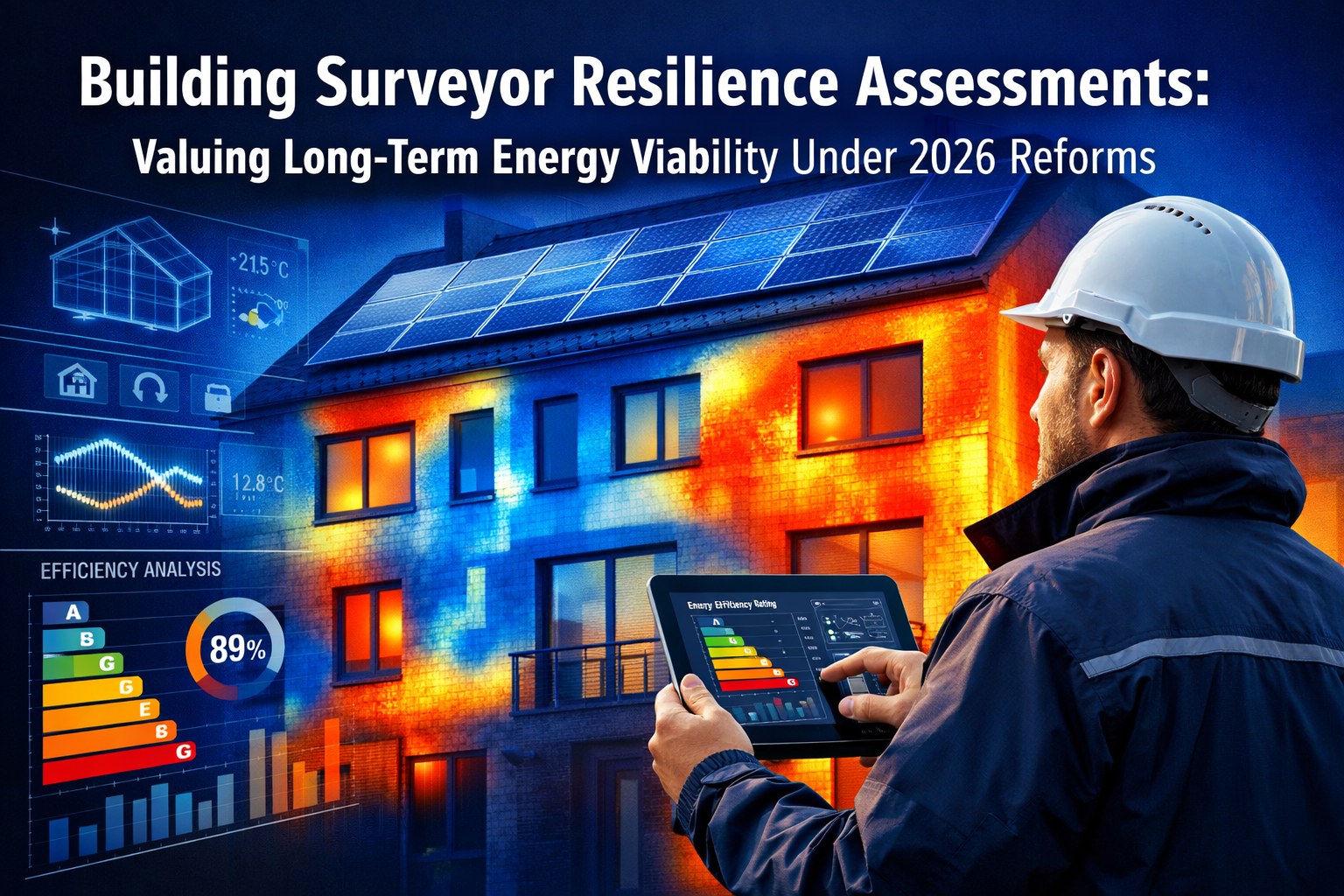
🔧 Thermal Imaging Cameras: Identifying heat loss, insulation defects, and thermal bridging that impact energy performance
🔧 Moisture Meters and Hygrometers: Assessing building envelope integrity and identifying condensation risks that affect long-term durability
🔧 Air Tightness Testing Equipment: Measuring infiltration rates that significantly impact heating efficiency
🔧 Digital Measurement Tools: Laser distance meters and 3D scanning for accurate dimensional analysis supporting retrofit planning
🔧 Energy Modeling Software: Calculating theoretical performance and simulating improvement scenarios
🔧 Carbon Calculation Tools: Quantifying embodied and operational carbon footprints aligned with RICS standards
These technologies enable surveyors to provide quantitative data supporting their qualitative assessments, creating more defensible valuations and recommendations.
Structured Reporting Framework
Resilience assessment reports require a new structure that clearly communicates both immediate findings and long-term projections. The recommended framework includes:
Section 1: Executive Summary
- Overall resilience rating (typically A-E scale)
- Critical immediate issues
- Long-term viability assessment
- Estimated total cost of ownership (10 and 20-year projections)
Section 2: Current Condition Assessment
- Traditional structural and defect analysis
- Current energy performance metrics
- ESG baseline evaluation
- Regulatory compliance status
Section 3: Future-Proofing Analysis
- Projected regulatory changes and compliance gaps
- Climate adaptation requirements
- Energy upgrade pathways with cost-benefit analysis
- Maintenance lifecycle projections
Section 4: Financial Implications
- Valuation adjustments based on resilience factors
- Lending viability assessment
- Investment priority recommendations
- Payback period calculations for improvements
Section 5: Action Plan
- Immediate priority actions (0-12 months)
- Medium-term improvements (1-5 years)
- Long-term strategic upgrades (5-20 years)
- Monitoring and reassessment recommendations
This comprehensive structure ensures that clients receive actionable intelligence supporting informed decision-making, whether they're purchasing, refinancing, or planning property improvements.
Integration with Existing Survey Types
Resilience assessments don't replace traditional surveys but rather enhance them. Understanding how resilience protocols integrate with established survey types is essential for both surveyors and clients.
RICS Level 2 Survey (HomeBuyer Report) Enhancement:
The standard RICS HomeBuyer Survey now routinely includes basic resilience metrics, particularly energy performance assessment and identification of major upgrade requirements. While not as comprehensive as dedicated resilience assessments, enhanced Level 2 surveys provide sufficient information for most standard residential transactions.
RICS Level 3 Survey (Building Survey) Enhancement:
Full structural surveys naturally accommodate comprehensive resilience assessment, as they already involve detailed investigation of building fabric and systems. The addition of resilience protocols adds approximately 20-30% to survey time but provides substantially greater value, particularly for older properties requiring significant upgrades.
Specialist Survey Integration:
Resilience assessments complement specialist surveys such as damp surveys, where moisture issues directly impact energy performance through insulation degradation and increased heating requirements.
Case Study: Victorian Terrace Resilience Assessment
A practical example illustrates how these protocols function in real-world applications:
Property: Three-bedroom Victorian terrace, original construction 1895, partial modernization 1980s
Traditional Survey Findings: Generally sound structure, some minor pointing required, original single-glazed sash windows, aging boiler (15 years old), no significant defects
Resilience Assessment Additions:
- Current EPC: D (62 points)
- Projected 2028 compliance: FAIL (requires minimum C rating for rental)
- Thermal imaging revealed 35% heat loss through windows and 25% through uninsulated solid walls
- Lifecycle analysis identified £45,000 in essential upgrades over 10 years (windows, insulation, heating system, roof)
- Climate risk assessment flagged increasing overheating risk due to poor ventilation and south-facing aspect
- Carbon footprint: 4.2 tonnes CO2/year (significantly above 2030 target trajectory)
Valuation Impact: Initial asking price £650,000, adjusted valuation £615,000 reflecting upgrade requirements and compliance risks
Lending Outcome: Mortgage approved at 75% LTV (instead of standard 85%) with condition requiring EPC improvement to C within 2 years
This example demonstrates how resilience assessments provide crucial information that traditional surveys miss, directly impacting transaction terms and buyer decision-making.
Strategic Implementation for Property Stakeholders
Different stakeholders require tailored approaches to implementing Building Surveyor Resilience Assessments: Valuing Long-Term Energy Viability Under 2026 Reforms within their decision-making processes.
For Property Buyers
Prospective purchasers should commission resilience assessments early in the transaction process, ideally before making formal offers. This allows for:
Informed Negotiation: Using resilience findings to negotiate price reductions reflecting genuine upgrade costs and compliance risks
Mortgage Planning: Understanding lending constraints before committing to specific properties
Budget Forecasting: Accurately projecting total ownership costs beyond the purchase price
Risk Mitigation: Identifying properties that may become difficult to sell or rent due to poor energy performance
Buyers should specifically request that surveyors address lending resilience criteria, ensuring reports contain information that mortgage providers require. When reviewing survey options, understanding the differences between survey levels helps buyers select appropriate assessment depth.
For Property Sellers
Sellers benefit from proactive resilience assessments conducted before listing properties, enabling:
Strategic Improvements: Identifying high-return upgrades that improve marketability and value
Realistic Pricing: Setting asking prices that reflect genuine market value considering resilience factors
Transaction Acceleration: Providing pre-prepared documentation that satisfies buyer and lender requirements
Competitive Positioning: Demonstrating energy performance and future-proofing as selling points
Sellers of properties with known deficiencies should consider whether addressing issues before sale or pricing accordingly provides better outcomes. Understanding what to do after a bad building survey report helps sellers respond constructively to negative findings.
For Lending Institutions
Mortgage providers have rapidly integrated resilience criteria into underwriting processes, but implementation varies significantly across institutions. Best practices include:
Standardized Assessment Requirements: Clearly specifying what resilience information must be included in valuation reports
Risk-Adjusted Pricing Models: Developing sophisticated pricing that reflects genuine default risk associated with poor energy performance
Green Mortgage Products: Creating incentive structures that reward energy-efficient properties and encourage improvements
Borrower Education: Helping applicants understand why energy performance affects lending terms
Portfolio Risk Management: Monitoring exposure to properties with poor resilience ratings that may become stranded assets
For Professional Surveyors
Surveyors must invest in continuous professional development to maintain competence in resilience assessment methodologies. Essential steps include:
✓ Technical Training: Completing courses on energy assessment, carbon calculation, and ESG evaluation methodologies
✓ Technology Investment: Acquiring thermal imaging, air tightness testing, and energy modeling tools
✓ Software Adoption: Implementing digital reporting platforms that accommodate comprehensive resilience assessment structures
✓ Professional Standards Compliance: Staying current with RICS guidance, Building Safety Regulator requirements, and evolving best practices
✓ Insurance Review: Ensuring professional indemnity coverage adequately addresses expanded scope of resilience assessments
✓ Client Communication: Developing clear explanations of why resilience assessments provide value beyond traditional surveys
Surveyors should view resilience assessment capabilities as essential competitive advantages, as clients increasingly demand comprehensive future-proofing analysis rather than basic condition reporting.
Common Challenges and Solutions in Resilience Assessment Implementation
Despite the clear value of comprehensive resilience assessments, implementation faces several practical challenges that surveyors and clients must navigate.
Challenge 1: Cost Concerns
Issue: Comprehensive resilience assessments cost 30-50% more than traditional surveys, creating affordability concerns for some clients.
Solution: Surveyors should clearly articulate the value proposition, demonstrating how resilience assessments prevent costly surprises and support better negotiation. For budget-conscious clients, tiered assessment options can provide basic resilience metrics within standard survey costs, with optional detailed analysis available as an add-on.
Challenge 2: Data Availability
Issue: Older properties often lack documentation about insulation, heating system specifications, or previous upgrades, making accurate assessment difficult.
Solution: Surveyors must develop investigative techniques including non-invasive testing, inference from construction period and visible evidence, and conservative assumptions clearly flagged in reports. Where significant uncertainty exists, recommendations for specialist investigation (thermal imaging, insulation surveys) provide clients with pathways to definitive answers.
Challenge 3: Rapidly Evolving Standards
Issue: Regulatory requirements and best practices continue evolving, making long-term projections uncertain.
Solution: Resilience assessments should include scenario analysis, projecting outcomes under different regulatory pathways (conservative, moderate, aggressive). This approach acknowledges uncertainty while providing useful guidance. Regular reassessment (every 3-5 years) ensures projections remain current.
Challenge 4: Technology Limitations
Issue: Not all surveyors have access to advanced assessment technologies, particularly smaller practices or those in early adoption phases.
Solution: Industry collaboration through equipment sharing arrangements, specialist subcontractor networks, and gradual technology adoption roadmaps allows practices to offer comprehensive services while managing capital investment. Clients should inquire about specific technologies used during assessments.
Challenge 5: Client Understanding
Issue: Many clients lack familiarity with ESG concepts, carbon calculations, and future regulatory projections, making resilience assessment findings difficult to interpret.
Solution: Effective communication strategies including visual presentations, simplified summary sections, and client education resources help bridge knowledge gaps. Surveyors should avoid jargon, use analogies, and provide clear action priorities that non-technical clients can understand and act upon.
Regulatory Compliance and Professional Standards
Surveyors conducting Building Surveyor Resilience Assessments: Valuing Long-Term Energy Viability Under 2026 Reforms must navigate complex regulatory requirements and professional standards that govern their work.
Building Safety Regulator Requirements
The Building Safety Regulator's strategic plan for 2026-2027 emphasizes competence, compliance, and continuous improvement across the built environment sector.[2] For surveyors, this translates to:
- Competency Demonstration: Maintaining evidence of relevant training and continuing professional development in energy assessment and resilience evaluation
- Quality Assurance: Implementing robust quality control processes ensuring consistent assessment standards
- Regulatory Awareness: Staying informed about Building Safety Regulator guidance, enforcement actions, and evolving expectations
- Documentation Standards: Maintaining comprehensive records supporting assessment findings and recommendations
RICS Professional Standards
The Royal Institution of Chartered Surveyors provides the primary professional framework for resilience assessments through several key documents:
- RICS Professional Standards for Whole Life Carbon Assessment (2nd Edition): Mandatory framework for carbon footprint calculations[3]
- RICS Valuation – Global Standards: Integration of ESG factors into valuation methodology
- RICS Home Survey Standard: Evolving requirements for residential property assessment
- RICS Guidance on Surveys of Residential Property: Best practice recommendations for comprehensive property evaluation
Surveyors must ensure their resilience assessment methodologies align with these standards, as non-compliance can result in professional sanctions and liability exposure.
Legal and Liability Considerations
The expanded scope of resilience assessments creates new liability considerations that surveyors must manage through:
Clear Scope Definition: Explicitly stating what the assessment covers and excludes, particularly regarding future regulatory projections that involve inherent uncertainty
Professional Indemnity Insurance: Ensuring coverage adequately addresses resilience assessment activities and associated risks
Limitation of Liability: Appropriately limiting liability for factors beyond the surveyor's control, such as regulatory changes or client decisions not to implement recommendations
Record Retention: Maintaining comprehensive documentation supporting assessment findings, as disputes may arise years after initial assessment
Surveyors should consult with professional indemnity insurers and legal advisors when developing resilience assessment services to ensure appropriate risk management.
Future Trends and Emerging Developments
The field of resilience assessment continues evolving rapidly, with several emerging trends likely to shape practice over coming years.
Artificial Intelligence Integration
AI-powered analysis tools are beginning to enhance resilience assessments through:
- Pattern Recognition: Identifying defect patterns and energy inefficiencies from thermal imaging and photographic data
- Predictive Modeling: Forecasting maintenance requirements and component failures with greater accuracy
- Automated Reporting: Generating draft report sections from assessment data, improving efficiency
- Comparative Analysis: Benchmarking properties against similar buildings to identify performance outliers
While AI tools enhance efficiency and consistency, professional judgment remains essential for interpreting findings and providing contextually appropriate recommendations.
Climate Risk Modeling
Increasingly sophisticated climate modeling enables more accurate assessment of location-specific risks including:
- Flood Risk Evolution: Projecting changing flood patterns under various climate scenarios
- Overheating Risk: Identifying properties vulnerable to dangerous temperature extremes
- Extreme Weather Exposure: Assessing structural resilience to high winds, heavy precipitation, and other climate impacts
- Coastal Erosion: Evaluating long-term viability of properties in vulnerable coastal locations
These tools allow surveyors to provide more nuanced climate adaptation recommendations tailored to specific properties and locations.
Retrofit Financing Integration
The growing retrofit financing market creates opportunities for surveyors to provide assessment services supporting:
- Green Mortgage Applications: Detailed energy improvement plans meeting lender requirements
- Government Grant Programs: Technical assessments supporting grant applications for energy upgrades
- Property-Linked Finance: Assessments supporting innovative financing mechanisms where loans attach to properties rather than owners
- Energy Performance Contracts: Technical due diligence for performance-based improvement programs
Surveyors who understand financing mechanisms can provide more valuable guidance helping clients implement recommended improvements.
Digital Building Passports
The concept of digital building passports—comprehensive digital records of building specifications, materials, energy performance, and maintenance history—is gaining traction. These passports would:
- Standardize information availability for resilience assessments
- Reduce assessment costs by eliminating redundant investigation
- Improve accuracy by providing verified historical data
- Support circular economy principles through material tracking
As digital building passports become more common, resilience assessment methodologies will evolve to leverage this standardized information.
Conclusion
Building Surveyor Resilience Assessments: Valuing Long-Term Energy Viability Under 2026 Reforms represent a fundamental evolution in how properties are evaluated, moving beyond simple condition reporting to comprehensive future-proofing analysis that directly impacts value, lending decisions, and long-term viability. The mandatory integration of ESG factors into valuations, combined with increasingly stringent regulatory requirements, makes resilience assessment an essential component of property transactions rather than an optional enhancement.
For property buyers, these assessments provide crucial intelligence supporting informed decision-making, realistic budget forecasting, and effective negotiation. For sellers, proactive resilience assessment enables strategic improvements and realistic pricing that accelerates transactions. For lending institutions, comprehensive resilience evaluation supports more accurate risk assessment and appropriate lending terms. For surveyors, developing resilience assessment capabilities creates competitive advantage while fulfilling evolving professional obligations.
The protocols outlined in this article—systematic energy standards assessment, maintenance lifecycle integration, lending resilience evaluation, and future-proofing analysis—provide a practical framework for implementing comprehensive resilience assessments. While challenges remain around cost, data availability, and rapidly evolving standards, the solutions discussed enable effective implementation across various property types and transaction contexts.
Actionable Next Steps
For Property Buyers:
- Commission resilience assessments early in the purchase process, before making formal offers
- Request that surveyors explicitly address lending criteria and provide 10-year cost projections
- Use resilience findings to negotiate price adjustments reflecting genuine upgrade requirements
- Consider properties' long-term viability under projected 2030-2040 standards, not just current condition
For Property Sellers:
- Obtain pre-sale resilience assessments identifying strategic improvement opportunities
- Complete high-return energy upgrades before listing to maximize value and marketability
- Prepare comprehensive documentation about building systems, upgrades, and energy performance
- Price properties realistically considering resilience factors that buyers and lenders will evaluate
For Surveyors:
- Invest in training covering energy assessment, carbon calculation, and ESG evaluation methodologies
- Acquire essential technologies including thermal imaging and energy modeling tools
- Develop standardized resilience assessment reporting templates aligned with RICS standards
- Review professional indemnity insurance ensuring adequate coverage for expanded assessment scope
- Create client education resources explaining resilience assessment value and findings interpretation
For All Stakeholders:
- Stay informed about evolving regulatory requirements and Building Safety Regulator guidance
- Recognize that energy performance and resilience are now fundamental value drivers, not peripheral concerns
- Adopt long-term perspectives considering 15-30 year property viability rather than immediate conditions
- Engage with professional surveyors early in property transactions to maximize assessment value
The 2026 reforms have permanently changed property assessment and valuation. Stakeholders who embrace comprehensive resilience evaluation will make better-informed decisions, avoid costly surprises, and position themselves advantageously in an increasingly sustainability-focused property market. Those who continue relying solely on traditional assessment approaches risk significant financial exposure as regulatory requirements tighten and market preferences shift decisively toward energy-efficient, future-proofed properties.
References
[1] Biz Const Building Safety Act 2026 Key Developments And What To Expect – https://www.rwkgoodman.com/info-hub/biz-const-building-safety-act-2026-key-developments-and-what-to-expect/
[2] Building Safety Regulator Strategic Plan 2026 To 2027 – https://www.gov.uk/government/publications/building-safety-regulator-strategic-plan-2026-to-2027/building-safety-regulator-strategic-plan-2026-to-2027
[3] pbctoday.co.uk – https://www.pbctoday.co.uk/news/planning-construction-news/five-hot-topics-for-surveyors-spring-2026/158511/
[5] Valuation Resilience And Future Proofing How Building Surveyors Assess Energy Standards And Long Term Property Viability In 2026 – https://nottinghillsurveyors.com/blog/valuation-resilience-and-future-proofing-how-building-surveyors-assess-energy-standards-and-long-term-property-viability-in-2026