
"
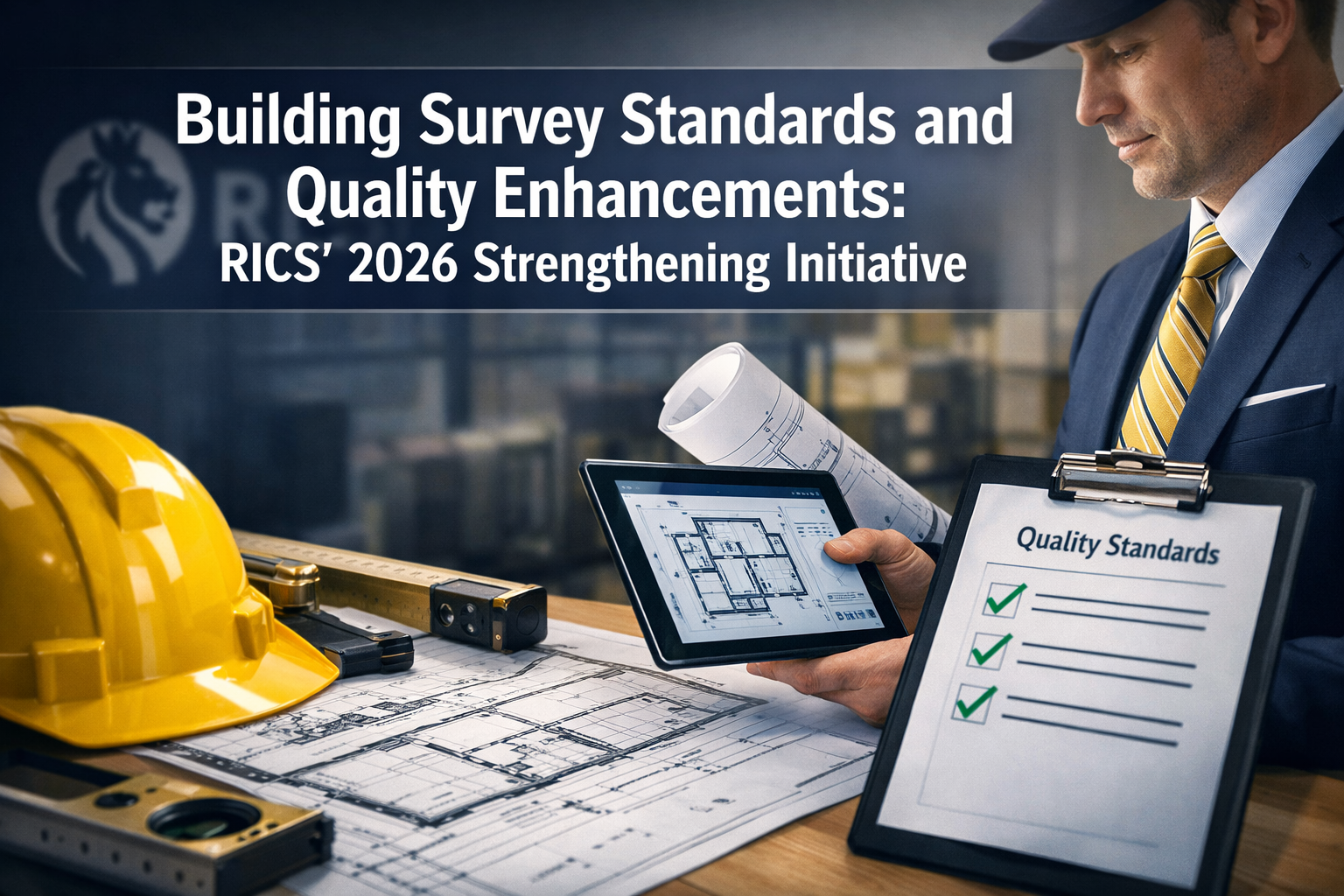
The property surveying landscape is experiencing a significant transformation in 2026. As chartered surveyors navigate an increasingly complex housing market with diverse property types and evolving consumer expectations, the Royal Institution of Chartered Surveyors (RICS) is actively strengthening home survey standards to ensure quality, transparency, and relevance. Building Survey Standards and Quality Enhancements: RICS' 2026 Strengthening Initiative and What It Means for Practitioners represents a pivotal moment for the profession—one that will reshape how surveys are conducted, reported, and valued by both practitioners and property buyers.
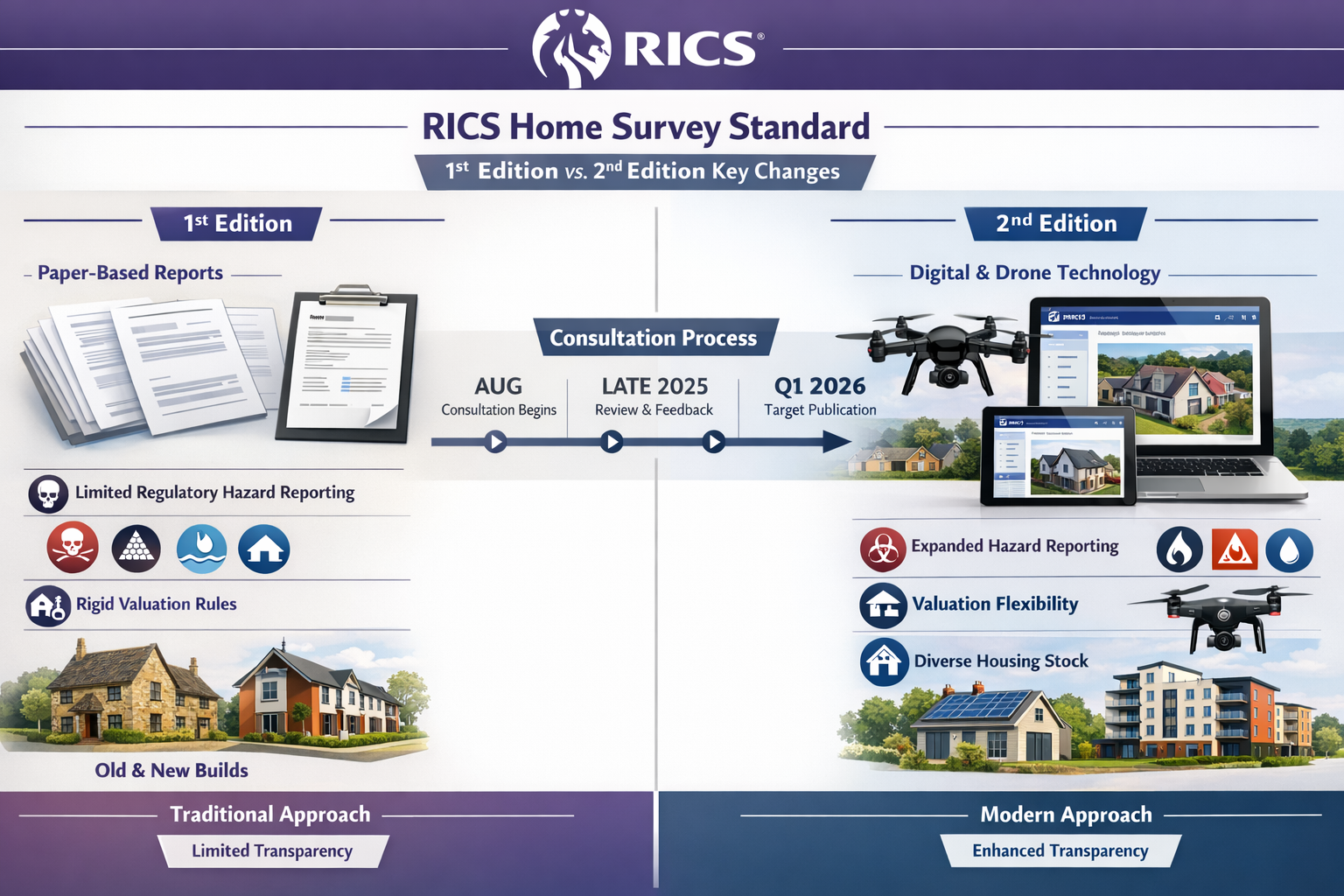
With the 2nd edition of the Home Survey Standard targeted for publication by March 31, 2026, surveyors across the United Kingdom are preparing for changes that will impact their daily practice, technological toolkit, and professional responsibilities.[1] This comprehensive update follows an extensive public consultation that received over 1,000 comments, demonstrating the industry's engagement with these critical quality enhancements.[1][3]
Key Takeaways
✅ Q1 2026 Publication Timeline: RICS aims to publish the 2nd edition of the Home Survey Standard by March 31, 2026, following extensive consultation and regulatory approval processes.[1]
✅ Expanded Regulatory Scope: The Housing Health & Safety Rating System will expand in phases throughout 2026-2027, covering fire, electrical, hygiene, and excess cold hazards.[1]
✅ Technology Integration: The updated standard formally recognizes modern surveying technologies, including drone inspections for residential properties.[1]
✅ Enhanced Flexibility: New provisions allow valuation to be included at any survey level, extending scope beyond traditional condition-based reporting.[1]
✅ Clarity and Transparency: The standard distinguishes clearly between mandatory requirements ('musts') and recommended practices ('shoulds') to improve professional guidance and consumer understanding.[3]
Understanding the RICS 2026 Strengthening Initiative Context
Why Standards Matter for Building Surveyors
Professional standards serve as the foundation of trust between surveyors and the public. For practitioners conducting a RICS building survey, standards provide the framework that ensures consistency, quality, and professional accountability across the industry. In 2026, these standards are more critical than ever as property transactions become increasingly complex and consumers demand greater transparency.
The current initiative reflects RICS' commitment to maintaining the profession's relevance in a rapidly changing environment. With housing stock diversifying to include historic buildings, new builds, and retrofit properties, surveyors need updated guidance that addresses these specific challenges.[1]
The Consultation Process and Industry Engagement
The public consultation launched on August 19, 2025, represented one of the most comprehensive engagement exercises in RICS' recent history.[1][3] The organization received feedback from:
- Practicing chartered surveyors across various specializations
- Consumer advocacy groups concerned with transparency
- Professional indemnity insurers focused on risk management
- Regulatory bodies ensuring public protection
- Technology providers supporting modern survey methods
This diverse input has shaped a standard that balances professional flexibility with consumer protection—a delicate equilibrium that defines effective regulation.[3]
New Leadership Guiding the Initiative
In December 2025, RICS appointed a new project lead with 20 years of experience as a Chartered Surveyor to guide the standard through its critical final phases.[3] This appointment signals the organization's commitment to practitioner-led development, ensuring that the updated standard reflects real-world surveying challenges and opportunities.
The leadership transition comes at a crucial time, as the organization analyzes consultation feedback and prepares the final draft for regulatory approval. With a progress update expected by the end of March 2026, practitioners can anticipate clarity on implementation timelines and transition requirements.[3]
Key Changes in Building Survey Standards and Quality Enhancements: RICS' 2026 Strengthening Initiative
Expanded Regulatory Hazards Coverage
One of the most significant changes in Building Survey Standards and Quality Enhancements: RICS' 2026 Strengthening Initiative and What It Means for Practitioners involves the expansion of regulatory hazards under the Housing Health & Safety Rating System (HHSRS).
Phase Implementation Timeline:
| Phase | Expected Timeframe | Hazards Covered |
|---|---|---|
| First Phase | Completed 2025 | Foundation hazards |
| Second Phase | 2026 | Fire, electrical, hygiene, excess cold |
| Final Phase | 2027 | Comprehensive coverage of all hazards |
This phased approach allows surveyors to adapt their inspection protocols and reporting frameworks gradually, ensuring quality isn't compromised during the transition.[1] For practitioners conducting building surveys, this means developing enhanced competencies in identifying and assessing these specific hazard categories.
Valuation Flexibility Across Survey Levels
The 2nd edition introduces a groundbreaking change: valuation can now be included at any survey level, not just specific tiers.[1] This flexibility responds to consumer demand for comprehensive property assessments that combine condition analysis with market value insights.
Practical Implications:
- 📊 Surveyors can offer tailored packages combining inspection depth with valuation services
- 💰 Clients benefit from integrated reports that support both purchase decisions and price negotiations
- 🎯 Enhanced market positioning for practices offering comprehensive assessment services
- ⚖️ Clear guidelines prevent scope confusion and manage professional liability
This change acknowledges that property buyers increasingly seek holistic advice rather than compartmentalized services, reflecting broader market trends toward integrated professional support.
Housing Stock Diversification Guidance
Modern housing stock presents unique challenges that the original standard didn't fully address. The 2026 update provides specific guidance for:
Historic Buildings 🏛️
- Conservation considerations in inspection methodology
- Specialized knowledge requirements for period features
- Reporting frameworks that respect heritage significance
New Build Properties 🏗️
- Warranty and defect liability period considerations
- Modern construction method assessment
- Developer handover quality verification
Retrofit and Renovated Homes ♻️
- Energy efficiency upgrade evaluation
- Building regulation compliance verification
- Integration quality between old and new elements
This diversification recognizes that a one-size-fits-all approach no longer serves the market effectively. Surveyors must demonstrate competence across property types or clearly define their specialization areas.[1]
Technological Integration and Modern Survey Methods
Perhaps the most forward-looking aspect of Building Survey Standards and Quality Enhancements: RICS' 2026 Strengthening Initiative and What It Means for Practitioners is the formal recognition of technological developments in surveying practice.
Drone Inspections 🚁
The standard now acknowledges drone technology for residential property surveys, particularly for:
- Roof condition assessment without physical access
- Chimney stack and high-level masonry inspection
- Large property external envelope evaluation
- Safety-critical inspections of dangerous access areas
This recognition doesn't mandate drone use but establishes frameworks for appropriate deployment, quality standards, and reporting requirements when technology is employed.[1]
Digital Reporting Platforms
While not prescriptive about specific software, the standard encourages digital reporting that enhances:
- Consumer accessibility and understanding
- Visual documentation integration
- Interactive elements for complex issues
- Secure delivery and archiving
Survey Level Transparency Improvements
Consumer confusion about survey levels has long been an industry challenge. The 2nd edition addresses this through enhanced transparency requirements that help property buyers understand exactly what they're purchasing.[1]
Surveyors must now provide clearer explanations of:
- Inspection limitations at each survey level
- What is and isn't included in the scope
- Appropriate property types for each survey level
- Additional services available beyond standard offerings
This transparency benefits both consumers and practitioners by setting realistic expectations and reducing post-survey disputes. For those wondering which home survey is right for them, these clearer definitions provide essential decision-making support.
Practical Implications for Practitioners: What Building Survey Standards and Quality Enhancements Mean
Mandatory Requirements vs. Recommended Practices
A consistent theme from the consultation feedback was the need for clarity about what surveyors must do versus what they should do.[3] The revised standard addresses this by:
'Must' Requirements (Mandatory)
- ✔️ Legally required actions
- ✔️ Consumer protection essentials
- ✔️ Professional indemnity insurance prerequisites
- ✔️ Regulatory compliance obligations
'Should' Requirements (Recommended)
- 💡 Best practice guidance
- 💡 Quality enhancement opportunities
- 💡 Competitive differentiation options
- 💡 Professional development pathways
This distinction helps surveyors understand their baseline obligations while identifying opportunities to exceed minimum standards and deliver exceptional service.
Balancing Prescriptiveness with Professional Judgment
RICS faces a delicate balance: providing sufficient guidance to ensure quality while preserving the professional judgment that defines chartered surveying.[3] The 2026 standard addresses this by:
Establishing Clear Frameworks without dictating specific methodologies
Defining Outcomes rather than prescribing exact processes
Recognizing Competence as the foundation for appropriate decision-making
Encouraging Innovation within quality-assured parameters
This approach respects the expertise of chartered surveyors while ensuring consistent public protection across the profession.
Updated Legal and Regulatory Framework
The property surveying landscape operates within a complex legal and regulatory environment that evolves continuously. The 2nd edition updates guidance to reflect:
- Current building regulations and compliance requirements
- Consumer protection legislation changes
- Professional indemnity insurance market developments
- Data protection and privacy obligations
- Environmental and sustainability regulations
For practitioners, this means the standard serves as a comprehensive reference point for legal compliance, reducing the research burden and ensuring current practice aligns with regulatory expectations.[1]
Quality Assurance and Professional Development
Building Survey Standards and Quality Enhancements: RICS' 2026 Strengthening Initiative and What It Means for Practitioners emphasizes continuous professional development as essential to maintaining competence in an evolving field.
CPD Focus Areas for 2026:
- Technology Competence: Understanding and appropriately deploying modern survey technologies
- Hazard Assessment: Enhanced skills in identifying and evaluating HHSRS hazards
- Diverse Property Types: Specialized knowledge for historic, new build, and retrofit properties
- Consumer Communication: Improved transparency and explanation skills
- Regulatory Awareness: Current understanding of legal and compliance frameworks
Surveyors who proactively develop these competencies will be best positioned to deliver high-quality services under the new standard while differentiating themselves in a competitive market.
Implementation Timeline and Transition Considerations

Current Status and Publication Expectations
As of February 17, 2026, the Home Survey Standard 2nd edition is in its final development phase. The timeline includes:
✅ Completed Stages:
- Public consultation (August 19, 2025 – closure)
- Feedback analysis (ongoing)
- Draft revisions based on consultation input
🔄 Current Stage:
- Member-led professional panel review
- Expert board evaluation
- Regulatory approval process
📅 Upcoming Milestones:
- Progress update by end of March 2026[3]
- Final publication by March 31, 2026 (target)[1]
- Implementation guidance release
- Transition period commencement
This timeline places the profession in a critical preparatory phase where understanding likely changes and planning adaptation strategies is essential.
Preparing Your Practice for the New Standards
Forward-thinking surveyors are already preparing for the enhanced standards by:
Reviewing Current Procedures 📋
- Comparing existing practices against draft standard requirements
- Identifying gaps in current methodology
- Planning process improvements and documentation updates
Investing in Technology 💻
- Evaluating drone inspection capabilities
- Upgrading digital reporting platforms
- Implementing quality assurance software
Enhancing Team Competencies 👥
- Scheduling relevant CPD activities
- Developing specialization in diverse property types
- Improving consumer communication skills
Updating Client Communications 📢
- Revising service descriptions for clarity
- Developing transparent scope explanations
- Creating educational materials about survey levels
Practices that invest in these preparations will experience smoother transitions and maintain service continuity when the standard becomes effective.
Managing the Transition Period
RICS typically provides transition periods when implementing significant standard changes, allowing practitioners to adapt systems and processes without immediate compliance pressure. While specific transition arrangements haven't been finalized, surveyors should anticipate:
- Grace period for updating templates and procedures
- Phased implementation of complex requirements
- Guidance materials supporting practical application
- Support resources including webinars and workshops
During this transition, maintaining quality should remain the priority. Rushing implementation without proper understanding risks errors and professional liability exposure.
Consumer Benefits and Market Impact
Enhanced Transparency for Property Buyers
The ultimate beneficiaries of Building Survey Standards and Quality Enhancements: RICS' 2026 Strengthening Initiative and What It Means for Practitioners are property buyers who rely on professional surveys to make informed decisions.
Key Consumer Benefits:
🏠 Clearer Service Understanding: Improved explanations of what each survey level provides
💷 Better Value Perception: Understanding exactly what they're paying for
🔍 Enhanced Report Quality: More comprehensive and accessible survey reports
⚖️ Informed Negotiations: Better information supporting price negotiations
🛡️ Greater Protection: Strengthened professional standards reducing poor practice
This consumer focus aligns with RICS' public interest mandate, ensuring that professional standards serve broader societal needs beyond just practitioner interests.
Market Differentiation Opportunities
The enhanced standards create opportunities for surveyors to differentiate their services through:
Specialization in specific property types (historic, new build, retrofit)
Technology Leadership through early adoption of drone and digital tools
Enhanced Service Packages combining surveys with valuations and advisory services
Quality Certification demonstrating compliance excellence beyond minimum standards
Practices that position themselves as quality leaders under the new standards can command premium fees and attract discerning clients who value professional excellence.
Impact on Property Transactions
Survey quality directly impacts property transaction efficiency and success. The 2026 enhancements should:
- Reduce transaction failures through better defect identification
- Accelerate decision-making with clearer, more accessible reports
- Improve price accuracy through integrated valuation options
- Decrease post-purchase disputes via comprehensive hazard assessment
For the broader property market, these improvements contribute to transaction confidence and market stability—particularly important during periods of economic uncertainty.[6]
Regional Considerations and Local Market Factors
London and Metropolitan Markets
Surveyors operating in London and major metropolitan areas face unique challenges that the enhanced standards address:
Property Diversity: From period terraces in Wimbledon to modern developments in Battersea, metropolitan markets require broad competence across property types.
High-Value Transactions: Enhanced valuation integration particularly benefits premium markets where comprehensive assessment justifies higher survey investment.
Conservation Areas: Specialized guidance for historic buildings supports surveyors working in heritage-rich areas like Westminster and Notting Hill.
Technology Adoption: Urban practitioners can leverage drone technology for difficult-to-access properties in dense developments.
Regional and Rural Considerations
Beyond metropolitan centers, the standards accommodate regional market characteristics:
Rural Property Challenges: Guidance for non-standard construction and agricultural conversions
Regional Building Traditions: Recognition of local construction methods and materials
Access Limitations: Technology solutions for properties with challenging access
Market Value Variations: Valuation flexibility supporting diverse price points
Whether practicing in Croydon, Richmond, or Brentwood, surveyors will find the enhanced standards provide relevant guidance for their specific market contexts.
Professional Liability and Risk Management
Insurance Implications
Professional indemnity insurers have been active participants in the consultation process, recognizing that survey standards directly impact claims frequency and severity.[1] The 2026 enhancements should:
Reduce Claims Risk through clearer guidance and mandatory requirements
Improve Defense Positions when procedures align with current standards
Potentially Lower Premiums as industry-wide quality improvements reduce overall claims
Clarify Coverage Scope through better-defined service levels
Surveyors should proactively engage with their insurers about the new standards, ensuring coverage remains appropriate for enhanced service offerings.
Quality Assurance Protocols
The strengthened standards emphasize systematic quality assurance as essential to consistent service delivery:
Peer Review Systems: Internal checking procedures before report release
Template Compliance: Standardized reporting formats ensuring complete coverage
Continuing Education: Regular CPD maintaining current competence
Feedback Mechanisms: Learning from client input and complaint resolution
Practices that implement robust quality assurance protocols demonstrate professional maturity and reduce liability exposure while delivering superior client outcomes.
Documentation and Record Keeping
Enhanced standards bring enhanced documentation expectations. Best practices include:
- Comprehensive inspection notes supporting report conclusions
- Photographic evidence documenting conditions and defects
- Limitation records clearly noting areas not inspected
- Communication logs tracking client instructions and clarifications
- Version control managing report drafts and revisions
Proper documentation serves dual purposes: supporting quality service delivery and providing evidence of professional competence if disputes arise.
Technology and Innovation in Modern Surveying
Drone Technology Integration
The formal recognition of drone inspections in the 2026 standard represents a significant technological milestone.[1] Effective deployment requires:
Regulatory Compliance 🚁
- CAA licensing and operational permissions
- Privacy and data protection adherence
- Insurance coverage for aerial operations
- Safety protocols for residential areas
Technical Competence 📸
- High-quality imaging and video capture
- Data interpretation and analysis skills
- Integration with traditional inspection findings
- Report presentation of aerial evidence
Client Communication 💬
- Explaining technology benefits and limitations
- Managing expectations about what drones can reveal
- Addressing privacy and neighbor concerns
- Demonstrating value justification
Surveyors who master drone technology gain significant competitive advantages, particularly for complex properties where traditional access is difficult or dangerous.
Digital Reporting Evolution
Modern clients expect digital delivery and interactive content. The enhanced standards encourage:
Visual Documentation: Extensive photography and annotated diagrams
Interactive Elements: Clickable floor plans and linked defect references
Accessibility Features: Mobile-friendly formats and clear navigation
Secure Delivery: Encrypted transmission and controlled access
These digital enhancements improve client understanding and satisfaction while creating more engaging, professional deliverables that reflect contemporary expectations.
Future Technology Horizons
While the 2026 standard addresses current technology, forward-thinking surveyors are already exploring:
- Thermal imaging for energy efficiency and moisture detection
- 3D modeling for comprehensive property visualization
- AI-assisted analysis for defect pattern recognition
- Blockchain verification for report authenticity and archiving
The standard's flexible approach to technology means these innovations can be adopted as they mature without requiring further standard revisions.
Conclusion: Embracing Quality Enhancement for Professional Excellence
Building Survey Standards and Quality Enhancements: RICS' 2026 Strengthening Initiative and What It Means for Practitioners represents more than regulatory compliance—it's an opportunity to elevate the entire profession. As the 2nd edition of the Home Survey Standard approaches publication by March 31, 2026, chartered surveyors stand at a pivotal moment where embracing change positions them for long-term success.
The enhanced standards address real-world challenges that practitioners face daily: diverse property types, technological capabilities, consumer transparency expectations, and evolving regulatory requirements. By providing clearer guidance while respecting professional judgment, RICS has created a framework that supports both quality assurance and competitive differentiation.
Actionable Next Steps for Practitioners
Immediate Actions (Now – March 2026):
- Monitor RICS Communications: Watch for the progress update expected by end of March 2026[3]
- Review Current Practices: Compare existing procedures against draft standard requirements
- Identify Competence Gaps: Assess where additional training or specialization is needed
- Engage with Technology: Explore drone and digital reporting options relevant to your market
- Update Client Materials: Begin revising service descriptions for enhanced transparency
Short-Term Priorities (Q2-Q3 2026):
- Attend Implementation Training: Participate in RICS guidance sessions and workshops
- Update Templates and Procedures: Align reporting formats with new requirements
- Enhance Quality Assurance: Implement systematic checking and peer review processes
- Communicate with Insurers: Ensure professional indemnity coverage reflects enhanced services
- Develop Specializations: Build expertise in specific property types or survey methods
Long-Term Strategic Goals (2026-2027):
- Market Leadership Positioning: Differentiate through quality excellence and technology adoption
- Continuous Professional Development: Maintain cutting-edge competence as standards evolve
- Client Education: Help property buyers understand survey value and quality indicators
- Industry Contribution: Participate in future standard development and professional dialogue
- Practice Excellence: Build reputation as a quality-focused, forward-thinking surveyor
The Broader Professional Context
These enhancements don't exist in isolation. They're part of RICS' broader commitment to professional standards across all disciplines, from party wall matters to specialized services like damp surveys and stock condition assessments. The organization's approach to ESG and sustainability in commercial valuations[4] demonstrates similar quality-focused evolution across practice areas.
For consumers seeking surveyor advice or finding a surveyor, these enhanced standards provide confidence that the profession is actively maintaining relevance and quality in a changing world.
Final Thoughts
The journey toward the 2nd edition Home Survey Standard reflects the profession's maturity and commitment to public service. While change always brings challenges, it also creates opportunities for those willing to embrace quality enhancement as a competitive advantage rather than a compliance burden.
As practitioners prepare for implementation, the focus should remain on the fundamental purpose of surveying: providing property buyers with accurate, comprehensive, and understandable information that supports informed decision-making. The enhanced standards simply provide better tools and clearer frameworks for achieving this timeless professional objective.
The future of building surveying is bright for those who view Building Survey Standards and Quality Enhancements: RICS' 2026 Strengthening Initiative and What It Means for Practitioners as an opportunity to demonstrate professional excellence, serve clients better, and contribute to a stronger, more trusted profession.
References
[1] Surveyors – https://www.rpclegal.com/thinking/insurance-reviews/annual-insurance-review-2026/surveyors/
[3] Home Survey Standard 2nd Edition A Progress Update – https://www.rics.org/news-insights/home-survey-standard-2nd-edition-a-progress-update
[4] Rics Publishes Updated Global Standard Esg Sustainability Commercial Property Valuation – https://www.rics.org/news-insights/rics-publishes-updated-global-standard-esg-sustainability-commercial-property-valuation
[6] Uk Resi Survey Jan 2026 Report Shows Early Signs Market Recovery Despite Caution – https://www.rics.org/news-insights/uk-resi-survey-jan-2026-report-shows-early-signs-market-recovery-despite-caution