The UK rental market is experiencing a dramatic transformation in 2026, with institutional investors flooding back into the buy-to-let sector after years of uncertainty. Recent RICS lettings data reveals tenant demand remains elevated at 10 enquiries per property nationally—significantly above pre-pandemic norms—while rental stock sits 33% below levels from a decade ago. This supply-demand imbalance is creating unprecedented opportunities for professional landlords, but it also demands a sophisticated approach to Building Survey Risk Assessment for Institutional Buy-to-Let Investors: Navigating Increased Landlord Demand in the 2026 Recovery Phase.
As 86.4% of landlords plan rent increases and national rent growth forecasts predict 2-2.6% annual growth, institutional investors need specialized risk assessment protocols that go far beyond traditional residential surveys. The stakes are higher, the portfolios are larger, and the regulatory landscape is more complex than ever before.
Key Takeaways
✅ Market Recovery Dynamics: The 2026 recovery phase presents unique opportunities with tenant demand at 10 enquiries per property and rental yields reaching 7.2% in high-performing regions like the North West.
✅ Enhanced Risk Protocols Required: Institutional buy-to-let portfolios demand comprehensive Level 3 building surveys with specialized risk frameworks addressing regulatory compliance, tenant safety obligations, and long-term asset performance.
✅ Strategic Due Diligence: Successful institutional investors implement multi-property risk assessment matrices, portfolio-wide defect tracking systems, and proactive maintenance forecasting to maximize returns in the competitive 2026 market.
✅ Regulatory Navigation: Professional landlords must integrate building survey findings with evolving EPC requirements, electrical safety standards, and fire safety regulations to avoid costly compliance failures.
✅ Data-Driven Investment Decisions: Leveraging building survey risk assessments alongside market analytics enables institutional investors to identify high-yield opportunities while mitigating structural, financial, and regulatory risks.
Understanding the 2026 Buy-to-Let Market Recovery Landscape

The buy-to-let sector is experiencing a renaissance in 2026 after navigating several challenging years of tax changes, regulatory pressures, and economic uncertainty. The current market dynamics create both opportunities and complexities for institutional investors seeking to expand their rental portfolios.
Current Market Indicators Driving Institutional Interest
The numbers tell a compelling story about why professional landlords are re-entering the market with renewed confidence:
Tenant Demand Metrics 📊
- 10 enquiries per property nationally (down from pandemic peak of 14, but well above historical norm of 6)
- Sustained demand despite economic headwinds
- Regional variations with urban centers showing strongest tenant interest
- Professional tenant demographics increasingly seeking quality rental accommodation
Rental Growth Projections
- National rent growth forecast: 2-2.6% annually for 2026
- Regional outperformers like the North West achieving 3.6% annual growth
- Rental yields stabilizing around 7.2% in high-performing markets
- Supply constraints supporting continued rental value appreciation
Supply-Side Constraints
The rental property shortage remains the market's defining characteristic. With rental stock approximately 33% below levels from a decade ago, landlords with quality properties are positioned advantageously. This scarcity has been driven by:
- Previous regulatory changes causing portfolio reductions
- Increased compliance costs deterring smaller landlords
- Limited new build supply entering the rental sector
- Conversion of rental properties to owner-occupation
Why Institutional Investors Are Returning Now
Professional landlords and institutional investors are recognizing several strategic advantages in the 2026 market environment:
-
Stabilized Regulatory Framework: After years of continuous change, the regulatory environment is becoming more predictable, allowing for better long-term planning.
-
Professionalization Opportunity: Smaller landlords exiting the market create acquisition opportunities for well-capitalized institutional investors who can absorb compliance costs across larger portfolios.
-
Yield Advantage: With interest rates stabilizing and rental growth outpacing many traditional investment vehicles, buy-to-let offers attractive risk-adjusted returns.
-
Demographic Trends: Changing homeownership patterns and lifestyle preferences are creating a permanent rental class requiring professional management and quality accommodation.
However, these opportunities come with heightened risks that demand sophisticated assessment approaches. Understanding the difference between survey levels becomes crucial when evaluating potential portfolio additions.
Building Survey Risk Assessment for Institutional Buy-to-Let Investors: Core Methodologies

Institutional investors require fundamentally different survey approaches compared to individual homebuyers. The Building Survey Risk Assessment for Institutional Buy-to-Let Investors: Navigating Increased Landlord Demand in the 2026 Recovery Phase demands comprehensive evaluation protocols that address both immediate structural concerns and long-term portfolio performance factors.
Level 3 Building Surveys: The Institutional Standard
For buy-to-let portfolios, the comprehensive Level 3 building survey (formerly known as a structural survey) represents the minimum acceptable standard. This detailed inspection provides:
Comprehensive Structural Analysis
- Complete examination of all accessible areas including roof spaces, foundations, and structural elements
- Identification of defects with severity ratings and repair urgency classifications
- Assessment of building materials, construction methods, and age-related deterioration
- Evaluation of previous alterations, extensions, and their compliance with building regulations
Risk-Focused Reporting
- Detailed cost estimates for identified repairs and maintenance requirements
- Prioritization of defects by urgency (immediate, short-term, long-term)
- Impact assessment on rental income potential and tenant satisfaction
- Regulatory compliance gaps requiring remediation
When considering whether to choose a homebuyers report or building survey, institutional investors should consistently opt for the more comprehensive Level 3 survey to protect their investment.
Specialized Risk Assessment Components for Buy-to-Let Properties
Beyond standard structural evaluation, institutional buy-to-let surveys must incorporate additional risk assessment layers:
1. Tenant Safety and Compliance Risk Assessment 🛡️
Modern landlord obligations extend far beyond basic property maintenance. Building surveys for buy-to-let properties must evaluate:
- Electrical Safety: Condition of wiring, consumer units, and compliance with current regulations requiring periodic testing
- Gas Safety: Boiler condition, gas appliance status, and annual safety certificate requirements
- Fire Safety: Smoke and carbon monoxide detector provisions, fire door specifications, means of escape adequacy
- EPC Requirements: Energy efficiency ratings and potential upgrade pathways to meet minimum standards
- Legionella Risk: Water system assessment for properties with complex plumbing or storage tanks
2. Maintenance Liability Forecasting
Institutional investors need predictive maintenance analysis, not just current condition reporting:
| Building Element | Assessment Focus | Risk Impact |
|---|---|---|
| Roof Systems | Remaining lifespan, leak history, replacement timeline | High – Major capital expense |
| Heating Systems | Boiler age, efficiency rating, breakdown risk | High – Tenant satisfaction critical |
| Windows & Doors | Seal integrity, security features, thermal performance | Medium – Affects EPC and tenant comfort |
| Drainage | Condition assessment, blockage history, shared system risks | Medium – Emergency repair potential |
| Damp & Timber | Moisture ingress points, treatment history, structural impact | High – Progressive deterioration risk |
For properties showing concerning moisture issues, commissioning a specific defect survey focused on damp and timber conditions provides deeper analysis.
3. Portfolio Integration Assessment
When building multi-property portfolios, individual building surveys should consider:
- Standardization Opportunities: Can maintenance approaches be standardized across similar properties?
- Bulk Procurement Potential: Are common defects present across multiple acquisitions allowing consolidated remediation?
- Management Efficiency: Do property-specific issues create disproportionate management burdens?
- Risk Concentration: Are similar defect types creating concentrated portfolio risk?
Multi-Property Risk Assessment Matrices
Sophisticated institutional investors develop portfolio-level risk frameworks that aggregate individual survey findings into strategic decision-making tools:
Risk Categorization Framework
- Category A (Low Risk): Properties requiring only routine maintenance with no significant defects
- Category B (Moderate Risk): Properties with identified issues requiring budgeted repairs within 2-5 years
- Category C (High Risk): Properties with immediate safety concerns or major structural issues requiring urgent attention
- Category D (Unacceptable Risk): Properties with fundamental defects making them unsuitable for rental without major investment
This classification system enables portfolio managers to balance risk across acquisitions, ensuring that high-risk properties with strong rental yields are offset by stable, low-maintenance assets.
Navigating Regulatory Compliance Through Building Survey Risk Assessment
The regulatory landscape for landlords has expanded significantly, making building survey risk assessment an essential compliance tool. Understanding what to do after receiving a concerning building survey report becomes particularly important when regulatory issues are identified.
Critical Regulatory Areas Identified Through Building Surveys
Energy Performance Certificate (EPC) Compliance
Since 2018, rental properties must achieve a minimum EPC rating of E, with future regulations likely to increase this threshold. Building surveys should specifically assess:
- Current EPC rating and improvement potential
- Cost-benefit analysis of energy efficiency upgrades
- Impact of improvements on rental value and tenant appeal
- Timeline for compliance with anticipated regulatory changes
Properties requiring significant investment to meet EPC standards may still represent viable acquisitions if rental yields justify the capital expenditure.
Electrical Installation Condition Reports (EICR)
Landlords must ensure electrical installations are inspected and tested at least every five years. Building surveys identify:
- Age and condition of electrical systems
- Compliance with current wiring regulations
- Immediate safety hazards requiring urgent remediation
- Anticipated costs for bringing installations to compliant standards
Housing Health and Safety Rating System (HHSRS)
Local authorities assess rental properties against 29 potential hazards under HHSRS. Building surveys provide early identification of:
- Category 1 hazards (serious risks requiring immediate action)
- Category 2 hazards (less serious but still requiring attention)
- Structural issues affecting tenant health and safety
- Environmental hazards including damp, mold, and inadequate heating
Using Survey Findings for Strategic Negotiation
One of the most valuable aspects of comprehensive building surveys is their utility in purchase negotiations. Understanding the average price reduction after survey provides institutional investors with realistic expectations for renegotiation potential.
Negotiation Strategies Based on Survey Findings:
✅ Immediate Safety Issues: Properties with Category 1 HHSRS hazards or urgent structural defects justify significant price reductions or seller remediation requirements
✅ Compliance Gaps: Identified regulatory non-compliance provides objective evidence for price adjustments reflecting remediation costs
✅ Maintenance Backlog: Quantified repair schedules with cost estimates support data-driven negotiation positions
✅ Hidden Defects: Discovery of previously undisclosed issues strengthens negotiating leverage considerably
Professional investors typically achieve price reductions of 5-15% when significant defects are identified, though this varies based on market conditions and seller motivation.
Strategic Implementation: Building Survey Risk Assessment Protocols for 2026
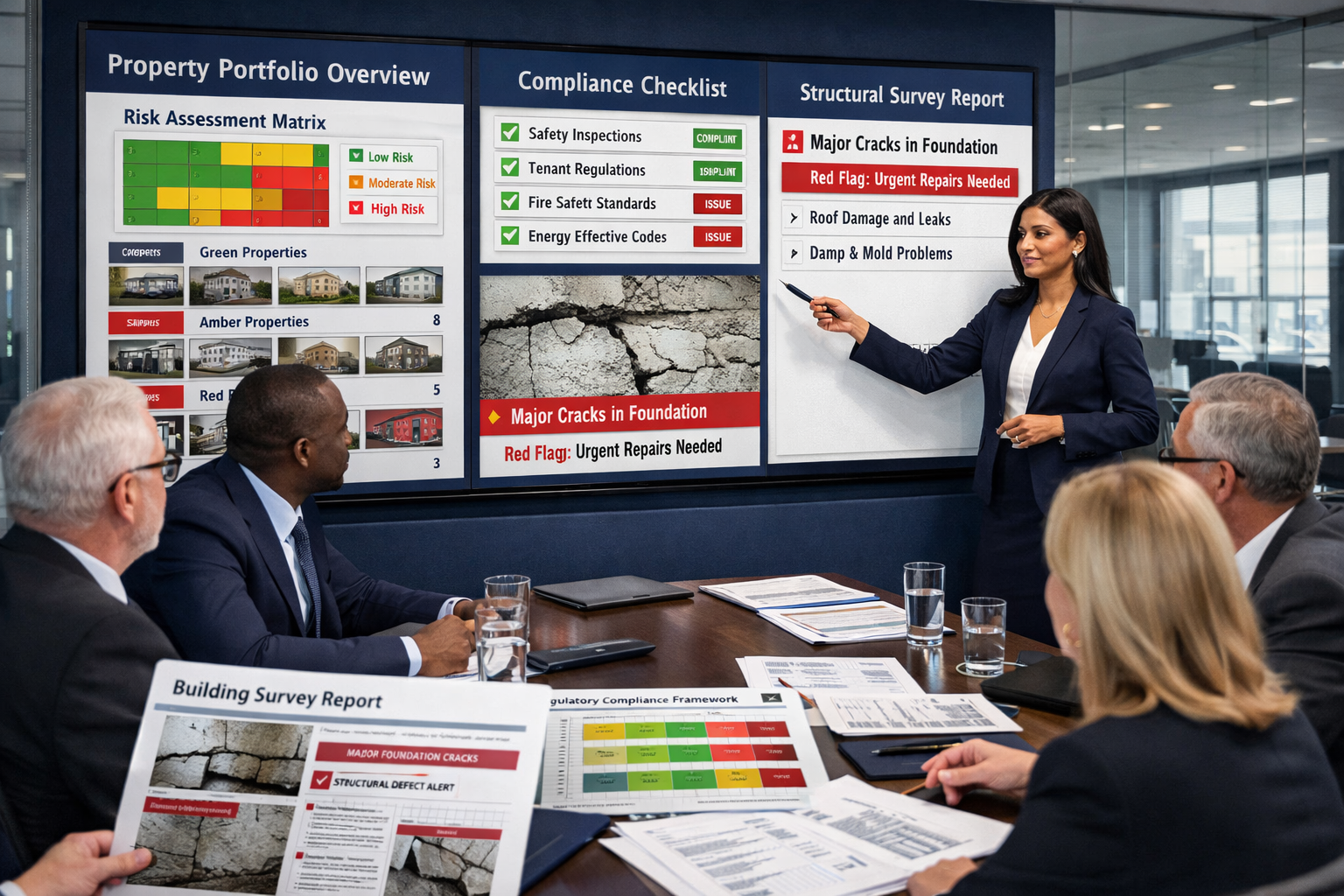
Successfully implementing Building Survey Risk Assessment for Institutional Buy-to-Let Investors: Navigating Increased Landlord Demand in the 2026 Recovery Phase requires systematic approaches that scale across growing portfolios.
Developing Standardized Survey Procurement Processes
Institutional investors benefit from establishing consistent survey procurement protocols:
1. Qualified Surveyor Selection Criteria
Working with RICS-qualified surveyors ensures professional standards and appropriate insurance coverage. When finding the best local surveyor, institutional investors should prioritize:
- RICS Membership: Ensures adherence to professional standards and continuing education requirements
- Buy-to-Let Specialization: Experience with rental property-specific issues and regulatory frameworks
- Local Market Knowledge: Understanding of regional construction methods, common defects, and local authority requirements
- Portfolio Experience: Capability to handle multiple property assessments with consistent methodology
- Technology Integration: Ability to provide digital reports, photographic evidence, and data in formats suitable for portfolio management systems
2. Survey Specification Templates
Developing standardized survey specifications ensures consistency across portfolio acquisitions:
Core Survey Requirements:
- Full Level 3 building survey for all properties regardless of age or apparent condition
- Specific assessment of landlord compliance areas (electrical, gas, fire safety, EPC)
- Detailed cost estimates for all identified repairs with urgency classifications
- Photographic documentation of all significant defects
- Assessment of accessibility for future maintenance and inspections
Supplementary Investigations:
- Specialist damp and timber surveys where moisture issues are suspected
- Drainage surveys for properties with historical drainage problems
- Structural engineer consultations for properties with significant structural concerns
- Environmental surveys for properties near contaminated land or with unusual construction materials
3. Timeline and Coordination Management
Efficient survey management prevents transaction delays:
- Pre-offer surveys for competitive markets where speed is essential
- Conditional offer surveys with defined timelines for report delivery and review
- Coordinated multi-property surveys when acquiring portfolio packages
- Follow-up inspection protocols for clarification of significant findings
Integrating Survey Findings into Investment Decision Frameworks
Building survey risk assessments must feed directly into investment decision-making processes:
Financial Modeling Integration
Survey findings directly impact investment returns through:
Acquisition Cost Adjustments
- Price renegotiation based on identified defects
- Contingency reserves for uncertain repair costs
- Timeline adjustments affecting financing costs
Operational Expense Forecasting
- Immediate repair budgets for pre-tenanting work
- Scheduled maintenance reserves for medium-term requirements
- Long-term capital expenditure planning for major system replacements
Revenue Impact Assessment
- Rental value optimization through strategic improvements
- Void period extensions for necessary remediation work
- Tenant retention implications of property condition
Risk-Adjusted Return Calculations
Sophisticated investors incorporate survey-identified risks into return projections:
| Risk Factor | Impact on Returns | Mitigation Strategy |
|---|---|---|
| Major structural defects | -15% to -30% ROI | Price reduction or walk away |
| Regulatory non-compliance | -5% to -15% ROI | Budgeted remediation program |
| Deferred maintenance | -3% to -10% ROI | Phased improvement plan |
| Energy efficiency upgrades | +2% to +8% ROI | Strategic improvement for premium rents |
Portfolio-Level Risk Management Systems
As institutional portfolios grow, systematic risk management becomes essential:
1. Centralized Defect Tracking
Implementing portfolio management systems that:
- Aggregate survey findings across all properties
- Track remediation progress and completion
- Monitor recurring defect patterns indicating systematic issues
- Generate portfolio-wide risk reports for stakeholders
2. Predictive Maintenance Scheduling
Using survey data to develop proactive maintenance calendars:
- Scheduled inspections based on identified risk areas
- Preventive maintenance programs addressing common defects
- Capital expenditure forecasting for major system replacements
- Vendor relationship development for efficient repair delivery
3. Compliance Monitoring Frameworks
Systematic tracking of regulatory obligations:
- EPC certification renewal schedules
- Electrical testing five-year cycles
- Gas safety annual certification
- Fire safety equipment inspection intervals
- Legionella risk assessment reviews
Leveraging Technology in Building Survey Risk Assessment
Modern institutional investors increasingly utilize technology to enhance survey value:
Digital Survey Platforms 📱
- Cloud-based report delivery with searchable databases
- Photographic evidence with geotagging and date stamping
- Integration with property management software
- Mobile accessibility for on-site decision-making
Data Analytics Applications
- Pattern recognition across portfolio survey findings
- Benchmarking against regional property condition norms
- Predictive modeling for maintenance cost forecasting
- Risk scoring algorithms for acquisition prioritization
Thermal Imaging and Advanced Diagnostics
- Enhanced defect detection beyond visual inspection
- Moisture mapping for comprehensive damp assessment
- Insulation effectiveness evaluation for EPC improvement planning
- Electrical hotspot identification for safety risk mitigation
Regional Considerations: Building Survey Risk Assessment Across UK Markets
The 2026 recovery phase shows significant regional variation, requiring location-specific survey considerations:
High-Growth Regional Markets
North West England (3.6% rent growth, 7.2% yields)
- Older Victorian and Edwardian housing stock requiring careful structural assessment
- Industrial heritage buildings converted to residential use needing specialist evaluation
- Strong tenant demand justifying investment in property improvements
- Local authority variation in enforcement priorities affecting compliance focus
London and Southeast (Premium rental markets)
- Leasehold complexities requiring additional legal and structural considerations
- High property values making survey findings more financially significant
- Stricter local authority enforcement of housing standards
- Period property prevalence requiring heritage-sensitive approaches
When investing in specific London locations, working with local property surveyors who understand regional construction patterns and regulatory nuances provides significant advantages.
Property Type-Specific Considerations
Houses in Multiple Occupation (HMOs)
HMO properties require enhanced survey protocols addressing:
- Fire safety provisions including fire doors, detection systems, and escape routes
- Shared facility adequacy and condition
- Room size compliance with local HMO licensing standards
- Structural capacity for intensive occupancy patterns
- Sound insulation between units
Purpose-Built Flats and Apartments
Multi-unit buildings introduce additional complexities:
- Building-wide systems (heating, water, structure) affecting individual unit viability
- Service charge implications of major works identified in surveys
- Freeholder responsibilities versus leaseholder obligations
- Cladding and fire safety considerations post-Grenfell
Converted Properties
Properties converted from commercial to residential use or subdivided houses require:
- Building regulation compliance verification for conversion works
- Structural adequacy assessment for altered layouts
- Sound insulation testing between units
- Compliance with current fire safety standards for conversions
Cost-Benefit Analysis: Investing in Comprehensive Building Survey Risk Assessment
While comprehensive building surveys represent a significant upfront cost, the return on investment for institutional buy-to-let portfolios is substantial:
Direct Financial Benefits
Negotiation Leverage 💰
- Average price reductions of 5-15% when significant defects identified
- On a £300,000 property, this represents £15,000-£45,000 in savings
- Survey cost (typically £800-£1,500) represents exceptional ROI when negotiations succeed
Avoided Acquisition Mistakes
- Walking away from fundamentally flawed properties saves entire investment
- Identifying properties requiring disproportionate remediation prevents poor allocation of capital
- Discovering hidden defects before completion prevents costly post-purchase surprises
Optimized Maintenance Planning
- Accurate repair cost forecasting prevents budget overruns
- Prioritized maintenance scheduling maximizes property availability for rental income
- Preventive maintenance identification reduces emergency repair costs
Risk Mitigation Value
Regulatory Compliance Assurance
- Early identification of compliance gaps prevents enforcement action
- Systematic remediation planning avoids rushed, expensive emergency compliance work
- Documentation of due diligence provides legal protection if issues arise
Tenant Satisfaction and Retention
- Addressing defects before tenanting improves initial tenant experience
- Proactive maintenance reduces tenant complaints and turnover
- Quality properties command premium rents and attract better tenants
Portfolio Reputation Protection
- Systematic quality standards across portfolio enhance institutional reputation
- Professional approach to property condition supports brand development
- Reduced risk of negative publicity from property condition issues
Long-Term Strategic Advantages
Institutional investors who implement rigorous building survey risk assessment protocols position themselves advantageously in the 2026 recovery phase:
-
Competitive Acquisition Advantage: Ability to move quickly with confidence on suitable properties while avoiding problematic assets
-
Operational Efficiency: Standardized approaches to property assessment and maintenance create economies of scale
-
Stakeholder Confidence: Systematic risk management demonstrates professional governance to investors and lenders
-
Regulatory Resilience: Proactive compliance positioning protects against regulatory change impacts
-
Portfolio Optimization: Data-driven decision-making enables continuous improvement of portfolio composition and performance
Future-Proofing: Anticipating Regulatory and Market Evolution
The buy-to-let landscape continues evolving, and building survey risk assessment must anticipate future changes:
Emerging Regulatory Trends
Enhanced Energy Efficiency Requirements
- EPC minimum standards likely to increase from E to C rating by 2028-2030
- Building surveys should assess feasibility and cost of achieving higher ratings
- Properties with limited improvement potential may face obsolescence risk
Electrical Safety Expansion
- Current five-year testing requirements may be supplemented with additional safety standards
- Smart home technology integration may become compliance requirement
- Survey assessment of electrical system upgrade capacity becomes increasingly important
Tenant Protection Legislation
- Continuing evolution of tenant rights affecting landlord obligations
- Property condition standards likely to become more stringent
- Building surveys identifying marginal compliance issues provide early warning
Market Evolution Considerations
Tenant Expectations Rising
- Professional tenants increasingly expect high-quality, well-maintained properties
- Survey-identified improvements that enhance tenant appeal justify investment
- Properties meeting higher standards command rental premiums
Institutional Competition Intensifying
- As more professional investors enter the market, quality standards rise
- Comprehensive due diligence becomes competitive necessity
- Portfolio differentiation through superior property condition creates market advantage
Technology Integration
- Smart home features becoming tenant expectations
- Building surveys should assess infrastructure capability for technology integration
- Properties with modern systems and upgrade capacity have competitive advantages
Conclusion: Strategic Excellence in Building Survey Risk Assessment for 2026 and Beyond
The 2026 recovery phase in the UK buy-to-let market presents exceptional opportunities for institutional investors who approach property acquisition with sophisticated risk assessment protocols. With tenant demand elevated at 10 enquiries per property, rental growth forecasted at 2-2.6% annually, and supply constraints supporting continued value appreciation, the fundamentals strongly favor professional landlords with quality portfolios.
However, success in this competitive environment demands more than capital and market timing. Building Survey Risk Assessment for Institutional Buy-to-Let Investors: Navigating Increased Landlord Demand in the 2026 Recovery Phase represents the foundation of sustainable portfolio development, protecting investments while optimizing returns.
Key Success Factors for Institutional Investors
✅ Commit to Comprehensive Assessment: Level 3 building surveys should be non-negotiable for all acquisitions, regardless of property age or apparent condition
✅ Integrate Regulatory Compliance: Building surveys must specifically address landlord obligations including electrical safety, EPC requirements, and HHSRS standards
✅ Develop Systematic Processes: Standardized survey procurement, reporting, and integration into investment decisions creates efficiency and consistency
✅ Leverage Negotiation Opportunities: Use survey findings strategically to optimize acquisition pricing and terms
✅ Implement Portfolio-Level Risk Management: Aggregate survey data across properties to identify patterns, manage risks systematically, and optimize maintenance strategies
✅ Anticipate Future Requirements: Assess properties not just against current standards but against likely future regulatory and market expectations
Actionable Next Steps
For institutional investors seeking to capitalize on the 2026 buy-to-let recovery:
-
Establish Surveyor Relationships: Develop partnerships with qualified RICS surveyors who understand buy-to-let requirements and can provide consistent service across portfolio acquisitions
-
Create Survey Specification Templates: Document your standard survey requirements to ensure consistency and comprehensiveness across all property assessments
-
Implement Portfolio Management Systems: Invest in technology platforms that centralize survey findings, track remediation, and support data-driven decision-making
-
Develop Financial Modeling Integration: Ensure survey findings feed directly into acquisition pricing, operational budgeting, and return projections
-
Build Compliance Monitoring Frameworks: Create systematic approaches to tracking and maintaining regulatory compliance across growing portfolios
-
Conduct Portfolio Reviews: For existing holdings, commission comprehensive surveys to identify risks and opportunities within current portfolios
The institutional investors who will thrive in the 2026 recovery phase and beyond are those who recognize that building survey risk assessment is not merely a transaction cost but a strategic investment in portfolio quality, operational efficiency, and long-term value creation. By implementing rigorous assessment protocols, institutional buy-to-let investors position themselves to capitalize on the significant opportunities presented by elevated tenant demand while navigating the complexities of modern landlord obligations with confidence and professionalism.
The market conditions are favorable, the opportunities are substantial, and the investors who combine capital with comprehensive due diligence will build the high-performing, compliant, and sustainable buy-to-let portfolios that define successful institutional property investment in the years ahead.