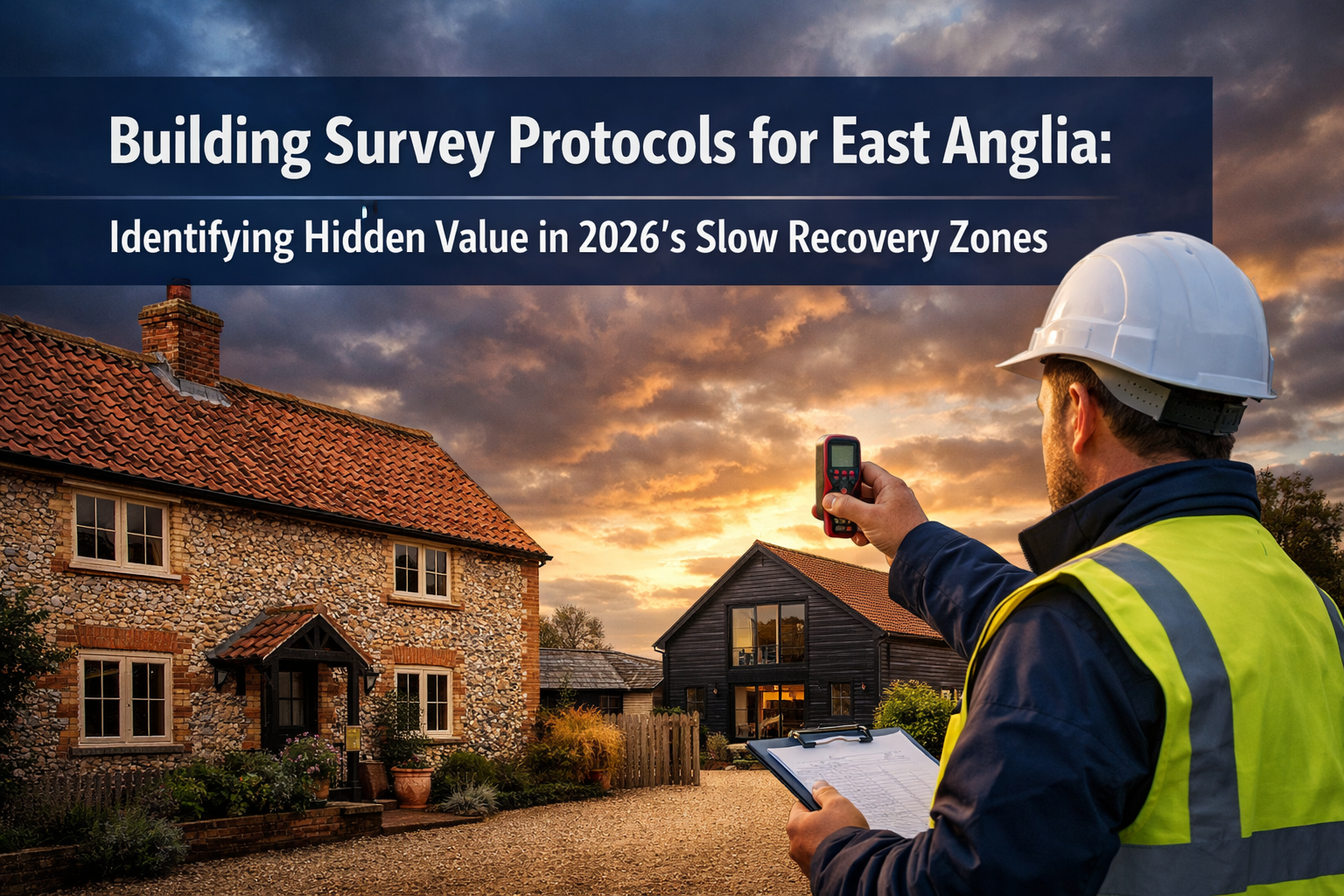
East Anglia's property market continues to puzzle investors and homebuyers alike in 2026. While national averages show tentative recovery signs, this historic region—spanning Norfolk, Suffolk, Cambridgeshire, and parts of Essex—remains stubbornly behind the curve. But here's the opportunity: Building Survey Protocols for East Anglia Price Lags: Identifying Hidden Value in 2026's Slow Recovery Zones can unlock substantial value for savvy buyers willing to look beyond surface-level market data.
The region's persistent price lag isn't necessarily a weakness—it's a strategic advantage for those equipped with proper survey protocols. Understanding how to identify structural integrity, hidden defects, and renovation potential in these cautious markets can transform seemingly stagnant properties into valuable investments.
Key Takeaways
✅ East Anglia's market lag creates unique opportunities for buyers who understand proper building survey protocols and can identify undervalued properties with solid structural foundations
🏠 Comprehensive RICS Building Surveys are essential in slow recovery zones to uncover hidden defects that sellers may not disclose in cautious markets
📊 Regional price variations within East Anglia mean Norfolk and Suffolk properties often offer better value than Cambridgeshire, requiring location-specific survey approaches
💰 Survey findings provide powerful negotiation leverage in stagnant markets, with defect-based renegotiations averaging 5-15% price reductions
🔍 Targeting period properties with structural potential rather than modern builds can reveal hidden value when proper survey protocols identify manageable renovation needs
Understanding East Anglia's 2026 Market Position
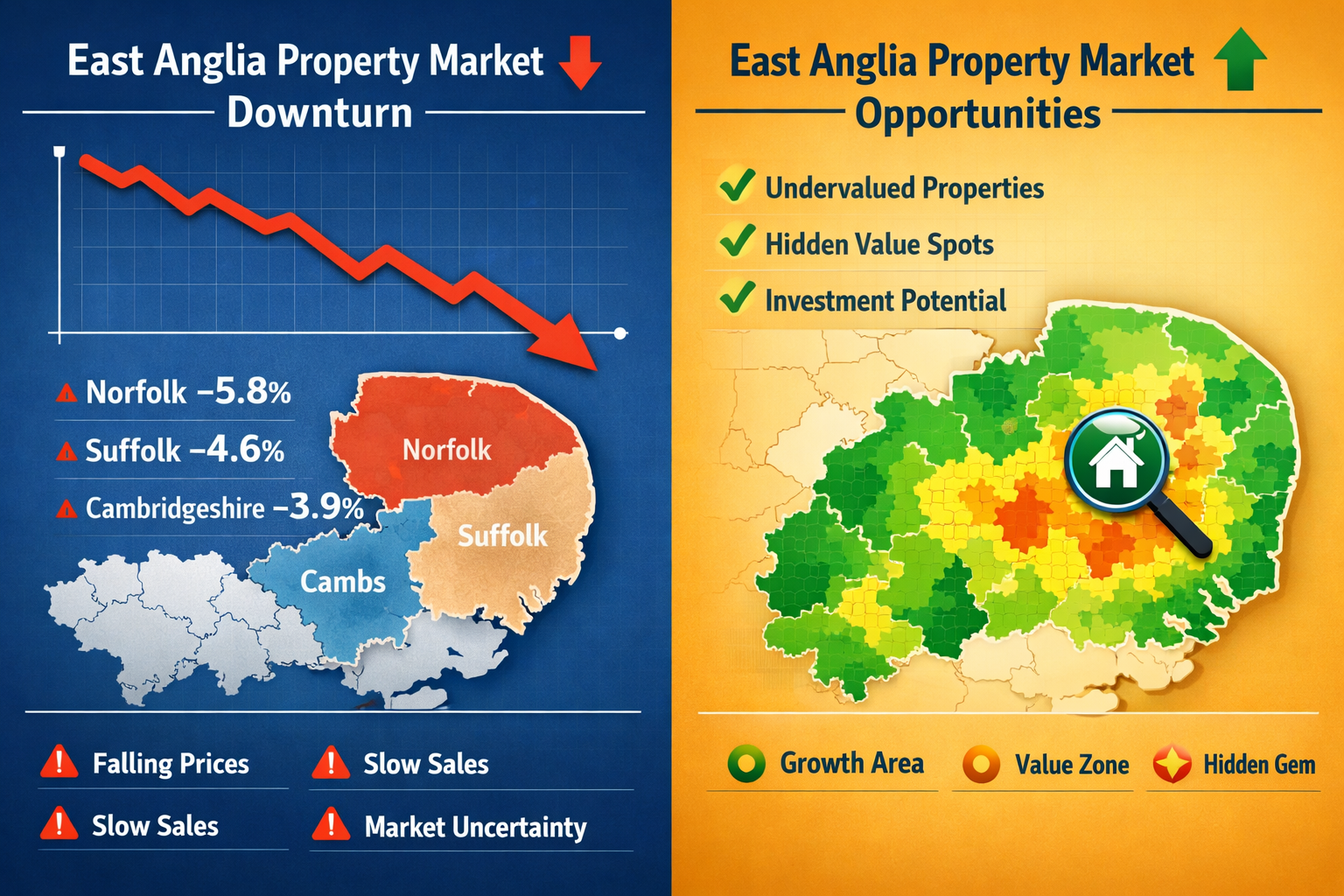
The East of England property market presents a complex picture in 2026. Recent data shows the region experiencing slower growth compared to national trends, with certain areas demonstrating significant price stagnation[1]. This lag behind the UK average creates what market analysts call "slow recovery zones"—areas where property values haven't rebounded as quickly from previous market corrections.
Regional Price Performance
East Anglia's market characteristics in 2026 include:
- Norfolk: Average house prices showing modest year-on-year changes with rural areas experiencing particular sluggishness
- Suffolk: Coastal properties maintaining steadier values while inland market remains cautious
- Cambridgeshire: Peterborough and surrounding areas showing more resilience due to London commuter demand
- Essex (eastern portions): Mixed performance with some areas benefiting from Greater London overspill
According to recent market reports, the East of England has seen more conservative price movements compared to regions like the North West and Scotland[3]. This disparity creates opportunities for buyers who can identify properties with strong fundamentals despite market hesitation.
Why the Lag Exists
Several factors contribute to East Anglia's slower recovery:
🔹 Economic uncertainty affecting rural and agricultural economies
🔹 Limited infrastructure investment compared to other regions
🔹 Demographic shifts with younger populations migrating to urban centers
🔹 Brexit impacts on agricultural sectors particularly affecting rural Norfolk and Suffolk
🔹 Cautious buyer sentiment following previous market volatility
Understanding these dynamics is crucial when developing building survey protocols tailored to the region's unique challenges.
Building Survey Protocols for East Anglia Price Lags: Essential Methodologies
Implementing proper Building Survey Protocols for East Anglia Price Lags: Identifying Hidden Value in 2026's Slow Recovery Zones requires a systematic approach that goes beyond standard property inspections. The key is understanding that price lags often mask properties with excellent structural integrity that simply haven't benefited from market momentum.
Comprehensive RICS Level 3 Building Surveys
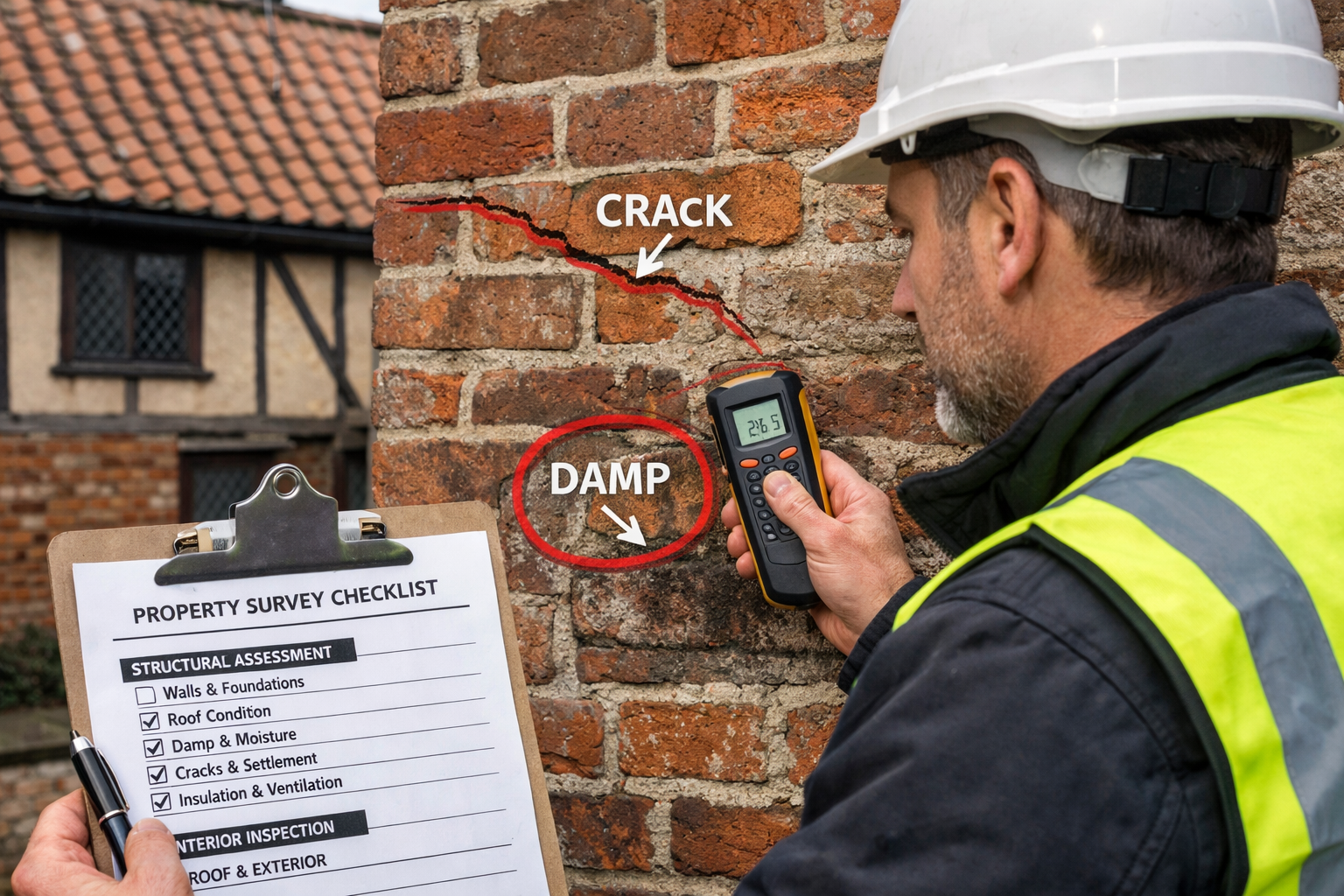
The RICS Building Survey (formerly known as a Full Structural Survey) represents the gold standard for property assessment in slow recovery zones. This detailed inspection provides:
Structural Assessment Components:
- Foundation integrity and settlement analysis
- Roof structure and covering condition
- Wall construction and damp penetration
- Timber condition and pest infestation
- Drainage systems and water ingress
- Services condition (electrical, plumbing, heating)
- Environmental factors (flood risk, ground conditions)
In East Anglia specifically, surveyors must pay particular attention to:
- Flint and traditional construction: Many Norfolk and Suffolk properties feature historic building methods requiring specialist knowledge
- Coastal exposure: Properties near the coast face unique weathering and damp challenges
- Agricultural buildings conversions: Barn conversions are common but may have hidden structural compromises
- Subsidence risks: Clay soils in parts of Cambridgeshire and Essex increase subsidence vulnerability
Targeted Inspection Protocols
When assessing properties in East Anglia's slow recovery zones, surveyors should implement these specialized protocols:
🏚️ Period Property Checklist
For properties built before 1950 (common in East Anglia):
| Inspection Area | Key Focus Points | Red Flags |
|---|---|---|
| Foundations | Settlement patterns, crack monitoring | Progressive cracking, differential settlement |
| Roof Structure | Timber condition, traditional coverings | Roof spread, rafter deterioration |
| Damp Issues | Rising damp, penetrating damp, condensation | Widespread moisture readings >20% |
| Timber Elements | Woodworm, rot, structural integrity | Active infestations, wet rot in joists |
| Services | Age and condition of systems | Pre-1970s wiring, lead pipes |
🔧 Modern Build Assessment
For properties constructed after 1980:
- Build quality verification: Checking developer reputation and construction standards
- Warranty coverage: Confirming NHBC or similar warranty validity
- Modern materials performance: Assessing cavity wall insulation, UPVC longevity
- Energy efficiency: EPC ratings and potential improvement costs
- Snagging issues: Identifying construction defects still under warranty
Technology-Enhanced Survey Methods
Modern survey protocols increasingly incorporate technology to provide more accurate assessments:
Thermal Imaging: Identifies heat loss, insulation gaps, and hidden moisture
Moisture Meters: Quantifies damp levels in walls and timbers
Borescopes: Inspects cavity walls and concealed spaces
Drone Surveys: Assesses roof condition without scaffolding access
Ground Penetrating Radar: Evaluates foundation depth and underground drainage
These tools are particularly valuable in East Anglia where traditional construction methods may conceal issues from visual inspection alone.
Identifying Hidden Value Through Survey Analysis
The true skill in Building Survey Protocols for East Anglia Price Lags: Identifying Hidden Value in 2026's Slow Recovery Zones lies not just in identifying defects, but in recognizing which properties offer genuine investment potential despite apparent issues.
Distinguishing Between Deal-Breakers and Opportunities
Not all survey findings are equal. Understanding which defects represent manageable challenges versus fundamental problems is crucial:
✅ Manageable Issues (Potential Value Opportunities)
Cosmetic Defects:
- Outdated décor and fittings
- Minor plasterwork damage
- Dated kitchen and bathrooms
- Garden overgrowth and landscaping needs
Repairable Structural Issues:
- Localized damp requiring targeted treatment
- Roof covering replacement (structure sound)
- Window and door upgrades
- Heating system modernization
- Electrical rewiring requirements
These issues often cause properties to languish on the market in slow recovery zones, creating negotiation opportunities for buyers with renovation budgets.
❌ Serious Concerns (Proceed with Caution)
Fundamental Structural Problems:
- Progressive subsidence requiring underpinning
- Extensive structural timber decay
- Major roof structure failure
- Widespread damp affecting multiple areas
- Defective drainage causing foundation damage
- Hazardous materials (asbestos, lead paint) requiring specialist removal
Even in slow markets, properties with these issues may not represent good value unless priced significantly below market rates with renovation costs factored in.
Calculating Renovation-Adjusted Value
To identify true hidden value, apply this formula:
True Property Value = Market Price – Repair Costs + Post-Renovation Value Increase
For example:
- Listed price: £280,000
- Survey-identified repairs: £35,000
- Post-renovation market value: £340,000
- Potential equity gain: £25,000
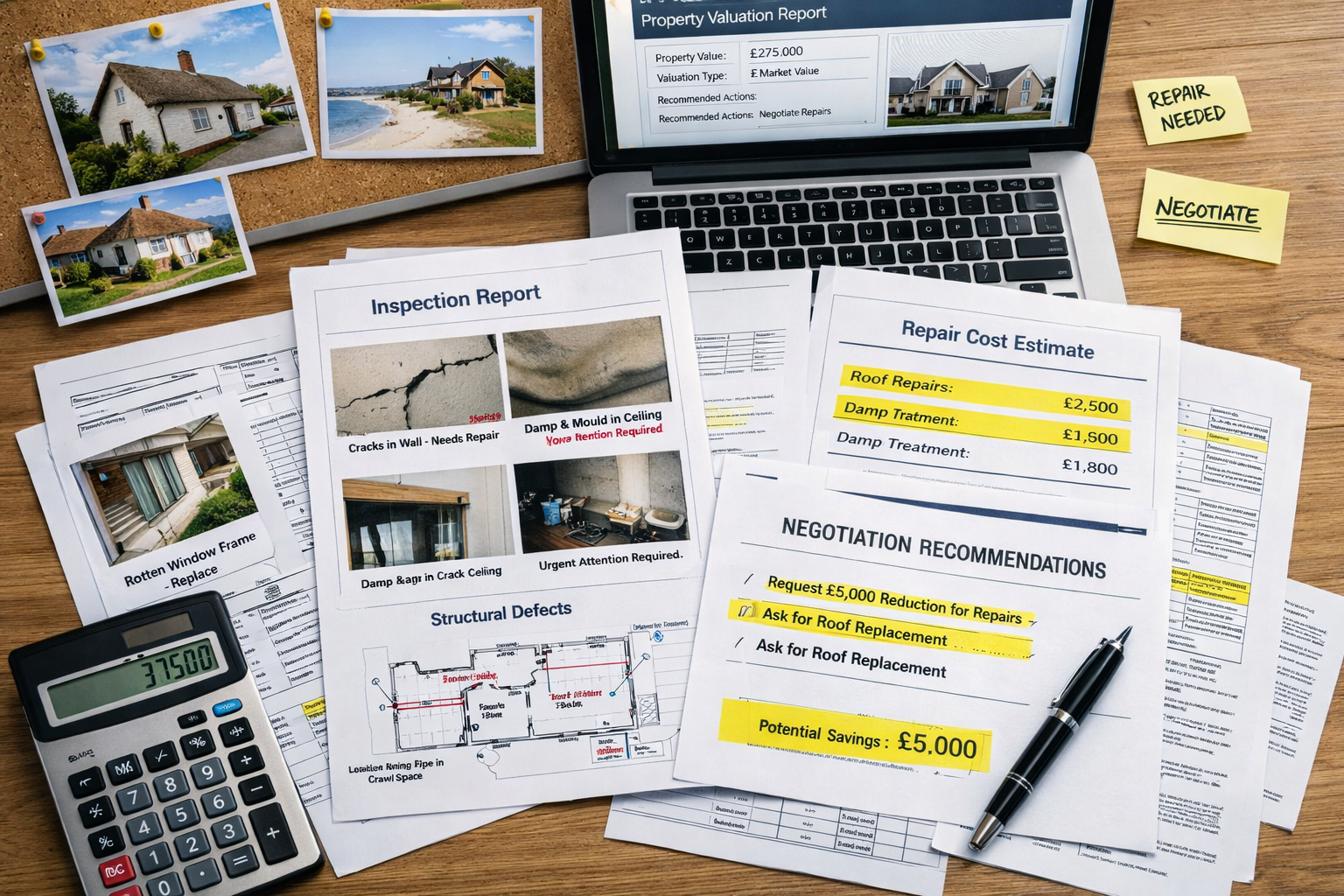
This approach works particularly well in East Anglia's slow recovery zones where sellers may be motivated to negotiate based on survey findings. Understanding how to renegotiate after a poor building survey result becomes a valuable skill.
Regional Value Indicators
Certain property characteristics signal hidden value in East Anglia specifically:
🏡 Location-Specific Opportunities:
Norfolk:
- Properties in market towns with good transport links
- Coastal properties requiring modernization but structurally sound
- Period cottages in villages with community amenities
Suffolk:
- Barn conversions with planning permission for extensions
- Properties near Ipswich with commuter potential
- Historic properties in conservation areas (premium when renovated)
Cambridgeshire:
- Properties within reasonable commute to Cambridge
- Village properties with development potential
- Ex-local authority properties in desirable areas
Essex (Eastern):
- Properties benefiting from Crossrail accessibility
- Coastal properties in regeneration areas
- Period properties in historic towns
Survey-Based Negotiation Strategies
Armed with comprehensive survey data, buyers can negotiate effectively even in cautious markets:
Negotiation Approach 1: Direct Price Reduction
Request reduction equivalent to repair costs identified in survey, typically achieving 50-70% of requested amount in slow markets.
Negotiation Approach 2: Retention Agreement
Seller agrees to retain portion of sale price in escrow until specific repairs completed, providing security for buyer.
Negotiation Approach 3: Repair Completion
Seller completes identified repairs before completion, verified by re-inspection. This approach works well when sellers are motivated but cash-constrained.
Negotiation Approach 4: Warranty Insurance
For specific defects, seller purchases warranty insurance covering future repair costs, providing buyer protection without immediate price reduction.
Knowing what to do after a bad report on building survey empowers buyers to make informed decisions rather than simply walking away from potentially valuable properties.
Implementing Survey Protocols: Practical Steps
Successfully applying Building Survey Protocols for East Anglia Price Lags: Identifying Hidden Value in 2026's Slow Recovery Zones requires a systematic approach from property identification through to purchase completion.
Step 1: Pre-Survey Property Selection
Before commissioning surveys, screen properties for hidden value potential:
Initial Assessment Criteria:
- Properties on market for 90+ days (indicates seller motivation)
- Listings with limited or poor-quality photographs (may hide cosmetic issues masking good structure)
- Properties priced below local averages without obvious reasons
- Period properties in desirable locations requiring "updating"
- Properties with vague descriptions about condition
Red Flag Indicators to Avoid:
- Properties with multiple price reductions suggesting fundamental issues
- Listings mentioning "structural work required" without specifics
- Properties in areas with known flooding or subsidence problems
- Buildings with obvious external deterioration visible in photographs
Step 2: Selecting the Right Survey Type
Different property types and conditions require appropriate survey levels:
| Property Type | Recommended Survey | Rationale |
|---|---|---|
| Modern build (<10 years) | RICS HomeBuyer Report | Lower risk, warranty coverage likely |
| Standard property (10-50 years) | RICS HomeBuyer Report or Level 3 Survey | Depends on condition and construction type |
| Period property (>50 years) | RICS Level 3 Building Survey | Traditional construction requires detailed assessment |
| Renovation project | RICS Level 3 Building Survey + Specialist reports | Comprehensive assessment essential |
| Listed building | RICS Level 3 Building Survey + Conservation specialist | Heritage considerations require expertise |
Understanding the difference between HomeBuyers Report or Building Survey helps buyers make cost-effective decisions while ensuring adequate protection.
Step 3: Commissioning Qualified Surveyors
Selecting the right surveyor is crucial for accurate assessment:
Essential Qualifications:
- RICS (Royal Institution of Chartered Surveyors) membership
- Local knowledge of East Anglia construction methods
- Experience with period properties (if applicable)
- Professional indemnity insurance
- Positive client reviews and recommendations
Questions to Ask Potential Surveyors:
- How many surveys have you conducted in [specific East Anglia location]?
- What experience do you have with [specific property type]?
- Do you use thermal imaging and moisture detection equipment?
- What is included in your survey report?
- Will you be available to discuss findings after report delivery?
- What is your typical turnaround time?
Finding the best local surveyor near you with regional expertise ensures accurate assessment of East Anglia-specific issues.
Step 4: Survey Day Preparation
Maximize survey effectiveness by:
Before Survey Day:
- Provide surveyor with property details and any known history
- Request access to loft spaces, cellars, and outbuildings
- Inform current occupants about inspection requirements
- Request utility meter locations and service histories
During Survey (if attending):
- Accompany surveyor to understand findings firsthand
- Ask questions about specific concerns
- Take photographs of identified issues
- Request preliminary feedback on major concerns
After Survey:
- Review report thoroughly within 24-48 hours
- Highlight areas requiring clarification
- Obtain quotes for identified repair works
- Prepare negotiation strategy based on findings
Step 5: Post-Survey Decision Making
Survey results should inform one of four decisions:
1️⃣ Proceed at Agreed Price
Survey reveals no significant issues; property represents fair value at current price.
2️⃣ Renegotiate Price
Survey identifies defects warranting price reduction; calculate repair costs and present evidence-based negotiation.
3️⃣ Request Repairs
Seller completes specific repairs before completion; particularly effective for safety-critical issues.
4️⃣ Withdraw from Purchase
Survey reveals fundamental problems making property unsuitable; exercise due diligence clause to recover costs where possible.
In East Anglia's slow recovery zones, option 2 (renegotiation) frequently succeeds due to motivated sellers and limited buyer competition.
Regional Considerations for East Anglia Surveys
East Anglia's diverse geography and building traditions require location-specific survey protocols:
Norfolk-Specific Considerations
Coastal Properties:
- Salt spray damage to external renders and metalwork
- Wind-driven rain penetration in exposed locations
- Flood risk assessment for coastal and tidal areas
- Coastal erosion considerations for cliff-top properties
Rural Norfolk:
- Traditional flint construction requiring specialist knowledge
- Agricultural building conversions with non-standard construction
- Septic tank and private drainage systems
- Limited mains gas requiring oil or LPG heating assessment
Norwich and Urban Areas:
- Victorian terraced properties with typical period issues
- 1960s-70s system builds requiring specific structural assessment
- Conservation area restrictions affecting renovation potential
Suffolk Considerations
Coastal Suffolk:
- Similar coastal exposure issues to Norfolk
- Historic fishing villages with unique construction methods
- Beach erosion and coastal change affecting long-term value
Inland Suffolk:
- Timber-framed buildings requiring specialist assessment
- Suffolk pink render (lime-based) requiring appropriate maintenance
- Agricultural conversions with planning restriction considerations
Ipswich and Towns:
- Victorian and Edwardian properties with standard period characteristics
- Post-war estates with concrete construction requiring assessment
- Modern developments with varying build quality
Cambridgeshire Considerations
Cambridge and Surrounding Villages:
- Higher property values requiring careful value assessment
- Conservation areas with strict planning controls
- Student rental potential affecting property suitability
Fenland Areas:
- Clay soil subsidence risks requiring foundation assessment
- High water tables affecting basements and foundations
- Historic drainage issues in reclaimed fenland
Peterborough:
- Mix of period and modern properties
- Concrete construction in 1960s developments
- Commuter location affecting value dynamics
Essex (Eastern) Considerations
Coastal Essex:
- Estuary locations with specific weathering challenges
- Flood risk in low-lying areas near Thames estuary
- Regeneration areas with varying property quality
Market Towns:
- Period properties in historic centers
- Modern estates on town peripheries
- Commuter demand affecting value stability
Cost-Benefit Analysis of Comprehensive Surveys
Investing in thorough survey protocols involves upfront costs but typically delivers substantial returns:
Survey Cost Structure
Typical Survey Costs in East Anglia (2026):
- RICS HomeBuyer Report: £400-£600 (depending on property value)
- RICS Level 3 Building Survey: £600-£1,200 (depending on property size and complexity)
- Specialist Reports (if required):
- Structural engineer assessment: £500-£1,500
- Damp and timber survey: £200-£400
- Electrical condition report: £150-£300
- Drainage survey: £250-£600
Total Investment for Comprehensive Assessment: £600-£3,000+
Return on Investment
Consider this real-world scenario from Norfolk in 2026:
Property: 1930s detached house, listed at £295,000
Survey Cost: £850 (Level 3 Building Survey)
Findings: Roof requiring replacement (£12,000), damp treatment needed (£4,500), rewiring recommended (£6,000)
Total Repair Costs: £22,500
Renegotiated Price: £275,000 (£20,000 reduction)
Net Benefit: £19,150 (£20,000 saving minus £850 survey cost)
ROI: 2,247%
This example demonstrates how comprehensive surveys in slow recovery zones frequently pay for themselves many times over through informed negotiation.
Hidden Cost Avoidance
Beyond direct negotiation benefits, thorough surveys prevent:
❌ Unexpected repair costs after purchase
❌ Safety hazards requiring immediate attention
❌ Mortgage valuation issues causing purchase delays
❌ Insurance problems due to undisclosed defects
❌ Resale difficulties when issues later discovered
For first-time buyers particularly, understanding why to book a building survey provides essential protection in unfamiliar markets.
Future-Proofing Your East Anglia Property Investment
Applying Building Survey Protocols for East Anglia Price Lags: Identifying Hidden Value in 2026's Slow Recovery Zones isn't just about immediate purchase decisions—it's about long-term investment strategy.
Market Recovery Positioning
Properties purchased with comprehensive survey knowledge during slow recovery periods typically outperform when markets rebound:
Strategic Advantages:
- Bought at market bottom: Price lags create entry opportunities
- Known condition: Survey eliminates uncertainty affecting resale
- Renovation potential: Identified improvements add value
- Negotiation equity: Purchase price reduction creates instant equity
According to forecasts, regions experiencing current price lags may see accelerated growth when market sentiment improves[3][5]. Properties purchased with structural integrity confirmed by thorough surveys will benefit most from this recovery.
Renovation Planning
Survey findings should inform strategic renovation planning:
Priority 1: Essential Repairs
- Structural stability issues
- Weatherproofing and damp prevention
- Electrical and gas safety
- Heating system functionality
Priority 2: Value-Adding Improvements
- Kitchen and bathroom modernization
- Energy efficiency upgrades
- Space optimization (loft conversions, extensions)
- Kerb appeal enhancements
Priority 3: Lifestyle Enhancements
- Decorative updates
- Landscaping
- Smart home technology
- Luxury features
Addressing priorities 1 and 2 based on survey findings maximizes property value while ensuring safety and habitability.
Long-Term Value Protection
Implementing ongoing maintenance protocols based on initial survey findings:
Annual Maintenance Checklist:
- Roof and gutter inspection
- External drainage clearance
- Damp monitoring in identified risk areas
- Heating system servicing
- Electrical testing (every 5 years minimum)
Five-Year Review:
- Comprehensive condition reassessment
- Updating repair priorities
- Planning major replacement items (roof, boiler, windows)
- Evaluating energy efficiency improvements
This proactive approach, informed by initial survey protocols, protects investment value and prevents minor issues becoming major problems.
Conclusion
Building Survey Protocols for East Anglia Price Lags: Identifying Hidden Value in 2026's Slow Recovery Zones represents more than just due diligence—it's a strategic investment approach that transforms market challenges into opportunities. East Anglia's continued lag behind national property price trends creates a unique window for savvy buyers equipped with proper survey knowledge and protocols.
The key insights for successful property investment in East Anglia's slow recovery zones include:
🏆 Comprehensive RICS Level 3 Building Surveys provide essential detailed assessment of property condition, particularly crucial for period properties common throughout Norfolk, Suffolk, and Cambridgeshire.
🏆 Survey findings deliver powerful negotiation leverage in cautious markets where sellers face limited buyer competition and extended marketing periods.
🏆 Distinguishing between manageable renovation needs and fundamental structural problems separates genuine value opportunities from money pits.
🏆 Regional expertise matters—surveyors with specific East Anglia knowledge understand local construction methods, materials, and environmental challenges.
🏆 Technology-enhanced survey methods including thermal imaging and moisture detection provide more accurate assessment than visual inspection alone.
Actionable Next Steps
For buyers targeting East Anglia properties in 2026:
1. Research Local Markets: Identify specific towns and villages within Norfolk, Suffolk, Cambridgeshire, and Essex showing price lag but strong fundamentals (transport links, amenities, employment).
2. Commission Comprehensive Surveys: Don't compromise on survey quality—invest in RICS Building Surveys for properties built before 1980 or showing any condition concerns.
3. Develop Renovation Budgets: Obtain detailed quotes for identified repair works before finalizing negotiations, ensuring realistic cost assessment.
4. Negotiate Strategically: Present survey evidence professionally, requesting price reductions or repair completion based on documented findings rather than speculation.
5. Plan Long-Term: View property purchase as multi-year investment, with survey findings informing both immediate renovation priorities and ongoing maintenance strategies.
6. Engage Local Experts: Work with qualified surveyors who understand East Anglia's unique property characteristics and market dynamics.
The properties offering greatest hidden value in 2026's slow recovery zones are those where comprehensive survey protocols reveal solid structural foundations beneath cosmetic neglect or dated presentation. While other buyers hesitate due to surface-level concerns, informed investors armed with detailed survey knowledge can identify and secure properties offering substantial long-term value.
East Anglia's market lag won't last forever. When recovery accelerates—as forecasts suggest it will[3][5]—properties purchased with thorough survey due diligence will deliver optimal returns. The time to implement rigorous building survey protocols and identify hidden value is now, while motivated sellers and cautious competition create ideal negotiating conditions.
Start your East Anglia property search with confidence, knowing that comprehensive survey protocols transform uncertainty into opportunity and market challenges into strategic advantages.
References
[1] East Of England Regional Market Report – https://www.fineandcountry.co.uk/insights/property-market-reports/east-of-england-regional-market-report
[2] East Of England House Prices – https://www.plumplot.co.uk/East-of-England-house-prices.html
[3] Revealed The 10 Uk Locations Which Could See The Biggest House Price Growth In 2026 – https://moneyweek.com/investments/house-prices/revealed-the-10-uk-locations-which-could-see-the-biggest-house-price-growth-in-2026
[4] February2026 – https://www.ons.gov.uk/economy/inflationandpriceindices/bulletins/privaterentandhousepricesuk/february2026
[5] House Price Forecast – https://hoa.org.uk/advice/guides-for-homeowners/i-am-buying/house-price-forecast/