


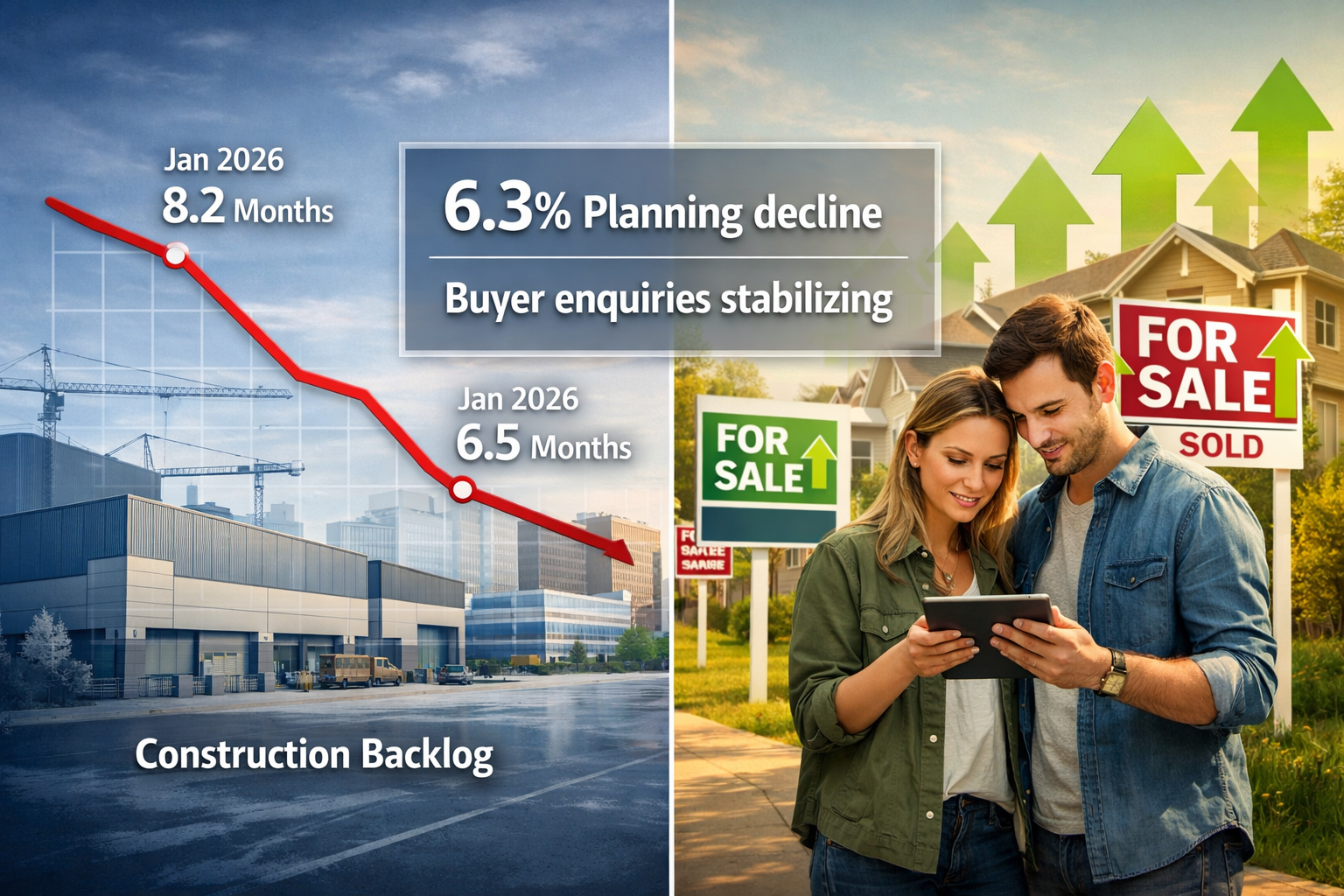
The early months of 2026 have presented a fascinating paradox for property professionals. While construction planning tumbled and contractor backlogs reached four-year lows, something unexpected happened in the residential property market: buyer enquiries began to stabilise. For building surveyors, this represents a critical inflection point—a moment when strategic positioning can determine whether practices thrive or merely survive the year ahead.
Understanding Building Survey Demand in Early 2026: Capturing Market Momentum as Buyer Enquiries Stabilise requires looking beyond headline construction figures to identify the underlying shifts in homebuyer behaviour. This stabilisation, though modest, signals renewed confidence after years of market turbulence. For surveyors, it presents both opportunity and challenge: how to manage potential workflow surges while positioning for the traditional spring recovery period.
Key Takeaways
- 📊 Construction activity declined 6.3% in January 2026, but residential buyer demand showed signs of stabilisation with over half of builders reporting expectations met
- 🏠 Mandatory upfront condition assessments launching in 2026 will fundamentally reshape survey demand patterns and create new service opportunities
- 📈 Strategic workflow management is essential as surveyors prepare for spring market recovery amid cautious but growing buyer interest
- ⚖️ Market divergence between commercial construction weakness and residential market stabilisation creates unique positioning opportunities
- 🎯 Proactive marketing and capacity planning in Q1 2026 will determine which surveying practices capture the momentum as enquiries convert to instructions
Understanding the Early 2026 Market Landscape
The Construction Sector Slowdown
The broader construction industry entered 2026 with significant headwinds. Construction planning fell 6.3% in January 2026, with particular weakness across commercial and institutional project types including warehouse, office, and healthcare facilities[2]. This decline wasn't isolated—contractor backlog hit a four-year low during the same period, suggesting reduced forward demand for construction services across multiple sectors[2].
Total US construction starts are forecast to rise just 1.6% in 2026, a dramatic slowdown from the robust 14.2% growth experienced in 2025[1]. This deceleration reflects several converging factors:
- Elevated financing costs continuing to constrain development
- Economic uncertainty dampening commercial investment
- Shifting workplace patterns reducing office space demand
- Supply chain normalisation removing urgency from warehouse projects
Residential Market Stabilisation
Against this backdrop of construction sector weakness, the residential property market tells a different story. Just over half of builders surveyed reported that demand was on track with expectations in January 2026—a figure that represents a doubling of the share from prior periods[9]. This stabilisation, while modest, marks a significant psychological shift in the market.
Residential building starts are forecasted to grow 0.9% in 2026, with single-family housing starts rising 1.3% while multi-family starts remain essentially flat at 0.1% growth[1]. These figures suggest:
✅ Buyer confidence gradually returning to the single-family market
✅ Mortgage market conditions stabilising after years of volatility
✅ Pent-up demand beginning to release as buyers adjust to new rate environment
✅ Inventory levels improving as sellers re-enter the market
For building surveyors, this stabilisation creates a critical window of opportunity. As buyer enquiries convert to property viewings and eventually to offers, the demand for comprehensive property assessments will naturally follow—typically with a 4-8 week lag between initial enquiry and survey instruction.
Building Survey Demand in Early 2026: Key Drivers and Opportunities
Mandatory Upfront Condition Assessments
Perhaps the most significant structural change affecting Building Survey Demand in Early 2026 is the implementation of mandatory upfront condition assessments as part of homebuying reform in the UK[8]. This regulatory shift fundamentally alters the survey demand landscape:
Traditional Model:
- Buyer commissions survey after offer accepted
- Survey occurs late in transaction process
- Demand concentrated in offer-to-exchange period
New 2026 Model:
- Seller commissions assessment before listing
- Survey occurs at market entry point
- Demand distributed across listing preparation phase
This change creates several opportunities for forward-thinking surveying practices:
- Vendor-side survey services become a new revenue stream
- Earlier engagement in the property transaction cycle
- Reduced abortive work from collapsed transactions
- Standardised reporting requirements create efficiency opportunities
Surveyors who position themselves to serve both buyers and sellers can effectively double their addressable market while helping clients navigate this new regulatory landscape. Understanding the difference between Level 2 and Level 3 surveys becomes even more critical as sellers seek guidance on appropriate assessment levels.

Managing Workflow Surges: Strategies for Building Survey Demand in Early 2026
Capacity Planning for Spring Recovery
The traditional spring property market surge typically begins in late February and accelerates through March and April. In 2026, with buyer enquiries stabilising earlier than in recent years, surveyors face a compressed preparation window. Effective capacity planning requires:
Assessment Phase (January-February):
- Review 2025 peak period capacity utilisation
- Identify bottlenecks in survey delivery process
- Evaluate technology and equipment needs
- Assess associate surveyor availability
Preparation Phase (February-March):
- Secure additional surveyor capacity through partnerships
- Implement scheduling optimisation systems
- Streamline report production workflows
- Establish clear client communication protocols
Execution Phase (March-May):
- Monitor booking rates against capacity
- Adjust pricing dynamically for peak periods
- Maintain quality standards despite volume
- Communicate realistic timeframes to clients
Technology and Process Optimisation
Modern surveying practices increasingly rely on digital tools to manage workflow surges efficiently:
| Technology Solution | Workflow Impact | Implementation Priority |
|---|---|---|
| Online booking systems | Reduces administrative burden by 40% | High |
| Digital survey tools | Accelerates on-site data collection by 25% | High |
| Template-based reporting | Speeds report production by 30% | Medium |
| Client portals | Improves communication efficiency | Medium |
| Automated scheduling | Optimises surveyor utilisation | High |
| Mobile invoicing | Accelerates payment cycles | Low |
Practices that invested in these technologies during quieter periods are better positioned to capture market momentum without compromising service quality. For surveyors serving specific areas like Wandsworth or Richmond, geographic scheduling optimisation can significantly improve daily capacity.
Quality Maintenance During High-Volume Periods
The greatest risk during workflow surges is quality degradation. Building surveyors must balance volume with the thoroughness that clients expect and professional standards demand. Key strategies include:
🔍 Standardised checklists ensuring no elements are overlooked
📋 Peer review processes for complex or high-value properties
⏰ Realistic time allocation per survey type and property size
📞 Clear client communication about what surveys do and don't cover
🎓 Continuous training on emerging building defects and technologies
Maintaining quality protects both professional reputation and reduces liability exposure. Clients increasingly compare homebuyers survey options before selecting a surveyor, making quality differentiation essential for capturing premium market segments.
Positioning for Market Momentum: Marketing and Client Acquisition Strategies
Understanding Buyer Psychology in Early 2026
The cautious optimism characterising early 2026 buyer behaviour requires nuanced marketing approaches. Buyers are neither fearful nor exuberant—they're carefully evaluating opportunities while remaining conscious of economic uncertainties. Effective positioning addresses this psychology:
Buyer Concerns:
- "Is now the right time to buy?"
- "What hidden problems might this property have?"
- "How can I negotiate based on survey findings?"
- "What will this property cost to maintain?"
Surveyor Value Propositions:
- Providing objective condition information for confident decisions
- Identifying negotiation leverage through defect discovery
- Offering realistic maintenance cost projections
- Delivering peace of mind through thorough inspection
Marketing materials should emphasise risk mitigation rather than opportunity maximisation. Case studies showing how surveys prevented costly purchases resonate more strongly than generic service descriptions. Providing example homebuyers reports helps potential clients understand the value they'll receive.
Geographic and Demographic Targeting
Building Survey Demand in Early 2026 varies significantly by location and buyer demographic. Strategic practices focus resources where demand is strongest:
High-Opportunity Segments:
🏘️ First-time buyers in affordable areas (require education about survey importance)
🏡 Family upsizers purchasing older properties (higher survey complexity)
🏰 Period property buyers (specialist survey expertise valued)
💼 Investment purchasers (commercial approach to survey ROI)
🌳 Rural relocators (unique property characteristics require specialist knowledge)
Geographic concentration allows practices to develop deep local expertise. Surveyors serving areas like Battersea, Hammersmith, or Merton can position themselves as neighbourhood specialists who understand local building characteristics, common defects, and area-specific risks.
Digital Marketing and Lead Generation
In 2026, the buyer journey begins online. Effective digital presence captures enquiries during the research phase:
Essential Digital Assets:
- SEO-optimised website ranking for local survey searches
- Educational content answering common buyer questions
- Online booking capability reducing friction in instruction process
- Client testimonials building trust and credibility
- Clear pricing information qualifying serious enquiries
Content marketing that addresses specific buyer concerns generates qualified leads. Articles explaining what surveyors do or comparing survey levels attract buyers actively researching their options—precisely when they're most receptive to selecting a surveyor.

Capturing Spring Market Momentum: Tactical Approaches for Building Survey Demand in Early 2026
Partnership Development with Estate Agents
Estate agents remain the primary referral source for building surveyors. Strengthening these relationships before the spring surge ensures consistent instruction flow:
Relationship-Building Tactics:
- Regular check-ins with agent partners (monthly minimum)
- Rapid response times for agent enquiries (within 2 hours)
- Flexible scheduling accommodating tight transaction timelines
- Clear communication about survey findings affecting transactions
- Educational sessions for agent staff on survey processes
Agents value surveyors who facilitate transactions rather than obstruct them. While maintaining professional independence, surveyors can position themselves as problem-solvers who help buyers and sellers reach mutually acceptable terms based on objective property condition information.
Pricing Strategy for Stabilising Markets
As buyer enquiries stabilise, surveyors face pricing decisions that balance volume capture with margin maintenance:
Pricing Considerations:
| Market Condition | Pricing Approach | Rationale |
|---|---|---|
| Early stabilisation | Maintain or slightly reduce | Capture market share as confidence returns |
| Accelerating demand | Hold steady | Build client relationships for referrals |
| Peak surge | Premium pricing for fast turnaround | Manage capacity constraints |
| Geographic variation | Area-specific pricing | Reflect local market conditions |
Transparent pricing builds trust. Practices offering clear service comparisons help clients understand value differences between survey levels, supporting premium pricing for comprehensive assessments.
Service Differentiation and Value-Added Offerings
In stabilising markets, differentiation becomes crucial. Surveyors competing solely on price face margin erosion. Value-added services justify premium positioning:
✨ Same-week availability for urgent transactions
📱 Digital report delivery with interactive floor plans
📞 Post-survey consultation explaining findings in detail
🔧 Contractor recommendations for identified repairs
💰 Negotiation guidance based on defect severity
📊 Maintenance planning projecting future costs
These enhancements transform surveys from commodity services to strategic advisory relationships. Clients willing to pay premium fees expect premium service—responsiveness, accessibility, and expertise that extends beyond the written report.
Preparing for Regulatory Changes and Market Evolution
Adapting to Mandatory Assessment Requirements
The 2026 regulatory changes requiring upfront condition assessments represent the most significant shift in UK property surveying in decades[8]. Forward-thinking practices are already adapting:
Operational Adjustments:
- Developing vendor-focused marketing materials
- Creating seller-oriented report formats
- Establishing relationships with estate agents as vendor advisors
- Training staff on new regulatory requirements
- Updating professional indemnity insurance for vendor-side work
Service Innovations:
- Pre-listing assessment packages for sellers
- Condition disclosure reports meeting regulatory standards
- Remediation planning services helping sellers address defects before listing
- Re-inspection services verifying repairs completed
These changes create opportunities for practices willing to evolve beyond traditional buyer-side services. The vendor assessment market could eventually equal or exceed traditional buyer survey demand, effectively doubling the addressable market for adaptable practices.
Professional Development and Specialisation
As Building Survey Demand in Early 2026 evolves, specialist expertise becomes increasingly valuable. Surveyors investing in professional development can command premium fees:
High-Value Specialisations:
- Period property expertise (Victorian, Edwardian, Georgian)
- Modern construction methods and materials
- Environmental performance and energy efficiency
- Structural engineering for complex defects
- Historic building conservation
- Sustainable building practices
Specialist credentials and continuous professional development demonstrate commitment to excellence. Membership in professional bodies and pursuit of advanced qualifications differentiate practices in competitive markets. Understanding why to choose RICS surveyors helps clients appreciate the value of professional credentials.
Long-Term Strategic Positioning
Building Resilient Business Models
The volatility of recent years has taught valuable lessons about business resilience. Surveyors capturing momentum in early 2026 should simultaneously build foundations for long-term stability:
Resilience Strategies:
- Diversified service offerings reducing dependence on single revenue streams
- Geographic expansion spreading risk across multiple markets
- Technology investment improving efficiency and scalability
- Associate networks providing flexible capacity
- Financial reserves cushioning against market downturns
- Client relationship management generating repeat and referral business
Practices serving multiple locations—such as Bromley, Lewisham, and Southwark—benefit from geographic diversification that smooths demand fluctuations.
Client Relationship Management
In stabilising markets, client retention becomes as important as client acquisition. Building lasting relationships generates referral business and repeat instructions:
Relationship-Building Approaches:
- Post-survey follow-up checking client satisfaction
- Annual property check-up offers for previous clients
- Educational newsletters on property maintenance
- Referral incentive programmes
- Alumni networks connecting past clients
Satisfied clients become advocates, providing testimonials, online reviews, and personal recommendations that generate high-quality leads at minimal acquisition cost. In 2026's cautious market, personal recommendations carry exceptional weight in surveyor selection decisions.
Conclusion
Building Survey Demand in Early 2026: Capturing Market Momentum as Buyer Enquiries Stabilise presents a unique opportunity for strategic surveying practices. While broader construction activity remains subdued, the residential property market shows genuine signs of stabilisation—with over half of builders reporting demand meeting expectations, a dramatic improvement from previous periods[9].
The implementation of mandatory upfront condition assessments fundamentally reshapes the survey market, creating new service opportunities for practices willing to adapt[8]. Combined with traditional spring market momentum, surveyors face potentially significant workflow increases requiring careful capacity planning and process optimisation.
Success in this environment demands a multi-faceted approach:
🎯 Strategic positioning that addresses cautious buyer psychology
⚙️ Operational excellence managing workflow surges without quality compromise
🤝 Partnership development securing referral relationships before peak demand
📈 Service innovation differentiating through value-added offerings
🔄 Regulatory adaptation capturing vendor-side assessment opportunities
The practices that thrive won't be those simply hoping for market recovery—they'll be those actively capturing momentum through deliberate strategy, operational preparedness, and client-focused service delivery.
Next Steps for Surveying Practices
Immediate Actions (Next 30 Days):
- Assess current capacity and identify constraints
- Review and update marketing materials for 2026 market conditions
- Strengthen estate agent relationships through proactive outreach
- Implement or optimise online booking systems
- Develop vendor-side service offerings for new regulatory requirements
Short-Term Priorities (Next 90 Days):
- Secure additional surveyor capacity for spring surge
- Launch targeted digital marketing campaigns
- Establish clear pricing strategy for different market segments
- Create educational content addressing buyer concerns
- Train staff on new regulatory requirements and service offerings
Long-Term Strategic Initiatives (2026 and Beyond):
- Build diversified service portfolio reducing market dependency
- Invest in technology improving efficiency and scalability
- Develop specialist expertise commanding premium fees
- Expand geographic coverage spreading market risk
- Cultivate client relationships generating referral business
The early months of 2026 have revealed a market in transition—neither booming nor collapsing, but stabilising with cautious optimism. For building surveyors, this represents the ideal environment to capture momentum, build market share, and establish foundations for sustained success regardless of how market conditions evolve through the year ahead.
The question isn't whether demand will materialise—the stabilisation is already evident. The question is which practices will be positioned to capture it.
References
[1] Spring 2026 Us Construction Forecast Modest Growth Amid Economic Uncertainty – https://news.constructconnect.com/spring-2026-us-construction-forecast-modest-growth-amid-economic-uncertainty
[2] constructiondive – https://www.constructiondive.com/news/construction-dive-march-2026-economic-roundup/814254/
[8] Homebuying Reform Impacts On Building Surveys Preparing For Mandatory Upfront Condition Assessments In 2026 – https://nottinghillsurveyors.com/blog/homebuying-reform-impacts-on-building-surveys-preparing-for-mandatory-upfront-condition-assessments-in-2026
[9] Article314777124 – https://www.kentucky.com/news/business/article314777124.html