

The UK property market is showing renewed signs of life in 2026, with first-time buyer enquiries surging and confidence climbing by an impressive 35% over the 12-month outlook period. Yet behind this optimism lies a critical challenge: how do first-time buyers navigate the complex landscape of building defects when they have limited experience and often stretched budgets? Building Survey Defect Prioritization for First-Time Buyers in Recovering Markets: RICS Tactics for Improving Buyer Confidence in 2026 has emerged as a vital framework for surveyors who must translate technical findings into actionable advice that empowers rather than overwhelms new entrants to the property ladder.
As markets stabilize and transaction volumes increase, RICS-qualified surveyors face mounting pressure to deliver clear, evidence-based assessments that distinguish between deal-breaking structural issues and manageable cosmetic concerns. The stakes have never been higher: building defects remain complex and costly across residential sectors, with surveyors developing robust investigative skills to avoid liability and reputational damage.[3] For first-time buyers navigating their property purchase, understanding defect severity, remediation costs, and negotiation leverage can mean the difference between a sound investment and a financial burden.

Key Takeaways
- Defect categorization systems help first-time buyers understand which issues require immediate action versus those that can be addressed over time, reducing decision paralysis in competitive markets
- RICS 2026 priorities focus on RAAC concrete, cladding compliance, fire safety, and damp management—critical areas that directly impact property valuations and buyer confidence[2][3]
- Cost transparency in survey reports enables first-time buyers to negotiate purchase prices effectively, with clear remediation estimates providing tangible leverage in price discussions
- Communication strategies that translate technical jargon into accessible language empower buyers to make informed decisions without requiring specialist construction knowledge
- Regulatory compliance awareness around the Building Safety Act and Awaab's Law creates legal protection for buyers while ensuring surveyors meet heightened professional standards[3]
Understanding Building Survey Defect Prioritization for First-Time Buyers in Recovering Markets
The Current Market Context for First-Time Buyers
The 2026 property market recovery presents unique opportunities and challenges for first-time buyers. After years of affordability constraints and economic uncertainty, improving mortgage availability and stabilizing prices have reopened pathways to homeownership. However, this recovery coincides with heightened awareness of building defects—particularly legacy issues like RAAC concrete, non-compliant cladding systems, and fire safety concerns that have dominated property headlines.[2]
First-time buyers typically face several distinct vulnerabilities:
- Limited property inspection experience and difficulty assessing defect severity
- Stretched budgets with minimal contingency for unexpected repairs
- Emotional investment that can cloud objective risk assessment
- Pressure to compete in recovering markets where properties move quickly
- Lack of established relationships with contractors for cost verification
RICS surveyors must recognize these constraints when preparing reports and recommendations. The goal extends beyond technical accuracy to include practical guidance that enables confident decision-making within realistic financial parameters.
The RICS Framework for Defect Assessment in 2026
RICS has strengthened quality initiatives and professional standards throughout 2025-2026, responding to both regulatory changes and market demands for greater accountability.[1] The framework emphasizes:
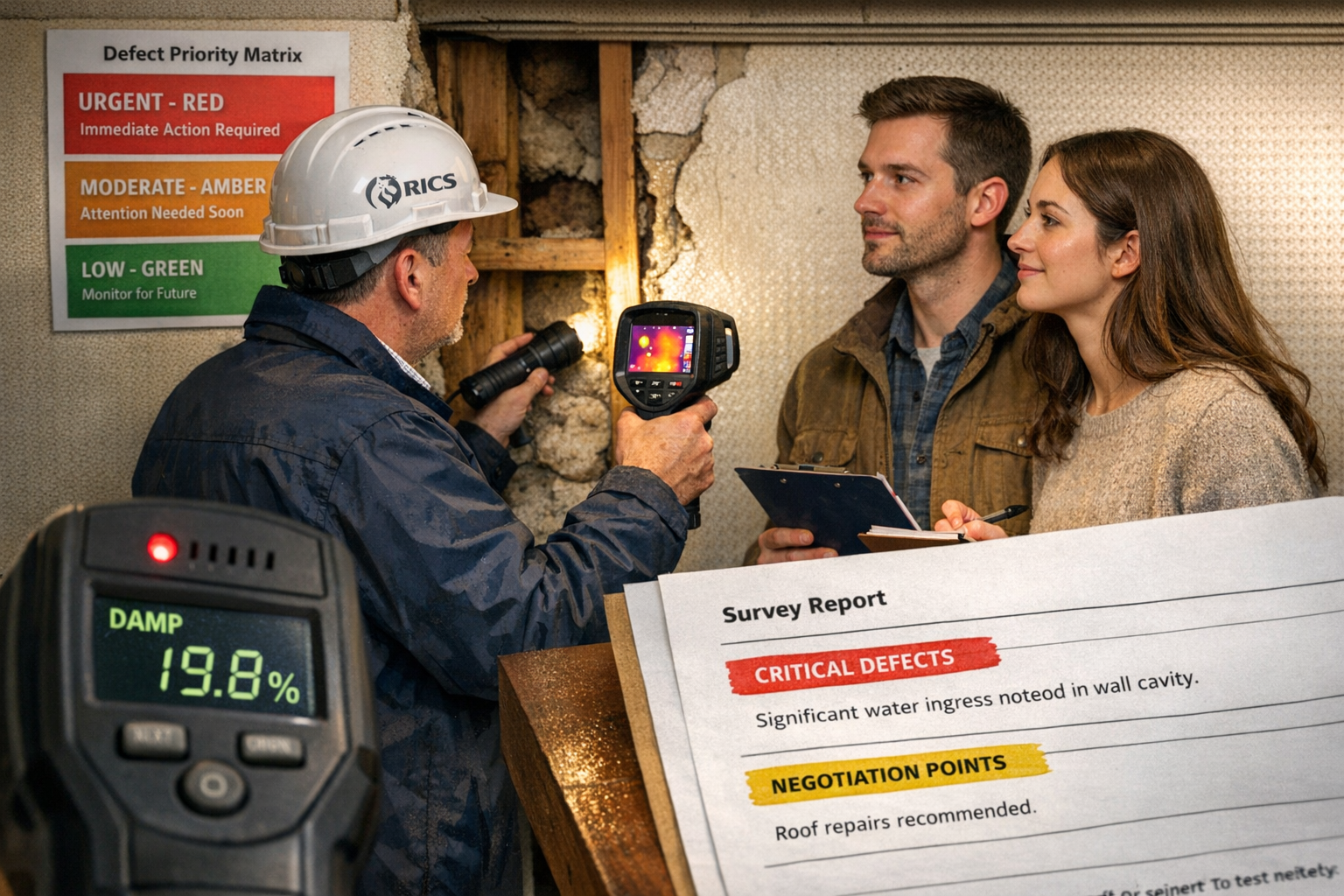
- Evidence-based diagnostics using appropriate technology (thermal imaging, moisture meters, structural calculations)
- Standardized categorization that clearly distinguishes urgency levels
- Cost transparency with realistic remediation estimates
- Risk communication that balances technical precision with accessibility
- Regulatory compliance verification across Building Safety Act requirements
This systematic approach provides the foundation for Building Survey Defect Prioritization for First-Time Buyers in Recovering Markets: RICS Tactics for Improving Buyer Confidence in 2026, ensuring consistency while allowing professional judgment on individual properties.
RICS Tactics for Defect Categorization and Communication
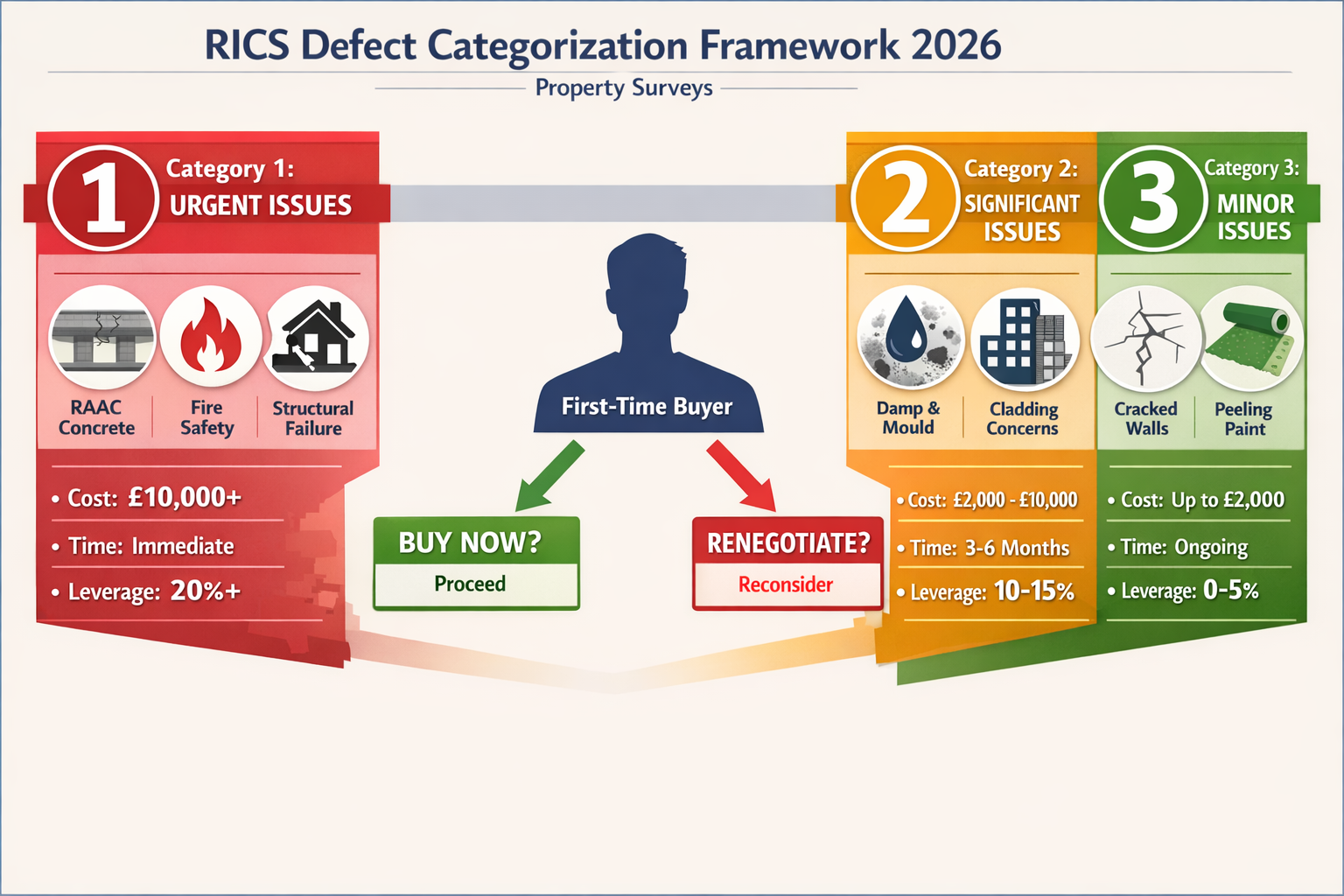
The Three-Tier Priority System Explained
RICS guidance establishes a clear hierarchy for defect reporting that helps first-time buyers understand what demands immediate attention versus what can be managed over time. When examining homebuyers survey findings, this categorization becomes essential for rational decision-making.
Category 1: Urgent Defects Requiring Immediate Action 🚨
These defects pose serious risks to safety, structural integrity, or legal compliance. They typically require remediation before completion or immediate post-purchase intervention:
- RAAC concrete in structural elements (roofs, floors, load-bearing walls)[2]
- Non-compliant cladding systems with fire safety risks
- Active structural movement indicating foundation failure or subsidence
- Severe damp and mould meeting Awaab's Law thresholds for health hazards[3]
- Dangerous electrical installations failing current regulations
- Compromised fire safety in flats and conversions
For first-time buyers, Category 1 defects should trigger either substantial price renegotiation (typically 20-40% of remediation costs as a minimum), seller remediation before completion, or reconsideration of the purchase entirely.
Category 2: Significant Defects Requiring Attention ⚠️
These issues don't pose immediate danger but will require remediation within 12-24 months and may affect property value or insurability:
- Aging roof coverings approaching end of serviceable life
- Deteriorating external render or brickwork allowing water penetration
- Outdated heating systems with declining efficiency
- Minor damp issues requiring investigation and treatment
- Aging windows with failed seals or poor thermal performance
- Drainage defects causing localized dampness
Category 2 defects provide negotiation opportunities for first-time buyers, typically justifying 10-20% of estimated remediation costs as price reduction, or retention of funds in escrow for agreed repairs.
Category 3: Minor Defects for Ongoing Maintenance ✅
These cosmetic or minor maintenance issues are normal for properties of their age and type:
- Superficial decoration wear and tear
- Minor plaster cracks from normal settlement
- Worn floor finishes requiring replacement
- Garden maintenance requirements
- Minor joinery repairs to doors and windows
Category 3 items rarely justify price negotiation but help first-time buyers budget for near-term maintenance and establish property care priorities.
Communicating Technical Findings to Non-Specialist Buyers
The skills gap in building surveying extends beyond technical competence to include client communication effectiveness.[3] First-time buyers benefit most from reports that:
Use Visual Documentation Extensively 📸
- Annotated photographs showing defect locations and severity
- Comparative images (e.g., "normal wear" versus "concerning deterioration")
- Thermal imaging or moisture mapping where relevant
- Diagrams explaining how defects developed and potential progression
Provide Context and Benchmarking 📊
- "This level of roof wear is typical for a property of this age" versus "This deterioration is premature and suggests underlying issues"
- Comparison to building regulations and industry standards
- Expected lifespan data for building elements
- Regional market norms for similar properties
Include Actionable Cost Information 💷
| Defect Type | Typical Remediation Cost | Urgency Timeline | Negotiation Leverage |
|---|---|---|---|
| RAAC Concrete Replacement | £15,000-£50,000+ | Immediate | 30-40% reduction or seller remediation |
| Cladding Remediation | £10,000-£100,000+ | 6-12 months | 25-35% reduction or warranty |
| Roof Replacement | £5,000-£15,000 | 12-24 months | 15-20% reduction |
| Damp Treatment | £2,000-£8,000 | 3-6 months | 10-15% reduction |
| Rewiring | £3,000-£8,000 | 12 months | 10-15% reduction |
These cost ranges enable first-time buyers to assess whether a property remains affordable after accounting for necessary remediation work.
Translate Technical Language 📝
Effective surveyors avoid jargon or provide clear definitions:
- Instead of "spalling masonry with efflorescence," explain "brick surface damage with white salt deposits indicating moisture problems"
- Replace "differential settlement" with "uneven ground movement causing structural cracks"
- Clarify "deliquescent salts" as "moisture-attracting minerals that perpetuate dampness"
For those reviewing a complete property survey guide, accessible language transforms technical documents into decision-making tools.
Priority Defects in 2026: RAAC, Cladding, Fire Safety, and Damp
RAAC Concrete: The Critical Assessment Priority
Reinforced Autoclaved Aerated Concrete (RAAC) has emerged as a central priority for building survey practice in 2026, particularly relevant for stabilizing property prices in recovering markets.[2] This lightweight concrete material, used extensively in construction between the 1950s and 1990s, has a limited lifespan and can fail suddenly without warning.
RICS surveyors must:
- Identify potential RAAC presence in flat roofs, floor slabs, and wall panels based on construction period and building type
- Recommend specialist structural assessment when RAAC is suspected or confirmed
- Clearly communicate risk levels to first-time buyers, emphasizing that RAAC presence typically constitutes a Category 1 defect
- Advise on remediation complexity including temporary propping, phased replacement, and occupancy restrictions
For first-time buyers, RAAC discovery often necessitates purchase withdrawal or substantial price reduction (frequently 30-50% of property value depending on extent and location). Surveyors should provide clear guidance on mortgage lender attitudes toward RAAC-affected properties, as many institutions now decline lending without evidence of remediation.
Cladding Compliance and Fire Safety Assessment
The Building Safety Act continues to reshape surveyor responsibilities around façade systems and fire safety in 2026.[3] First-time buyers purchasing flats or converted properties face particular exposure to cladding-related issues that can:
- Render properties unmortgageable without EWS1 certification
- Trigger substantial service charges for remediation works
- Affect resale prospects and property values
- Create legal liability concerns
RICS tactics for cladding assessment include:
- Visual inspection of external wall construction and materials
- Documentation review of EWS1 forms, fire risk assessments, and building warranties
- Verification of material classification and installation integrity
- Assessment of building height and regulatory applicability
- Evaluation of remediation status and funding arrangements
Surveyors must help first-time buyers understand the financial implications of cladding issues, including:
- Immediate remediation costs (potentially £10,000-£100,000+ per flat)
- Interim safety measures (waking watches, enhanced fire detection)
- Service charge increases and special levies
- Impact on mortgage availability and insurance premiums
Properties with unresolved cladding issues typically require either substantial price reduction, seller-funded remediation, or purchase reconsideration. Saving money through thorough building surveys becomes especially relevant when cladding concerns are identified early in the purchase process.
Damp and Mould: Statutory Obligations Under Awaab's Law
Damp and mould management has become a statutory and ethical priority following Awaab's Law, requiring surveyors to correctly diagnose, evidence, and report issues with heightened legal duties for timely remediation.[3] For first-time buyers, understanding damp severity and remediation requirements prevents health risks and unexpected costs.
RICS best practices for damp assessment:
- Distinguish between damp types: rising damp, penetrating damp, condensation, and hygroscopic salts
- Use appropriate diagnostic tools: moisture meters, thermal imaging, salt analysis
- Identify root causes: defective damp-proof courses, failed tanking, inadequate ventilation, building defects
- Assess health implications: mould growth, air quality concerns, vulnerable occupant risks
- Provide remediation pathways: source elimination, ventilation improvement, specialist treatment
Common damp scenarios and buyer implications:
| Damp Type | Typical Cause | Remediation Cost | Buyer Action |
|---|---|---|---|
| Rising Damp | Failed DPC | £2,000-£5,000 | Negotiate 15-20% reduction |
| Penetrating Damp | Roof/wall defects | £1,500-£8,000 | Address source; negotiate 10-15% |
| Condensation | Ventilation/heating | £500-£2,000 | Minor negotiation; manageable |
| Hygroscopic Salts | Historic dampness | £2,000-£6,000 | Specialist assessment required |
First-time buyers should understand that superficial damp treatment without addressing underlying causes represents poor value and may void warranties. Surveyors serve buyers best by recommending specialist damp surveys when initial findings suggest complex or extensive issues.
Fire Safety and Building Safety Act Compliance
Beyond cladding, fire safety assessment encompasses multiple building elements critical for first-time buyer protection:
- Fire door integrity and certification in flats and conversions
- Compartmentation effectiveness preventing fire spread
- Means of escape adequacy and compliance
- Fire detection and alarm systems meeting current standards
- Passive fire protection around service penetrations
The Building Safety Act has introduced stricter scrutiny of Gateway submissions and increasing case backlogs, requiring surveyors to prepare defensible documentation on legacy issues, complex refurbishments, and overlapping warranties.[3] First-time buyers purchasing properties subject to Building Safety Act provisions should receive clear guidance on:
- Accountable Person responsibilities and building registration status
- Safety case documentation and compliance verification
- Ongoing compliance costs through service charges
- Leaseholder protection under Building Safety Act provisions
- Mortgage lender requirements for fire safety certification
Properties with unresolved fire safety concerns typically fall into Category 1 or 2 defects depending on severity and regulatory applicability.
Building Survey Defect Prioritization for First-Time Buyers: Practical Negotiation Strategies
Translating Survey Findings into Negotiation Leverage
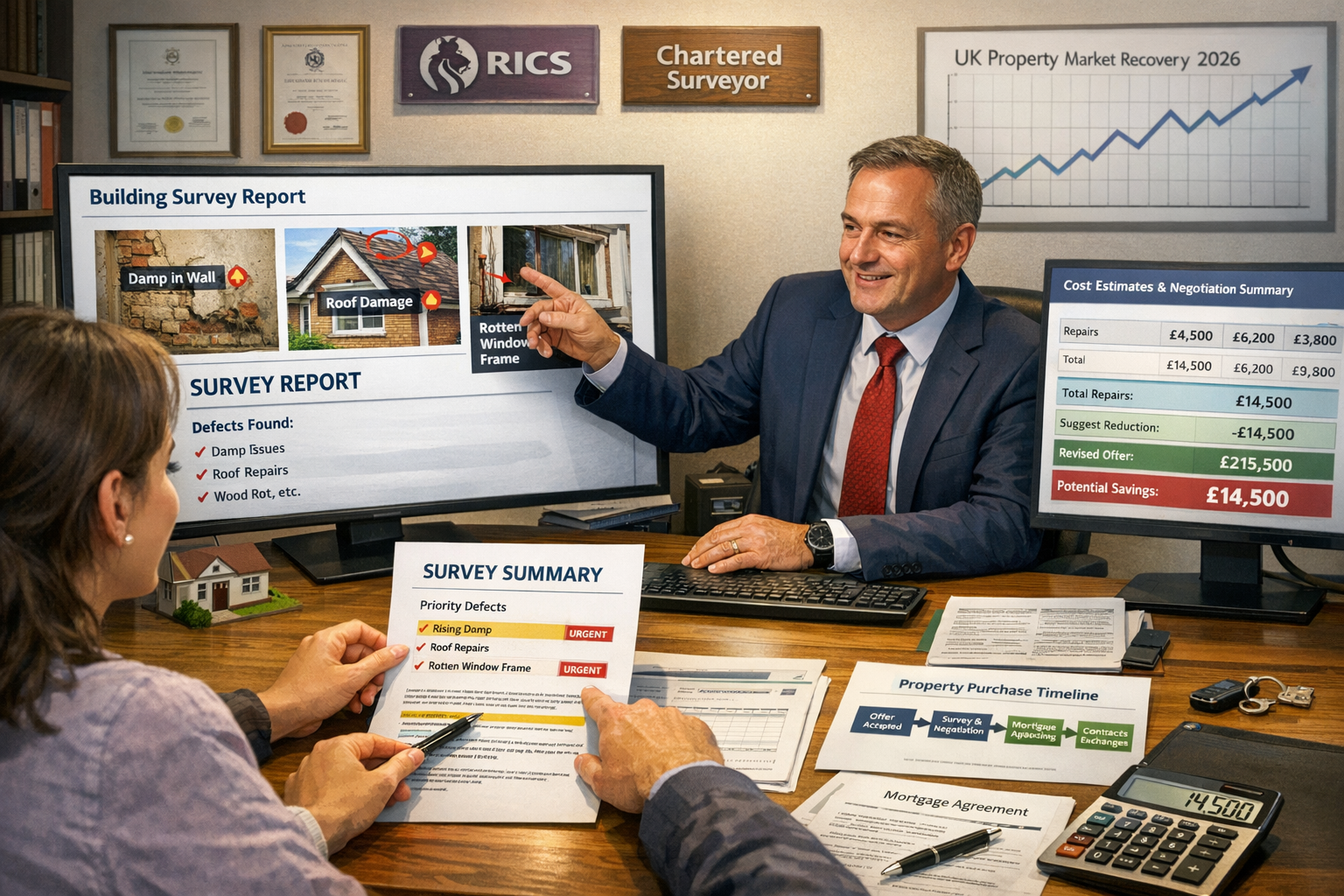
The ultimate value of Building Survey Defect Prioritization for First-Time Buyers in Recovering Markets: RICS Tactics for Improving Buyer Confidence in 2026 lies in converting technical assessments into negotiation outcomes that protect buyer interests while maintaining transaction viability.
Effective negotiation strategies based on defect categories:
For Category 1 Defects (Urgent):
- Request seller remediation before completion with certification from qualified contractors
- Negotiate substantial price reduction (typically 30-40% of remediation costs minimum)
- Consider retention of funds in escrow pending verified completion of works
- Evaluate purchase withdrawal if defects exceed buyer risk tolerance or budget capacity
- Obtain specialist reports to substantiate claims and prevent seller disputes
For Category 2 Defects (Significant):
- Negotiate moderate price reduction (typically 10-20% of remediation costs)
- Request contribution toward specific repairs rather than general price reduction
- Propose retention arrangements for agreed works post-completion
- Seek extended warranty coverage or insurance-backed guarantees where applicable
- Use multiple defects collectively to strengthen negotiation position
For Category 3 Defects (Minor):
- Focus on budgeting for future maintenance rather than price negotiation
- Consider goodwill adjustments when multiple minor issues accumulate
- Use as relationship-building opportunities by acknowledging normal property condition
- Prioritize items affecting immediate habitability over long-term cosmetic concerns
Case Study Examples: Defect Prioritization in Action
Scenario 1: Victorian Terrace with Multiple Defects
A first-time buyer received a survey identifying:
- Roof requiring replacement within 2 years (£8,000)
- Rising damp in ground floor rooms (£3,500 treatment)
- Outdated electrical installation (£4,000 rewiring)
- Cosmetic plaster cracks (£1,500 decoration)
RICS surveyor prioritization:
- Category 2: Roof (safety and water ingress risk)
- Category 2: Damp (health and structural protection)
- Category 2: Electrical (safety and insurability)
- Category 3: Plaster (cosmetic only)
Negotiation outcome: Buyer negotiated £12,000 price reduction (approximately 15% of combined Category 2 costs totaling £15,500), enabling remediation of critical items while accepting cosmetic work as planned future expense.
Scenario 2: 1960s Flat with Cladding Concerns
First-time buyer survey revealed:
- Potential non-compliant cladding requiring EWS1 assessment
- No current fire risk assessment available
- Building not registered under Building Safety Act
- Service charge history showing no remediation provisions
RICS surveyor prioritization:
- Category 1: Cladding compliance (mortgage and safety risk)
- Category 1: Fire safety documentation (regulatory requirement)
- Category 1: Building Safety Act registration (legal obligation)
Negotiation outcome: Buyer withdrew from purchase after seller refused to obtain EWS1 certification or reduce price to reflect unmortgageability risk. Survey saved the buyer from a potentially disastrous purchase that would have been unsellable without substantial remediation.
Documentation and Evidence for Successful Negotiations
First-time buyers strengthen negotiation positions through:
Comprehensive Survey Reports 📋
- Detailed photographic evidence of defects
- Clear categorization using RICS framework
- Specific remediation recommendations
- Cost estimates from reputable sources
- Regulatory compliance assessments
Specialist Supporting Reports 🔍
- Structural engineer assessments for movement or RAAC concerns
- Specialist damp surveys with salt analysis and moisture mapping
- Electrical installation condition reports (EICR)
- Arboricultural reports for tree-related subsidence risks
- Fire safety assessments for regulatory compliance
Contractor Quotations 💼
- Multiple quotes (minimum 2-3) for major remediation works
- Detailed scope of works matching survey findings
- Timeline estimates for completion
- Warranty and guarantee provisions
- Professional credentials and insurance verification
Market Evidence 📊
- Comparable property prices reflecting defect-free condition
- Recent sales of similar properties requiring remediation
- Mortgage lender lending policies for specific defect types
- Insurance availability and premium implications
When property offers have been accepted, this documentation provides the foundation for renegotiation based on survey findings.
Improving Buyer Confidence Through Transparent Communication
The Psychology of First-Time Buyer Decision-Making
Understanding the emotional and psychological dimensions of first-time property purchase enhances surveyor effectiveness in Building Survey Defect Prioritization for First-Time Buyers in Recovering Markets: RICS Tactics for Improving Buyer Confidence in 2026.
First-time buyers commonly experience:
- Analysis paralysis when confronted with extensive defect lists
- Fear of missing out in competitive recovering markets
- Overreaction to minor defects due to inexperience
- Underestimation of major defects due to emotional attachment
- Difficulty distinguishing between normal wear and serious concerns
RICS surveyors can address these psychological barriers through:
- Executive summaries highlighting critical issues before detailed technical sections
- Contextualization comparing property condition to market norms
- Action prioritization with clear timelines and urgency indicators
- Cost transparency enabling realistic financial planning
- Balanced perspective acknowledging both concerns and positive attributes
Building Long-Term Professional Relationships
Surveyors who successfully guide first-time buyers through defect prioritization and negotiation establish valuable long-term professional relationships that extend beyond individual transactions:
- Referrals to other first-time buyers in social and professional networks
- Repeat business for future property moves, extensions, or investment purchases
- Positive online reviews enhancing professional reputation
- Professional credibility within estate agent and mortgage broker networks
- Reduced liability exposure through clear communication and appropriate recommendations
The recovering market of 2026 presents opportunities for surveyors to demonstrate value beyond regulatory compliance, positioning themselves as trusted advisors rather than mere technical reporters.
Technology and Tools Enhancing Communication
Modern surveying practice leverages technology to improve first-time buyer understanding:
Digital Survey Platforms 💻
- Interactive reports with clickable defect markers
- Video walkthroughs explaining key findings
- Cost calculators for remediation scenarios
- Document sharing for specialist reports and quotations
Visual Communication Tools 📱
- Annotated photography with severity indicators
- Thermal imaging showing hidden defects
- 3D property models highlighting defect locations
- Comparison imagery showing progression risks
Client Portals 🔐
- Secure access to survey documents and updates
- Direct messaging for follow-up questions
- Resource libraries with guidance materials
- Contractor recommendation databases
These tools complement rather than replace personal consultation, with the most effective surveyors combining technology-enabled clarity with human expertise and judgment.
Regulatory Compliance and Professional Standards in 2026
RICS Quality Strengthening Initiatives
RICS has implemented quality strengthening initiatives throughout 2025-2026 that directly impact surveyor practice and first-time buyer protection.[1] Key developments include:
Enhanced Competency Requirements 📚
- Continuing Professional Development (CPD) focusing on emerging defect types
- Specialized training on RAAC identification and assessment
- Fire safety and Building Safety Act compliance modules
- Damp and mould diagnosis meeting Awaab's Law standards
Standardized Reporting Frameworks 📄
- Consistent defect categorization across RICS members
- Mandatory cost indication requirements
- Clear urgency and priority communication
- Regulatory compliance verification protocols
Professional Indemnity Insurance 🛡️
- Increased coverage requirements reflecting liability exposure
- Specific provisions for RAAC and cladding assessments
- Enhanced claims management and risk mitigation
- Documentation standards for defensibility
Quality Assurance Mechanisms ✅
- Peer review programs for complex assessments
- Client feedback integration into professional development
- Disciplinary procedures for substandard practice
- Best practice sharing through professional networks
These initiatives enhance first-time buyer confidence by ensuring consistent professional standards across the surveying profession.
Emerging Skills Requirements for Building Surveyors
The RICS 2026 conference has highlighted concerns about the building surveying skills gap alongside shifting economic, regulatory, and technological landscape demands.[3] Surveyors serving first-time buyers in recovering markets must develop competencies in:
Technical Assessment Skills 🔧
- RAAC identification and structural assessment
- Façade system evaluation and fire risk analysis
- Advanced damp diagnosis and remediation specification
- Building Safety Act compliance verification
- Thermal performance and energy efficiency assessment
Communication and Client Management 💬
- Translating technical findings for non-specialist audiences
- Negotiation support and cost-benefit analysis
- Psychological awareness in buyer decision-making
- Digital communication and report presentation
- Conflict resolution and expectation management
Regulatory and Legal Knowledge ⚖️
- Building Safety Act requirements and implications
- Awaab's Law compliance and health hazard assessment
- Leaseholder protection and service charge implications
- Professional liability and risk management
- Insurance and warranty provisions
Technology Adoption 🖥️
- Thermal imaging and moisture detection equipment
- Digital reporting platforms and client portals
- 3D scanning and property modeling
- Data analysis and defect trending
- Remote consultation and virtual inspections
Surveyors who develop these multifaceted competencies position themselves as indispensable advisors for first-time buyers navigating complex property decisions in 2026's recovering market.
Liability Considerations and Risk Management
Building defects remain complex and costly, with surveyors facing pressure to avoid liability and reputational damage through robust investigative skills and evidence-based diagnostic approaches.[3] Effective risk management for surveyors includes:
Comprehensive Inspection Protocols 🔍
- Systematic examination of all accessible areas
- Appropriate use of diagnostic equipment
- Documentation of limitations and inaccessible areas
- Photographic evidence of conditions and defects
- Clear scope of service definition
Appropriate Recommendations 📋
- Specialist referrals when expertise limits are reached
- Clear urgency and priority communication
- Cost estimates with appropriate caveats
- Regulatory compliance verification
- Follow-up investigation recommendations
Professional Documentation 📝
- Detailed contemporaneous notes and observations
- Clear report structure with executive summaries
- Terms of engagement defining scope and limitations
- Professional indemnity insurance verification
- File retention meeting regulatory requirements
Client Communication Records 💼
- Written confirmation of verbal advice
- Email trails documenting recommendations
- Meeting notes and consultation summaries
- Acknowledgment of report receipt and understanding
- Follow-up correspondence addressing questions
These practices protect both surveyors and first-time buyers, ensuring appropriate professional standards while managing liability exposure in an increasingly complex regulatory environment.
Conclusion: Empowering First-Time Buyers Through Expert Defect Prioritization
Building Survey Defect Prioritization for First-Time Buyers in Recovering Markets: RICS Tactics for Improving Buyer Confidence in 2026 represents far more than technical assessment—it embodies the critical bridge between property condition and informed decision-making that enables successful homeownership journeys. As the UK property market continues its recovery trajectory with first-time buyer confidence climbing 35% over 12-month outlook periods, RICS-qualified surveyors occupy a pivotal position in facilitating sustainable transactions that protect buyer interests while maintaining market momentum.
Key Principles for Surveyor Excellence
Surveyors who excel in serving first-time buyers in 2026's recovering market embrace several core principles:
Clarity Over Complexity ✨
- Translate technical findings into accessible language
- Prioritize defects using clear, consistent categorization
- Provide visual documentation supporting written assessments
- Offer executive summaries before detailed technical sections
Cost Transparency 💷
- Include realistic remediation cost estimates
- Explain cost ranges and variables affecting pricing
- Connect costs to negotiation strategies and leverage
- Help buyers assess affordability after accounting for repairs
Regulatory Awareness 📜
- Verify compliance with Building Safety Act requirements
- Assess fire safety and cladding issues comprehensively
- Address Awaab's Law obligations for damp and mould
- Identify RAAC and other emerging priority defects
Empowerment Through Education 🎓
- Contextualize findings within market norms
- Distinguish between urgent concerns and normal wear
- Provide actionable next steps and timelines
- Support negotiation strategies with evidence
Actionable Next Steps for First-Time Buyers
First-time buyers navigating property purchases in 2026's recovering market should:
- Commission comprehensive building surveys rather than basic valuation reports, particularly for properties built before 2000 or showing visible defect indicators
- Engage RICS-qualified surveyors with demonstrated expertise in priority defect areas including RAAC, cladding, fire safety, and damp assessment
- Request detailed cost estimates for identified defects to inform negotiation strategies and financial planning
- Obtain specialist reports when surveyors recommend further investigation of structural, damp, or fire safety concerns
- Use survey findings strategically in price negotiations, focusing on Category 1 and 2 defects with clear remediation costs
- Maintain realistic expectations about property condition relative to age, type, and market norms
- Build professional relationships with surveyors, contractors, and advisors for long-term property ownership support
The Future of Building Survey Practice
The evolving regulatory landscape, emerging defect priorities, and technological capabilities are reshaping building survey practice in ways that ultimately benefit first-time buyers. RICS quality strengthening initiatives, enhanced competency requirements, and standardized reporting frameworks create greater consistency and reliability across the profession.[1]
As surveyors develop specialized expertise in RAAC assessment, cladding compliance, fire safety evaluation, and damp diagnosis meeting Awaab's Law standards, first-time buyers gain access to more sophisticated and protective advisory services than ever before. The integration of thermal imaging, moisture detection technology, digital reporting platforms, and interactive client portals enhances communication effectiveness while maintaining the irreplaceable value of professional judgment and experience.
The recovering market of 2026 presents opportunities for surveyors and first-time buyers alike—opportunities to establish sustainable homeownership foundations built on thorough assessment, transparent communication, and appropriate risk management. By embracing Building Survey Defect Prioritization for First-Time Buyers in Recovering Markets: RICS Tactics for Improving Buyer Confidence in 2026, the property profession can fulfill its essential role in facilitating informed, confident, and successful property transactions that serve individual buyers and market stability equally.
For first-time buyers embarking on property ownership journeys, the investment in comprehensive building surveys and expert defect prioritization represents not an optional expense but a fundamental protection that transforms property purchase from gamble to calculated decision. In recovering markets where confidence and momentum build on solid foundations, there is no substitute for the clarity, evidence, and expertise that professional building surveys provide.
References
[1] Building Survey Standards Evolution How Rics Quality Strengthening Initiatives Impact Surveyor Practice In 2026 – https://nottinghillsurveyors.com/blog/building-survey-standards-evolution-how-rics-quality-strengthening-initiatives-impact-surveyor-practice-in-2026
[2] Building Survey Priorities In 2026 Market Recovery Raac Cladding And Latent Defects For Stabilising Prices – https://nottinghillsurveyors.com/blog/building-survey-priorities-in-2026-market-recovery-raac-cladding-and-latent-defects-for-stabilising-prices
[3] Rics Building Surveying Conferece 2026 Agenda – https://www.rics.org/content/dam/ricsglobal/documents/event-programmes/RICS-Building-Surveying-Conferece-2026_Agenda.pdf