
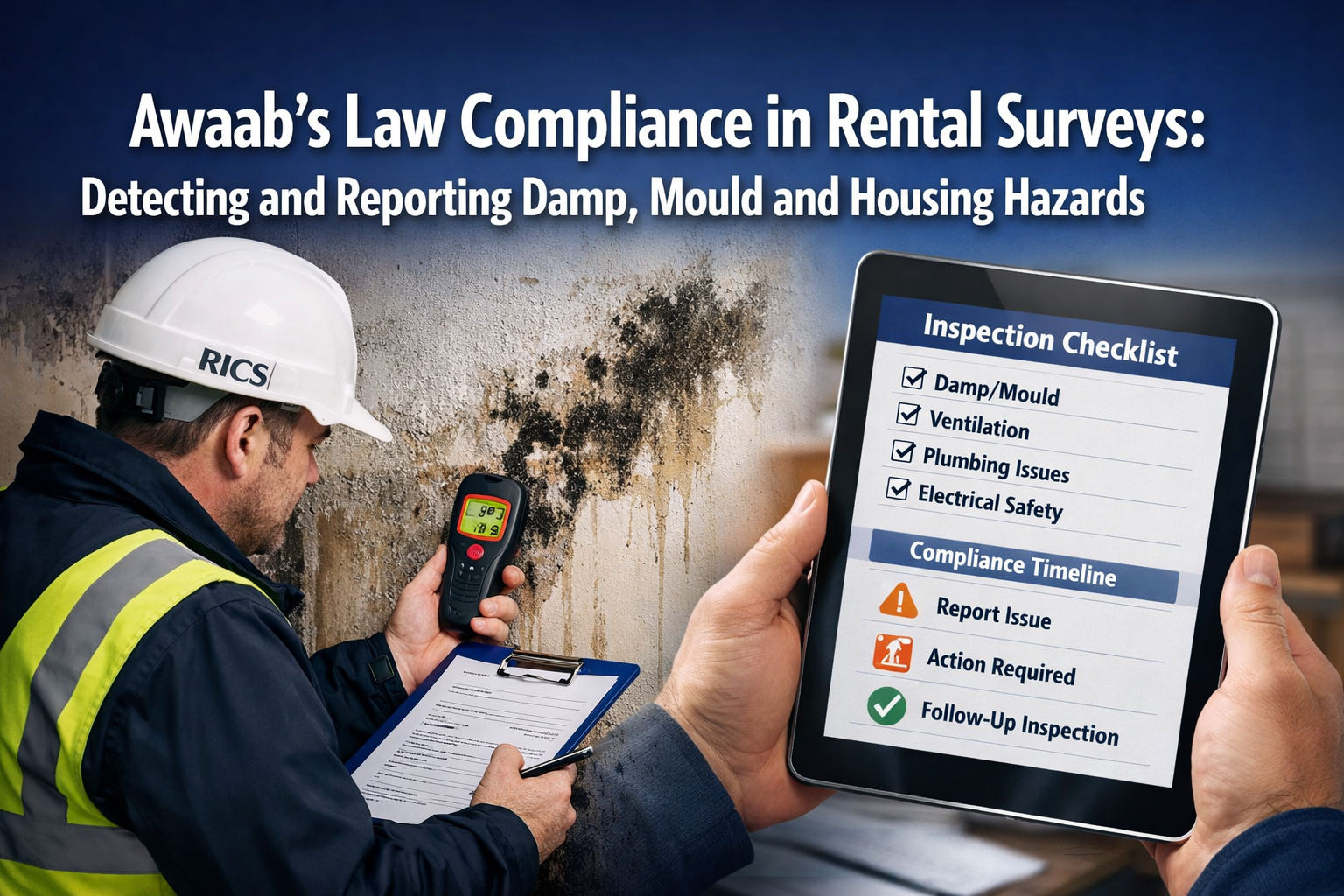
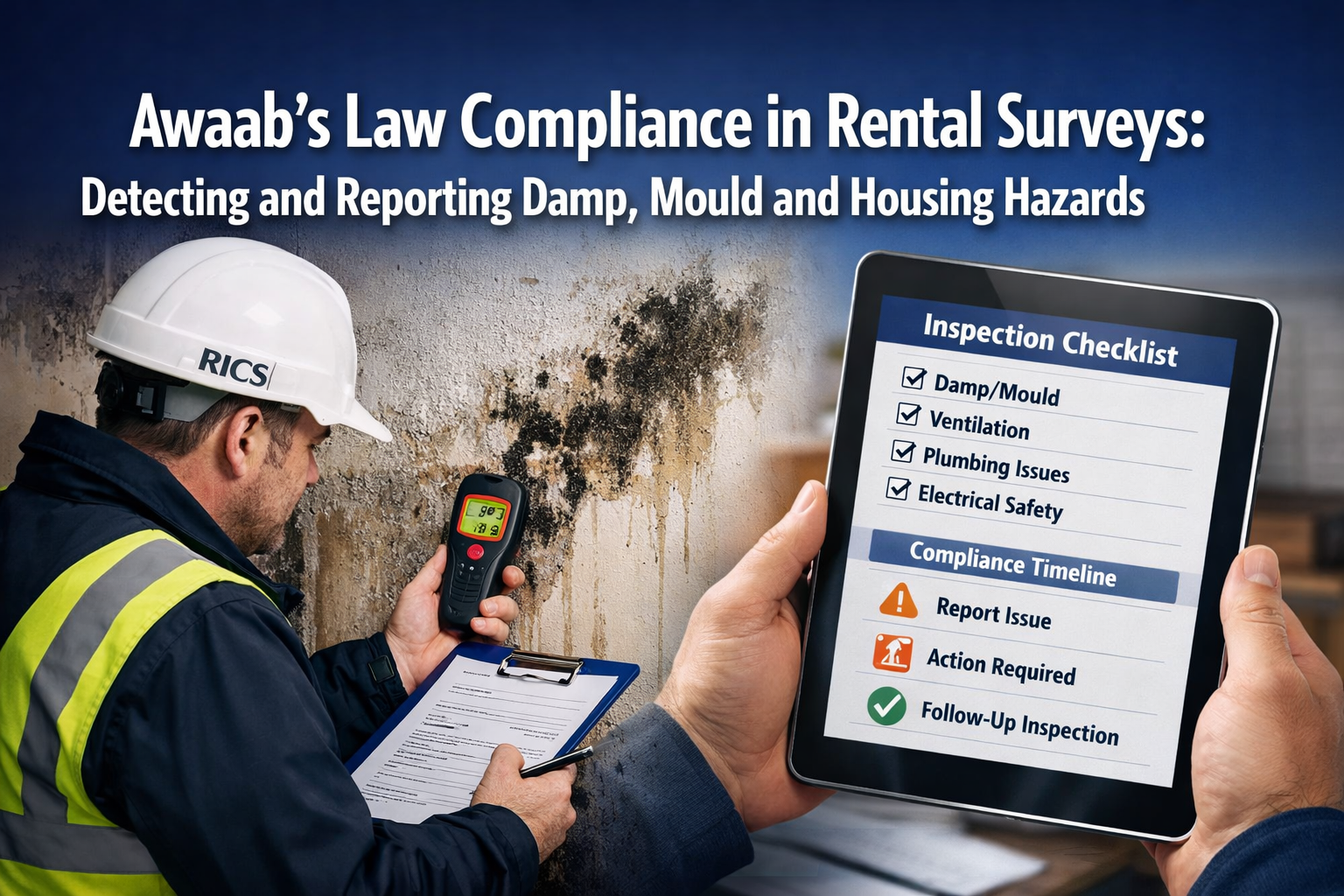
When two-year-old Awaab Ishak died from prolonged exposure to black mould in his family's social housing flat in 2020, the tragedy exposed a systemic failure in how landlords respond to tenant reports of damp and mould. The subsequent legislation—Awaab's Law—fundamentally transformed rental property compliance in England, establishing strict statutory timeframes that landlords and housing providers must meet when addressing health hazards. As we move through 2026, understanding Awaab's Law Compliance in Rental Surveys: Detecting and Reporting Damp, Mould and Housing Hazards has become essential for property surveyors, landlords, and managing agents navigating this new regulatory landscape.
The legislation's impact extends far beyond social housing. With Phase 3 expansion affecting approximately 4.6 million privately rented homes across England[5], property professionals must develop robust protocols for detecting, documenting, and reporting housing hazards that meet strict legal standards.
Key Takeaways
- ⏱️ Emergency hazards require 24-hour investigation and immediate safety measures, with damp and mould investigations completed within 14 days
- 📋 Detailed documentation is legally essential: surveyors must maintain comprehensive records of inspections, findings, communications, and remedial actions to demonstrate compliance
- 🏠 Phase 2 (2026) expands beyond damp and mould to include fire safety, electrical hazards, structural risks, extreme temperatures, and fall hazards with statutory timeframes
- 🔍 Professional mould surveys provide critical compliance evidence, establishing causation, risk levels, and appropriate remediation strategies
- ⚖️ Non-compliance carries significant penalties including improvement notices, fines, banning orders, and potential impacts on rental income and insurance eligibility
Understanding Awaab's Law: Legislative Framework and Compliance Requirements
Awaab's Law represents the most significant shift in rental property health and safety regulation in decades. The legislation establishes mandatory timeframes for landlords to investigate and remediate serious housing hazards, with enforcement mechanisms that carry substantial penalties for non-compliance.
The Three-Phase Rollout
The legislation's implementation follows a structured timeline:
Phase 1 (Social Housing): Initially applied to registered social landlords and housing associations, establishing the foundational compliance framework for damp and mould hazards[3].
Phase 2 (2026 Expansion): Introduces statutory timeframes for additional hazards including fire safety risks, electrical dangers, structural defects, excess cold and heat conditions, fall hazards, and hygiene-related issues[2]. This phase significantly broadens the scope of mandatory compliance beyond the initial damp and mould focus.
Phase 3 (Private Rental Sector): Extends requirements to private landlords and managing agents throughout England, affecting approximately 4.6 million privately rented properties[5]. Private landlords must investigate significant health hazard reports within 14 days and commence repairs within 7 days of identifying serious issues.
Statutory Response Timeframes
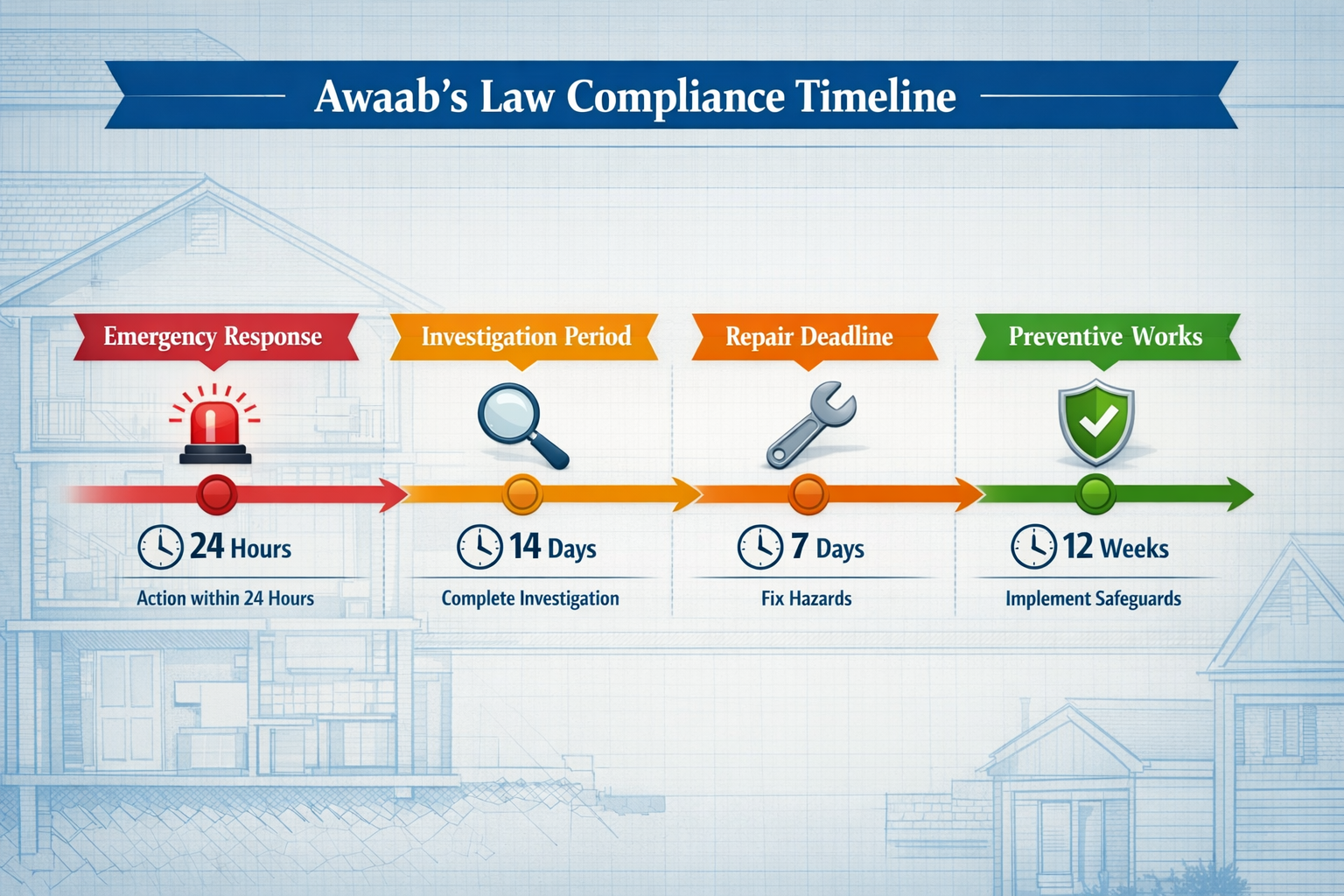
The legislation establishes non-negotiable deadlines that fundamentally change how property professionals must operate:
| Hazard Type | Investigation Period | Repair Commencement | Completion Deadline |
|---|---|---|---|
| Emergency Hazards | 24 hours | Immediate | Make safe within 24 hours[3] |
| Damp and Mould | 14 days | 7 days (if significant risk) | Within reasonable timeframe |
| Preventive Works | N/A | 5 working days | 12 weeks[3] |
| Written Summary | N/A | N/A | 48 hours after investigation[4] |
These timeframes are absolute requirements. Landlords who fail to meet them face enforcement action, regardless of resource constraints or operational challenges. Recent reports indicate that poor data quality and outdated IT systems are creating significant compliance obstacles for landlords attempting to meet these deadlines[1].
Understanding these requirements is crucial when conducting property condition assessments and determining appropriate survey methodologies.
Step-by-Step Protocol for Awaab's Law Compliance in Rental Surveys: Detecting and Reporting Damp, Mould and Housing Hazards
Professional surveyors play a critical role in helping landlords achieve compliance with Awaab's Law. The following protocol provides a systematic approach to detecting, documenting, and reporting housing hazards that meets legal standards.
Step 1: Pre-Inspection Preparation and Risk Assessment
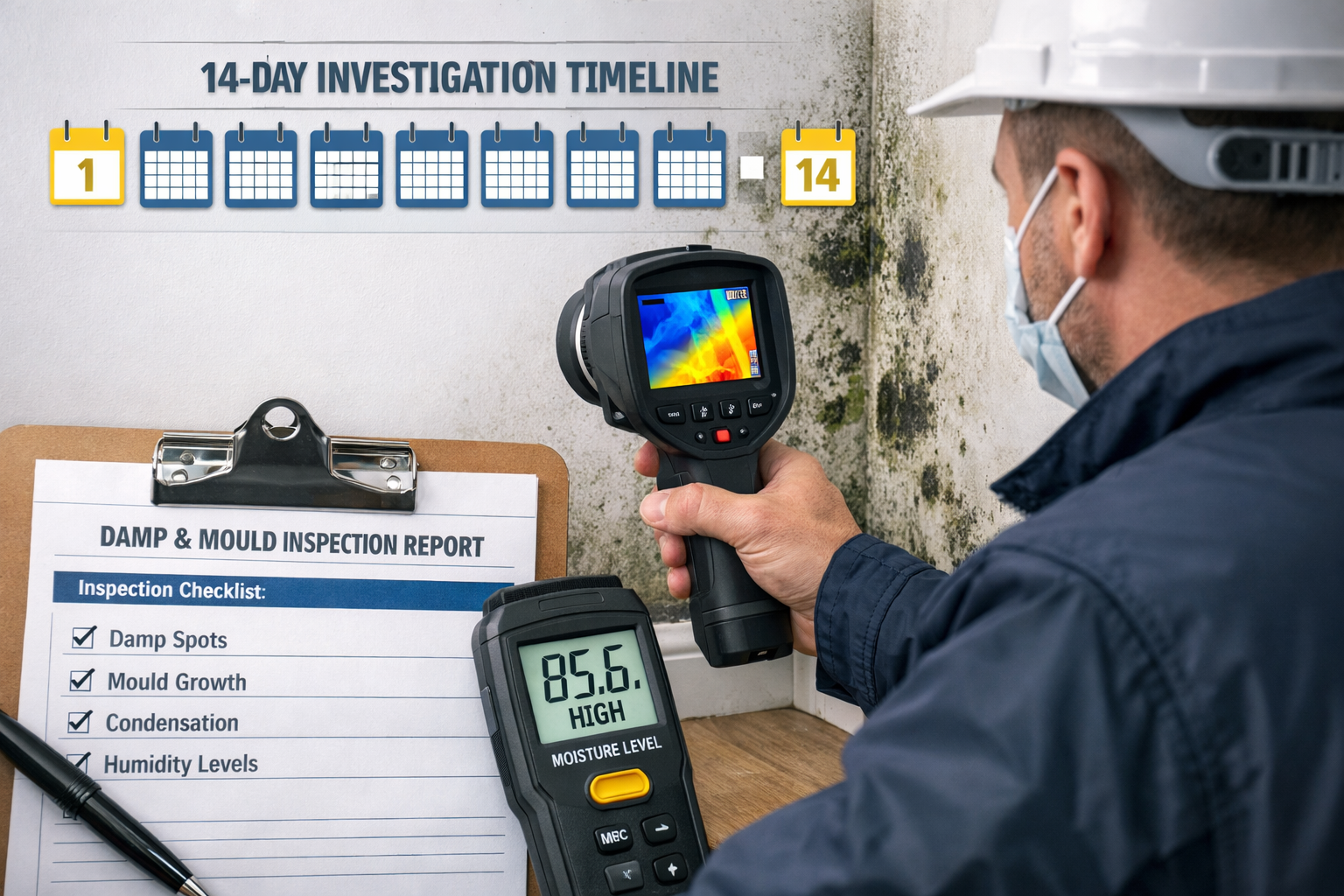
Before entering any rental property, surveyors should:
Review tenant reports and complaint history: Obtain all documentation related to tenant concerns, including photographs, correspondence dates, and previous inspection records. This establishes the timeline for compliance assessment.
Identify hazard categories: Determine whether the inspection involves emergency hazards (requiring 24-hour response), damp and mould (14-day investigation), or Phase 2 hazards (fire, electrical, structural, temperature, falls, hygiene)[2].
Assemble appropriate equipment: Essential tools include:
- Thermal imaging cameras for identifying hidden moisture and temperature anomalies
- Calibrated moisture meters (both surface and penetrating types)
- Hygrometers for measuring relative humidity
- Digital cameras for comprehensive photographic documentation
- Air quality monitoring equipment for mould spore assessment
- Detailed inspection checklists aligned with Awaab's Law requirements
Establish documentation protocols: Create systematic recording methods that capture dates, times, measurements, observations, and communications—all essential for demonstrating compliance[4].
Step 2: Systematic Property Inspection
Conduct a methodical inspection following these principles:
External envelope assessment: Begin outside the property to identify potential moisture ingress sources:
- Damaged or missing roof tiles and flashing
- Blocked or defective guttering and downpipes
- Cracked or deteriorating external render
- Failed pointing in brickwork
- Ground level issues causing rising damp
Internal systematic survey: Work through each room methodically:
- Visual inspection: Document all visible mould growth, noting location, extent, colour, and texture
- Moisture mapping: Use moisture meters to identify elevated readings in walls, floors, and ceilings
- Thermal imaging: Detect cold spots, thermal bridges, and hidden moisture patterns
- Ventilation assessment: Evaluate mechanical and passive ventilation adequacy
- Condensation risk factors: Identify inadequate heating, poor insulation, and ventilation deficiencies
Causation analysis: Distinguish between:
- Penetrating damp (external moisture ingress)
- Rising damp (ground moisture without adequate damp-proof course)
- Condensation (lifestyle factors, inadequate ventilation, heating deficiencies)
- Combination factors (multiple contributing causes)
Understanding damp survey methodologies and pricing helps establish appropriate investigation scope.
Step 3: Health and Safety Risk Categorization
Classify findings according to severity:
Category 1 Hazards (Serious and immediate risk to health):
- Extensive black mould (Stachybotrys chartarum) covering significant wall areas
- Structural defects posing collapse risk
- Severe electrical hazards
- Immediate fire safety failures
Category 2 Hazards (Less serious but still significant):
- Limited mould growth in isolated areas
- Minor electrical issues
- Moderate ventilation deficiencies
This categorization determines applicable response timeframes and remediation urgency. For properties requiring comprehensive evaluation, consider recommending a RICS Homebuyer Survey to establish baseline conditions.
Step 4: Root Cause Identification
Awaab's Law compliance requires identifying underlying causes, not just visible symptoms. Document:
Building defects contributing to hazards:
- Structural issues allowing moisture penetration
- Failed or absent damp-proof courses
- Inadequate or damaged insulation
- Ventilation system deficiencies
Design and construction factors:
- Thermal bridging in building fabric
- Inadequate heating system capacity
- Poor bathroom and kitchen ventilation design
Maintenance failures:
- Deferred repairs to roof, gutters, or external envelope
- Blocked or non-functional ventilation systems
- Deteriorated sealants around windows and doors
Occupancy factors (document objectively without blame):
- Overcrowding relative to property size
- Heating usage patterns
- Ventilation practices
Professional surveyors must present factual findings while avoiding language that appears to blame tenants, as Awaab's Law emphasizes landlord responsibility for providing safe, habitable properties.
Step 5: Photographic and Measurement Documentation
Create comprehensive evidence that withstands legal scrutiny:
Photographic standards:
- Date and time-stamped images
- Wide-angle context shots showing room layout
- Close-up detail of specific defects
- Measurement scales in frame for size reference
- Before-and-after comparison capability
Measurement records:
- Moisture meter readings with specific wall locations
- Temperature and humidity measurements
- Mould coverage area calculations (square meters)
- Ventilation air flow measurements
Site notes and sketches:
- Floor plans marking defect locations
- Elevation sketches showing moisture patterns
- Written observations of conditions at inspection time
This documentation proves essential if disputes arise or enforcement action occurs. Detailed records demonstrate the landlord took investigation seriously and followed proper protocols.
Awaab's Law Compliance Timelines: Remediation Reports and Documentation Standards
Once inspection is complete, surveyors must deliver findings within strict timeframes that align with Awaab's Law requirements.
Immediate Reporting Obligations
Emergency hazards (24-hour requirement): When inspection identifies Category 1 hazards posing immediate risk, surveyors must:
- Notify the landlord immediately (same day, preferably within hours)
- Provide verbal briefing on urgent safety concerns
- Recommend immediate protective measures (property evacuation if necessary)
- Follow up with written confirmation within 24 hours[3]
Damp and mould investigations (14-day completion): Complete the full investigation, causation analysis, and recommendations within 14 days of the tenant's initial report[4]. The landlord must then provide a written summary to the tenant within 48 hours of investigation completion.
Comprehensive Survey Report Structure
Professional reports supporting Awaab's Law compliance should include:
Executive Summary:
- Property address and inspection date
- Inspector credentials and qualifications
- Summary of key findings and risk categorization
- Urgent actions required with specific timeframes
Detailed Findings Section:
- Room-by-room condition descriptions
- Moisture readings and thermal imaging analysis
- Photographic evidence with annotations
- Mould species identification (if laboratory analysis conducted)
- Health risk assessment based on hazard severity
Causation Analysis:
- Root cause identification (building defect, design flaw, maintenance failure)
- Contributing factors
- Distinction between landlord responsibility and occupancy factors
- Expert opinion on primary causation
Remediation Recommendations:
- Immediate actions (emergency repairs, safety measures)
- Short-term repairs (7-day deadline compliance for significant risks)
- Long-term preventive works (12-week completion timeline)[3]
- Specification of works required
- Estimated costs and timeframes
- Alternative accommodation recommendations if necessary
Compliance Statement:
- Confirmation of investigation timeline compliance
- Documentation of tenant communication dates
- Record of landlord notification dates
- Statement of professional standards followed
This structured approach ensures reports provide landlords with clear guidance for meeting their legal obligations. When recommending surveys to clients, explain which home survey is right for specific situations.
Record-Keeping Requirements for Enforcement Defense
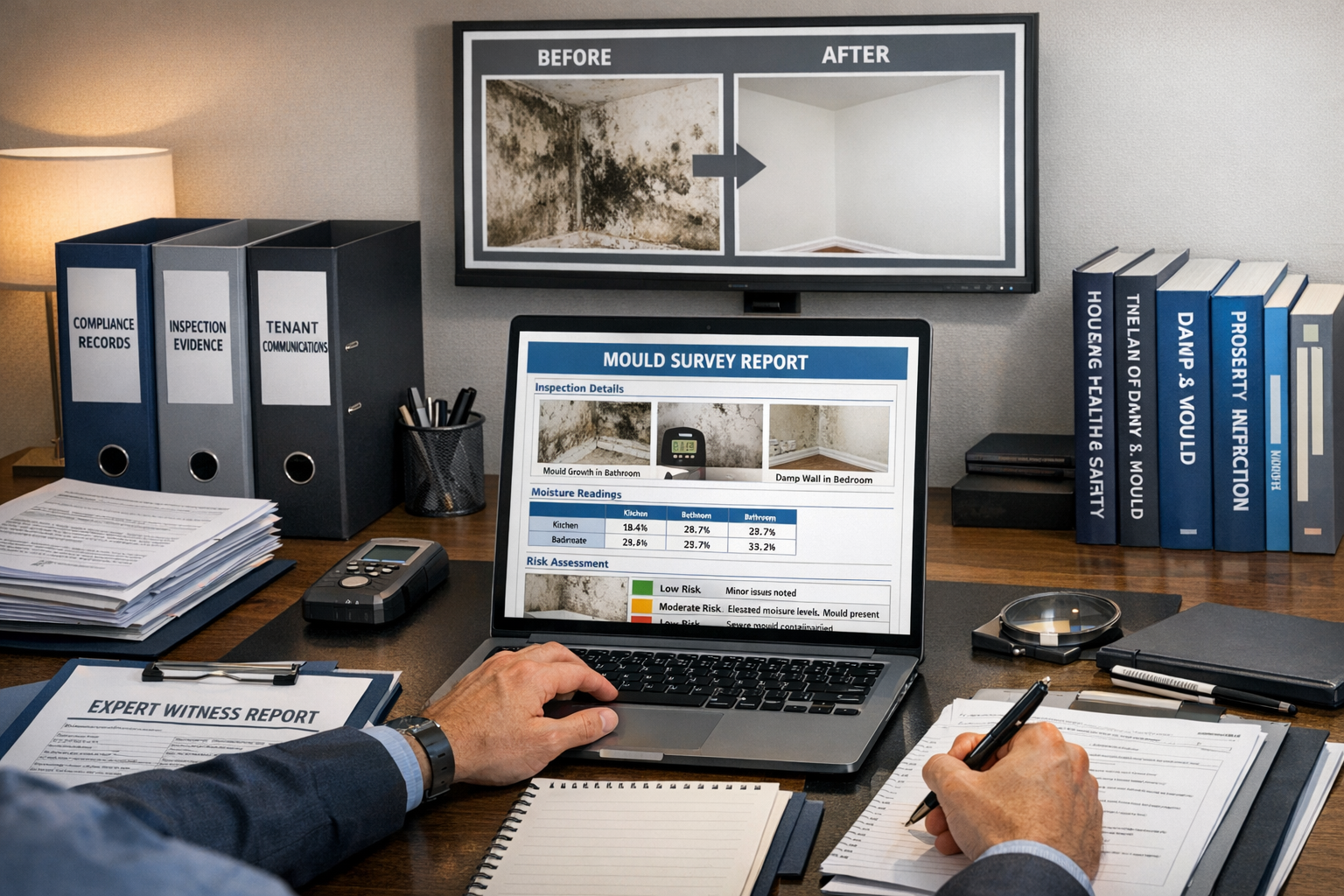
Landlords and managing agents must maintain detailed compliance records including[4]:
- Inspection reports with dates and findings
- Tenant communications (complaint dates, acknowledgment dates, update communications)
- Action logs documenting all steps taken
- Contractor instructions and completion certificates
- Photographic evidence of conditions before and after works
- Cost documentation for works completed
- Alternative accommodation arrangements if provided
These records serve as evidence that the landlord responded appropriately and within statutory timeframes. They also demonstrate when delays occurred due to circumstances beyond the landlord's control (tenant access refusal, contractor availability for specialized works).
Professional surveyors should advise clients to implement robust document management systems that capture this information systematically. Poor data quality and outdated IT systems are already creating major compliance obstacles for landlords[1].
Expert Witness Preparation: Surveyor's Role in Awaab's Law Disputes
As enforcement activity increases throughout 2026, surveyors may be called upon to provide expert witness testimony in disputes involving Awaab's Law compliance. This role requires additional preparation beyond standard survey work.
Expert Witness Qualifications and Duties
Professional credentials: Expert witnesses in housing hazard cases should possess:
- RICS (Royal Institution of Chartered Surveyors) membership
- Relevant specialist qualifications (damp and timber, building pathology)
- Demonstrated experience in housing condition surveys
- Knowledge of relevant legislation and building regulations
- Professional indemnity insurance adequate for expert witness work
Duty to the court: Expert witnesses owe their primary duty to the court or tribunal, not to the party instructing them. This requires:
- Objectivity: Present findings impartially regardless of which party engaged you
- Completeness: Disclose all relevant information, including facts that may not support your client's position
- Clarity: Express opinions in language accessible to non-technical audiences
- Limitations: Acknowledge the boundaries of your expertise and areas of uncertainty
Preparing the Expert Report
Expert reports in Awaab's Law disputes typically address:
Timeline compliance analysis:
- When was the hazard first reported by the tenant?
- When did the landlord commence investigation?
- Was the 14-day investigation deadline met?[4]
- When were repairs initiated following identification of significant risk?
- Was the 7-day repair commencement deadline met?
- Were preventive works completed within 12 weeks?[3]
Causation and responsibility assessment:
- What defects or conditions caused the hazard?
- Were these within the landlord's control and responsibility?
- Could the hazard have been prevented through reasonable maintenance?
- Did tenant actions contribute to the condition? (Document factually without blame)
Reasonableness evaluation:
- Were the landlord's investigative methods adequate?
- Were proposed remedial works appropriate to address root causes?
- Were completion timeframes reasonable given the scope of works?
- Were alternative accommodation or protective measures appropriate if repairs couldn't be completed within deadlines?
Industry standards comparison:
- How do the landlord's actions compare to accepted professional practice?
- What would a competent landlord have done in similar circumstances?
- Were appropriate specialists engaged (structural engineers, damp specialists, etc.)?
Preparing for Cross-Examination
If disputes proceed to tribunal or court, expert witnesses should prepare for:
Document familiarity: Know every detail in your report, supporting documentation, and photographic evidence. Opposing counsel will test your knowledge of specifics.
Methodology defense: Be prepared to explain and justify your inspection methods, equipment calibration, and analytical approach.
Alternative explanations: Anticipate challenges to your causation analysis. Can you explain why alternative theories are less likely?
Professional standards: Reference relevant RICS guidance, British Standards, and industry best practices supporting your conclusions.
Limitations acknowledgment: Be prepared to clearly state what you cannot determine from available evidence. Acknowledging limitations enhances credibility.
Mediation and Settlement Support
Many Awaab's Law disputes resolve through mediation before reaching formal hearings. Surveyors can facilitate resolution by:
- Providing neutral technical assessments that both parties can rely upon
- Quantifying remediation costs with detailed specifications
- Proposing practical solutions that address root causes while considering cost-effectiveness
- Clarifying technical disputes that may be based on misunderstandings rather than genuine disagreements
This mediation role requires diplomacy and communication skills beyond technical expertise. The goal is finding solutions that ensure tenant safety while recognizing practical constraints landlords face.
For landlords seeking to understand broader property assessment implications, reviewing examples of homebuyers reports provides context for professional survey standards.
Phase 2 Expansion: Beyond Damp and Mould in 2026
While initial Awaab's Law focus centered on damp and mould, Phase 2 implementation in 2026 significantly expands the scope of hazards subject to statutory response timeframes[2].
Additional Hazard Categories Under Phase 2
Fire safety hazards:
- Inadequate means of escape
- Missing or non-functional fire detection systems
- Compromised fire-resistant construction
- Blocked escape routes
Electrical hazards:
- Outdated wiring systems
- Missing RCD protection
- Overloaded circuits
- Exposed live conductors
Structural risks:
- Significant cracking indicating movement
- Roof structure deterioration
- Floor collapse risk
- Wall instability
Excess cold and heat conditions:
- Inadequate heating systems
- Poor insulation causing extreme cold
- Overheating risk in summer months
- Fuel poverty implications
Fall hazards:
- Defective stairs and balustrades
- Unsafe balconies
- Trip hazards
- Inadequate lighting on stairs
Hygiene-related issues:
- Pest infestations
- Inadequate sanitation facilities
- Contamination risks
Adapting Survey Protocols for Phase 2 Compliance
Surveyors must expand inspection methodologies to address this broader hazard range:
Multi-disciplinary approach: Complex properties may require specialist input from:
- Electrical engineers for comprehensive electrical safety assessments
- Structural engineers for significant structural concerns
- Fire safety consultants for complex fire risk assessments
- Heating engineers for thermal comfort and energy efficiency evaluation
Enhanced equipment requirements:
- Electrical testing equipment for circuit verification
- Structural monitoring tools for movement assessment
- Temperature logging equipment for thermal comfort evaluation
- Comprehensive fire safety inspection checklists
Broader documentation scope: Survey reports must now address all Phase 2 hazard categories systematically, not just damp and mould conditions.
This expansion creates significant challenges for landlords already struggling with Phase 1 compliance. Media reports indicate housing providers are failing to meet established deadlines, triggering increased scrutiny[1]. Surveyors can support landlords by conducting comprehensive assessments that identify all potential hazards in single inspections, rather than requiring multiple follow-up visits.
Private Landlord Compliance: Phase 3 Implementation Considerations
The extension of Awaab's Law to approximately 4.6 million privately rented properties represents the legislation's most significant impact[5]. Private landlords face unique challenges compared to social housing providers.
Key Differences for Private Landlords
Resource constraints: Unlike housing associations with dedicated maintenance teams, private landlords often manage properties individually or through small portfolios. They may lack:
- In-house technical expertise
- Established contractor relationships for rapid response
- Sophisticated property management software for tracking compliance
- Financial reserves for immediate major works
Enforcement approach: Local authorities will enforce compliance in the private sector through[5]:
- Improvement notices requiring specific actions within defined timeframes
- Financial penalties for non-compliance
- Banning orders preventing landlords from renting properties
- Rent repayment orders requiring landlords to refund rent paid during non-compliance periods
Insurance and financing implications: Non-compliance can affect:
- Landlord insurance eligibility and premiums
- Mortgage lender requirements for buy-to-let properties
- Portfolio valuation for landlords seeking refinancing
- Ability to obtain selective licensing in certain local authority areas
Proactive Compliance Strategies for Private Landlords
Regular preventive inspections: Rather than waiting for tenant complaints, conduct:
- Annual property condition surveys
- Seasonal checks of high-risk areas (gutters before winter, ventilation systems before summer)
- Post-tenancy changeover inspections
Tenant communication protocols: Establish clear reporting mechanisms:
- Written procedures for tenants to report hazards
- Acknowledgment systems confirming receipt of complaints
- Regular update communications during investigation and repair periods
- Documentation of all tenant interactions with dates and times[4]
Contractor framework agreements: Develop relationships with reliable contractors who can respond within Awaab's Law timeframes:
- Damp and mould specialists
- Emergency plumbers and electricians
- Roofing contractors
- Heating engineers
Professional survey commissioning: Engage qualified surveyors to conduct baseline assessments and investigate tenant reports. Professional surveys provide[6]:
- Credible evidence of compliance efforts
- Root cause identification supporting effective remediation
- Risk assessment prioritizing actions appropriately
- Remediation specifications contractors can work from
- Expert witness capability if disputes arise
Understanding damp surveyor fees and pricing structures helps landlords budget appropriately for compliance investigations.
Technology Solutions for Compliance Management
Given that poor data quality and outdated IT systems are creating major compliance obstacles[1], private landlords should consider:
Property management software with:
- Tenant complaint logging and tracking
- Automated deadline reminders for statutory timeframes
- Document storage for compliance evidence
- Contractor management and work order tracking
Digital inspection tools:
- Tablet-based inspection apps for systematic surveys
- Cloud storage for photographic evidence
- Automated report generation
- Integration with property management systems
Tenant portals:
- Online reporting systems for maintenance issues
- Communication tracking with automatic timestamping
- Transparency showing investigation and repair progress
These technological solutions need not be expensive. Even basic spreadsheet systems with clear protocols can demonstrate systematic compliance efforts if disputes arise.
Conclusion: Building a Culture of Proactive Compliance
Awaab's Law Compliance in Rental Surveys: Detecting and Reporting Damp, Mould and Housing Hazards represents more than regulatory box-ticking—it embodies a fundamental shift toward tenant safety and landlord accountability. As we progress through 2026, with Phase 2 expansion introducing broader hazard categories and Phase 3 extending requirements to private landlords, property professionals must adapt their practices to meet these elevated standards.
Key Implementation Actions
For surveyors:
- ✅ Develop systematic inspection protocols aligned with Awaab's Law timeframes
- ✅ Invest in appropriate equipment for comprehensive hazard detection
- ✅ Create report templates that address compliance requirements explicitly
- ✅ Maintain detailed documentation supporting expert witness roles
- ✅ Stay current on Phase 2 hazard categories and assessment methodologies
For landlords and managing agents:
- ✅ Commission baseline property condition surveys before tenant complaints arise
- ✅ Establish clear tenant reporting procedures with documented acknowledgment systems
- ✅ Develop contractor frameworks enabling rapid response within statutory deadlines
- ✅ Implement robust record-keeping systems demonstrating compliance efforts
- ✅ Budget appropriately for professional surveys and remedial works
For tenants:
- ✅ Report hazards promptly in writing to establish clear timelines
- ✅ Understand your rights under Awaab's Law regarding investigation and repair deadlines
- ✅ Document conditions with photographs and maintain correspondence records
- ✅ Seek local authority support if landlords fail to meet statutory obligations
The legislation's strict timeframes—24 hours for emergency hazards, 14 days for damp and mould investigations, 7 days to commence significant repairs, and 12 weeks for preventive works—leave no room for complacency. Landlords struggling with poor data quality and outdated systems[1] must prioritize compliance infrastructure investment to avoid enforcement action.
Professional surveyors occupy a critical position in this compliance ecosystem. By conducting thorough investigations, identifying root causes, specifying appropriate remediation, and maintaining documentation that withstands legal scrutiny, surveyors enable landlords to meet their obligations while protecting tenant health and safety.
The tragic circumstances that led to Awaab's Law serve as a sobering reminder that housing quality directly impacts lives. By embracing these requirements not as burdens but as professional standards, the property industry can ensure such preventable tragedies never occur again.
Next Steps
Property professionals seeking to enhance their Awaab's Law compliance capabilities should:
- Review current inspection methodologies against the protocols outlined in this article
- Audit documentation systems to ensure they capture all information required for compliance demonstration
- Engage with professional development on Phase 2 hazard categories beyond damp and mould
- Establish relationships with specialist consultants for complex assessments
- Consult comprehensive property survey guides to understand broader context of professional survey standards
The regulatory landscape will continue evolving as enforcement authorities test compliance standards throughout 2026[4]. Property professionals who adopt proactive, systematic approaches now will be best positioned to navigate this challenging environment while delivering the safe, healthy housing that all tenants deserve.
References
[1] Poor Data Hindering Landlords Compliance With Awaabs Law – https://news.fmbusinessdaily.com/2026/03/poor-data-hindering-landlords-compliance-with-awaabs-law/
[2] Awaabs Law Phase 2 Is Coming What Social Landlords Need To Know About Additional Hazard Compliance In 2026 – https://www.mobysoft.com/resources/blogs/awaabs-law-phase-2-is-coming-what-social-landlords-need-to-know-about-additional-hazard-compliance-in-2026/
[3] Awaabs Law – https://www.ecosafegroup.co.uk/post/awaabs-law
[4] How Awaabs Law Will Be Stress Tested In 2026 – https://theintermediary.co.uk/2026/02/how-awaabs-law-will-be-stress-tested-in-2026/
[5] Awaabs Law What Private Landlords Need To Know Before 2026 – https://objectivehealth.co.uk/news/awaabs-law-what-private-landlords-need-to-know-before-2026
[6] Awaabs Law Private Landlords 2026 – https://www.idealresponse.co.uk/blog/awaabs-law-private-landlords-2026/