


The property market in 2026 has shifted dramatically. Buyers are no longer rushing to make offers above asking price. Instead, they're taking their time, scrutinizing every detail, and demanding precision in valuations. With median listing prices declining 2.4% year-over-year and homes spending 8 days longer on the market compared to February 2025, the balance of power has tilted firmly in favor of purchasers.[1] In this new landscape, understanding affordability pressures and valuation accuracy has become essential for buyers who want to negotiate effectively and secure the best possible deal.
Professional surveyors now play a pivotal role in this transformed market. Their detailed, defensible valuations provide buyers with the evidence they need to negotiate harder, challenge inflated asking prices, and account for both immediate repair costs and future financial implications. As affordability constraints continue to shape purchasing decisions, surveyors who can deliver comprehensive assessments are becoming indispensable allies for cost-conscious buyers navigating the 2026 property market.
Key Takeaways
- 📉 Market conditions favor buyers: With inventory up 7.5% year-over-year and prices declining 2.4%, buyers have significantly more negotiating leverage in 2026.[1]
- 🔍 Accurate valuations drive negotiations: Professional survey reports provide documented evidence of defects and repair costs that support price reduction requests averaging 5-10% of the purchase price.
- 💰 Affordability constraints demand precision: With wage growth finally exceeding home price appreciation, buyers need detailed cost assessments to maximize their purchasing power.[4]
- 🏠 Regional market variations matter: While some areas show price declines (Florida, Texas, California), others remain resilient (Midwest, Northeast), requiring localized valuation expertise.[3]
- ⚖️ Future-proofing purchases: Comprehensive surveys help buyers account for long-term costs, tax implications, and maintenance expenses that affect overall affordability.
Understanding the 2026 Market Shift: Affordability Pressures Creating Buyer Opportunities
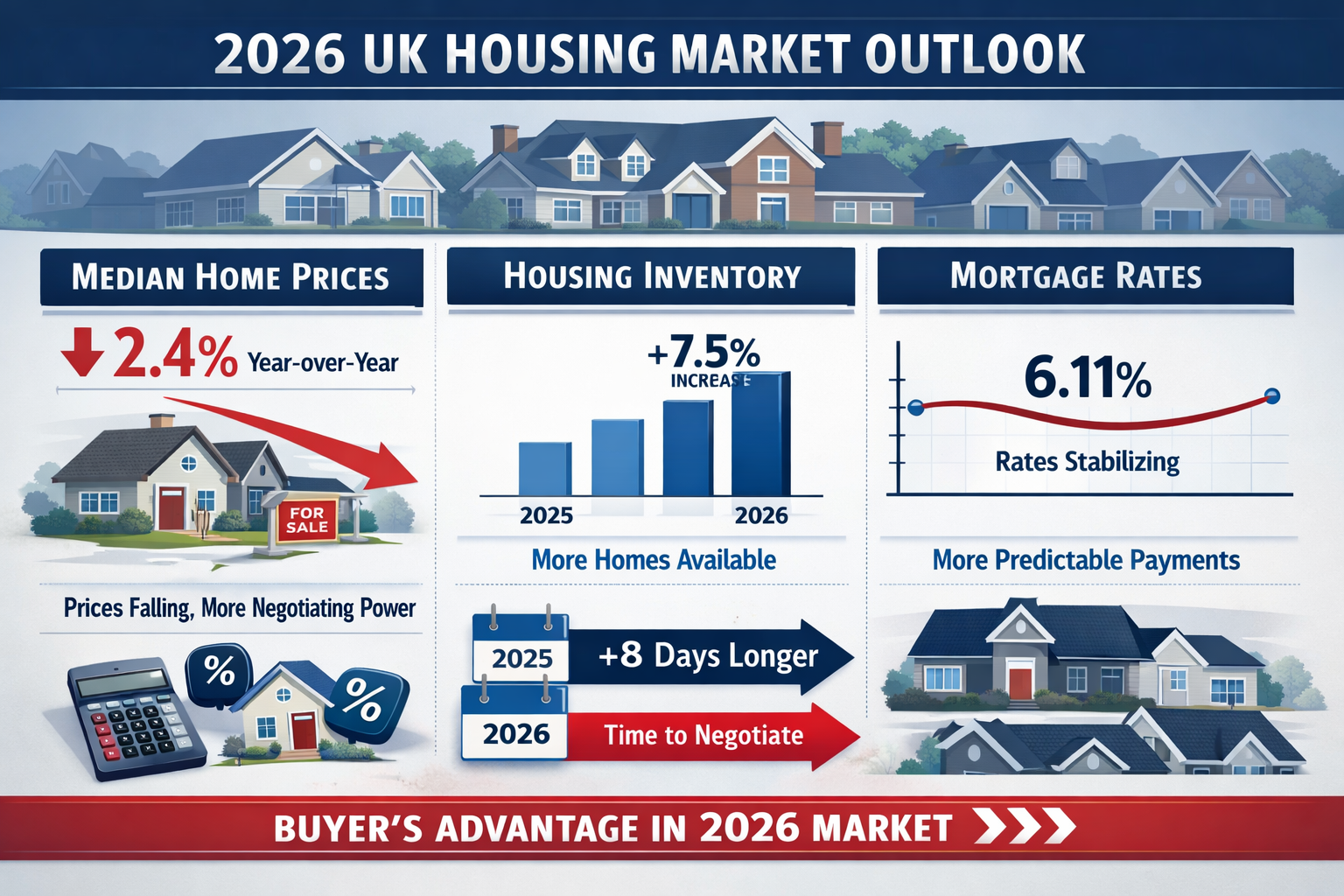
The property market has undergone a fundamental transformation in 2026. After years of rapid price appreciation and bidding wars, the pendulum has swung decisively toward buyers. This shift stems from several converging factors that have reshaped market dynamics and created unprecedented opportunities for informed purchasers.
The Numbers Behind the Market Transformation
The statistics paint a clear picture of changing market conditions:
| Market Indicator | 2026 Change | Impact on Buyers |
|---|---|---|
| Median Listing Prices | -2.4% year-over-year[1] | Lower entry costs, negotiating room |
| Days on Market | +8 days vs. 2025[1] | More time for due diligence |
| Active Inventory | +7.5% year-over-year[1] | Greater selection, less competition |
| New Listings | -8.5% year-over-year[1] | Sellers holding back, reducing pressure |
| Mortgage Rates | Stabilized at ~6.11%[1] | Predictable financing costs |
| Price Growth Projection | 0-2.2% for 2026[2][3] | Minimal appreciation pressure |
These figures represent a dramatic departure from the seller's market that dominated the previous several years. For the first time since the pandemic-era housing boom, buyers can approach purchases methodically rather than frantically.
Why Affordability Pressures Are Reshaping Buyer Behavior
Affordability constraints have fundamentally changed how buyers approach property purchases. Even with mortgage rates stabilizing, the cumulative effect of years of rapid price appreciation has stretched household budgets to their limits. According to Mark Fleming, Chief Economist at First American, "affordability remains challenging, but for the first time in several years, the underlying forces are finally aligned toward gradual improvement."[4]
This improvement stems from a critical shift: wage growth is now exceeding home price appreciation. After years of falling behind, household incomes are finally catching up, providing buyers with increased purchasing power.[4] However, this doesn't mean buyers are spending freely. Instead, they're:
- 🔎 Conducting more thorough due diligence before making offers
- 💵 Demanding detailed cost breakdowns for repairs and improvements
- 📊 Using professional valuations to justify lower offers
- ⏰ Taking advantage of extended market times to negotiate better terms
- 🏦 Factoring in long-term costs including taxes, insurance, and maintenance
Regional Variations in Affordability Pressures
The 2026 market isn't uniform across all regions. Significant geographic variations exist, with some areas experiencing price declines while others maintain stability or modest growth:
Markets Showing Price Declines:
- Florida
- Texas
- Colorado
- Arizona
- Utah
- California
Markets Showing Resilience:
- Illinois (+5.4%)
- New Jersey (+5.5%)
- Nebraska (+5.4%)
- Other Midwest and Northeast states[3]
These regional differences reflect varying levels of inventory pressure, migration patterns, and local economic conditions. Buyers in declining markets have even greater negotiating leverage, while those in resilient markets must rely more heavily on detailed valuations to identify fair pricing.
Understanding these market dynamics is the first step. The next is leveraging professional survey expertise to translate market conditions into tangible negotiating advantages.
The Critical Role of Valuation Accuracy in Supporting Buyer Negotiations
In the 2026 market, valuation accuracy has become the cornerstone of successful property negotiations. Buyers are no longer willing to accept estate agents' asking prices at face value. Instead, they're demanding objective, evidence-based assessments that reflect true property condition and fair market value.
How Professional Surveys Provide Negotiating Leverage
A comprehensive homebuyers survey serves as powerful ammunition in price negotiations. Unlike basic mortgage valuations that simply confirm lending security, professional surveys conducted by RICS chartered surveyors provide:
Detailed Defect Documentation 📋
- Structural issues with photographic evidence
- Damp and moisture problems with severity ratings
- Roof condition assessments
- Electrical and plumbing concerns
- Subsidence or settlement indicators
Quantified Repair Costs 💷
- Itemized estimates for addressing each defect
- Prioritization of urgent versus routine repairs
- Long-term maintenance projections
- Specialist work requirements
Comparative Market Analysis 📊
- Assessment of asking price versus condition
- Comparison with similar properties in better condition
- Adjustment factors for identified defects
- Fair market value recommendations
This documentation transforms negotiations from subjective haggling into objective, data-driven discussions. When buyers present sellers with a detailed survey report documenting £15,000 in necessary roof repairs, the conversation shifts from "Can you reduce the price?" to "How will we account for these documented costs?"
The Average Price Reduction Supported by Survey Evidence
Research shows that buyers who commission professional surveys achieve significant price reductions. According to industry data, the average price reduction after survey ranges from 5-10% of the purchase price when substantial defects are identified.
Consider these real-world scenarios:
Scenario 1: Victorian Terrace – £450,000 Asking Price
- Survey identifies: damp issues, outdated electrical system, roof repairs needed
- Documented repair costs: £22,000
- Negotiated reduction: £25,000 (5.6%)
- Final price: £425,000
Scenario 2: 1930s Semi-Detached – £325,000 Asking Price
- Survey identifies: subsidence evidence, asbestos in garage, boiler replacement needed
- Documented repair costs: £18,500
- Negotiated reduction: £30,000 (9.2%)
- Final price: £295,000
Scenario 3: Modern Apartment – £280,000 Asking Price
- Survey identifies: minor defects, service charge concerns, cladding questions
- Documented issues: £4,500 estimated costs
- Negotiated reduction: £8,000 (2.9%)
- Final price: £272,000
These examples illustrate how professional valuations transform abstract concerns into concrete financial adjustments. In the current market, where buyers have more time and options, sellers are increasingly willing to negotiate when faced with documented evidence.
Types of Surveys That Support Different Negotiating Strategies
Different survey levels provide varying degrees of detail and negotiating power:
RICS Level 2 Survey (HomeBuyer Report) 🏘️
- Best for: Modern properties in reasonable condition
- Negotiating strength: Moderate
- Typical findings: Surface-level defects, maintenance issues
- Cost: £400-£600
- Learn more about the RICS HomeBuyer Survey
RICS Level 3 Survey (Building Survey) 🏚️
- Best for: Older properties, complex buildings, renovation projects
- Negotiating strength: Strong
- Typical findings: Structural issues, hidden defects, comprehensive condition assessment
- Cost: £600-£1,200
- Explore the difference between Level 2 and Level 3 surveys
Specialist Surveys 🔬
- Damp and timber surveys
- Structural engineer assessments
- Drainage surveys
- Asbestos surveys
- Negotiating strength: Very strong for specific issues
The choice of survey type depends on the property age, condition, and complexity. However, in the 2026 market where affordability pressures demand precision, many buyers are opting for more comprehensive Level 3 surveys even on relatively modern properties. The additional cost (typically £200-£400 more than a Level 2) often pays for itself many times over through negotiated price reductions.
Timing Your Survey for Maximum Negotiating Impact
Strategic timing of property surveys can significantly enhance negotiating leverage:
Pre-Offer Survey (Uncommon but powerful)
- Commission survey before making an offer
- Make informed, realistic initial offer
- Avoid emotional commitment before knowing true condition
- Advantage: Strongest negotiating position, no sunk costs
Post-Offer, Pre-Exchange Survey (Standard approach)
- Make offer subject to satisfactory survey
- Commission survey after offer acceptance
- Negotiate based on findings before legal commitment
- Advantage: Balanced approach, industry standard
Rush Survey for Competitive Situations (2026 less common)
- Fast-track survey in multiple-offer scenarios
- Quick turnaround (3-5 days instead of 7-10)
- Advantage: Speed without sacrificing due diligence
In the current market with extended days on market and reduced competition, buyers have more flexibility in timing. This allows for thorough surveys without pressure, creating optimal conditions for evidence-based negotiations.
Affordability Pressures and Valuation Accuracy: How Surveyors Can Support Buyers Negotiating Harder in the 2026 Market
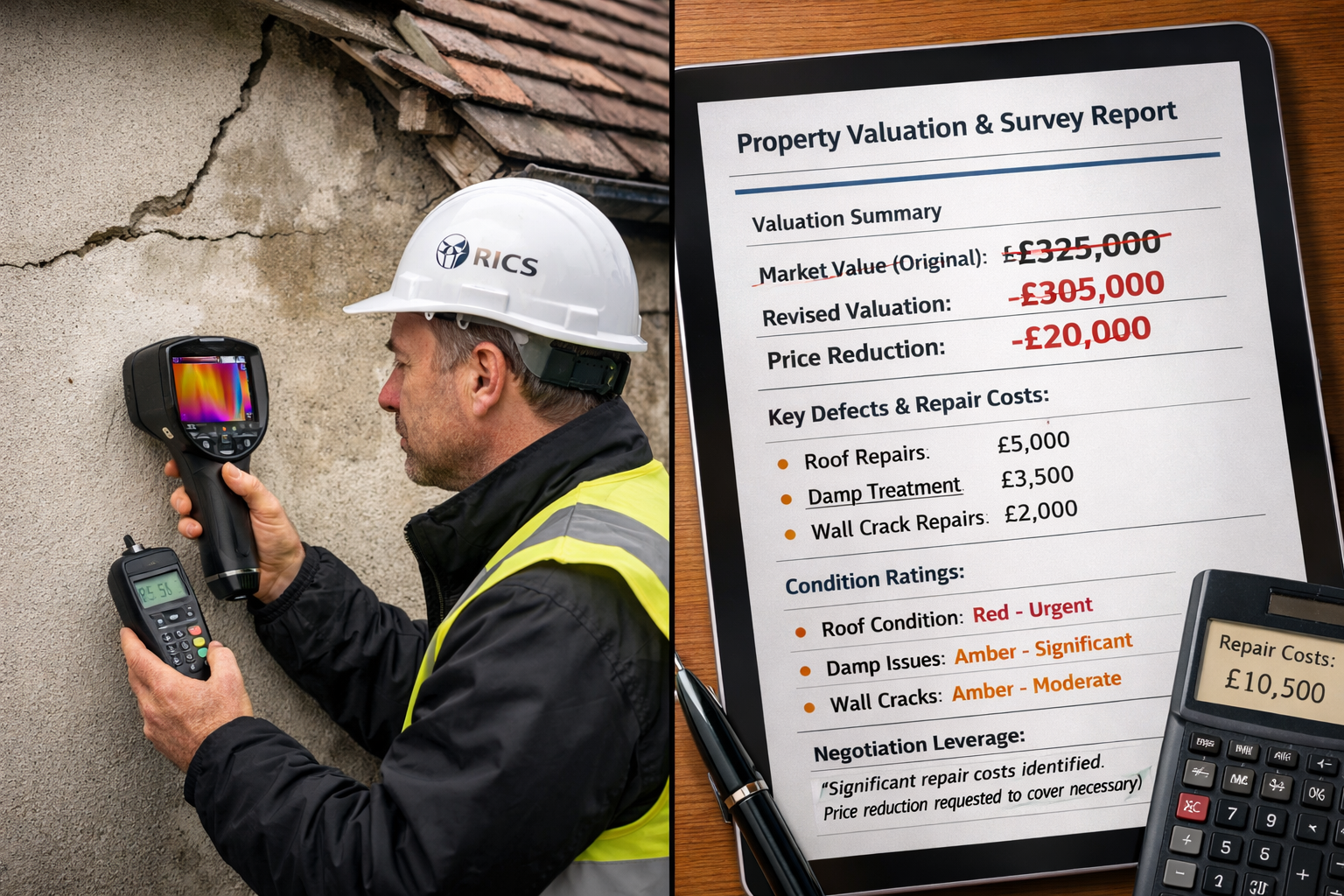
Professional surveyors have evolved from simple property inspectors to strategic advisors who help buyers navigate affordability pressures and negotiate optimal purchase terms. In 2026, their role extends far beyond identifying defects—they provide the detailed, defensible valuations that empower buyers to negotiate harder and make financially sound decisions.
How Surveyors Quantify Affordability Impact Beyond Purchase Price
The true cost of property ownership extends well beyond the purchase price. Forward-thinking surveyors in 2026 are helping buyers understand the total cost of ownership by quantifying:
Immediate Repair and Remediation Costs 🔧
- Urgent structural repairs
- Safety-critical electrical or gas work
- Damp treatment and prevention
- Roof repairs or replacement
- Heating system upgrades
Short-Term Improvement Costs (1-3 Years) 🏗️
- Necessary modernization work
- Energy efficiency improvements
- Cosmetic updates to make property habitable
- Garden or external works
- Compliance with building regulations
Long-Term Maintenance Projections (5-10 Years) 📅
- Roof lifespan and replacement costs
- Window and door replacement schedules
- Heating system replacement
- External decoration and maintenance
- Drainage and guttering renewal
Ongoing Cost Implications 💰
- Higher heating costs due to poor insulation
- Increased insurance premiums for identified risks
- Service charges and ground rent (leasehold)
- Council tax band considerations
- Potential future repair costs for deferred maintenance
By presenting this comprehensive financial picture, surveyors help buyers understand whether a property fits within their long-term affordability constraints, not just their initial budget. This holistic approach is particularly valuable in 2026, where buyers are thinking more carefully about total ownership costs.
Creating Defensible Valuations That Stand Up to Seller Scrutiny
For survey findings to support successful negotiations, they must be defensible, detailed, and professionally presented. Estate agents and sellers will often challenge survey findings, attempting to minimize concerns or dispute repair cost estimates. Professional surveyors counter this by:
Providing Photographic Evidence 📸
- High-quality images of all significant defects
- Multiple angles showing extent of issues
- Before-and-after comparisons where relevant
- Annotated photographs highlighting specific concerns
Including Technical Specifications 📐
- Precise measurements of cracks, damp patches, or structural movement
- Technical terminology that demonstrates expertise
- Reference to building regulations and industry standards
- Comparison with acceptable tolerance levels
Citing Repair Cost Benchmarks 💷
- Itemized repair estimates based on current market rates
- References to industry-standard pricing guides
- Recommendations for specialist contractor quotes
- Breakdown of materials versus labor costs
Offering Professional Opinions with Caveats ⚖️
- Clear distinction between observed defects and inferred causes
- Recommendations for specialist investigations where needed
- Risk assessments for potential hidden defects
- Professional liability insurance backing opinions
When sellers or their agents challenge findings, buyers armed with this level of documentation can respond confidently. The survey becomes an objective third-party assessment that's difficult to dismiss, especially when prepared by chartered surveyors with professional credentials and insurance.
Supporting Buyers Through the Negotiation Process
The best surveyors don't just deliver a report and disappear. In 2026, they're actively supporting buyers through negotiations by:
Providing Post-Report Consultations 📞
- Explaining findings in plain language
- Prioritizing issues by urgency and cost
- Advising on realistic price reduction requests
- Suggesting alternative negotiation strategies
Offering Written Summaries for Estate Agents 📄
- Concise executive summaries of key findings
- Professional presentation suitable for forwarding to sellers
- Clear cost implications
- Recommendations for resolution
Being Available for Follow-Up Questions ❓
- Clarifying technical points during negotiations
- Providing additional context as needed
- Updating estimates if quotes come in differently
- Supporting buyers' solicitors with technical queries
Recommending Specialist Contractors 👷
- Trusted specialists for detailed quotes
- Contractors who can verify survey findings
- Professionals who can provide remediation plans
- Cost-effective solutions for identified problems
This ongoing support transforms the survey from a one-time document into a negotiating tool that buyers can leverage throughout the purchase process.
Case Study: How Detailed Valuation Saved a Buyer £35,000
Property: 1960s detached house in outer London
Asking Price: £625,000
Buyer's Initial Offer: £610,000 (accepted subject to survey)
Survey Findings:
- Significant structural movement in rear extension (estimated repair: £12,000)
- Outdated electrical system requiring full rewire (estimated cost: £8,500)
- Asbestos-containing materials in garage and soffits (removal cost: £3,500)
- Flat roof over extension nearing end of life (replacement: £6,000)
- Damp issues in ground floor rooms (treatment and remediation: £4,500)
- Total documented repair costs: £34,500
Negotiation Process:
- Buyer's solicitor forwarded survey executive summary to seller's agent
- Seller initially offered £5,000 reduction, claiming issues were "minor"
- Buyer obtained three specialist quotes confirming survey cost estimates
- Buyer presented detailed breakdown showing £34,500 in necessary work
- Buyer revised offer to £575,000 (£35,000 reduction)
- Seller countered at £590,000
- Buyer held firm with evidence, noting extended market time and rising inventory
- Final agreed price: £585,000 (£25,000 reduction, 4% below asking)
Additional Benefits:
- Buyer used saved £25,000 to complete urgent electrical and structural work
- Remaining repairs scheduled over 18 months
- Buyer avoided purchasing a property with hidden costs that would have strained affordability
- Survey provided roadmap for systematic property improvement
This case illustrates how professional valuation accuracy combined with current market conditions (extended days on market, rising inventory) creates powerful negotiating leverage. The buyer's willingness to walk away, backed by documented evidence of costs, ultimately secured a significant reduction.
How Surveyors Address Future Tax and Regulatory Implications
Beyond immediate repair costs, experienced surveyors in 2026 are helping buyers understand future regulatory and tax implications that affect long-term affordability:
Energy Performance Certificate (EPC) Considerations ⚡
- Current rating and improvement potential
- Costs to achieve higher ratings
- Future rental market implications (minimum EPC requirements)
- Potential government grant eligibility for improvements
Building Safety and Cladding Issues 🏢
- Identification of potential cladding concerns
- Fire safety compliance assessments
- Estimated remediation costs
- Impact on property value and mortgageability
Planning and Building Regulation Compliance 📋
- Identification of unauthorized alterations
- Costs to regularize non-compliant work
- Risks of retrospective planning applications
- Potential enforcement action implications
Stamp Duty Land Tax (SDLT) Optimization 💷
- Valuation of chattels versus fixtures
- Potential for SDLT reduction through proper valuation
- Documentation supporting tax position
- Advice on mixed-use or multiple dwelling relief
Future Maintenance Tax Implications 🏠
- Capital improvements versus repairs (for landlords)
- Potential VAT implications for listed buildings
- Energy-saving investment tax considerations
- Documentation for future capital gains calculations
By addressing these forward-looking considerations, surveyors help buyers understand the complete financial picture, ensuring that affordability assessments account for both immediate and future costs.
The Surveyor's Role in Different Property Types
Different property types require specialized valuation approaches to support effective negotiations:
Period Properties (Pre-1900) 🏛️
- Emphasis on structural movement, damp, and traditional construction methods
- Understanding of period-appropriate repairs versus modern interventions
- Assessment of listed building implications
- Valuation of character features versus maintenance burdens
Inter-War and Post-War Properties (1920s-1960s) 🏘️
- Focus on common issues: cavity wall tie failure, concrete deterioration, asbestos
- Assessment of original features versus modernization needs
- Evaluation of extension quality and compliance
- Consideration of estate-specific issues
Modern Properties (1970s-Present) 🏗️
- Emphasis on build quality and developer reputation
- NHBC warranty coverage and claims history
- Energy efficiency and modern building standards
- Assessment of new-build snagging issues
Leasehold Properties 📄
- Lease length implications for value and mortgageability
- Service charge reasonableness and future projections
- Building condition and major works provisions
- Freeholder relationship and management quality
- Learn more about what to check before buying leasehold property
Each property type presents unique valuation challenges. Surveyors who understand these nuances provide buyers with targeted insights that support more effective negotiations.
Practical Strategies: Using Survey Findings to Negotiate in the 2026 Market
Armed with a comprehensive survey report, buyers need practical strategies to translate findings into negotiating success. The 2026 market conditions—with rising inventory, extended market times, and price softening—create an environment where evidence-based negotiations are particularly effective.
The Three-Tier Negotiation Approach
Professional negotiators recommend a tiered approach when presenting survey findings:
Tier 1: Critical Safety and Structural Issues 🚨
- Issues that affect property safety or habitability
- Structural defects requiring immediate attention
- Dangerous electrical or gas installations
- Severe damp or water ingress
- Negotiating stance: These issues justify significant price reductions or seller remediation before completion
Tier 2: Significant Defects Requiring Near-Term Attention ⚠️
- Roof repairs needed within 1-2 years
- Heating system approaching end of life
- Moderate damp issues
- Outdated but functional electrical systems
- Negotiating stance: Request price reduction equivalent to repair costs, or seller contribution toward work
Tier 3: Maintenance and Cosmetic Issues 🔧
- Routine maintenance items
- Cosmetic improvements
- Minor repairs
- General wear and tear
- Negotiating stance: Minor price adjustment or acceptance as part of property's condition
By categorizing findings into these tiers, buyers can present a structured negotiation position that prioritizes the most significant issues while acknowledging that some defects are expected in any property.
Calculating Fair Price Reductions Based on Survey Evidence
Determining how much to request in price reductions requires balancing several factors:
The Basic Formula:
Requested Reduction = (Documented Repair Costs × Negotiation Factor) + Risk Premium
Negotiation Factor typically ranges from 1.0 to 1.5:
- 1.0 = Request exactly the documented repair costs
- 1.25 = Add 25% for inconvenience, project management, and contingency
- 1.5 = Add 50% for significant disruption or uncertainty
Risk Premium applies when:
- Further investigation is needed (e.g., structural engineer assessment)
- Full extent of defects is unknown
- Specialist work is required
- Property may be difficult to sell in future with known issues
Example Calculation:
Property: £400,000 asking price
Survey findings: £18,000 in documented repairs
Negotiation factor: 1.25 (repairs will cause disruption)
Risk premium: £3,000 (structural issue requires specialist assessment)
Calculation:
- Base repair costs: £18,000
- With negotiation factor: £18,000 × 1.25 = £22,500
- Plus risk premium: £22,500 + £3,000 = £25,500 requested reduction
- Revised offer: £374,500 (6.4% below asking)
This systematic approach provides a defensible rationale for the requested reduction, making it harder for sellers to dismiss as arbitrary.
Presenting Survey Findings to Maximize Impact
How buyers present survey findings significantly affects negotiating outcomes:
DO:
- ✅ Provide a professional executive summary highlighting key findings
- ✅ Include photographic evidence of major defects
- ✅ Obtain independent quotes to verify repair cost estimates
- ✅ Present findings through your solicitor or buying agent for credibility
- ✅ Maintain a professional, fact-based tone
- ✅ Show willingness to proceed if price is adjusted fairly
- ✅ Reference current market conditions (rising inventory, price softening)
DON'T:
- ❌ Present every minor defect as a major issue
- ❌ Make unrealistic demands that exceed documented costs
- ❌ Use survey as leverage to renegotiate an already fair price
- ❌ Present findings in an aggressive or confrontational manner
- ❌ Ignore seller's perspective or reasonable counterarguments
- ❌ Threaten to walk away unless you're genuinely prepared to do so
Remember: the goal is to reach a fair price that reflects the property's true condition, not to exploit every minor defect for maximum reduction.
Alternative Negotiation Strategies Beyond Price Reduction
Price reduction isn't the only way to address survey findings. Consider these alternatives:
Seller Completes Repairs Before Completion 🔨
- Advantages: Work is done, buyer moves into improved property
- Disadvantages: Quality control concerns, potential delays, buyer has less control over contractors
- Best for: Straightforward repairs with clear scope
Retention from Purchase Price 💰
- How it works: Solicitor holds agreed amount in escrow until repairs are completed
- Advantages: Ensures funds are available, protects both parties
- Disadvantages: More complex legal arrangements, potential disputes over completion quality
- Best for: Significant repairs where both parties want assurance
Seller Contribution Toward Costs 🤝
- How it works: Seller provides cash contribution at completion for buyer to arrange repairs
- Advantages: Buyer controls contractor selection and quality, simpler than retention
- Disadvantages: Buyer must manage project, potential for cost overruns
- Best for: Moderate repairs where buyer wants control
Extended Guarantee or Warranty 📜
- How it works: Seller provides insurance-backed guarantee for specific issues
- Advantages: Protection against future costs, peace of mind
- Disadvantages: Limited availability, may not cover all issues
- Best for: Specific concerns like subsidence or damp
Adjusted Completion Date 📅
- How it works: Delay completion to allow seller time for repairs
- Advantages: Repairs completed properly without rushing
- Disadvantages: Delays buyer's plans, potential for seller to withdraw
- Best for: Situations where both parties are flexible on timing
The optimal strategy depends on the specific defects identified, market conditions, and both parties' priorities. In the 2026 market with extended transaction times, buyers have more flexibility to consider these alternatives.
Handling Seller Pushback and Counteroffers
Sellers often resist initial price reduction requests. Common responses include:
"The survey is too pessimistic" 🤔
- Counter: Obtain independent specialist quotes confirming costs
- Response: "We've obtained three quotes from reputable contractors that verify the survey's estimates. Here's the documentation."
"We've already priced the property fairly" 💷
- Counter: Reference comparable properties in better condition
- Response: "We appreciate your pricing, but comparable properties without these defects are selling for similar amounts. The survey reveals costs we weren't aware of when making our initial offer."
"These are normal issues for a property of this age" 🏚️
- Counter: Acknowledge this while maintaining that costs are real
- Response: "We understand these issues are common, but they still represent real costs we'll need to address. We're asking for a fair adjustment to reflect this."
"We can only reduce by £X (much less than requested)" 🔢
- Counter: Prioritize critical issues and negotiate incrementally
- Response: "We understand your position. Let's focus on the critical structural and safety issues first. Can we agree on addressing these items totaling £Y?"
"Take it or leave it at the current price" ⛔
- Counter: Be prepared to walk away if survey reveals deal-breaking issues
- Response: "We're disappointed, but given the documented costs and current market conditions, we'll need to reconsider our position. We'll take 48 hours to review our options."
In the 2026 market, with inventory up 7.5% and prices softening, buyers have more credibility when maintaining firm positions based on survey evidence.[1] Sellers who refuse reasonable adjustments may find their property sitting on the market even longer, potentially necessitating further price reductions.
When to Walk Away: Red Flags That Surveys Reveal
Sometimes survey findings reveal issues so significant that walking away is the wisest decision:
Structural Red Flags 🚩
- Active subsidence with no insurance claim history
- Severe structural movement requiring underpinning (£20,000-£50,000+)
- Major structural alterations without building regulation approval
- Foundation failures or significant settlement
Financial Red Flags 💸
- Total repair costs exceeding 15-20% of purchase price
- Hidden defects likely requiring extensive further investigation
- Issues that will make property difficult to sell in future
- Leasehold properties with excessive service charges or short leases
Legal and Compliance Red Flags ⚖️
- Significant planning breaches with enforcement risk
- Dangerous cladding or fire safety issues
- Asbestos throughout property requiring extensive removal
- Boundary disputes or access issues
Risk Red Flags ⚠️
- Evidence of ongoing water ingress with unknown source
- Signs of previous poor-quality repairs hiding underlying issues
- Multiple structural issues suggesting systemic problems
- Seller's reluctance to provide documentation or allow further investigation
In these situations, even significant price reductions may not adequately compensate for the risk, cost, and stress of addressing the problems. The 2026 market's increased inventory means buyers can often find alternative properties without these issues.
Leveraging Market Conditions in Your Negotiation
The specific market conditions in 2026 provide additional negotiating leverage:
Extended Days on Market ⏰
- Average 8 days longer than 2025[1]
- Leverage: "We understand the property has been on the market for X weeks. Given the survey findings and current market pace, we believe our adjusted offer reflects fair value."
Rising Inventory 📈
- Active inventory up 7.5% year-over-year[1]
- Leverage: "With inventory levels rising and more choices available, we need to ensure we're making a sound investment. The survey has revealed costs that affect our decision."
Price Softening 📉
- Median prices down 2.4% year-over-year[1]
- Leverage: "Recent market data shows prices softening in this area. Combined with the survey findings, we believe a price adjustment is justified to reflect current market conditions."
Reduced New Listings 📊
- New listings down 8.5% year-over-year[1]
- Leverage: "We recognize that fewer properties are coming to market, which makes this transaction valuable for both of us. We're committed to proceeding if we can agree on a fair price that accounts for the documented repairs."
Mortgage Rate Stability 🏦
- Rates stabilized around 6.11%[1]
- Leverage: "With mortgage rates stabilizing, we've carefully calculated our maximum affordable purchase price including necessary repairs. Our revised offer represents our ceiling given the survey findings."
These market-specific talking points, combined with survey evidence, create a compelling narrative for price adjustments that sellers find difficult to dismiss.
Conclusion: Empowering Buyers Through Professional Valuation in 2026

The property market in 2026 has fundamentally shifted in favor of informed, patient buyers. With median prices declining 2.4% year-over-year, inventory rising 7.5%, and homes spending 8 days longer on the market, the balance of power has tilted away from sellers who could once command premium prices with minimal scrutiny.[1] In this transformed landscape, affordability pressures and valuation accuracy have become the twin pillars supporting successful property negotiations.
Professional surveyors play an indispensable role in this new market reality. Their comprehensive, defensible valuations provide buyers with the evidence needed to negotiate harder, challenge inflated asking prices, and make financially sound decisions that account for both immediate repair costs and long-term affordability implications. From detailed homebuyers reports to comprehensive building surveys, these professional assessments transform abstract concerns into concrete negotiating positions backed by photographic evidence, technical specifications, and quantified cost estimates.
The case for investing in professional surveys has never been stronger. With average price reductions of 5-10% achievable when significant defects are documented, the cost of a comprehensive survey (typically £600-£1,200) represents exceptional value. Beyond immediate price negotiations, surveys provide buyers with a roadmap for property improvement, protection against hidden costs, and confidence that they're making informed decisions in a complex market.
Actionable Next Steps for Buyers in the 2026 Market
1. Commission the Right Survey for Your Property 🔍
- For modern properties in good condition: Consider a RICS Level 2 HomeBuyer Report
- For older properties or those requiring renovation: Opt for a comprehensive Level 3 Building Survey
- For specific concerns: Add specialist surveys (damp, structural, drainage)
- Review example survey reports to understand what to expect
2. Choose a Qualified, Experienced Surveyor 👨💼
- Verify RICS chartered status and professional indemnity insurance
- Select surveyors with local market knowledge
- Review what surveyors do to understand their role
- Ask for examples of previous reports and client references
3. Time Your Survey Strategically ⏱️
- Commission survey after offer acceptance but before legal commitment
- Allow 7-10 days for thorough inspection and reporting
- Schedule follow-up consultation to discuss findings
- Plan negotiation timeline with your solicitor
4. Prepare a Structured Negotiation Strategy 📋
- Categorize survey findings into critical, significant, and minor issues
- Calculate fair price reductions using documented repair costs
- Obtain independent quotes for major works to verify estimates
- Consider alternative solutions beyond price reduction
- Review guidance on negotiating with survey evidence
5. Present Findings Professionally 📄
- Provide executive summary highlighting key issues
- Include photographic evidence and specialist quotes
- Maintain fact-based, professional tone
- Work through solicitor or buying agent for credibility
- Reference current market conditions to support position
6. Be Prepared to Walk Away 🚶
- Set clear limits on acceptable repair costs
- Identify deal-breaking issues before negotiations begin
- Remember that rising inventory provides alternative options
- Don't let emotional attachment override financial prudence
7. Plan for Long-Term Affordability 💰
- Factor in all ownership costs, not just purchase price
- Budget for immediate repairs and long-term maintenance
- Consider energy efficiency improvements and running costs
- Account for potential regulatory changes and compliance costs
- Ensure total costs align with household income growth
The Future of Property Valuations and Buyer Negotiations
As we progress through 2026 and beyond, several trends will continue to shape the relationship between affordability pressures, valuation accuracy, and buyer negotiations:
Increased Buyer Sophistication 📚
- More buyers commissioning comprehensive surveys
- Greater understanding of negotiation strategies
- Increased use of specialist surveys for specific concerns
Technology-Enhanced Valuations 💻
- Thermal imaging and moisture detection becoming standard
- Drone surveys for roof and chimney inspections
- 3D modeling and virtual property assessments
- Digital report delivery with interactive features
Regulatory Evolution 📜
- Stricter energy efficiency requirements
- Enhanced building safety standards post-Grenfell
- Greater transparency in leasehold costs
- Potential changes to survey standardization
Market Normalization 📊
- Continued alignment of wages and house prices
- Gradual improvement in affordability metrics
- More balanced negotiations between buyers and sellers
- Reduced speculative purchasing, increased focus on value
In this evolving landscape, buyers who leverage professional survey expertise will consistently achieve better outcomes than those who rely on superficial assessments or skip due diligence altogether. The investment in comprehensive valuation pays dividends not just in immediate price negotiations, but in long-term property satisfaction and financial security.
Final Thoughts
The 2026 property market represents a historic opportunity for buyers willing to approach purchases methodically and strategically. Affordability pressures have created a more balanced market where informed buyers can negotiate effectively, while valuation accuracy provides the evidence needed to support those negotiations. Professional surveyors serve as the critical link between market conditions and buyer success, transforming abstract market data into actionable insights that drive better purchasing decisions.
Whether you're a first-time buyer navigating the market for the first time or an experienced investor seeking value, the principles remain the same: commission comprehensive surveys, present findings professionally, negotiate based on evidence, and maintain realistic expectations grounded in documented costs. By following these principles and leveraging the expertise of qualified surveyors, buyers in 2026 can navigate affordability pressures successfully and secure properties at fair prices that reflect true condition and value.
The power has shifted to informed buyers. The question is: will you use professional valuation expertise to maximize that advantage?
References
[1] Weekly Housing Trends View Data Week February 7 2026 – https://www.realtor.com/research/weekly-housing-trends-view-data-week-february-7-2026/
[2] The Current State Of The Real Estate Market February 2026 A Shift Toward Stability – https://libtitle.com/the-current-state-of-the-real-estate-market-february-2026-a-shift-toward-stability/
[3] Us Home Price Insights February 2026 – https://www.cotality.com/insights/articles/us-home-price-insights-february-2026
[4] February 2026 Real Estate Market Update – https://humrealestate.com/blog/february-2026-real-estate-market-update