

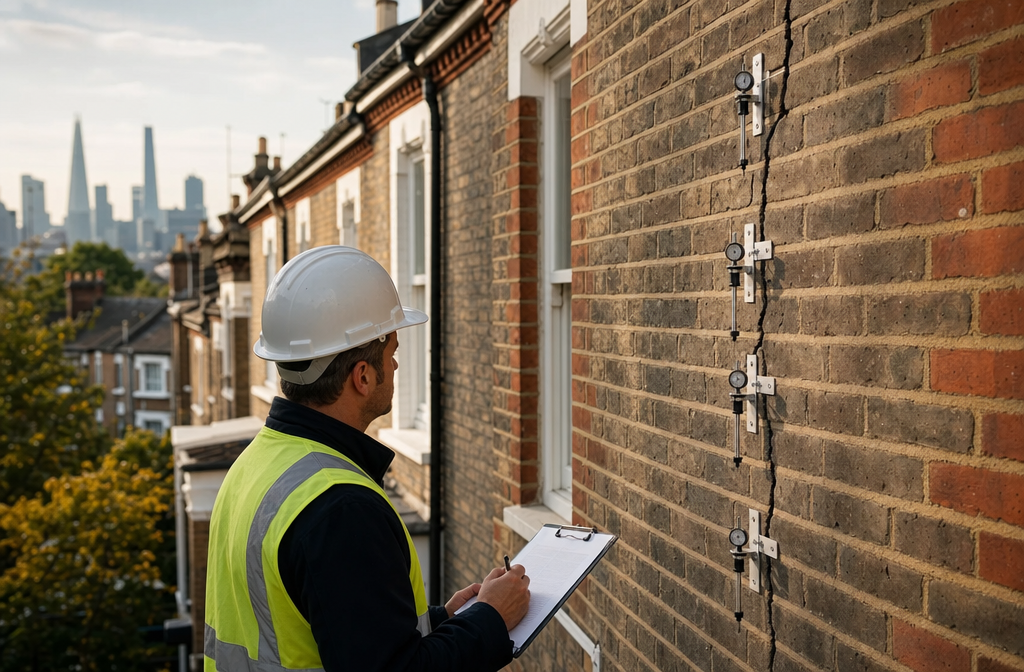
Nearly 40% of Party Wall disputes in Greater London escalate beyond the initial notice stage — a figure that rises sharply in areas where construction activity has resumed after a period of price-driven stagnation. As Southern property prices stabilize amid persistent affordability pressures, homeowners who previously deferred renovation and extension projects are now pressing ahead. The result is a surge in building works along shared boundaries, and with it, a renewed urgency around Party Wall Act Compliance in London-South East Price Stabilization: Surveyor Checklists for 2026.
This article provides a practical, RICS-aligned framework for surveyors, building owners, and adjoining owners navigating the Party Wall etc. Act 1996 in London and the South East during 2026. It covers the current compliance landscape, step-by-step surveyor checklists, monitoring protocols, and the specific pressures that a stabilizing market creates for dense urban properties.

Key Takeaways
- London-South East price stabilization is driving a fresh wave of construction along shared boundaries, increasing Party Wall Act disputes and enforcement scrutiny in 2026.
- RICS-compliant surveyor checklists now incorporate monitoring plans, crack gauge protocols, and pre-agreed trigger levels as standard conditions in Party Wall Awards.
- Three surveyor appointment models exist under the Act; choosing the right one early reduces cost and delays significantly.
- A thorough Schedule of Condition, completed before works begin, remains the single most effective tool for preventing post-construction disputes.
- Surveyors must act impartially regardless of who appoints them — a principle reinforced by updated RICS guidance issued in 2026.
Why Price Stabilization in London-South East Is Driving Party Wall Disputes in 2026
The relationship between property market conditions and Party Wall activity is direct. When prices rise sharply, homeowners extend to add value. When prices plateau, those who cannot afford to move extend instead. The London-South East market in 2026 sits firmly in the second category.
Affordability constraints have suppressed transaction volumes across boroughs from Croydon to Bromley, Wimbledon to Harrow. Homeowners are investing in loft conversions, rear extensions, basement excavations, and side-return infills — all works that routinely trigger obligations under the Party Wall etc. Act 1996.
"Enforcement awareness among London homeowners and their solicitors has significantly increased due to the rise in basement conversions, leading to stricter adherence to the Party Wall etc. Act 1996 requirements." [1]
This enforcement awareness matters. Solicitors acting on property sales are now routinely checking whether Party Wall Awards were properly executed for previous works. A missing or defective Award can delay a sale, reduce a buyer's offer, or trigger a dispute claim years after the original works were completed. For more background on how survey findings affect purchase negotiations, the average price reduction after a building survey is a useful reference point.
The Dense Urban Context: Why London Properties Face Unique Challenges
London's Victorian and Edwardian terraces, semi-detached properties, and converted flats create a compliance environment unlike anywhere else in the UK. Shared walls are often load-bearing, poorly documented, and already carrying the stress of decades of minor works. In this context, even modest extensions can have significant structural implications for adjoining owners.
Properties across the South East — from London's inner boroughs to outer areas such as Barnet and Battersea — share these structural characteristics. Surveyors operating in these areas must treat every Party Wall instruction as a high-stakes engagement, not a box-ticking exercise.
Understanding Surveyor Appointment Options Under the Act
Before any checklist can be applied, the correct appointment model must be established. The Party Wall etc. Act 1996 provides three distinct options [2]:
| Appointment Model | Description | Best Suited For |
|---|---|---|
| Agreed Surveyor | One surveyor acts for both parties | Cooperative neighbours, straightforward works |
| Two Appointed Surveyors | Each party appoints their own surveyor; a third is selected to resolve disagreements | Complex works, higher-value properties |
| Default Appointment | Building owner appoints on behalf of an unresponsive adjoining owner after 14 days | Non-responsive adjoining owners |
Each model carries different cost and timeline implications. The Agreed Surveyor route is faster and more cost-effective but requires genuine cooperation from both parties. The two-surveyor model provides stronger independent advocacy but increases fees and can slow the process. [2]
For a comprehensive overview of how these options interact with homeowner rights, the Party Wall Act 1996 guide provides detailed context.
A critical point for 2026: RICS has updated its guidance to reinforce that surveyors must act impartially regardless of who appoints or pays them. This is not merely an ethical obligation — it is a legal one. A surveyor who demonstrably favors the appointing party risks having the Award challenged and set aside. [2]
Party Wall Act Compliance in London-South East Price Stabilization: Surveyor Checklists for 2026
The following checklists are structured around the three principal stages of Party Wall compliance: pre-notice, during the Award process, and post-Award monitoring. They reflect current RICS guidance and the specific demands of dense urban construction in London and the South East.
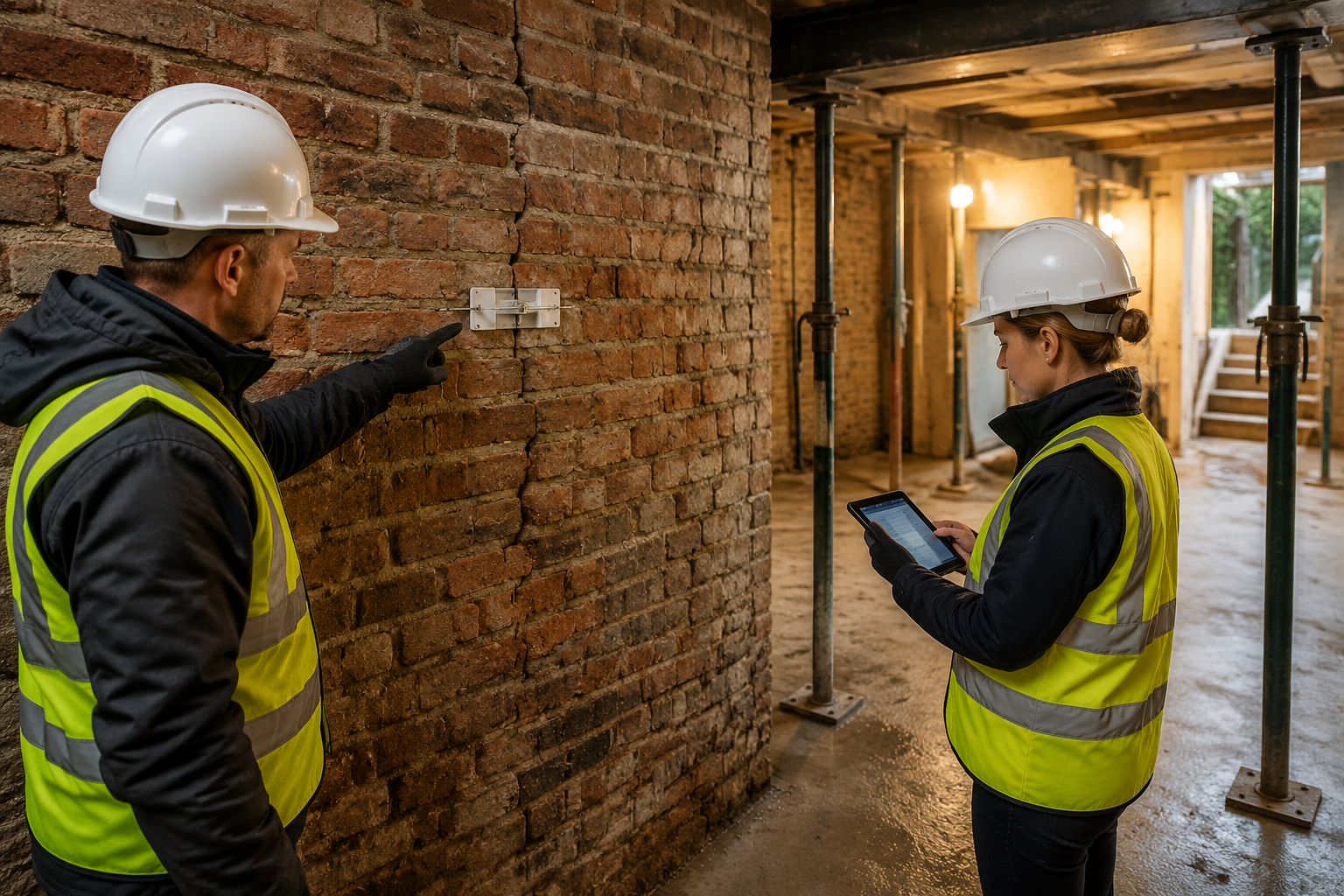
Pre-Notice Checklist: Before Serving the Party Wall Notice
Errors at the notice stage are among the most common — and most costly — mistakes building owners make. [1] A defective notice can invalidate the entire process, forcing a restart and delaying works by months.
Confirm whether the works trigger the Act:
- Does the work involve a party wall, party fence wall, or party structure?
- Does excavation come within 3 metres of an adjoining building to a depth below its foundations?
- Does excavation come within 6 metres and cut a line drawn downward at 45 degrees from the bottom of the adjoining foundation?
Verify notice content and timing:
- Notice served at least two months before works begin for party wall works (one month for excavation notices)
- Notice includes the building owner's full name and address
- Notice describes the proposed works clearly and accurately
- Notice served on all adjoining owners, including leaseholders with leases exceeding one year
- Notice served by hand, recorded delivery, or affixed to the property if owner is absent
Identify all adjoining owners:
- Land Registry searches completed for all affected properties
- Freeholders and qualifying leaseholders identified separately
- Notices served individually on each qualifying owner
For guidance on what to do when a notice is received rather than served, the Party Wall notice response guide is an essential resource for adjoining owners.
Schedule of Condition Checklist
The Schedule of Condition is the cornerstone document in any Party Wall compliance process. It records the pre-existing state of the adjoining property before works begin, providing an objective baseline against which any damage claims are assessed.
Documentation requirements:
- Photographic record of all internal and external surfaces adjacent to proposed works
- Written description of existing cracks, settlement, damp patches, and structural defects
- Measurements of significant existing cracks (width and length recorded)
- Record of finishes, fixtures, and fittings in rooms adjacent to the party wall
- Date-stamped photographs with location references
Scope of inspection:
- All rooms sharing the party wall, including cellars and loft spaces
- External elevations of the party wall where accessible
- Garden walls, boundary structures, and outbuildings within the zone of influence
- Drains and manholes where excavation works are proposed
A robust Schedule of Condition protects both parties. It prevents spurious damage claims by the adjoining owner and ensures that genuine damage caused by the works is properly compensated. Skipping or abbreviating this document is a false economy.
Party Wall Award Checklist: Core Content Requirements
The Party Wall Award (also called the Award) is the legally binding document that governs how the works are carried out. A 2026-compliant Award must address the following:
Structural and technical provisions:
- Description of permitted works with reference to approved drawings
- Specification of working hours (typically 8am-6pm weekdays, 8am-1pm Saturdays in London boroughs)
- Requirements for temporary support and propping of the party wall
- Specification of materials to match existing construction where the wall is made good
- Drainage protection measures where excavation is involved
Access and notification provisions:
- Right of access for the adjoining owner's surveyor to inspect works
- Notification requirements before each significant phase of works begins
- Procedure for dealing with unforeseen conditions (e.g., unexpected foundation types)
Dispute resolution provisions:
- Identity of the Third Surveyor, agreed in advance
- Procedure for referring disputes to the Third Surveyor
- Timeframes for responding to referrals
Insurance and financial provisions:
- Confirmation that the building owner holds adequate public liability insurance
- Mechanism for assessing and paying compensation for damage
- Responsibility for surveyor fees (typically the building owner's liability)
Monitoring Plan Checklist: 2026 Standard Requirements
Monitoring plans have become a standard condition in Party Wall Awards for works involving excavation, underpinning, or significant structural intervention. [2] This reflects both the technical complexity of London's ground conditions and the increased enforcement awareness among adjoining owners and their legal advisors.
A 2026-compliant monitoring plan typically includes [2]:
- Tell-tale crack gauges installed across existing cracks in the party wall, with baseline readings recorded before works begin
- Settlement plates at the base of excavations to detect vertical movement
- Inclinometers for deep excavations exceeding 4 metres, measuring lateral wall movement
- Weekly readings during active works, reducing to monthly readings post-completion
- Pre-agreed trigger levels that automatically halt works if movement exceeds defined thresholds
The trigger level protocol is particularly important. It removes ambiguity about when works must stop and provides clear, objective grounds for intervention. Without pre-agreed triggers, disputes about whether movement is "significant" can delay remedial action and worsen damage.
For works involving ongoing structural monitoring beyond the Party Wall process, monitoring surveys provide a complementary service that extends the protection period.
Party Wall Act Compliance in London-South East Price Stabilization: Surveyor Checklists for 2026 — Common Failure Points
Even experienced surveyors encounter recurring compliance failures in London-South East projects. Understanding these failure points is as important as following the checklists above.

Failure Point 1: Inadequate Identification of Adjoining Owners
In converted flats, HMOs, and mixed-use buildings — all common in South East London — multiple qualifying owners may exist for a single property. Serving notice on the freeholder alone, when long leaseholders also qualify, invalidates the notice. [1] A Land Registry search is necessary but not always sufficient; direct enquiries to managing agents and a review of the lease register may also be required.
Failure Point 2: Works Commencing Before Dissent Period Expires
The Act requires adjoining owners to be given 14 days to respond to a Party Wall notice. If no response is received within 14 days, a dispute is deemed to have arisen and the surveyor appointment process is triggered. [2] Building owners who begin works before this period expires, or before an Award is in place, lose the statutory protections the Act provides and expose themselves to injunction proceedings.
Failure Point 3: Defective or Incomplete Schedules of Condition
A Schedule of Condition that omits key areas, uses poor-quality photographs, or fails to record measurements of existing cracks is of limited value in a dispute. Surveyors should treat the Schedule as a legal document from the outset. For properties with pre-existing structural concerns, a specific defect survey may be warranted to establish a more detailed baseline.
Failure Point 4: Failure to Notify on Change of Works
Where the scope of works changes materially during construction — a common occurrence in basement excavations where unexpected ground conditions are encountered — the Award must be amended or a supplementary Award issued. Proceeding with materially different works under an existing Award exposes the building owner to challenge.
Failure Point 5: Ignoring the Third Surveyor Mechanism
The Third Surveyor is a safeguard built into the Act, yet many parties treat the appointment as a formality. When genuine disagreements arise between two appointed surveyors, failure to use the Third Surveyor mechanism promptly can allow disputes to escalate into costly litigation. Understanding party wall surveyor responsibilities in full helps all parties understand when and how to invoke this mechanism.
Fees, Costs, and the London-South East Market Context
Party Wall surveyor fees in London in 2026 reflect both the complexity of the work and the density of the urban environment. Agreed Surveyor fees for straightforward works typically range from £700 to £1,500. More complex projects involving basement excavations or underpinning can attract fees of £2,000 to £5,000 or more per surveyor. [4]
In a stabilizing market, where homeowners are acutely sensitive to project costs, there is pressure to minimize Party Wall compliance expenditure. This is a false economy. A defective Award, an inadequate Schedule of Condition, or a missed notice can result in injunctions, damage claims, and legal costs that dwarf the savings made on surveyor fees.
Building owners should also be aware that the adjoining owner's reasonable surveyor fees are typically recoverable from the building owner. Choosing an unqualified or inexperienced surveyor to reduce costs can therefore increase total liability if the process is challenged.
For those seeking to understand what a qualified surveyor actually does throughout this process, the detailed explanation of what a party wall surveyor does is a valuable starting point.
Conclusion: Actionable Next Steps for 2026 Compliance
Party Wall Act Compliance in London-South East Price Stabilization: Surveyor Checklists for 2026 is not a passive administrative exercise. In a market where construction activity is rising, enforcement awareness is high, and structural risks in dense urban properties are significant, compliance must be proactive, thorough, and expertly managed.
Actionable next steps for building owners:
- Confirm whether proposed works trigger the Act before any design work is finalized — this avoids costly redesigns after notice is served.
- Appoint a RICS-accredited party wall surveyor at the earliest possible stage, ideally before planning permission is sought.
- Commission a thorough Schedule of Condition for all adjoining properties within the zone of influence before works begin.
- Ensure the Party Wall Award includes a monitoring plan with pre-agreed trigger levels for any works involving excavation or structural alteration.
- Keep the Award updated if the scope of works changes during construction.
Actionable next steps for adjoining owners:
- Respond formally to any Party Wall notice within 14 days — either consenting or dissenting — to preserve rights under the Act.
- Appoint an independent surveyor to represent interests, particularly for complex works such as basement conversions.
- Request a copy of the Schedule of Condition and review it carefully before works begin.
- Monitor works and report concerns to the appointed surveyor promptly rather than waiting until works are complete.
The stabilizing London-South East market will continue to drive construction activity along shared boundaries throughout 2026 and beyond. Surveyors and property owners who treat Party Wall compliance as a genuine risk management tool — rather than a procedural hurdle — will be best placed to protect their interests and avoid the disputes that are becoming increasingly common across the region.
References
[1] Party Wall Notice Mistakes Basement Extensions London 2026 The Complete Guide To Avoiding Costly Disputes – https://partywallsurveyorlondon.uk/blogs/party-wall-notice-mistakes-basement-extensions-london-2026-the-complete-guide-to-avoiding-costly-disputes/?utm_source=openai
[2] Underpinning Works And Party Wall Agreements 2026 Surveyor Protocols For Foundation Stability Disputes – https://wimbledonsurveyors.com/underpinning-works-and-party-wall-agreements-2026-surveyor-protocols-for-foundation-stability-disputes/?utm_source=openai
[3] Party Wall Act Compliance In Regional Market Contrasts Survey Strategies For North Vs South 2026 Developments – https://wimbledonsurveyors.com/party-wall-act-compliance-in-regional-market-contrasts-survey-strategies-for-north-vs-south-2026-developments/?utm_source=openai
[4] Agreed Surveyor Cost London 2026 – https://www.partywallslimited.com/blog/agreed-surveyor-cost-london-2026?utm_source=openai
[5] Party Wall – https://www.td-re.co.uk/surveyors/party-wall/?utm_source=openai
[6] Party Wall Surveyor London – https://mylocallondonbuilder.co.uk/articles/party-wall-surveyor-london?utm_source=openai
[7] Party Wall Act London Guide – https://www.tbdconstruction.co.uk/blog/party-wall-act-london-guide?utm_source=openai