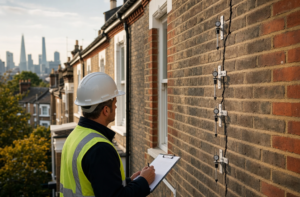


Northern Ireland's average property price hit £224,607 in Q1 2026 — a 5.2% year-on-year increase that has reshaped affordability calculations for thousands of first-time buyers across the region [1]. For young buyers, many of them migrants settling in Belfast, Derry, or the coastal towns, this surge makes professional property surveys not a luxury but a financial necessity. Valuing First-Time Buyer Properties in Northern Ireland: Surveys Amid 2026 Price Surge is a challenge that sits at the intersection of rising market pressure, regional price variation, and the critical need for independent professional assessment before any offer is signed.
Key Takeaways
- Northern Ireland's average property price reached £224,607 in Q1 2026, up 5.2% year-on-year, creating heightened affordability risk for first-time buyers.
- Regional hotspots such as Derry City and Strabane (up 5.8% quarterly) and Ards and North Down (up 3.4%) demand location-specific valuation scrutiny.
- A professional RICS survey can reveal defects that justify price renegotiation, potentially saving buyers thousands of pounds.
- First-time buyers, including young migrants unfamiliar with local property conditions, should choose a survey level matched to the property's age, type, and condition.
- Strong buyer demand — with 41% of surveyors reporting rising enquiries in January 2026 — means buyers have less time to act but even more reason to commission independent assessments.
Northern Ireland's 2026 Housing Market: What First-Time Buyers Are Facing
The Northern Ireland housing market entered 2026 with considerable momentum. In January 2026 alone, 41% of surveyors reported an increase in new buyer enquiries, while a 51% net balance of surveyors noted a rise in new instructions to sell [2]. On the surface, that sounds like a balanced market. In practice, however, rising supply has not kept pace with the intensity of demand from first-time buyers, particularly in urban centres.
Price Performance by Property Type
For buyers on constrained budgets, the breakdown by property type matters enormously:
| Property Type | Average Price (Q1 2026) | Quarterly Change |
|---|---|---|
| Terrace / Townhouse | £151,890 | +1.3% |
| Apartment | £163,350 | -1.2% |
| Semi-Detached | £208,380 | +2.3% |
| Detached | £334,337 | +1.6% |
Source: Ulster University House Price Index, Q1 2026 [1]
Terraced houses and apartments remain the most accessible entry points. However, the -1.2% quarterly dip in apartment prices should not be read as a simple bargain. Apartments — particularly older converted stock — carry specific structural and leasehold risks that demand careful survey attention. Understanding what to check before buying a leasehold property is essential for any buyer considering flat ownership.
Regional Hotspots Driving the Surge
Not all of Northern Ireland is moving at the same pace. Three areas stand out for their sharp quarterly price acceleration [1]:
- Derry City and Strabane: +5.8% quarterly — the steepest regional rise
- Causeway Coast and Glens: +3.5% quarterly
- Ards and North Down: +3.4% quarterly
These regional surges matter for valuation purposes. A property listed at £185,000 in Derry today may have been worth £175,000 just three months ago. For first-time buyers relying on mortgage valuations alone, this speed of change creates a dangerous gap between perceived value and actual market risk.
Why Surveys Are Non-Negotiable When Valuing First-Time Buyer Properties in Northern Ireland
A mortgage lender's valuation is not a survey. This is one of the most persistent and costly misconceptions among first-time buyers. A lender's valuation exists to protect the bank, not the buyer. It confirms whether the property provides adequate security for the loan — nothing more.
A professional survey, by contrast, assesses the physical condition of the property in detail, identifies defects, flags maintenance risks, and provides the buyer with independent evidence to support price negotiation or withdrawal.
"In a rising market, buyers feel pressure to move fast and skip due diligence. That is precisely when surveys deliver their greatest financial return."
Choosing the Right Survey Level
The RICS framework offers three main survey levels. Understanding which applies to a given property is the first practical step for any first-time buyer:
Level 1 — Condition Report: A basic traffic-light overview. Suitable only for new-build or near-new properties in excellent condition. Rarely appropriate for the older housing stock common across Northern Ireland.
Level 2 — Homebuyer Report: The most widely used option for standard residential properties. It covers visible defects, damp, structural movement, and maintenance issues. For most terraced and semi-detached homes built post-1900, this is the recommended starting point. Reviewing a homebuyers report example before commissioning one helps buyers understand exactly what they will receive.
Level 3 — Building Survey: A full structural investigation. Essential for older properties, those with visible defects, or any home that has been significantly altered. For pre-1919 stone or brick-built terraces — common in Belfast and Derry — this level of scrutiny is strongly advisable.
For buyers uncertain which level suits their target property, a clear comparison of home survey levels 2 vs level 3 provides practical guidance on making the right choice.
Damp: A Persistent Risk in Northern Ireland's Housing Stock
Northern Ireland's climate — persistent rainfall, high humidity — creates conditions where damp penetration and rising moisture are endemic in older properties. Damp is among the most frequently identified defects in pre-1970 housing stock, and it is also one of the most misunderstood.
Buyers should be aware that damp issues range from minor condensation to serious penetrating damp or rising damp caused by failed damp-proof courses. Each carries a different remediation cost and a different implication for the property's value. A specialist damp survey can distinguish between cosmetic surface issues and structural moisture problems before exchange of contracts.
Tailored Valuation and Survey Advice for Young Migrants Buying in Northern Ireland
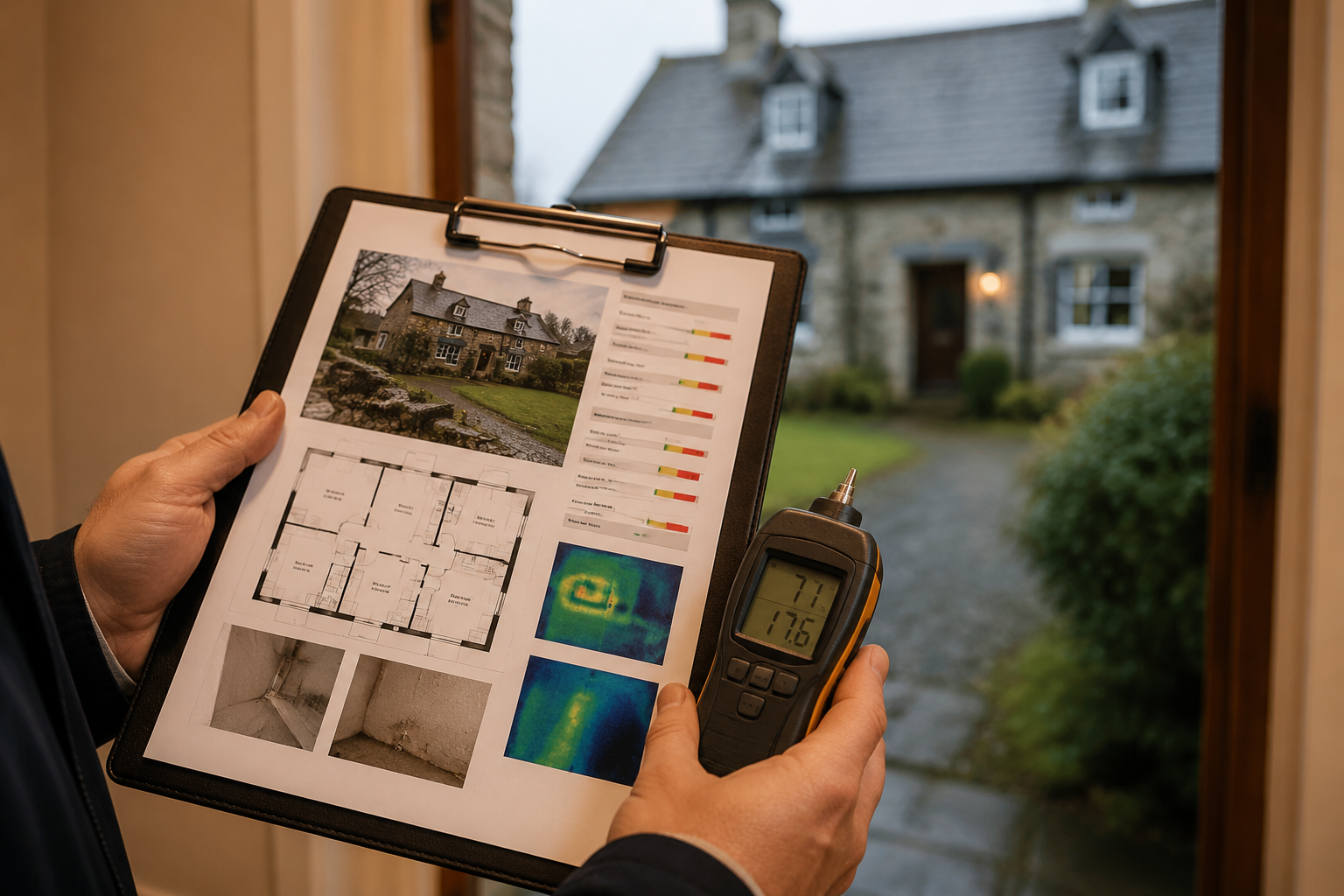
Northern Ireland has seen a notable increase in young migrants — professionals relocating from other parts of the UK, EU nationals, and international workers — entering the property market for the first time. This group faces a specific combination of challenges: unfamiliarity with local building traditions, limited knowledge of regional price variations, and in some cases, language barriers when interpreting technical survey reports.
Understanding Local Building Characteristics
Northern Ireland's housing stock is distinct. Key features that surveyors routinely flag include:
- Solid brick or stone walls in pre-1945 properties, which lack cavity insulation and are more susceptible to damp penetration
- Suspended timber floors in Victorian and Edwardian terraces, which require adequate sub-floor ventilation to prevent rot
- Older heating systems — back boilers and oil-fired central heating are common in rural and semi-rural areas
- Flat-roof extensions added in the 1970s and 1980s, which have typically reached or exceeded their service life
For buyers unfamiliar with these characteristics, a Level 3 building survey provides the most comprehensive protection. It is worth noting that common myths about property surveys — such as the belief that a survey will kill a deal or that surveyors are overly cautious — often discourage first-time buyers from commissioning the level of assessment they genuinely need.
Using Survey Findings to Negotiate Price
In a market where prices have risen 5.2% year-on-year, every negotiating tool matters. Survey findings are among the most powerful. When a Level 2 or Level 3 survey identifies significant defects — a failing roof, structural movement, damp penetration, or outdated electrics — the buyer has documented, professional evidence to request a price reduction or require remedial works as a condition of sale.
Understanding how an RICS survey can help negotiate the price of a property illustrates this process clearly. The same principles apply in Northern Ireland: a credible, written defect report from a chartered surveyor carries weight in any price negotiation.
The Full Cost of Buying: Beyond the Purchase Price
First-time buyers — particularly those new to the UK property market — sometimes focus exclusively on the headline purchase price and mortgage repayments. The full cost of buying in Northern Ireland includes several additional items:
- Stamp Duty Land Tax: First-time buyers in Northern Ireland benefit from relief on properties up to £425,000, meaning most first-time purchases currently attract no stamp duty [4]
- Solicitor / conveyancing fees: Typically £800 to £1,500 for a standard residential transaction in Northern Ireland [4]
- Survey costs: Variable by level and property size; a Level 2 report typically ranges from £400 to £700; a Level 3 building survey from £600 to £1,200
- Mortgage arrangement fees: Lender-specific, often £500 to £1,000
- Moving costs and initial repairs: Frequently underestimated, particularly for older stock
Budgeting accurately for these costs prevents the situation — common among first-time buyers — where survey findings reveal necessary repairs that the buyer simply cannot afford after completion.
Housing Waiting Lists: The Urgency Behind First-Time Buyer Decisions
Almost 50,000 households are currently on Northern Ireland's social housing waiting list [3]. This figure contextualises the urgency many first-time buyers feel. For those who have been waiting for social housing allocation, the decision to purchase privately is often driven by desperation rather than ideal market conditions. This emotional pressure makes independent professional advice even more important: a buyer who rushes a purchase without a survey because they fear losing the property may inherit defects that cost far more than the survey would have.
Practical Steps for Valuing First-Time Buyer Properties in Northern Ireland: Surveys Amid 2026 Price Surge
Bringing together the market data, survey guidance, and buyer-specific advice above, the following practical framework applies to first-time buyers navigating Northern Ireland's 2026 market.
Step 1: Establish a Realistic Budget Including Survey Costs
Before viewing properties, calculate the full acquisition cost — not just the mortgage. Include solicitor fees, survey costs, and a contingency reserve of at least 1% of the purchase price for post-survey remedial works.
Step 2: Research Regional Price Trends Before Making an Offer
Given the wide variation in quarterly price growth — from -1.2% for apartments to +5.8% in Derry City and Strabane — buyers should analyse recent comparable sales in the specific area and street before submitting an offer. Estate agents' asking prices in fast-moving regional hotspots often lag behind actual transaction prices.
Step 3: Commission the Right Survey Before Exchange
Match the survey level to the property:
- New-build or post-2000 property in good condition: Level 1 or Level 2
- Standard post-war semi-detached or terrace: Level 2 Homebuyer Report
- Pre-1945 property, any property with visible defects, or any significantly extended home: Level 3 Building Survey
For buyers who want to understand what a completed report looks like before commissioning one, downloading an example homebuyers report provides a clear preview of the format and depth of information provided.
Step 4: Act on Survey Findings Before Committing
Survey findings fall into three categories of response:
- Minor maintenance issues: Accept and budget for post-completion repairs
- Significant defects with known remediation costs: Use findings to negotiate a price reduction or require seller to complete works
- Serious structural or legal issues: Consider withdrawal, particularly if remediation costs are uncertain or disproportionate to the property's value
Choosing the right type of property assessment from the outset ensures that the survey delivers actionable findings rather than a superficial overview that leaves key risks unaddressed.
Step 5: Verify Subsidence and Ground Movement Risk
Northern Ireland has areas of known ground instability, particularly in former industrial zones and areas with high clay content. Subsidence can be a costly and complex issue to remediate. Buyers should understand why subsidence is such a significant problem and ensure their survey specifically addresses ground movement risk for the target property.
Conclusion
Northern Ireland's 2026 property market presents genuine opportunity for first-time buyers — particularly those targeting terraced homes and semi-detached properties at the more accessible end of the price spectrum. However, the 5.2% year-on-year price surge, combined with sharp regional acceleration in areas like Derry City and Strabane, means that the cost of a misjudged purchase has never been higher.
Actionable next steps for first-time buyers in Northern Ireland right now:
- Obtain a full cost breakdown including survey fees, legal costs, and a repair contingency before agreeing any offer
- Commission a Level 2 or Level 3 RICS survey — matched to the property's age and condition — before exchange of contracts
- Use survey findings actively: request price reductions or remedial works where significant defects are identified
- If buying an apartment or leasehold property, seek specific advice on service charges, lease length, and building condition
- Engage a RICS-accredited chartered surveyor with demonstrable knowledge of Northern Ireland's local building stock and regional market conditions
In a market moving as fast as Northern Ireland's is in 2026, the survey is not a formality. It is the most important financial document a first-time buyer will commission before one of the largest purchases of their life.
References
[1] Northern Ireland Housing Market Remains Stable With Modest Price Growth – https://www.ulster.ac.uk/news/2026/may/northern-ireland-housing-market-remains-stable-with-modest-price-growth?utm_source=openai
[2] Northern Ireland Housing Market Off To A Strong Start In 2026 – https://www.businesseye.co.uk/news/northern-ireland-housing-market-off-to-a-strong-start-in-2026/?utm_source=openai
[3] Almost 50000 Households Housing Waiting List – https://www.nisra.gov.uk/news/almost-50000-households-housing-waiting-list?utm_source=openai
[4] Cost Of Buying House Northern Ireland – https://crawfordmulholland.com/cost-of-buying-house-northern-ireland/?utm_source=openai