

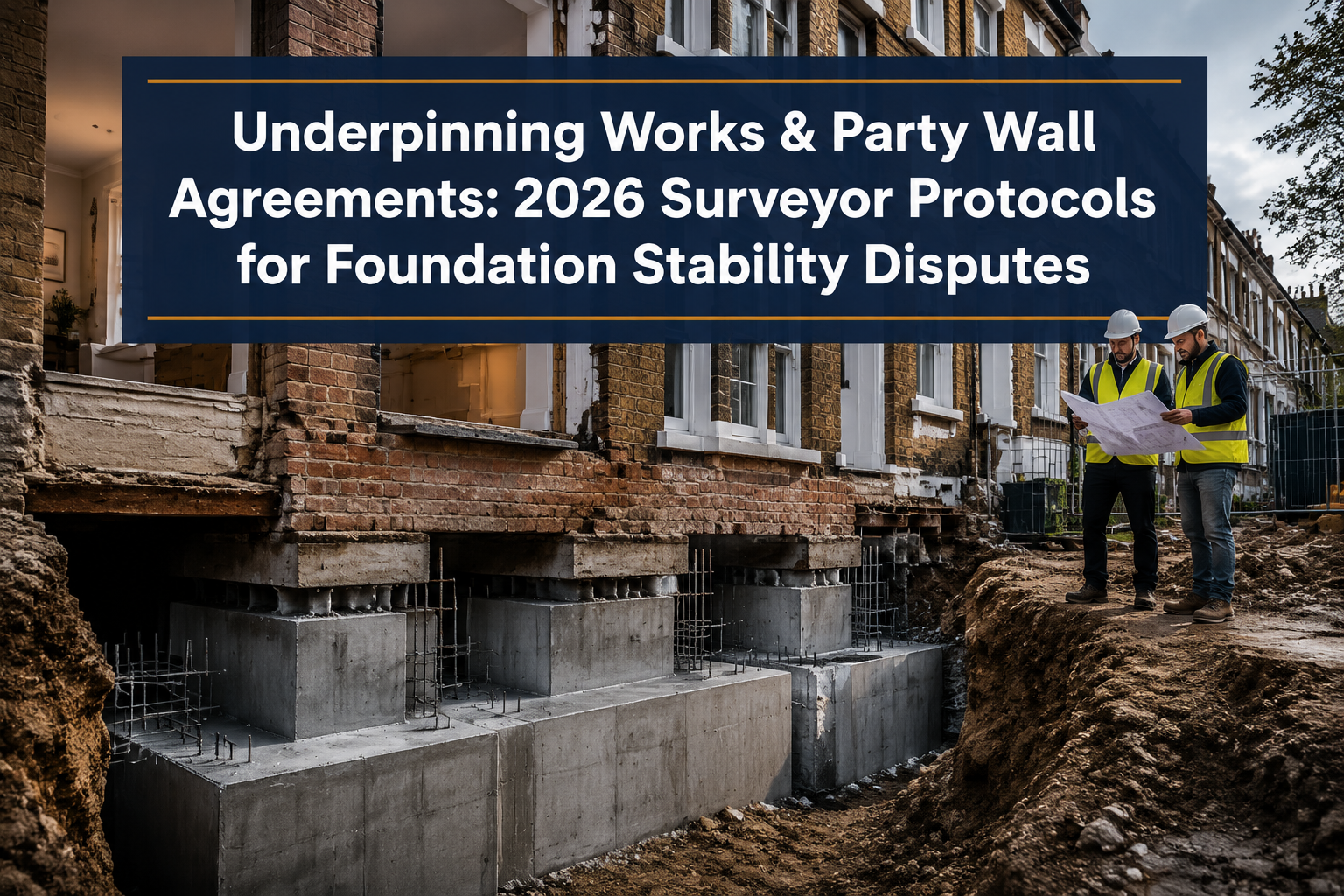
Nearly one in three underpinning projects in the UK triggers a formal dispute between neighbouring property owners — yet fewer than half of building owners serve the correct statutory notice before work begins. In 2026, that gap between legal obligation and practice is closing fast, as updated surveyor protocols tighten the rules around Underpinning Works and Party Wall Agreements: 2026 Surveyor Protocols for Foundation Stability Disputes and place greater accountability on every party involved.
Whether a homeowner is addressing subsidence, extending a basement, or reinforcing ageing Victorian footings, the intersection of underpinning and the Party Wall etc. Act 1996 creates a complex legal and technical landscape. Getting it wrong can mean injunctions, compensation awards, and costly delays.
Key Takeaways 📋
- Underpinning almost always triggers Party Wall Act obligations — specifically under Section 6 for excavations within 3 or 6 metres of an adjoining structure.
- A Schedule of Condition must be completed before any foundation work begins to protect both parties in a dispute.
- Joint or agreed surveyors can reduce costs and timelines significantly when both owners cooperate early.
- Monitoring plans — including crack gauges, inclinometers, and settlement plates — are now a standard requirement in 2026 surveyor protocols.
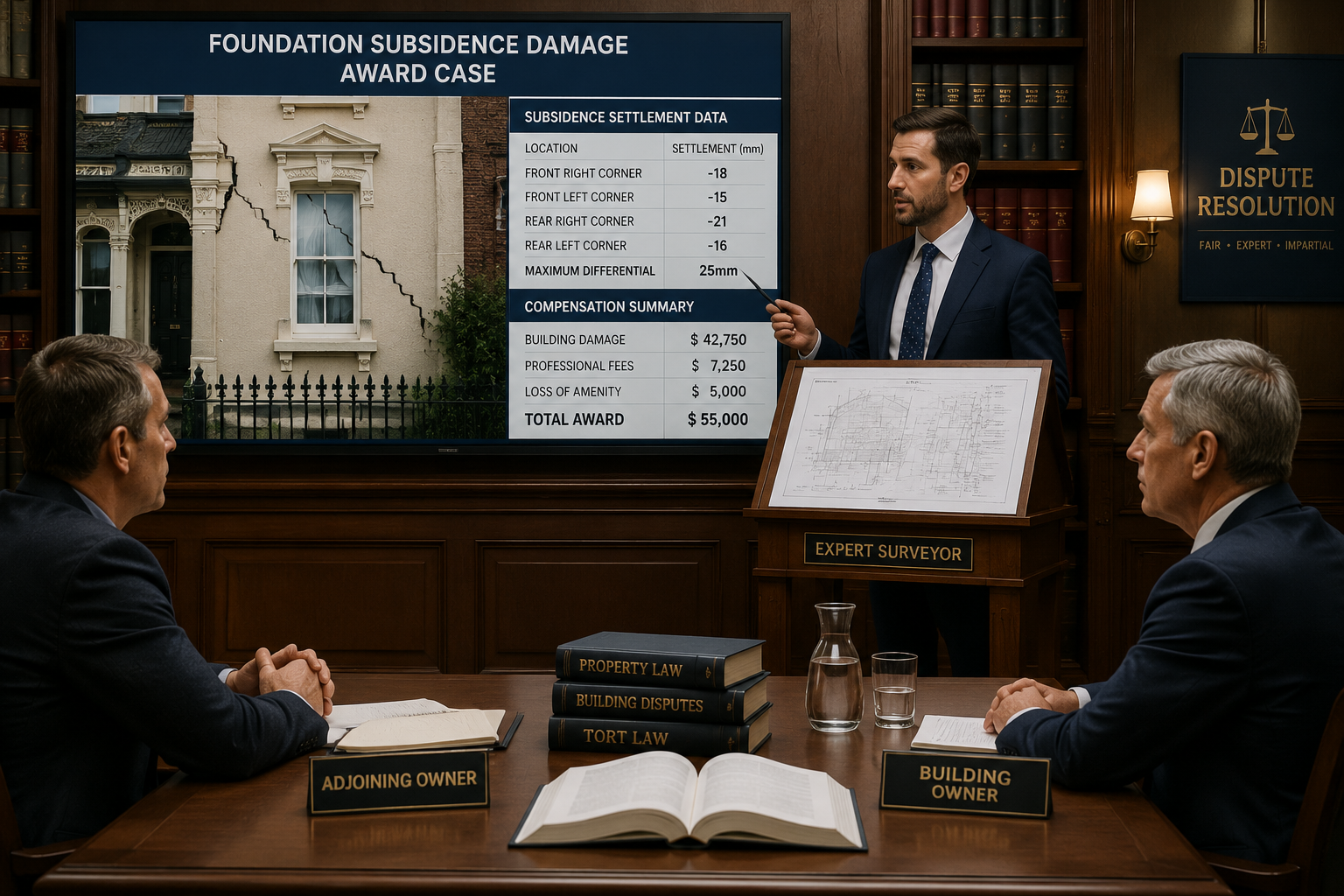
- Subsidence-related awards can run into tens of thousands of pounds; documented surveyor evidence is the single most important factor in dispute outcomes.
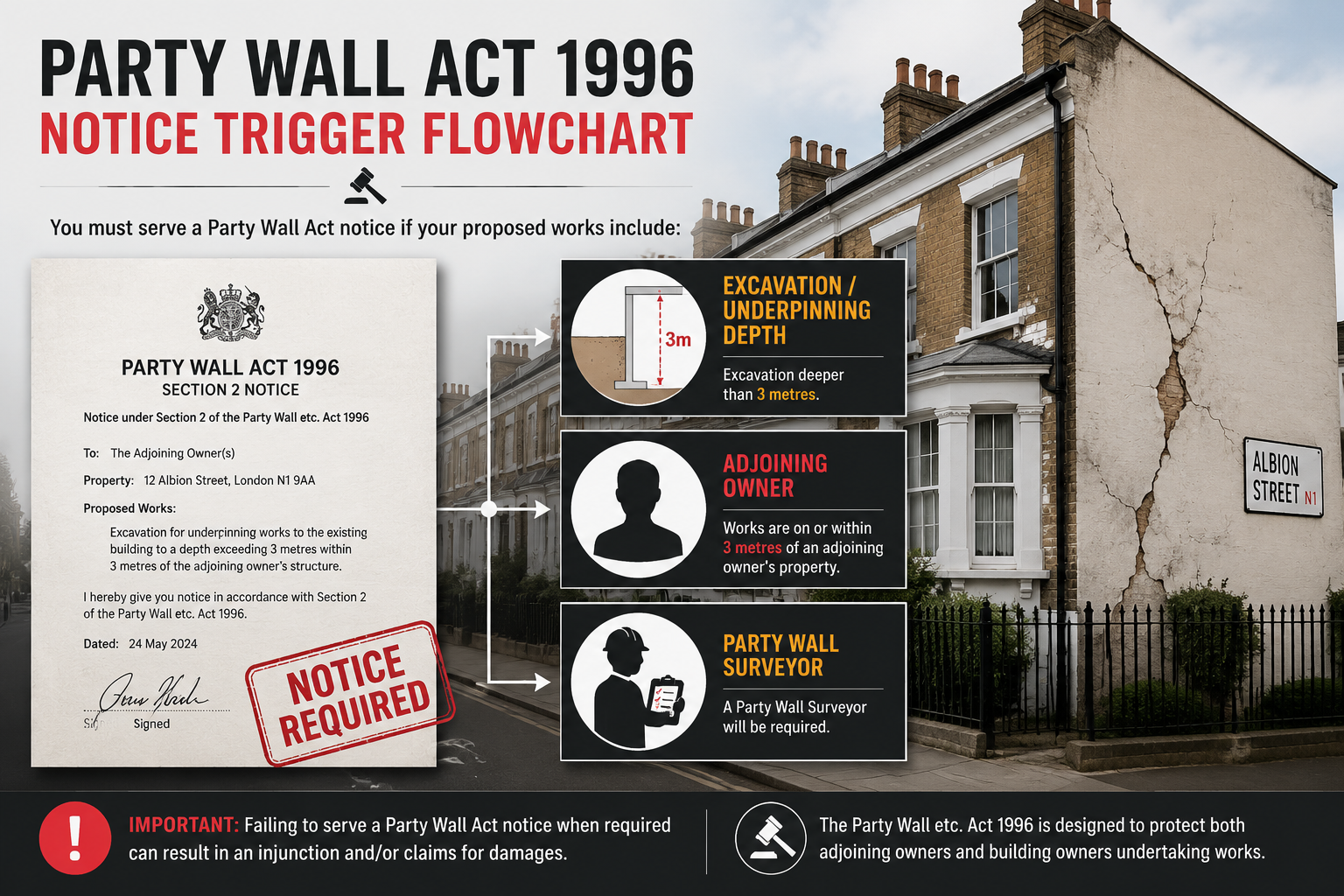
What Triggers a Party Wall Notice for Underpinning Works?
The Legal Framework Under the Party Wall etc. Act 1996
The Party Wall etc. Act 1996 remains the governing statute in England and Wales. Three key notice types apply to underpinning scenarios:
| Notice Type | Section | Trigger |
|---|---|---|
| Party Structure Notice | Section 3 | Works to an existing party wall or floor |
| Line of Junction Notice | Section 1 | Building a new wall at or astride the boundary |
| Adjacent Excavation Notice | Section 6 | Excavating within 3m (deeper than neighbour's foundations) or within 6m (cutting a plane 45° from neighbour's foundations) |
💡 Pull Quote: "Section 6 of the Party Wall Act is the most commonly overlooked trigger in underpinning projects. Excavation depth — not just proximity — determines whether notice is legally required."
For most underpinning projects, Section 6 is the critical trigger. If a contractor digs below the level of an adjoining owner's foundations within 3 metres, or if the excavation intersects a 45-degree line drawn from the base of a neighbour's foundations within 6 metres, a formal notice must be served.
Notice Periods and Timing in 2026
Under current protocols, a Section 6 notice requires a minimum one-month notice period before work commences. In 2026, surveyors are increasingly advising clients to serve notice even earlier — ideally two to three months ahead — to allow time for:
- Appointment of an adjoining owner's surveyor
- Preparation and agreement of a Schedule of Condition
- Negotiation and execution of a Party Wall Award
- Installation of baseline monitoring equipment
Failure to serve notice does not make the works unlawful per se, but it removes all statutory protections for the building owner and exposes them to injunction risk. Understanding what a party wall surveyor does and their duties to homeowners is essential before any foundation work begins.
2026 Surveyor Protocols: Joint Roles, Schedules of Condition, and Monitoring Plans
Appointing Surveyors: Agreed, Joint, or Separate?
One of the most consequential early decisions in any underpinning dispute is surveyor appointment. The Act provides three options:
- Agreed Surveyor — A single surveyor acts for both parties. Cost-effective and faster, but requires genuine cooperation.
- Two Appointed Surveyors — Each party appoints their own. A third surveyor is selected in advance to resolve disagreements.
- Default Appointment — If an adjoining owner fails to respond within 14 days, the building owner may appoint a surveyor on their behalf.
In 2026, professional bodies including the RICS (Royal Institution of Chartered Surveyors) have updated guidance emphasising that surveyors must act impartially regardless of who appoints them. This is particularly important in underpinning disputes, where financial stakes are high and technical opinions often diverge.
Working with experienced party wall surveyors who understand foundation engineering — not just the legal process — is strongly recommended for complex underpinning cases.
The Schedule of Condition: Your Most Important Document
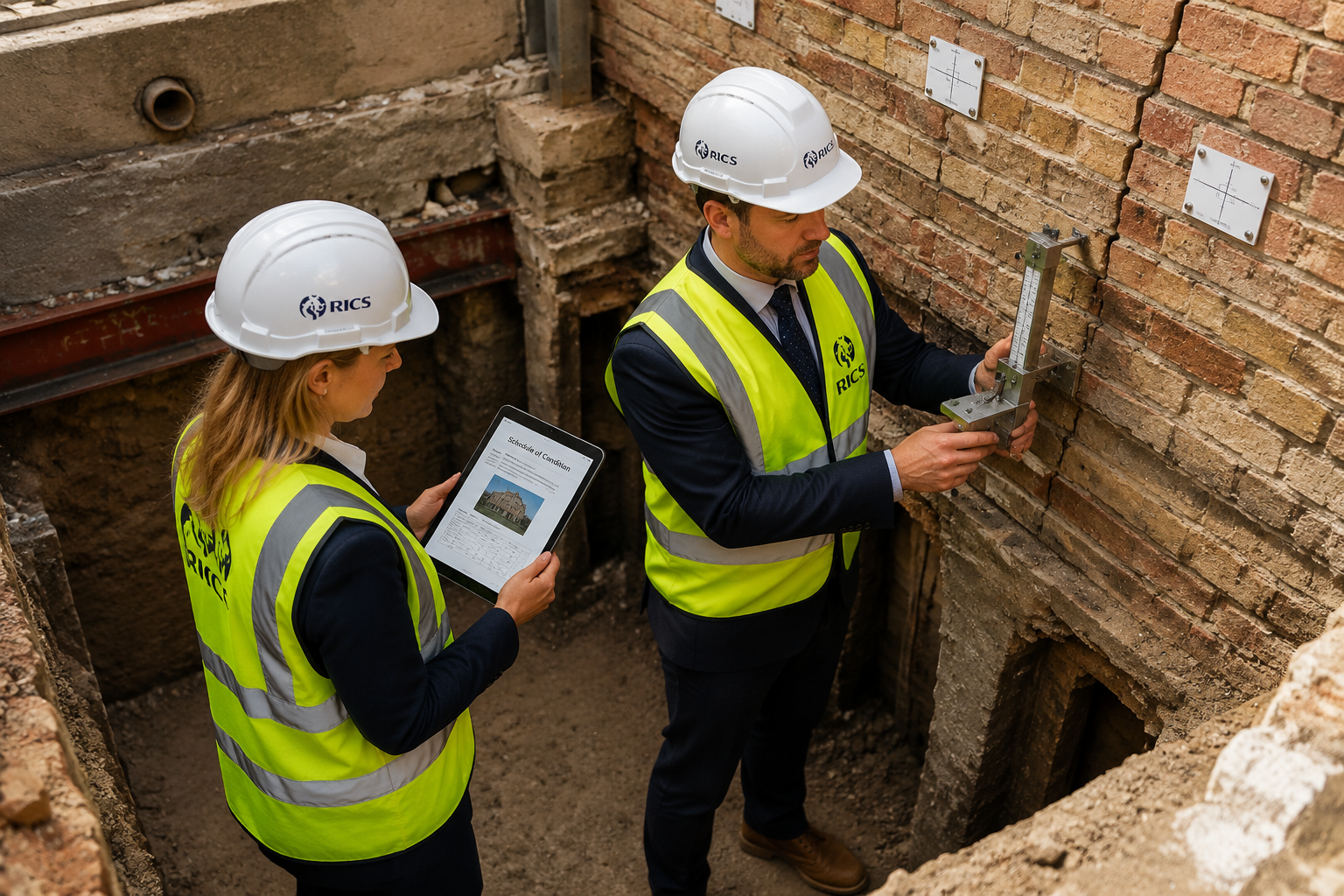
A Schedule of Condition is a detailed photographic and written record of an adjoining property's state before works begin. In underpinning disputes, it is the single most important document for:
- Establishing pre-existing damage (cracks, settlement, damp)
- Attributing new damage to specific works
- Supporting or defending compensation claims
🔍 What a robust 2026 Schedule of Condition should include:
- High-resolution photographs of all walls, floors, ceilings, and external elevations
- Crack width measurements (in millimetres) with reference markers
- Condition of drains and drainage channels
- Existing settlement or tilt readings
- Structural engineer's baseline assessment where relevant
Surveyors are now routinely using drone photography and 3D laser scanning to create more accurate baseline records, particularly for properties with complex rooflines or restricted access.
Monitoring Plans: The New Standard in Foundation Stability Disputes
Perhaps the most significant shift in Underpinning Works and Party Wall Agreements: 2026 Surveyor Protocols for Foundation Stability Disputes is the formalisation of monitoring plans as a standard Award condition rather than an optional extra.
A 2026-compliant monitoring plan for underpinning works typically includes:
- 📐 Tell-tale crack gauges installed across existing cracks in the party wall
- 📏 Settlement plates at the base of excavations
- 🔩 Inclinometers for deep excavations exceeding 4 metres
- 📅 Weekly readings during active works, reducing to monthly post-completion
- 🚨 Trigger levels — pre-agreed thresholds that halt works if exceeded
The monitoring data feeds directly into the dispute resolution process. If an adjoining owner claims damage, the surveyor can cross-reference the monitoring log against the timeline of works to determine causation objectively.
For properties in areas with known ground movement history, such as those served by London property surveyors familiar with clay shrinkage zones, baseline monitoring is especially critical.
Real-World Case Studies: Subsidence Awards and Lessons Learned
Case Study 1: Victorian Terrace Subsidence in South London
A building owner in Croydon began underpinning works to address subsidence caused by a leaking drain beneath their mid-terrace property. No Party Wall notice was served. Within six weeks, the adjoining owner reported new diagonal cracking above their ground-floor window — a classic sign of differential settlement.
Outcome: The County Court awarded the adjoining owner £34,000 in damages, covering:
- Structural repairs to the cracked masonry: £18,500
- Temporary accommodation during repairs: £7,200
- Surveyor and legal fees: £8,300
The building owner had no Schedule of Condition to prove the cracks were pre-existing. The absence of a Party Wall Award also meant they could not rely on the Act's compensation framework, which would have capped certain costs.
Lesson: Serving notice and completing a Schedule of Condition before works begin is not bureaucratic box-ticking — it is financial protection.
Case Study 2: Basement Extension Dispute in Islington
A homeowner in Islington commissioned a basement extension requiring mass concrete underpinning to a depth of 3.8 metres. The adjoining owner's surveyor identified that the proposed works fell within the Section 6 six-metre zone and insisted on a comprehensive monitoring plan as a condition of the Award.
During works, settlement plate readings showed 4mm of movement — within the agreed trigger threshold of 5mm. Works were paused, the structural engineer adjusted the underpinning sequence, and movement ceased. No damage occurred to the adjoining property.
Outcome: No dispute, no compensation claim, and the project completed on time. The monitoring data provided by Islington property surveyors was cited as the key factor in preventing escalation.
Lesson: Monitoring plans do not just protect adjoining owners — they protect building owners from spurious claims and project delays.
Case Study 3: Disputed Causation in Battersea
A more complex case arose in Battersea where an adjoining owner claimed that underpinning works had caused cracking to their rear extension. The building owner's surveyor argued the damage was pre-existing and related to tree root activity.
The dispute went to the Third Surveyor, who reviewed:
- The Schedule of Condition (which showed hairline cracks pre-dating works)
- Monitoring logs (showing no measurable settlement during the underpinning phase)
- An arboricultural report confirming active root systems beneath the adjoining extension
Outcome: The Third Surveyor found in favour of the building owner. The adjoining owner received no award. The Battersea property surveyors involved noted that without the monitoring data, the outcome could easily have gone the other way.
Navigating Underpinning Works and Party Wall Agreements: 2026 Surveyor Protocols for Foundation Stability Disputes — Practical Guidance
For Building Owners: A Step-by-Step Protocol
Following the correct sequence protects the project, the budget, and the relationship with neighbours:
- Engage a structural engineer to confirm underpinning is necessary and define the scope.
- Identify notice obligations — check excavation depths and proximity to adjoining foundations.
- Serve formal notice at least one month (ideally two to three months) before works begin.
- Appoint a party wall surveyor experienced in foundation works. Review party wall agreements guidance to understand your obligations.
- Commission a Schedule of Condition of all adjoining properties within the zone of influence.
- Agree a Party Wall Award that includes a detailed monitoring plan with trigger levels.
- Maintain monitoring logs throughout the works and retain them for at least six years post-completion.
For Adjoining Owners: Protecting Your Property
Adjoining owners have strong rights under the Act. Key steps include:
- Do not ignore the notice — a 14-day failure to respond triggers the dispute procedure automatically.
- Appoint your own surveyor if the works are complex or if you have concerns. The building owner typically pays reasonable surveyor fees.
- Request a thorough Schedule of Condition covering all rooms, not just those directly adjacent to the works.
- Insist on a monitoring plan with clear trigger levels and a works-halt protocol.
- Keep records of any changes you notice during the works — photographs with timestamps are valuable evidence.
For homeowners in areas with older housing stock, understanding UK boundary wall rules alongside Party Wall obligations provides a more complete picture of rights and responsibilities.
When Disputes Escalate: The Third Surveyor Process
If the two appointed surveyors cannot agree, either party can refer the matter to the Third Surveyor — selected in advance and named in the Award. The Third Surveyor's determination is binding, though it can be appealed to the County Court within 14 days.
In foundation stability disputes, Third Surveyors typically focus on:
- Causation — did the works cause the alleged damage?
- Quantum — what is the reasonable cost of remediation?
- Fees — who bears the surveyor costs?
The Third Surveyor process is generally faster and cheaper than litigation, but the quality of technical evidence — particularly monitoring data and the Schedule of Condition — determines the outcome. Engaging surveyors with specialist building survey expertise from the outset significantly improves outcomes.
Frequently Asked Questions ❓
Q: Does all underpinning require a Party Wall notice?
Not always. If the underpinning is entirely within the building owner's own property and does not involve excavation within the Section 6 zones, notice may not be required. A surveyor should assess each case individually.
Q: Who pays for the adjoining owner's surveyor?
In most cases, the building owner pays the reasonable fees of the adjoining owner's surveyor, provided those fees are proportionate to the complexity of the works.
Q: Can works begin before the Award is finalised?
No. Works that trigger the Act cannot legally commence until a Party Wall Award is in place (or the adjoining owner has given written consent).
Q: How long does a Party Wall Award take?
For straightforward underpinning cases, four to eight weeks is typical. Complex disputes involving multiple adjoining owners or deep excavations may take longer.
Conclusion: Act Early, Document Everything, and Monitor Continuously
The protocols governing Underpinning Works and Party Wall Agreements: 2026 Surveyor Protocols for Foundation Stability Disputes are more rigorous than ever — and for good reason. Foundation works carry genuine risk to neighbouring properties, and the legal framework exists to ensure that risk is managed fairly and transparently.
The case studies above demonstrate a consistent pattern: disputes that are won or lost on documentation. A robust Schedule of Condition, a properly drafted Party Wall Award, and a diligent monitoring plan are not optional extras — they are the professional standard in 2026.
✅ Actionable Next Steps
- If planning underpinning works: Engage a qualified party wall surveyor before appointing a contractor. Early legal compliance prevents costly delays.
- If you have received a Party Wall notice: Do not ignore it. Appoint your own surveyor to review the proposed works and protect your property.
- If a dispute has already arisen: Gather all photographic evidence, monitoring records, and correspondence immediately. The Third Surveyor process is your fastest route to resolution.
- For all parties: Consider a monitoring survey to establish baseline conditions and track any ground movement throughout the project lifecycle.
Foundation stability disputes are stressful and expensive. The right surveyor, engaged at the right time, makes all the difference.
References
[1] New 2026 Minimum Standard Detail 3684174 – https://www.jdsupra.com/legalnews/new-2026-minimum-standard-detail-3684174/
[3] Alta Nsps Key Changes And Updates In The 2026 Standards – https://www.beneschlaw.com/insight/alta-nsps-key-changes-and-updates-in-the-2026-standards/
[4] 2026 Alta Survey Standards Updates – https://www.hklaw.com/en/insights/publications/2026/03/2026-alta-survey-standards-updates
[5] Updated Alta Nsps Land Title Survey Standards Take Effect Feb 23 – https://www.mcguirewoods.com/client-resources/alerts/2026/2/updated-alta-nsps-land-title-survey-standards-take-effect-feb-23/
[8] 2026 Alta Nsps Iplsa 20260206 – https://www.iplsa.org/uploads/1/4/1/2/141294891/2026_alta-nsps_iplsa_20260206.pdf
Meta Title: Underpinning & Party Wall Agreements: 2026 Surveyor Protocols
Meta Description: Learn the 2026 surveyor protocols for underpinning works and party wall agreements — notice triggers, monitoring plans, and real dispute case studies explained.