
The Renters' Rights Act 2026 fundamentally reshapes how landlords approach structural alterations in private rented properties. With Section 21 'no fault' evictions abolished from May 1, 2026, and tenants gaining indefinite security of tenure, the traditional approach to party wall works during tenancies requires complete strategic recalibration.[5] Landlords can no longer rely on fixed-term tenancy endpoints to schedule disruptive extension projects, while new pet accommodation rights create additional modification pressures that intersect directly with party wall procedures.
This legislative transformation means party wall surveyors must now navigate a complex intersection of tenant protection measures, periodic tenancy frameworks, and traditional Party Wall etc. Act 1996 obligations. The stakes have risen significantly—poorly timed or inadequately communicated party wall works can trigger tenant disputes under strengthened protection frameworks, potentially delaying projects by months and exposing landlords to ombudsman complaints once the new system launches in October 2026.[5]
Understanding the Party Wall Implications of Renters' Rights Act 2026: Surveyor Strategies for PRS Extension Works and Pet-Friendly Modifications is now essential for any professional managing private rental sector construction projects.
Key Takeaways
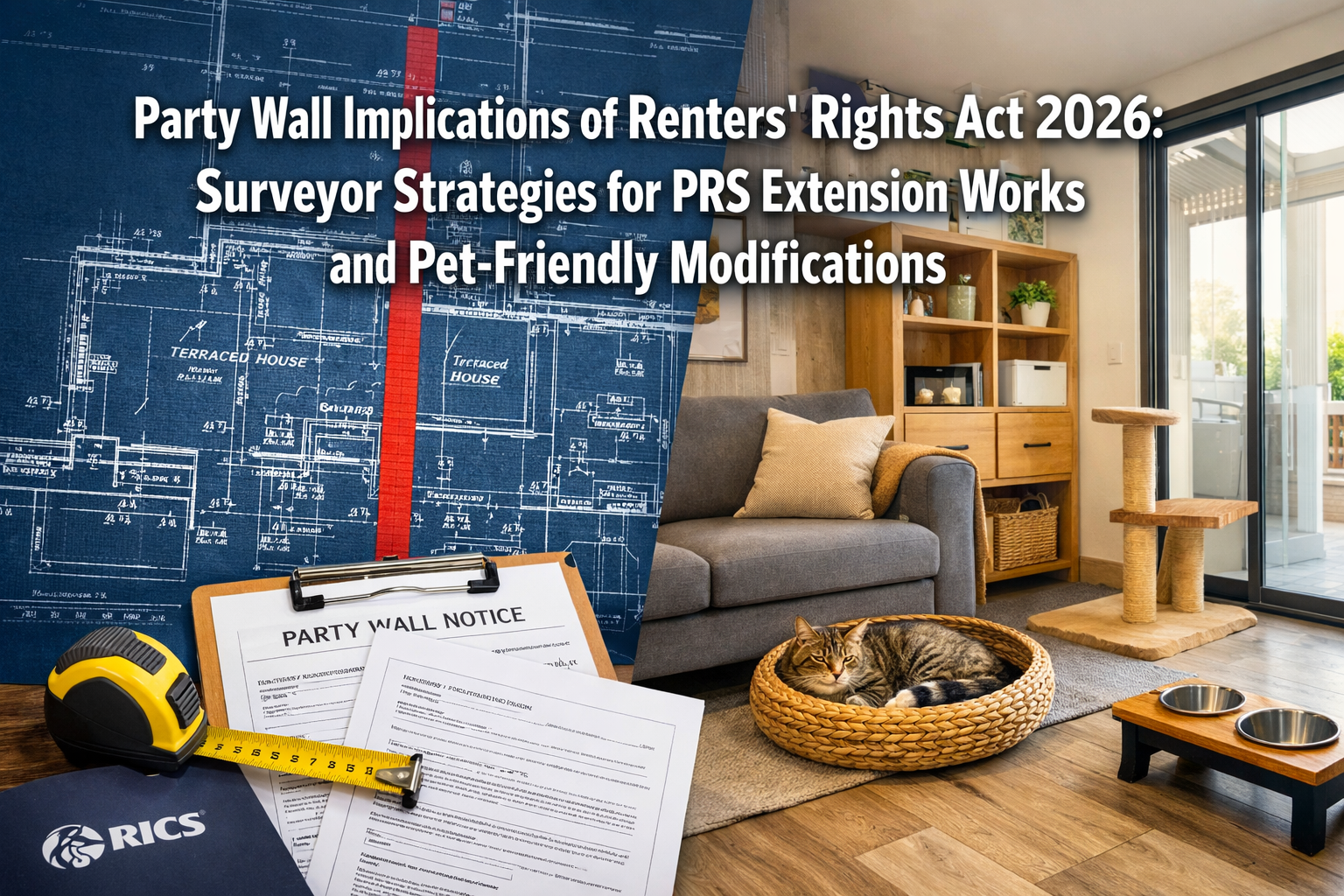
- Section 21 abolition from May 1, 2026 eliminates fixed-term tenancy endpoints, requiring party wall works to proceed during active tenancies with enhanced tenant consultation[5]
- Landlords retain full financial responsibility for party wall surveyor fees under the Party Wall etc. Act 1996, with costs typically non-recoverable from tenants[1]
- 28-day pet request response obligations create new modification timelines that must align with party wall notice procedures for structural alterations[2]
- RICS-compliant surveyor strategies minimize disputes by integrating tenant rights considerations into traditional party wall protocols
- PRS database registration from October 2026 will likely require documentation of approved modifications and extension works compliance[5]
Understanding the Renters' Rights Act 2026 Framework and Party Wall Intersections
The Renters' Rights Act 2026 represents the most significant overhaul of private rental sector regulation in decades. From May 1, 2026, all existing assured shorthold tenancies (ASTs) automatically convert to Assured Periodic Tenancies (APTs), creating rolling monthly or specified period arrangements that continue indefinitely unless landlords can demonstrate valid Section 8 possession grounds.[3]
This fundamental shift eliminates the strategic advantage landlords previously enjoyed when planning major works. Previously, landlords could schedule extension projects or significant modifications to coincide with fixed-term tenancy endings, minimizing tenant disruption concerns and simplifying party wall procedures. That option no longer exists.
Key Legislative Changes Affecting Party Wall Works
Tenant Security of Tenure: Tenants can now remain in properties indefinitely, meaning any party wall notice must be issued and works completed during active occupancy. This creates new challenges for managing construction noise, access requirements, and temporary disruptions that party wall procedures inherently involve.[5]
Rent Increase Restrictions: Landlords can only increase rents once per year with at least two months' notice.[5] This timing constraint requires careful coordination—issuing party wall notices for extension works that might justify future rent increases must align with annual rent review cycles to avoid compounding tenant dissatisfaction during construction periods.
Pet Accommodation Rights: From May 1, 2026, landlords must respond to tenant pet requests within 28 days and can only refuse with valid reasons (typically requiring pet damage insurance).[2] This creates a new category of modification works—pet-friendly adaptations like reinforced flooring, pet access doors, or garden modifications—that may trigger party wall considerations when they affect shared structures.
Enhanced Council Powers: Local authorities gained strengthened inspection and document demand powers from December 27, 2025.[2] This early implementation phase means party wall works are already subject to heightened compliance scrutiny, particularly regarding tenant notification and safety standards.
Party Wall Act 1996 Obligations Remain Unchanged
Despite the Renters' Rights Act transformation, the Party Wall etc. Act 1996 statutory framework continues to govern structural alterations affecting shared walls, boundaries, and excavations. Building owners (landlords) retain full responsibility for:
- Serving appropriate party wall notices (typically 1-2 months before works commence)
- Covering all party wall surveyor fees for both appointed and agreed surveyors
- Ensuring works comply with party wall awards and schedules of condition
- Compensating adjoining owners for any damage resulting from notifiable works[1]
The critical difference in 2026 is that these traditional obligations now operate within a tenant-centric regulatory environment where works cannot be used to facilitate possession and must proceed with enhanced consideration for occupier rights.
Party Wall Implications of Renters' Rights Act 2026: Extension Works Strategies for PRS Properties
Extension works in the private rented sector present particularly complex party wall challenges under the 2026 framework. Rear extensions, loft conversions, and basement excavations—the most common value-adding modifications—all trigger party wall notice requirements when affecting shared structures.
Strategic Timing Considerations for Extension Projects
Pre-Notice Tenant Consultation: While not legally required under the Party Wall Act, best practice now includes informal tenant consultation before serving formal party wall notices. This approach:
- ✅ Identifies potential tenant objections early in the planning process
- ✅ Allows time to address concerns about noise, access, and disruption schedules
- ✅ Reduces risk of tenant complaints triggering Section 8 possession ground defenses
- ✅ Demonstrates good landlord conduct for potential ombudsman scrutiny from October 2026[5]
Coordination with Rent Review Cycles: Extension works that will justify rent increases should be timed to complete at least 2-3 months before the annual rent review date. This allows:
- Works to finish and properties to return to normal condition
- Tenants to experience the improvement benefits before rent increase notices
- Sufficient gap to avoid perception that construction disruption is being immediately monetized
Avoiding Section 8 Ground Complications: The new Section 8 framework includes grounds for landlord intention to occupy or sell. Party wall works cannot be used as pretext for possession claims, and any attempt to do so will face scrutiny.[4] Surveyors should document that works are genuine improvements rather than strategic tenant displacement attempts.
Extension Types and Party Wall Notice Requirements
| Extension Type | Party Wall Notice Required | Typical Timeline | PRS-Specific Considerations |
|---|---|---|---|
| Single-storey rear extension | Section 1 (new building on/at boundary line) | 1 month notice period | Coordinate with tenant garden access needs; consider pet accommodation features |
| Loft conversion | Section 2 (works to existing party wall) | 2 months notice period | Noise impact on occupied properties below; temporary access through rental units |
| Basement excavation | Section 6 (excavation within 3-6m) | 1 month notice period | Significant disruption; may require temporary tenant relocation with compensation |
| Side return extension | Sections 1 & 2 (boundary work + party wall) | 2 months notice period | Often affects multiple party walls; complex neighbor negotiations during tenancy |
RICS-Compliant Surveyor Appointment Strategies
The party wall surveyor responsibilities framework allows for three appointment scenarios:
1. Agreed Surveyor Approach (Recommended for PRS Works)
Appointing a single agreed surveyor to act for both building and adjoining owners offers significant advantages in the 2026 context:
- 🏆 Cost efficiency: Single surveyor fee rather than two separate appointments
- 🏆 Faster resolution: Streamlined decision-making without inter-surveyor negotiations
- 🏆 Reduced tenant disruption: Single point of contact for all parties
- 🏆 Clearer communication: Unified messaging about works timeline and impact
For this approach to succeed, the agreed surveyor must demonstrate complete impartiality and RICS compliance. Landlords should ensure the appointed surveyor:
- Holds current RICS membership with party wall specialization
- Maintains professional indemnity insurance (minimum £1 million coverage)
- Provides transparent fee structures upfront
- Documents all decisions with clear reasoning accessible to tenants
2. Separate Surveyors with Third Surveyor Provision
For complex extensions affecting multiple properties or where neighbor relationships are already strained, separate surveyors may be necessary. The building owner appoints their surveyor, adjoining owners appoint theirs, and both jointly select a third surveyor to resolve disputes.
This approach increases costs significantly but provides:
- Enhanced protection for all parties through independent representation
- Formal dispute resolution mechanism
- Detailed documentation valuable if tenant complaints escalate to ombudsman review[5]
3. Tenant Involvement in Surveyor Selection
While tenants are not typically parties to party wall procedures (the building owner/landlord is), the 2026 framework suggests proactive tenant involvement benefits landlord compliance:
- Share surveyor appointment information with tenants occupying the building owner's property
- Provide copies of party wall notices and awards to tenants
- Allow tenant input on works scheduling to minimize disruption
- Document tenant consultation efforts for potential ombudsman evidence
Managing Extension Works During Active Tenancies
Access Protocols: Extension works often require access through rental properties. Landlords must:
- Provide minimum 24 hours' written notice for access (48 hours preferred)
- Schedule access during reasonable hours (typically 8am-6pm weekdays)
- Minimize frequency of access requirements
- Compensate tenants for significant inconvenience if works exceed normal party wall scope
Noise and Disruption Management: Party wall awards should include specific provisions for:
- Construction hours limitations (stricter than standard planning conditions)
- Noise monitoring and complaint procedures
- Dust and debris control measures
- Temporary facility provisions if works affect tenant amenities
Schedule of Condition Documentation: Pre-works surveys must now consider tenant possessions and rental property condition. Best practice includes:
- Photographing tenant-occupied spaces with tenant present
- Documenting existing property condition separately from tenant belongings
- Providing tenants with copies of relevant schedule sections
- Establishing clear damage claim procedures accessible to tenants
Extension Works and Awaab's Law Compliance
The extension of Awaab's Law to the private rented sector establishes legally enforceable timeframes for addressing serious hazards including mold and damp.[3] Extension works provide strategic opportunities to:
- Upgrade ventilation systems to prevent condensation and mold
- Install damp-proof coursing as part of foundation works
- Improve insulation reducing cold bridging and moisture risks
- Enhance drainage preventing water ingress
Surveyors should recommend incorporating these improvements into extension specifications, creating compliance documentation valuable for the upcoming PRS database registration requirements.[5]
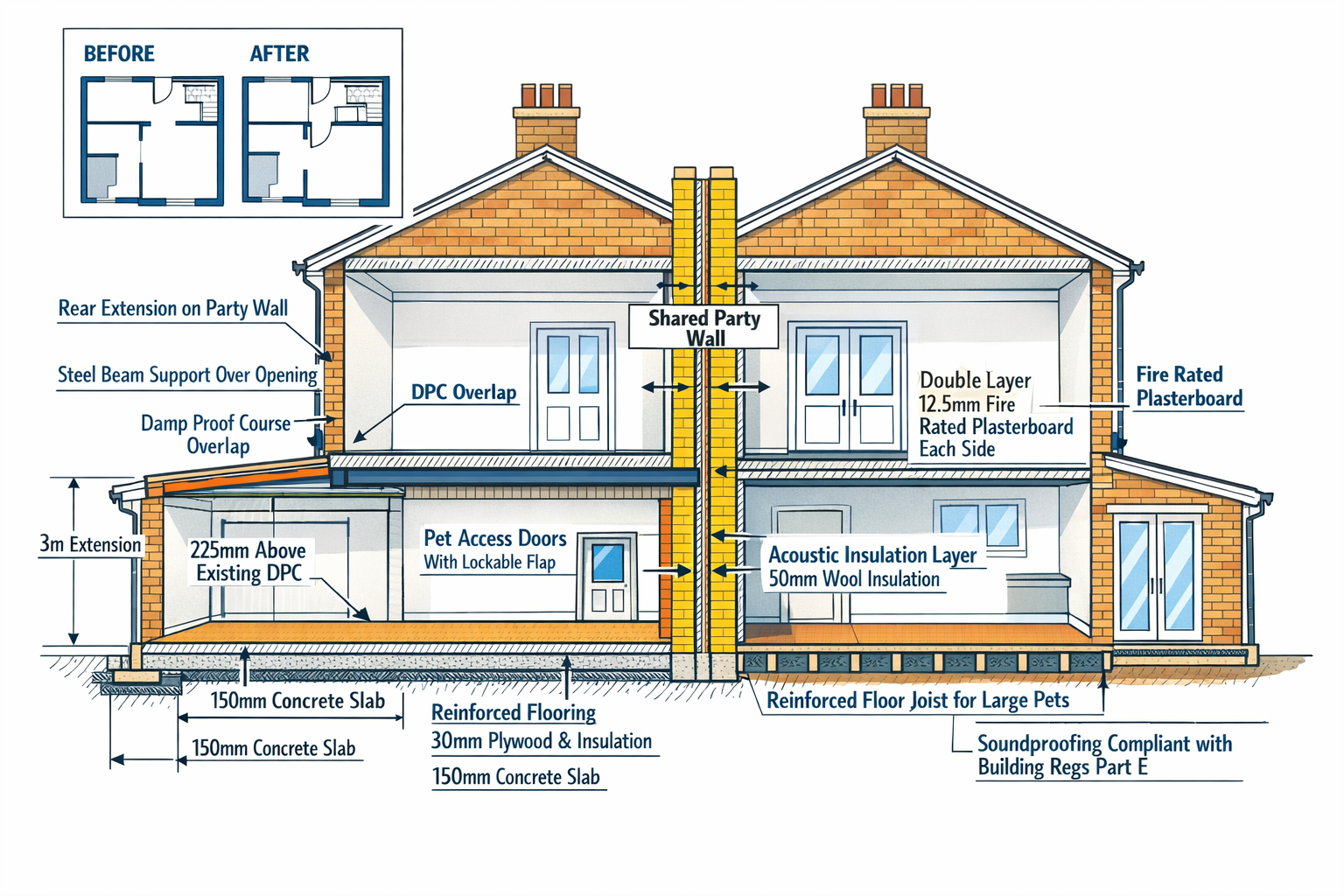
Pet-Friendly Modifications and Party Wall Implications of Renters' Rights Act 2026
The new pet accommodation rights create an entirely novel category of party wall considerations. From May 1, 2026, landlords must consider tenant requests to keep pets, with refusals requiring valid justification.[2] This shifts the modification landscape significantly—landlords can no longer categorically prohibit pets, meaning properties may require adaptations that trigger party wall procedures.
Pet-Friendly Modifications That May Require Party Wall Notices
Structural Floor Reinforcement: Properties with lightweight floor constructions between units may require strengthening to accommodate larger pets. Works involving:
- Upgrading floor joists affecting party walls
- Installing acoustic insulation between floor levels
- Reinforcing ceiling structures in lower units
These modifications typically require Section 2 notices (works to existing party structures) when they affect shared floor/ceiling assemblies in converted properties or flats.
Pet Access Installations: Creating pet access through external walls may trigger party wall considerations:
- Pet doors through boundary walls: Require Section 1 notices if installed on/at the boundary line
- Garden access modifications: May affect party wall foundations if excavation is involved
- External ramp installations: Could trigger Section 6 notices if excavation occurs within 3-6 meters of neighboring foundations
Acoustic Modifications: Soundproofing works to minimize pet noise transmission between units:
- Installing acoustic insulation within party walls (Section 2 notice required)
- Upgrading party wall plasterboard to acoustic-rated boards
- Adding resilient bars and sound-dampening materials
The 28-Day Pet Request Timeline and Party Wall Coordination
Landlords face a 28-day statutory period to respond to tenant pet requests.[2] This creates a compressed timeline for assessing whether pet accommodation requires structural modifications:
Days 1-7: Initial Assessment Phase
- Review property construction and pet type requested
- Identify potential structural modifications needed
- Consult with party wall surveyors about notice requirements
- Assess whether works would affect adjoining properties
Days 8-21: Surveyor Consultation and Neighbor Contact
- Obtain preliminary surveyor advice on party wall implications
- Informally contact adjoining owners about potential works
- Develop modification cost estimates
- Determine whether pet damage insurance requirement is sufficient alternative
Days 22-28: Response Formulation
- Approve pet request with conditions (insurance, specific modifications)
- Refuse with valid justification (structural unsuitability, party wall complications)
- Request extension for complex structural assessments
Post-Response: Party Wall Procedure Initiation
- Serve formal party wall notices (1-2 months before works)
- Appoint agreed or separate surveyors
- Develop party wall awards incorporating pet-friendly specifications
RICS Surveyor Checklist for Pet-Friendly Modification Assessments
Professional surveyors evaluating pet-friendly modifications should complete the following assessment protocol:
🔍 Structural Suitability Assessment
- Identify floor construction type and load-bearing capacity
- Assess acoustic performance of existing party walls/floors
- Evaluate external wall construction at proposed pet door locations
- Review building control approval requirements for modifications
- Determine whether works constitute notifiable party wall matters
📋 Party Wall Notice Requirements
- Confirm building owner identity (landlord, not tenant)
- Identify all adjoining owners requiring notice
- Determine appropriate notice type (Section 1, 2, or 6)
- Calculate statutory notice periods (1-2 months)
- Prepare notice documentation with modification specifications
💰 Cost and Fee Responsibility Documentation
- Provide transparent surveyor fee estimates to landlord
- Confirm landlord responsibility for all party wall costs[1]
- Document that costs cannot be recovered from tenant
- Estimate total modification costs including party wall procedures
- Advise on pet damage insurance as cost-effective alternative
👥 Tenant Communication Protocol
- Develop tenant notification approach for works timeline
- Establish access requirements and scheduling
- Create disruption minimization plan
- Document tenant consultation for ombudsman evidence[5]
- Provide tenant with surveyor contact information
📝 Award and Compliance Documentation
- Draft party wall award incorporating pet-specific provisions
- Include acoustic performance standards for pet noise control
- Specify remediation procedures for any damage
- Establish monitoring protocol during and after works
- Create documentation suitable for PRS database registration[5]
Balancing Pet Rights with Neighbor Protections
The 2026 framework creates tension between tenant pet rights and adjoining owner protections. Surveyors must navigate:
Tenant Perspective: Statutory right to request pet accommodation with refusal requiring justification[2]
Adjoining Owner Perspective: Party wall protections against increased noise, damage risk, and property value impacts
Surveyor Role: Develop modification specifications that:
- Enable pet accommodation within reasonable structural parameters
- Protect adjoining properties through acoustic and structural safeguards
- Document compliance with both Renters' Rights Act and Party Wall Act
- Create enforceable standards for ongoing pet-related maintenance
Pet-Friendly Modifications and Property Value Considerations
Extension works and pet-friendly modifications both affect property valuations, creating strategic considerations for landlords:
Positive Value Impacts:
- Expanded rental market appeal (pet-owning tenants represent significant demographic)
- Premium rent potential for pet-friendly properties with quality modifications
- Competitive advantage in markets with limited pet-friendly supply
- Future-proofed compliance with evolving rental regulations
Risk Mitigation Through Quality Works:
- Professional party wall procedures demonstrate property management standards
- RICS-compliant modifications protect against depreciation from poor-quality alterations
- Documentation creates audit trail valuable for property sales
- Compliance positioning for PRS database "good landlord" status from October 2026[5]
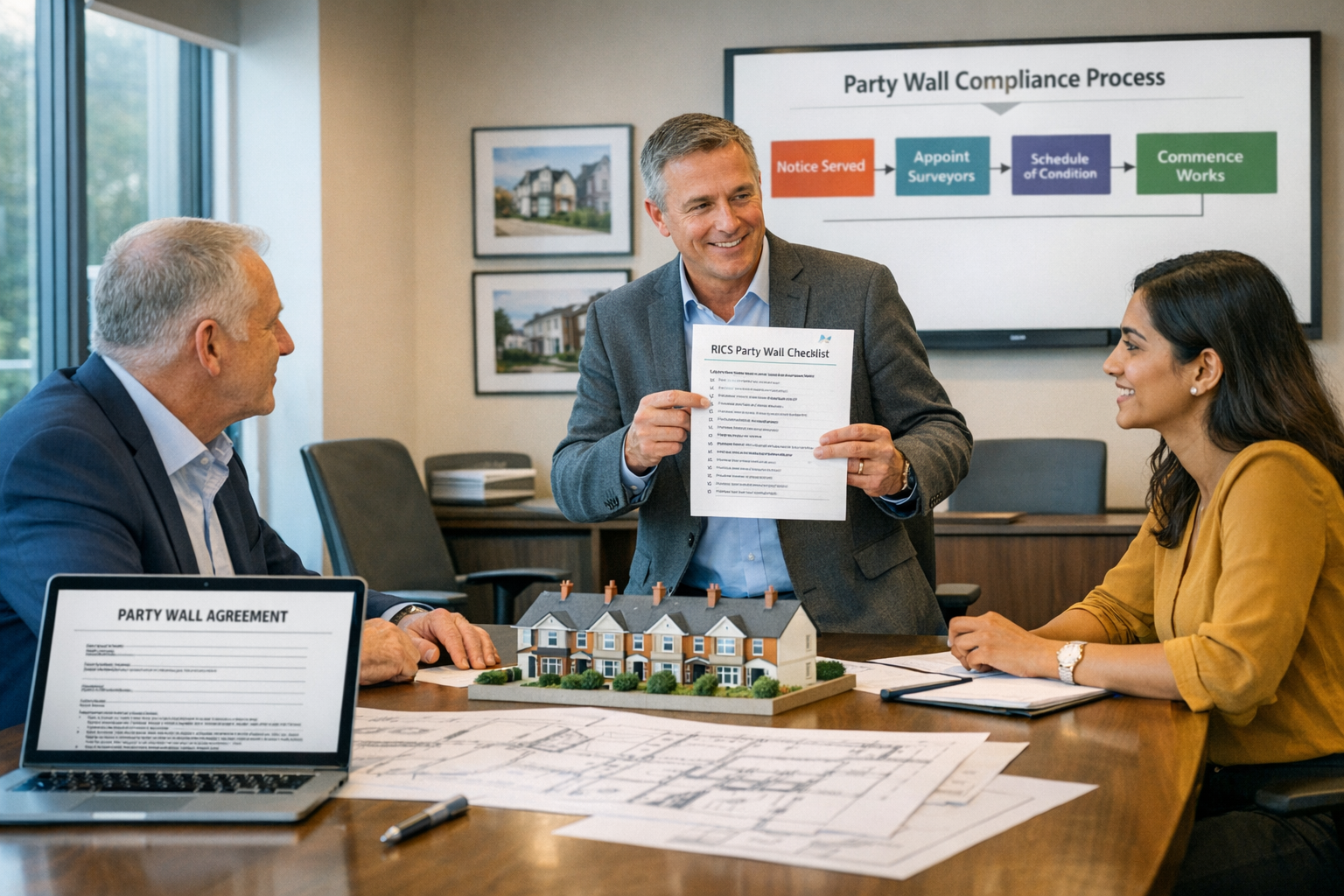
Surveyor Strategies for Minimizing Disputes Under the New Framework
The Party Wall Implications of Renters' Rights Act 2026: Surveyor Strategies for PRS Extension Works and Pet-Friendly Modifications require proactive dispute prevention approaches that integrate tenant protections with traditional party wall procedures.
Pre-Works Dispute Prevention Protocol
1. Enhanced Notification Procedures
Standard party wall notices meet legal minimums but may be insufficient for the 2026 context. Enhanced notification includes:
- Plain language summaries: Accompany statutory notices with accessible explanations of works, timeline, and impact
- Visual aids: Provide drawings or renderings showing proposed works
- FAQ documents: Address common concerns about noise, access, disruption, and damage
- Multiple contact methods: Offer phone, email, and in-person consultation options
- Tenant copies: Provide rental property occupants with all notice documentation
2. Stakeholder Mapping and Communication Plans
Complex extension works may affect multiple parties. Create stakeholder maps identifying:
- Primary adjoining owners: Those receiving statutory party wall notices
- Secondary affected parties: Neighbors impacted by construction but not requiring notices
- Tenant occupants: Both in building owner's property and adjoining properties
- Managing agents: For adjoining properties under professional management
- Freeholders: In leasehold properties where works may affect building structure
Develop tailored communication approaches for each stakeholder group, recognizing that tenants require different information than property owners.
3. Pre-Commencement Meetings
Schedule face-to-face or virtual meetings before works begin to:
- Introduce contractors and site managers
- Walk through works schedule and phasing
- Demonstrate safety and dust control measures
- Establish complaint and communication procedures
- Build relationships that facilitate problem-solving during construction
RICS-Compliant Award Drafting for PRS Properties
Party wall awards for rental properties should incorporate specific provisions addressing tenant occupancy:
Standard Award Sections:
- Description of proposed works with specifications
- Schedule of condition documenting pre-works property state
- Access rights and notice requirements
- Working hours and methodology restrictions
- Insurance and indemnity provisions
PRS-Specific Enhanced Provisions:
Tenant Notification Requirements: Award should specify that building owner must:
- Notify tenants at least 48 hours before each access requirement
- Provide tenant contact information to contractors
- Establish tenant complaint escalation procedures
- Commit to addressing tenant concerns within specified timeframes
Disruption Limitation Standards: Include specific provisions for:
- Maximum consecutive days of high-noise works
- Quiet periods during works (lunch breaks, early finish Fridays)
- Dust control measures exceeding standard building control requirements
- Temporary facility provisions if works affect tenant amenities
Damage Remediation Protocols: Establish clear procedures for:
- Tenant-reported damage investigation timelines
- Distinction between building damage and tenant possession damage
- Compensation procedures for damaged tenant belongings
- Final inspection protocols including tenant participation
Compliance Documentation: Require building owner to:
- Maintain photographic records of works progression
- Provide completion certificates from contractors
- Document any variations from approved works
- Create compliance files suitable for PRS database submission[5]
Managing Disputes When They Arise
Despite best prevention efforts, disputes may occur. The 2026 framework creates new escalation pathways:
Traditional Party Wall Dispute Resolution:
- Agreed surveyor mediation between parties
- Third surveyor determination if separate surveyors appointed
- County court appeal of surveyor decisions (rare)
New Tenant Complaint Pathways (from October 2026):
- Direct landlord complaint procedures
- Landlord Ombudsman referral for unresolved issues[5]
- Local authority enforcement action for serious breaches
- Rent repayment orders for harassment or illegal eviction attempts
Surveyor Role in Multi-Pathway Disputes:
Party wall surveyors should:
- Document extensively: Maintain detailed records of all decisions, communications, and site conditions
- Remain impartial: Avoid advocacy for building owner that could undermine professional standing
- Facilitate communication: Act as neutral intermediary between landlords, tenants, and neighbors
- Anticipate ombudsman review: Draft awards and correspondence assuming potential future scrutiny[5]
- Coordinate with other professionals: Work with managing agents, solicitors, and building control officers
Technology and Documentation Best Practices
Modern surveying technology enhances dispute prevention and resolution:
Digital Documentation Systems:
- Cloud-based photo and video libraries with timestamps
- Shared access portals for all parties to review documentation
- Automated notification systems for works scheduling
- Digital signature platforms for award acceptance
Monitoring Technology:
- Vibration monitors documenting construction impact levels
- Noise meters providing objective disruption measurements
- Crack monitoring systems tracking any structural movement
- Dust sensors demonstrating air quality management
Communication Platforms:
- Dedicated project websites with works updates
- WhatsApp or SMS notification groups for immediate updates
- Email distribution lists for formal communications
- Video call capabilities for remote consultations
Case Study: Successful PRS Extension with Pet-Friendly Elements
Property Type: Victorian terraced house, privately rented, two adjoining properties
Works Proposed: Single-storey rear extension with pet access door and reinforced flooring
Surveyor Strategy:
- Pre-notice consultation: Met with tenant and adjoining owners before formal notices
- Agreed surveyor appointment: Single surveyor for both properties, reducing costs
- Enhanced award provisions: Included specific pet-friendly specifications and tenant notification protocols
- Phased works approach: Completed structural works during tenant vacation period, finishing touches during occupancy
- Documentation excellence: Created comprehensive photo record and compliance file
Outcome:
- Works completed on schedule without disputes
- Tenant remained throughout with minimal complaints
- Adjoining owners satisfied with communication and damage prevention
- Property value increased 12% through extension and pet-friendly positioning
- Landlord achieved premium rent increase (within annual limit) post-completion
- Full compliance documentation prepared for October 2026 PRS database registration[5]
Preparing for Phase 2 Implementation: PRS Database and Ombudsman
The October 2026 Phase 2 implementation introduces the Private Rented Sector database and Landlord Ombudsman service.[5] These systems will significantly impact how party wall works are documented and potentially reviewed.
PRS Database Registration Requirements
While final database requirements remain under development, expected elements include:
Property Information:
- Address and property type
- Landlord and agent contact details
- Tenancy information (anonymized)
- Safety certification status
Modification and Works History:
- Major structural alterations (extensions, conversions)
- Party wall procedures completed
- Building control approvals obtained
- Compliance with Decent Homes Standard (when implemented 2035-2037)[2]
Party Wall Documentation Likely Required:
- Copies of party wall notices served
- Party wall awards with completion confirmations
- Schedule of condition reports
- Surveyor appointment records
- Evidence of cost responsibility (landlord payment of fees)[1]
Landlord Ombudsman Implications for Party Wall Works
The new ombudsman service will handle tenant complaints about landlord conduct.[5] Party wall works may generate complaints regarding:
- Inadequate notification: Tenant claims of insufficient warning about works
- Excessive disruption: Complaints about noise, dust, or access frequency
- Damage to possessions: Claims that works damaged tenant belongings
- Retaliatory conduct: Allegations that works were timed to pressure tenant departure
Surveyor Protection Strategies:
To protect against ombudsman complaints, surveyors should:
- Create comprehensive communication records: Document all tenant notifications, meetings, and correspondence
- Establish objective standards: Use monitoring technology to demonstrate compliance with noise and disruption limits
- Implement formal complaint procedures: Provide clear escalation pathways before issues reach ombudsman
- Maintain professional independence: Ensure surveyor decisions are defensible as impartial and RICS-compliant
- Provide landlord guidance: Advise building owners on tenant relations best practices throughout works
Future-Proofing Party Wall Practices
The 2026 changes represent the beginning of ongoing rental sector reform. Surveyors should anticipate:
Decent Homes Standard Implementation (2035-2037)[2]: Extension and modification works should incorporate quality standards that will eventually become mandatory, including:
- Energy efficiency measures (insulation, glazing)
- Modern heating and ventilation systems
- Adequate natural lighting
- Functional layouts meeting space standards
Continued Tenant Protection Expansion: Future legislation may introduce:
- Additional modification rights for tenants (accessibility, sustainability)
- Stricter construction impact limitations during tenancies
- Enhanced compensation requirements for works-related disruption
- Mandatory tenant participation in works planning
Technology Integration: Digital systems will increasingly facilitate:
- Automated party wall notice service
- Online surveyor appointment platforms
- Real-time works monitoring and reporting
- Integrated compliance documentation for multiple regulatory frameworks
Conclusion
The Party Wall Implications of Renters' Rights Act 2026: Surveyor Strategies for PRS Extension Works and Pet-Friendly Modifications represent a fundamental shift in how structural alterations proceed in rental properties. The abolition of Section 21 evictions, introduction of indefinite periodic tenancies, and new pet accommodation rights create a complex regulatory environment where traditional party wall procedures must integrate seamlessly with enhanced tenant protections.
Professional surveyors navigating this landscape must adopt strategies that go beyond statutory party wall compliance to embrace tenant-centric communication, comprehensive documentation, and proactive dispute prevention. The agreed surveyor approach offers particular advantages in PRS contexts, providing cost efficiency and streamlined decision-making while maintaining RICS professional standards.
Actionable Next Steps for Surveyors and Landlords
Immediate Actions (2026):
- Review existing practices: Audit current party wall procedures against new tenant protection requirements
- Enhance documentation systems: Implement digital platforms for comprehensive works recording
- Develop tenant communication protocols: Create templates and procedures for enhanced notification
- Update fee structures: Ensure transparent pricing that reflects increased PRS complexity
- Build professional networks: Connect with managing agents, solicitors, and ombudsman services
Preparation for October 2026:
- Compile compliance documentation: Organize party wall records for PRS database registration[5]
- Establish ombudsman procedures: Develop complaint handling systems anticipating new service launch
- Train team members: Ensure all staff understand integrated party wall and tenant rights frameworks
- Review insurance coverage: Confirm professional indemnity policies cover expanded scope of practice
Long-Term Strategic Planning:
- Monitor Decent Homes Standard development: Stay informed about quality standards implementation timeline[2]
- Invest in monitoring technology: Acquire vibration, noise, and crack monitoring equipment
- Develop specialization: Consider focusing on PRS party wall works as niche expertise area
- Build reputation: Establish track record of dispute-free PRS projects for competitive advantage
The intersection of party wall law and rental sector reform creates both challenges and opportunities. Surveyors who master the Party Wall Implications of Renters' Rights Act 2026: Surveyor Strategies for PRS Extension Works and Pet-Friendly Modifications will position themselves as essential professionals in an evolving market where quality, compliant structural alterations add significant value to rental portfolios.
By understanding party wall surveyor responsibilities within this new context and implementing RICS-compliant strategies that prioritize tenant welfare alongside traditional party wall protections, professionals can navigate these changes successfully while maintaining the highest standards of practice.
For landlords planning extension works or pet-friendly modifications, engaging experienced party wall surveyors early in the process—ideally before serving formal notices—provides the strategic advantage needed to complete projects smoothly under the 2026 framework. The investment in professional surveyor guidance pays dividends through reduced dispute risk, faster project completion, and comprehensive compliance documentation valuable for the evolving regulatory landscape.
References
[1] Party Wall Notice Requirements For Prs Database Compliance Works Surveyor Tactics Post Renters Rights Act Registration In 2026 – https://nottinghillsurveyors.com/blog/party-wall-notice-requirements-for-prs-database-compliance-works-surveyor-tactics-post-renters-rights-act-registration-in-2026
[2] Renters Rights Act Implementation 6365569 – https://www.jdsupra.com/legalnews/renters-rights-act-implementation-6365569/
[3] Alerts Realestate Impacts Of The Renters Rights Act – https://www.goodwinlaw.com/en/insights/publications/2026/01/alerts-realestate-impacts-of-the-renters-rights-act
[4] Party Wall Surveys For Renters Rights Act Compliance Managing Notices When Landlord Initiated Works Face New Section 8 Ground Requirements – https://nottinghillsurveyors.com/blog/party-wall-surveys-for-renters-rights-act-compliance-managing-notices-when-landlord-initiated-works-face-new-section-8-ground-requirements
[5] Shw Renters Rights Act Begins Implementation Journey On 1st May 2026 – https://www.shw.co.uk/news/2025/shw—renters-rights-act-begins-implementation-journey-on-1st-may-2026.html