
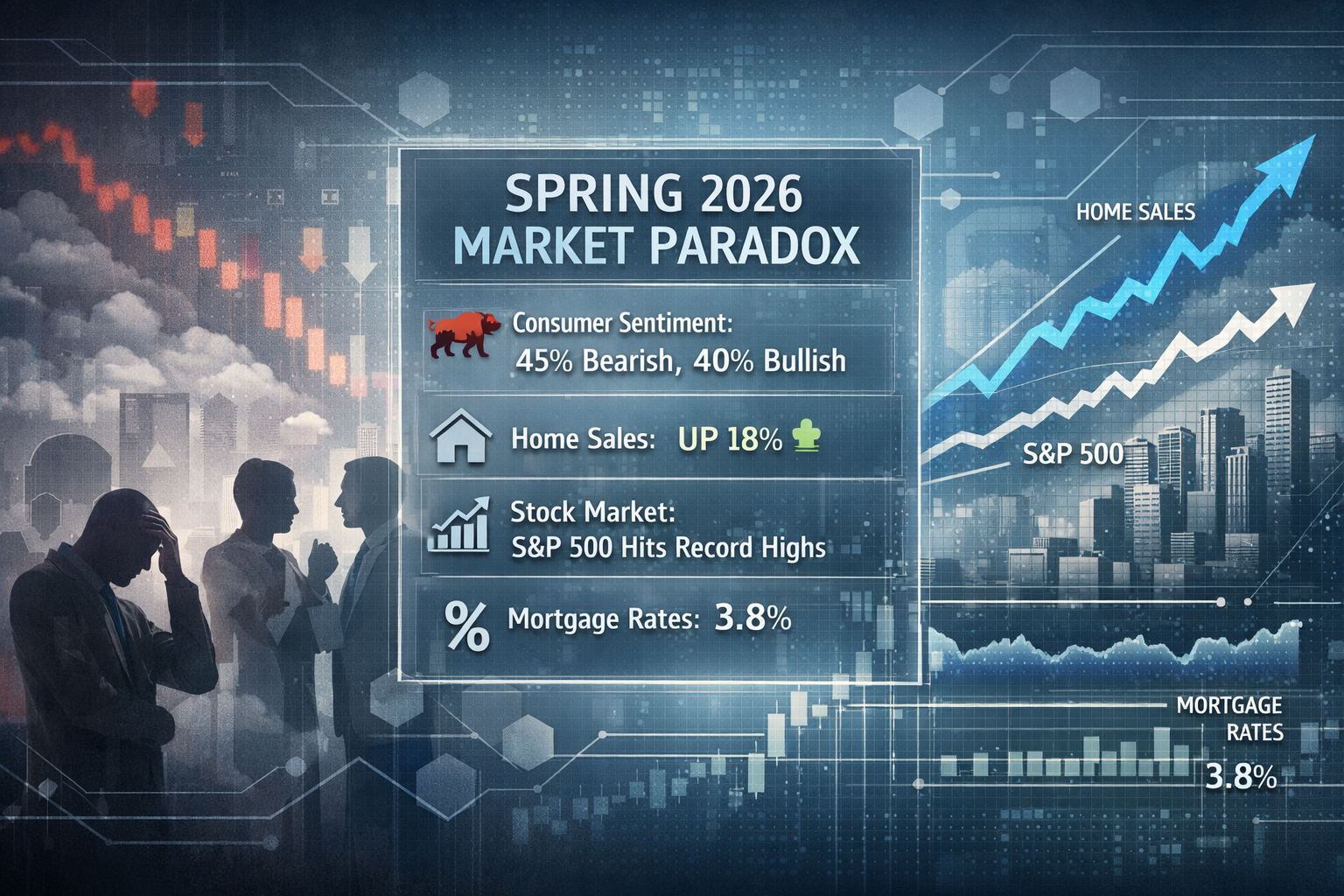
Year-over-year home price growth has collapsed to just 0.5% in February 2026—a dramatic deceleration that has caught many market participants off guard.[4] Yet simultaneously, agent confidence in buyer traffic has surged from 27% to 37% compared to the prior year, creating a puzzling disconnect between optimistic sentiment and subdued price momentum.[3] This is the defining challenge of spring 2026: a market where positive feelings about the future clash with present-day realities, leaving property valuations suspended between hope and hard data.
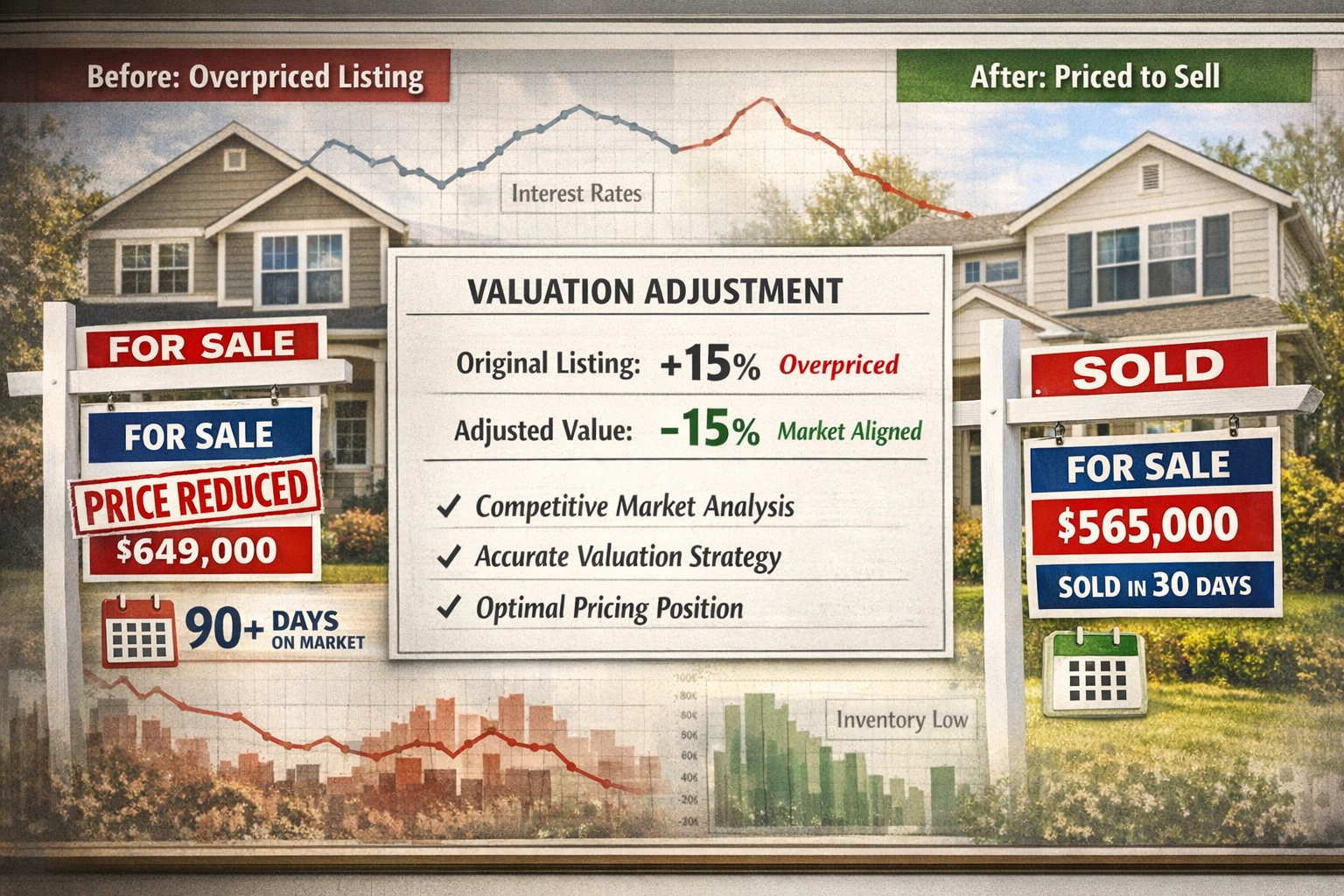
For chartered surveyors and property professionals, Valuation Accuracy in Spring 2026's Market Paradox: Surveyor Strategies When Sentiment Diverges from Activity has become the central question. When client expectations reflect bullish sentiment but transaction data tells a more cautious story, how do professionals calibrate accurate property valuations? The stakes are higher than ever—overpricing by even 5% can result in stale listings in a market where price growth has normalized to 1-3% annually.[1]

Key Takeaways
- Market sentiment has turned positive with agent confidence rising 10 percentage points year-over-year, yet price growth has slowed to 0.5%, creating valuation challenges
- Inventory increased 10% year-over-year to a balanced 4-6 month supply, ending scarcity-driven pricing and demanding precision valuations
- Mortgage rate volatility spiked dramatically in late March 2026 due to geopolitical tensions, causing mortgage demand to drop over 10% despite earlier optimism
- Accurate condition assessment has become critical as buyers compare properties more closely and negotiate aggressively in the stability-induced environment
- Geographic variance matters with markets showing different resilience levels based on demographics and affordability metrics
Understanding the Spring 2026 Market Paradox
The current real estate landscape presents a unique contradiction. February 2026 recorded 6,580 home sales, representing a 7.4% increase year-over-year and a 12% jump from January—indicating robust early-year transaction activity.[3] These numbers suggest a market gaining momentum, and this activity fueled optimism among real estate professionals.
However, beneath this surface-level strength lies a more complex reality. Mortgage rates, which had stabilized in the low 6% range through early 2026 and even dipped to 5.98% in early March—below the psychologically important 6% threshold—experienced a dramatic reversal.[3] Geopolitical tensions triggered a sharp spike in late March 2026, pushing rates to their highest level since October 2025 and causing mortgage demand to plummet more than 10% in the final week of March.[3]
The Sentiment-Activity Disconnect
This creates what industry analysts are calling the "stability paradox." When markets appear calm and balanced, buyers paradoxically become more hesitant rather than more confident.[1] The increased inventory—now at a balanced 4-6 month supply after years of scarcity—gives buyers more options and negotiating power. They're comparing properties more closely and negotiating more aggressively, requiring valuations to reflect true market appeal rather than scarcity-driven premiums.[3]
For surveyors, this environment demands a recalibration of valuation methodologies. Traditional approaches that relied on rapid appreciation and seller leverage no longer apply. Properties that "miss the mark on price, condition, or flexibility are losing interest quickly," placing heightened importance on accurate property valuation and realistic condition assessment.[3]
Valuation Accuracy in Spring 2026's Market Paradox: Core Challenges for Surveyors
The divergence between sentiment and activity creates several specific challenges for property professionals conducting valuations in 2026.
🎯 Challenge 1: Reconciling Comparable Sales Data
With price growth at just 0.5% year-over-year, comparable sales from even six months ago may not accurately reflect current market conditions.[4] Surveyors must carefully weight recent transactions more heavily while accounting for:
- Seasonal variations in spring 2026 versus winter transactions
- Rate environment changes affecting buyer purchasing power
- Inventory level shifts from scarcity to balance
- Geographic micro-market differences in resilience and demand
Markets like Indianapolis demonstrate how demographic factors—higher millennial household concentration and relative affordability—create localized strength that may not reflect broader regional trends.[3] This geographic variance means local surveyor expertise becomes even more valuable.
🏠 Challenge 2: Condition Assessment Takes Center Stage
In a scarcity market, buyers often overlooked minor defects or deferred maintenance. The balanced market of spring 2026 has eliminated this tolerance. Buyers now scrutinize property condition intensely, making comprehensive condition survey reports essential for accurate valuation.
Key condition factors affecting 2026 valuations:
| Condition Element | Impact on Valuation | Buyer Sensitivity Level |
|---|---|---|
| Structural integrity | High (5-15% adjustment) | Critical |
| Damp or moisture issues | High (7-12% adjustment) | Critical |
| Energy efficiency | Medium (3-8% adjustment) | High |
| Cosmetic updates | Low (1-4% adjustment) | Medium |
| Deferred maintenance | Medium (4-10% adjustment) | High |
The opportunity cost of inaccurate valuations has become significant. Waiting one year on a £450,000 home results in approximately £9,000 in lost equity appreciation at current 2% growth rates—a substantial penalty for overpricing that leads to extended listing periods.[1]
📊 Challenge 3: Sentiment-Driven Client Expectations
Clients reading headlines about increased agent confidence and rising sales volumes may expect valuations that reflect this optimism. However, the actual price data tells a more restrained story. Surveyors must navigate this expectation gap by:
- Presenting multiple data sources that show both sentiment indicators and transaction evidence
- Explaining the lag effect between sentiment shifts and price realization
- Demonstrating market-specific conditions rather than relying on national averages
- Providing scenario analysis showing valuation ranges under different market trajectories
Chartered surveyors with strong communication skills can bridge this gap by educating clients about the distinction between market direction (improving) and current valuation reality (constrained).
Surveyor Strategies for Navigating the Sentiment-Activity Divide
Professional surveyors have developed specific methodologies to maintain valuation accuracy when market signals conflict.
Strategy 1: Multi-Layered Comparable Analysis
Rather than relying solely on recent comparable sales, surveyors in spring 2026 are implementing a three-tier analysis approach:
Tier 1: Recent Transactions (0-3 months)
- Weighted most heavily (50-60% of analysis)
- Adjusted for rate environment at time of sale
- Filtered for distressed or unusual circumstances
Tier 2: Seasonal Comparables (Same season, prior year)
- Weighted moderately (25-30% of analysis)
- Adjusted for year-over-year price growth (0.5%)
- Provides seasonal context for spring market dynamics
Tier 3: Trend Analysis (6-12 months)
- Weighted lightly (15-20% of analysis)
- Identifies directional momentum
- Highlights acceleration or deceleration patterns
This layered approach prevents over-reliance on any single data point while acknowledging that recent transactions most accurately reflect current buyer behavior and financing conditions.
Strategy 2: Enhanced Condition Weighting
With buyers scrutinizing properties more carefully, surveyors are increasing the valuation impact of condition factors. Building surveys now carry greater weight in the valuation process, with specific adjustments for:
- Energy Performance Certificate (EPC) ratings reflecting increased buyer focus on running costs
- Damp and moisture issues that previously might have been minimized in hot markets
- Structural concerns requiring immediate or near-term remediation
- Modernization status of kitchens, bathrooms, and mechanical systems
For first-time buyers especially, comprehensive building surveys provide the detailed condition information necessary to justify valuation adjustments and negotiate effectively.
Strategy 3: Scenario-Based Valuation Ranges
Rather than providing a single-point valuation, forward-thinking surveyors are presenting scenario-based ranges that acknowledge market uncertainty:
Conservative Scenario (Current Activity-Based)
- Assumes continued rate volatility and cautious buyer behavior
- Based primarily on recent transaction data
- Reflects 0.5% annual growth trajectory
Moderate Scenario (Balanced Outlook)
- Assumes stabilizing rates and gradual sentiment improvement
- Incorporates both activity data and forward indicators
- Projects 1-2% annual growth
Optimistic Scenario (Sentiment-Driven)
- Assumes positive sentiment translates to activity
- Weighted toward agent confidence and buyer traffic indicators
- Projects 2-3% annual growth
This approach provides clients with realistic expectations while acknowledging the genuine uncertainty in the current market. It also protects surveyors from criticism if market conditions shift unexpectedly in either direction.
Strategy 4: Geographic Micro-Market Analysis
The spring 2026 market shows significant geographic variance in performance. Surveyors are investing more effort in understanding local market dynamics rather than applying regional or national averages. This includes analyzing:
- Demographic composition and household formation rates
- Employment sector concentration and economic resilience
- Affordability metrics relative to local income levels
- Inventory dynamics specific to the neighborhood or borough
Areas like Chiswick, Merton, and Battersea each demonstrate unique market characteristics that require localized valuation approaches rather than broad-brush methodologies.
Practical Implementation: Valuation Accuracy in Spring 2026's Market Paradox
Implementing these strategies requires both technical skill and effective client communication. Here's how leading surveyors are putting theory into practice:
📋 Pre-Valuation Preparation Checklist
Before conducting a property valuation in the current environment, surveyors should:
✅ Gather comprehensive market data from the past 6 months, not just 3 months
✅ Review recent rate movement and its impact on buyer purchasing power
✅ Assess current inventory levels in the specific property segment
✅ Identify comparable properties currently on market, not just sold
✅ Conduct thorough condition assessment with emphasis on buyer concerns
✅ Research local market sentiment through agent contacts and buyer feedback
✅ Prepare scenario analysis framework before arriving at property
This preparation ensures the valuation reflects both hard data and market psychology—critical when the two diverge.
🔍 On-Site Assessment Priorities
During the property inspection, surveyors should prioritize elements that carry disproportionate weight in the current market:
Critical Assessment Areas:
- Structural integrity and any signs of movement or settlement
- Damp, moisture, and ventilation adequacy
- Heating system efficiency and age
- Window condition and energy performance
- Roof condition and remaining service life
- Electrical and plumbing system status
For properties requiring specialized assessment, coordinating with damp survey specialists or structural engineers provides the detailed information necessary for accurate valuation adjustments.
💬 Client Communication Framework
When presenting valuations that may not align with client expectations, effective communication is essential:
Opening Context: "The spring 2026 market shows a unique pattern where sentiment has improved significantly—agent confidence is up 10 percentage points—but price growth remains constrained at 0.5% year-over-year. This creates both opportunity and challenge for accurate valuation."
Data Presentation: Show both sentiment indicators (sales volume, agent confidence) and price data (comparable sales, days on market) to demonstrate the divergence clearly.
Valuation Rationale: "Based on recent comparable transactions, current inventory levels, and property-specific condition factors, the supported valuation range is…"
Market Positioning: "To achieve optimal results in this environment, pricing should reflect current buyer behavior rather than improving sentiment. As sentiment translates to activity over the next 6-12 months, values should appreciate toward the moderate scenario."
This framework acknowledges client awareness of positive market news while grounding the valuation in transaction reality.
Regional Considerations and Market Variations
The market paradox manifests differently across regions and property types. Understanding these variations is crucial for Valuation Accuracy in Spring 2026's Market Paradox: Surveyor Strategies When Sentiment Diverges from Activity.
London Market Dynamics
London demonstrates particularly pronounced divergence between sentiment and activity. Areas like Islington and Hounslow show different patterns based on:
- Transport connectivity and commuting patterns post-pandemic
- Price point positioning relative to affordability thresholds
- Property type mix (flats versus houses showing different dynamics)
- Local economic factors and employment concentration
Outer London and Commuter Belt
Markets like Brentwood, Enfield, and Hornchurch benefit from relative affordability but face different challenges:
- Rate sensitivity due to higher loan-to-value ratios
- Commuting cost considerations in buyer calculations
- Family-oriented buyer base with different priorities
- New build competition affecting resale valuations
Surveyors working in these areas must adjust their methodologies to reflect these distinct market characteristics rather than applying central London approaches.
Risk Management and Professional Standards
Maintaining valuation accuracy in uncertain markets also involves managing professional risk and adhering to standards.
RICS Red Book Compliance
The RICS Valuation – Global Standards (Red Book) requires valuers to:
- State assumptions clearly when market evidence is limited or conflicting
- Disclose uncertainty in market conditions affecting valuation confidence
- Document methodology thoroughly to support valuation conclusions
- Update valuations when material market changes occur
In spring 2026's paradoxical market, these requirements take on heightened importance. Surveyors should explicitly state when sentiment and activity data diverge and explain how this divergence was addressed in the valuation methodology.
Professional Indemnity Considerations
Valuation challenges increase professional indemnity exposure. Surveyors can mitigate risk by:
- Documenting data sources comprehensively
- Retaining market evidence supporting valuation decisions
- Communicating limitations clearly to clients
- Avoiding pressure to inflate valuations based on sentiment alone
- Seeking second opinions on complex or high-value properties
When clients push for valuations that exceed supportable ranges, surveyors must stand firm on professional standards—even if it means losing the instruction.
Looking Ahead: Navigating Continued Uncertainty
The market paradox of spring 2026 may persist for several quarters as sentiment and activity gradually realign. Surveyors should prepare for:
Short-term (Q2-Q3 2026):
- Continued volatility in mortgage rates affecting buyer behavior
- Gradual translation of sentiment into transaction activity
- Persistent buyer scrutiny of condition and value
- Inventory levels remaining elevated compared to recent years
Medium-term (Q4 2026-Q1 2027):
- Potential convergence of sentiment and price data
- Stabilization of rate environment (absent further shocks)
- Price growth acceleration toward 2-3% annually
- Return to more predictable valuation patterns
Long-term (2027+):
- New equilibrium between supply and demand
- Normalized appreciation rates
- Reduced divergence between sentiment and activity
Understanding this trajectory helps surveyors provide context to clients and position current valuations within a broader market evolution narrative.
Conclusion
Valuation Accuracy in Spring 2026's Market Paradox: Surveyor Strategies When Sentiment Diverges from Activity represents one of the most challenging environments for property professionals in recent years. The disconnect between improving sentiment and constrained price growth requires surveyors to navigate carefully between client expectations and market reality.
The strategies outlined in this article—multi-layered comparable analysis, enhanced condition weighting, scenario-based valuation ranges, and geographic micro-market analysis—provide a framework for maintaining accuracy and professional standards in uncertain conditions. The key is recognizing that positive sentiment is a leading indicator that may eventually translate to price appreciation, but current valuations must reflect actual transaction evidence rather than optimistic projections.
Actionable Next Steps
For property professionals seeking to improve valuation accuracy in the current market:
- Enhance data collection by expanding comparable analysis timeframes and incorporating multiple market indicators
- Invest in condition assessment training to better evaluate factors that matter most to today's buyers
- Develop client communication protocols that explain market paradoxes clearly and manage expectations effectively
- Build local market expertise through regular engagement with agents, buyers, and other surveyors
- Document methodology thoroughly to support valuations and manage professional risk
- Stay informed about rate movements, inventory changes, and sentiment shifts through continuous market monitoring
Whether you're a first-time buyer seeking a building survey or a property professional conducting valuations, understanding the spring 2026 market paradox is essential. The divergence between sentiment and activity won't last forever—but navigating it successfully requires both technical skill and strategic thinking.
For comprehensive property assessments that account for current market complexities, consider engaging experienced chartered surveyors who understand how to balance optimistic sentiment with transaction reality. Accurate valuations today protect both buyers and sellers from the costly mistakes that occur when hope replaces evidence.
References
[1] Blog 142037 The Stability Paradox Why Calm Markets Create More Hesitation Than Volatile Ones – https://www.har.com/blog_142037_the-stability-paradox-why-calm-markets-create-more-hesitation-than-volatile-ones
[3] Spring 2026 Real Estate A Tug Of War Between Recovery And Geopolitical Volatility – https://que.com/spring-2026-real-estate-a-tug-of-war-between-recovery-and-geopolitical-volatility/
[4] Us Home Price Insights April 2026 – https://www.corelogic.com.au/insights/articles/us-home-price-insights-april-2026