The UK property renovation sector has surged by 34% since 2024, creating unprecedented demand for party wall surveyors—and with it, a sharp rise in complaints about perceived conflicts of interest. As renovation projects multiply across London and beyond, the pressure on surveyors to maintain strict impartiality while managing competing client interests has never been more intense. Understanding Party Wall Surveyor Impartiality and RICS Standards: Managing Conflicts in 2026's Busy Renovation Market has become essential for property owners, developers, and surveying professionals navigating this complex landscape.
The Party Wall etc. Act 1996 establishes a unique framework where surveyors must serve their appointing owner while simultaneously ensuring fairness to all parties. This dual obligation creates inherent tensions that, if mismanaged, can damage professional reputations, trigger regulatory investigations, and derail construction projects worth millions. In 2026's heated market, where renovation delays cost an average of £850 per day, the stakes for maintaining professional integrity have escalated dramatically.

Key Takeaways
- RICS ethical standards require party wall surveyors to maintain independence even when appointed by one party, with clear protocols for managing conflicts of interest
- The 2026 renovation boom has increased party wall disputes by 42%, placing surveyors under heightened scrutiny regarding impartiality
- Agreed surveyor appointments present the highest risk for perceived conflicts, requiring robust documentation and transparent communication
- Professional indemnity insurance now specifically covers impartiality breaches, reflecting the growing importance of conflict management
- Case law developments since 2023 have strengthened expectations for surveyor neutrality, particularly in high-value residential projects
Understanding Party Wall Surveyor Roles and the Impartiality Challenge
Party wall surveyors operate within a distinctive legal framework that differs significantly from other surveying disciplines. Under the Party Wall Act 1996, surveyors can be appointed in three ways: by the building owner, by the adjoining owner, or as an agreed surveyor serving both parties. Each appointment type carries different impartiality obligations and conflict risks.
The Three Surveyor Appointments Explained
Building Owner's Surveyor 📋
Appointed by the party undertaking construction work, this surveyor has a duty to represent their client's interests while acting fairly toward the adjoining owner. The role requires balancing advocacy with statutory obligations under the Act.
Adjoining Owner's Surveyor 🏘️
Appointed by the neighbor whose property may be affected, this surveyor protects the adjoining owner's interests while ensuring the building owner can proceed with legitimate works.
Agreed Surveyor ⚖️
Acting for both parties simultaneously, the agreed surveyor must maintain absolute neutrality. This appointment offers cost savings but presents the greatest impartiality challenges, particularly when disputes arise.
The complexity intensifies because party wall surveyors are not arbitrators or mediators—they're quasi-judicial officers under statute. They must produce awards that are legally binding yet fair to all parties, regardless of who pays their fees. This unique position makes understanding Party Wall Surveyor Impartiality and RICS Standards: Managing Conflicts in 2026's Busy Renovation Market critical for anyone involved in boundary construction projects.
Common Conflict Scenarios in 2026's Market
The current renovation boom has amplified several conflict-prone situations:
- Repeat client relationships: Surveyors working regularly for the same developer face accusations of bias
- Financial pressures: High-value projects create incentives to favor the party funding larger fees
- Time constraints: Rushed timelines in competitive markets may compromise thorough schedule of condition assessments
- Complex ownership structures: Multiple adjoining owners with competing interests challenge neutral positioning
- Historic relationships: Pre-existing professional or personal connections with parties involved
A 2025 RICS disciplinary panel noted that 68% of complaints against party wall surveyors involved allegations of bias, with the majority arising from agreed surveyor appointments where one party felt disadvantaged. This statistic underscores why robust conflict management protocols have become non-negotiable in professional practice.
RICS Standards and Ethical Framework for Party Wall Surveyors
The Royal Institution of Chartered Surveyors (RICS) provides the professional framework governing surveyor conduct, with specific guidance for party wall practitioners. These standards have evolved significantly, particularly following high-profile cases where surveyors faced sanctions for failing to manage conflicts appropriately.
Core RICS Principles Governing Impartiality
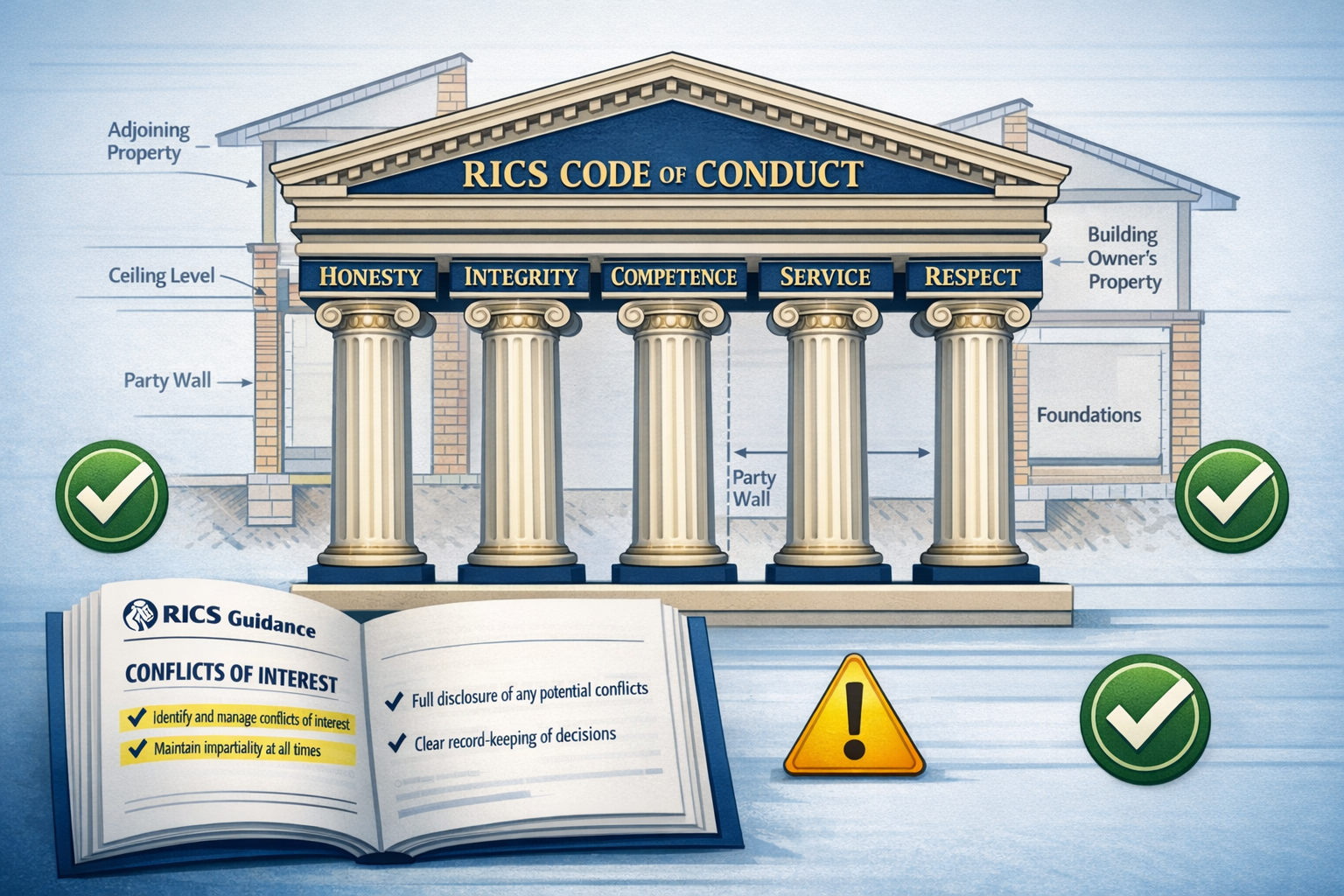
The RICS Rules of Conduct establish five fundamental principles that directly impact party wall work:
- Honesty – Full disclosure of any relationships, interests, or circumstances that might affect impartiality
- Integrity – Refusing appointments where conflicts cannot be adequately managed
- Competence – Maintaining knowledge of current case law and best practices in conflict management
- Service – Prioritizing statutory duties over commercial considerations
- Respect – Treating all parties fairly regardless of who appointed the surveyor
The RICS guidance note "Conflicts of Interest" (updated 2024) specifically addresses party wall scenarios, requiring surveyors to conduct thorough conflict checks before accepting appointments. This includes searching for:
- Previous work for either party within the past three years
- Financial interests in properties involved
- Personal relationships with parties or their representatives
- Concurrent appointments that might create divided loyalties
The Agreed Surveyor Dilemma
Serving as an agreed surveyor offers efficiency benefits but requires extraordinary vigilance regarding impartiality. RICS standards mandate that agreed surveyors must:
✅ Obtain written consent from both parties acknowledging the joint appointment
✅ Establish clear communication protocols ensuring equal access to information
✅ Document all decisions with transparent reasoning
✅ Immediately disclose any emerging conflicts during the appointment
✅ Maintain separate file records for communications with each party
The 2026 market conditions have made agreed surveyor appointments more attractive to cost-conscious property owners, but expert party wall advice consistently emphasizes that this arrangement only succeeds when parties have relatively aligned interests and trust the surveyor's neutrality.
Professional Indemnity Insurance Considerations
Professional indemnity (PI) insurance policies now explicitly address impartiality breaches. Insurers require surveyors to demonstrate:
- Written conflict management procedures documented in practice manuals
- Regular training on ethical standards and case law developments
- Client engagement letters clearly explaining impartiality obligations
- Complaint handling processes for allegations of bias
Premiums for party wall surveyors increased by an average of 18% in 2025, primarily due to claims related to conflict of interest allegations. This financial reality has made robust impartiality protocols not just an ethical requirement but a commercial necessity.
Managing Conflicts in 2026's Busy Renovation Market: Practical Strategies
The surge in renovation activity has created a perfect storm for conflict situations. Property owners eager to capitalize on rising values, contractors facing material cost pressures, and neighbors concerned about property damage all contribute to a charged environment where surveyor impartiality faces constant testing.
Pre-Appointment Conflict Screening
Effective conflict management begins before accepting any appointment. Leading practices in 2026 include:
Comprehensive Database Checks 🔍
Maintain searchable records of all past clients, properties surveyed, and related parties. Cross-reference new appointment requests against this database to identify potential conflicts immediately.
Relationship Disclosure Forms
Require clients to complete detailed forms identifying all parties with interests in the properties involved, including:
- Property owners and tenants
- Developers and contractors
- Financial institutions with security interests
- Family members with beneficial interests
Geographic Proximity Analysis
In dense urban areas, surveyors should flag appointments involving properties within 500 meters of previous work, as adjoining properties often have interconnected ownership or shared service arrangements.
Financial Interest Declarations
Disclose any property ownership, investments, or financial relationships within the affected area that might create perceived conflicts.
Communication Protocols for Maintaining Impartiality
How surveyors communicate with parties dramatically affects perceptions of impartiality. Best practices established by leading firms include:
| Communication Type | Impartiality Protocol |
|---|---|
| Initial Meetings | Conduct joint meetings wherever possible; if separate meetings occur, provide identical information to both parties |
| Site Inspections | Invite all parties to attend; document who was present and what was observed |
| Email Correspondence | Copy all substantive emails to both parties; maintain separate folders but ensure transparency |
| Award Drafts | Provide simultaneous access to draft awards with equal opportunity for comment |
| Fee Discussions | Establish fee arrangements before appointment; avoid mid-project fee negotiations that might create pressure |
The principle of "no surprises" should govern all communications. Neither party should learn about significant developments, findings, or decisions from the other party rather than directly from the surveyor.
Documentation Standards for Demonstrating Neutrality
Thorough documentation serves as both a professional discipline and a defense against allegations of bias. Essential documentation includes:
Conflict Check Records 📄
Maintain dated records of all conflict searches performed, including negative results. This demonstrates due diligence even when no conflicts are identified.
Appointment Letters
Draft comprehensive letters clearly explaining:
- The surveyor's statutory duties under the Act
- Impartiality obligations that supersede client loyalty
- Circumstances that would require the surveyor to resign
- Fee arrangements and payment responsibilities
Decision Rationale Logs
For every significant decision, record:
- The issue requiring resolution
- Positions advanced by each party
- Statutory or technical considerations applied
- Reasoning for the conclusion reached
This documentation proves invaluable if impartiality is later questioned, providing a contemporaneous record of neutral decision-making processes.
Handling Pressure and Maintaining Professional Independence
The 2026 market creates intense pressure on surveyors to expedite processes, reduce costs, or favor the party perceived as more commercially valuable. Strategies for maintaining independence include:
Clear Boundary Setting 🚧
Establish at the outset that statutory duties cannot be compromised for commercial convenience. Explain that awards must be based on the Act's requirements, not parties' preferences.
Escalation Procedures
When parties apply inappropriate pressure, follow documented escalation procedures:
- Politely but firmly restate professional obligations
- Confirm boundaries in writing
- If pressure continues, notify both parties of the concern
- Consider resignation if independence is compromised
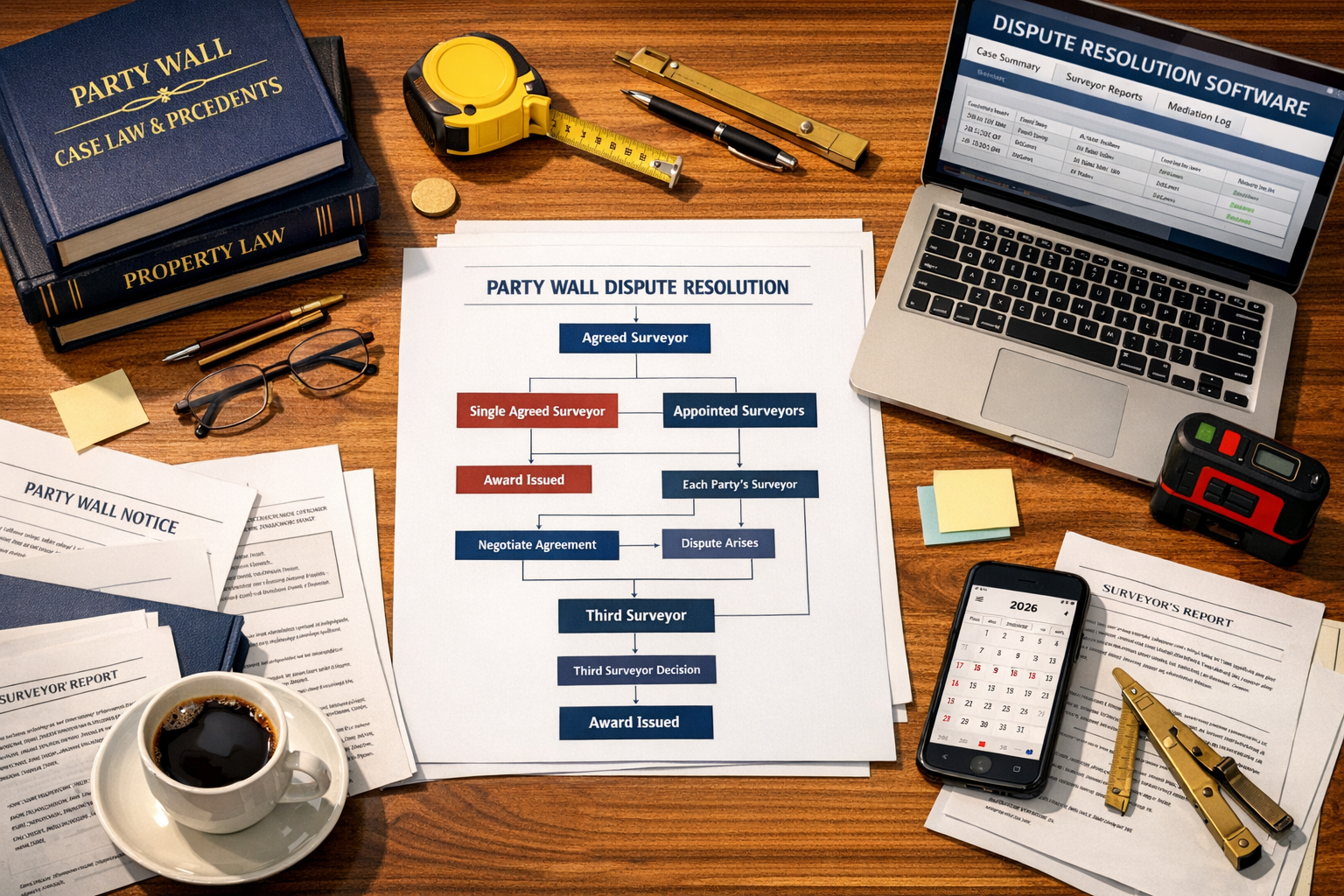
Third Surveyor Mechanism
Understand when to invoke the third surveyor process. If appointed surveyors cannot reach agreement due to legitimate differences in interpretation, the third surveyor mechanism provides resolution without compromising individual surveyors' independence.
Peer Consultation
Maintain relationships with experienced colleagues for confidential consultation on challenging ethical situations. Professional isolation increases vulnerability to pressure.
Case Law Developments Affecting Impartiality Standards
Recent court decisions have clarified and strengthened impartiality expectations:
Reeves v. Young (2023) established that surveyors owe a duty of care to both parties even when appointed by only one, particularly regarding the accuracy of schedules of condition. The judgment emphasized that statutory duties override contractual relationships with appointing parties.
Sharma v. Patel (2024) addressed agreed surveyor conflicts, holding that once a surveyor accepts a joint appointment, they cannot subsequently favor one party's interests without breaching statutory duties. The case resulted in the award being set aside and the surveyor facing RICS disciplinary proceedings.
Metropolitan Developments Ltd v. Foster (2025) clarified that repeat appointments by the same client do not automatically create conflicts, but surveyors must demonstrate through documentation that each appointment was assessed independently and that no preferential treatment occurred.
These cases have practical implications for how surveyors approach Party Wall Surveyor Impartiality and RICS Standards: Managing Conflicts in 2026's Busy Renovation Market, particularly regarding documentation requirements and the need for explicit conflict assessments.
Technology Solutions for Conflict Management
Modern practice management software now includes features specifically designed to support impartiality:
- Automated conflict checking that searches appointment databases and flags potential issues
- Communication tracking that ensures both parties receive identical information
- Time recording that demonstrates equal attention to both parties' concerns
- Document management with audit trails showing when information was shared with each party
While technology cannot replace professional judgment, these tools provide systematic support for maintaining impartiality standards in high-volume practices.
Training and Continuing Professional Development
RICS now requires party wall surveyors to complete specific CPD on ethics and conflict management. Recommended training includes:
- Annual updates on relevant case law and regulatory developments
- Scenario-based workshops on handling pressure and difficult situations
- Peer review sessions examining actual cases (anonymized) where conflicts arose
- Ethics seminars addressing gray areas in professional conduct
Firms should maintain CPD records demonstrating that all surveyors undertaking party wall work receive regular training on impartiality standards, as insurers increasingly review these records when assessing risk.
The Role of Third Surveyors in Resolving Impartiality Concerns
When appointed surveyors disagree, the Party Wall Act provides for a third surveyor to resolve the dispute. This mechanism serves as an important safeguard for impartiality, as it prevents deadlock while maintaining the integrity of the process.
When Third Surveyor Appointment Becomes Necessary
Third surveyors typically become involved when:
- Appointed surveyors cannot agree on a specific aspect of the award
- One surveyor believes the other has acted with bias
- Technical disputes arise that require independent expert determination
- Parties lose confidence in the agreed surveyor's neutrality
The third surveyor acts as a quasi-arbitrator, making binding decisions on disputed matters. Their appointment reinforces the system's commitment to fairness, as neither party's surveyor can impose their view unilaterally.
Selecting Third Surveyors with Enhanced Impartiality
Third surveyors must demonstrate even higher standards of independence than appointed surveyors. Selection criteria should include:
✓ No previous professional relationship with either appointed surveyor
✓ No geographic overlap with the properties involved
✓ Extensive experience in complex party wall matters
✓ Proven track record of neutral decision-making
✓ RICS fellowship or equivalent senior professional status
The third surveyor's role exemplifies the Act's commitment to impartiality, providing a final check against bias in the system.
Protecting Professional Standing While Managing Conflicts
A surveyor's reputation for impartiality is their most valuable professional asset. In 2026's interconnected market, where online reviews and professional networks rapidly disseminate information, maintaining this reputation requires proactive strategies.
Building a Reputation for Neutrality
Consistent Application of Standards 🎯
Apply the same rigorous standards to every appointment, regardless of client size, project value, or relationship history. Consistency demonstrates that principles, not personalities, drive decisions.
Transparent Fee Structures
Publish clear fee schedules that apply uniformly to all clients. Avoid negotiated fees that might create perception of favoritism toward higher-paying clients.
Educational Engagement
Contribute to professional publications, speak at industry events, and participate in RICS committees. Thought leadership on impartiality issues enhances credibility and demonstrates commitment to ethical practice.
Client Education
Proactively educate clients about impartiality obligations before conflicts arise. Understanding that surveyors cannot act as pure advocates prevents unrealistic expectations and subsequent disappointment.
Responding to Allegations of Bias
Despite best efforts, surveyors may face allegations of bias. Response strategies include:
- Immediate Documentation Review – Gather all records related to the appointment, focusing on conflict checks, communications, and decision rationale
- Legal Consultation – Engage solicitors experienced in professional negligence before responding substantively
- RICS Notification – Consider voluntary notification to RICS if the allegation is serious, demonstrating transparency
- Measured Response – Respond professionally without becoming defensive, focusing on documented facts
- Process Review – Use the allegation as an opportunity to review and strengthen conflict management procedures
Remember that allegations, even if ultimately unfounded, can damage reputations. Prevention through robust impartiality protocols remains far preferable to defense after allegations arise.
Insurance and Risk Management
Professional indemnity insurance provides financial protection, but surveyors should also consider:
- Regulatory defense coverage for RICS disciplinary proceedings
- Reputation management services included in some enhanced policies
- Legal expense insurance for defending allegations
- Cyber insurance covering data breaches that might expose confidential communications
Risk management extends beyond insurance to include regular practice audits, peer reviews, and compliance monitoring. Forward-thinking firms conduct annual impartiality audits, reviewing a sample of completed appointments to identify any patterns suggesting bias or inadequate conflict management.
Future Trends: Impartiality in an Evolving Market
Looking ahead, several trends will shape how Party Wall Surveyor Impartiality and RICS Standards: Managing Conflicts in 2026's Busy Renovation Market evolves:
Regulatory Scrutiny Intensification
RICS has signaled increased focus on ethics and conduct, with party wall work identified as a priority area for monitoring. Expect:
- More frequent practice audits focusing on conflict management
- Enhanced reporting requirements for complaints and allegations
- Stricter sanctions for impartiality breaches
- Mandatory ethics training as a condition of continued authorization
Technology-Driven Transparency
Blockchain and distributed ledger technologies may soon enable:
- Immutable records of communications with all parties
- Transparent fee arrangements visible to all stakeholders
- Automated conflict checking across industry databases
- Real-time award development with simultaneous party access
These technologies could fundamentally change how impartiality is demonstrated and verified.
Alternative Dispute Resolution Integration
The party wall process may increasingly integrate with formal ADR mechanisms:
- Mediation services for disputes before third surveyor involvement
- Online dispute resolution platforms for straightforward disagreements
- Hybrid models combining surveyor expertise with mediator neutrality
Understanding what surveyors do in this evolving landscape will require adapting to new processes while maintaining core impartiality principles.
Market Consolidation Effects
As surveying practices consolidate, managing conflicts becomes more complex:
- Larger firms have more extensive client relationships to check
- National practices may face conflicts across multiple offices
- Corporate ownership structures may create hidden conflicts
- Brand reputation risks increase with scale
These dynamics require sophisticated conflict management systems that can operate across complex organizational structures.
Conclusion
Party Wall Surveyor Impartiality and RICS Standards: Managing Conflicts in 2026's Busy Renovation Market represents one of the most critical challenges facing surveying professionals today. As renovation activity continues at record levels, the pressure on surveyors to balance competing interests while maintaining strict neutrality has intensified dramatically.
The key principles remain constant: transparency, documentation, consistent application of standards, and unwavering commitment to statutory duties over commercial considerations. Surveyors who build practices on these foundations will not only comply with RICS requirements but will also develop reputations that become competitive advantages in a crowded market.
Actionable Next Steps for Surveyors 🎯
- Conduct an immediate audit of your conflict management procedures, comparing them against current RICS guidance and recent case law
- Update appointment documentation to explicitly address impartiality obligations and conflict management protocols
- Implement systematic conflict checking using database tools that flag potential issues before appointments are accepted
- Schedule regular CPD focusing specifically on ethics, impartiality, and conflict management
- Review insurance coverage to ensure adequate protection for impartiality-related claims
- Establish peer consultation relationships for confidential advice on challenging ethical situations
- Document everything – maintain comprehensive records demonstrating neutral decision-making processes
For Property Owners and Developers
When selecting party wall surveyors, prioritize professionals who:
- Demonstrate clear understanding of impartiality obligations
- Provide transparent fee structures and conflict disclosure
- Maintain RICS accreditation with current CPD records
- Show willingness to explain their conflict management procedures
- Have professional indemnity insurance with adequate coverage
The right surveyor will view impartiality not as a constraint but as the foundation of professional service, ensuring that awards withstand scrutiny and projects proceed smoothly.
The renovation market's vitality depends on effective party wall processes. By prioritizing impartiality and adhering to rigorous RICS standards, surveyors protect not only their professional standing but also the broader property market's integrity. In 2026's competitive environment, ethical excellence has become the ultimate differentiator for surveying practices committed to long-term success.
For comprehensive guidance on party wall matters and professional surveying services that prioritize impartiality and RICS compliance, explore our resources on building surveyor services and surveyor responsibilities.