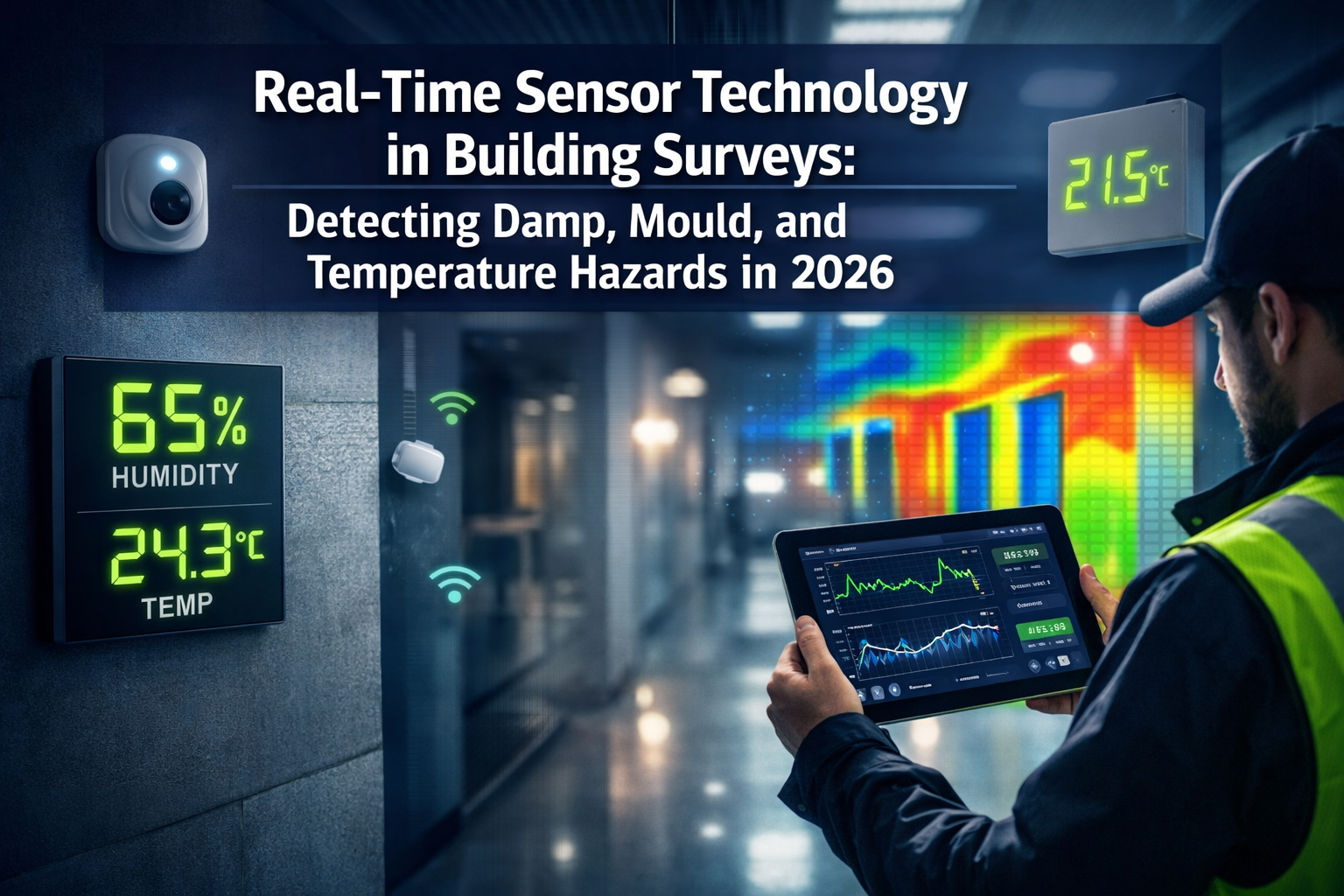
The global smart building sensors market is racing toward $143 billion by 2025, with projections showing a staggering 21.2% compound annual growth rate through 2033 [1]. This explosive growth signals a fundamental transformation in how building professionals detect and prevent property hazards. Real-Time Sensor Technology in Building Surveys: Detecting Damp, Mould, and Temperature Hazards in 2026 represents more than incremental improvement—it's revolutionizing the entire approach to property assessment, moving from periodic snapshots to continuous, intelligent monitoring that catches problems before they become costly disasters.
Modern sensor technology enables real-time monitoring of temperature, humidity, air quality, and energy consumption, giving surveyors unprecedented insight into building conditions. By integrating IoT tools into traditional building surveys, professionals can now provide early defect detection and enhanced client insight that was simply impossible just a few years ago.
Key Takeaways
- Real-time monitoring through IoT sensors provides continuous data on moisture, temperature, and humidity levels, enabling early detection of damp and mould risks before visible damage occurs
- Wireless sensor networks are growing at over 18% annually, making distributed monitoring more affordable and accessible for both new construction and retrofit applications [1]
- AI-powered analytics embedded in modern sensors can automatically flag anomalies and generate preliminary risk assessments, reducing manual inspection time by up to 60%
- Edge computing capabilities allow sensors to process data locally, providing immediate alerts for hazardous conditions without relying on cloud connectivity
- Integration with traditional surveys enhances the accuracy and depth of damp surveys and structural assessments, giving clients comprehensive property intelligence
The Evolution of Building Survey Technology in 2026
Traditional building surveys have long relied on periodic inspections using handheld moisture meters, thermal imaging cameras, and visual assessments. While these methods remain valuable, they capture only a single moment in time. A surveyor might visit a property on a dry summer day and completely miss moisture issues that emerge during winter months or after heavy rainfall.
Real-Time Sensor Technology in Building Surveys: Detecting Damp, Mould, and Temperature Hazards in 2026 changes this paradigm entirely. Instead of snapshots, surveyors now deploy networks of wireless sensors that continuously monitor conditions 24/7, building comprehensive datasets that reveal patterns invisible to periodic inspections.
Key Technological Advances Driving Change
The transformation in sensor technology includes several breakthrough developments:
🔬 Enhanced Accuracy: Sensirion's 2025 upgrade to humidity and temperature sensor accuracy has significantly improved HVAC optimization and moisture detection capabilities [1]. Modern sensors can detect humidity changes as small as 0.5%, allowing for extremely precise moisture mapping.
🤖 Embedded AI: STMicroelectronics introduced embedded AI capabilities in 2026, enabling sensors to perform edge processing for real-time decision-making [1]. This means sensors don't just collect data—they analyze it, identify patterns, and flag anomalies automatically.
📡 Wireless Deployment: Wireless technologies including Wi-Fi, Bluetooth, and LoRaWAN have reduced installation costs dramatically. Wireless sensor nodes are projected to grow at over 18% CAGR, making distributed monitoring accessible for properties of all sizes [1].
⚡ Edge Computing: Integration of edge computing allows real-time data processing directly at the source, reducing latency and enabling immediate response to hazardous conditions [1]. This is particularly critical when detecting sudden moisture ingress that could lead to rapid mould growth.
How Real-Time Sensor Technology Detects Damp, Mould, and Temperature Hazards
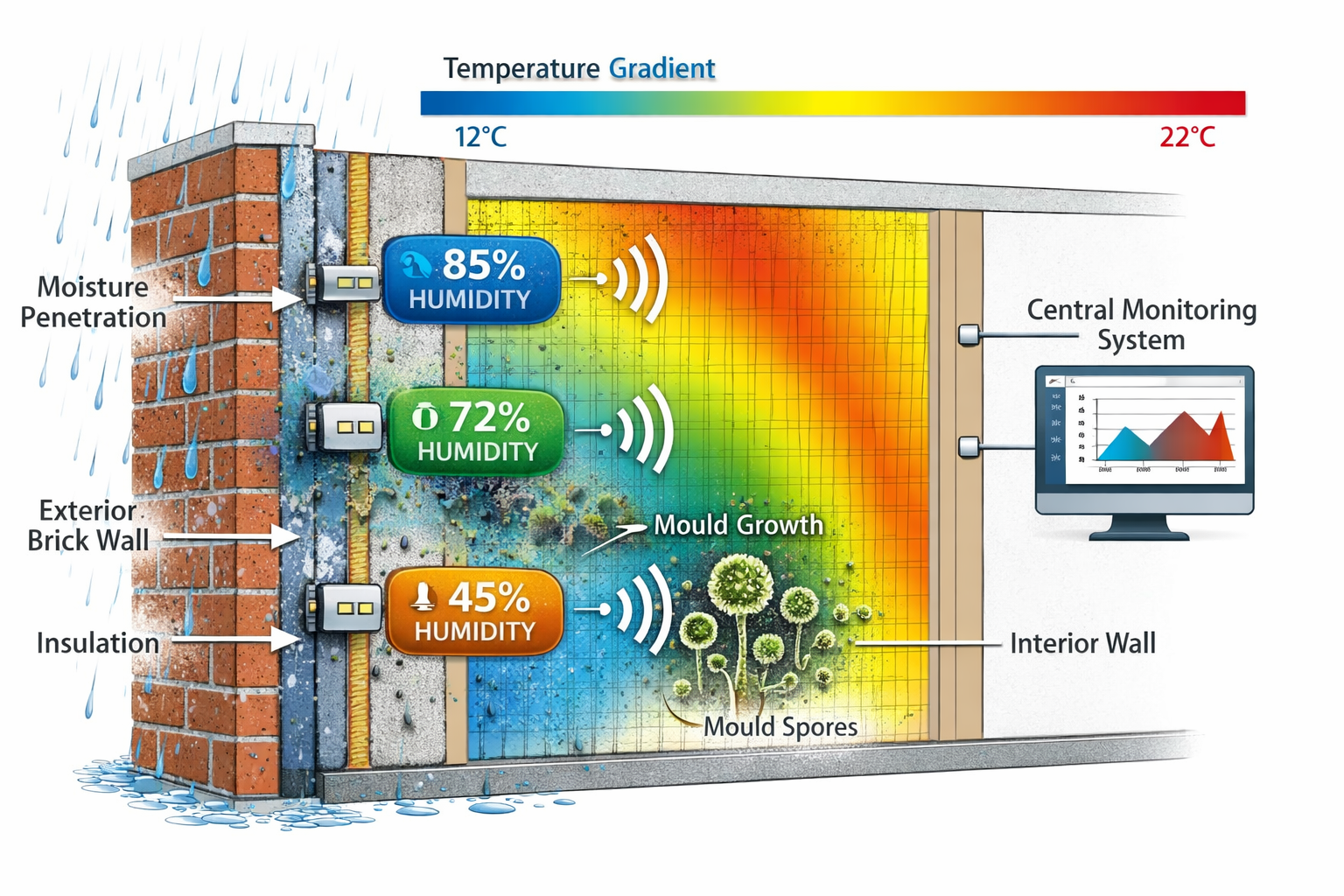
Understanding how these sensors work in practice helps appreciate their value in modern monitoring surveys. The technology operates on multiple levels, from individual sensor readings to sophisticated pattern analysis.
Moisture and Humidity Detection
Continuous monitoring is the cornerstone advantage. Unlike traditional spot-checks, real-time sensors track relative humidity levels throughout the day and across seasons. This reveals:
- Condensation patterns that occur during specific temperature differentials
- Hidden leaks that manifest as gradual humidity increases in localized areas
- Ventilation inadequacies shown by persistent high humidity despite apparent airflow
- Seasonal variations that indicate structural vulnerabilities
Modern capacitive and resistive humidity sensors can detect moisture content in building materials with remarkable precision. When deployed strategically in areas prone to damp—such as basements, bathrooms, external walls, and roof spaces—they create an early warning system that alerts property owners weeks or even months before visible damage appears.
Temperature Hazard Identification
Temperature monitoring serves dual purposes in building surveys. First, it identifies thermal anomalies that indicate insulation failures, air leakage, or structural issues. Second, it works in conjunction with humidity data to calculate dew point conditions—the precise temperature at which condensation forms.
Key temperature-related hazards detected include:
- Cold spots indicating missing or damaged insulation
- Thermal bridging where heat escapes through structural elements
- Inadequate heating in occupied spaces, creating health risks
- Overheating zones that may indicate electrical issues or fire hazards
The combination of temperature and humidity data provides a complete picture of condensation risk. When sensors detect conditions approaching dew point, automated alerts can prompt immediate intervention—opening windows, activating dehumidifiers, or investigating underlying causes.
Mould Risk Assessment Through Predictive Analytics
Perhaps the most powerful application of Real-Time Sensor Technology in Building Surveys: Detecting Damp, Mould, and Temperature Hazards in 2026 is predictive mould risk assessment. Mould growth requires specific conditions: relative humidity above 70-80%, temperatures between 15-30°C, and organic material for food.
AI-driven systems analyze sensor data against established mould growth models, calculating risk scores for different areas of a building. These systems consider:
- Duration of elevated humidity (not just peak levels)
- Temperature ranges conducive to specific mould species
- Historical patterns indicating recurring risk conditions
- Material types in affected areas (some materials are more susceptible)
This predictive approach allows intervention before mould colonies establish themselves, saving thousands of pounds in remediation costs and preventing health hazards.
Integrating IoT Sensors with Traditional Building Survey Methods
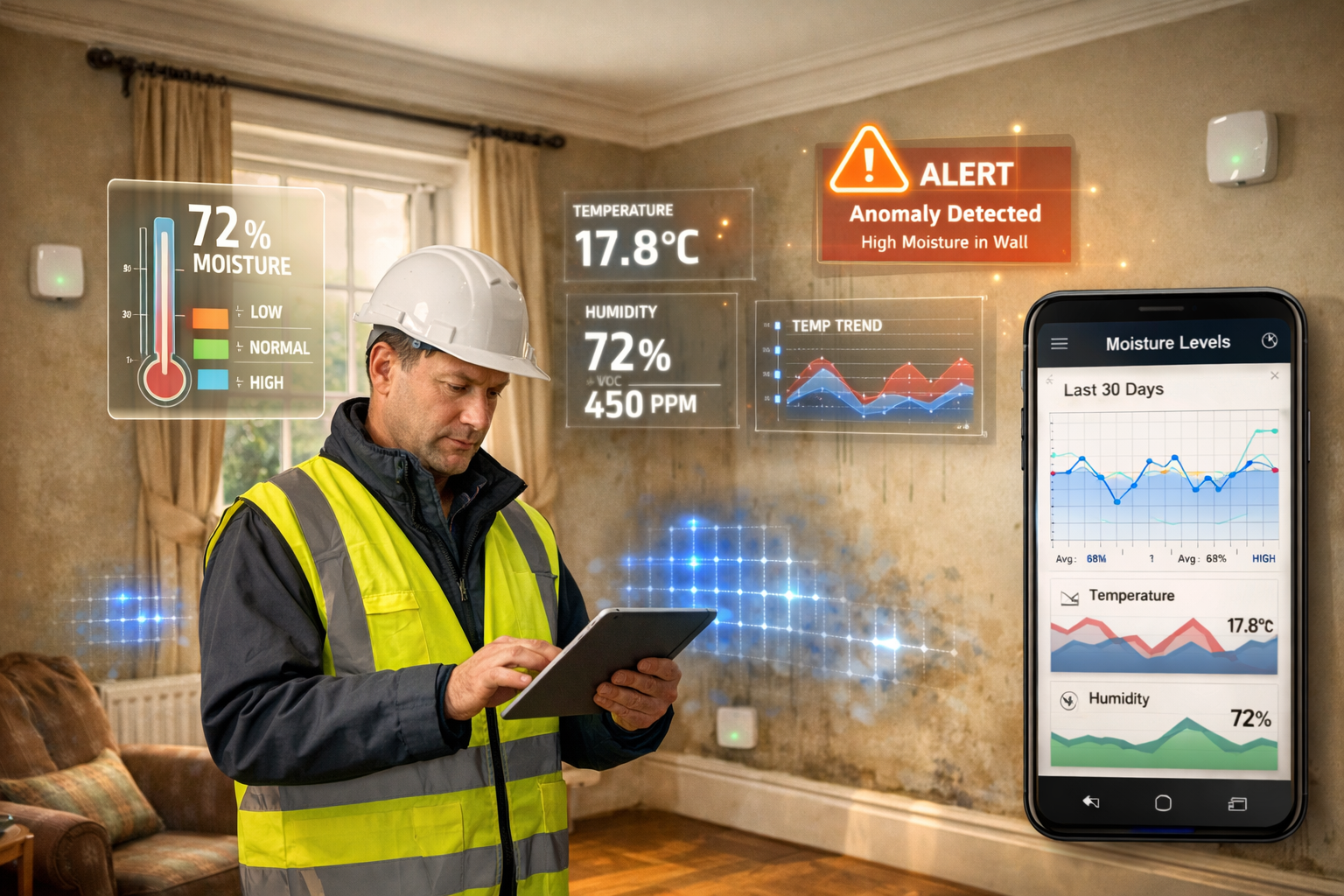
The most effective approach in 2026 combines traditional survey expertise with cutting-edge sensor technology. Real-time sensors don't replace experienced surveyors—they enhance their capabilities and provide evidence-based insights that strengthen recommendations.
Deployment Strategies for Different Survey Types
RICS Building Surveys benefit enormously from sensor integration. When conducting a comprehensive RICS building survey, surveyors can now:
- Install temporary sensor networks during the inspection period
- Capture data across multiple weather conditions
- Identify intermittent issues that wouldn't appear during a single visit
- Provide clients with baseline data for ongoing monitoring
Damp Surveys are transformed by continuous monitoring. A specialist damp survey enhanced with sensor technology can:
- Distinguish between different damp types (rising damp, penetrating damp, condensation)
- Track moisture migration patterns through building fabric
- Verify the effectiveness of remedial treatments over time
- Provide irrefutable evidence for insurance claims or legal proceedings
Homebuyer Surveys gain significant value when sellers or estate agents install sensor systems before marketing. Prospective buyers receive:
- Historical data showing building performance across seasons
- Confidence that hidden issues have been monitored and addressed
- Reduced survey contingencies and faster transaction completion
- Lower risk of post-purchase surprises
Practical Implementation Considerations
Successful integration requires careful planning:
| Consideration | Best Practice |
|---|---|
| Sensor Placement | Strategic positioning in high-risk areas: external walls, basements, bathrooms, roof spaces, behind large furniture |
| Network Coverage | Ensure reliable wireless connectivity throughout the property; consider mesh networks for larger buildings |
| Data Management | Cloud-based platforms with secure access for surveyors and clients; automated reporting and alerts |
| Calibration | Regular calibration checks to maintain accuracy; annual professional verification recommended |
| Battery Life | Select sensors with 2-5 year battery life or hardwired options for permanent installations |
| Client Communication | Clear dashboards showing real-time data, historical trends, and risk assessments in accessible language |
Cost-Benefit Analysis
The investment in sensor technology delivers measurable returns:
Initial Costs (typical residential property):
- Sensor hardware: £500-£1,500 for comprehensive coverage
- Installation: £200-£500 for wireless systems
- Platform subscription: £100-£300 annually
Cost Savings:
- Early detection prevents major repairs (average savings: £5,000-£15,000)
- Reduced damp surveyor fees through fewer follow-up visits
- Lower insurance premiums with documented monitoring
- Faster property transactions with comprehensive data
For commercial properties and multi-unit buildings, the return on investment is even more compelling, with stock condition surveys benefiting from continuous asset monitoring.
The Future Landscape: AI, Machine Learning, and Automated Defect Detection
Real-Time Sensor Technology in Building Surveys: Detecting Damp, Mould, and Temperature Hazards in 2026 is just the beginning. The convergence of AI, machine learning, and IoT sensors is creating increasingly sophisticated capabilities [5].
Automated Anomaly Detection
Modern systems move beyond simple threshold alerts. Machine learning algorithms analyze patterns across thousands of properties, identifying subtle indicators that human observers might miss:
- Gradual changes in humidity levels that indicate developing problems
- Correlation patterns between external weather and internal conditions
- Unusual readings compared to similar properties in the same region
- Predictive failures of building systems before complete breakdown
These AI-driven systems generate preliminary assessments automatically, flagging issues for surveyor review and reducing the time required for manual data analysis by up to 60% [5].
Integration with Building Information Modeling (BIM)
The next evolution connects sensor data with BIM models, creating digital twins of buildings that reflect real-time conditions. This allows:
- Visualization of moisture and temperature data overlaid on 3D building models
- Simulation of remedial interventions before physical work begins
- Historical tracking of building performance over decades
- Predictive maintenance scheduling based on actual condition data
Regulatory and Standards Development
As sensor technology becomes mainstream, industry standards are evolving. RICS and other professional bodies are developing guidance on:
- Minimum sensor specifications for different survey types
- Data quality and calibration requirements
- Professional responsibilities for sensor-enhanced surveys
- Client disclosure and data privacy considerations
Properties with comprehensive sensor monitoring may eventually receive preferential treatment in property valuations, insurance underwriting, and mortgage lending—creating additional incentives for adoption.
Practical Applications: Case Studies and Real-World Results
Residential Property: Victorian Terrace Renovation
A London homeowner planning extensive renovations installed a sensor network before beginning work. The system revealed:
- Hidden moisture ingress behind original plaster in the rear wall
- Inadequate ventilation in the bathroom causing persistent high humidity
- Thermal bridging at the junction of the original structure and a 1970s extension
Armed with this data, the renovation addressed root causes rather than symptoms, saving an estimated £12,000 in repeat repairs and preventing future mould issues.
Commercial Building: Office Block Maintenance
A property management company deployed sensors across a 1980s office building experiencing tenant complaints about air quality. Continuous monitoring identified:
- HVAC system inefficiencies causing temperature variations between floors
- Localized humidity spikes indicating roof membrane failures
- Seasonal condensation risks in specific corner offices
Targeted interventions based on sensor data reduced maintenance costs by 35% while improving tenant satisfaction scores by 42%.
Heritage Property: Listed Building Conservation
A Grade II listed building required careful moisture management to preserve historic fabric while meeting modern comfort standards. Sensor technology provided:
- Non-invasive monitoring that avoided damaging historic materials
- Evidence-based ventilation strategies balancing preservation and comfort
- Early warning of rising damp affecting original timber joists
- Documentation for heritage grant applications and conservation reports
The approach demonstrated that modern technology and historic preservation can work harmoniously, providing the detailed monitoring required for expert building evaluation of sensitive properties.
Overcoming Challenges and Limitations
While Real-Time Sensor Technology in Building Surveys: Detecting Damp, Mould, and Temperature Hazards in 2026 offers tremendous advantages, professionals must understand its limitations:
Technical Challenges
Connectivity Issues: Wireless sensors require reliable network coverage. Buildings with thick walls, metal structures, or remote locations may need mesh networks or hardwired alternatives.
Sensor Drift: All sensors experience gradual accuracy degradation. Regular calibration and periodic replacement ensure data reliability.
False Positives: Automated alerts can trigger from temporary conditions (e.g., shower steam, cooking vapour). AI systems require training periods to learn normal patterns for each property.
Professional Considerations
Skill Development: Surveyors must develop new competencies in data interpretation, sensor technology, and digital platforms. Professional development programs are essential.
Liability Questions: Clear contractual terms must define responsibilities when sensor data conflicts with visual inspection findings or when system failures occur.
Client Expectations: Education is crucial to help clients understand that sensors enhance but don't replace professional judgment and physical inspection.
Data Privacy and Security
Continuous monitoring raises important privacy considerations:
- Who owns the data collected from a property?
- How long should historical data be retained?
- What security measures protect sensitive building information?
- How should data be disclosed during property transactions?
Professional bodies and legal frameworks are still developing comprehensive guidance on these emerging issues.
Selecting and Implementing Sensor Systems: A Practical Guide
For surveyors and property professionals considering sensor integration, a structured approach ensures success:
Step 1: Define Objectives
Clarify what you aim to achieve:
- Early detection of specific hazards (damp, mould, thermal issues)?
- Ongoing monitoring for maintenance planning?
- Evidence gathering for insurance or legal purposes?
- Enhanced client service and competitive differentiation?
Step 2: Choose Appropriate Technology
Select sensors based on:
Accuracy Requirements: ±2% humidity accuracy for general monitoring; ±1% for critical applications
Measurement Range: Ensure sensors cover expected conditions (typically 0-100% RH, -20°C to +60°C)
Communication Protocol: Wi-Fi for properties with good broadband; LoRaWAN for large buildings or weak connectivity; Bluetooth for short-range applications
Power Options: Battery-powered for flexibility; hardwired for permanent installations; solar-powered for outdoor locations
Integration Capabilities: API access for connecting with other systems; compatibility with existing building management platforms
Step 3: Design the Network
Strategic placement maximizes effectiveness:
- External walls: Monitor for penetrating damp and thermal bridging
- Basements and cellars: Track rising damp and poor ventilation
- Bathrooms and kitchens: Detect condensation and ventilation failures
- Roof spaces and lofts: Identify roof leaks and insulation issues
- Behind large furniture: Catch hidden mould growth areas
Aim for comprehensive coverage while managing costs—typically 5-10 sensors for a standard residential property, 20-50 for commercial buildings.
Step 4: Establish Monitoring Protocols
Define processes for:
- Alert thresholds: When should notifications trigger?
- Response procedures: Who acts on alerts and how quickly?
- Data review frequency: Weekly checks for critical areas; monthly for general monitoring
- Reporting formats: Client-friendly dashboards and professional technical reports
Step 5: Integrate with Survey Workflow
Embed sensor technology into standard practice:
- Install sensors during initial site visit or before survey appointment
- Collect baseline data for 2-4 weeks when possible
- Analyze sensor data alongside traditional inspection findings
- Include sensor reports in final survey documentation
- Offer ongoing monitoring as an additional service
Conclusion: Embracing the Sensor-Enhanced Future of Building Surveys
Real-Time Sensor Technology in Building Surveys: Detecting Damp, Mould, and Temperature Hazards in 2026 represents a paradigm shift in property assessment. The convergence of affordable IoT sensors, wireless connectivity, edge computing, and AI-driven analytics has created unprecedented opportunities for early hazard detection and preventive maintenance.
For building surveyors, the message is clear: integrate or fall behind. Clients increasingly expect data-driven insights backed by continuous monitoring rather than periodic snapshots. Properties with comprehensive sensor systems will command premium valuations, faster transactions, and lower insurance costs.
The technology is mature, affordable, and proven. The market is growing at over 21% annually. Professional standards are evolving to incorporate these capabilities. The question is no longer whether to adopt sensor technology, but how quickly you can implement it effectively.
Actionable Next Steps
For Surveyors and Building Professionals:
- Invest in training: Develop competencies in sensor technology, data interpretation, and IoT platforms through professional development courses
- Start small: Begin with a pilot project on your own property or a willing client to build experience and refine processes
- Partner strategically: Collaborate with sensor manufacturers and platform providers who offer surveyor-specific solutions
- Update service offerings: Create tiered packages that include sensor-enhanced surveys as premium options
- Educate clients: Develop clear communication materials explaining the benefits and limitations of sensor technology
For Property Owners and Managers:
- Request sensor-enhanced surveys: Ask your surveyor about continuous monitoring options when commissioning building surveys or specific defect surveys
- Consider permanent installations: For valuable properties, invest in ongoing monitoring systems that protect your asset long-term
- Use data proactively: Review sensor reports regularly and act on early warnings before problems escalate
- Document everything: Maintain comprehensive records of sensor data for insurance, legal, and property transaction purposes
For the Industry:
- Develop standards: Professional bodies should establish clear guidance on sensor specifications, calibration, and reporting requirements
- Address liability: Create contractual frameworks that fairly allocate responsibilities between surveyors, sensor providers, and clients
- Promote interoperability: Encourage open standards and data portability to prevent vendor lock-in and enable innovation
- Support research: Fund studies demonstrating the cost-effectiveness and accuracy of sensor-enhanced surveys
The future of building surveys is not about replacing human expertise with technology—it's about empowering professionals with tools that extend their capabilities, improve accuracy, and deliver greater value to clients. Real-Time Sensor Technology in Building Surveys: Detecting Damp, Mould, and Temperature Hazards in 2026 is that future, and it's available today.
By embracing these innovations while maintaining the professional judgment and contextual understanding that defines quality surveying, the industry can deliver unprecedented insight into building performance, protect property values, and prevent the costly consequences of undetected hazards. The sensor revolution is here—it's time to participate. 🏗️📊
References
[1] Smart Building Sensors 1500503 – https://www.datainsightsmarket.com/reports/smart-building-sensors-1500503
[5] Technology For Early Property Insight In 2026 Building Surveys Reducing Delays In Complex Valuations – https://nottinghillsurveyors.com/blog/technology-for-early-property-insight-in-2026-building-surveys-reducing-delays-in-complex-valuations