
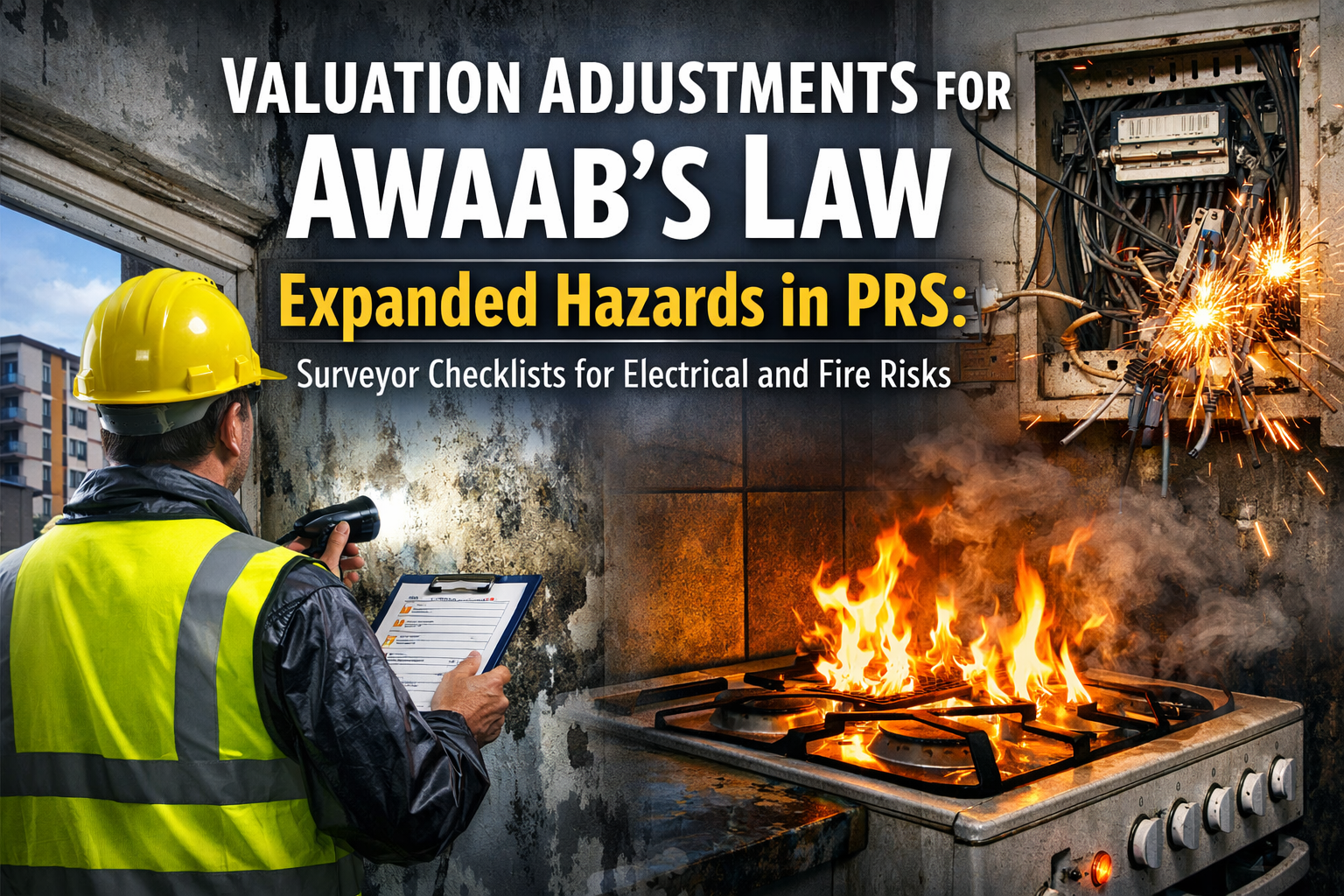
{"cover":"Professional landscape format (1536×1024) hero image with bold text overlay 'Valuation Adjustments for Awaab's Law Expanded Hazards in PRS: Surveyor Checklists for Electrical and Fire Risks' in extra large 70pt white sans-serif font with dark shadow and semi-transparent navy overlay box, positioned center-top. Background shows split composition: left side features surveyor in high-visibility vest inspecting electrical consumer unit with clipboard and thermal imaging camera, right side shows private rental property exterior with visible fire safety equipment. Color scheme: navy blue, safety orange, white accents. Magazine cover aesthetic, editorial quality, high contrast, professional lighting","content":["Landscape format (1536×1024) detailed surveyor inspection scene showing professional conducting electrical hazard assessment in private rental property. Close-up view of hands holding digital tablet displaying checklist app next to exposed consumer unit with color-coded wiring. Table overlay showing Awaab's Law Phase 2 hazard categories with repair timeframes (15 days highlighted). Include thermal imaging camera on tripod, testing equipment, and official documentation. Color scheme: professional blue, safety yellow, technical grey. Infographic style with annotation callouts, clean composition, educational focus","Landscape format (1536×1024) property valuation adjustment visualization showing before-and-after comparison. Split-screen composition: left shows property with identified electrical and fire hazards marked with red warning icons and percentage value reduction indicators (-8%, -12%, -15%). Right side displays same property post-remediation with green compliance checkmarks and restored valuation figures. Include calculator, property report documents, and HHSRS rating scale graphic. Financial charts showing market impact. Color scheme: red for hazards, green for compliance, professional navy. Data-driven aesthetic, clear visual hierarchy","Landscape format (1536×1024) comprehensive surveyor checklist infographic layout for Awaab's Law compliance. Bird's-eye view of organized workspace showing multiple inspection documents, checklists with checkboxes, electrical testing equipment (multimeter, socket tester), fire safety assessment tools, thermal imaging printouts, and tablet displaying digital reporting system. Include categorized hazard identification cards for electrical, fire, excess cold, and excess heat risks. Flowchart showing 15-day repair timeline. Color-coded priority system: red (immediate), amber (urgent), green (compliant). Professional, organized, systematic visual approach"]"}
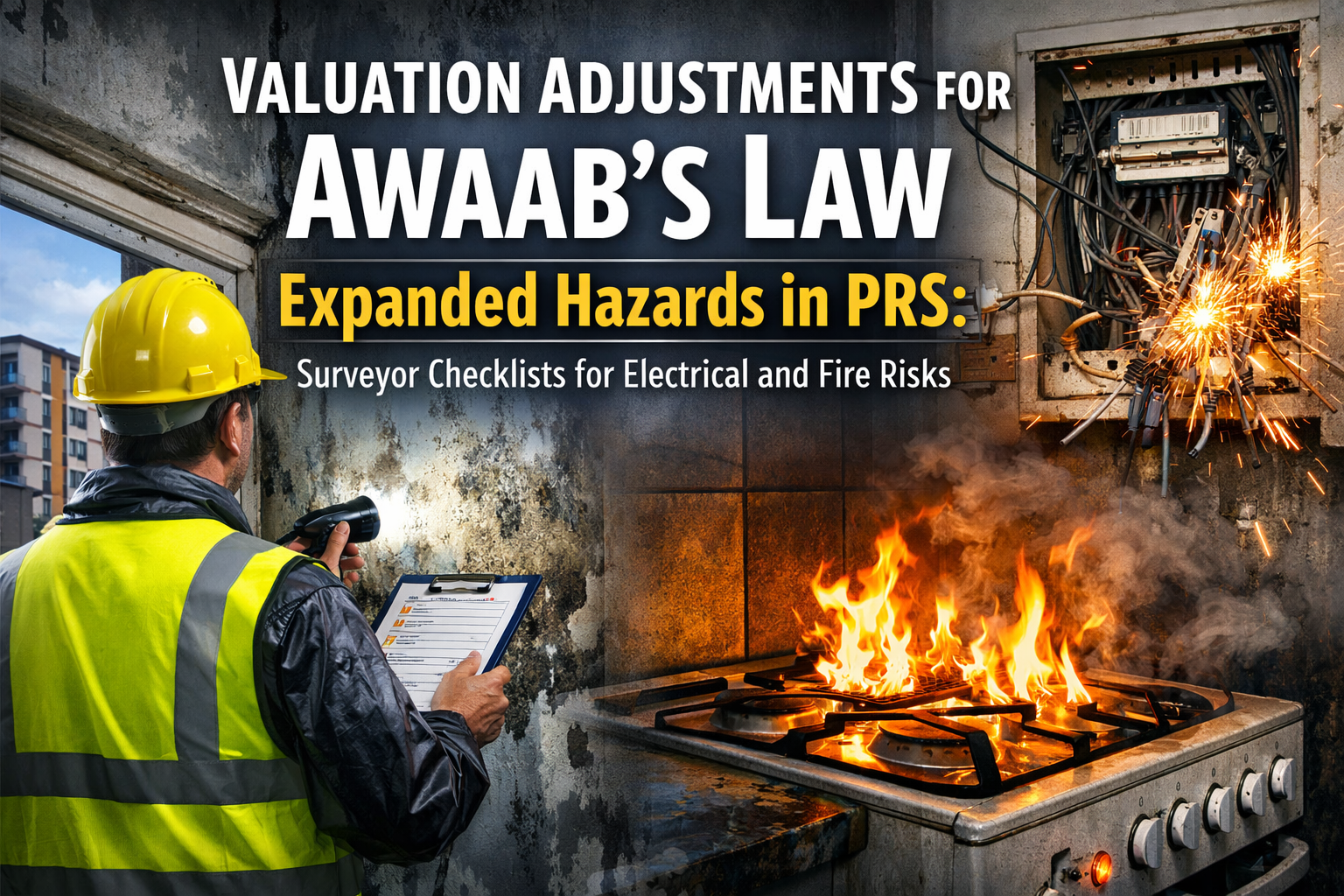
Social housing landlords face fines up to £7,000 per property for non-compliance with Awaab's Law Phase 2, which extends to electrical hazards, fire risks, excess cold, and excess heat from 2026. This legislative expansion fundamentally reshapes how surveyors assess private rental sector (PRS) properties and calculate Valuation Adjustments for Awaab's Law Expanded Hazards in PRS: Surveyor Checklists for Electrical and Fire Risks.
The tragic death of two-year-old Awaab Ishak from prolonged mould exposure in 2020 sparked legislative reform that initially focused on damp and mould hazards. Now, Phase 2 mandates that social landlords must investigate and remediate expanded hazards within 15 days of notification[6]. For surveyors, this creates immediate pressure to develop comprehensive assessment protocols that identify these risks accurately and support evidence-based valuation adjustments.
Key Takeaways
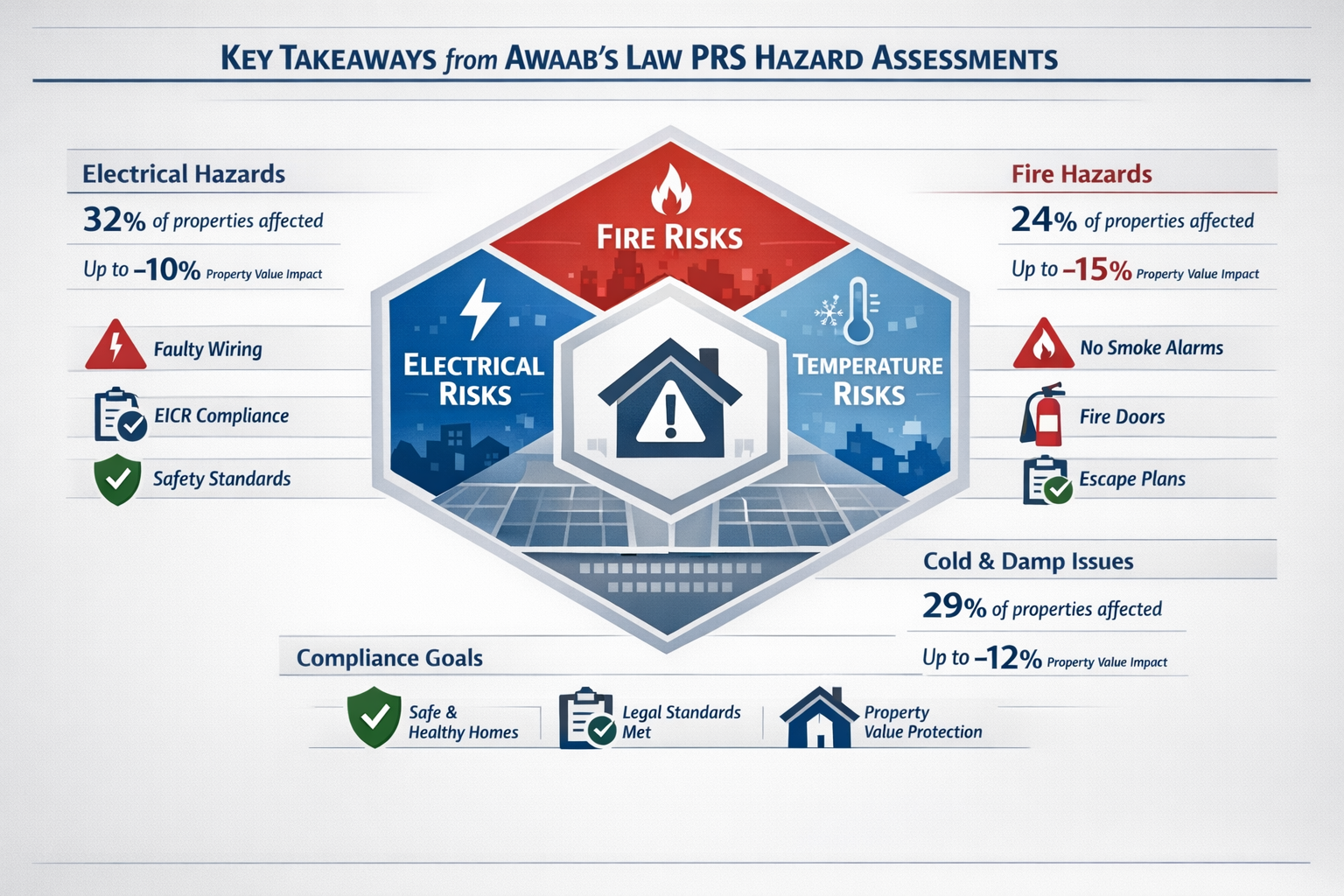
- 🔌 Awaab's Law Phase 2 (2026) expands mandatory hazard coverage to include electrical faults, fire risks, excess cold, and excess heat in social housing[3][5]
- ⏱️ 15-day repair deadline applies to all expanded hazards once reported, requiring rapid surveyor response and documentation[6]
- 📊 Valuation impacts range from 8-15% reductions for properties with identified electrical and fire hazards requiring immediate remediation
- ✅ Person-centred assessment replaces traditional HHSRS scoring alone, demanding surveyors consider vulnerable occupants' specific risks[3][5]
- 📋 Digital checklist systems are essential for managing increased workload and meeting strict reporting timeframes
Understanding Awaab's Law Phase 2 Expansion and PRS Implications
Legislative Framework and Timeline
Awaab's Law Phase 1 established strict timeframes for addressing damp and mould in social housing. Phase 2, effective 2026, extends these requirements to encompass electrical hazards, fire risks, excess cold, and excess heat[3][5][6]. While the legislation specifically targets social landlords, the ripple effects influence PRS valuations, insurance requirements, and buyer expectations across the rental market.
The government guidance clarifies that landlords must address hazards "where they present a significant risk of harm"[5]. This person-centred approach considers the vulnerability of actual or potential occupants rather than relying solely on Housing Health and Safety Rating System (HHSRS) scores[3]. For surveyors, this means assessments must evaluate both the physical condition and the occupancy context.
Expanded Hazard Categories Requiring Assessment
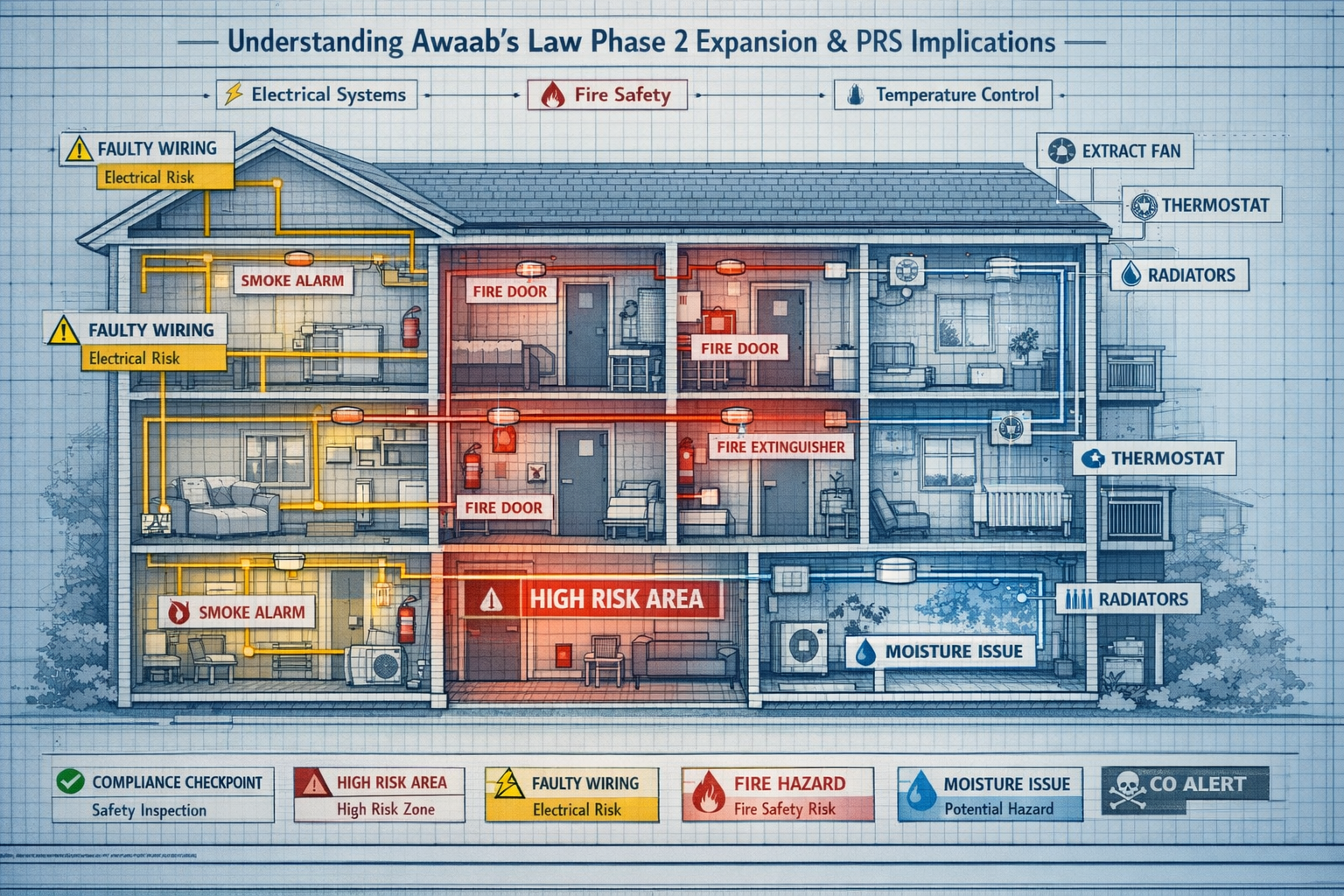
The Phase 2 expansion introduces four critical hazard categories that surveyors must now systematically evaluate:
Electrical Hazards:
- Outdated or damaged consumer units
- Inadequate earthing and bonding
- Overloaded circuits and improper wiring
- Non-compliant electrical installations
- Absence of RCD protection
Fire Risks:
- Inadequate means of escape
- Missing or non-functional smoke/heat detectors
- Combustible materials in escape routes
- Faulty fire doors and fire separation
- Electrical fire hazards from poor installations
Excess Cold:
- Insufficient heating systems
- Poor insulation and thermal efficiency
- Single-glazed windows in vulnerable occupancy
- Damp-related cold conditions
- Non-functional heating controls
Excess Heat:
- Inadequate ventilation systems
- Lack of window coverings or cooling measures
- Heat-retaining building materials
- Insufficient thermal protection in summer months
Understanding these categories is essential for conducting thorough building surveys that meet the new legislative standards.
Repair Timeframe Requirements
The 15-day repair deadline represents a significant operational challenge[6]. From the moment a tenant reports a qualifying hazard, social landlords must:
- Days 1-3: Investigate and assess the reported hazard
- Days 4-10: Develop remediation plan and procure materials/contractors
- Days 11-15: Complete repairs and document compliance
For surveyors, this compressed timeline demands rapid assessment capabilities and clear documentation protocols. Properties requiring extensive electrical rewiring or fire safety upgrades may not realistically meet the 15-day window, necessitating interim safety measures and transparent communication with landlords and tenants.
Valuation Adjustments for Awaab's Law Expanded Hazards in PRS: Impact Analysis
How Hazards Affect Property Valuations
Valuation Adjustments for Awaab's Law Expanded Hazards in PRS: Surveyor Checklists for Electrical and Fire Risks directly influence market values through multiple mechanisms:
| Hazard Type | Typical Valuation Impact | Remediation Cost Range | Market Perception |
|---|---|---|---|
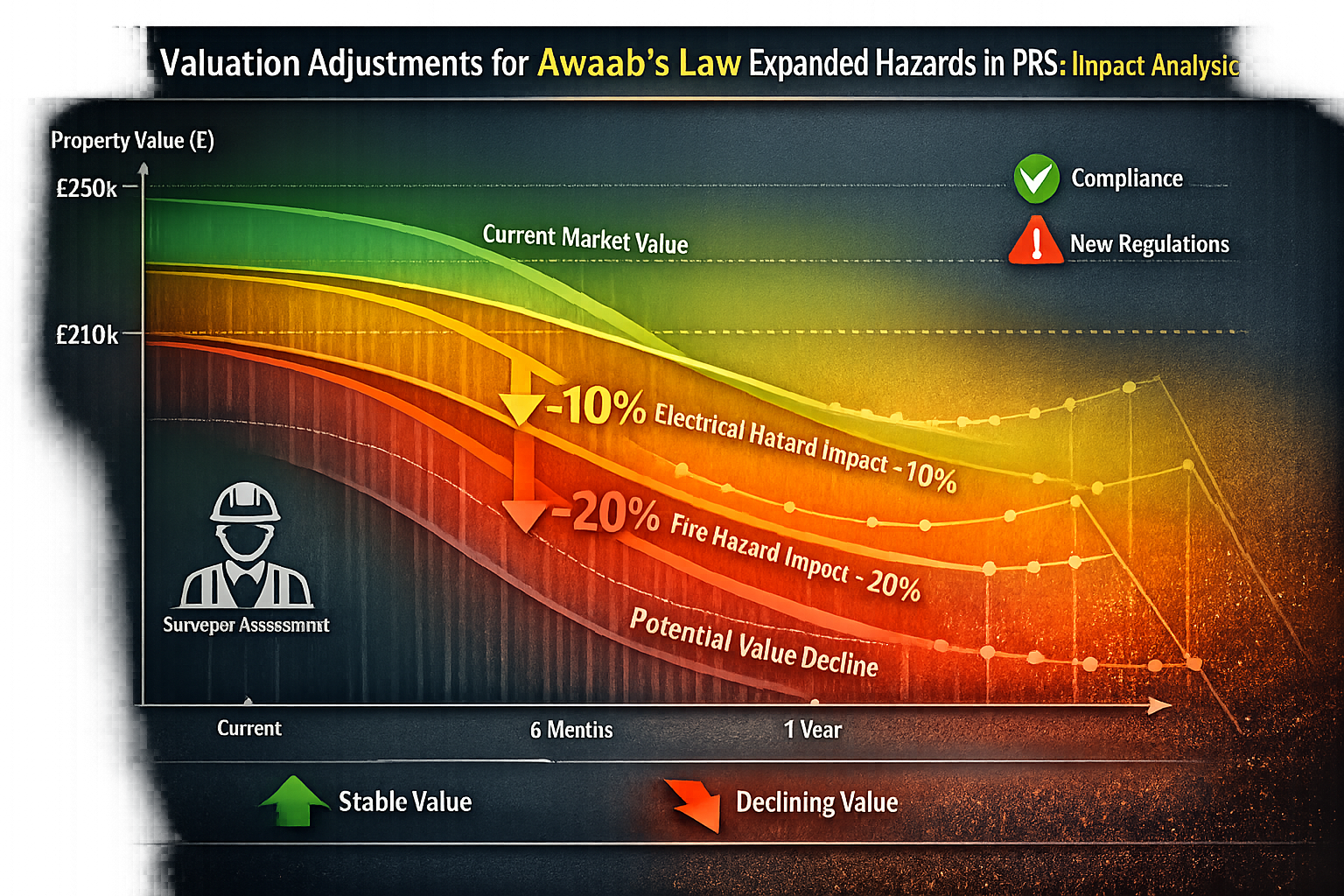
| Electrical (major) | -10% to -15% | £3,000-£8,000 | High concern – safety critical |
| Fire safety defects | -8% to -12% | £2,000-£6,000 | Severe – insurance implications |
| Excess cold | -5% to -10% | £4,000-£12,000 | Moderate – EPC linked |
| Excess heat | -3% to -7% | £1,500-£5,000 | Growing concern – climate change |
These adjustments reflect both the direct remediation costs and the market stigma associated with properties failing to meet modern safety standards. Buyers increasingly factor compliance risk into their offers, particularly for PRS investments where regulatory penalties apply.
Market Response to Compliance Requirements
The 2026 implementation of Phase 2 creates a two-tier PRS market:
Compliant Properties:
- Premium valuations (2-5% above market average)
- Faster sales and lettings
- Lower insurance premiums
- Reduced landlord liability exposure
Non-Compliant Properties:
- Discounted valuations requiring immediate adjustment
- Extended marketing periods
- Buyer negotiation leverage
- Potential delisting from rental platforms
Surveyors conducting RICS building surveys must quantify these compliance gaps with precision, providing landlords and buyers with actionable remediation cost estimates.
Insurance and Lending Implications
Mortgage lenders increasingly require evidence of Awaab's Law compliance before approving PRS finance. Properties with identified electrical or fire hazards may face:
- Higher interest rates (0.5-1.5% premium)
- Reduced loan-to-value ratios (maximum 65% vs standard 75%)
- Mandatory retention amounts until remediation completion
- Insurance policy exclusions for hazard-related claims
These financial constraints compound the direct valuation impact, making comprehensive surveyor assessments essential for accurate property valuations and negotiations.
Surveyor Checklists for Electrical Hazard Assessment
Pre-Inspection Preparation
Before conducting on-site assessments, surveyors should:
✅ Review property documentation:
- Previous electrical installation certificates (EICR)
- Building control completion certificates
- Historical survey reports
- Tenant complaint records
✅ Prepare equipment:
- Socket testers and voltage detectors
- Thermal imaging cameras
- Digital photography equipment
- Tablet or smartphone with checklist app
✅ Understand occupancy context:
- Number and vulnerability of occupants
- Presence of children, elderly, or disabled residents
- Usage patterns and electrical load requirements
Comprehensive Electrical Safety Checklist
Consumer Unit Assessment:
- Age and type of consumer unit (pre-1990s units require immediate flagging)
- Presence of RCD protection on all circuits
- Adequate circuit labeling and documentation
- Signs of overheating, burning, or arcing
- Appropriate IP rating for location
- Accessible for emergency isolation
Wiring and Installation Quality:
- Visible wiring condition (perished, damaged, or exposed)
- Appropriate cable types for applications
- Secure cable routing and protection
- Proper junction box accessibility
- Earth bonding to gas, water, and heating systems
- Absence of DIY modifications or extensions
Socket and Switching Assessment:
- Socket quantity adequate for occupancy needs
- No evidence of overloading or adapter proliferation
- Secure mounting and proper faceplates
- Correct polarity and earth connection (test each accessible socket)
- Absence of heat damage or discoloration
- Appropriate IP rating for bathroom/kitchen locations
Fixed Appliance Connections:
- Cooker circuits appropriately rated
- Immersion heater controls functional
- Extractor fan isolation switches present
- Shower circuits with RCD protection
- Central heating controls properly wired
Testing Protocols and Documentation
Surveyors must document findings with:
📸 Photographic evidence of all defects
📋 Detailed written descriptions using standardized terminology
📊 Risk ratings aligned with person-centred assessment principles
🔢 Remediation cost estimates from qualified electricians
⏰ Urgency classifications (immediate, 15-day, routine)
For properties requiring extensive electrical work, surveyors should recommend full EICR (Electrical Installation Condition Report) by qualified electricians, noting that this may reveal additional hidden defects affecting valuation.
Surveyor Checklists for Fire Risk Assessment
Fire Safety Regulatory Context
Fire risk assessment in PRS properties must comply with:
- Regulatory Reform (Fire Safety) Order 2005
- Building Regulations Approved Document B
- Awaab's Law Phase 2 requirements (2026 onwards)[5][6]
- Local authority licensing conditions
Surveyors conducting structural surveys must identify fire risks that compromise occupant safety and property value.
Fire Detection and Alarm Systems Checklist
Smoke and Heat Detector Assessment:
- Smoke alarms on every floor
- Alarms within 7 meters of bedroom doors
- Heat detectors in kitchens (not smoke alarms)
- Interconnected alarm systems (mains-powered preferred)
- Functional testing completed (date recorded)
- Battery backup operational
- Appropriate alarm age (replace after 10 years)
- Audibility throughout property
Carbon Monoxide Detection:
- CO alarms in rooms with fuel-burning appliances
- Appropriate positioning (wall-mounted, correct height)
- Functional and within manufacturer's lifespan
Means of Escape Evaluation
Escape Route Assessment:
- Clear, unobstructed escape routes from all habitable rooms
- Adequate escape route width (minimum 750mm)
- Absence of combustible storage in escape routes
- Functional locks allowing escape without keys
- Emergency lighting where required (HMOs, communal areas)
- Alternative escape routes where single route inadequate
Fire Door Compliance:
- Self-closing mechanisms functional on required doors
- Intumescent strips and smoke seals present
- Fire door certification labels visible
- No damage compromising fire resistance
- Appropriate gaps around door edges
- No unauthorized modifications or glazing
Electrical Fire Risk Identification
Electrical faults represent a leading cause of residential fires. Surveyors must specifically assess:
- Overloaded sockets and extension leads
- Heat generation from electrical equipment
- Proximity of combustibles to electrical installations
- Portable heater usage and safety
- Damaged appliance cables
- Accumulation of dust on electrical equipment
Fire Separation and Compartmentation
Structural Fire Protection:
- Intact fire separation between units (flats, HMOs)
- No breaches in fire-rated walls or floors
- Proper fire-stopping around penetrations (pipes, cables)
- Fire-rated ceiling integrity maintained
- Cavity barriers present where required
- Loft space compartmentation in converted properties
Properties with compromised fire separation require immediate flagging and significant valuation adjustments, often 10-15% below market value until remediation.
Surveyor Checklists for Temperature Hazard Assessment
Excess Cold Evaluation
Heating System Assessment:
- Central heating present and operational
- Adequate radiator coverage for room sizes
- Functioning thermostatic controls
- Boiler age and efficiency rating
- Annual service records available
- Heating system capacity appropriate for property size
Thermal Efficiency Indicators:
- Double glazing throughout (or secondary glazing)
- Loft insulation depth (minimum 270mm recommended)
- Cavity wall insulation present
- Draught-proofing on external doors and windows
- EPC rating C or above (target for PRS by 2025)
- Absence of cold bridging or thermal bypasses
Damp-Related Cold Hazards:
Properties with penetrating or rising damp experience significantly reduced thermal performance. Surveyors should cross-reference damp survey findings with thermal assessments, as damp walls lose insulating properties and create cold, unhealthy environments[3].
- No visible damp patches or moisture staining
- Absence of mould growth indicating condensation
- Functional ventilation preventing condensation damp
- Effective damp-proof course and membranes
Excess Heat Assessment
Climate change makes overheating an increasing concern, particularly in:
- Top-floor flats with inadequate insulation
- South-facing properties with excessive glazing
- Converted loft spaces with limited ventilation
- Properties with dark external finishes retaining heat
Cooling and Ventilation Checklist:
- Openable windows on all habitable rooms
- Cross-ventilation opportunities
- Window coverings (blinds, shutters) present
- Mechanical ventilation where natural ventilation inadequate
- Loft ventilation preventing heat accumulation
- External shading (trees, awnings) where appropriate
- Reflective roofing materials on flat roofs
Vulnerable Occupant Considerations:
The person-centred approach requires surveyors to consider:
- Elderly occupants with reduced thermoregulation
- Young children susceptible to heat stress
- Occupants with medical conditions affected by temperature
- Night-time bedroom temperatures exceeding safe thresholds
Properties failing to provide adequate temperature control for vulnerable occupants warrant valuation adjustments of 5-10%, depending on remediation complexity.
Implementing Digital Checklist Systems for Compliance
Technology Solutions for Surveyor Efficiency
The expanded scope of Awaab's Law Phase 2 significantly increases surveyor workload[3]. Digital checklist systems offer:
✨ Standardized assessment protocols ensuring consistency
✨ Real-time data capture with photographic evidence
✨ Automated report generation meeting 15-day timeframes
✨ Cloud-based collaboration with landlords and contractors
✨ Compliance tracking across property portfolios
Recommended features for surveyor apps:
- Offline functionality for properties with poor connectivity
- Integration with thermal imaging and testing equipment
- Customizable checklists for different property types
- Risk scoring algorithms aligned with person-centred assessment
- Automatic valuation adjustment calculations
Triage Systems for Managing Increased Demand
Surveyors should implement triage protocols prioritizing:
Priority 1 (Immediate – 24-48 hours):
- Imminent electrical fire risks
- Compromised means of escape
- Severe heating system failures in winter
- Dangerous appliance installations
Priority 2 (Urgent – 5-10 days):
- Non-compliant consumer units requiring upgrade
- Missing or non-functional smoke alarms
- Inadequate fire doors in HMOs
- Significant thermal efficiency deficiencies
Priority 3 (Routine – 15+ days):
- Minor electrical non-compliances
- Cosmetic fire door issues
- Incremental insulation improvements
- Ventilation enhancements
This systematic approach ensures surveyors meet critical safety deadlines while managing workflow efficiently.
Valuation Report Documentation Standards
Essential Report Components
Valuation Adjustments for Awaab's Law Expanded Hazards in PRS: Surveyor Checklists for Electrical and Fire Risks require comprehensive documentation including:
Executive Summary:
- Property address and inspection date
- Overall compliance status (compliant/non-compliant)
- Critical hazards identified
- Total valuation adjustment recommended
- Estimated remediation costs
Detailed Hazard Schedule:
| Hazard Category | Location | Severity | Risk Rating | Remediation Cost | Valuation Impact |
|---|---|---|---|---|---|
| Electrical | Kitchen consumer unit | High | Immediate | £4,500 | -£18,000 (-10%) |
| Fire | Bedroom 2 door | Medium | 15-day | £800 | -£3,200 (-1.8%) |
| Excess Cold | Living room | Low | Routine | £1,200 | -£2,400 (-1.3%) |
Photographic Evidence:
- Minimum 3 images per identified hazard
- Clear, well-lit photographs with annotations
- Context shots showing hazard location
- Close-ups of specific defects
Remediation Recommendations:
- Detailed scope of works required
- Specification of materials and standards
- Recommended contractor qualifications
- Estimated timeframes for completion
- Interim safety measures if applicable
Person-Centred Assessment Documentation
Awaab's Law requires consideration of occupant vulnerability[3][5]. Surveyors must document:
Occupancy Profile:
- Number of occupants and age ranges
- Presence of vulnerable individuals (elderly, children, disabled)
- Specific health conditions affected by identified hazards
- Occupancy patterns (shift workers, home-based employment)
Risk Contextualization:
- How identified hazards specifically affect these occupants
- Enhanced risk factors beyond standard HHSRS scoring
- Urgency justification based on occupant vulnerability
- Recommended monitoring or interim protection measures
This person-centred documentation supports landlords in prioritizing remediation and justifies valuation adjustments to buyers and lenders.
Professional Development and Training Requirements
Surveyor Competency Standards
To effectively conduct Valuation Adjustments for Awaab's Law Expanded Hazards in PRS: Surveyor Checklists for Electrical and Fire Risks, surveyors should pursue:
Core Competencies:
- HHSRS assessment methodology
- Electrical installation fundamentals (Level 3 Award in Inspection and Testing desirable)
- Fire risk assessment principles
- Building physics and thermal performance
- Person-centred risk evaluation
Continuing Professional Development:
- Annual updates on Awaab's Law implementation
- Electrical safety regulation changes
- Fire safety legislation updates
- Thermal performance standards evolution
- Digital assessment tool training
RICS-qualified surveyors must demonstrate competence in these expanded assessment areas to maintain professional standards.
Collaboration with Specialist Contractors
Surveyors should develop relationships with:
- Qualified electricians (NICEIC/NAPIT registered) for detailed EICR
- Fire risk assessors for complex HMO and commercial conversions
- Building control officers for regulatory interpretation
- Thermal imaging specialists for detailed heat loss analysis
- Damp specialists for moisture-related cold hazards
This collaborative approach ensures comprehensive assessments while maintaining appropriate professional boundaries regarding specialist testing and certification.
Market Trends and Future Legislative Developments
PRS Market Response to Awaab's Law
Early market indicators suggest:
📈 Increased demand for compliant properties with 3-5% premium pricing
📉 Declining values for non-compliant stock requiring extensive upgrades
🏗️ Accelerated landlord exit from PRS due to compliance costs
💰 Rising insurance premiums for properties with identified hazards
📊 Portfolio rebalancing toward newer, compliant properties
These trends reinforce the importance of accurate surveyor assessments supporting informed investment decisions.
Potential Extension to Private Rental Sector
While Awaab's Law Phase 2 currently applies to social housing, industry experts anticipate eventual extension to the broader PRS[1][7]. Surveyors should prepare for:
- Expanded assessment volumes across entire rental market
- Increased scrutiny from local authority enforcement
- Enhanced buyer due diligence requirements
- Standardized compliance certification schemes
- Integration with EPC and Decent Homes Standard requirements
Surveyors positioning themselves as Awaab's Law compliance specialists will benefit from this anticipated market expansion.
Climate Change and Temperature Regulation
Overheating risks will intensify as climate change progresses. Future legislative developments may include:
- Maximum summer temperature thresholds for habitable rooms
- Mandatory cooling provisions for vulnerable occupants
- Enhanced ventilation standards for new conversions
- Reflective roofing requirements for top-floor flats
- Green infrastructure integration (living roofs, external shading)
Surveyors incorporating forward-looking climate resilience assessments add significant value for long-term property investors.
Conclusion
Valuation Adjustments for Awaab's Law Expanded Hazards in PRS: Surveyor Checklists for Electrical and Fire Risks represent a fundamental shift in property assessment methodology. The 2026 Phase 2 expansion to electrical hazards, fire risks, excess cold, and excess heat creates immediate challenges for surveyors managing increased workload while maintaining rigorous standards[3][5][6].
The 15-day repair deadline demands rapid assessment capabilities supported by digital checklist systems and efficient triage protocols[6]. Surveyors must adopt person-centred evaluation approaches that consider occupant vulnerability alongside traditional HHSRS scoring[3][5]. This comprehensive methodology ensures accurate valuation adjustments reflecting both remediation costs and market perception of compliance risk.
Properties with identified hazards face valuation reductions of 8-15% depending on severity and remediation complexity. These adjustments directly impact mortgage lending, insurance availability, and buyer negotiations, making thorough surveyor documentation essential for transparent property transactions.
Actionable Next Steps
For Surveyors:
- Implement digital checklist systems incorporating all Phase 2 hazard categories
- Pursue CPD training in electrical safety and fire risk assessment
- Develop standardized valuation adjustment methodologies
- Establish relationships with specialist contractors for complex assessments
- Create template reports meeting Awaab's Law documentation requirements
For Landlords and Property Investors:
6. Commission comprehensive building surveys before purchasing PRS properties
7. Budget for proactive compliance upgrades ahead of 2026 implementation
8. Maintain detailed records of all safety testing and remediation work
9. Consider portfolio rebalancing toward compliant properties
10. Engage qualified surveyors for annual compliance audits
For Property Buyers:
11. Request evidence of Awaab's Law compliance before proceeding with purchases
12. Use identified hazards as negotiation leverage for price reductions
13. Obtain detailed remediation cost estimates from qualified contractors
14. Factor compliance costs into investment return calculations
15. Prioritize properties with recent electrical and fire safety certifications
The expanded scope of Awaab's Law elevates surveyor expertise from routine property assessment to critical safety evaluation. Professionals who master these comprehensive checklist protocols and valuation adjustment methodologies will lead the market in protecting both property values and occupant wellbeing throughout the evolving regulatory landscape.
References
[1] Building Surveys And Awaabs Law 2026 Extensions Identifying Electrical Fire And Temperature Hazards In Prs Properties – https://nottinghillsurveyors.com/blog/building-surveys-and-awaabs-law-2026-extensions-identifying-electrical-fire-and-temperature-hazards-in-prs-properties
[2] Renters Rights Act 2026 Impact On Building Surveys Surveyor Roles In Decent Homes Standard Compliance For Landlords – https://nottinghillsurveyors.com/blog/renters-rights-act-2026-impact-on-building-surveys-surveyor-roles-in-decent-homes-standard-compliance-for-landlords
[3] Awaabs Law Is Here The Surveyors Guide For Compliance – https://www.surventrix.com/blog/awaabs-law-is-here-the-surveyors-guide-for-compliance
[4] Awaabs Law New Rules Protect You And Your Home – https://www.brighterplaces.co.uk/awaabs-law-new-rules-protect-you-and-your-home/
[5] Awaabs Law Guidance For Social Landlords Timeframes For Repairs In The Social Rented Sector – https://www.gov.uk/government/publications/awaabs-law-guidance-for-social-landlords/awaabs-law-guidance-for-social-landlords-timeframes-for-repairs-in-the-social-rented-sector
[6] The Key Changes In 2026 That You Need To Be Aware Of – https://selo.global/the-key-changes-in-2026-that-you-need-to-be-aware-of/
[7] Awaabs Law 2026 Hazard Expansions Surveyor Protocols For Electrical Fire And Excess Heat Risks In Rentals – https://nottinghillsurveyors.com/blog/awaabs-law-2026-hazard-expansions-surveyor-protocols-for-electrical-fire-and-excess-heat-risks-in-rentals